Garden Blog - Top Tropicals

Date: 29 Jan 2026

How to make Sapodilla fruit profusely?

Sapodilla - Manilkara or Achras zapota, the Brown Sugar Fruit

🍊 How to make Sapodilla fruit profusely?


Sapodilla - Manilkara or Achras zapota), the Brown Sugar Fruit is a warm-climate evergreen fruit tree that can produce a lot of fruit once conditions are right. So why do so many sapodilla trees grow beautifully, flower heavily, and still refuse to set fruit?

Sapodilla Fruit Production - What Really Matters

1. 🌳 Choose the Right Tree
Grafted or air-layered trees fruit much sooner - typically in 1-2 years - and more reliably than seedlings, which may take 6–8+ years.
Some varieties are more profuse producers than others. For example, Silas Woods is virtually everbearing, Hasya is commercial prolific producer, Oxkutzcab (or Ox) -is also heavily productive (learn more about varieties).

2. ☀️ Environment: Heat, Sun & Water Balance

Temperature and Humidity
Excessive heat above 90F and low humidity can cause flowers to dry up and fall before setting fruit.
Solution: Provide filtered light or shade during the hottest part of the day to reduce heat stress on blossoms.

Water
Sapodillas are drought tolerant, but consistent moisture during flowering and fruit set improves fruit retention.
Avoid waterlogged conditions - soggy soil can stress roots and reduce yield.

Sun Exposure
Full sun is best for growth and flowering - but for hot climates, protection during peak afternoon heat helps reduce flower drop.
Young trees can also suffer sunburn.

3. Fertilization: Feed for Fruit, Not Just Foliage
Good nutrition is critical for flowers to turn into fruit. Apply a routine feed through the growing/flowering season - contolled-release (Green Magic) or liquid (Sunshine C-Cibus) both work.
Balanced fertilizer with trace elements like Boron (B), Molybdenum (Mo), Iron (Fe), and Copper (Cu) is essential for fruit set and development. Boron & Molybdenum deficiency as a frequent cause of flower/fruit drop in container-grown trees (nutrients get depleted quickly in pots).
Micro-nutrient sprays 2-3 times per year help improve fruit retention and quality. Some growers use sugar boosters (Sunshine Honey) or micronutrient blends that include Mo & B to help fruit set (Sunshine Superfood).

4. 🐝 Pollination - Often Overlooked
Sapodilla flowers are small and often require pollinators for best fruit set.
In some regions, small insects like thrips are key pollinators.
In places with low insect activity, hand pollination dramatically increases fruit set - brushing pollen from one flower to another with a small paintbrush during peak bloom times can help.
Placing fruit scraps (apple peels/banana peels) under the tree to attract beetles is an inexpensive way to boost insect activity.

5. ✂️ Pruning and Tree Structure
Moderate pruning can help open the canopy for better light penetration and air circulation, which supports flowering and reduces stress. Training young trees promotes a strong branch structure that can carry more fruit later. Sapodilla flowers on young growth (tips of the branches).

6. Pot vs Ground: Size Matters
If your sapodilla is in a container, root bound trees struggle with fruit set because roots run out of space and nutrients - stepping up to a larger container or planting in the ground can help.
Root-bound trees often bloom but fail to develop fruit.

7.

📅 Patience & Timing


Even healthy trees can take years to start fruiting well.
Trees often flower repeatedly but only set fruit when environmental conditions and pollination align - especially important for young or newly planted trees.

📌 Summary Checklist for Better Sapodilla Fruiting

  • ✔️ Choose a grafted variety (faster, more reliable fruit).
  • ✔️ Manage heat & humidity - shade during hot hours.
  • ✔️ Water consistently but avoid waterlogging.
  • ✔️ Fertilize balanced NPK + micronutrients (include B & Mo).
  • ✔️ Encourage pollination


🛒 Grow your own Sugar Fruit

📚 Learn more:


#Food_Forest

🟢 Join 👉 TopTropicals

Date: 10 Feb 2026

Cold-hardy avocado survival groups - what the numbers really mean

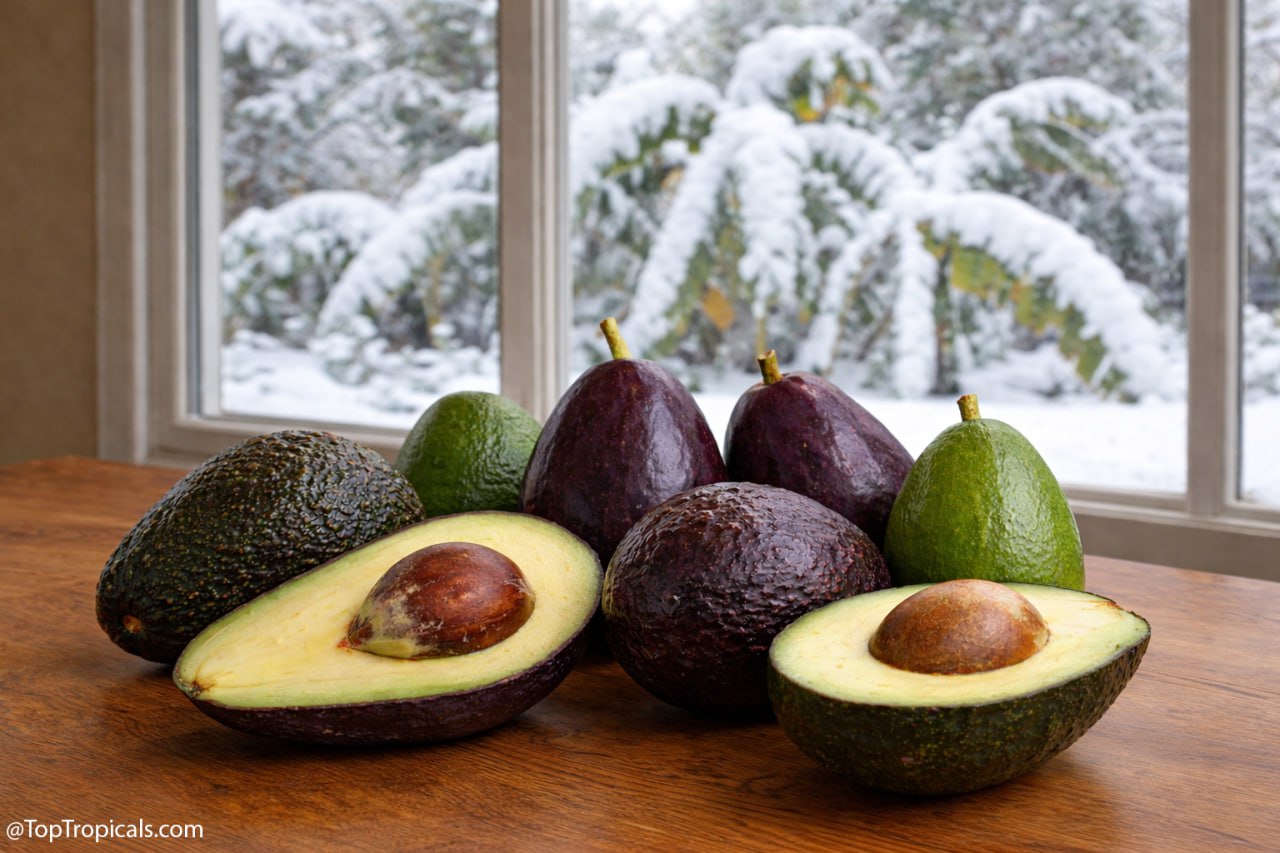
Different varieties of Avocado fruit on a table

Different varieties of Avocado fruit on a table

Cold-hardy avocado survival groups - what the numbers really mean


Avocado cold hardiness is often misunderstood. Temperature numbers do not mean a tree stays untouched - they describe survival, not appearance. Leaf burn, twig dieback, and temporary setbacks are normal even on hardy varieties. The difference is whether the tree recovers.
Below are cold-hardy avocado varieties grouped by minimum reported survival temperatures, along with what growers typically observe after a freeze.

🌡 Hardy to 15F:


Brazos Belle (Wilma), Fantastic, Joey, Lila (Opal), Day.
Best freeze survivors. Minor leaf burn possible, but trees usually recover quickly with little structural damage. These are among the most cold-tolerant avocado varieties when fully established and exposed to short-duration freezes.
What to expect: Trees in this group often survive temperatures near 15F with little to moderate leaf damage. Some tip dieback is possible, but major limb loss is uncommon. Recovery is usually strong once warm weather returns, especially in dry winter conditions.
  • 🌡 Hardy to 20F:
  • Bacon, Brogdon (Brogden), Fuerte (Dwarf), Mexicola, Miguel, Ulala (Super Hass), and Waldin.
    Reliable survivors in cold-prone areas. Expect leaf damage and some setback, but established trees typically rebound.
    These varieties perform well in marginal climates and are commonly grown where freezes are expected but not extreme.
    What to expect:
    Leaf burn is common at or below 20F, and young shoots may be damaged. Trees typically survive, but may need a full growing season to regain canopy density. Established trees usually rebound well with good drainage and protection from wind.
  • 🌡 Hardy to 25F:
  • Black Prince, Choquette, Hall, Hardee Red, Lula, Marcus Pumpkin, Mexicola Grande, Nishikawa, Oro Negro, Poncho (Pancho), Tonnage, Winter Mexican, Wurtz (Dwarf) and Yamagata.
    Moderate cold tolerance. Leaf drop and branch dieback are common after freezes, though trees usually survive.
    This group includes moderately cold-tolerant avocados that handle light freezes but are more easily damaged during prolonged cold.
    What to expect:
    Expect noticeable leaf drop and some branch dieback when temperatures fall near 25F. Trees usually survive but may look rough for weeks or months. Proper placement and drainage greatly influence recovery speed.
  • 🌡 Hardy to 30F:
Bernecker, Catalina, and Florida Hass (Haas).
Frost-tolerant only. Damage occurs quickly, and repeated freezes can cause serious stress without protection.
Actual results depend on tree age, freeze duration, wind, moisture, and microclimate. Lower numbers do not mean damage-free - they mean the tree lived to grow again.
These avocados are best suited to areas with only occasional frost and minimal freeze exposure.
What to expect:
Leaf damage occurs quickly near 30F, and unprotected trees may suffer significant canopy loss. Survival is possible during brief cold events, but repeated freezes can cause lasting damage. These varieties benefit most from proactive protection.

❗️ Important reminder


All temperature figures are approximate and experience-based, not guarantees. Survival depends on tree age, duration of cold, wind, moisture, and microclimate. Cold tolerance improves significantly as trees mature, while young trees remain vulnerable across all groups.
Understanding the difference between survival and damage is the key to choosing the right avocado for colder climates.

🛒 Explore cold hardy Avocado varieties

📖 Our Book: Avocado Variety Guide, Snack or Guacamole?

📚 Learn more:


🎥 These Avocados survived 25F hard freeze 3 nights of Florida Record Freeze

#Food_Forest #Avocado #Discover #How_to

🟢 Join 👉 TopTropicals

Date: 23 Jul 2025

Five best fruit trees to plant in Summer

James Coconuts and Bob introducing Five best fruit trees

🌳 Five best fruit trees to plant in Summer


☀️ Summer might be scorching, but it’s actually a great time to plant fruit trees that love the heat. If you've got sunshine and a little space, these five tropical picks will reward you with fresh, homegrown fruit - some you’ll never find in a store!

1.🥭 Mango - the King of all fruit, a must have in every garden. Fiberlress varieties only! You can't buy those in the store.

2. Avocado - a must have super-fruit in everyone's diet, grow your own!

3.🐲 Dragon fruit - heat tolerant easy plant with low water needs, sweet fruit-bearing cactus

4. 🍉 Guava - by far the most flavorful tropical fruit, great for Summer drinks

5. 🍐 Black Sapote - fast growing, heat- and flood-tolerant, fruit tastes like chocolate pudding

📚 Learn more from previous posts:

🛒 Explore the finest rare tropical fruit trees

#Food_Forest #Discover

🟢 Join 👉 TopTropicals

Date: 16 Jun 2023

NEW VIDEO:
ABC7 Fort Myers News:
Avocado Varieties at Top Tropicals

We continue the series of ABC-7 News on Top Tropicals selections. Previously, we showed you segments about Butterfly Plants, Rare Fruit Trees, and Mango varieties. Today's video is about growing an Avocado tree in your home garden.

Growing your own avocado tree has many benefits. You can enjoy fresh, delicious avocados right from your garden. Avocado trees are attractive, provide shade, and enhance your landscape. There are many avocado varieties to choose from, offering unique flavors, sizes, and ripening times. You will find Avocado trees for sale online right here at TopTropicals.com. Our trees can be shipped to you!

Watch the news segment by Rachel Anderson for ABC-7:
Avocado Varieties at Top Tropicals.

Subscribe to our Channel:

Stay updated with TopTropicals Videos by subscribing to our channel at YouTube.com/TopTropicals and get our latest video news of what is fruiting and blooming!

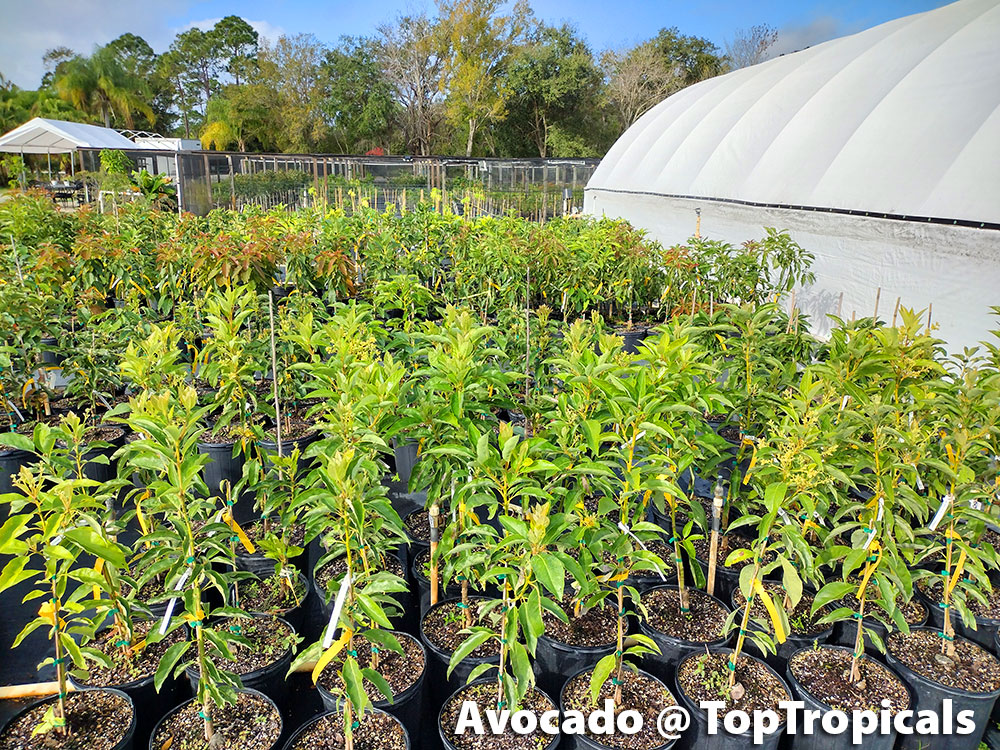
Avocado  trees  in  3  gal  pots

Date: 29 Jul 2019

When to fertilize and prune tropical fruit trees?

Q: Can tropical fruit trees (Soursop, Mango, Star fruit, etc) be given plant food any time of year? Also can they be trimmed this time of year/summer?

A: True tropical plants (including fruit trees) need plant food most of the year in real Tropics, where temperatures have very little fluctuations, and active growth season is close to 12 months a year. In subtropical areas when temperatures in winter drop below 65F, plant metabolism slows down, so it is recommended to fertilize only during the warmest period (March through November). So yes, Summer is the perfect time for fertilizing your trees; their metabolism is at the highest point and they can use more food!

Trim your fruit trees right after harvesting. Obviously, you don't want to prune branches before or during flowering or fruiting. The specific time of the year for pruning depends on the plant - every tree has its own flowering/fruiting season. However, avoid pruning right before winter: young shoots promoted by pruning are tender and can be cold damaged.

Recommended fertilizers for fruit trees:

Fruit Festival Plant Food - Super Crop Booster
Mango-Food - Smart Release Fruit Tree Booster
SUNSHINE-Honey - for sweeter fruit
SUNSHINE SuperFood - microelement supplement