Garden Blog - Top Tropicals

Date: 4 Jul 2025

Happy Independence Day!
4th of July Sale

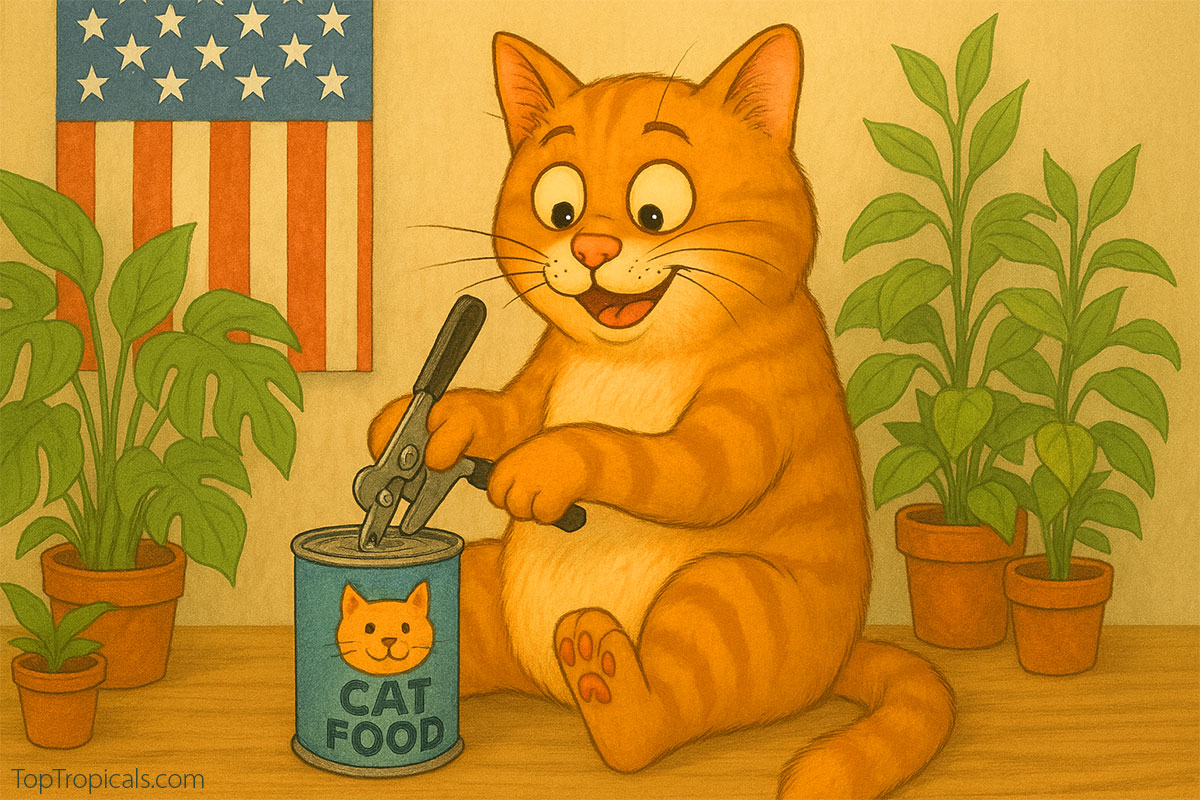
Independent  cat  on  Independence  Day  opening  a  can

"Independence is happiness." - Susan B. Anthony

Happy 4th of July from the tropics! Whether you're staying local or escaping for the long weekend, it's the perfect time to enjoy your garden, start something new, or grab that plant you've been eyeing. Red Desert Roses, white fragrant Gardenias and Jasmines, rare Blue Ginger - tropical blooms are showing off right now, and we are celebrating with a hot summer sale: 20% off everything with code HAPPY4TH25, plus extra savings on combined DEALS and BOGO! Add some color to your summer and let your garden do the fireworks!

Use the code below to save 20% on your entire order:

HAPPY4TH25

Min order $200. Excluding S/H. Exp. 7-7-25

Reminder: use our FREE and DISCOUNTED SHIPPING for qualified orders

Shop Now Bauhinia  madagascariensis,  Red  Butterfly  Orchid  Tree

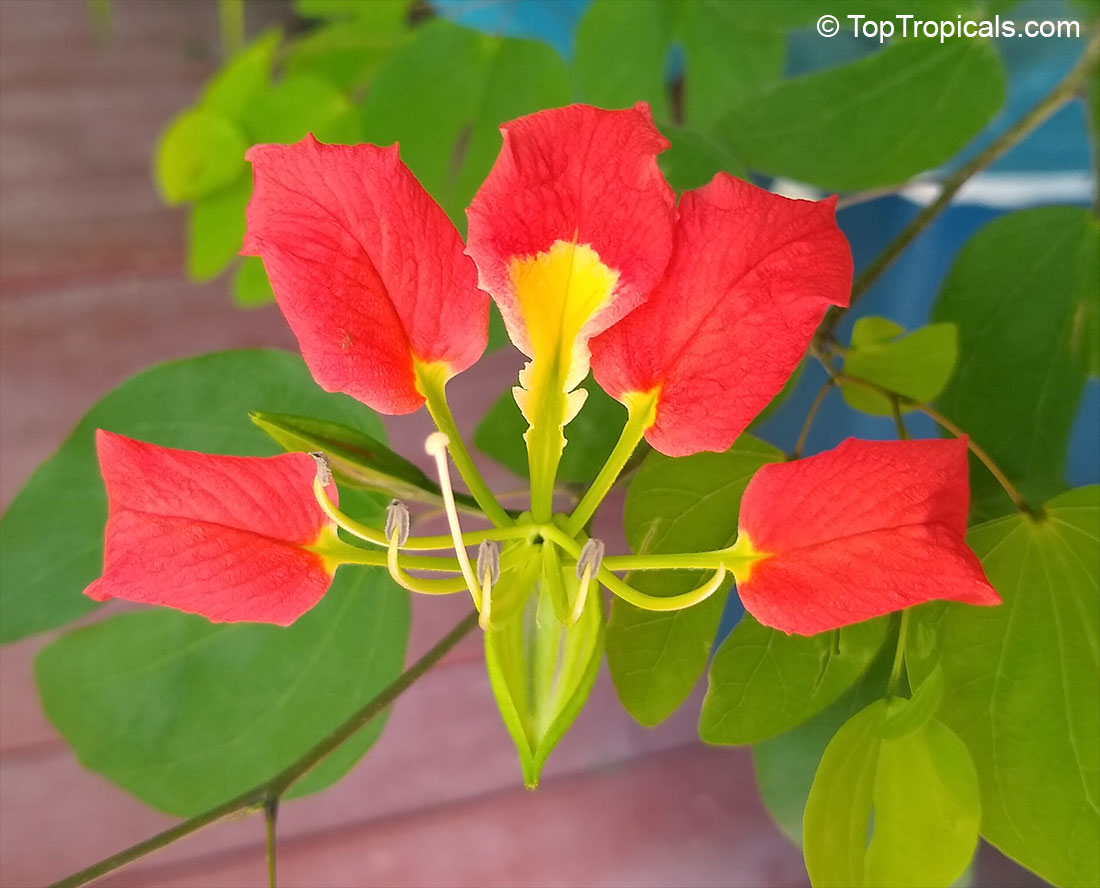
In the photo above: Bauhinia madagascariensis, Red Butterfly Orchid Tree - dazzles with bright red flowers striped in gold. A rare, fast-growing tropical that brings serious color to your garden, it is one of the most striking Orchid trees you can grow. It thrives in sun and rewards with nonstop color.

Date: 10 Nov 2025

❄️ How to Prepare Your Tropical Garden for Winter
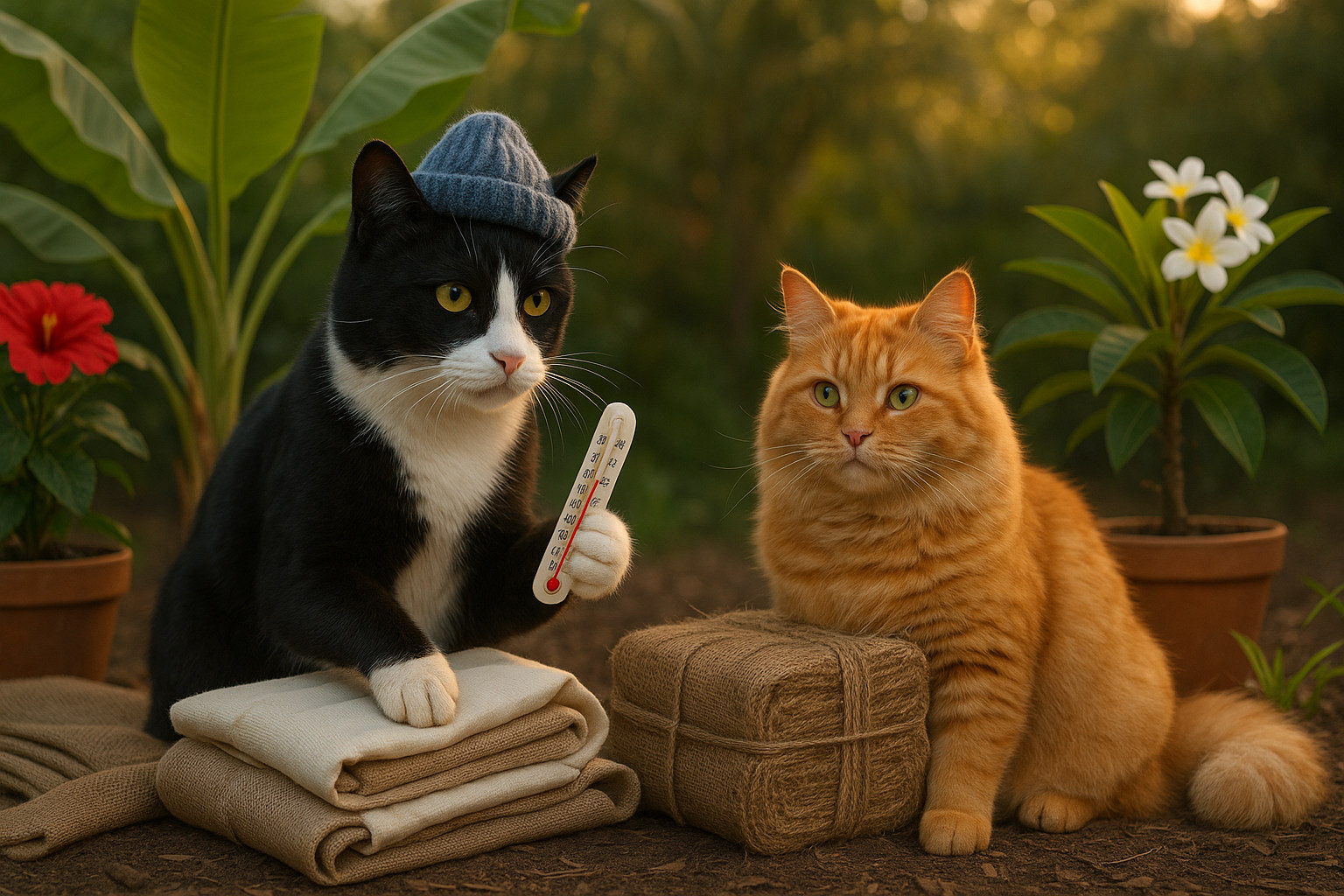
Two  cats  in  a  tropical  garden  at  sunset.  Smokey,  a  black-and-white 
 tuxedo  cat  wearing  a  wool  cap,  holds  a  thermometer  while  Sunshine,  a  fluffy 
 orange  tabby,  sits  beside  mulch  and  folded  frost  cloths  surrounded  by  banana
    and  hibiscus  plants.

Smokey and Sunshine Wrap Up the Garden with Frost Cloth Before the Chill.

Smokey: "Thermometer says 45. Time to wrap the bananas!"
Sunshine: "You wrap the bananas. I’ll guard the mulch… from this sunny spot."
Smokey: "Teamwork, Sunshine. Teamwork."

🌡️ Cold nights are coming - but your tropicals do not need to shiver!

Even in sunny Florida and other warm zones, one cold snap can undo months of growth. Preparation is everything. Tropical plants can handle a lot, but they dislike surprises. Let’s make sure your garden stays safe, strong, and happy all winter long.

Tips from Tatiana Anderson, Top Tropicals Plant Expert

👉 Group and Check Your Plants

You already know which plants are in pots and which are in the ground. What matters now is prioritizing by cold sensitivity. Identify the tender tropicals – papaya, banana, plumeria, adenium, heliconia – and decide which ones get covered first when temperatures drop. Keep frost cloths or old sheets near those areas, ready to grab fast. If your garden is large, label protection zones or mark plants that always need extra care. The goal is to have a plan, not a panic, when the cold alert hits.

Once you know your priorities, you can plan the rest of your protection strategy.

👉 Feed and Mulch

Stop using high-nitrogen fertilizers by late fall. They push soft new growth that freezes easily. Add compost around the base of your plants and top with 3 to 4 inches of mulch. Mulch acts like a blanket: it keeps warmth in, protects the roots, and keeps soil moisture steady. Just make sure the soil drains well; cold and soggy soil leads to root rot. In raised beds, check that water flows away easily.

After you feed and mulch, it is time to look at how your local zone changes the game.

👉 Zone-by-Zone Tips
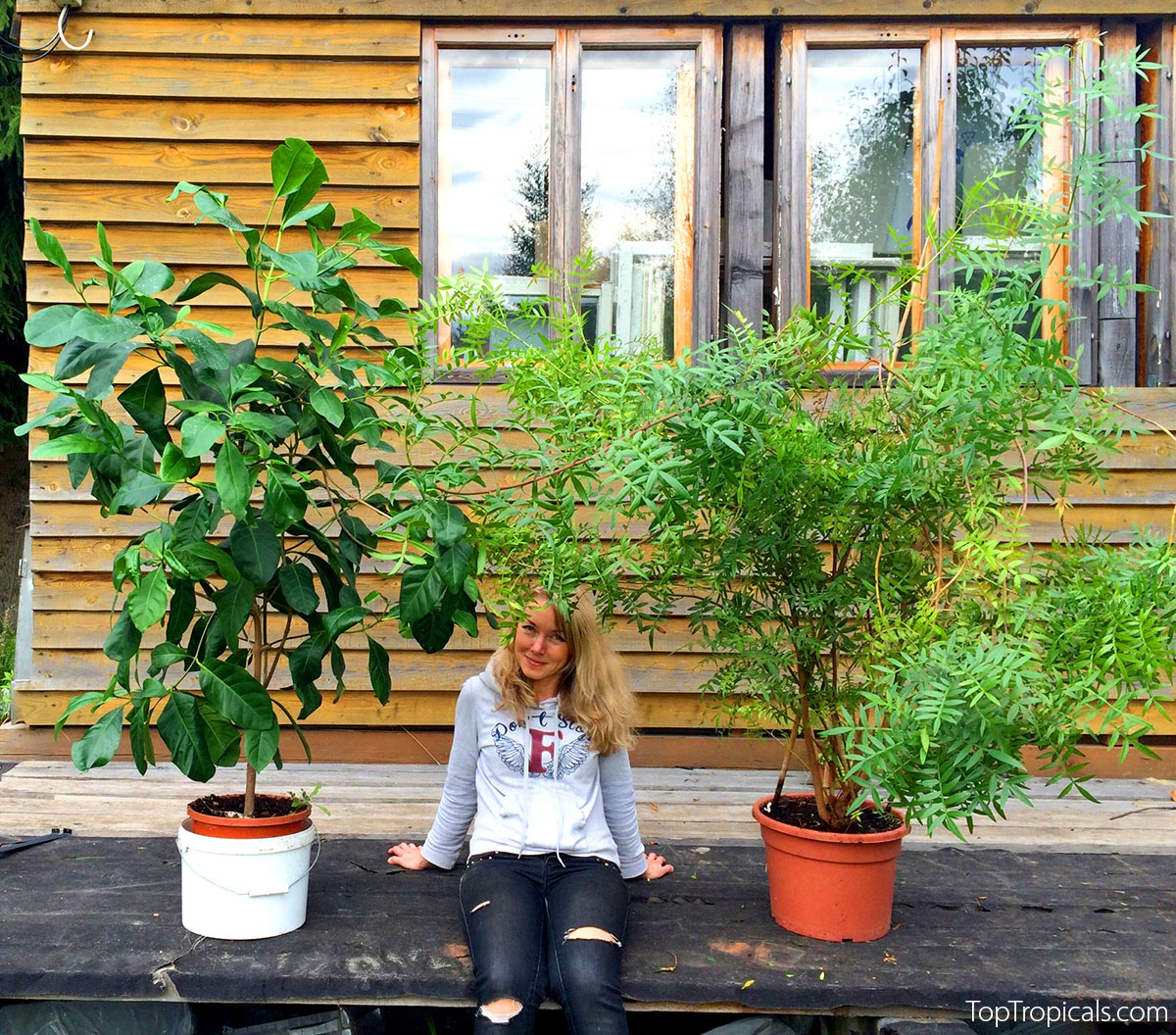
Woman  sitting  between  two  large  potted  tropical  plants  on  a  wooden  deck
    in  front  of  a  house,  preparing  to  move  them  indoors  for  the  winter.

Moving Tropical Plants Indoors for Winter Protection

  • Zone 10: You are lucky! This is mostly a maintenance season. Watch for root rot after heavy rain, trim lightly if needed, and protect tender young trees during surprise chills. Keep some frost cloth ready just in case.
  • Zone 9: This is the main action zone. Nights can dip into the 30s. Deep-water your trees once before cold nights to insulate the roots. Apply heavy mulch, and have frost protection ready to go. If you grow tropical fruit like mango or guava, consider wrapping young trunks in burlap or foam pipe insulation.
  • Zone 8: This is where tropical gardening becomes creative. Stick to cold-hardy tropicals such as loquat, guava, or cold-hardy avocado varieties. Use portable greenhouses, wrap trunks, and move smaller plants indoors or to a heated porch when frost threatens.

Now that the garden beds are set, let’s look at your pots and containers – your most mobile plants.

👉 Container and Patio Plants

Potted plants are the easiest to protect but also the quickest to freeze. Start reducing watering now so roots do not stay too wet in cooler weather. Before moving them, check for insects hiding under leaves or in the soil. Group your pots close to a wall for reflected heat and wind protection. If you plan to bring them indoors, do it gradually. Move them closer to the house for a few days before bringing them all the way inside to help them adjust to lower light and humidity.

When the chill starts, many gardeners rush to move everything inside at once – but a smooth transition works much better.

👉 Indoor Plants

When bringing plants inside, give them a good rinse to remove dust and bugs, and flush the soil to wash out salts from summer fertilizing. Keep them separate from your houseplants for a week to make sure no pests come along. Expect some leaf drop – it is normal as they adjust to lower light. Give them bright light near a window, and cut watering by about half until spring. Avoid misting too much; good airflow matters more than humidity during winter.

Many tropicals, like hibiscus, brugmansia, and crotons, may look tired for a while, but they will bounce back quickly once days get longer.

👉 Timing Is Everything

The key is to prepare before the first cold warning. Check your weather app regularly once nights start dropping into the 50s. Keep covers, mulch, and supplies ready so you are not running outside at midnight with a flashlight and a frozen hose. Have your frost cloths labeled by plant group and stored in an easy spot. A little organization now saves a lot of stress later.

Many tropicals, like hibiscus, brugmansia, and crotons, may look tired for a while, but they will bounce back quickly once days get longer.

Remember: the goal is to help your plants rest safely. Many gardeners prune or fertilize too late in the season – we will talk about why that can be risky next week."— says Tatiana Anderson, Top Tropicals Plant Expert

Coming next mail-list: The best gadgets for cold protection (lights, heaters, frost covers) and what NOT to do in winter.

📚 Learn more from Top Tropicals Blog:

Cold protection - winter action for your plant collection

What plants are good to order in Winter?

How to take care of house plants in Winter

How to protect tropical plants in Winter

How to take care of a mango tree in winter

How to protect Avocado from cold

Overwintering Adeniums outside of tropics
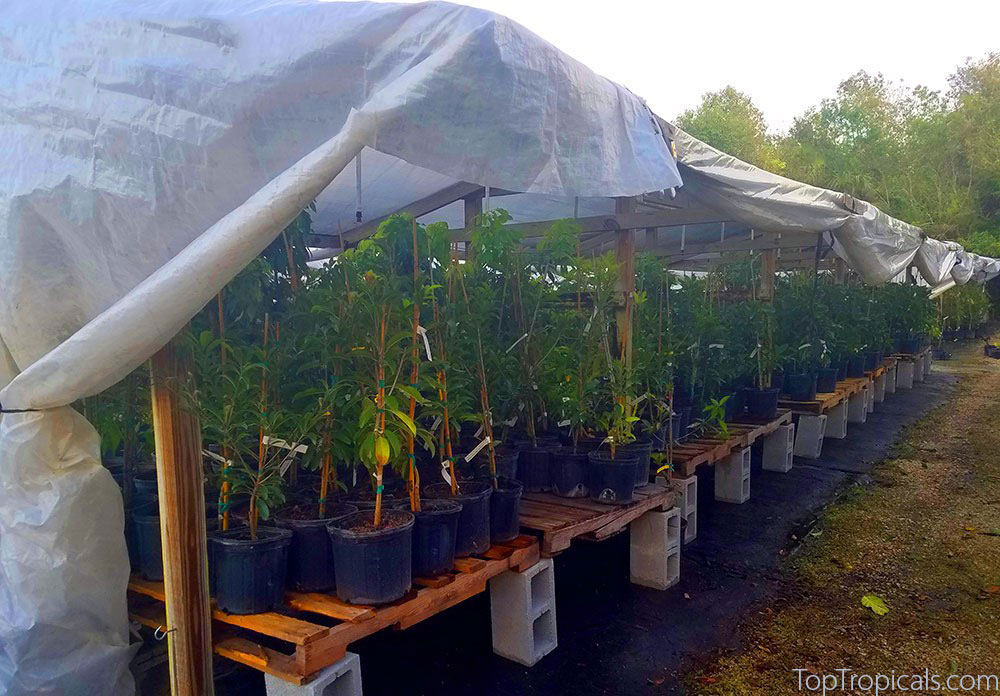
Rows  of  tropical  plants  in  black  pots  covered  with  frost  cloth  and 
 plastic  sheeting  for  winter  protection  at  Top  Tropicals  nursery.

Protecting Tropical Plants with Frost Covers at Top Tropicals Nursery
Date: 20 Jun 2026

Fathers Day and Summer Solstice Discount

Father's Day & Summer Solstice Discount

Father's Day & Summer Solstice Discount

Father's Day gift card

Father's Day gift card

🌞 Father's Day & Summer Solstice Discount 🌞

Still looking for a Father's Day gift?
Skip the tie and give Dad something that grows.

Top Tropicals Gift Certificate makes a perfect last-minute gift and can be emailed instantly. Let Dad choose the tropical plants, fruit trees, or collectibles he really wants.

And while you're shopping, celebrate the longest day of the year with us! Use coupon code:

🎁 FATHERS2026 🎁

Save on tropical plants, fruit trees, flowering shrubs, vines, succulents, and more.
Whether you're shopping for Dad, adding to your own garden, or planting something special to mark the Summer Solstice, this is a great weekend to bring home something new.

✅ Some customer favorites include:


🍑 Fruit trees and food forest plants
🌸 Plumerias and adeniums
Fragrant plants
🥭 Mangoes and avocados 🌳
Flowering and fast growing shade trees

Happy Father's Day to all the dads, grandfathers, stepdads, and plant dads who help things grow.
Happy Summer Solstice - may your gardens be lush, your fruit trees productive, and your days full of sunshine. 🌞🌴

Min order $100. Excluding S/H. Exp. 6-23-2026
Use our FREE and DISCOUNTED SHIPPING for qualified orders
Feel free to use code FATHERS2026 yourself or share it with your friend.

🛒 Shop tropical plants

#Discounts

🟢 Join 👉 TopTropicals and share with your friends

Date: 23 Jun 2026

Move Over Adeniums: Why This Unusual Gout Plant Is the Ultimate Natural Bonsai

Move Over Adeniums: Why This Unusual Gout Plant Is the Ultimate Natural Bonsai

🔥 Move Over Adeniums: Why This Unusual "Gout Plant" Is the Ultimate Natural Bonsai


If you love the sculpted look of Adeniums (Desert Roses), there is a rare tropical showpiece you need to add to your collection right now: Jatropha podagrica, commonly known as the Gout Plant.
With its knobby, swollen bottle-like stem and striking blooms, this plant looks less like a typical houseplant and more like a piece of living coral reef art.


The Ultimate Lazy Gardener's Bonsai


Unlike traditional bonsai trees that require years of meticulous wire training, pruning, and root shaping, Jatropha podagrica is a "natural bonsai." It does all the hard structural work for you.
Staying compact at just 2 to 3 feet tall, this unusual succulent is an absolute must-have for container gardens, succulent collectors, and bonsai lovers looking for an effortless, natural focal point.

The Caudex (Swollen Trunk): It forms a distinctive, bottle-shaped, knobby trunk completely on its own, mimicking the aged look of a masterfully trained bonsai from day one.
Massive Tropical Foliage: It features surprisingly large, umbrella-like leaves that can reach 10 to 12 inches in diameter, creating a bold contrast against the rugged trunk.
Coral-Red Flowers: It produces vibrant, eye-catching red flower clusters that resemble ocean coral. These terminal clusters pop brilliantly and stand high above the foliage canopy.

The Shade Trick for Giant Leaves


One of the coolest features of the Gout Plant is how it adapts to light. While it prefers partial sun and handles bright conditions beautifully, it thrives in the shade.
When kept in lower light or partial shade, the plant reacts by growing even larger, broader leaves to catch the light. This creates a dramatic, lush tropical canopy right above that textured, rugged trunk - giving you an even more exaggerated, stunning bonsai silhouette.

Effortless Care: Low Water, High Reward


If you are prone to forgetting to water, this is the plant for you. Because that beautiful, swollen trunk acts as a built-in water reservoir, the Gout Plant is highly drought-tolerant.

👉 Quick Care Guide


Light: Partial sun to partial shade (shade yields bigger leaves).
Soil: Must be planted in loose, well-draining soil mix.
Water: Low. Let the soil dry out significantly between waterings.
Size: Stays a manageable 2-3 feet high, making it ideal for small patios, bright windowsills, or compact garden spaces.

Easy to care for, completely unique, and an instant conversation starter - the Gout Plant brings an exotic, dramatic flair to any space without demanding constant attention.

🛒 Get Yours Before They're Gone

📚 Learn more:

Gout Plant Facts

Botanical name: Jatropha podagrica
Also known as: Gout Plant, Gout Stick, Buddha Belly, Guatemala Rhubarb, Tartogo
USDA Zone: 9 - 11
Highligths Plant with caudexPlant used for bonsaiSmall plant 2-5 ftSemi-shadeShadeFull sunWatering: Moderate. Water when top soil feels dryYellow, orange flowersRed, crimson, vinous flowersOrnamental foliageToxic or PoisonousPlant attracts butterflies, hummingbirdsSubtropical plant. Mature plant cold hardy at least to 30s F for a short timeSeaside, salt tolerant plant
Get personalized tips for your region

· Jatropha podagrica in Plant Encyclopedia
· 9 awesome accent plants and vines that love heat and dry conditions
· Coral-blooming bonsai with a bottle-shaped trunk - perfect container plant
· Attention grabber: swollen trunk, giant leaves, and flowers just like corals

🎥 Plant this bonsai with a bottle-shaped trunk - perfect container plant

#Container_Garden #Nature_Wonders #Discover

🟢 Join 👉 TopTropicals

Date: 4 Jun 2021

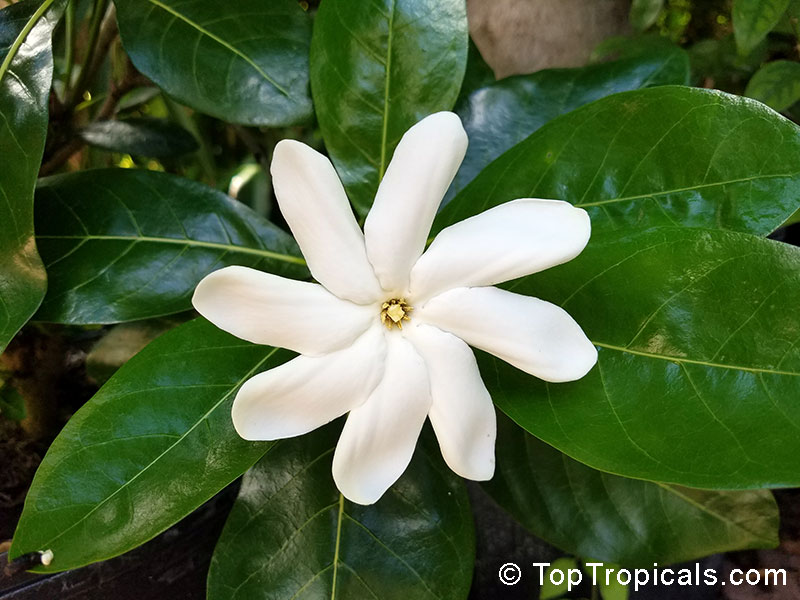
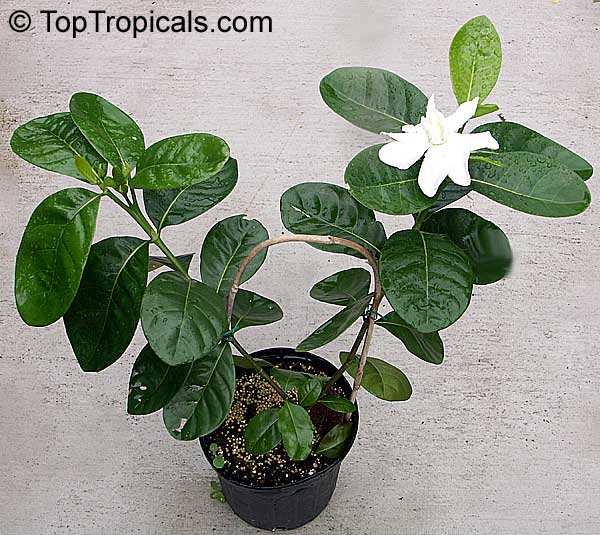
Tahitian Gardenia

Q: I am interested in your Tahitian Gardenia and I would love to try and grow this plant in a large container/fabric pot. The soil here where I live is terrible as it's hard rock, clay, and sand! So I'm not sure if amending the soil would help to plant in the ground? Can you tell me if this will do okay in a container or best in ground? I live here in Las Vegas, NV (zone 9a). Any information would be great to help me make a this decision, I love the selection of cool tropical plants you offer! Also my daughter does Tahitian/Polynesian dance and this would be a cool "topping on the cake" if she could have a live Tiare flower in her performances.

A: Tahitian Gardenia will be doing best if grown in container in your area. In its natural habitat, it grows full sun but also it enjoys mild weather conditions and high air humidity. All gardenias prefer acidic soils. In your area, if planted in the ground, it may be exposed to some harsh conditions: too high temperatures, too hot sun, dry air, and as you mentioned - heavy clay and sandy soil. You can enjoy this plant grown in container, which can be moved as needed away from too much sun during summer months. Use well-drained potting mix. Use plastic pot, do not use fabric or clay pots - soil will dry out too quickly.
Also remember to fertilize this plant on regular basis with a liquid fertilizer SUNSHINE Pikake - Fragrant Flower Booster.
Grow gardenia in full sun or semi-shade during the hottest months. You may spray it with pure water if the air too dry and hot. Enjoy your Tropical Beauty and good luck!