Garden Blog - Top Tropicals

Date: 24 Jun 2018

Cold hardy tropical fruit trees for Luisiana
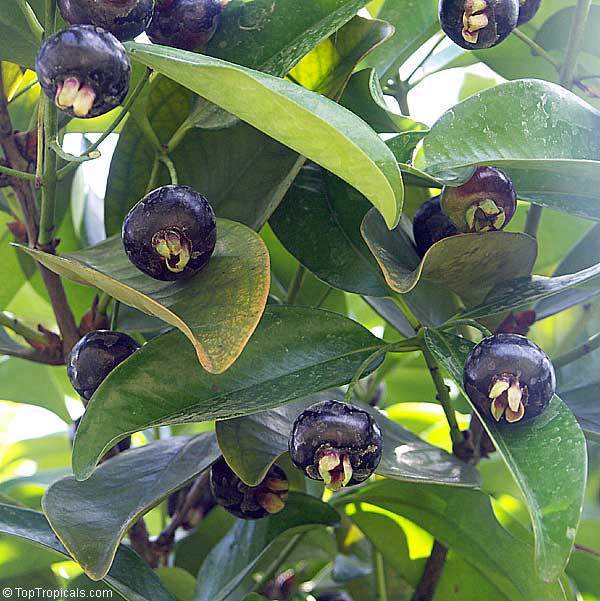
Q: I've just moved to Louisiana and have been wondering whether it would make sense to plant some tropical fruit trees in our garden. Average lows in New Orleans are 41 deg F in January and February, although we did hit 25 once with the Arctic vortex. I'm interested in litchi, longan, rambutans, and persimmons. Do you have varieties that can tolerate Louisiana's temperature range? I'd love mangosteen but I don't suppose they will survive. Do you have any suggestions on tropical fruit trees that I could try?

A: Average temperatures are for statistics only; it is actual temperatures that may hurt your cold sensitive plant. This is what you should keep in mind when starting your tropical fruit collection:
1) Ultra-tropical plants like Rambutan can not survive winters below 45-50F. However, they can be successfully grown in containers in a greenhouse or moved indoors into a sun room during cold periods.
2) Tropical plants like Litchi and Longan may take some light frost once established. Still, for areas with freeze our advice is - keep them in pots and move inside in case of cold.
3) There is a number of subtropical fruit trees that are hardy enough to take some freeze. Persimmon, Feijoa, Fig, Cattley Guava, Jujube, Kiwi, some Eugenias and others. Please refer to our Tropical Fruit Sensitivity Chart.
4) Remember that plant's ability to survive winter depends on several factors, not only temperature itself. Important factors are: wind protection (chill wind kills rather than low temperature itself), exposure, how close the tree is planted to the house, plant maturity and its overall strength and health. If a plant had received good nutrients during summer, has well established root system, planted in enclosed area protected from winds and has plenty of bright sunlight - it has better chances to survive than a weak plant in warmer conditions.
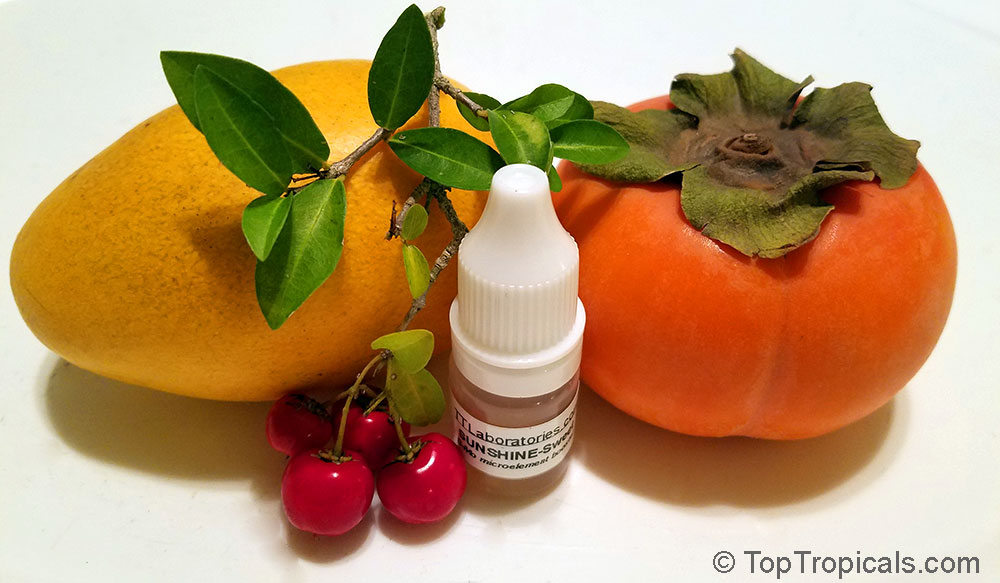
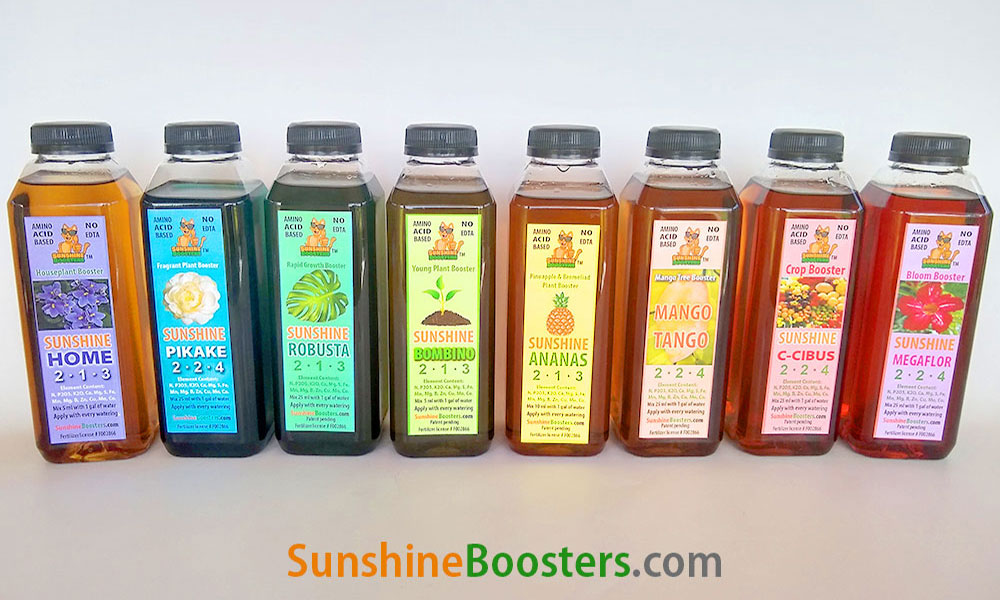
5) Use SUNSHINE plant boosters for improving cold tolerance of your tropical plant. It only takes a few drops, and only costs $5!
Date: 2 May 2020

Which fertilizer is right?

Q: I need some advice on which fertilizer(s) would be perfect for my C​annonball tree and its cousin Heaven's Lotus (Gustavia augusta). ​I also have fruit trees... soursops, mango, etc. and a collection of flowers including pua keni keni, plumeria, bougainvillea, etc. I am wondering if you can recommend a custom fertilizing regimen for my garden (especially the cannonball and the gustavia since they are young).

A: It is a perfect time now to fertilize your plants as they start active growth. We have suggestions on fertilizing programs for your trees. You will find here our recommendations for:

1. Young trees
2. Flowering trees
3. Fragrant plants
4. In-ground grown fruit trees... CONTINUE READING >>

Date: 23 Oct 2019

Best tasting white guava

Q: What's your best tasting white guava?

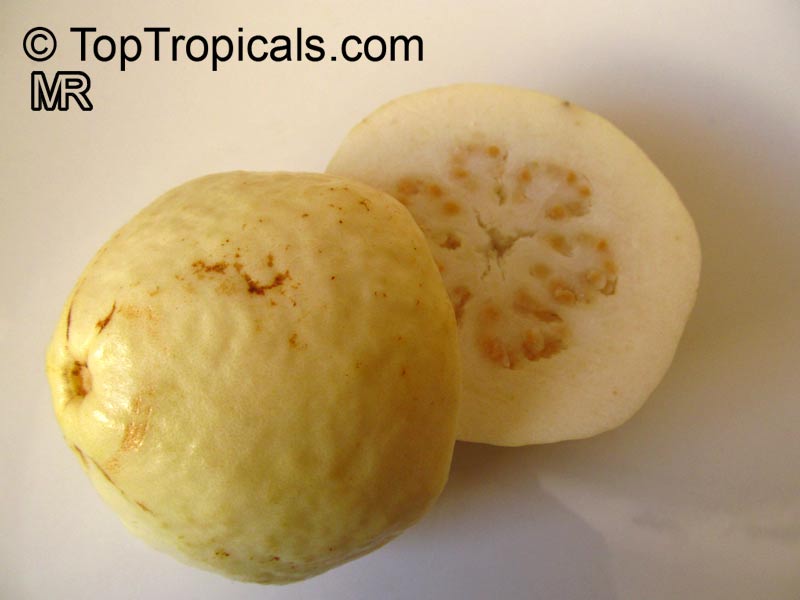
A: Our favorite white Guava is Viet Nam variety that is also very rare and hard to find. The fruit is very large, up to 6" in diameter, the pulp is very sweet and somewhat crunchy. The seeds are small which makes it more pleasurable to eat out of hand.
Another great feature of this variety, it stays compact and branches do not get leggy, unlike most guavas. It can be easily grown in a container, trimmed to the desired size and it will produce fruit under proper care.

Another cool variety is Indonesian, it also has a large round fruit and very few seeds to compare with others.

And last but not least, if you prefer soft fruit to crunchy, the Peruvian variety is a great choice. The fruit is pear-shaped.

Remember to provide plant food for good production, especially if grown in a container.

Fruit Festival Plant Food - Super Crop Booster
Mango-Food - Smart Release Fruit Tree Booster
SUNSHINE C-Cibus - Crop Nutrition Booster

Date: 3 Aug 2019

Grafted or seedling?

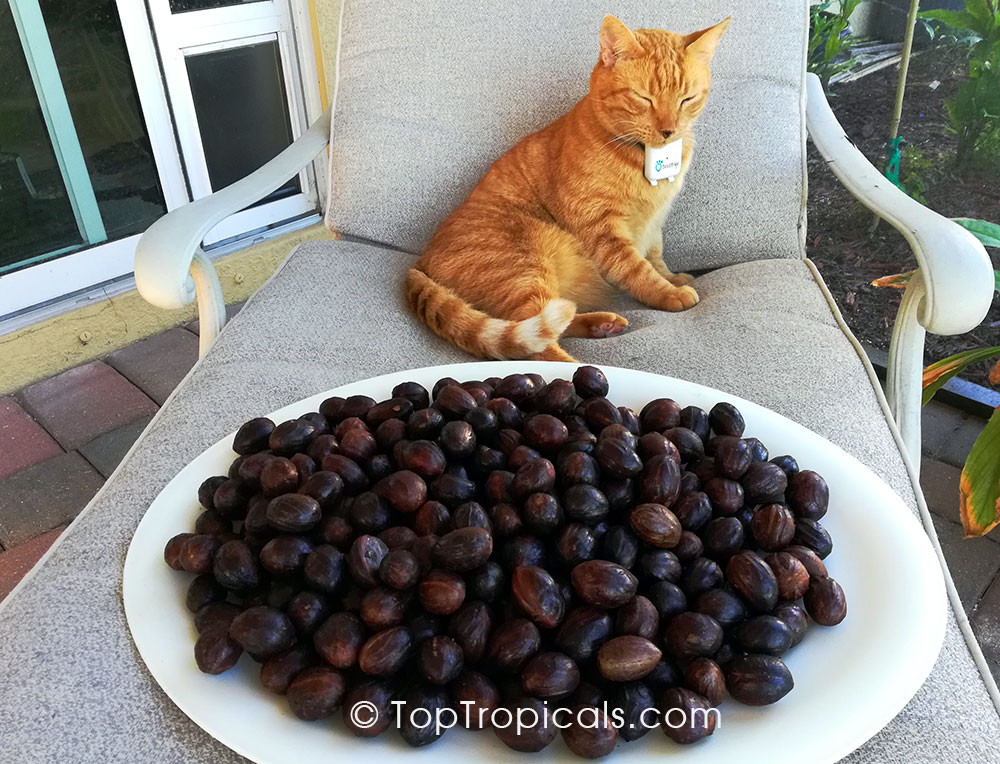
Photo: Mr Barcy meditating before planting Nutmeg seeds

Q: I planted an avocado seed and it sprouted quickly, it has been only a couple months and I already have a small plant. How soon will it produce fruit? Can I grow other tropical fruit from seed?

A: Unfortunately, some fruit trees, including varieties of avocado, mango, lychee, as well as apples and peaches - must be either grafted or air-layered in order to produce, for 2 main reasons:
- seedlings may take a very long time until fruiting, up to 10-15 years
- seedling gives no guarantee on the quality of the fruit or variety
These fruit trees should be propagated as "clones" - both grafted material or cuttings are actually copies of the mother plant and will keep the same fruit qualities. Grafted trees usually start producing immediately.
However there is a number of fruit trees that come true from seed, and take a very short time to start flowering. Jackfruit, Annonas (Sugar Apple, Guanabana, etc), Papaya, Icecream Bean, Eugenias start producing at a young age (3-4 years from seed).

Recommended fertilizers for fruit trees:

Fruit Festival Plant Food - Super Crop Booster
Mango-Food - Smart Release Fruit Tree Booster
SUNSHINE-Honey - for sweeter fruit
SUNSHINE SuperFood - microelement supplement

Date: 26 May 2021

Jasmine for a fence

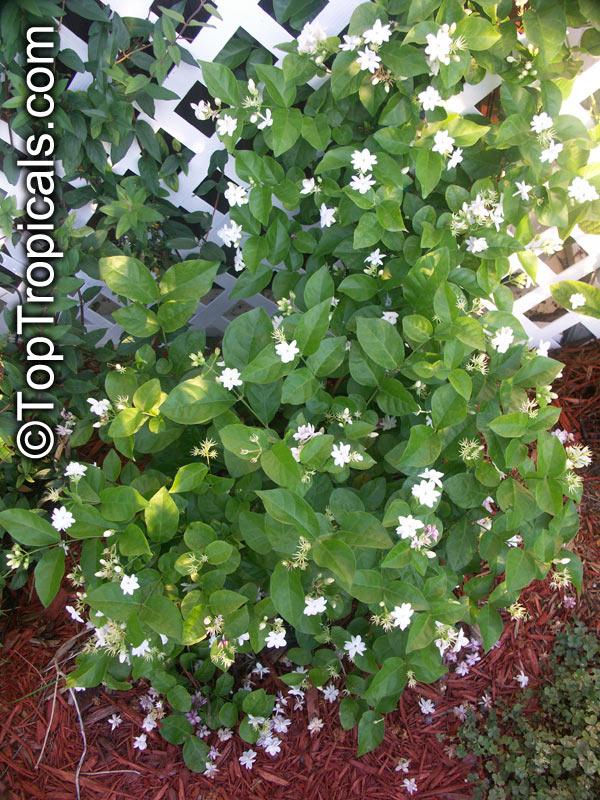
In the photo: Jasmine Maid of Orleans

Q:We are looking for a jasmine variety without thorns that we can grow on a wire fence...

A: All true jasmines (Jasminum spp.) are thornless. So you are safe to get anyone you like. The most vigorous, fast growing jasmines that grow into a vine, are:
Jasminum dichotomum
Jasminum pubescens
Jasminum nitidum
Jasminum officinale
Jasminum sambac Maid of Orleans - the most fragrant!

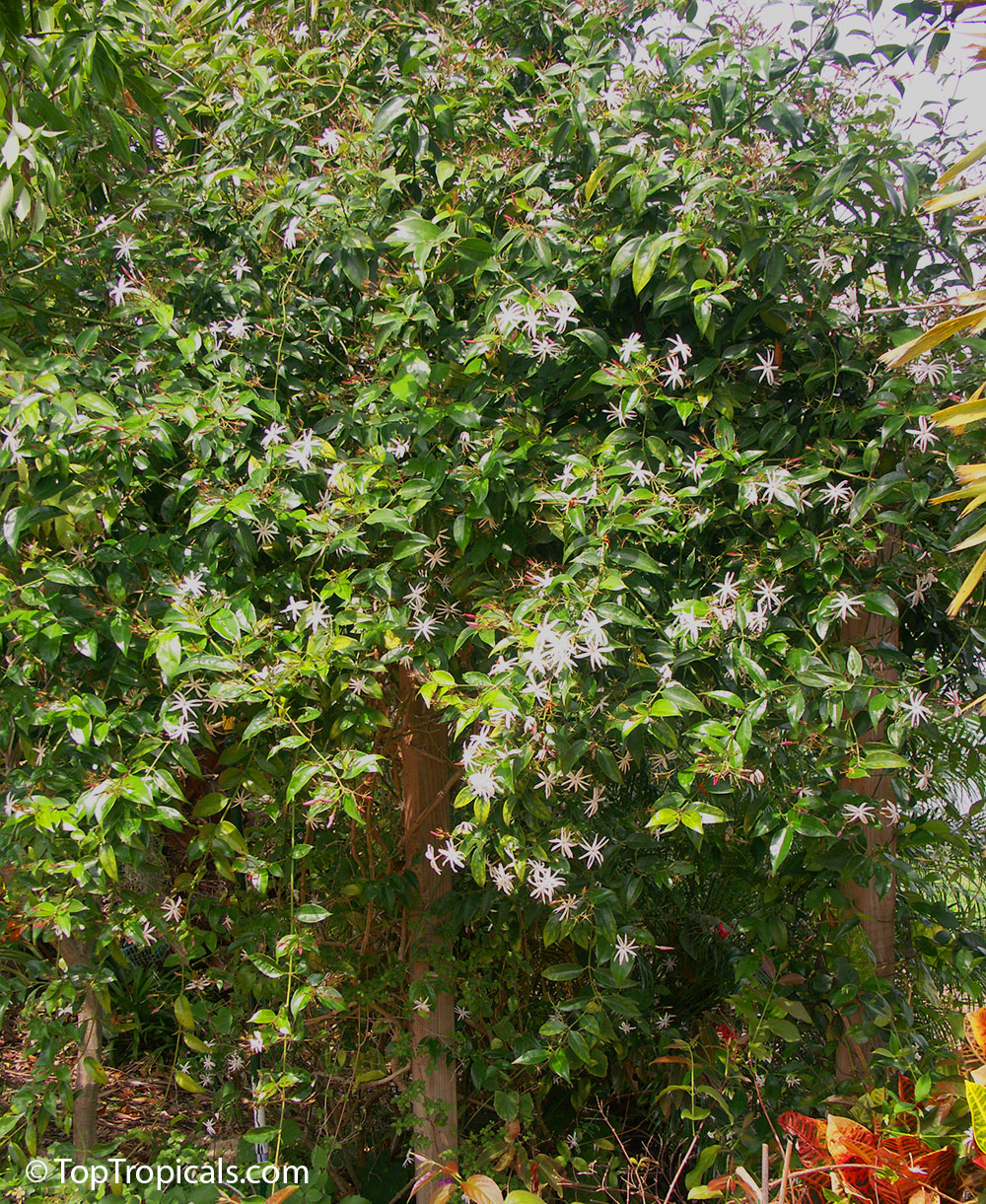
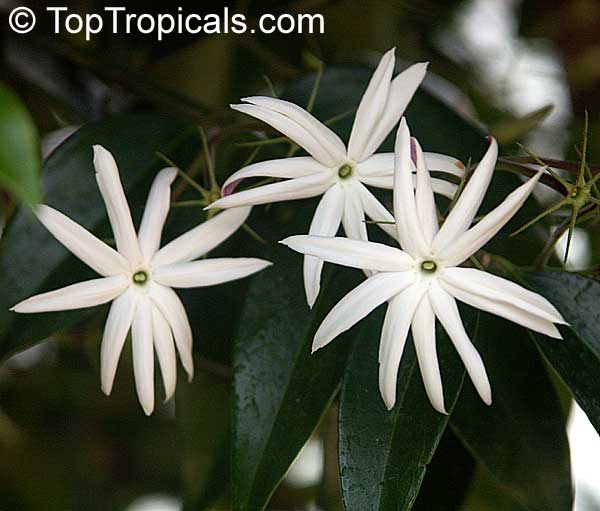
In the photos: Jasminum nitidum (Star Jasmine)