Date: 28 Sep 2019
Fragrance of Angel Hair Jasmine
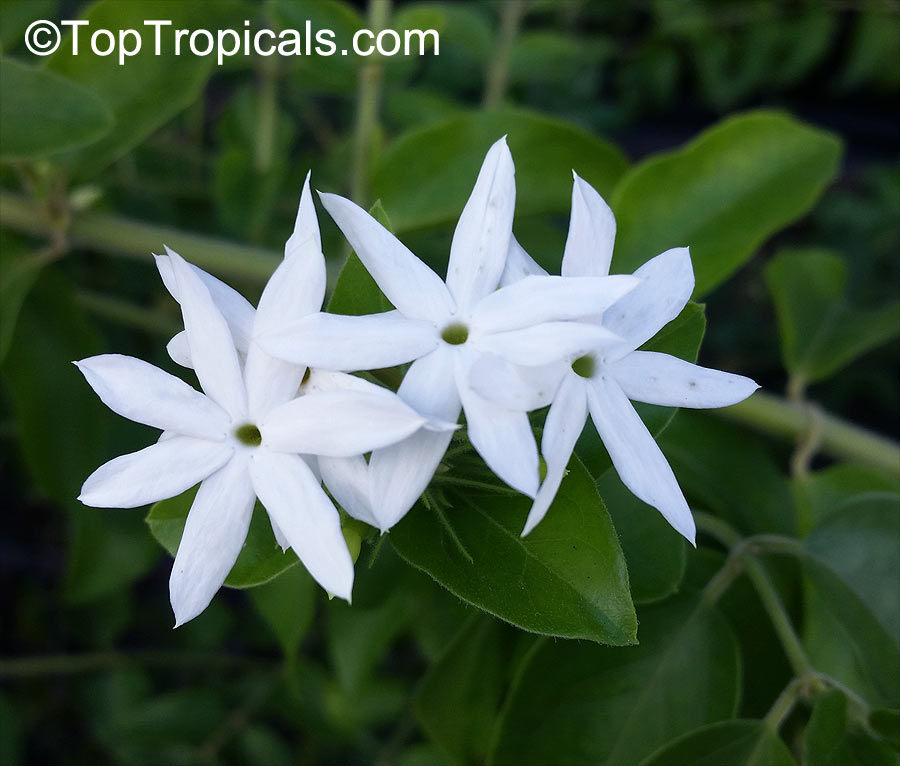
Q: I got angel hair jasmine, it started flowering, but it does not have any smell. What can be done?
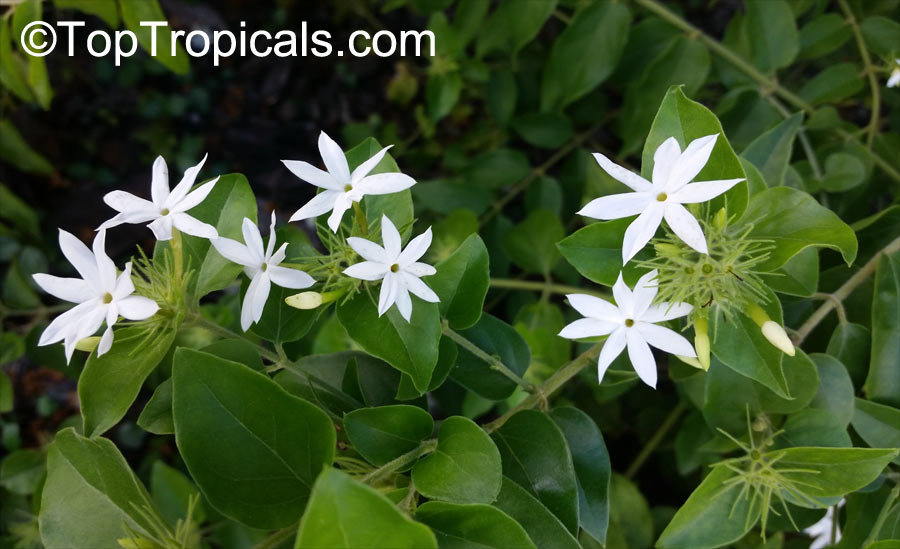
A: Jasminum pubescens - Angel Hair Jasmine has very fine fragrance. It is
not as strong as some other jasmines like Sambac for example. However flowers do have a sweet scent especially in
the early morning hours, as long as the plant is well-established, grows in
a warm and humid environment. Keep in mind that flowers on young small plants
that do not have a developed root system, may not be as fragrant as on
mature vigorous specimens. Also, this jasmine needs a full sun location and
regular fertilizer for profuse flowering.
We recommend the following fertilizers to boost flowering energy:
- Pink N Good Daily Plant Food - Flower Booster
- Plumeria Top Dress - Smart-Release Booster
Use microelements at least once a month to improve plant vigor and quality
of flowers

Date: 17 May 2019
Grafted Guanabana - what is the trick?
Q:Should I buy grafted Guanabana or a seedling? It is a big price difference. I have heard that Annonas fruit within 3 years from seed, why do I need a grafted tree?
A: Annona muricata - Guanabana, or Soursop - is known as the best tasting
Annona fruit. Many fruit lovers and gardeners want to have this tree in their
plant collection, and the first question they always ask is: "How soon will
it fruit? I can't wait to enjoy its deliciousness!"
Most Annonas start flowering and fruiting at a young age, 3-4 years from
seed. Annona muricata seedling takes longer. You may read more information on
how to grow Guanabanas from seed, even in a pot, even indoors - in Tropical Treasures Magazine issue # 7. Although it may take up to 15
years to see the fruit...
Now we have a solution to get this fruit sooner - a grafted tree! It
will fruit within a year after planting. The secret of grafting Guanabana was
almost lost (it's a tricky one to graft) and grafted plants were nearly
impossible to find. Now we have them! Quantities are limited.
Keep in mind that Guanabana is very cold sensitive and won't tolerate
even light freeze. However it is still relatively easy to grow even in
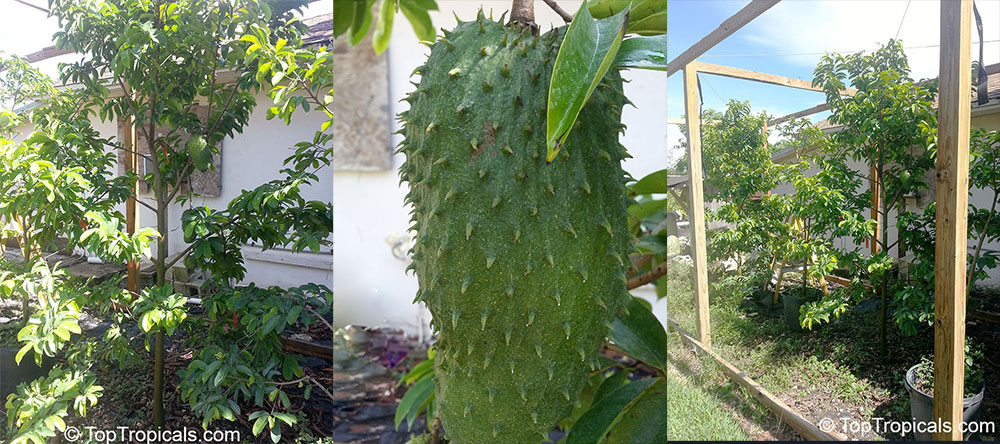
subtropical areas: the tree is small, and if tree grown in ground, a simple cold
protection structure can be built around it using basic wood or pipes (metal or
PVC) and covered with plastic for a few weeks of cold weather. Grafted
Guanabana is also a perfect choice for container culture (hand-pollinating maybe
required).
Photo: This grafted tree was planted less than a year ago, and was covered in winter with cold protection for about 8 weeks. Within a year, it has 4 large fruit on it!

Date: 25 Jul 2018
Looking for the rarest plant? This is the one!
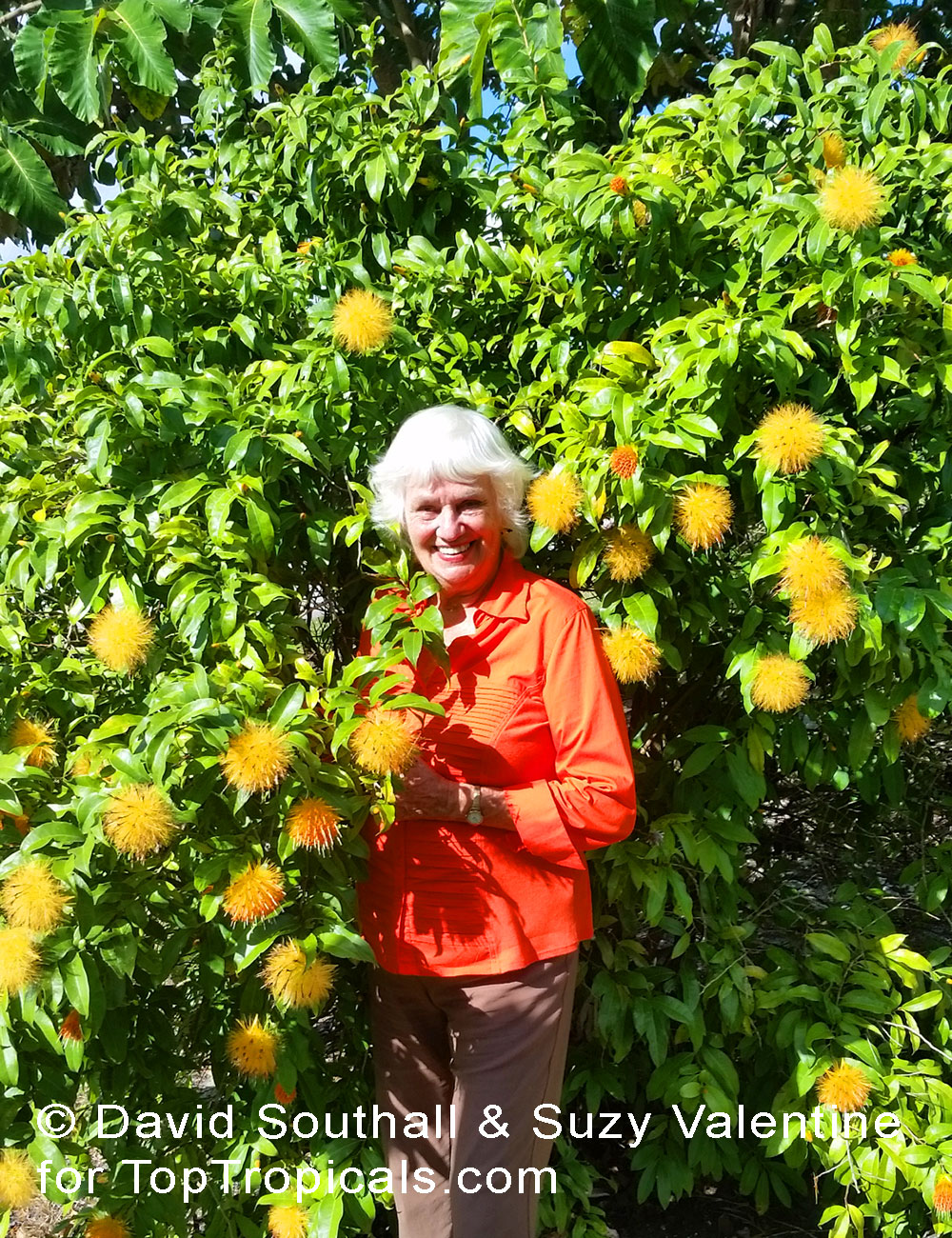
Stifftia chrysantha - Pompom, Rabo-de-Cutia
Looking for the rarest plant? This is the one!
Stifftia chrysantha is an exotic, rare flowering small tree with
spectacular flowers, endemic to the vast tropical savanna ecoregion of Brazil
called Cerrado. It grows into a bushy, attractive tree between 8 and 15 ft tall
and starts flowering within 1.5 - 2.5 years from seed. It is a very rewarding
plant that blooms 9 months out of the year, starting in Winter with great
intensity during July-September, with each flower staying on the plant for
several weeks. Seeds ripen from September through November.
The tree belongs to Aster family (Compositae) and has nothing to do
with Powderpuffs which are from Bean (Fabaceae) family. The flower has 30 to 40
green, imbricated scales with short hairs, and actinomorphic corollas are
orange below and darker above. After flowering, the inflorescence blows apart,
which would scatter seeds. The dried center remaining is very attractive, like
a small dried flower, and lasts for many months.
Stifftia can be grown in full sun to partial shade and is relatively
cold tolerant, can take short cold spells.
The plant doesn't like wet feet
and heavy/soggy soils; requires very well drained, acidic soil. We strongly
recommend to use our professional soilless mix. Let soil
slightly dry between waterings. It can be grown in full sun to partial shade and is
relatively cold tolerant, can take short cold spells. If grown in a pot, try
to keep the container shaded because roots don't like to be overheated. The
plant needs monthly applications of slow
release fertilizer as well as extra iron - use micro-nutrients to
keep leaves green and healthy.
See more pictures of this beauty.

Date: 24 Jun 2018

We can ID plants for you! Even Mango Elephant...
Q: I had a mango tree, the fruit was very large and no one knew the name of it. Can you please tell me the name of it or something about it? I have never seen this variety before. It weighed in at 7 lbs, it smells a little like bubble gum, its flesh is fiberless and the taste is watery with a little sweet. And do you have it for sale? I don't have the tree anymore. My pictures are about a year or two old, lighting struck the tree and it died so I have been trying ever since then to find another tree but I don't know what kind it is. I originally bought the tree on side of the road cause I always wanted a mango tree so I didn't care at the time what kind it was so I bought it but I was shocked at how big the mango was. However I collected rotten mangoes off the ground and planted the seeds. Only one germinated.
A: This
mango is called Elephant. We will try to
find this grafted variety and let you know when we have
it. Unfortunately seedlings take many years to fruit (8-15
for mango) and usually do not come trues to seed.
The closest variety by fruit size is Lancetilla, it is a giant 5
lb fruit, of a very good quality. And the best tasting and
the most popular - Nam Doc Mai
Date: 24 Jun 2018
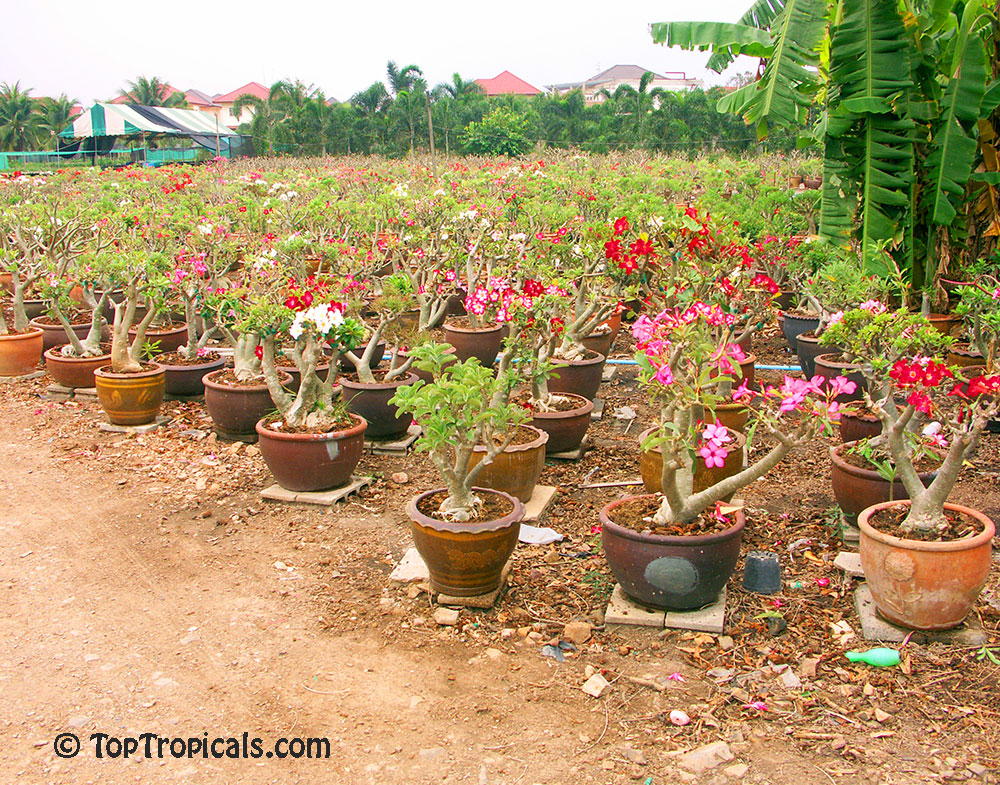
What you need for successful growing Adeniums
1) Adenium plants - from TopTropicals Endless selection of
Adeniums. We have double flower, red, purple, yellow
and even black flowers!
2) A small pot with excellent drainage is a must.
Position the plant in a pot, size of root system.
3) Adenium soil mix. TopTropicals Adenium Soilless Mix.
Use only well-drained soil.
4) Lots of light. Adeniums need lots of light for
heavy flowering. However from our own experience, in super
hot climates, they look healthier in filtered bright
light. After initial planting, once the plant is
established and starts growing new leaves (may take a few
weeks), gradually move it into brighter light.
5) Little water. Adeniums like a neutral to hard
water. Acidic water tends to sour the soil too fast and
may cause root rot. Water plants preferably in the early
morning, and allow them to drink up throughout the day.
Watering can be done daily to every few days. Do not water
again until soil dries on surface. Never allow your plants
to sit in a saucer of water, but don't let them to dry out
too often - this causes adeniums to go into early
dormancy. Adeniums do not like both over-watering or
drying-out.
6) Fertilizer. To make your plant develop a large
swollen base/trunk, you'll need a good quality fertilizer.
Use slow-release granulated fertilizer
for overall plant health, and liquid water soluble
fertilizer for swelling up trunks that is also used to
increase flowering. It shouldn't be too high in nitrogen,
the middle number should be the highest (similar to
10-50-10). Never apply fertilizer directly on roots and do
not liquid feed when a plant is thirsty: always water
first slightly to avoid root burn and leaf drop. Do not
wet leaves.
7) SuperFood micro-elements. Besides
macro-nutrients provided by fertilizer, Adenium needs
micro-elements for balanced development of root system and
especially caudex: Sunshine-SuperFood.
8) SUNSHINE-BC. Spray leaves with SUNSHINE-BC once a month to
encourage young growth, profuse flowering and large
caudex.
9) Growing caudex. There is a secret how to create
a large swollen caudex: raise the plant a bit every time
you re-pot it, so that the upper part of roots will be a
little exposed. The plant will form more roots that will
go down.