Garden Blog - Top Tropicals

Date: 2 Nov 2025

Winter flowering trees and shrubs - all you need for winter color in your garden

🌺 Winter flowering trees and shrubs - all you need for winter color in your garden.


Many snowbirds ask what to plant when they’re here just for the season. The answer is simple: go for trees and shrubs that bloom in winter. Fall is the perfect time to plant them, so your garden bursts with flowers once the cool season arrives.

📱 We put everything in one place for you!


Check out this single YouTube Post with all our favorite winter-blooming trees and shrubs - your shortcut to a colorful garden this season:
http://youtube.com/post/UgkxRWCHqNDqrRIIwK_BAeWjfi3spnZK0EbA?si=LbNv_RhkKGkc0rxv
Save it for later and share it with your garden friends.

🌸 Videos on Winter flowering trees and shrubs:
👉 See more...

🛒 Want to grow your own winter color garden?


🟢 Join 👉 TopTropicals

Date: 5 Jan 2022

Five Favorite Winter Bloomers

#5. Parrots Beak

Gmelina philippensis - Parrots Beak. An extraordinary fountain-like shrub with pendant branches, large long leaves and exotic flowers comprised of yellow blossoms which emerge at the end of a tube-like structure of overlapping bracts. The flower resembles parrot's beak!

#4. Royal Queens Wreath

Petrea - Royal Queens Wreath, Tropical Wisteria. Spectacular tall clusters of purple flowers similar to those of Wisteria come in racemes reaching over 1 foot long!

#3. Chinese Hat

Holmskioldia sanguinea - Bronze Chinese hat. Rare variety with orange-bronze flowers. Unique flowers are the main interest: each is a narrow tube backed by a broad, circular calyx, just like an oriental hat!

#2. Jacaranda

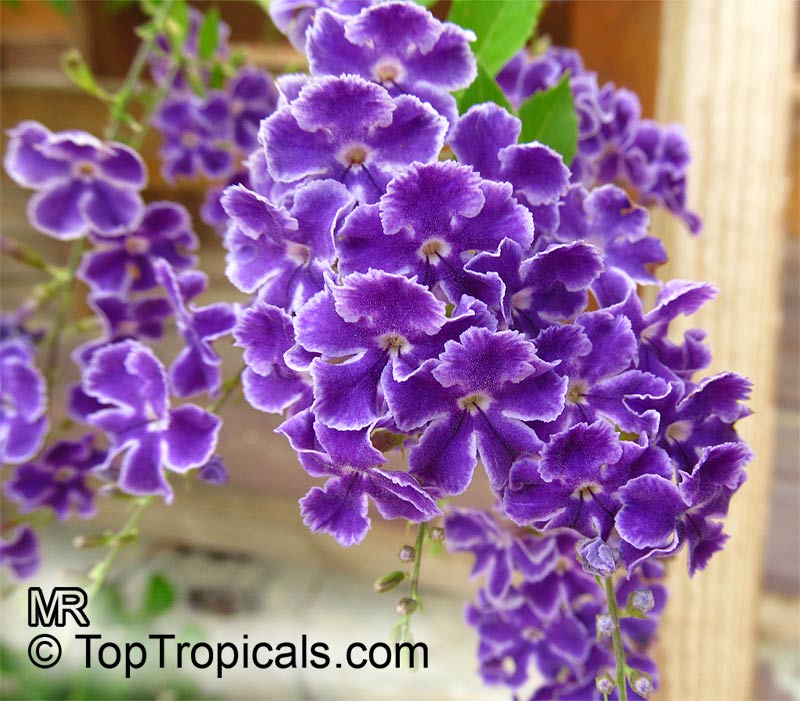
Jacaranda - all-time favorite winter flowering tree. Hypnotizing bluish-purple, trumpet-like flowers create the magical image of the tree...

#1. Royal Poinciana

Delonix regia - Royal Poinciana, Flamboyant. one of the most popular tropical trees covered with bright red orchid-like flowers from late winter through early summer. A must for any tropical garden, this tree however requires space since it spreads its branches 30-40 ft wide or more.

Date: 26 Jul 2020

The best grafted Loquat varieties
at 15% OFF for 3 days!

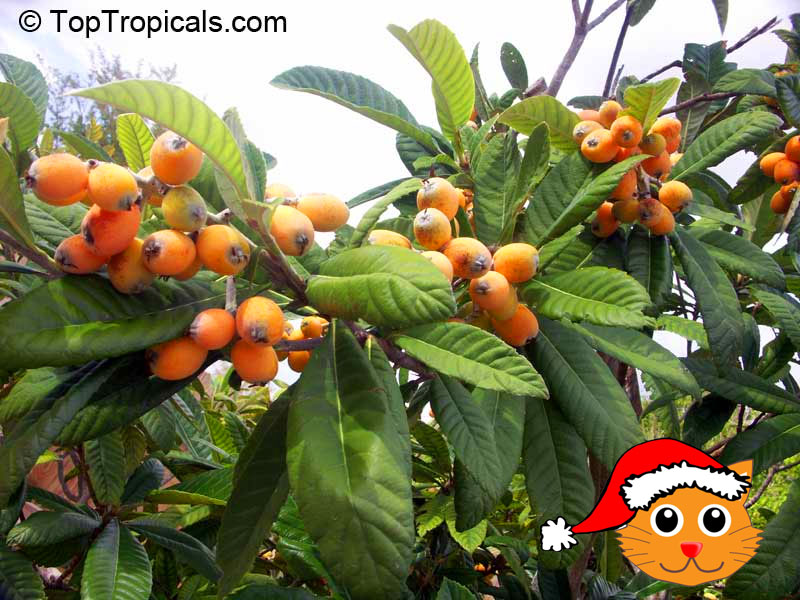
Q: I have a nice Loquat tree started from seed. I understand it will not bear fruit unless grafted. Can you graft the tree in your nursery? If this is not possible let me know the cost of Loquat tree and I buy it from your nursery.

A: From our experience, Loquat trees grown from seed bear fruit much sooner (within 5-6 years) than seedlings of such trees as Mango and Avocado (8-15 years). Also, unlike Mango and Avocado, the fruit quality of a Loquat seedling is usually not too bad. However, in order to have a tree with a superior fruit, it is recommended to plant grafted variety for a guaranteed tasty crop. If your seedling is already a large plant (with a trunk diameter over 5 mm), it may be too late to graft it, because quality graft requires fresh wood.
If you have plenty of room in your yard with enough space for both grafted tree and a seedling, you may still plant the seedling in the ground and give it a chance to produce in a few years. If your garden space is limited, we recommend you to plant a grafted variety and enjoy fruit as soon as the next year.

The most popular grafted Loquat varieties, heavy producers:
Champagne
Christmas
Gold Nugget
Yehuda

SALE: 15% OFF now, no min. order!

- $20% OFF discount code PARENTS2020 for orders over $200
- 5% automatically off all orders over $100
= make it a steal!

Offer expires 7-28-20

If you are local, stop by our Garden Center and we will pick the biggest and the best tree for you. Or just order online and get it in just a few days to your doorstep!
See full list of Loquat varieties available at the moment.

Date: 31 Jul 2025

Anthurium Collector Set

Giant  Bird's  Nest,  Long  Leaf,  and  Black  Dragon  Anthuriums  side  by 


side,  showcasing  their  dramatic  foliage  and  size

These aren't your typical tropicals - they're collector-grade Anthuriums grown for foliage and texture. Each one brings something different, but they all thrive in the same kind of setting: shade or filtered light, warmth, and humidity. Perfect for growing in containers indoors or out.

Anthurium Black Dragon

This is the most dramatic of the trio. Upright, leathery leaves shift from dark green to nearly black depending on light. Instead of bright flowers, it produces a dark brown spadix and glowing red berries. A hybrid not found in the wild, it's grown from seed - no two are exactly alike.

  • Best for: Indoor focal plant, shaded patio, black ceramic pot
  • Height: 2–4 ft in container
  • Texture: Thick, architectural leaves
  • Highlight: Color shifts with light intensity

Grow Your Own Black Dragon

Read more about Black Dragon Anthurium

Anthurium hookeri – Giant Bird's Nest

This one's about scale. Broad, crinkled leaves with a cardboard-like texture form a bold rosette. It can get huge with time - up to 6 feet across. Perfect for gardeners who want the "instant jungle" look.

  • Best for: Shaded garden, large pots on porches
  • Height: Up to 5 ft; width even more
  • Texture: Wrinkled and leathery
  • Highlight: Bright red berries in maturity

Buy Giant Bird's Nest Anthurium

Read more about Giant Bird's Nest Anthurium

Anthurium vittariifolium – Long Leaf Anthurium

Graceful and rare, this species sends out narrow strap-like leaves that can reach 5–6 ft long. Ideal for hanging baskets or mounting. Bonus: it produces small pink fruit against deep green foliage.

  • Best for: Hanging displays, vertical planters, bright bathrooms
  • Height: Leaf length, not upright height - up to 6 ft
  • Texture: Smooth, ribbon-like
  • Highlight: Cascading growth and color contrast

Buy Long Leaf Anthurium

Read more about Long Leaf Anthurium

✅ How to Care for Anthuriums

  • Light: Bright, indirect light is best. Avoid direct sun, especially mid-day. These plants evolved in rainforest understory - think "dappled light under trees."
  • Water: Keep the soil lightly moist but not soggy. Let the top inch dry before watering. They hate wet feet.
  • Humidity: These are tropicals - they'll do fine in 50-60% humidity, but thrive at 70%+. Use pebble trays or place near other plants. Bathrooms with windows work great.
  • Soil: Use an airy mix: orchid bark + perlite + peat or coco coir. Drainage is key. Never use plain potting soil.
  • Fertilizer: Feed with SUNSHINE Robusta every 2–4 weeks during warm seasons. It's formulated for aroids and won't burn roots.
  • Potting: Use shallow, wide containers. Repot only every 2–3 years, or when roots crowd the pot. They don't like frequent disruption.
  • Temperature: Ideal: 65–85 F. Short dips to the 30s F are tolerated by mature plants, but avoid cold drafts.

Shop All Anthuriums

Date: 23 May 2024

The Magic of 3 top tropical trees
from the legends of Caribbean

Yellow Poinciana, Jacaranda, and Royal Poinciana:
Three happy colors of the Tropics

paintings  of  3  top  tropical  trees  -  Royal  Poinciana,  Yellow  Poinciana,  and 


Jacaranda

While traveling through the vibrant and diverse Caribbean, we acquired three exquisite local paintings. Two of these are masterfully rendered on jacaranda wood plates, and the third is beautifully crafted on a calabash. These stunning pieces of art celebrate the three most spectacular and revered flowering trees of the Tropics: Yellow Poinciana, Jacaranda, and Royal Poinciana.

These trees are not only visually stunning but also deeply embedded in Caribbean culture, legends, and folk remedies.

The Yellow Poinciana, with its bright golden blossoms, is often associated with joy and sunlight, symbolizing the warmth of the Caribbean spirit.
The Jacaranda, known for its striking lavender-blue flowers, is a symbol of wisdom and rebirth, often blooming in a breathtaking display that signals the change of seasons.
The Royal Poinciana, with its fiery red and orange flowers, is a symbol of passion and energy, often referred to as the "Flamboyant" tree due to its bold and dramatic appearance.

These trees hold a special place in the hearts of the Caribbean people. They are featured in numerous local stories and songs, and their flowers and leaves are used in traditional remedies and rituals. Owning these paintings feels like possessing a piece of the Caribbean's soul and its natural beauty.

Now, we are fortunate to have not only the paintings but also the actual trees. Watching them grow and bloom in our garden brings a piece of the Caribbean to our home, a constant reminder of our travels and the vibrant culture we experienced. These trees and their representations in art are a testament to the region's rich heritage and its enduring connection to nature.

Get them now while we have them. No need to go too far into Caribbean!

Peltophorum  africanum  -  Golden  Flamboyant,  Yellow  Poinciana

Peltophorum africanum - Golden Flamboyant, Yellow Poinciana. An excellent garden shade tree, beautiful in flower. This variety starts flowering at young age, in 3 gal pot.

Jacaranda  mimosifolia  (acutifolia)

Jacaranda mimosifolia - Hypnotizing bluish-purple, trumpet-like flowers create the magical image of the tree. Incredible, long-lasting purple blooms. When the trumpet-shaped blooms finally fall, they form a lilac carpet beneath the awe-inspiring Jacaranda for luxuriant curb appeal...

Royal  poinciana,  Flamboyant  tree,  Delonix  regia

Royal poinciana, Flamboyant tree, Delonix regia - "One of the most spectacular flowering trees in the USA, and probably among the top 10 on this planet. In full bloom, it is like a regal elephant caparisoned in red and yellow brilliance." (Larry M. Schokman, The Kampong, National Tropical Botanic Garden)