Garden Blog - Top Tropicals

Date: 15 Jan 2026

When the Black Bat Lily decides to bloom
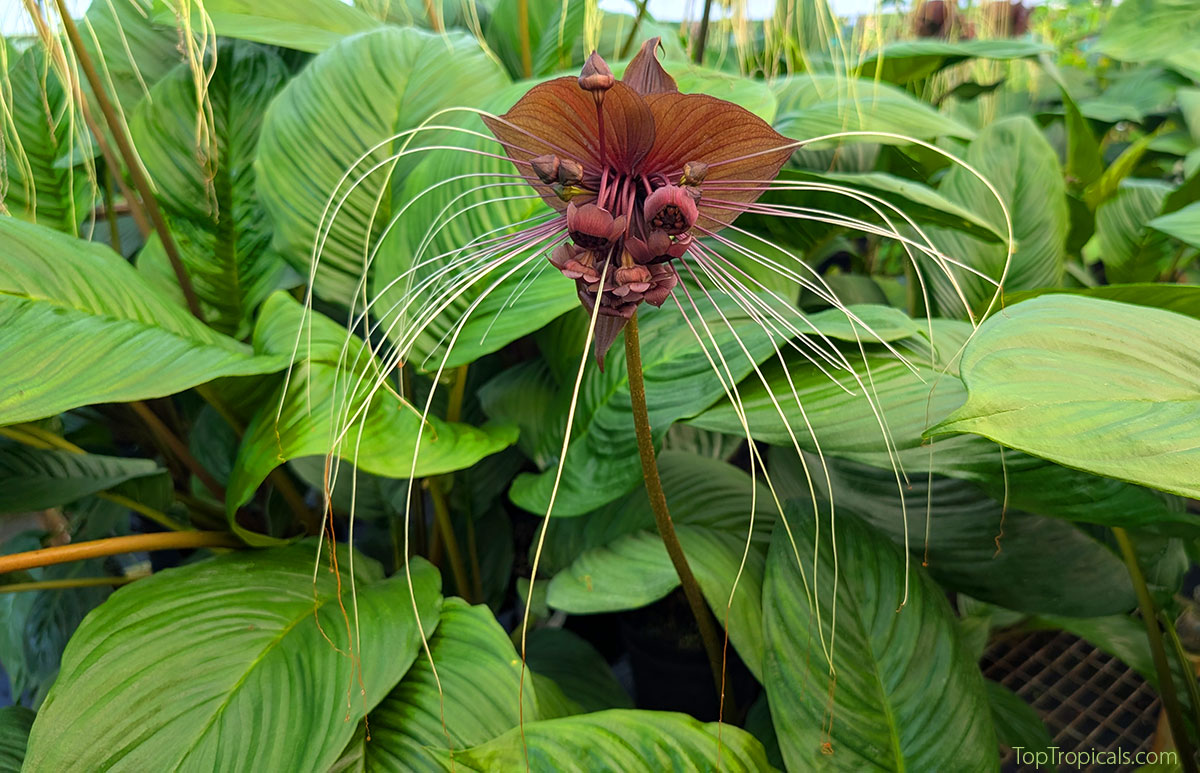
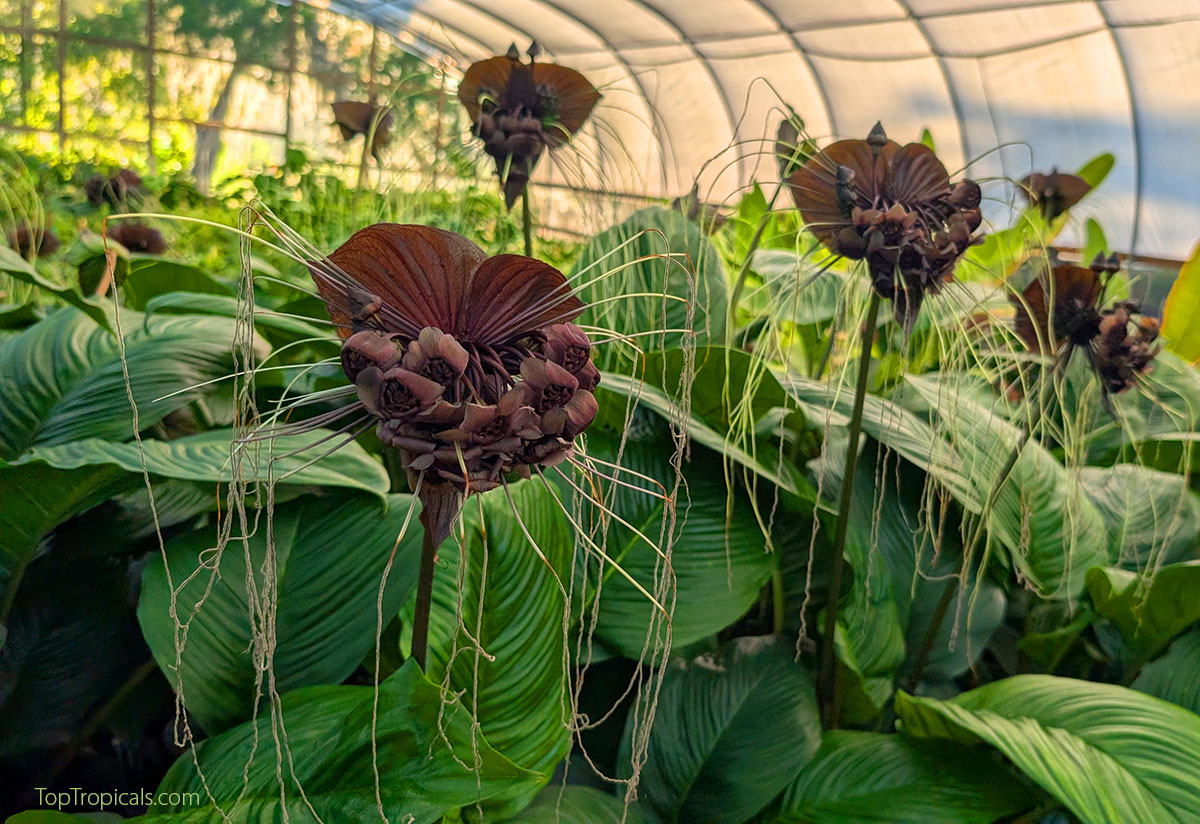
Blooming  Black  Bat  Lily  (Tacca  chantrieri)  with  dark  bat-shaped  flower 
 and  long  whisker-like  filaments  surrounded  by  green  leaves

Every so often a plant blooms and the whole greenhouse seems to slow down.

That is what happened this week with the Black Bat Lily, Tacca chantrieri. We have grown Taccas for years, but when the black ones open properly, it still feels special. The flowers are dark and quiet, almost unreal up close. They do not shout for attention. They make you lean in.

Right now, we have a lot of them blooming at the same time. If you have never seen one in person, photos only get you part of the way there. The wings are darker than you expect, and the whiskers seem to go on forever. People walk into the greenhouse, stop, stare, and usually ask the same question: "Is that real?" - Yes. It is.
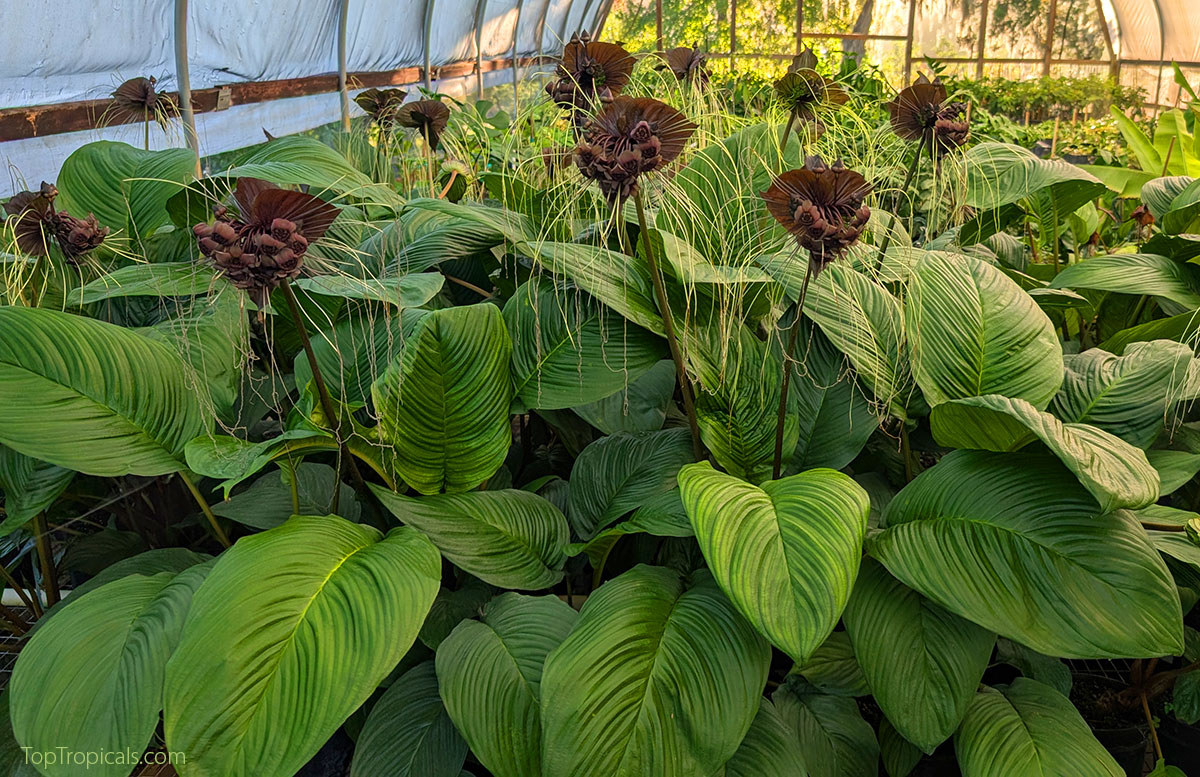
Group  of  blooming  Black  Bat  Lily  plants  (Tacca  chantrieri)  with  dark 
 bat-shaped  flowers  and  long  whisker-like  filaments  in  a  greenhouse

A quick honest note, because this matters. The blooms themselves are delicate and may not travel well. That is just the nature of this plant. The plants, however, are strong, well established. With the right conditions, they bloom again. This is not a one-time trick.

Black Tacca is not a beginner houseplant, but it is also not impossible. It likes filtered light, steady warmth, and humidity. It does especially well in a greenhouse or a bright indoor spot where you already keep plants that enjoy moisture. It is the kind of plant you keep close, not one you forget in the corner.

We are offering them now simply because they are ready and looking their best. If you have been waiting for one, this is a good moment.

You can see the Black Bat Lily here: https://toptropicals.com/store/item/2345.htm

Just wanted to share something we are enjoying in the greenhouse right now. Some plants come and go. Some stay with you.

Tacca (Bat Lily) FAQ

What is Tacca?

Tacca, also known as Bat Lily or Devil Flower, is a tropical plant grown for its unusual bat-shaped flowers with long whisker-like filaments. The most popular species is Tacca chantrieri, the Black Bat Lily.

Is Tacca hard to grow?

Tacca is not a beginner plant, but it is not impossible. It does best with warmth, humidity, and filtered light. Gardeners who already grow orchids, calatheas, or other humidity-loving plants usually do well with Tacca.

Does Tacca need a greenhouse?

A greenhouse is ideal, but not required. Tacca can be grown indoors in a bright spot with indirect light and good humidity, such as near a humidifier or in a bright bathroom with a window or skylight.

Will my Tacca arrive in bloom?

Plants may be blooming in the greenhouse, but flowers are often removed before shipping because they are delicate and do not travel well. The plants are well established and capable of blooming again with proper care.

How often does Tacca bloom?

Tacca does not bloom constantly. It may take time to establish before flowering, but once settled, it can bloom seasonally and may produce multiple flowers in warm, humid conditions.

Does Tacca grow from a bulb?

Tacca grows from a rhizome, not a bulb. The rhizome stores energy and allows the plant to regrow and bloom again.

Why does Tacca have long whiskers?

The long filaments are thought to help attract pollinators such as flies by mimicking the look of decaying organic matter. While unusual, this is part of the plant's natural pollination strategy.

✍️ More about growing Tacca
🛒 Get your own Tacca plant
🎥Watch our videos about Tacca

Date: 7 Oct 2025

🌸 Caring for Winter-Blooming Trees

Smokey  the  tuxedo  cat  plants  a  young  Bauhinia  blakeana  tree  in  the 
 ground  while  Sunshine,  a  ginger  cat,  relaxes  in  a  wicker  recliner  with  a  cup
    of  pumpkin  latte.  A  Callistemon  Little  John  bottlebrush  blooms  beside  him, 
 surrounded  by  pumpkins,  autumn  leaves,  and  warm  golden 
 light.

Tips from Top Tropicals Plant Expert - Tatiana Anderson

When northern gardens fade into gray, our tropicals wake up. Winter is color season here - and even if you live up north, you can still enjoy these same flowering trees indoors or on a sunny patio.

From the fiery Royal Poinciana to the golden Tabebuia and violet Jacaranda, these eight trees prove that winter can bloom anywhere

How to Care for Winter-Flowering Trees

We're often asked, at Top Tropicals, “Can I really grow tropical trees in winter?” Yes — with the right light and care, you can. Here’s what works best both outdoors and indoors, according to our expert, Tatiana Anderson.

🌡️ Fall Planting Guide

Let’s talk about timing, because that’s the part most people get nervous about. Everyone asks: “Isn’t it too cool to plant now?” — and the answer is no! Fall and early winter are actually the best months for tropicals in Zones 9 to 11.

Here’s why: the air has cooled off, but the soil is still warm. Roots love that combination. They quietly spread underground while the rest of the plant takes a break. By spring, those roots are ready to feed a burst of new growth — and that’s when you’ll see the first big flush of flowers.

Pick a sunny spot that gets plenty of light — six to eight hours if you can. Loosen the soil and mix in compost or pine bark so it drains well. Dig a hole about twice as wide as the pot and just as deep. Set the plant level with the ground, backfill, and water it deeply to settle everything in. Then add mulch — two or three inches is plenty — but keep it away from the trunk so it can breathe.

Tatiana’s tip: “Fall planting builds roots while everyone else is resting. By spring, your tree wakes up ready to grow.”

🌳 Outdoor Care (Warm Climates Zones 9–11)

Now, let’s talk about what happens after planting — because real gardening starts once the plant is yours. Tropical trees thrive on routine: steady sunlight, deep watering, and just a bit of attention.

Water them about once a week when the weather is mild, more often if it’s dry or windy. Always check the soil first — if it feels dry two inches down, go ahead and water. Mulch helps more than most people realize — it keeps roots cool in summer and warm in winter, and it saves you from watering as often.

Now, for those of you in Zone 9, here’s the truth: your trees can take a chill, but they don’t love surprises. A quick night in the upper 20s F won’t hurt mature plants, but young ones appreciate a little help — a frost cloth or being planted at the south side.

And don’t underestimate the wind. Cold, dry gusts can burn leaves faster than frost. Use fences, hedges, or taller shrubs as windbreaks, and take advantage of microclimates — those warm pockets next to the house, brick patios, or corners that get extra afternoon sun.

Tatiana’s tip: “A tropical garden in Zone 9 isn’t about fighting nature — it’s about cooperating with it. Find the warm corners, protect from the cold wind, and your trees will thank you with flowers all winter.”

🏚️ Indoor & Patio Care (Cooler Climates)

For our northern friends — yes, you can grow tropicals indoors! You just need good light, warm air, and a little attention.

Pick a large pot, with drainage holes and a light tropical soil mix. Place it in a bright window — south or southwest if you can — or under grow lights for about 12–14 hours a day. Keep temperatures between 65 and 85 F, and water when the top inch of soil dries out.

Misting helps keep leaves clean and adds humidity. Rotate the pot every couple of weeks so all sides get sun. In summer, move your plant outdoors gradually so it can enjoy real sunlight — then bring it back in before nights drop below 40 F.

Tatiana’s tip: “Don’t be afraid of growing trees in pots. They adapt beautifully — just select the right trees and pay attention to their needs.”

✔️ Learn more: Secrets of Winter planting - tropical planting breaks the rules.

🎥 Watch short videos about Winter Bloomers:

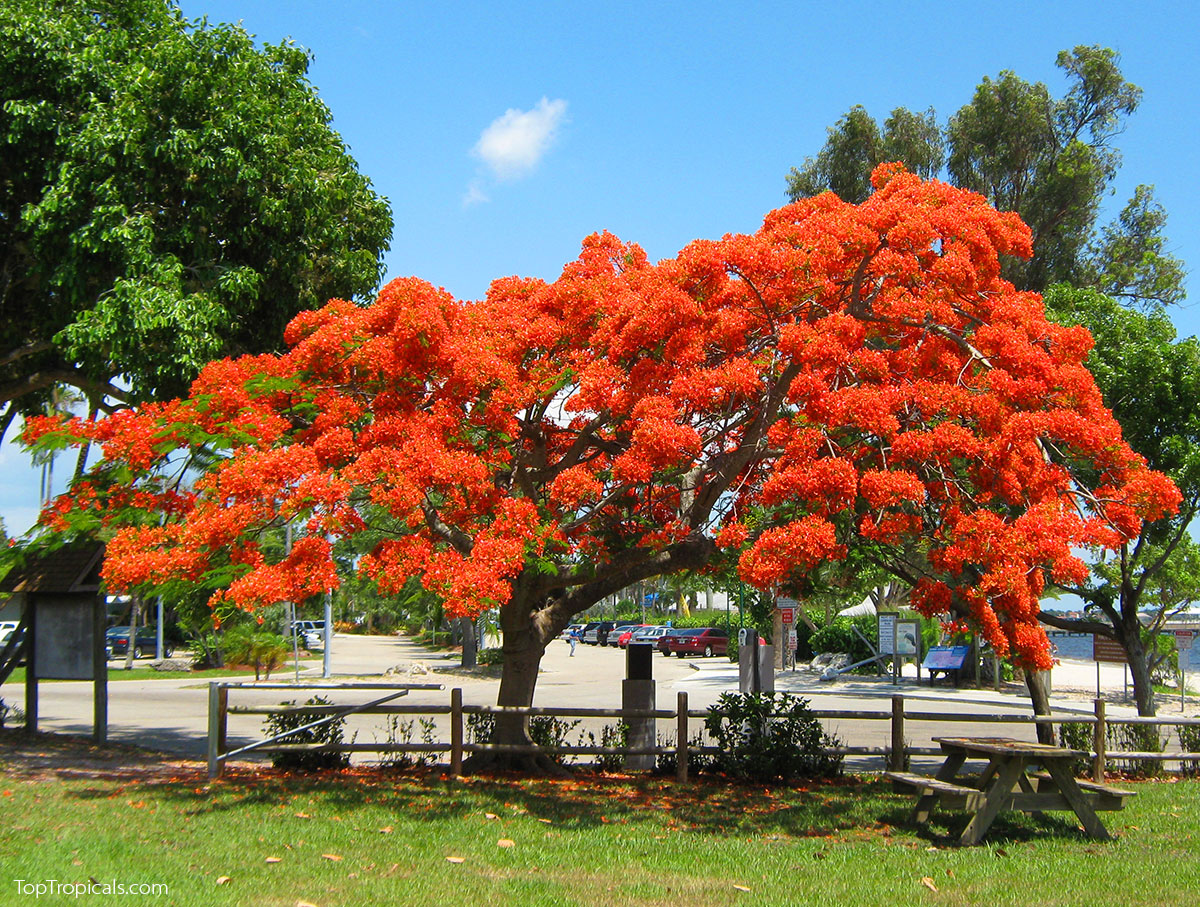
Royal  poinciana,  Flamboyant  tree,  Delonix  regia

💲 Special Offer – 20% off Winter Bloomers!

Get 20% OFF winter bloomers with code

BLOOM2025

Min order $100. Excluding S/H, valid online only, cannot be combined with other offers.

Hurry, offer expires October 13, 2025!

👉 Explore Winter Flowering Plants

Date: 31 Oct 2025

👻 When plants grow wings...

Smokey  the  black-and-white  tuxedo  cat  stands  upright  holding  a  glowing 
 jack-o'-lantern  filled  with  tropical  fruit,  while  Sunshine  the  fluffy  ginger
    tabby 
 lounges  in  a  hammock  under  string  lights,  sipping  cocoa.  Around  them  are 
 pumpkins,  lanterns,  and  tropical  plants  under  a  warm  twilight  sky.

🌴 Twilight in the garden. Smokey is holding a glowing pumpkin. Sunshine is sipping cocoa.

Sunshine: "Smokey, why does that plant look like it wants to fly away?"
Smokey: "That’s the Bat Lily - Tacca. It’s rare, it’s weird, and it’s in bloom just in time for Halloween."
Sunshine: "Figures. You always find the spooky ones."

Meet the Bat Lily (Tacca)

Tacca is also called the Bat Lily or Devil Flower. This tropical wonder grows bat-shaped wings and foot-long whiskers. The black form (Tacca chantrieri) looks straight out of a gothic dream, while the white one (Tacca nivea) is ghost-like and elegant.

Some of our plants are blooming right now in the nursery — true Halloween magic! Blooms are delicate and may not travel, but the plants are strong and will flower again soon in your care.

Black  Bat  Lily  (Tacca  chantrieri)  plants  in  bloom  inside  the  Top 
 Tropicals  greenhouse,  showing  dark  maroon  bracts  and  long  pale  whiskers 
 rising  above  large  green 
 leaves.

Black Bat Lily (Tacca chantrieri) with dark maroon wings and long whiskers

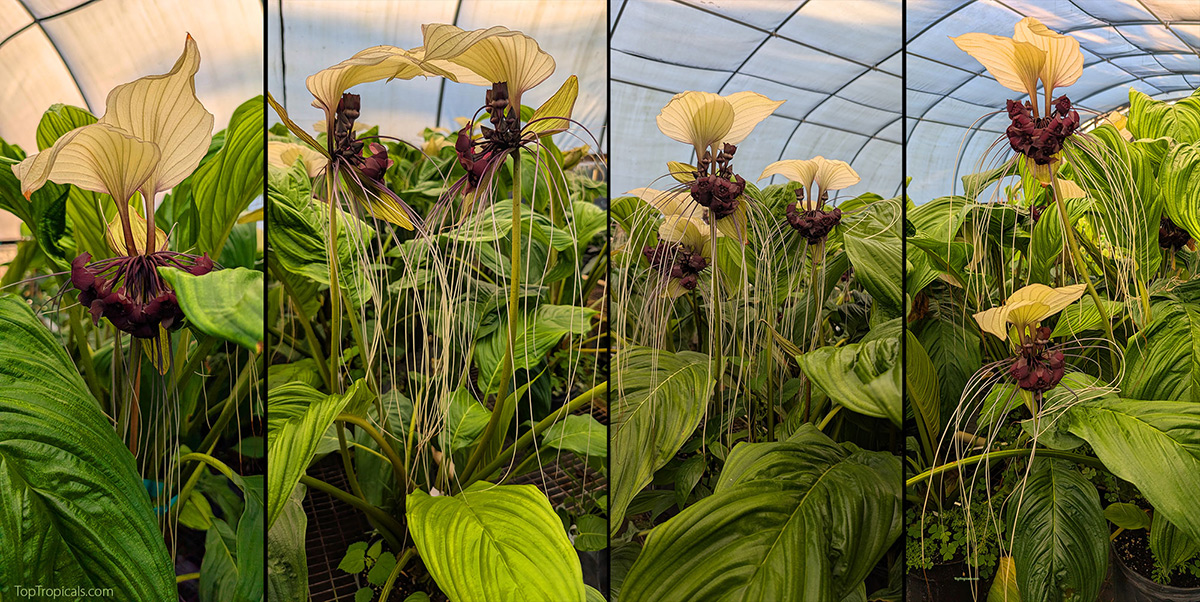
Close-up  of  White  Bat  Lily  (Tacca  nivea)  plants  in  a  greenhouse  at  Top 
 Tropicals,  showing  large  white  bracts  and  long  trailing  whiskers  above 
 glossy  green 
 leaves.

White Bat Lily (Tacca nivea) in bloom with wide ivory wings

"The White Bat Lily (Tacca nivea) is bold and sculptural, with oversized ivory wings that command attention. Its pale bracts stretch wide above clusters of deep maroon flowers, and long, silvery whiskers spill gracefully through the foliage. In filtered light, the plant seems to glow from within — elegant, crisp, and perfectly balanced between the strange and the beautiful. If I could pick, I’d go with the White Tacca. It feels more architectural, more balanced — those oversized wings catch light in a way that shows off every vein and curve. It looks engineered by nature, almost like an alien design prototype that actually works.

The Black Bat Lily (Tacca chantrieri) feels alive with shadow. Its dark maroon wings and wiry whiskers make it look like something that fluttered out of the jungle at dusk. The bloom’s layered structure and near-black sheen give it a quiet power — mysterious, understated, but impossible to ignore. But if I were designing mood lighting for a greenhouse at night, the Black Tacca wins. It’s subtle, mysterious, like a secret only visible up close. Together, they’re perfect opposites — yin and yang of the tropical underworld: white for daylight, black for moonlight." — says Tatiana Anderson, Top Tropicals Plant Expert

Special Offer: Discounts on Rare Tacca Plants

Grow your own Bat Lilies — White or Black — at a special Halloween price!

Get 25% OFF Tacca plants with code

TACCA2025

Min order $25 (excluding S/H), valid online only, cannot be combined with other offers.

Hurry, offer expires November 03, 2025!

🎃 Storewide Halloween Sale – For Everything Beyond Tacca

Not into spooky plants? Enjoy savings on all other tropical plants across the store!

Get 15% OFF tropical plants with code

HALLOWEEN2025

Min order $100 (excluding S/H), valid online only, cannot be combined with other offers.

Hurry, offer expires November 03 2025!

👉 Collect Tacca plants:

Black - Tacca chantrieri

White - Tacca nivea

Green - Tacca leontopetaloides

Date: 12 May 2026

The strange tropical plant that eats bugs - and gardeners cant stop collecting

The strange tropical plant that eats bugs - and gardeners cant stop collecting The strange tropical plant that eats bugs - and gardeners cant stop collecting The strange tropical plant that eats bugs - and gardeners cant stop collecting

🐸 The strange tropical plant that eats bugs - and gardeners can't stop collecting


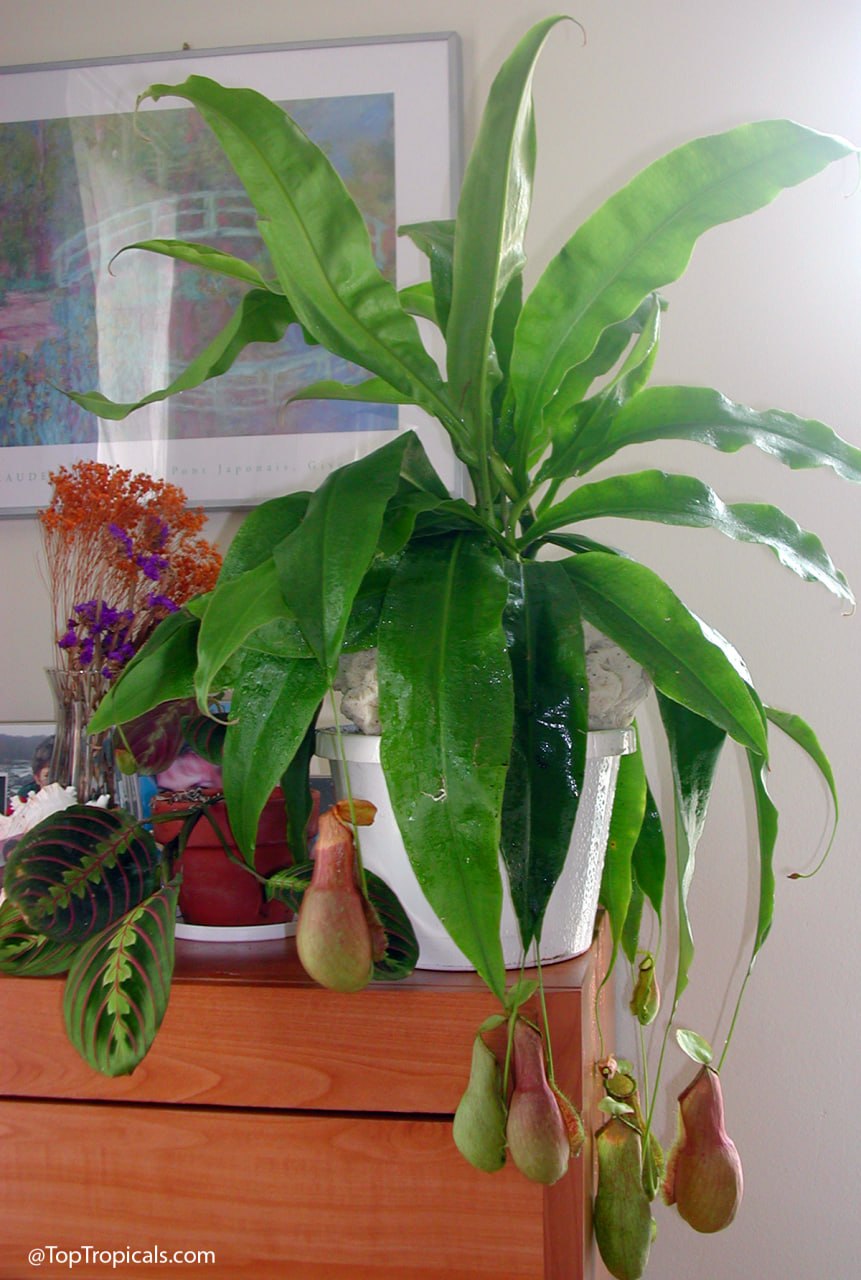
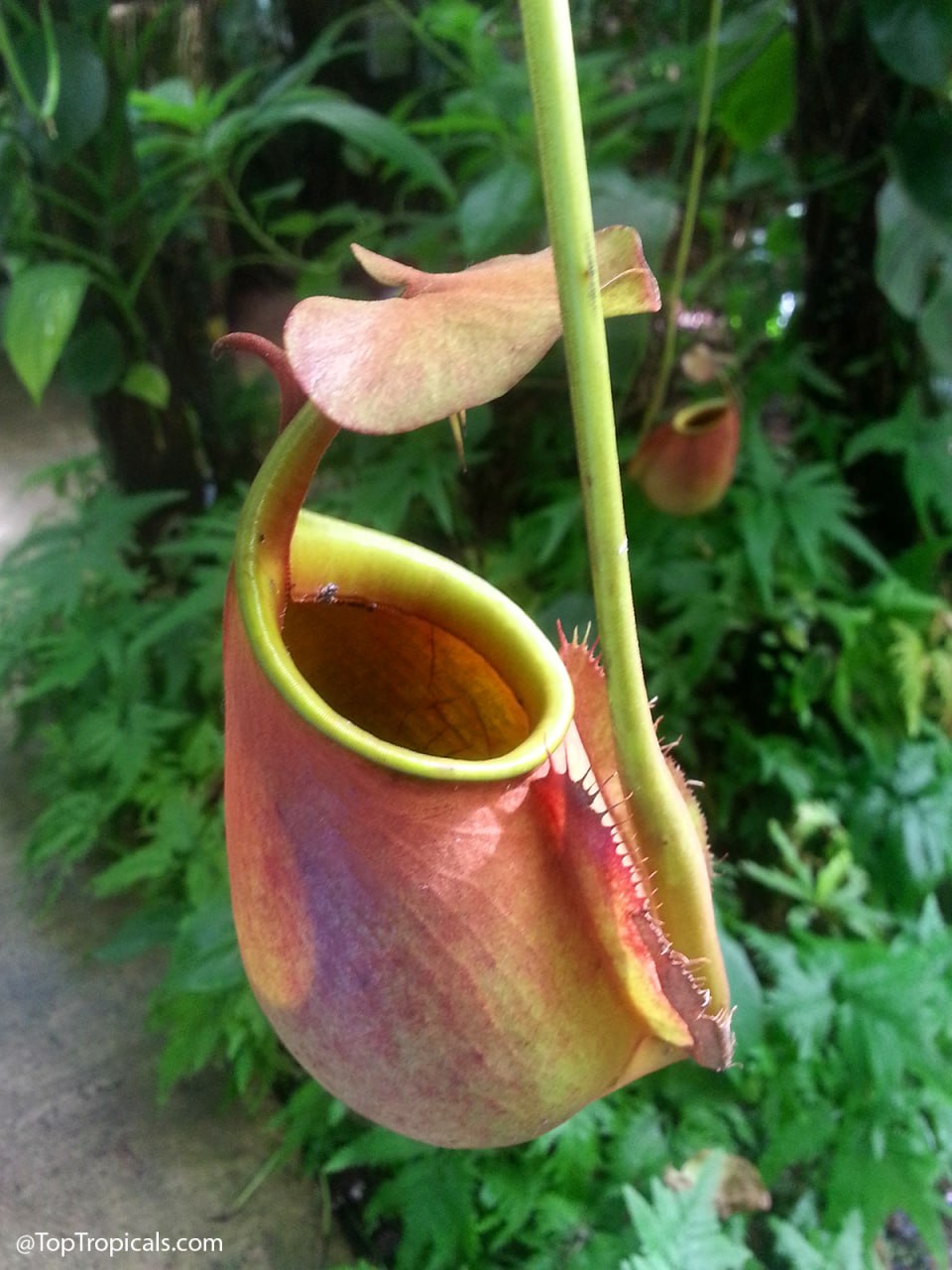
Nepenthes - tropical Pitcher Plants - look almost fake. Long vines and shiny leaves give way to colorful pitchers resembling exotic lanterns or sci-fi creatures. But these aren't flowers; they are sophisticated traps. Among the world's most fascinating carnivores, they lure insects into fluid-filled vessels to digest them for nutrients. Giant species can even trap small frogs or mice! 🐸🐭

🐱 Why pitcher plants look so unreal


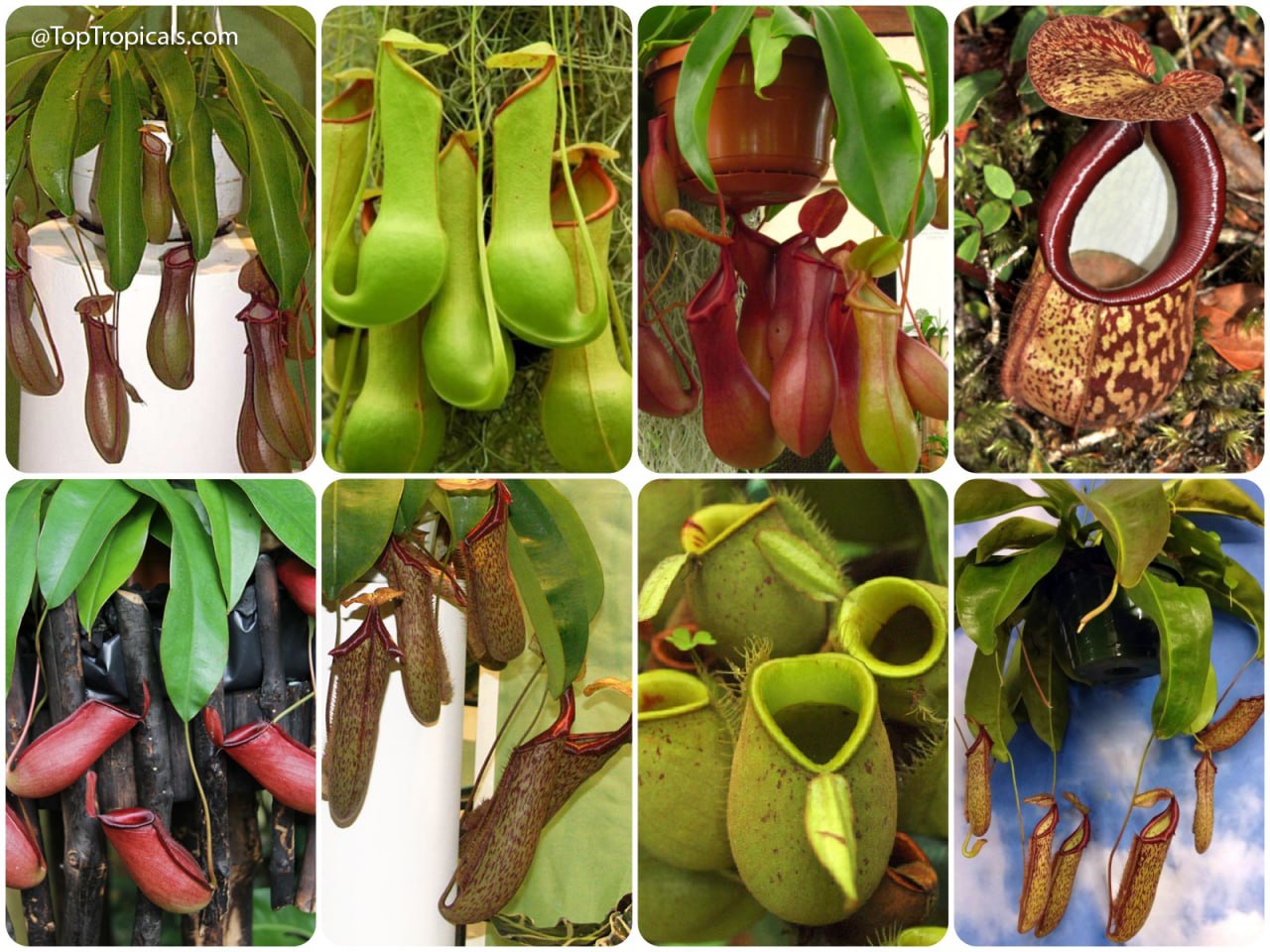
Pitchers are modified leaves designed to attract prey with vibrant colors and nectar. Many feature dramatic stripes or flared, sculpted rims. The diversity is immense: compact species fit on windowsills, while jungle giants produce foot-long traps. Some thrive in steamy lowlands, others in misty mountains. Their digestive fluid can even become sticky and elastic, making escape impossible.

🐱 The plant that inspired engineering


These plants have inspired more than just gardeners. Their slippery surfaces led to "liquid-infused" materials used in anti-fogging and water-repelling tech. Engineers study them as nature’s original biological pitfall trap, a masterclass in biomimetic design.

🐱 Why collectors become obsessed with Pitcher plants


What starts as a curiosity often becomes an obsession. With hundreds of species and hybrids, pitchers can resemble cobra heads, wine goblets, or alien pods. Under bright light, they develop stunning hues of burgundy, orange, or candy-stripes. Because of their popularity, ethical hobbyists emphasize buying nursery-propagated plants to protect wild populations from poaching.

🐱 Surprisingly easier than people think


Despite their reputation, many hybrids thrive indoors with basic care. They need bright indirect light, high humidity, and excellent drainage. Crucially, they require mineral-free water (distilled or rainwater) and airy media like sphagnum moss. Regular potting soil or tap water can be fatal to these sensitive plants.

🐱 The pitchers are temporary - and that's normal


It is normal for old pitchers to dry up as the plant grows. Healthy Nepenthes constantly replace traps, often changing shape and color as they mature. This shape-shifting behavior makes them addictive to watch - one month it’s an ordinary vine, the next it’s a living rainforest documentary.

🛒 Ready to go carnivorous? Feed your curiosity - get one for your collection

📚 Learn more:

Winged Nepenthes Plant Facts

Botanical name: Nepenthes alata, Nepenthes graciliflora
Also known as: Winged Nepenthes, Pitcher Plant
USDA Zone: 9 - 10
Highligths Vine or creeper plantSmall plant 2-5 ftSemi-shadeWatering: Regular. Let topsoil dry slightlyEpiphyte plantUnusual color
Get personalized tips for your region

Nepenthes Pitcher plants in Plant Encyclopedia
Nepenthes: Deadly traps of Monkey Cups

#Container_Garden #Nature_Wonders

🟢 Join 👉 TopTropicals

Date: 19 May 2026

The Tree That Looks Photoshopped (But Isnt)

The Tree That Looks Photoshopped (But Isnt) The Tree That Looks Photoshopped (But Isnt)
The Tree That Looks Photoshopped (But Isn't) 🌈

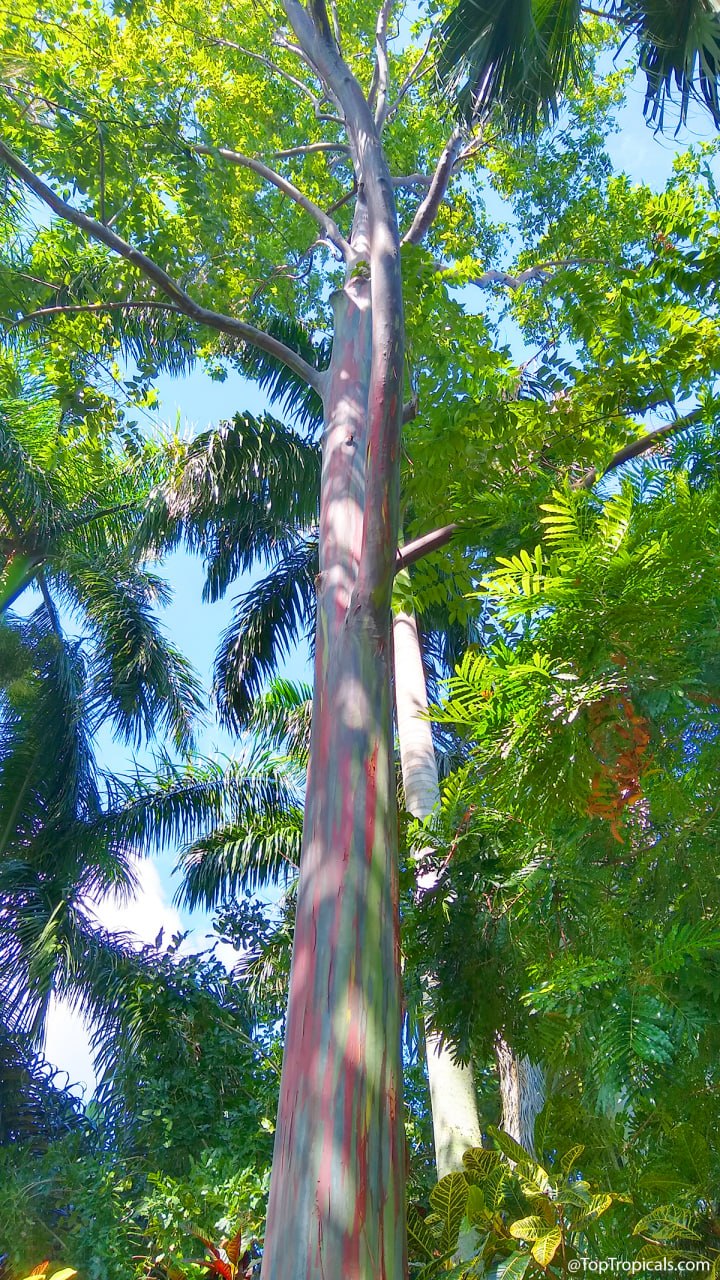
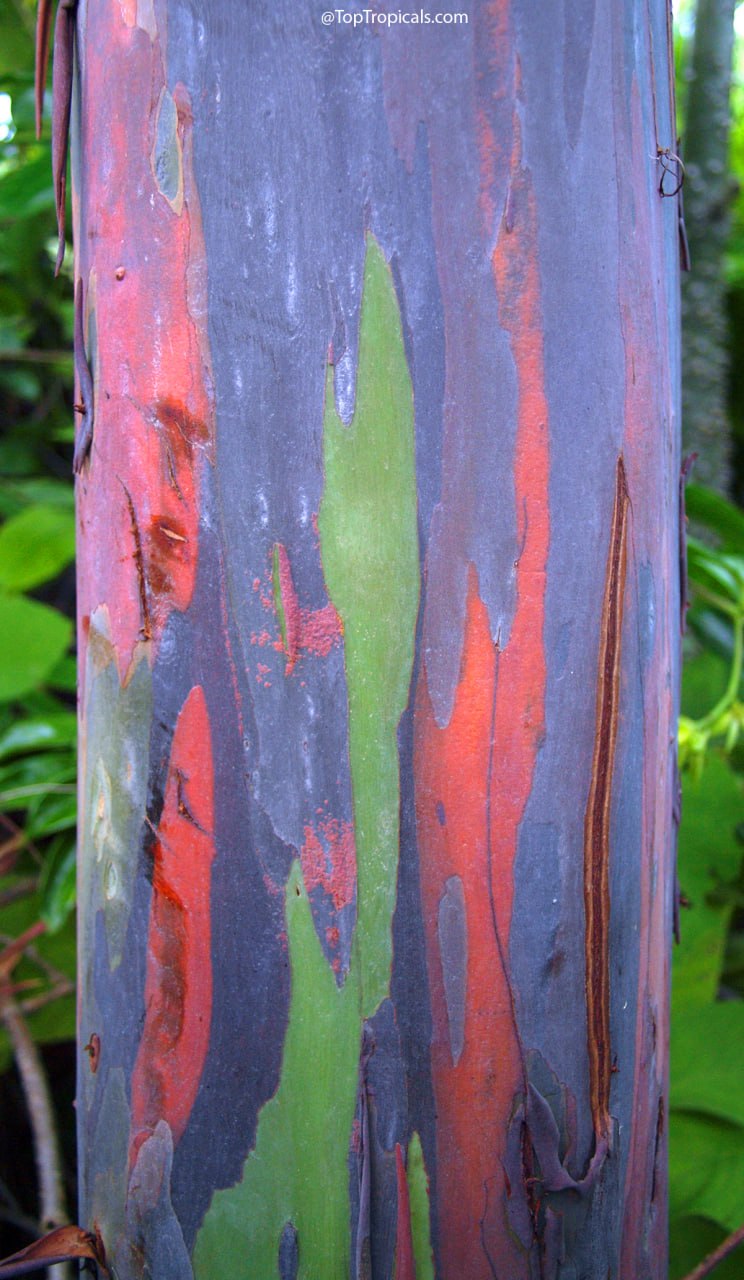
Most people see a photo of the Rainbow Eucalyptus and assume someone went heavy on the saturation filters. The trunk looks like an abstract artist got loose with neon greens, deep blues, purples, and burnt oranges - all on the same tree, all at once. It doesn't look real. But it is. And if you live in the right climate, you can actually grow one.

🎨 The Chemistry Behind the Watercolor Trunk


Eucalyptus deglupta does something no other tree quite pulls off at this scale: it sheds its bark in patches and strips throughout the year. While it seems entirely alien, this multi-colored, peeling bark is actually a family trait shared by many other members of the Myrtaceae (Myrtle) family - including common guava trees.

Rainbow Eucalyptus Plant Facts

Botanical name: Eucalyptus deglupta
Also known as: Rainbow Eucalyptus, Mindanao Gum, Rainbow Gum
USDA Zone: 10 - 11
Highligths Large tree taller than 20 ftFull sunWatering: Moderate. Water when top soil feels dryKeep soil moistRed, crimson, vinous flowersWhite, off-white flowersSpice or herb plantFlood tolerant plant
Get personalized tips for your region


However, the Rainbow Eucalyptus takes this family tradition to an absolute extreme. This constant shedding reveals a living, shifting canvas underneath:
The Fresh Layer: New bark starts out a shocking, vivid green because of the chlorophyll sitting just beneath the surface.
The Shift: As the bark is exposed to air, it oxidizes. Time and oxygen push the colors through a spectrum of blues, purples, and eventually into warm oranges and deep, reddish-browns.
The Living Canvas: Because different sections of the trunk shed at different times, the tree is never just one color. It looks like a living watercolor painting that's still drying.

🎨 A Rainforest Giant That Grows at Breakneck Speed


Native to the humid tropical rainforests of the Philippines, Indonesia, and Papua New Guinea, this isn't your average backyard sapling. In the wild, it can tower at nearly 200 feet tall.
While it stays a bit more manageable in residential landscapes, it remains fast-growing. If you give it full sun, rich soil, and plenty of humidity, a young tree can put on several feet of height per year.
Unlike its drought-tolerant Australian cousins, the Rainbow Eucalyptus loves water and can even handle occasional flooding. As a bonus, its leaves release a pleasant, spicy aroma when crushed, adding a sensory layer to its visual drama.

🎨 The Catch: It Hates the Cold


Before you run out to buy one, there is a major catch. While many eucalyptus species are surprisingly tough against the hard freeze, the Rainbow Eucalyptus is the tropical outlier of the family.

The Safe Zones: It thrives best in USDA Zones 10-11 (like South Florida and Southern California), where winters stay mild.
❄️ The Cold Threat: Hard freezes, frost, and biting cold winds will badly damage or kill it.

Can you grow it in colder climates? Yes, but you'll need a big container and a tall space to move it in. Many gardeners outside the tropics grow them in large pots so they can drag them indoors or into a greenhouse for the winter. It limits their ultimate size, but it keeps the theatrical effect alive.

🎨 Why It's Worth the Hype


If you are lucky enough to live in a climate where it can thrive, the Rainbow Eucalyptus makes the ultimate landscape centerpiece. Because its canopy is tall and airy rather than dense, it won't completely black out the sun for the rest of your garden. Instead, it just stands there looking impossible.

Photos actually undersell it. Standing next to the trunk in person, you find yourself looking for the trick. But there isn't one - just nature showing off.

🛒 Plant the Impossible Rainbow Eucalyptus

📚 Learn more: 


Eucalyptus deglupta - Rainbow Eucalyptus in Plant Encyclopedia

#Trees #Discover #Nature_Wonders #Fun_Facts

🟢 Join 👉 TopTropicals