Garden Blog - Top Tropicals

Date: 31 Jan 2026

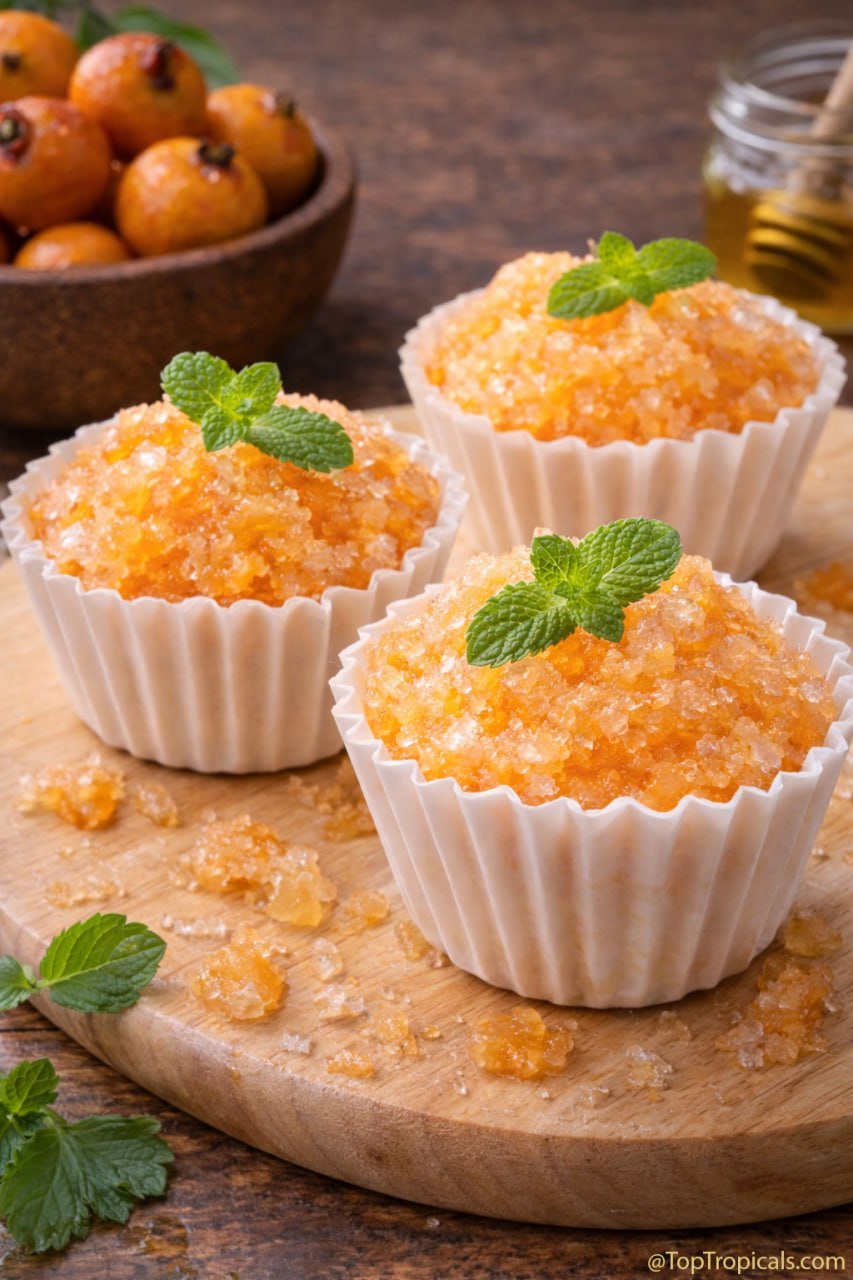
Pitomba pop cups: quick-n-fun exotic recipes

Frozen pitomba pops with mint

Frozen pitomba pops with mint

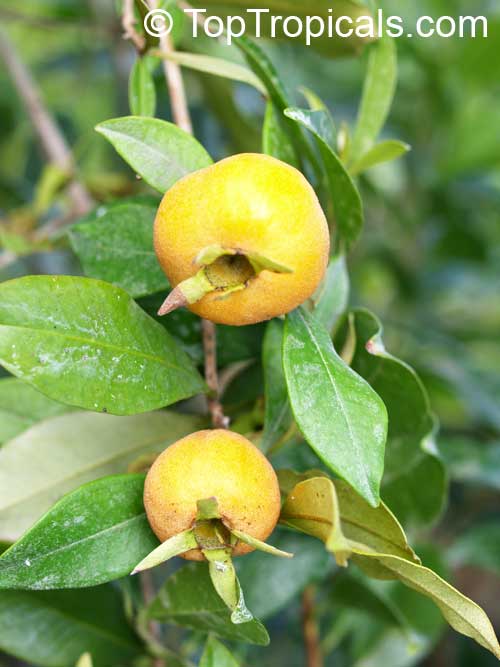
Eugenia luschnathiana - Pitomba

Eugenia luschnathiana - Pitomba

🍴 Pitomba pop cups: quick-n-fun exotic recipes


Pitomba Pop Cups

Ingredients

  • 1 cup pitomba pulp
  • 1 teaspoon honey
  • 1 tablespoon water
  • Fresh mint leaves (optional)

Instructions

  1. Scoop pitomba pulp into a small bowl.
  2. Mix with honey and a little water to soften the texture.
  3. Spoon the mixture into small cups or molds.
  4. Freeze until icy-soft.
  5. Serve topped with fresh mint for a refreshing tropical snack.


🌿 About the plant:


Pitomba (Eugenia luschnathiana) is a tropical fruit native to Brazil, prized for its bright, citrusy pulp with a sweet-sour kick. The flavor is often compared to a mix of apricot, citrus, and mild resin, making it refreshing and snack-worthy straight from the fruit.

Pitomba Plant Facts

Botanical name: Eugenia luschnathiana, Phyllocalyx luschnathianus
Also known as: Pitomba
USDA Zone: 9 - 11
Highligths Small tree 10-20 ftFull sunWatering: Moderate. Water when top soil feels dryWatering: Regular. Let topsoil dry slightlyWhite, off-white flowersEdible plant
Get personalized tips for your region


🌱 In the garden:


Pitomba grows as a small to medium-sized slow growing tree with glossy evergreen leaves. It thrives in warm climates, prefers full sun to light shade, suitable for USDA zones 10-11, it can also be grown in large containers and responds well to pruning, making it manageable for home gardens.

🛒 Plant exotic Pitomba cherry in your garden

📚 Learn more:


Eugenia luschnathiana - Pitomba - in Plant Encyclopedia

#Food_Forest #Recipes

🟢 Join 👉 TopTropicals

Date: 8 Feb 2024

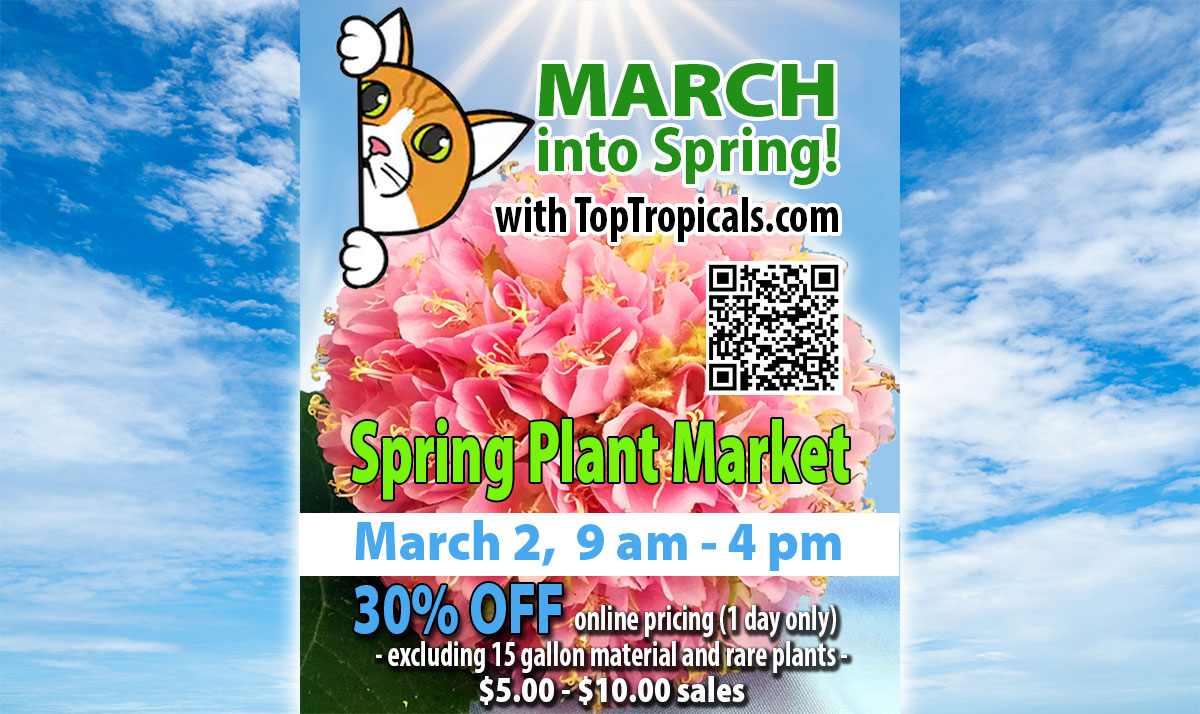
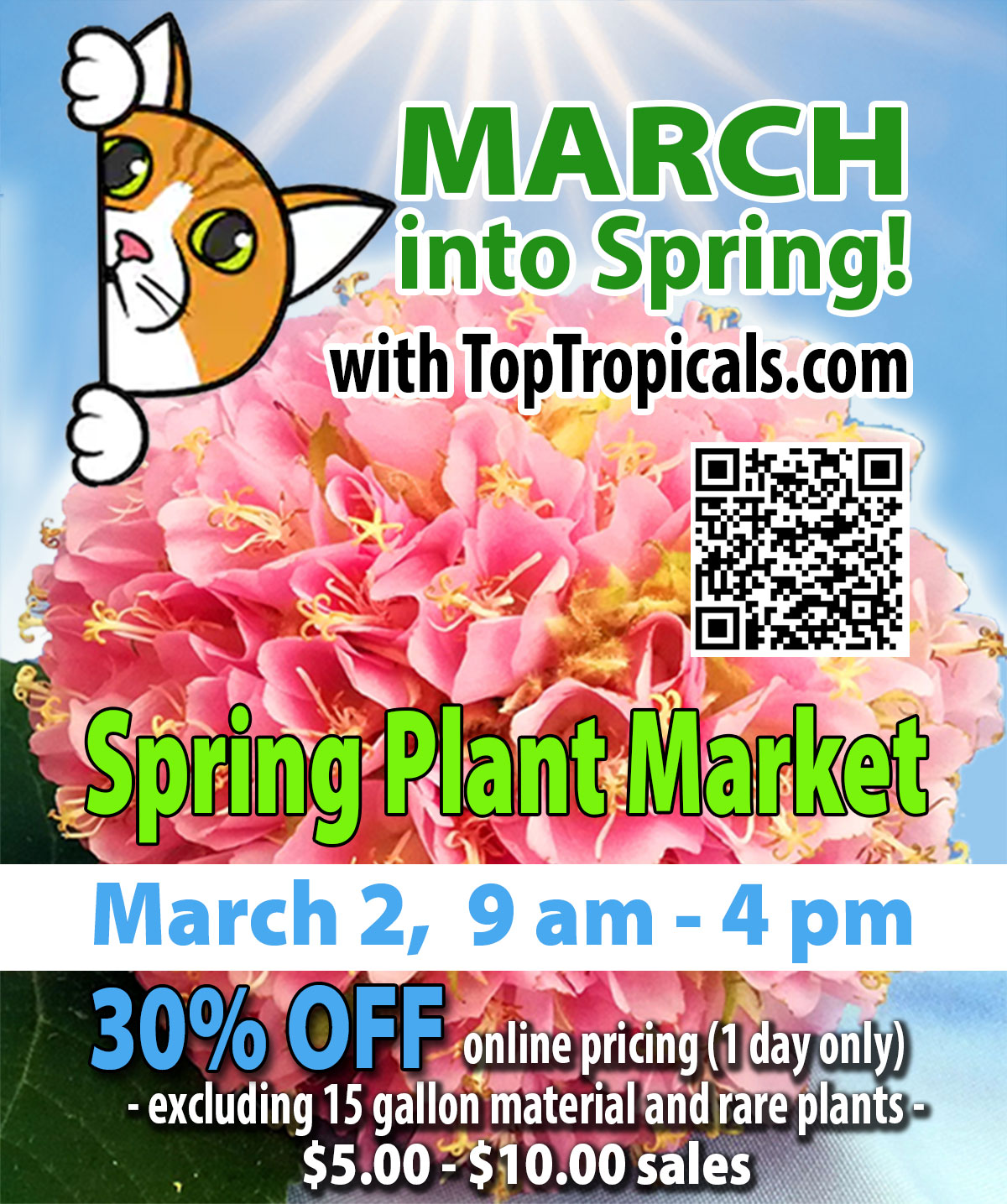
Mark your calendars: March 2, 2024

March  2,  2024  -  SATURDAY  -  Spring  Plant  Market:  March  into  Spring!

Plant Festival "March into Spring!"
Saturday, March 2, 9 am - 4 pm

Save the date! On March 2, 2024, join us for our vibrant Plant Festival, "March into Spring!"
Dive into a world of lush greenery, blooming delights, and rare fruit trees at our garden event. Discover unbeatable sales, exclusive deals, delightful gift bags, and receive free plants with every purchase.
Don't miss out on this opportunity to embrace the beauty of spring and elevate your garden to new heights!

Highlights of the event:

30% OFF online prices, one day only! (excluding 15 gallon material and rare plants)
Gift bags - for first 25 customers with $50 order
Secret Garden: Super savings area 50-70% off
$5 and $10 plants
Raffle
Free plant with any purchase as a token of our appreciation

Event discounts valid at both locations:

Ft Myers Garden Center: 13890 Orange River, Ft Myers, FL
Sebring B-Farm: 9100 McRoy Rd, Sebring, FL

Facebook event page - Download invitation

Cat  with  plants  in  a  bag

Date: 29 Sep 2020

Healthy Plant Food: Q&A from Mr Booster

Why my Sapodilla is not fruiting?
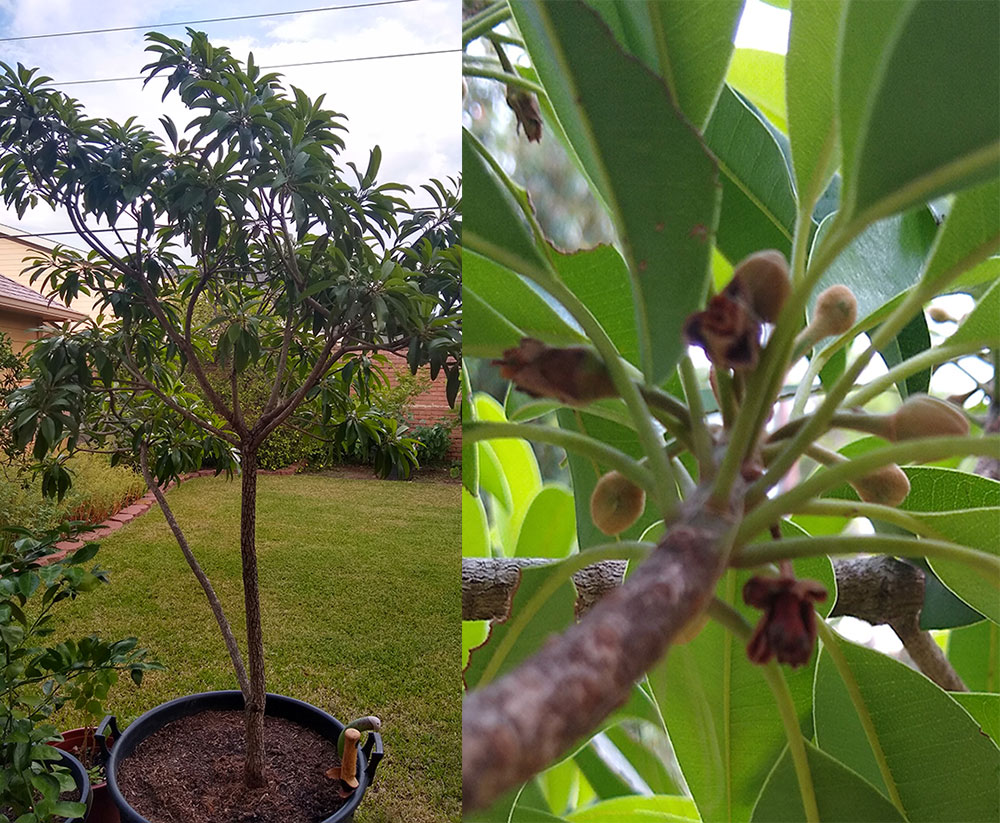
Q: I bought a Sapodilla tree from you several years ago, Silas Woods. I live in Houston area. The tree grows and produces blossoms for fruits, but then they just dry up and fall off. To-date, I have not gotten any fruits off the tree. Is there a reason for this? I really want a fruiting tree because Sapodilla is one of my favorite fruits. I have attached pictures of the tree. Please help.

A: Silas Woods is a free-flowering variety and in favorable conditions it should produce fruit almost year round, considering warm temperatures. The fact that the tree is producing flowers indicates that it is strong, overall healthy and ready for production, but for some reason these flowers don't set fruit. There may be several reasons for such behavior.

1) Too high temperature and too low humidity
In Houston area, humidity should be good in summer. However, if temperatures stay above 90F for a long time, this may cause flower dry-n-drop.
Solution: try to move the potted tree into filtered light, or in a spot where it does not get direct burning sun during the hottest hours of the day (morning sun is the best)

2) Root bound.
Solution: check if the tree needs stepping up into a larger container.

3) Lack of certain nutrients that are responsible for proper fruit formation.
In particular, elements B (Boron), Mo (Molybdenum), and a few other micro-elements (Fe - iron, Cu - Copper, etc.). This is most likely the cause of a flower drop. This is very common reason for undeveloped fruit or lack of fruit in container-grown fruit trees. When grown in the ground, plants can reach out to all necessary elements in surrounding soil (considering soils are not too poor on necessary elements). In a pot, a supply of nutrients can be exhausted very quickly, so a quality fertilizer program is very important. Fertilizer must include all necessary nutrients in easy accessible form, and a plant must have their constant supply for proper development.
Solution: prescribe to your Sapodilla tree the following combination of plant food:
- SUNSHINE C-Cibus - Crop Nutrition Booster. It will provide well-balanced amounts of high absorption Nitrogen, as well as other macro-elements - to provide enough energy to the tree, plus a combination of all necessary micro-elements. It is safe to apply this fertilizer as frequent as with every watering, including winter time.
- SUNSHINE-Honey - sugar booster. This supplement has a high content of elements Mo and B - once the tree starts getting them on regular basis (a few times a year, according to the label), it will change its habit dropping flowers and/or premature fruit drop. As extra bonus, Sunshine Honey makes fruit sweeter by bringing sugars from all over the plant and concentrating them into fruit.

4) Lack of pollinating insects.
Solution: For most effective pollination, we always recommend to put some pieces of fruit under the tree, apple peels, or even banana peel. Those attract tiny beetles that are responsible for small flower pollination.

With winter time approaching, fruiting season is about to end, however, do not get discouraged and start the fertilizing program right away: this will bring up the plant into a healthy stage within a few months, and by next season it should be covered with fruit you like so much! Remember, Sunshine liquid fertilizers can be used year round, including winter, without a risk to burn roots or overdose, as long as you follow label instructions.
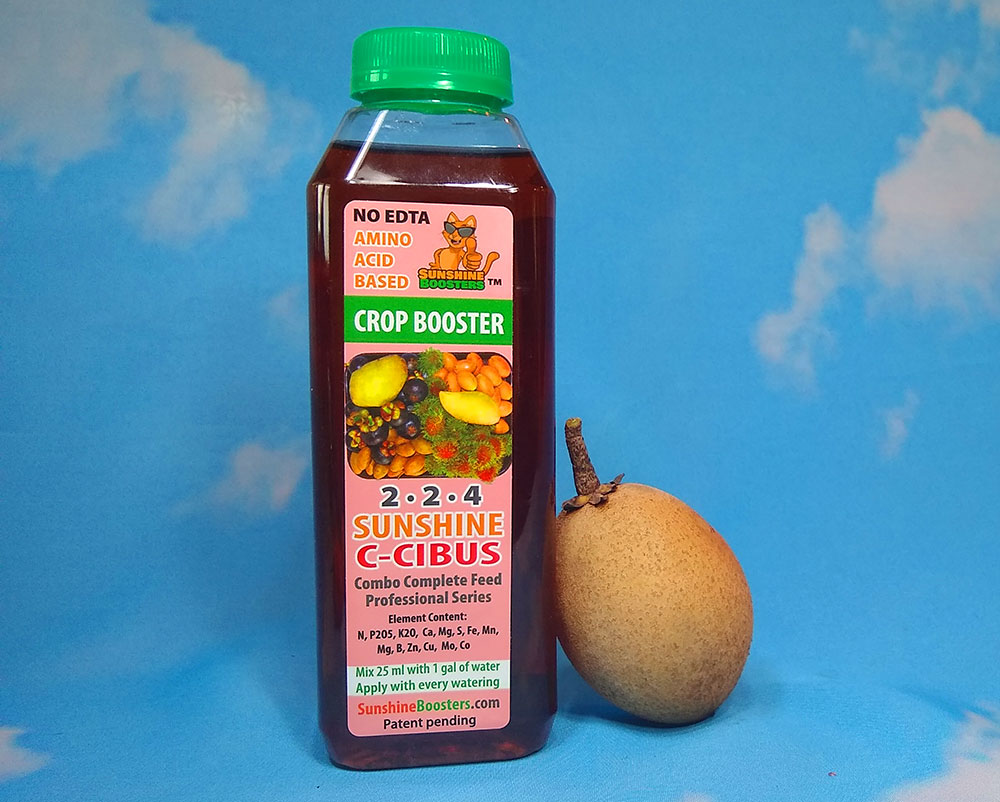
SUNSHINE C-Cibus - Crop Nutrition Booster from Garden Series, or Combo Total Feed Collection - all nutrients in just one bottle, for fruit trees and edibles.

Date: 5 Apr 2025

What will Tree Calliandra bring into your garden?

Calliandra houstoniana - Tree Calliandra

🎶 What will Tree Calliandra bring into your garden?


🐾 Calliandra houstoniana - Tree Calliandra - is a stunning, bushy tree with vibrant pink blooms.

🐾 Why every garden needs a Calliandra tree? It effortlessly adds charm in your garden and attracts wildlife: fluffy pink flowers attract hummingbirds and butterflies year around.

🐾 How big and fast does it grow? This is the only tree form of Powderpuff. It quickly grows into a bushy beautiful tree under 20 ft - in just one season.

📚 More prom previous post:


Calliandra Tree everyone should have: how big and fast does it grow?
What Tree Calliandra brings into your garden

🛒 Order Tree Calliandra to create an impressive butterfly paradise in no time

#Trees #Hedges_with_benefits #Butterfly_Plants #Discover

🔴 Join 👉 TopTropicals

Date: 24 Jun 2018

TopTropicals

URBAN TROPICAL GARDENING:
10 secrets of successful Container Mango growing on a balcony.

Q: I live in Miami in apartment on a second floor, and I have a balcony with SE exposure. I wonder if I can grow a mango tree in a pot? Will it fruit for me? I recently moved to South Florida and I don't know much about tropical plants; but I tasted real fiberless mangos from someone's garden - it was so delicious and different from those in the grocery store. I wonder if I can have a fruiting tree on my balcony? And if yes, how do I plant and take care of it?

A: Yes, you can! Here is what you need to do:
1) Temperature. You are lucky to live in Tropics, keep it on a balcony year round.
2) Light. Position the pot in a spot with the most sun exposure. Mango trees can take filtered light too, but the less sun, the less fruit you will get.
3) Soil and Container. Use only well drained potting mix. Step up the purchased plant into next size container (3 gal into 7 gal, 7 gal into 15 gal). When transplanting, make sure to keep growth point (where roots meet the trunk) just at the top of the soil. Covering base of the trunk with soil may kill the plant.
4) Water. Water daily during hot season, but only if top of soil gets dry. If it still moist, skip that day. Mangoes (unlike Avocados!) prefer to stay on a dry side.
5) Fertilizer. Use balanced fertilizer once a month, 1 tsp per 1 gal of soil. Do not fertilize during fruiting - this may cause fruit cracks.
6) Microelements. Apply SUNSHINE-Superfood once a month. This will help your mango healthy, vigorous, and resistant to diseases. Use SUNSHINE-Honey to make your fruit sweeter.
7) Insect control. Watch for scales and mealybugs, clean with solution of soapy water + vegetable oil (may need to repeat 2-3 times with 10 days interval), or with systemic insecticide like imidacloprid only as needed (if non-harsh treatment didn't help). Most Flea shampoo for dogs contain that chemical, you may try that shampoo solution.
8) Trimming. Once potted, do not remove leaves that are discolored or have spots until new growth appears. Dark dots on mango leaves, especially in humid climate like Florida, may be signs of fungus. Treat with fungicide according to label, and remove only badly damaged leaves. Trim crown as needed after flowering and fruiting (by Fall). Train into a small tree, and you may remove some lower branches eventually.
9) Flower and fruit. Mangoes are winter bloomers with bunches of tiny flowers coming in thousands. Many of them set fruit (if pollinating insects present). Keep in mind that young trees can only bare a few fruit. Normally a tree will drop excessive fruit and keep only a few that it can manage. To save the young tree some energy, remove fruit if too many and leave only 2-3 for the first year. It will pay you next year with more abundant crop.
10) Variety. Last but not least: Choose the right variety for container culture! Pick from "condo" dwarf varieties such as Icecream, Nam Doc Mai, Carrie, Cogshall, Julie, Fairchild, Pickering, Graham, Mallika, and a few others - check out Mango Chart pdf and full list of our Mango varieties.