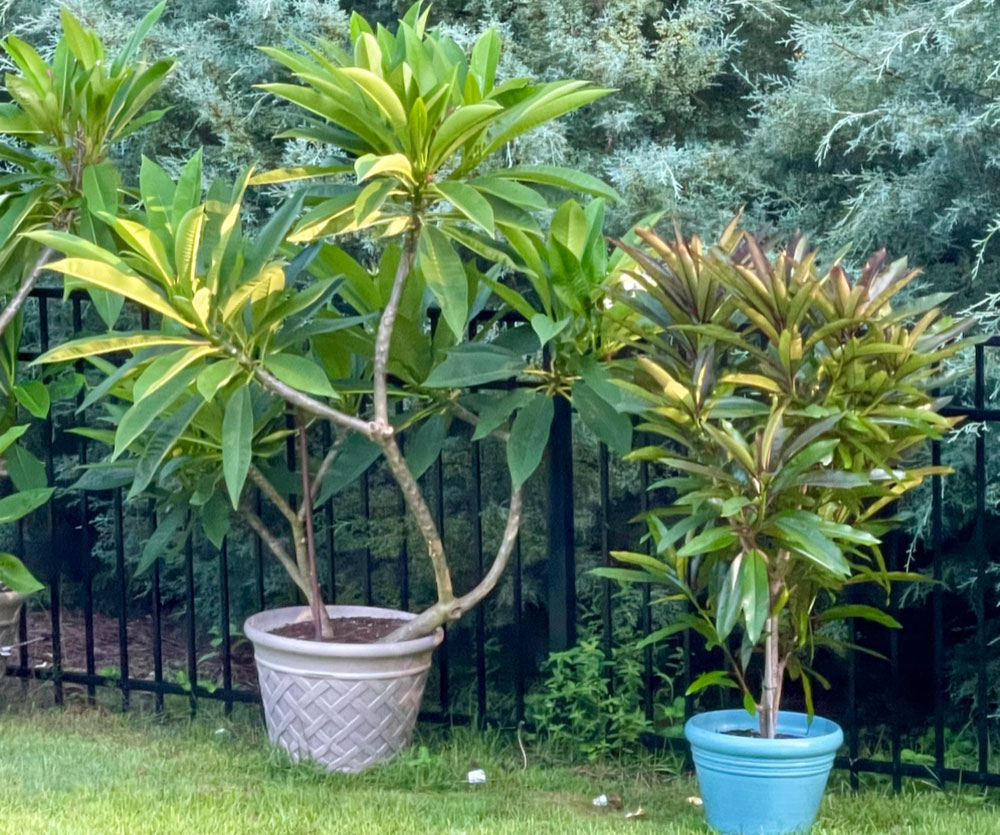
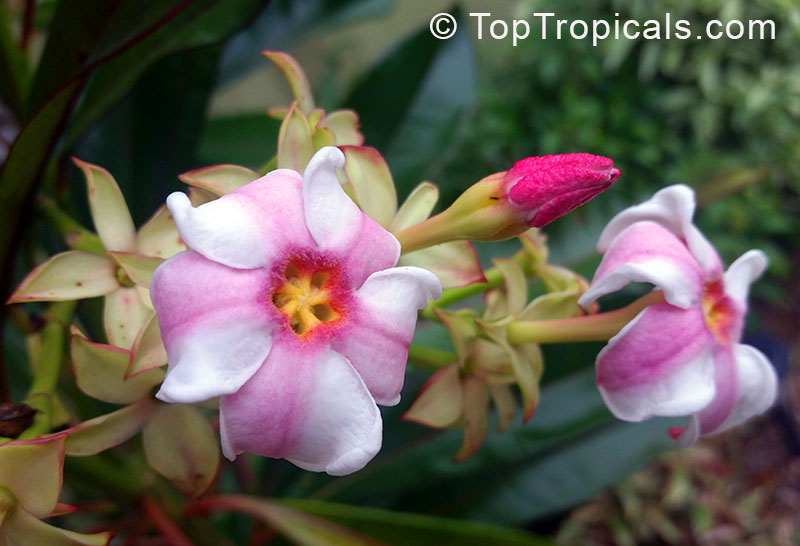
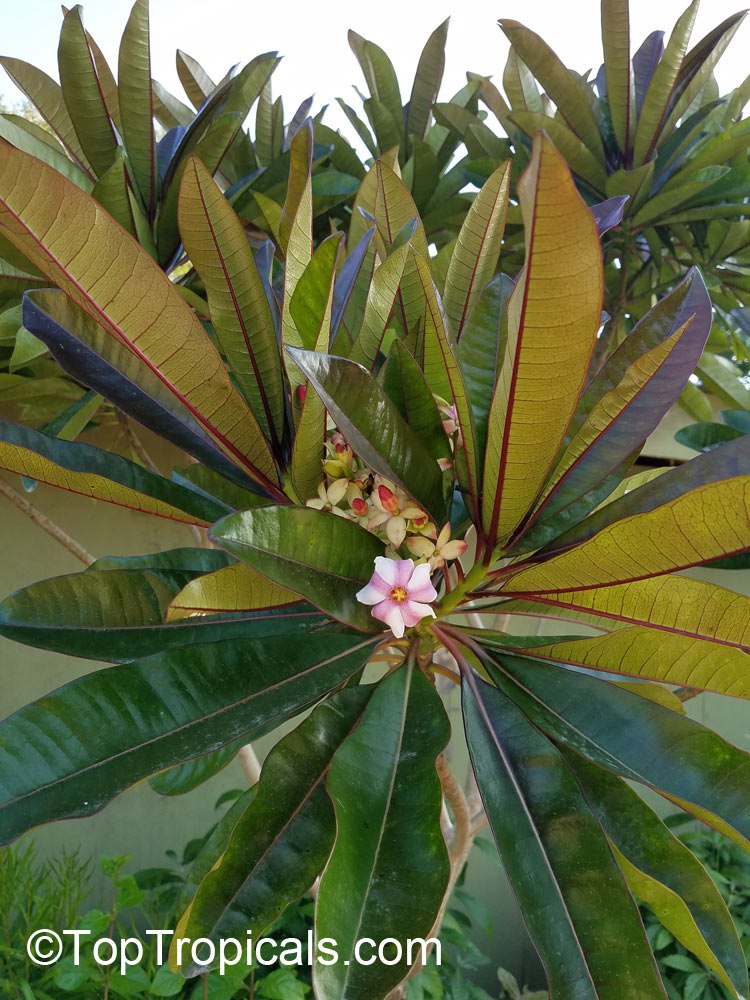
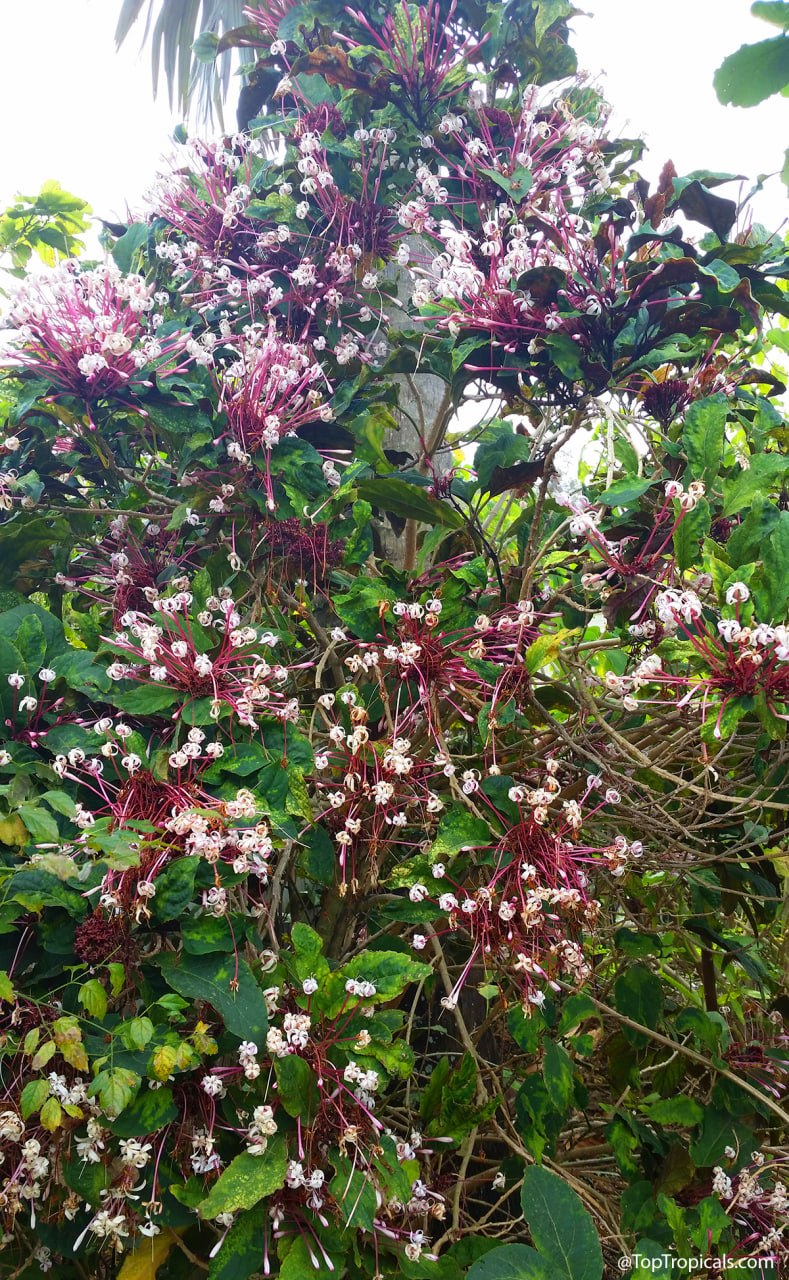
Q: I purchased Cerbera manghas - Enchanted Incense a year ago. As you see from the
photo, it's doing great however, no blooms. I fertilize properly and very often
and use worm castings for micronutrients. Yes it's not "your" fertilizer, but
my plumerias, that are also in pots they are over 5 feet tall and blooming
like crazy. I don't see any inflows coming on the Cerbera at all and it is hot
and humid here in North Carolina, so it's happy but no sign of blooming.
What is your advice?
A: Top Tropicals first brought Cerbera manghas into the US plant
market a few years ago, it was recommended to us by our friend, plant
taxonomist John Mood who visited Thailand, and among other exotic plants noted this
fragrant beauty. Since then we've been successfully growing this plant, it
has become one of everybody's favorites.
Generally speaking, Cerbera culture is very similar to Plumerias. These
plants are closely related. So if you know how to grow Plumeria, you sure
will succeed with Cerbera. Hot and sunny location, well-drained mix, moderate
water and bloom boom fertilizer will do the trick. However, we have noticed a
few distinctive features that make this plant somewhat challenging at
times.
1) Flowers
For past years, we've been studying what triggers its flowering.
Sometimes these plants start flowering in 1 gal pot, 1 ft tall. Other times a large
developed tree 5-6 ft tall, in 5-7 gal pot, grows beautiful foliage with no
signs of flowers. Eventually all of them bloom, no matter how stubborn they
are, it's just some individual plants start flowering sooner than others, all
grown in the same conditions.
One of our plants in the ground, a well-branched tree, was covered with
flowers for a few months, but only on the 3d year after planting. Before that,
it only produced a few random blooms. Others bloomed in pots at very young
age.
The following factors benefit to Cerbera flowering:
- full sun at least 10 hours a day
- hot temperatures above 85F
- regular water but not heavy rains
- regular fertilizer - Bloom Booster type
- very good drainage and drying out before waterings. If root ball stays
moist, the plant may look healthy but won't set flower buds. Keeping on a dry
side will encourage flowering. Very similar to Jasmines: they bloom like crazy
in April while it's hot and dry in Florida, but once our summer rainy season
starts, they reduce blooming.
We highly recommend using Sunshine Megaflor bloom booster or SUNSHINE Pikake in combination with micro-element supplements Sunshine Honey (B-Mo) and Sunshine Superfood (complex micro) that induce flowering.
Dry and granulated fertilizers may not supply exactly what a plant needs:
certain elements that trigger flowering may be missing. Sunshine Boosters
formulas are scientifically balanced, they contain precise amounts of nutrients
needed for setting flowers. Besides, excessive salts from regular dry
fertilizers create nutrient lock up that may retard plant metabolism; with liquid
amino-acid based Sunshine boosters, plants consume the whole menu of elements
without building them up in the soil.
2) Fruit
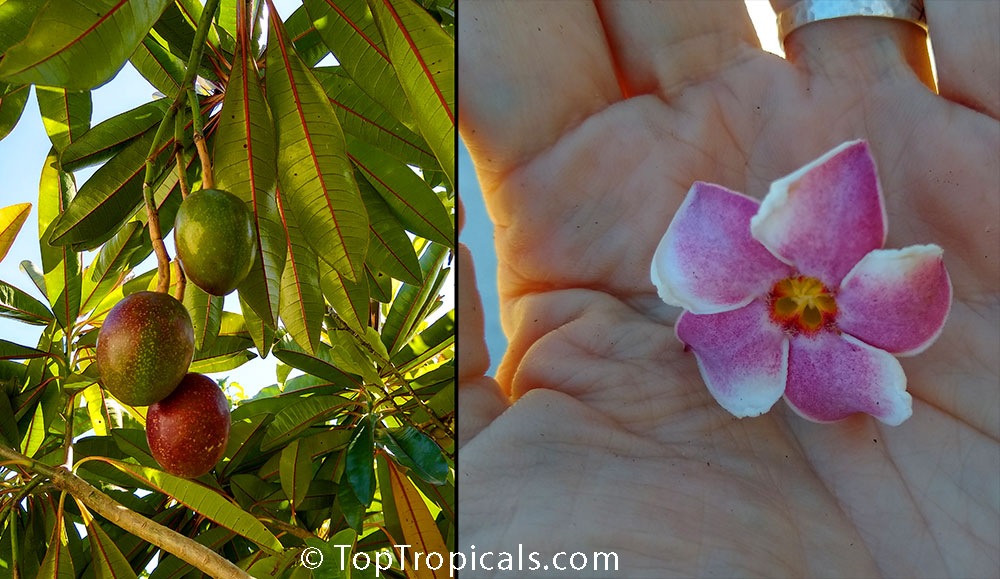
Fruit of Cerbera are very pretty and cover the tree after profuse
flowering. To inexperienced eye they may look very much like small mango or avocado
fruit - so make sure kids or visitors don't try to eat them! Cerbera seeds
are extremely poisonous.
3) Leaves
If you ever grew Passiflora or Milkweed, you know how leaves can be
eaten by caterpillars overnight. This may happen to Cerbera too, as we
discovered. In Florida environment this exotic plant doesn't have natural predators for
protection from certain insect species that may feed on it. So watch out and
if noticed first signs of leaves damage - its time for insect control.
Other than that, Cerbera foliage is usually beautiful and colorful, here in
Florida it looks much healthier than that of Plumerias often affected with
rusty residue during high humidity months.
Hope this helps. The Cerbera fragrance is enchanting, it is worth the
efforts and waiting!
Date: 4 Dec 2020
Establishing Cerbera Manghas
after a long shipping trip
Q: I live in Hawaii. I purchased Cerbera x manghas - Enchanted Incense. I followed the repotting
instructions but it looks like dying? Is the normal for all the leaves to fall off?
I only use purified water to mist and water the plant. I let it dry between watering and still it looks sad. Please help!
A: Cerbera is very sensitive to shipping stress (in particular to
darkness) and it often loses leaves in transit. Considering long trip to Hawaii, it had extra 1-2 days in transit, longer than to most of the
states.
Your plant looks very much alive, however we understand your concern about lost leaves.
You need to treat it like Plumera: keep on a dry side until it starts
sprouting new leaf growth. Once it gets re-established, you may move it out into regular irrigation or
rain.
We recommend to keep it under roof to control water input, but in very blight spot, preferably
sunny.
Make sure the soil doesn't get soggy, too much water may kill the plant especially when it is leafless and hence doesn't consume/evaporate much water.
Water only when top of the soil gets slightly dry.
Do not put into bigger container until roots start growing.
The plant should recover and start new growth under proper care. Keep us in loop how the plant is
doing!
Date: 22 Aug 2024
What flower is sweeter than any Jasmine
Cerbera x manghas - Enchanted Incense
Cerbera x manghas - Enchanted Incense
💥 What flower is sweeter than any Jasmine
🌸 Cerbera x manghas - Enchanted Incense: absolutely NEW perfume plant! It is becoming one of the most wanted in rare fragrant plant market.
🌸 This amazing flower was originally obtained in Thailand.
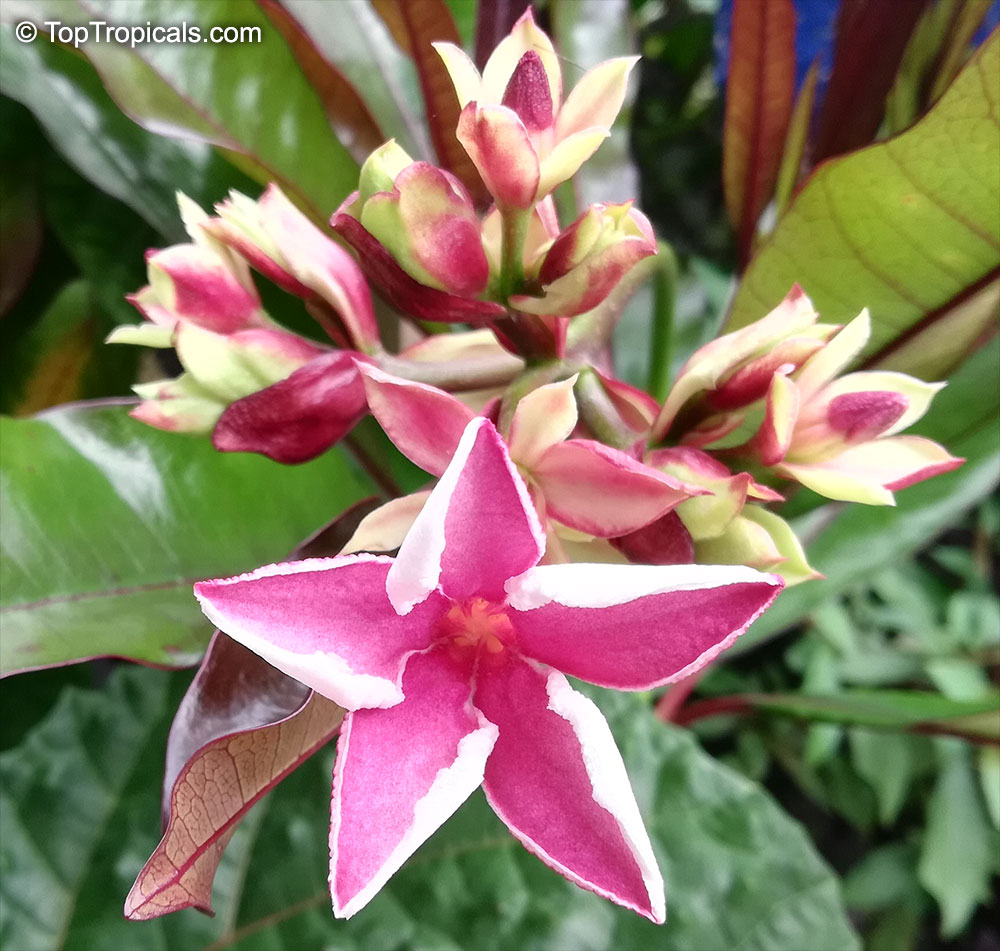
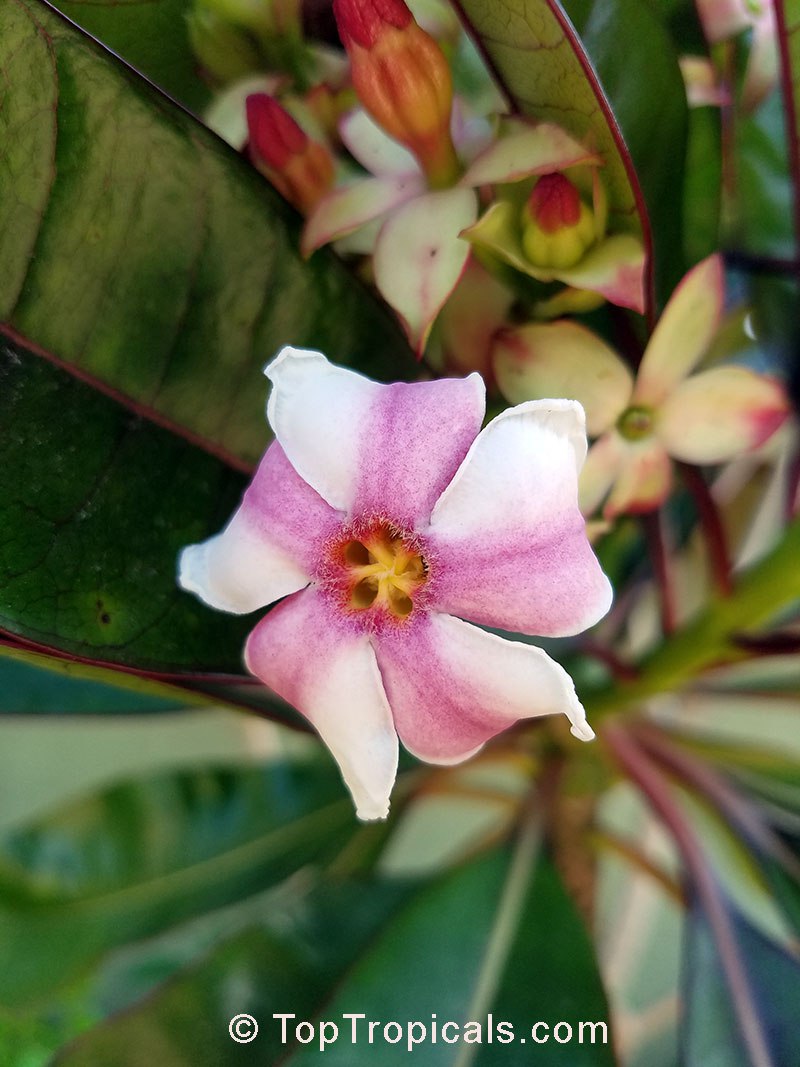
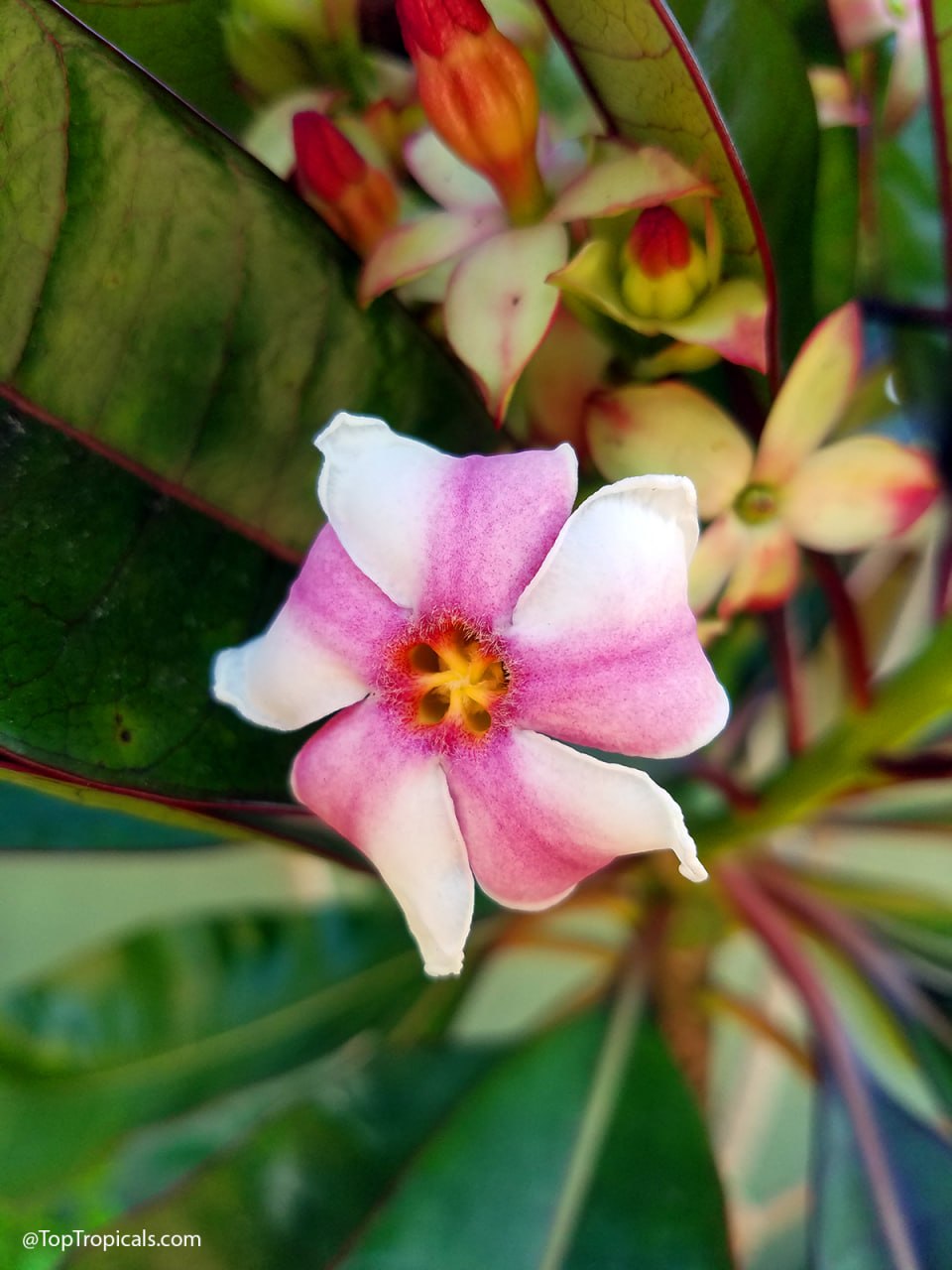
🌸 Beautiful striped red-and-white flowers are highly fragrant. Fragrance is the most intense you can imagine and is much better than all jasmines and gardenias all together.
🌸 The plant is very similar to plumeria in growth habit (and is close related to Plumeria). It grows into a small tree. Unlike Plumeria, it is evergreen in warm climate.
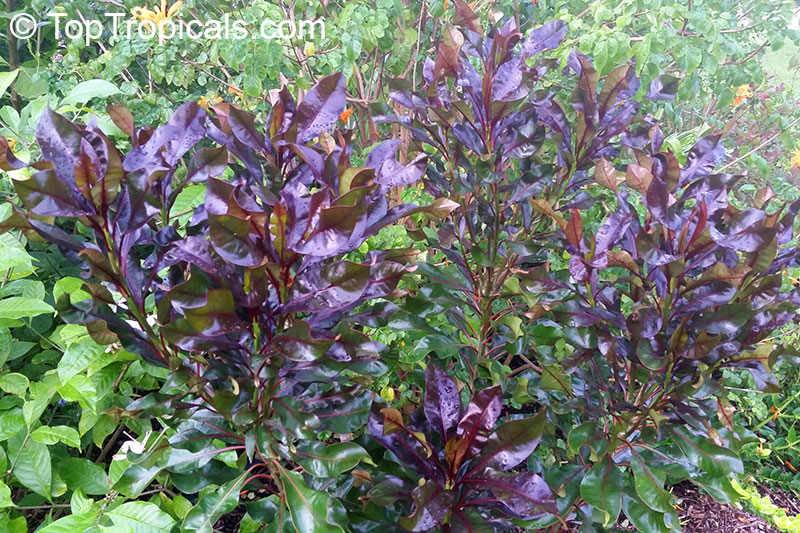
🌸 Beautiful mauve colored leaves are very ornamental.
🌸 Slow growing, compact plant, great for containers. Very undemanding and has low water needs.
7 best exotic dwarf trees for maximum impact in small tropical landscapes 🏡
For a yard that feels like a tropical escape but doesn't have the space for a massive jungle, these seven selections from TopTropicals are game-changers, chosen for their compact size, high "curb appeal," and unique tropical flair.
1. Dwarf Pink Princess Silk Floss Tree (Ceiba hybrid)
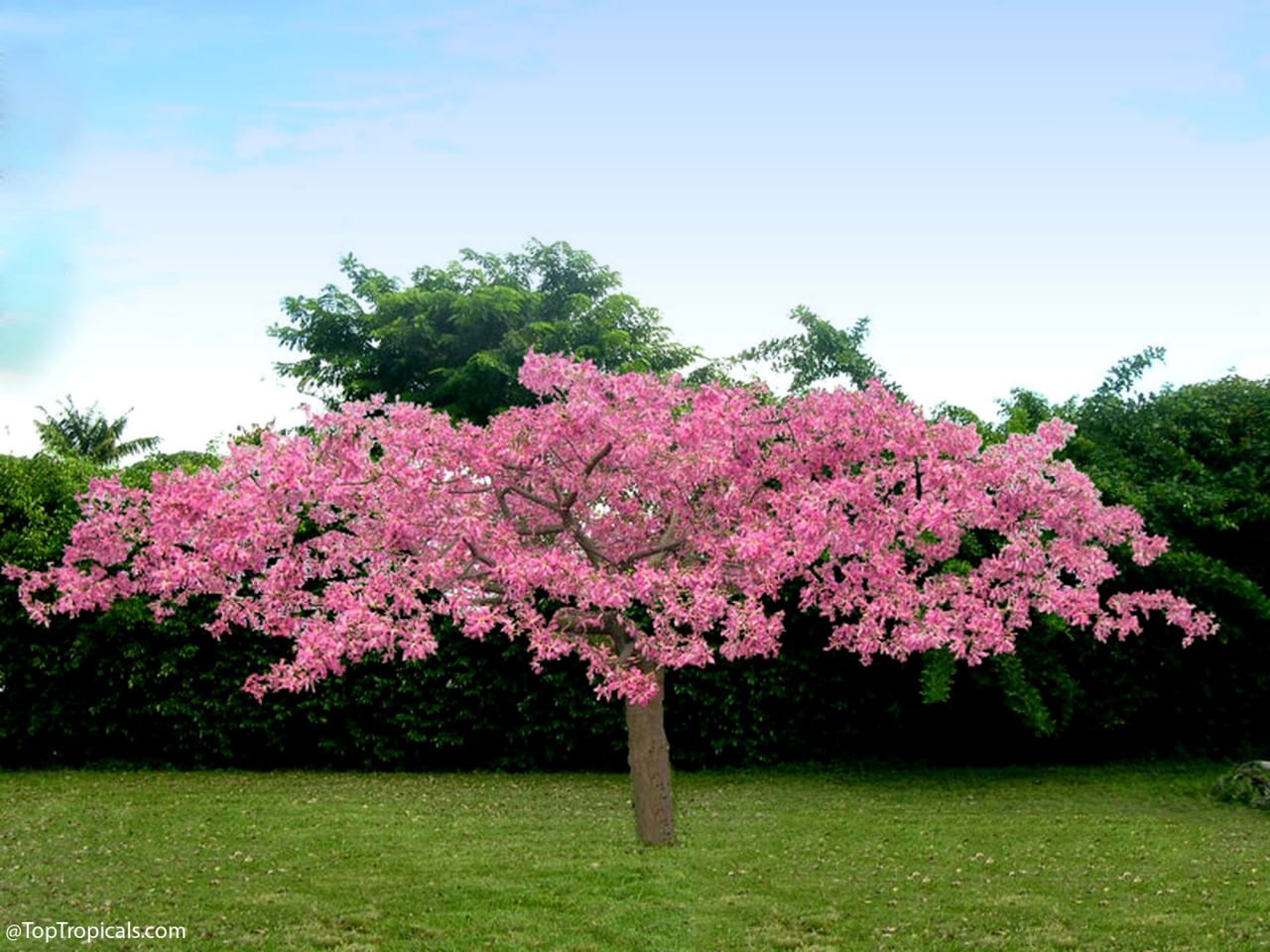
🌳 A spectacular grafted hybrid of the famous Silk Floss tree, but in a much smaller package: a unique, often "fat" or bottle-shaped trunk and large, showy pink flowers with white centers. 🏡 Unlike the standard Ceiba which can become a giant, the 'Pink Princess' is grafted to stay compact (usually under 10 - 12 feet), allowing you to enjoy those exotic, orchid-like blooms even in a tiny garden.
Ceiba Plant Facts
Botanical name: Ceiba sp. Also known as: Ceiba, Floss Silk Tree, Kapok Tree
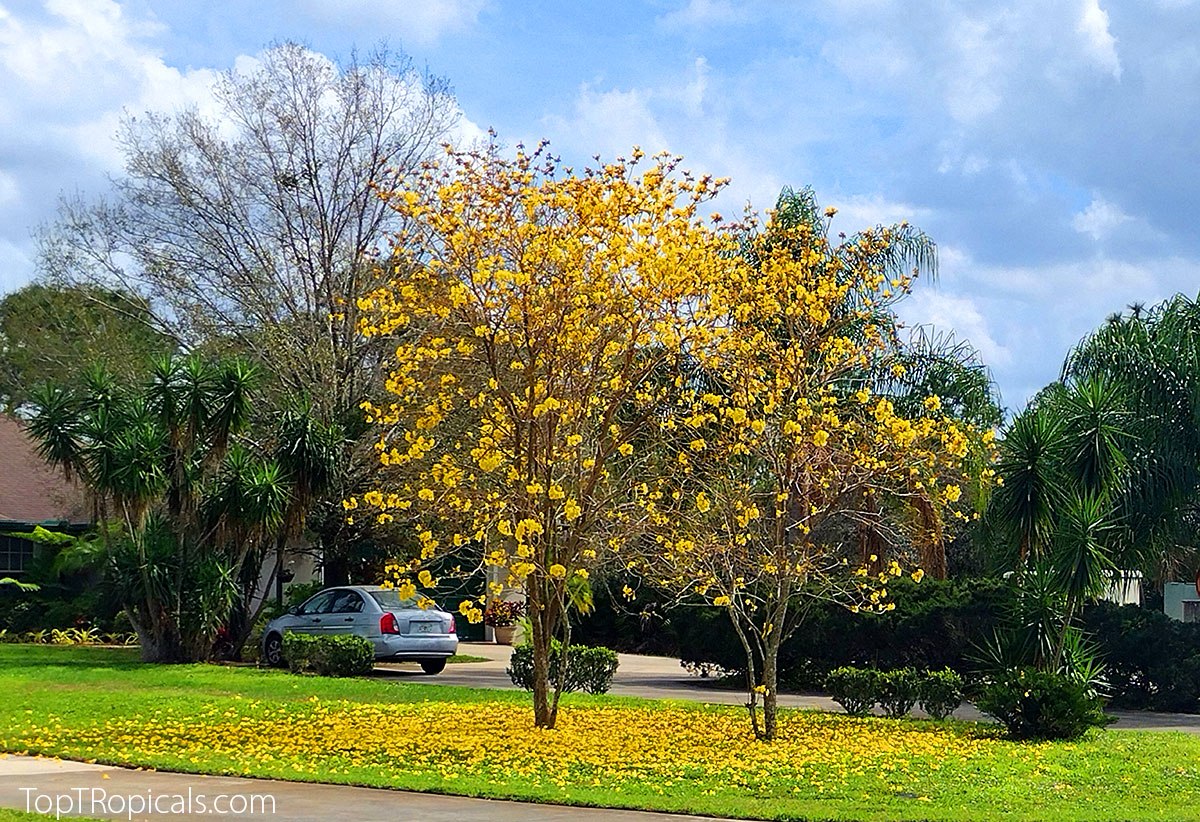
🌳 Known as the "Golden Trumpet Tree," this dwarf selection puts on one of the most brilliant displays in the plant kingdom. Before the leaves emerge in spring, the entire tree is covered in bright, trumpet-shaped yellow flowers. 🏡 This specific dwarf form stays much smaller and more manageable than the standard Tabebuias seen on city streets. Its silver-green foliage and rounded canopy make it an ideal "specimen" tree that acts as a focal point for your front yard.
Dwarf Golden Tabebuia Plant Facts
Botanical name: Handroanthus chrysotrichus, Tabebuia chrysotricha, Tabebuia chrysantha Also known as: Dwarf Golden Tabebuia
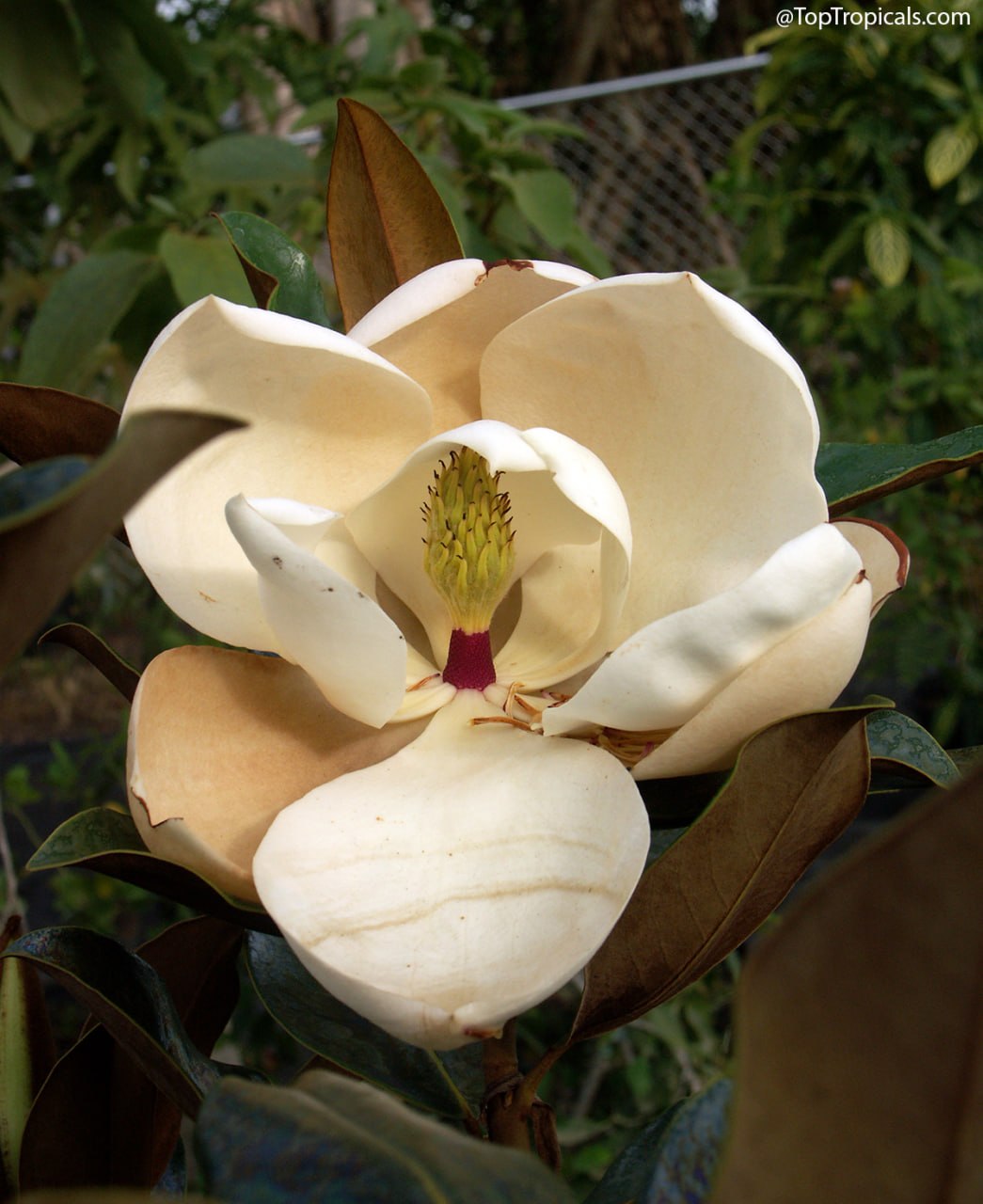
3. Little Gem Southern Magnolia (Magnolia grandiflora)
🌳 All the elegance of a classic Southern Magnolia but in a miniaturized version. It has the iconic waxy white, lemon-scented flowers and glossy leaves with fuzzy bronze undersides. 🏡 'Little Gem' is narrow and columnar, typically reaching only 15-20 feet (half the size of the standard species). It starts blooming at a very young age, so you don't have to wait years for those famous fragrant flowers.
Southern Magnolia Plant Facts
Botanical name: Magnolia grandiflora Also known as: Southern Magnolia, Bull Bay
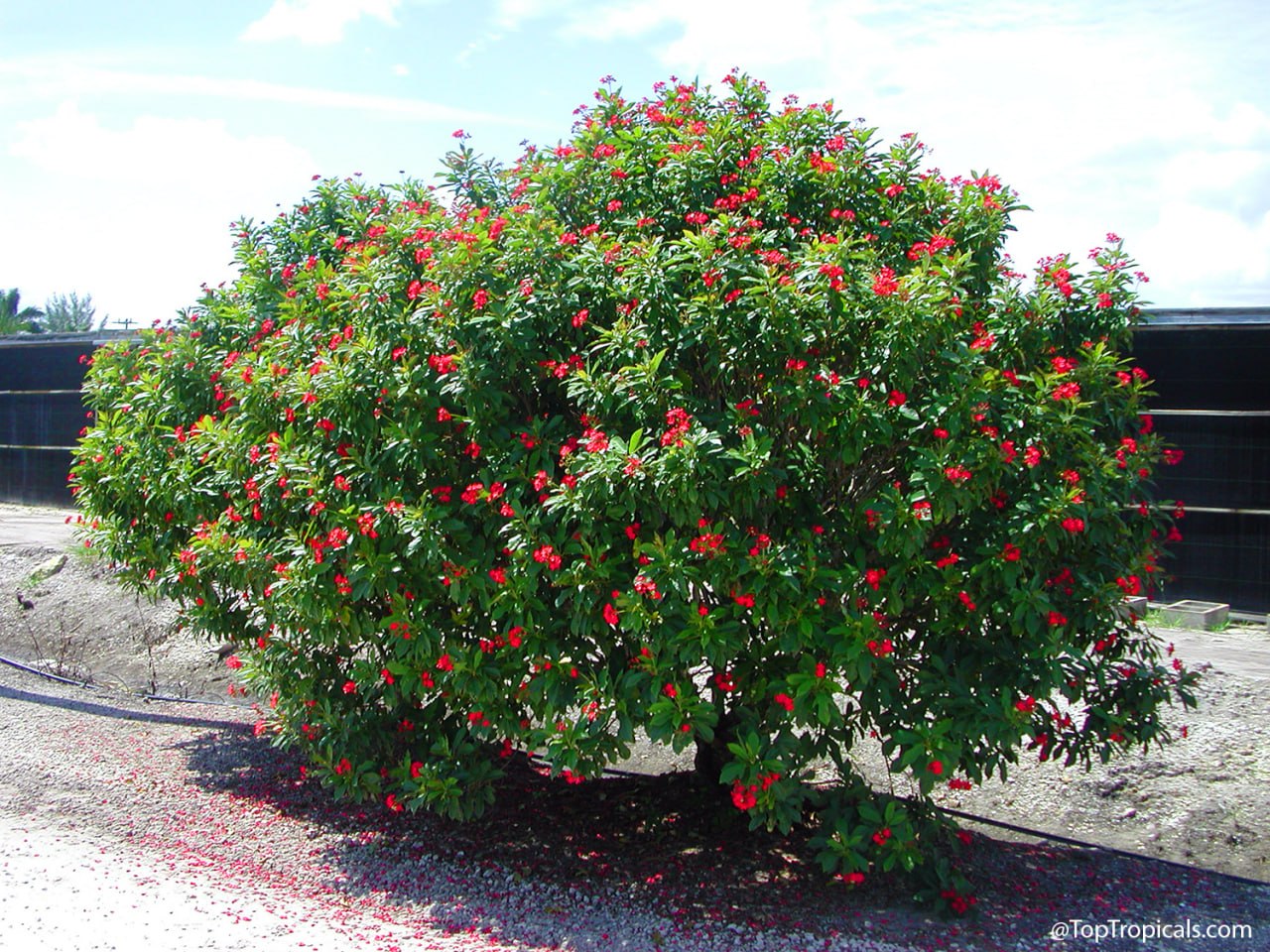
🌳 This "ever-blooming" small tree is a butterfly magnet. It features clusters of bright, cherry-red star flowers against glossy, fiddle-shaped leaves. 🏡 The Compacta variety is specifically bred to stay bushy and small. It blooms almost 365 days a year in warm climates, providing a constant splash of red that draws in hummingbirds and pollinators.
Peregrina Plant Facts
Botanical name: Jatropha integerrima, Jatropha pandurata Also known as: Peregrina, Spicy Jatropha, Coral Plant, Physic Nut
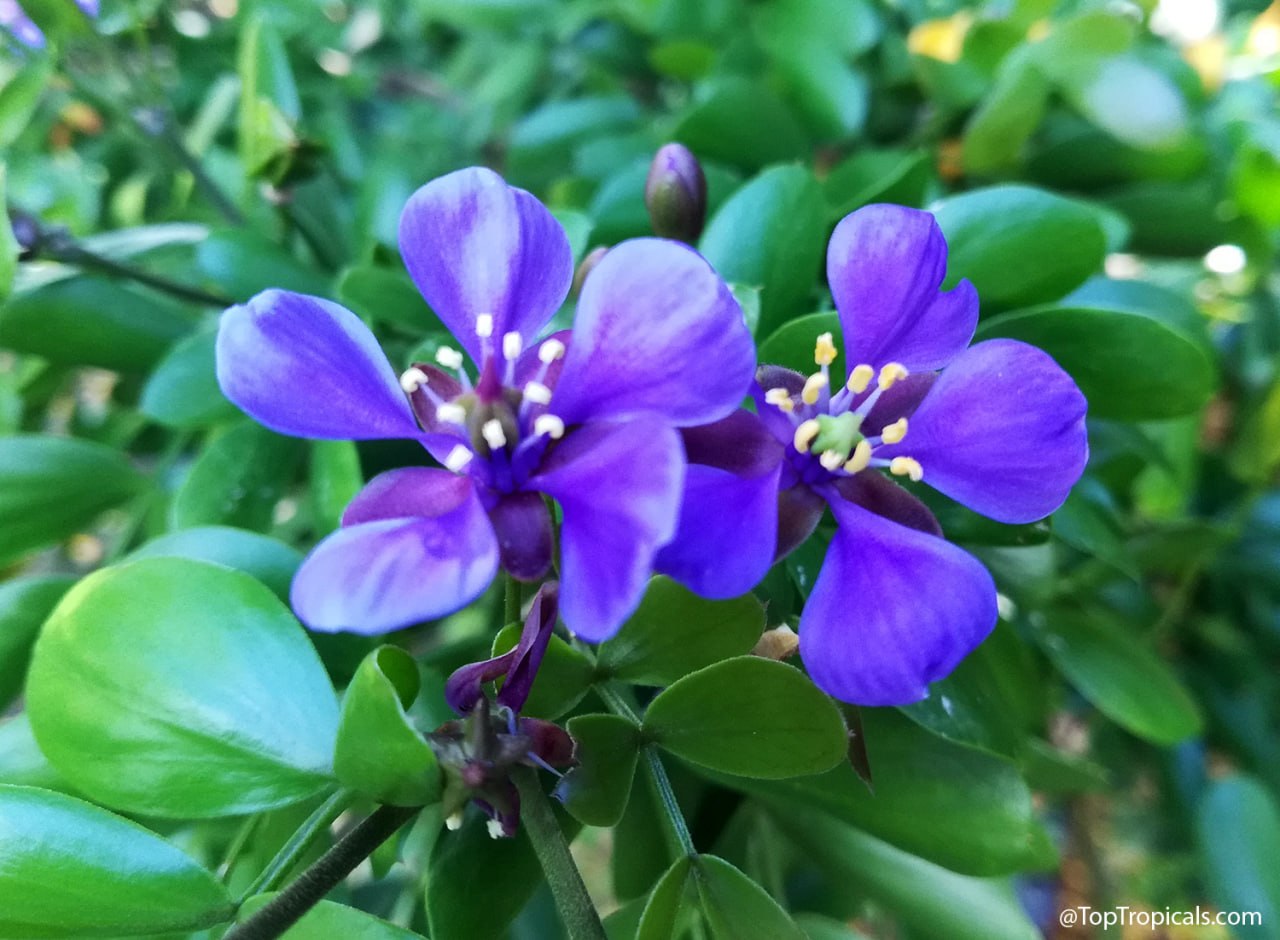
🌳 Known as the "Wood of Life," this is one of the slowest-growing trees in the world. It has fine-textured, dark green foliage and produce stunning, small blue flowers that fade to white, followed by bright orange seed pods. 🏡 Because it grows so slowly, it will never outgrow its space. It is extremely hardy, salt-tolerant, and hurricane-resistant, making it a "plant it and forget it" heirloom tree for coastal or small urban lots.
Lignum Vitae Plant Facts
Botanical name: Guaiacum sanctum Also known as: Lignum Vitae, Tree of Life, Gaiac tree
🌳 A visual firework display. The leaves are deep green on top and rich purple underneath. In late winter, it produces massive, 8-inch wide clusters of tubular pink-and-white flowers that look like an exploding star. 🏡 It is easily pruned to a single-trunk tree form. The purple foliage provides "curb appeal" year-round, while the winter blooms provide a much-needed pop of color when other plants are dormant.
Winter Starburst Plant Facts
Botanical name: Clerodendrum quadriloculare Also known as: Winter Starburst, Fireworks, Clerodendron
🌳 This is a rare, small evergreen tree with glossy, dark green leaves and clusters of highly fragrant, star-shaped white flowers with a red "eye." 🏡 It has an naturally architectural, upright habit. The fragrance is incredible - sweet and heavy - making it a perfect "sensory" tree to plant near a patio where you can enjoy the scent on summer evenings.
👉 more
Taurus - 4/20-5/20. Taurus is an EARTH sign ruled by the planet Venus.
Venus is the planet that represents desire and beauty, regarded as the female embodiment of sexual love and human appetite, so Taurus plants often have gorgeous flowers and enticing fragrances and, occasionally, red fruit. It rules the internal sexual organs, the nose and sense of smell.
Because Taurus rules the throat and ears, the best plants for the Bull are often soothing to the throat, or may calm the digestive system after overindulging in the finest foods. Taurus is related to those things we want and value. It harmonizes various body systems, and influences the complexion and facial appearance. Also under Venus's dominion are the abdomen, kidney, thymus, and breasts. Venus-governed herbs are soothing and help to regulate the body's metabolism through the endocrine system. Taurus herbs are traditionally used to attract money and resources. Earthy Taurus sign is all about building a stable and comfortable foundation and can help you generate greater abundance and prosperity in your life.
April 22 Earth Day discount - 15% off fragrant plants! Earth Day is more than just a single day â€"April 22, 2016. It's bigger than attending a rally and taking a stand. Plant one tree at a time to make our Planet better! This Earth Day and beyond, let's make big stuff happen. - See more at: www.earthday.org