Shade
Tree Discount Program
How to reduce an electric bill and energy costs?
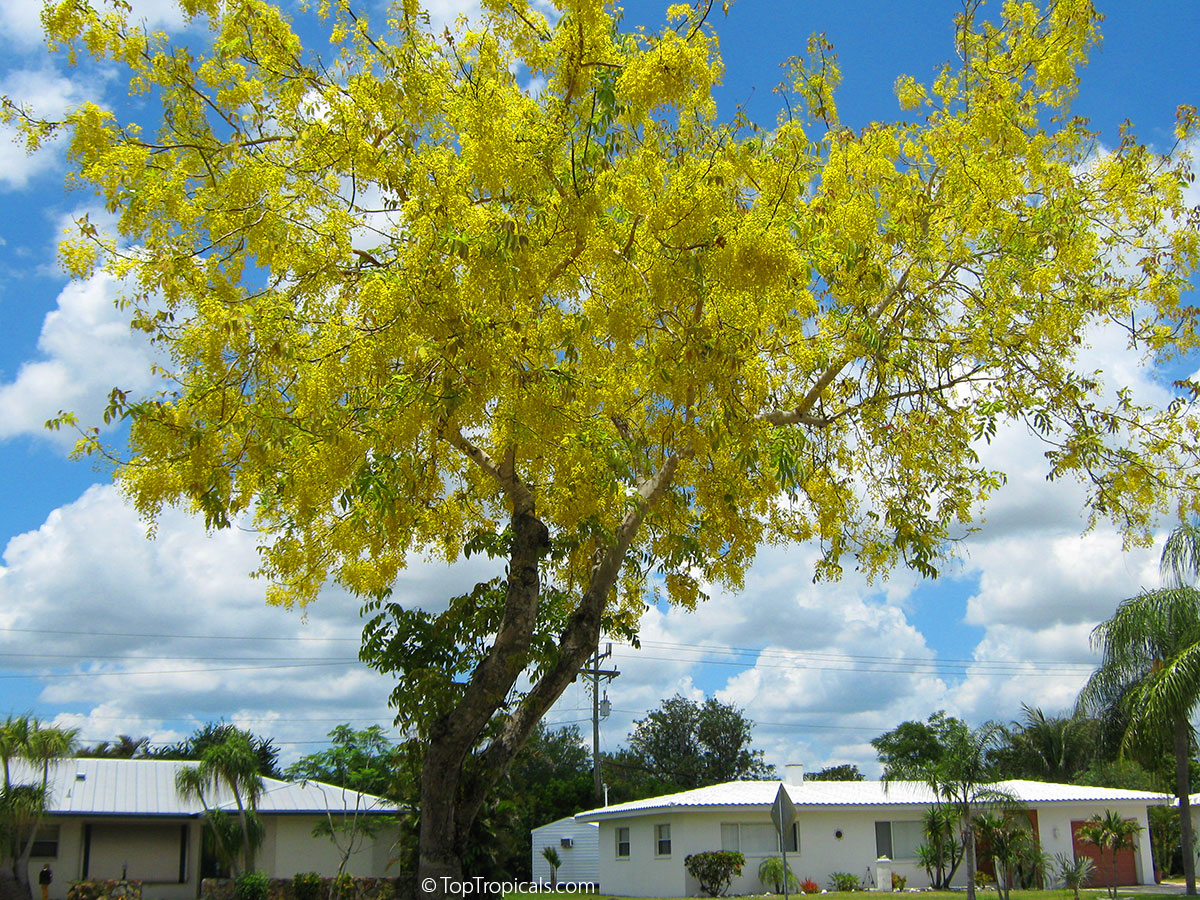
Photo above:
Cassia fistula - Golden Shower Tree - one of the most popular trees. This
all time favorite is fast growing and elegant.
Q: How to reduce an electric bill and energy
costs?
A: This summer is expected to be hot. And the
next summer... and next... Want to reduce your electric bill and energy costs?
There is an excellent solution: plant a shade tree! Once fully grown, these
trees will help keep your house cooler and lower your energy expenses.
Today we are offering a special discount you can use for purchasing
trees that will keep your homes cooler in Summer and gardens warmer in Winter!
Check out Fast
Growing Shade Trees, as well as other flowering trees and fruit trees and use discount below:
GETSHADE
Your savings with this code: 5% off orders $100+ 15% off orders $150+ 20% off orders $200+
Excluding S/H. Excluding 15 gal material. Exp.
6-12-24
Do Fruit Trees Increase Property Value? Tropical Plants That Pay Off
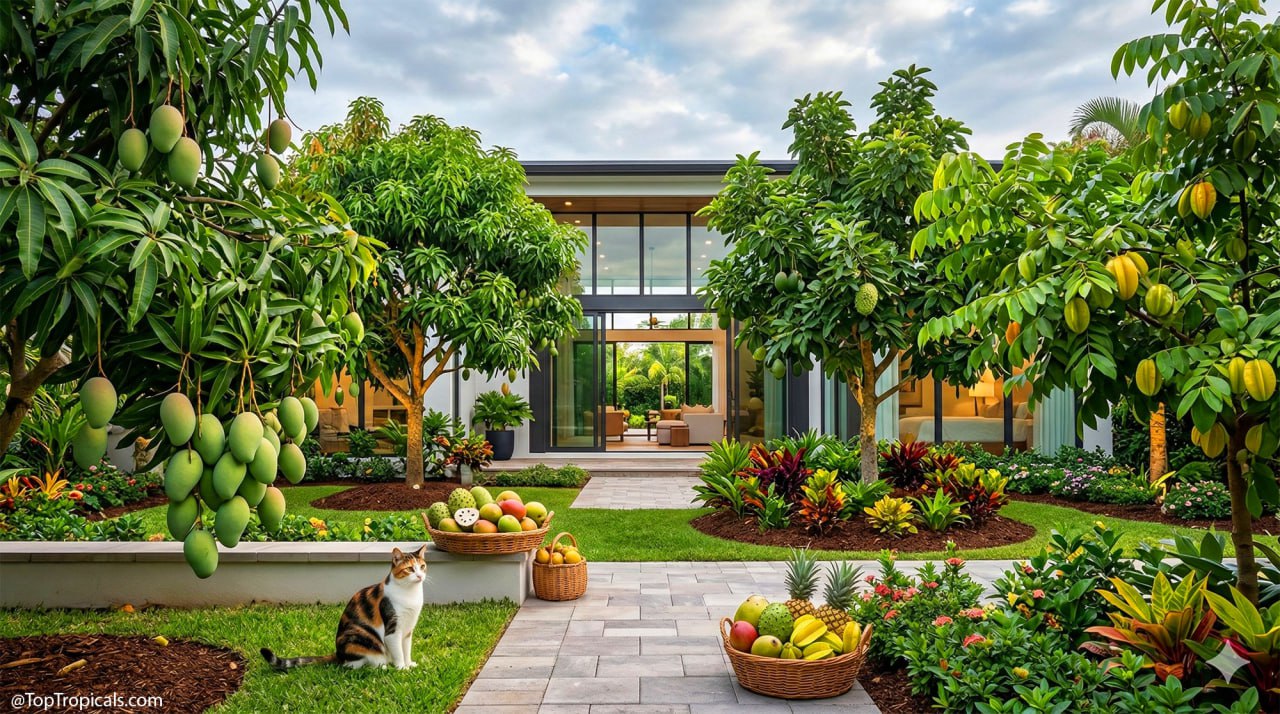
Yard with fruiting tropical trees
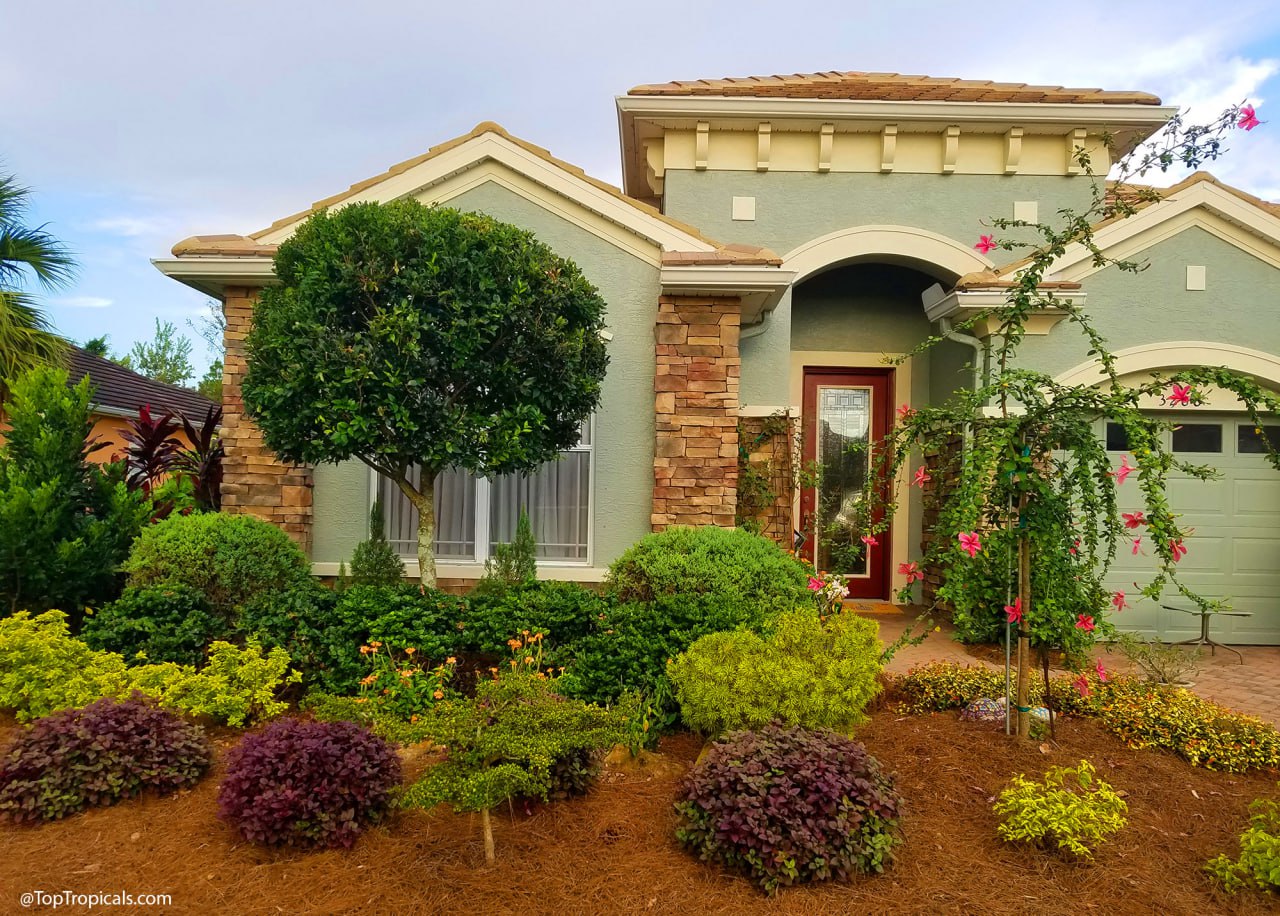
Landscaped yard in Florida
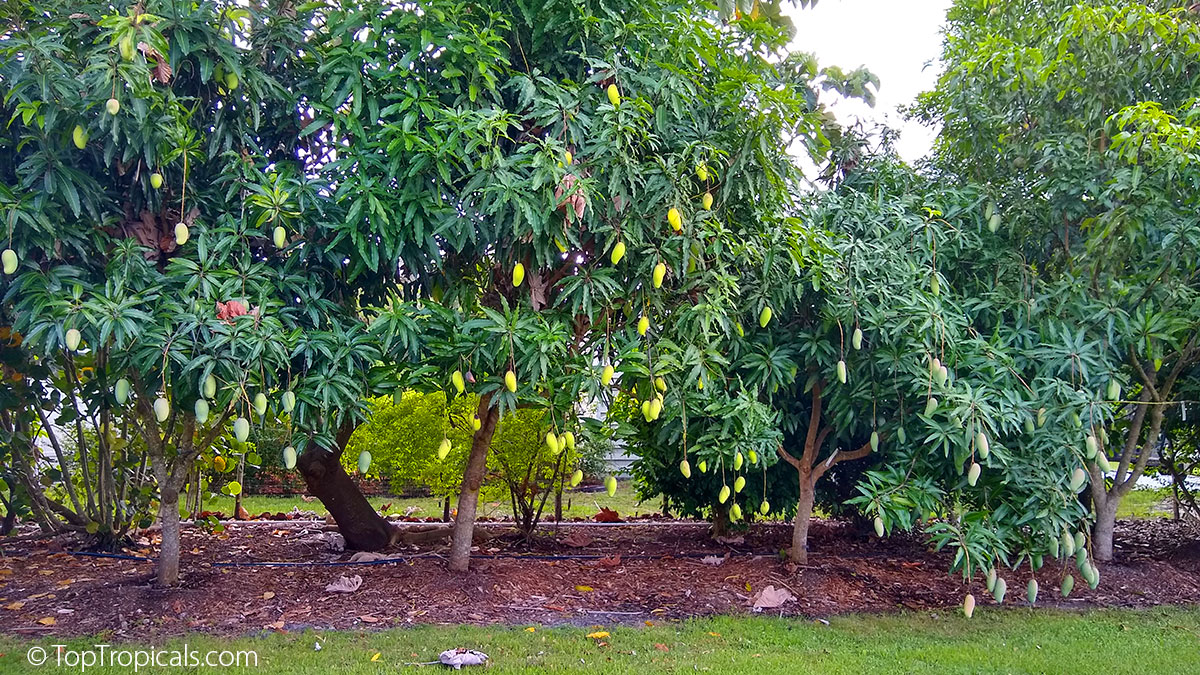
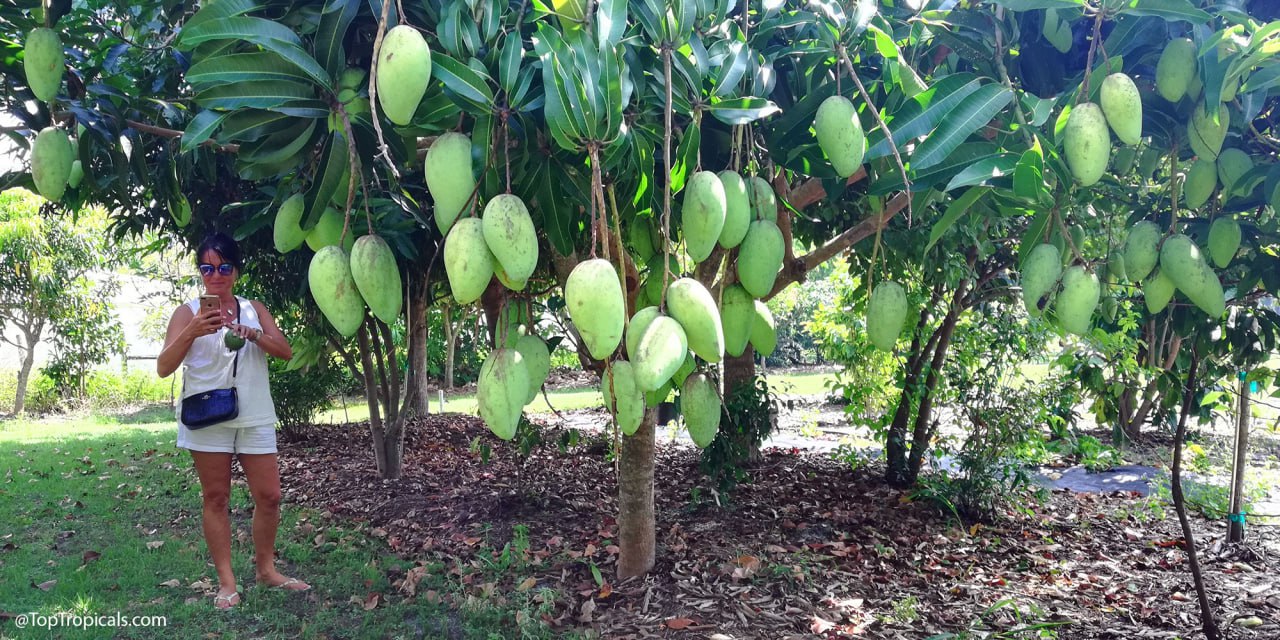
Mango tree fruiting in the garden
Do Fruit Trees Increase Property Value? Tropical Plants That Pay Off 🏡
Can your backyard pay for itself? Learn which 12 tropical fruit trees real estate experts say are the smartest investment for your landscape. Discover how tropical fruit trees like mango and avocado add "edible equity" and curb appeal to your property, making it more desirable to future buyers. Turn your yard into a private paradise that lowers grocery bills and boosts home value.
In warm climates like Florida, a mango tree isn't just landscaping - it’s a food-producing asset. Mature tropical fruit trees offer "edible equity," saving homeowners hundreds in grocery bills while creating a unique, memorable aesthetic for buyers.
Mango Plant Facts
Botanical name: Mangifera indica Also known as: Mango
USDA Zone: 9 - 11
Highligths
🥭 1. Focus on "Instant Recognition" Favorites
Trees buyers already know and love provide the strongest ROI. They signal that the yard is already productive - something new builds can’t offer.
• Top Picks: Mango, Avocado, Papaya, Banana, Guava, and Loquat.
Avocado Plant Facts
Botanical name: Persea americana, Persea gratissima Also known as: Avocado, Alligator Pear, Aguacate, Abacate
USDA Zone: 9 - 11
Highligths
• The Value: A single mature avocado or mango tree can yield hundreds of pounds of fruit annually.
🥭 2. Create a "Memorable Discovery" with Exotic Varieties
Unusual fruits turn a standard yard into a tropical orchard, acting as a conversation piece during home tours.
• The Exotic List: Jackfruit, Sugar Apple, Soursop, Sapodilla, Ice Cream Bean, and Star Fruit.
🥭 3. Strategic Placement for Energy Savings
Large-canopy trees like jackfruit or mango do more than provide food; they act as natural insulation.
• Natural Cooling: Strategic planting reduces afternoon sun exposure and lowers AC costs. • Indoor/Outdoor Flow: Use trees to frame window views, block neighbors, and create private "outdoor rooms."
🥭 4. The Power of the "Mini Orchard"
A collection of 3–5 trees creates a stronger emotional pull than a lone plant. Buyers begin to visualize a lifestyle of smoothies and harvests.
• Winning Combos: Mango + Avocado + Papaya or Guava + Star Fruit + Banana.
🥭 5. Maintenance: Health Equals Value
Fruit trees only add value if they look manageable. A neglected tree suggests a neglected home.
• Pre-Sale Prep: Prune for tidiness, mulch the base, and clear fallen fruit. • Spacing Matters: Avoid overcrowding; ensure buyers can walk comfortably through the yard without feeling "closed in."
🥭 The Long-Term Play
Unlike decorative plants that may need frequent replacement, fruit trees appreciate over time. Because a mango tree takes years to reach peak production, the best time to plant for future resale value is now. By the time you list, your yard will offer shade, privacy, and a harvest that buyers find hard to resist.
When northern gardens fade into gray, our tropicals wake up. Winter is
color season here - and even if you live up north, you can still enjoy these
same flowering trees indoors or on a sunny patio.
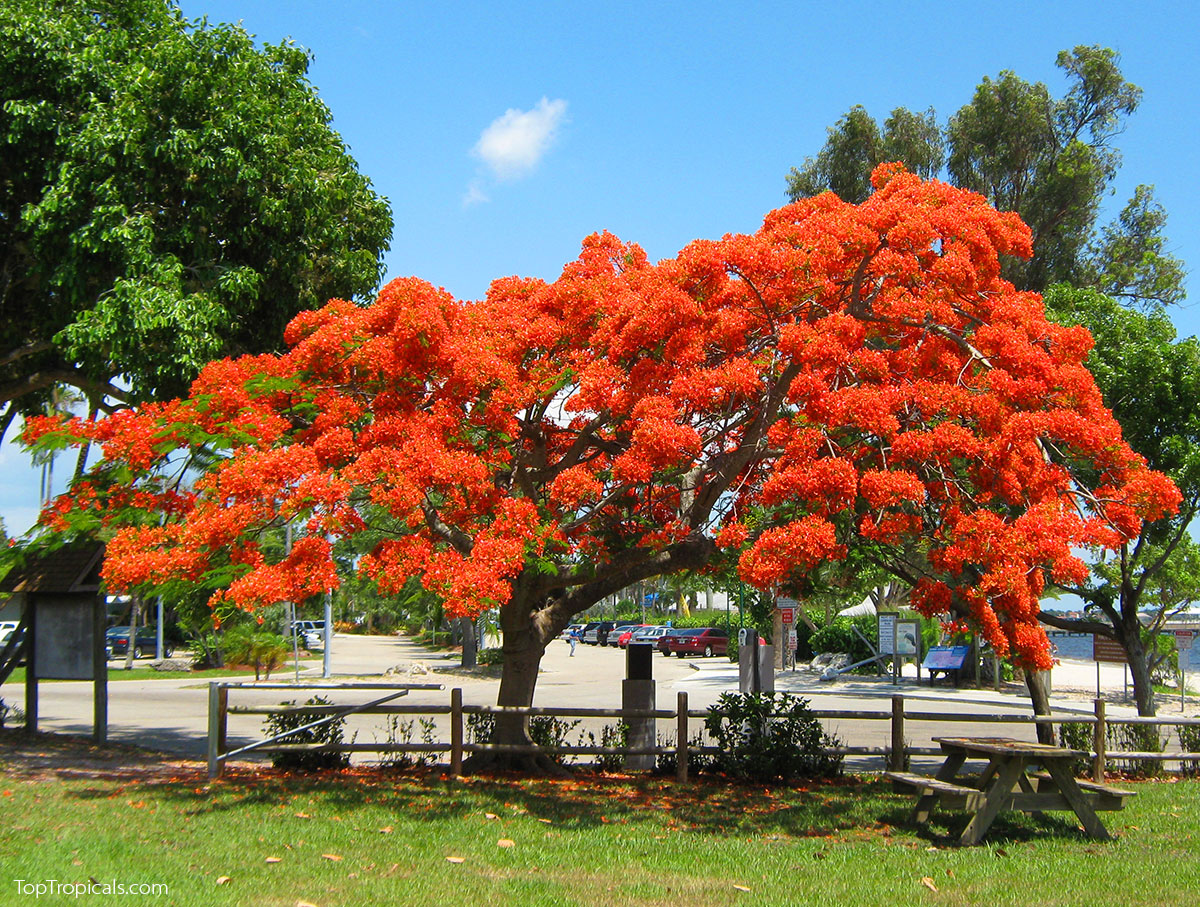
From the fiery Royal
Poinciana to the golden Tabebuia and
violet Jacaranda,
these eight trees prove that winter can bloom anywhere
How to Care for Winter-Flowering Trees
We're often asked, at Top Tropicals, “Can I really grow tropical
trees in winter?”
Yes — with the right light and care, you can.
Here’s what works best both outdoors and indoors, according to our
expert, Tatiana Anderson.
🌡️ Fall Planting Guide
Let’s talk about timing, because that’s the part most people
get nervous about.
Everyone asks: “Isn’t it too cool to plant now?” —
and the answer is no!
Fall and early winter are actually the best months for tropicals in Zones 9
to 11.
Here’s why: the air has cooled off, but the soil is still warm.
Roots love that combination. They quietly spread underground while the rest
of
the plant takes a break.
By spring, those roots are ready to feed a burst of new growth — and
that’s when you’ll see the first big flush of flowers.
Pick a sunny spot that gets plenty of light — six to eight hours
if you can.
Loosen the soil and mix in compost or pine bark so it drains well.
Dig a hole about twice as wide as the pot and just as deep.
Set the plant level with the ground, backfill, and water it deeply to
settle everything in.
Then add mulch — two or three inches is plenty — but keep it
away from the trunk so it can breathe.
Tatiana’s tip: “Fall planting builds roots while everyone
else is resting. By spring, your tree wakes up ready to grow.”
🌳 Outdoor Care (Warm Climates Zones 9–11)
Now, let’s talk about what happens after planting — because
real gardening starts once the plant is yours. Tropical trees thrive on
routine: steady sunlight, deep watering, and just a bit of attention.
Water them about once a week when the weather is mild, more often if
it’s dry or windy.
Always check the soil first — if it feels dry two inches down, go
ahead and water.
Mulch helps more than most people realize — it keeps roots cool in
summer and warm in winter, and it saves you from watering as often.
Now, for those of you in Zone 9, here’s the truth: your trees can
take a chill, but they don’t love surprises.
A quick night in the upper 20s F won’t hurt mature plants, but young
ones appreciate a little help — a frost cloth or being planted at the
south side.
And don’t underestimate the wind. Cold, dry gusts can burn leaves
faster than frost.
Use fences, hedges, or taller shrubs as windbreaks, and take advantage of
microclimates — those warm pockets next to the house, brick patios, or
corners that get extra afternoon sun.
Tatiana’s tip: “A tropical garden in Zone 9 isn’t
about fighting nature — it’s about cooperating with it. Find the
warm corners, protect from the cold wind, and your trees will thank you with
flowers all winter.”
🏚️ Indoor & Patio Care (Cooler Climates)
For our northern friends — yes, you can grow tropicals indoors!
You just need good light, warm air, and a little attention.
Pick a large pot, with drainage holes and a light tropical soil mix.
Place it in a bright window — south or southwest if you can —
or under grow lights for about 12–14 hours a day.
Keep temperatures between 65 and 85 F, and water when the top inch of soil
dries out.
Misting helps keep leaves clean and adds humidity.
Rotate the pot every couple of weeks so all sides get sun. In summer, move
your plant outdoors gradually so it can enjoy real sunlight — then
bring it back in before nights drop below 40 F.
Tatiana’s tip: “Don’t be afraid of growing trees in
pots. They adapt beautifully — just select the right trees and pay
attention to their needs.”
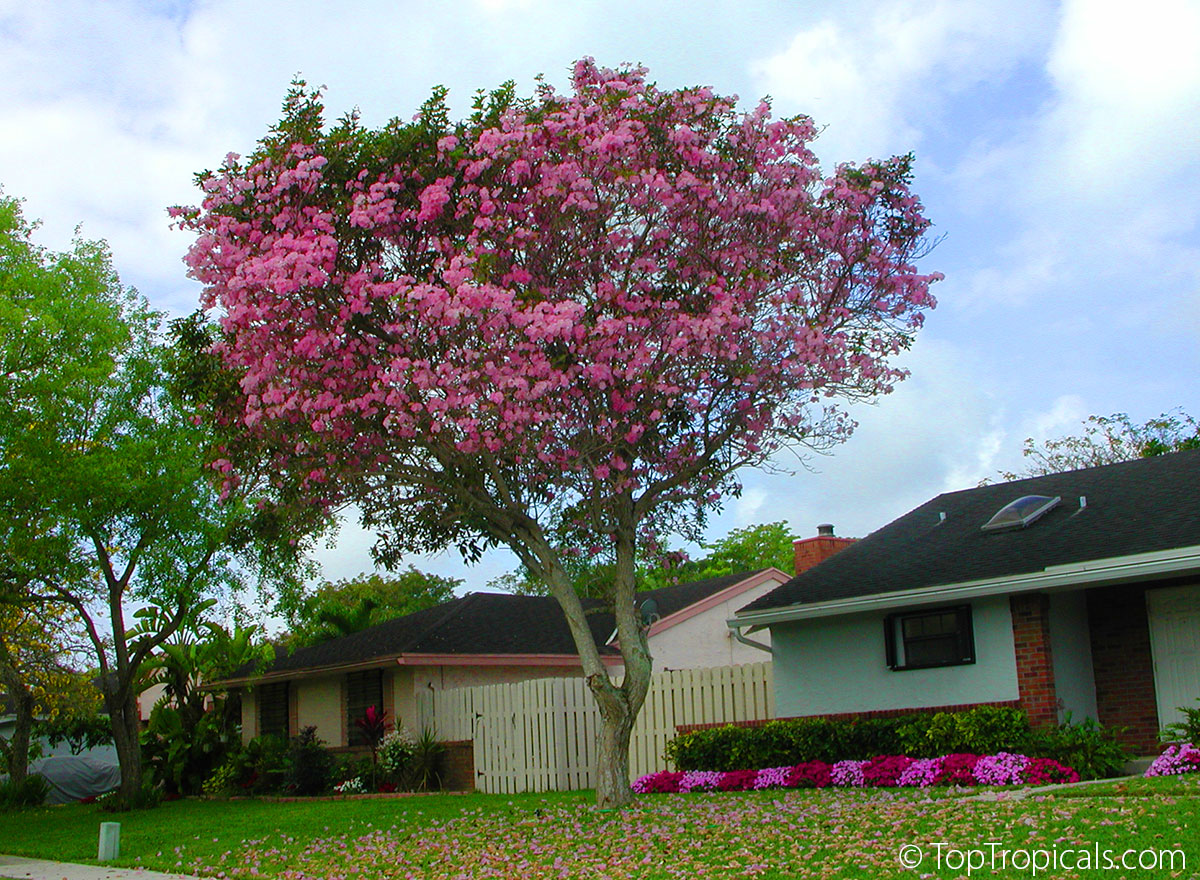
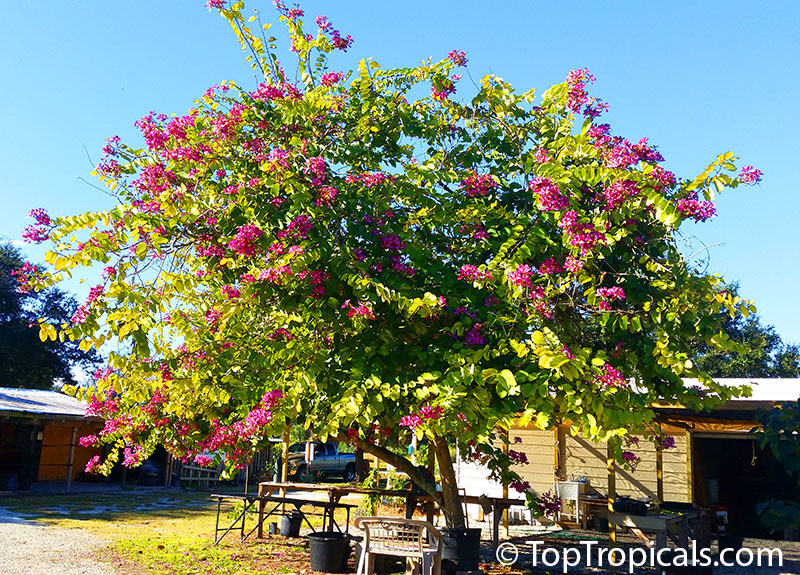
The most asked-about tree in the Sunshine State: Bauhinia
Purple Orchid tree - Bauhinia purpurea
🌸 The most asked-about tree in the Sunshine State: Bauhinia
🌸 If you visit Florida in winter, chances are you will notice a tree covered in orchid-like flowers and wonder what it is. That tree is often an orchid tree, most commonly Bauhinia purpurea. It is fast growing, wide spreading, and blooms from late winter through spring, sometimes with a second round in summer. The flowers range from magenta to lavender, are lightly fragrant, and stand out even from a distance. The leaves are just as distinctive - split into two halves like butterfly wings, which is why these trees are also called butterfly trees.
🌸 Orchid trees are easygoing and practical. They thrive in full sun, tolerate many soil types as long as drainage is good, and need little water once established. Growth is quick, often 2–3 feet per year, making them excellent shade trees for hot climates. The flowers attract bees, butterflies, and hummingbirds, and in some cultures the buds and blossoms are used in cooking, while the bark has a long history in folk remedies. Beautiful, useful, and low maintenance, orchid trees are a perfect fit for Southern landscapes.
Fruit Tree Hacks: 5 High-Yield Fruit Trees You Can Buy for Under $50
High-Yield Fruit Trees You Can Buy for Under $50
💲 Fruit Tree Hacks: 5 High-Yield Fruit Trees You Can Buy for Under $50
Starting a home orchard doesn’t have to cost a fortune. While high-end grafted Mangoes or Avocados can easily set you back $100 or more, there is a "secret category" of fruit plants that are affordable, fast-growing, and perfect for beginners. If you have a $40-50 budget and a small sunny spot, these five options provide the best "bang for your buck" in terms of growth speed and flavor.
1. Dragon Fruit: The Vertical Speedster
Dragon Fruit is the ultimate budget win. Because it grows from cuttings easily, nursery prices stay low. The Payoff: It grows incredibly fast. In a single season, a small pot can turn into a massive climbing cactus. Space Saver: It grows vertically on a post or trellis, making it perfect for side-yards or balconies. 👉 More...
2. Peanut Butter Fruit (Bunchosia)
This is the ultimate conversation starter for your garden. The Flavor: The fruit has a dense, sticky texture that tastes exactly like sweet peanut butter.
Why it’s a Bargain: It stays naturally compact (shrub-sized) and often begins fruiting in its second or third year - much faster than traditional fruit trees. 👉 More...
3. Blackberry Jam Fruit (Randia formosa)
If you love gardening in containers, this is your best friend. The Experience: You don't pick a bucket of these; you enjoy them as a garden snack. The pulp inside is black and gooey, tasting remarkably like high-quality preserves. The Price Point: Because it is technically a woody shrub, you can often find "ready-to-fruit" sizes for very reasonable prices compared to large-canopy trees. 👉 More...
4. The "Eugenia" Group (Surinam, Grumichama, Rio Grande)
Professional landscapers love this family of plants because they double as "Edible Hedges." Surinam Cherry: Extremely tough. It handles poor soil and neglect while producing star-shaped, ribbed fruits. Grumichama: Often called the "Brazilian Cherry," it produces a fruit that looks and tastes strikingly like a true Bing cherry but grows in warm climates where cherries usually fail. Cherry of the Rio Grande: A beautiful, upright grower with attractive peeling bark. It produces dark purple, teardrop-shaped fruits that are among the best tasting of all the tropical cherries. The tree is the most cold hardy of all eugenias. 👉 More...
5. Mulberries
While not on every list, a Mulberry is a budget powerhouse. They are often sold in small 3-gallon pots for $30-40 and will literally start popping out berries the same week you plant them. 👉 More...
👉 Pro Tip: How to Save Even More
To keep your costs down, look for these plants in 3-gallon containers.
Why? 3-gallon plants are the "sweet spot" for value. They are large enough to be established and hardy, but they haven't reached the premium price point of 7 or 15-gallon "instant landscape" trees.



 How to Care for Winter-Flowering Trees