Date: 26 Aug 2024
Top ten fast-fruiting trees
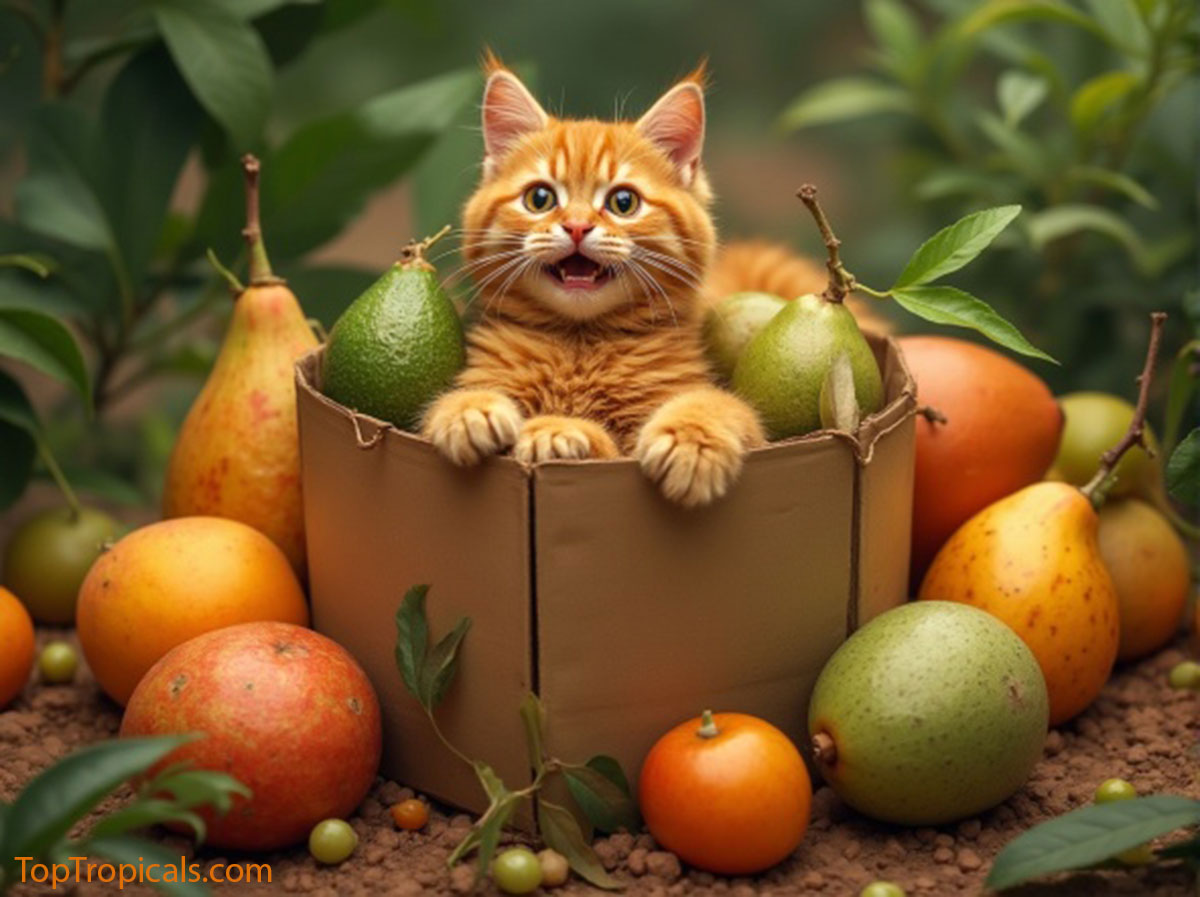
Q: I would like to plant several fruit trees... I am 85 years old and hope to see them fruiting soon. What fruit trees can you recommend that will fruit quickly?
A: Most grafted fruit trees, such as Mango, Avocado, and Peaches, will fruit quickly - often within the same year or the next. There are also many wonderful tropical fruits that will produce for you within a year or two, even without the need for grafting. Below are the top 10 of most popular, most rewarding and easy to grow fast fruiting tropical trees:
1. Annona - Sugar Apple, Custard Apple.
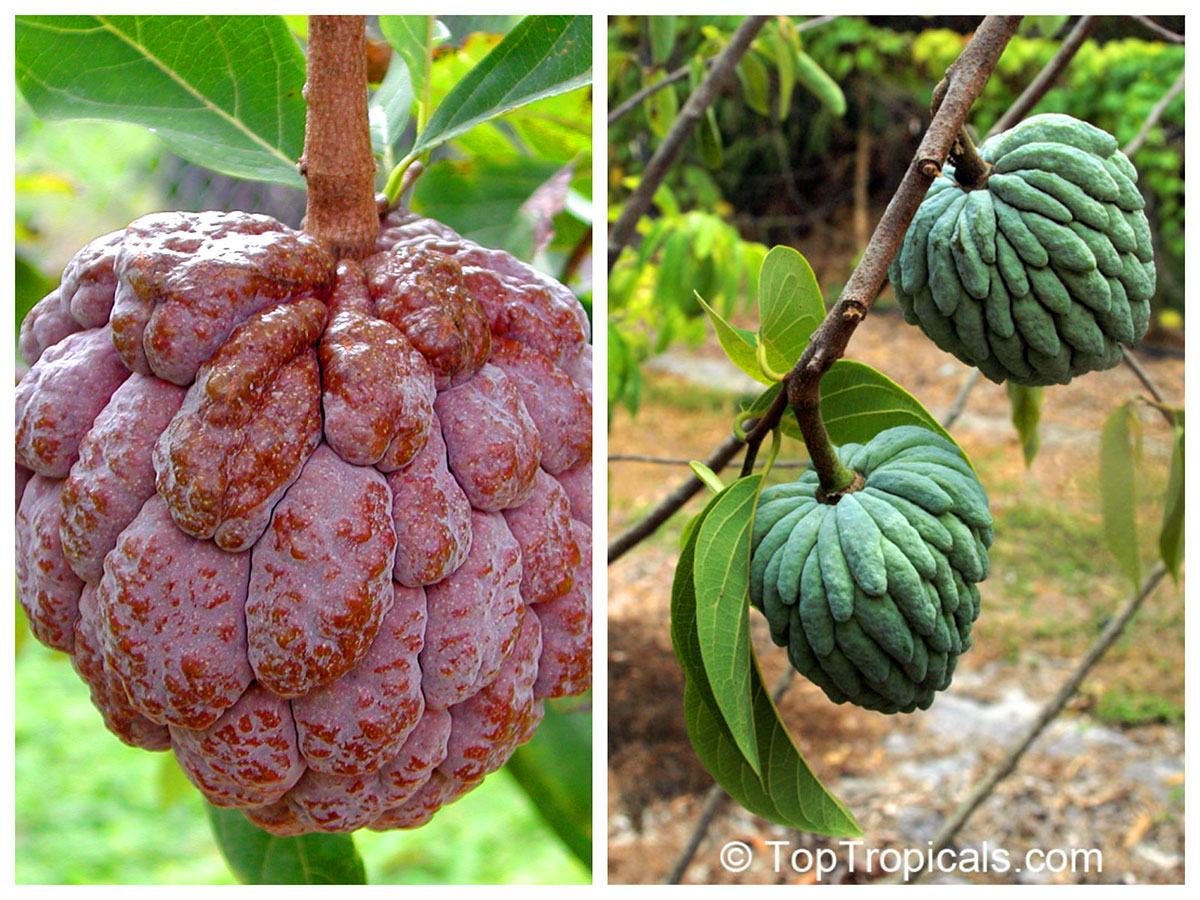
Annonas are the fastest fruiting trees: 2-3-4 years from seed to fruit, depending on species. They are the best tropical fruit trees suited for container growing, due to their small height and can be maintained within 6-8 ft tall.
2. Guava (Psidium sp.): Cattley and Tropical guava
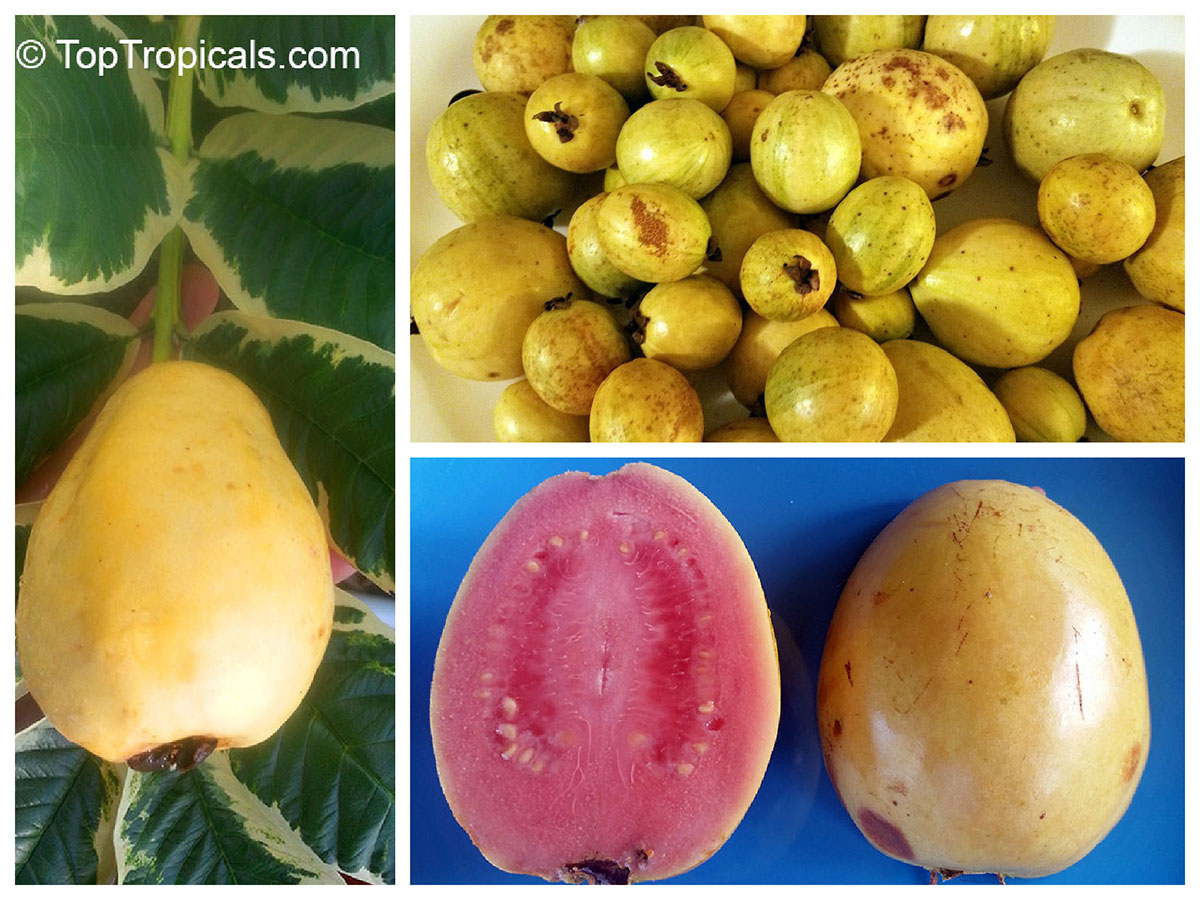
Guava is a reliable producer, starts fruiting in a pot at small size. Some varieties, especially Cattley guavas - Psidium littorale - are relatively cold hardy and can take some frost without damage. Guavas are fast growing small trees or large bushes.
3. Eugenia - Tropical Cherries
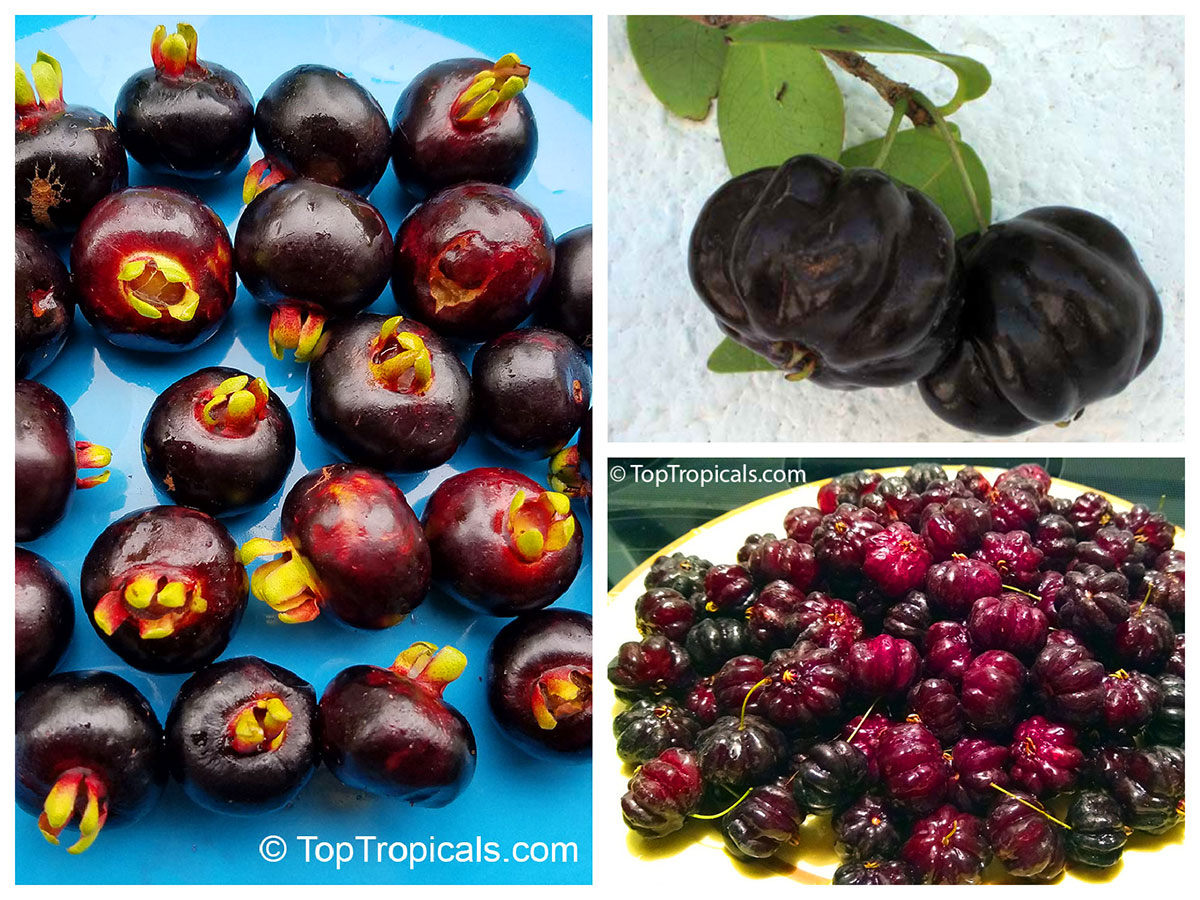
Eugenias are favorites of Southern gardens. They are relatively cold hardy and start producing right away. Black Surinam Cherry Lolita and Grumichama are our favorites!
4. Barbados Cherry (Malpighia glabra)
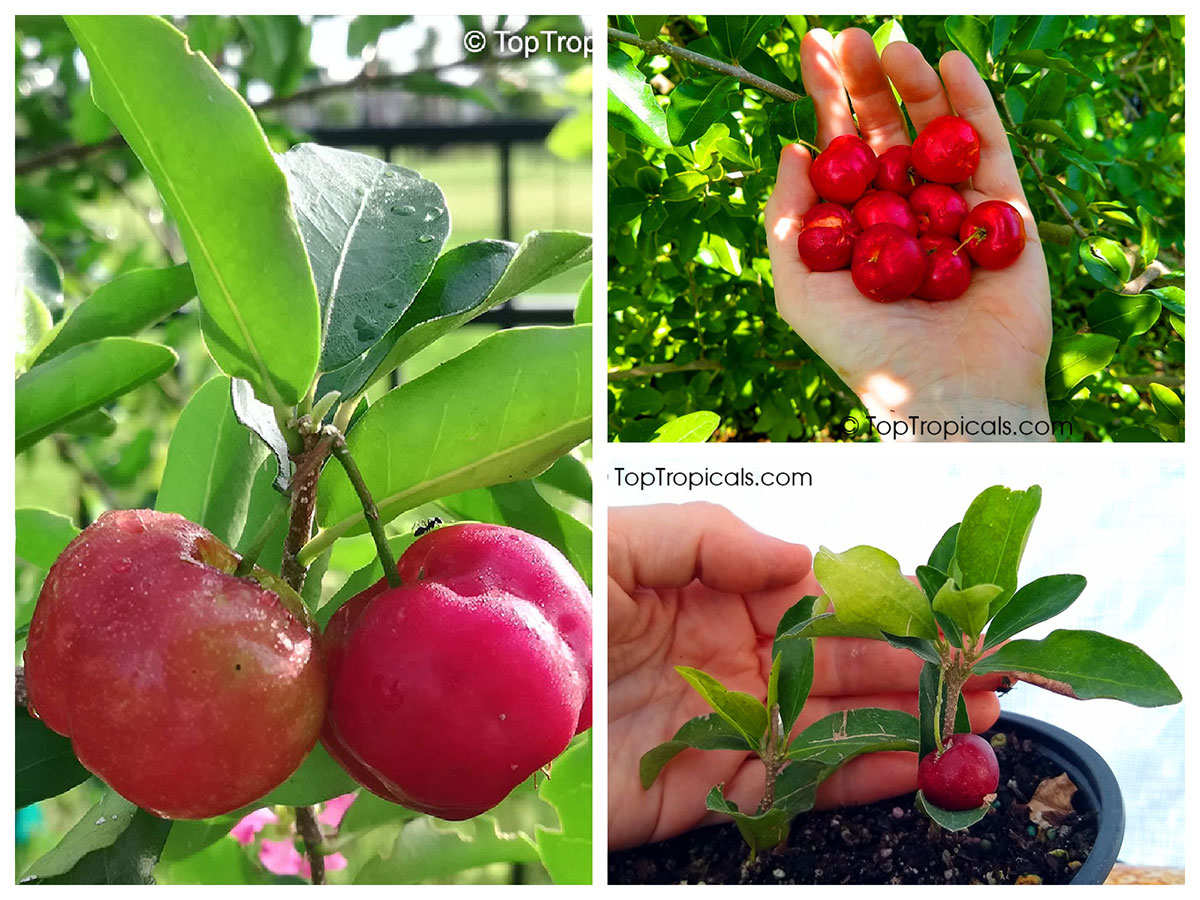
Another exceptional tropical cherry is Barbados Cherry. It is super popular as a heavy producer. The plant can start fruiting when it's only a few inches tall! If you are looking for a compact, but fast growing tree with colorful fruit that starts fruiting right away - plant Barbados Cherry. It will also happily fruit in containers.
5. Eriobotrya (Eriobotrya japonica)
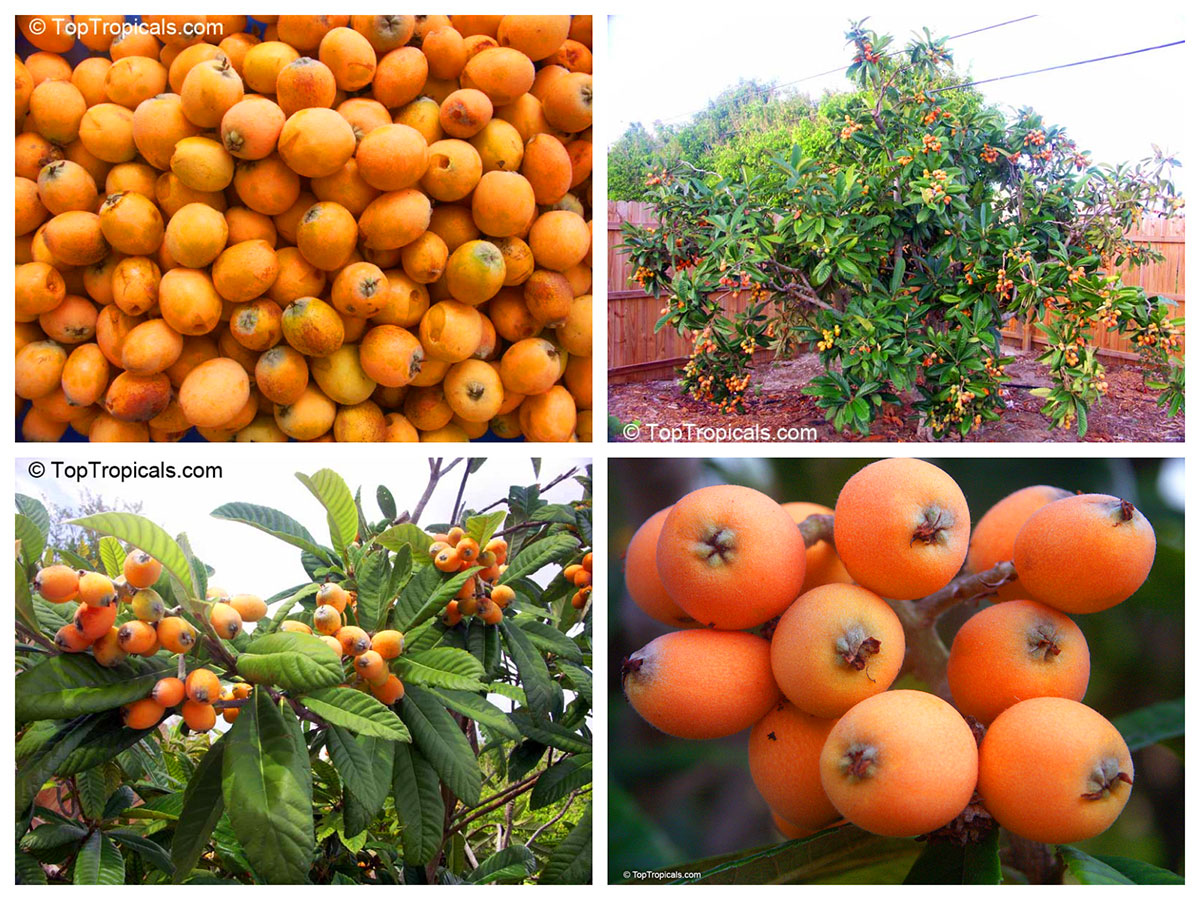
Loquat tree is fast-growing, drought-tolerant, cold-tolerant, compact tropical fruit tree. It is a heavy producer. Fruits are juicy, aromatic, and resemble apricots. Ripen from early Spring to early Summer. Ideal for small gardens, beginner fruit tree growers.
6. Papaya (Carica papaya)
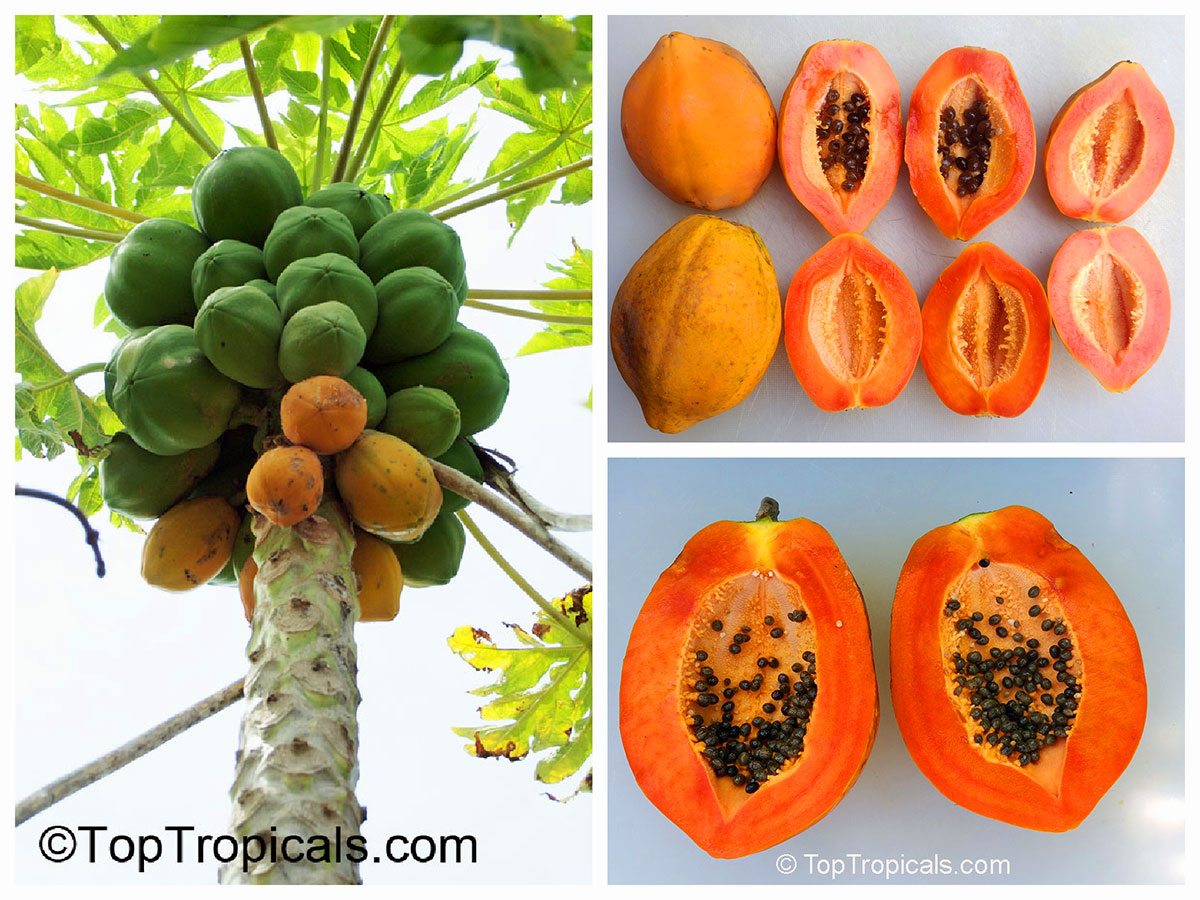
Papaya is probably the fastest fruiting tree that can start production the same year from planting a seed. Many dwarf varieties available in selection, reaching only 6-8 ft tall, but producing large crops of full size fruit - they are easy to harvest. Plant 2-3 Papaya trees of different cultivars that fruit at different times of the year and enjoy heavy crops of healthy fruit year around! Another benefit - this tree doesn't take much space in the garden, you can plant as many as you want.
7. Mulberry (Morus hybrids)
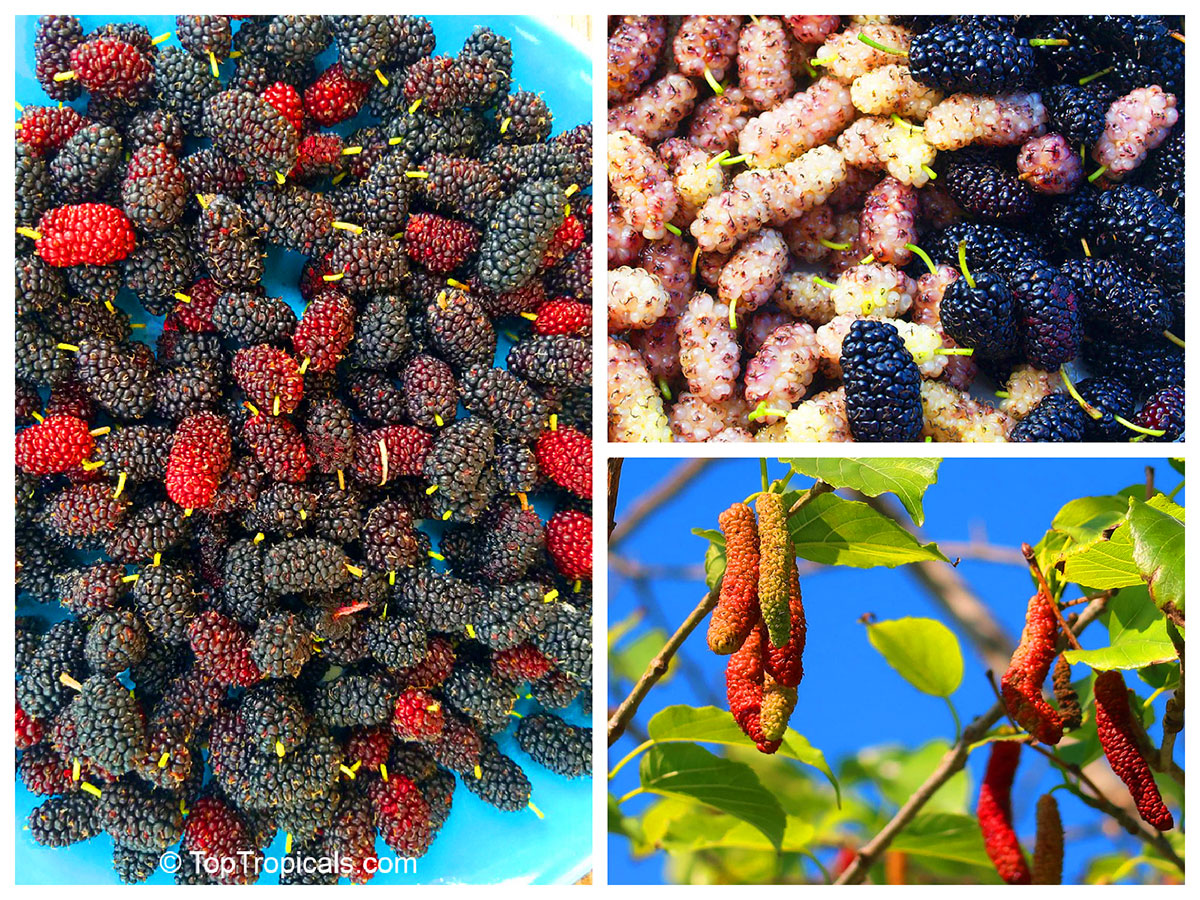
Mulberry is very cold hardy and can grow in wide range of climate zones, from USDA 5 to 10. Everyone knows this sweet, tasty, juicy fruit. The tree will produce right away, you will see fruit the next season after planting, and the tree grows fast.
8. Carambola - Starfruit (Averrhoa carambola)
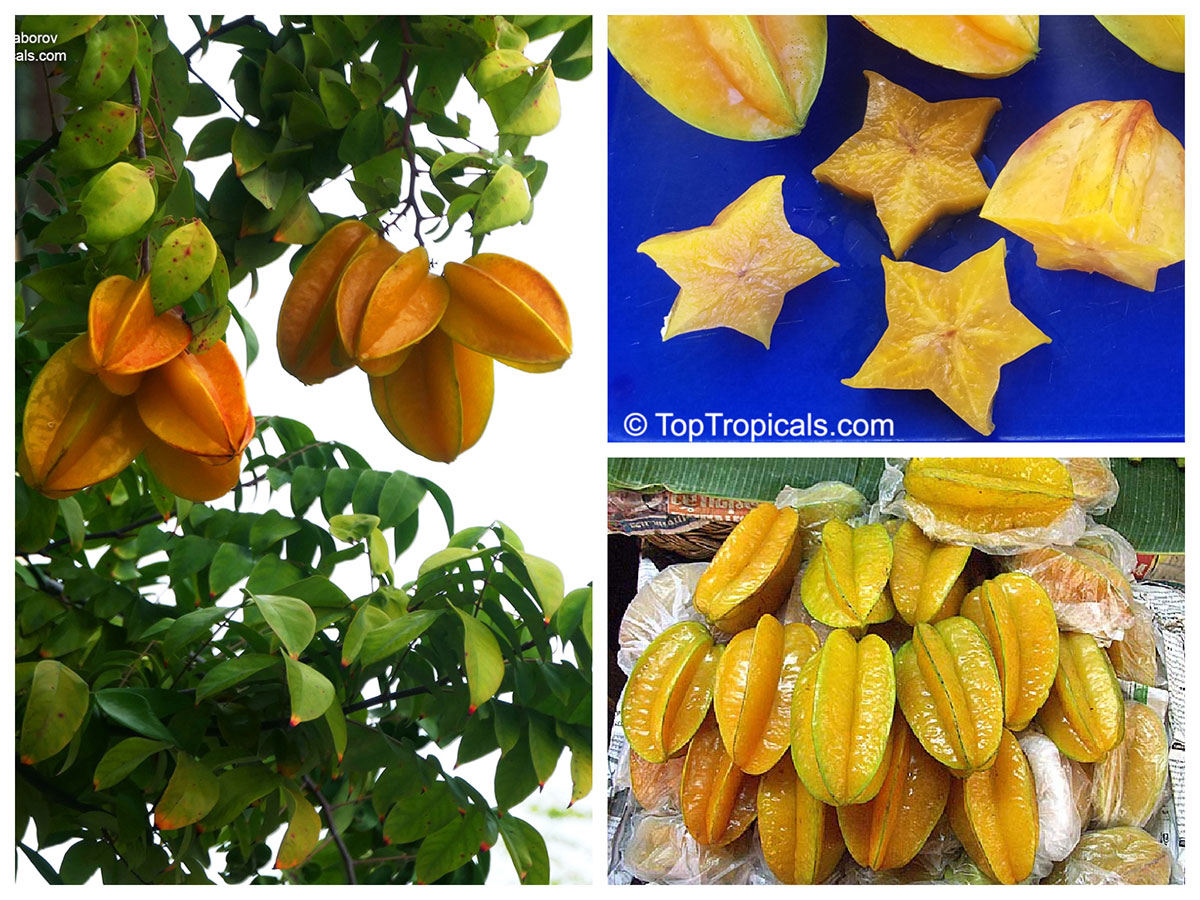
Growing Carambola tree is a fun and rewarding way to enjoy this unique star-shaped delicious fruit right at home. It fruits on the 3d year from seed. The tree is easy to grow and reliable producer, providing wind protection.
9. Blackberry Jam Fruit (Randia formosa)
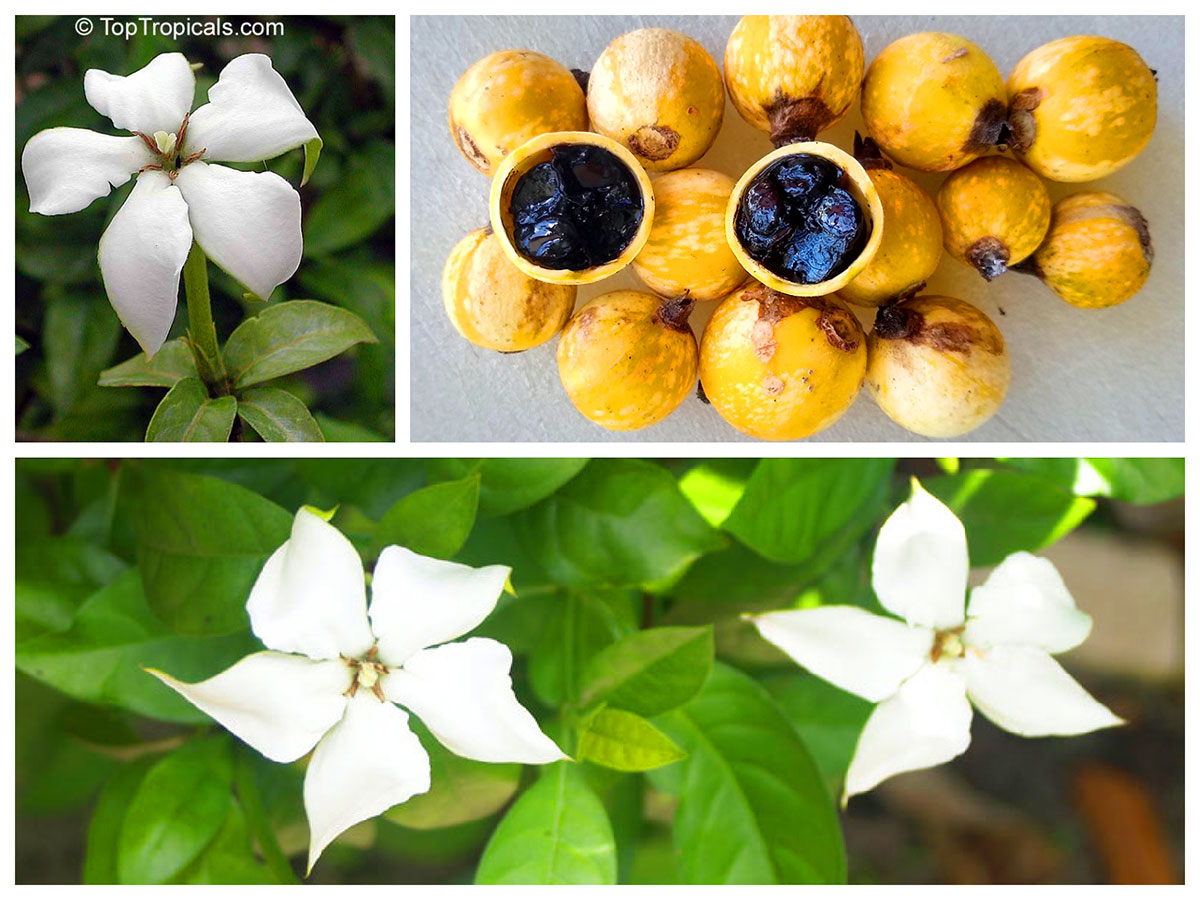
Blackberry Jam Fruit, Jasmin de Rosa is a curious small evergreen tree or bush that combines features of a fragrant flower and delicious dessert fruit which tastes like fresh Blackberry jam. Fragrant white flowers are similar to Gardenia.
10. Peanut Butter Tree (Bunchosia argentea)
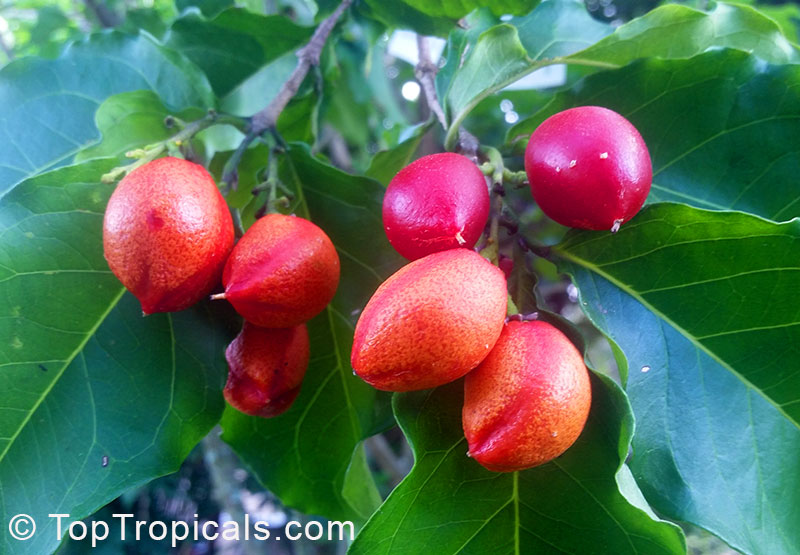
Peanut Butter Tree, earns its name from its fleshy fruits that boast a delightful peanut butter flavor. Compact in size, small tree reaching only 10-15 ft or kept as a bush, it's a perfect choice for limited spaces. Can thrive indoors, starting to fruit within just 2-3 years from seed.
Date: 16 May 2024
When Bigger means Better
Everybody loves shopping online nowadays, and plants are no exception. Buying plants by mail order is not uncommon anymore; it only takes one click, and luckily, there are many sources - from big shopping malls like Amazon to small backyard nurseries that sell their seedlings on eBay or Facebook - all delivered to your door. But plants are alive... So when doing your online plant shopping, you must ensure that you fully enjoy your experience and are happy with a healthy plant that a) doesn't die; b) recovers quickly; and c) starts growing fast, so you can see flowers and fruit as soon as possible.
The rule of thumb for shipping plants: bigger plants undergo shipping better, experience less stress, less leaf drop, and recover quicker than plants with smaller root systems. So when it comes to buying plants online, the bigger, the better. Unfortunately, many mail-order plant sources may sell you a tiny twig that has very few chances of surviving. Shipping is very expensive today, so shipping a bigger size plant may cost more than the plant itself.
Below is a piece of advice on how to make the best plant selection for your garden...
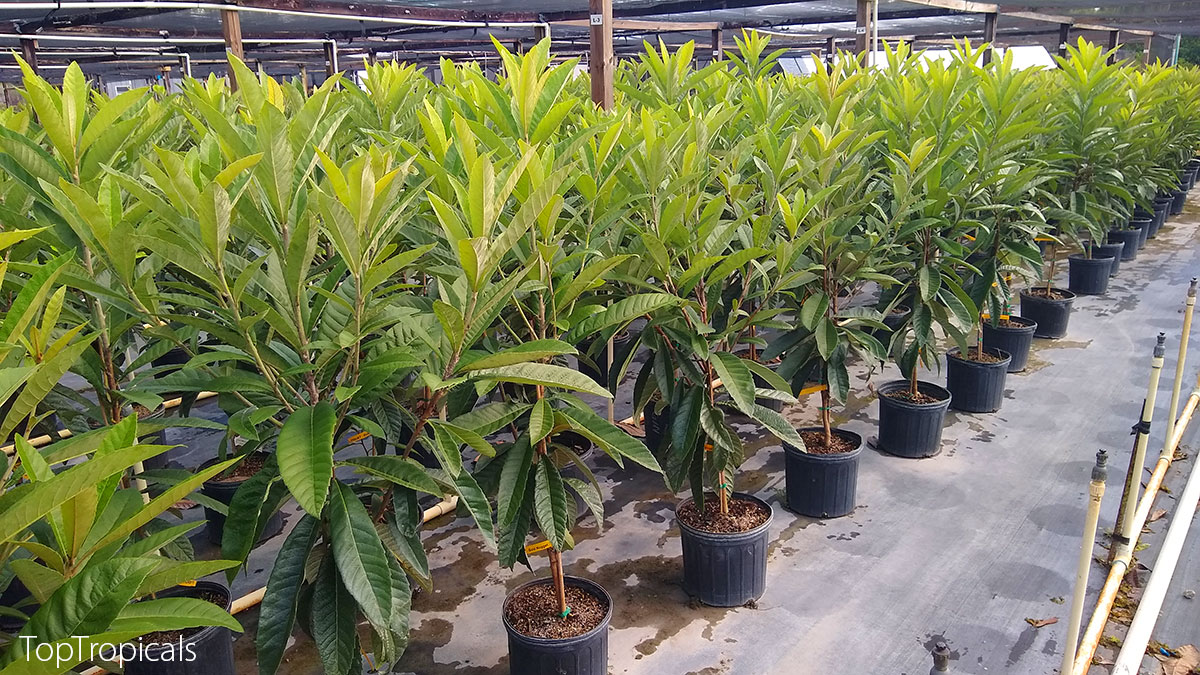
Photo above: Loquat trees in 3 gal containers.
5 important rules on how to buy trees online
1. Find a source with bigger plants. Check reviews, ask friends
for recommendations, inquire from the company about the size of their plants
and how they pack their plants for shipping.
TopTropicals offers well-established, strong plants with developed root
system, in container sizes 1, 3, 7, 15 gallon, directly from a tropical
Florida growing farm. Our unique plant-packing techniques are state of the art!
2. Price not always reflects the size and quality of the plant
TopTropicals offers many deals, discounts and sales, while still
providing the biggest and strongest plants grown in real tropical conditions.
3. Most fruit trees must be grafted to produce good fruit. Make
sure you are not purchasing a seedling when it comes to Mango, Avocado,
Peaches and some other trees with named varieties that don't come true to seed.
TopTropicals offers only grafted - Mango,
Avocado and a large number of other tropical cultivars.
4. Pick up when possible from the nursery your ordered from, or
get a delivery, instead of shipping the plants. A drive to the nursery will save you more time and money in the
future, plus you can hand-pick the biggest and healthiest specimens.
TopTropicals is open 7 days a week for your convenience. Visit our Ft Myers Garden Center or Sebring Farm to select the biggest plants.
5. Take advantage of X-Large size plant material if you live
outside the tropical zone and are trying to zone-push your tropical garden.
Bigger plants will establish faster and have more chances to survive cold winters.
Again, it will save you money in a long run (although bigger plants may be
more expensive, but their survival rate is much higher when it comes to cold
nights).
TopTropicals offers X-Large flowering and fruiting trees (7-15-25
gallons), and most of the varieties you see in our online
store can be custom-ordered in big sizes. Delivery and installation
available.
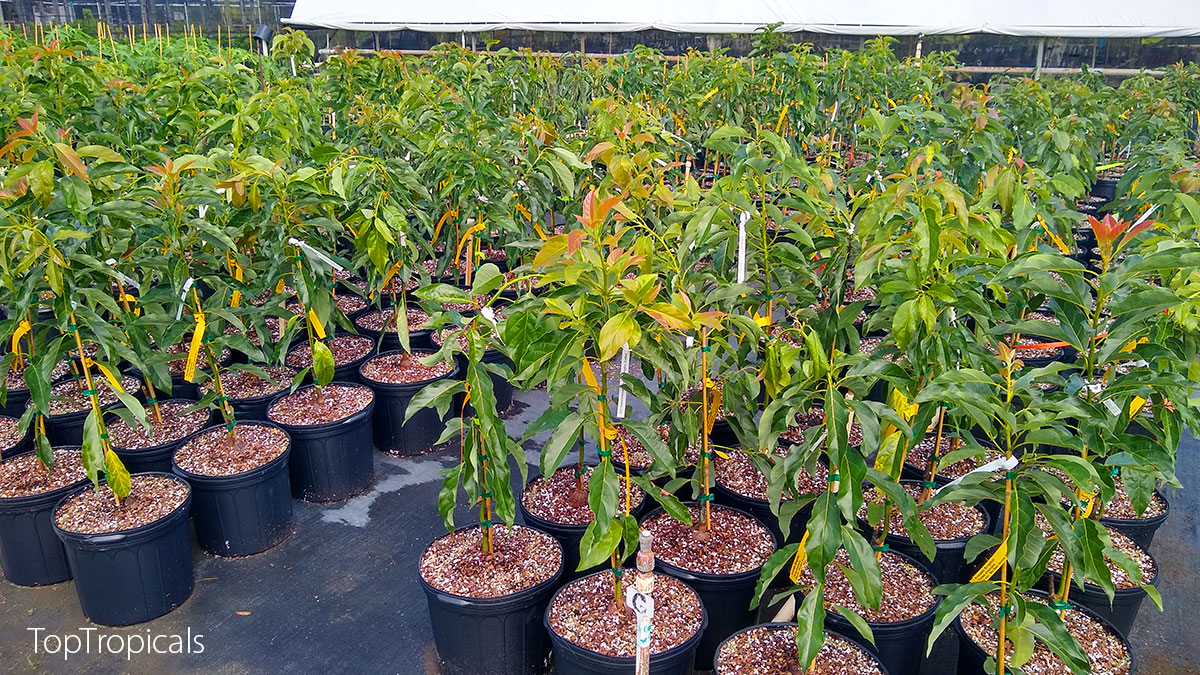
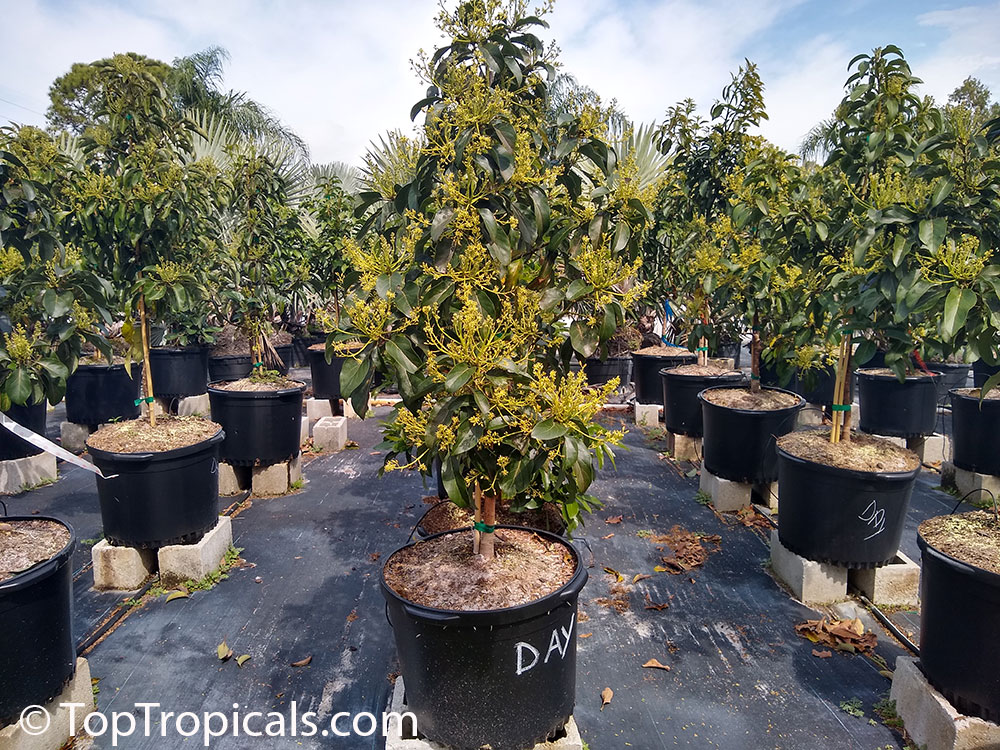
Photo above: Avocado trees in 7 gal containers.
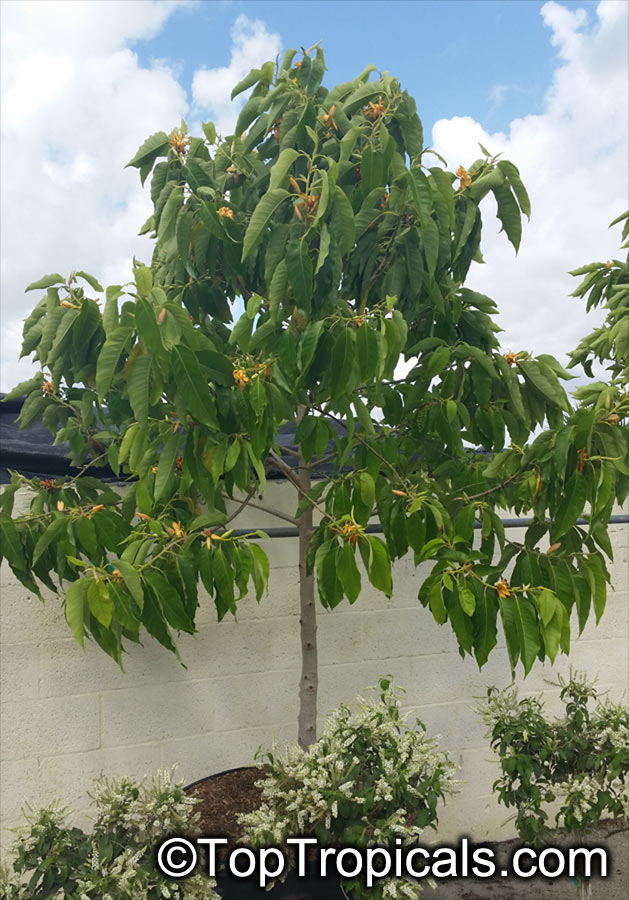
Photo above: Magnolia champaca
Date: 10 Jun 2024
Shade
Tree Discount Program
How to reduce an electric bill and energy costs?
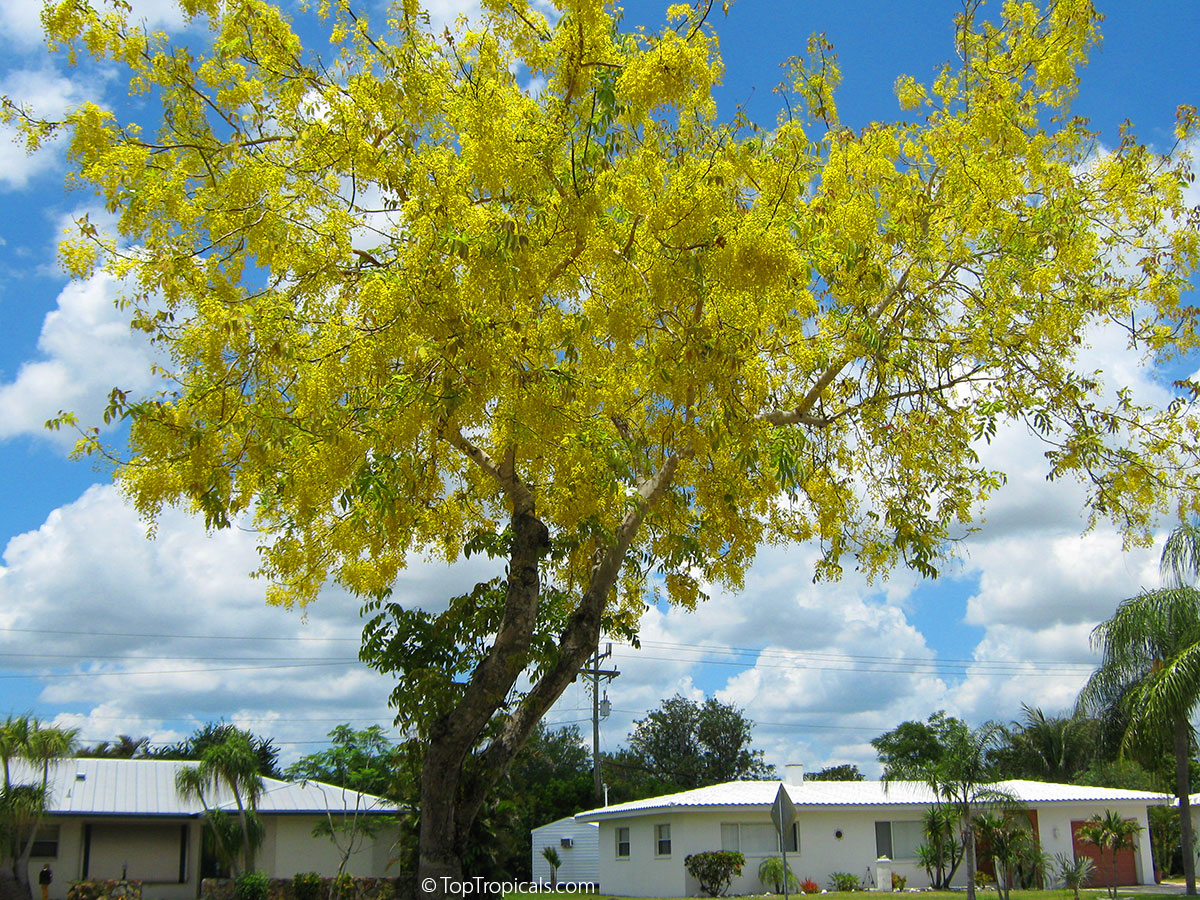
Photo above: Cassia fistula - Golden Shower Tree - one of the most popular trees. This all time favorite is fast growing and elegant.
Q: How to reduce an electric bill and energy costs?
A: This summer is expected to be hot. And the next summer... and next... Want to reduce your electric bill and energy costs? There is an excellent solution: plant a shade tree! Once fully grown, these trees will help keep your house cooler and lower your energy expenses.
Today we are offering a special discount you can use for purchasing
trees that will keep your homes cooler in Summer and gardens warmer in Winter!
Check out Fast
Growing Shade Trees, as well as other flowering trees and fruit trees and use discount below:
GETSHADE
Your savings with this code:
5% off orders $100+
15% off orders $150+
20% off orders $200+
Excluding S/H. Excluding 15 gal material. Exp. 6-12-24
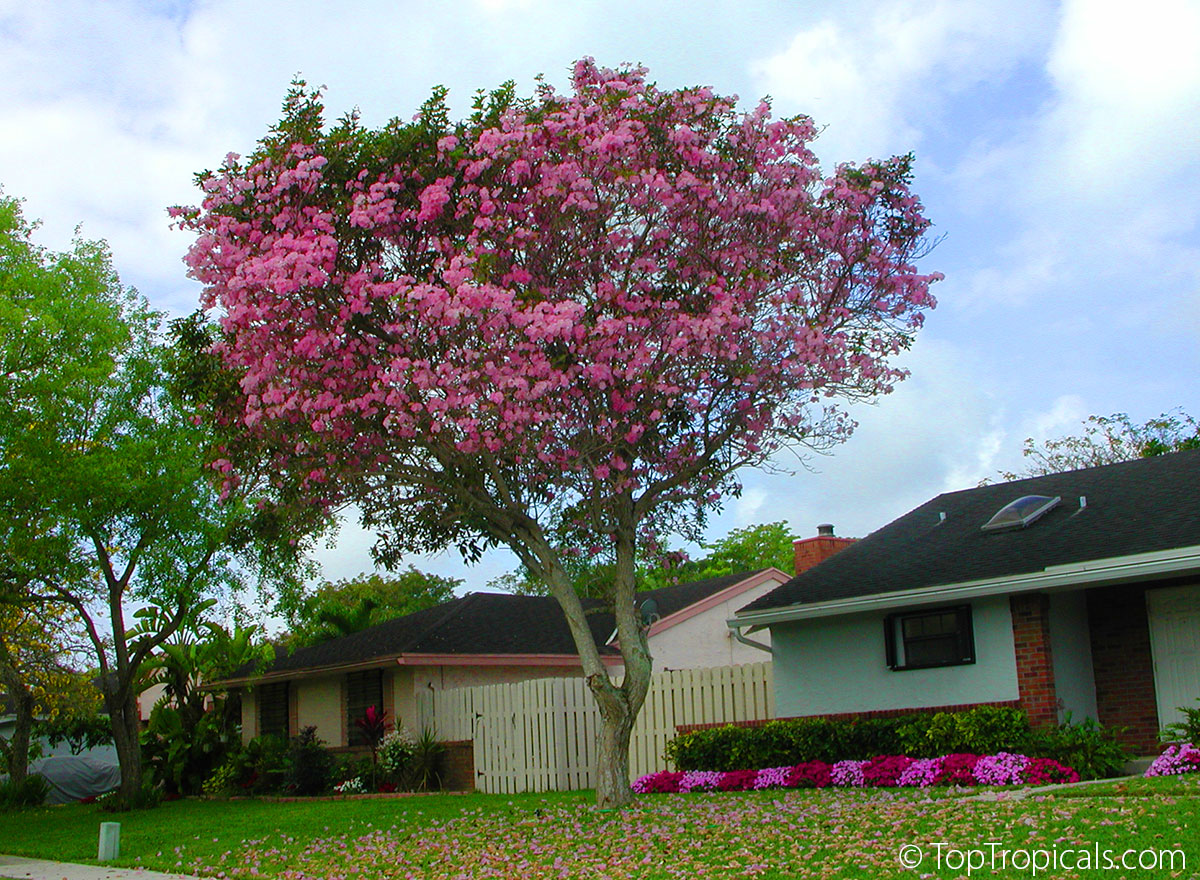
Photo above: Tabebuia - spectacular winter bloomer.
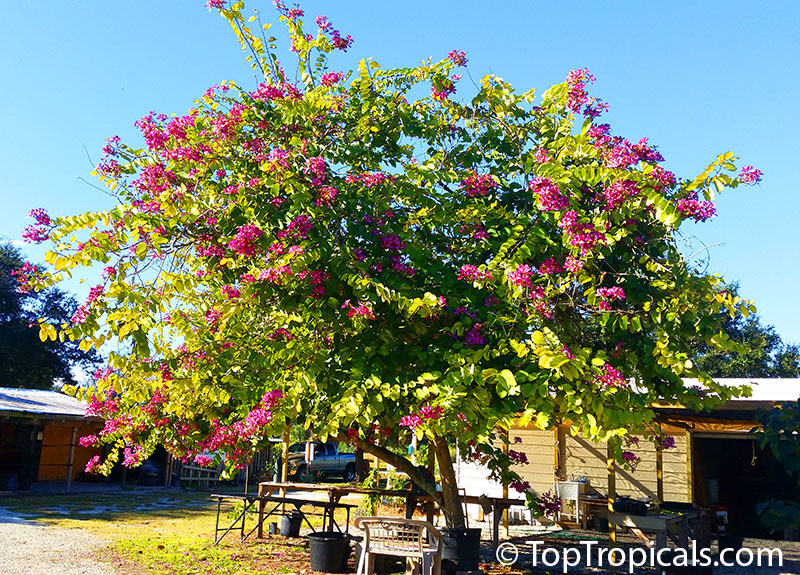
Photo above: Bauhinia blakeana - Hong Kong Orchid Tree. The most beautiful of all orchid trees.
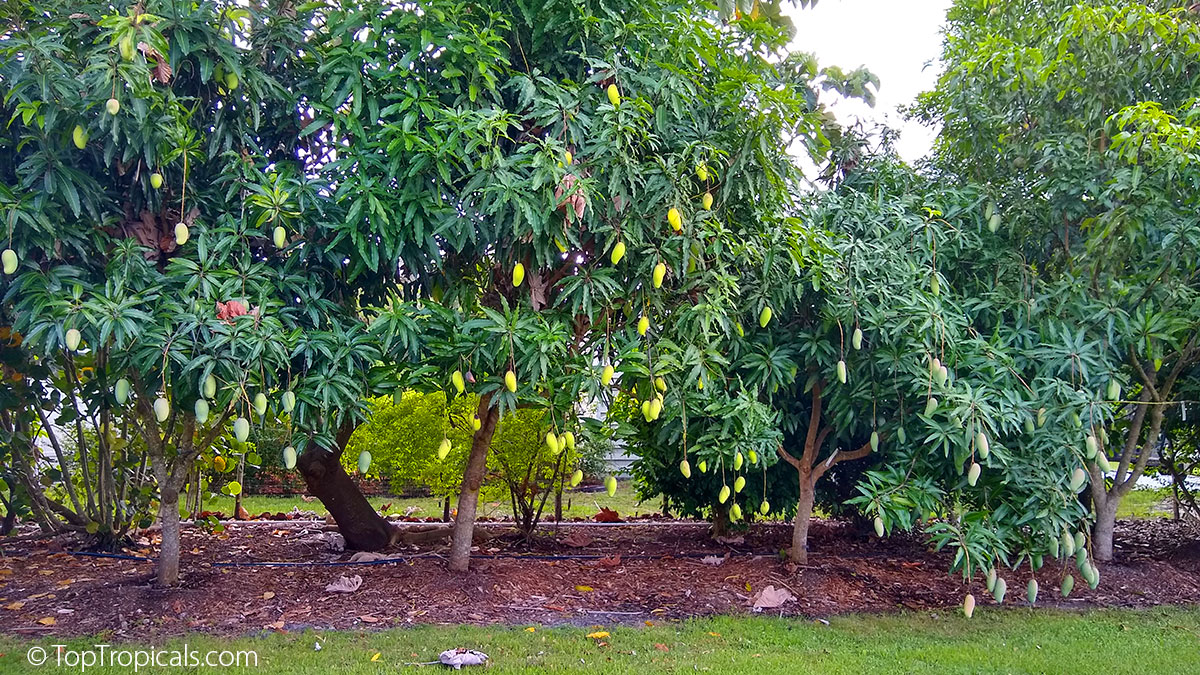
Photo above: Mango trees now. Many varieties are vigorous, large trees.
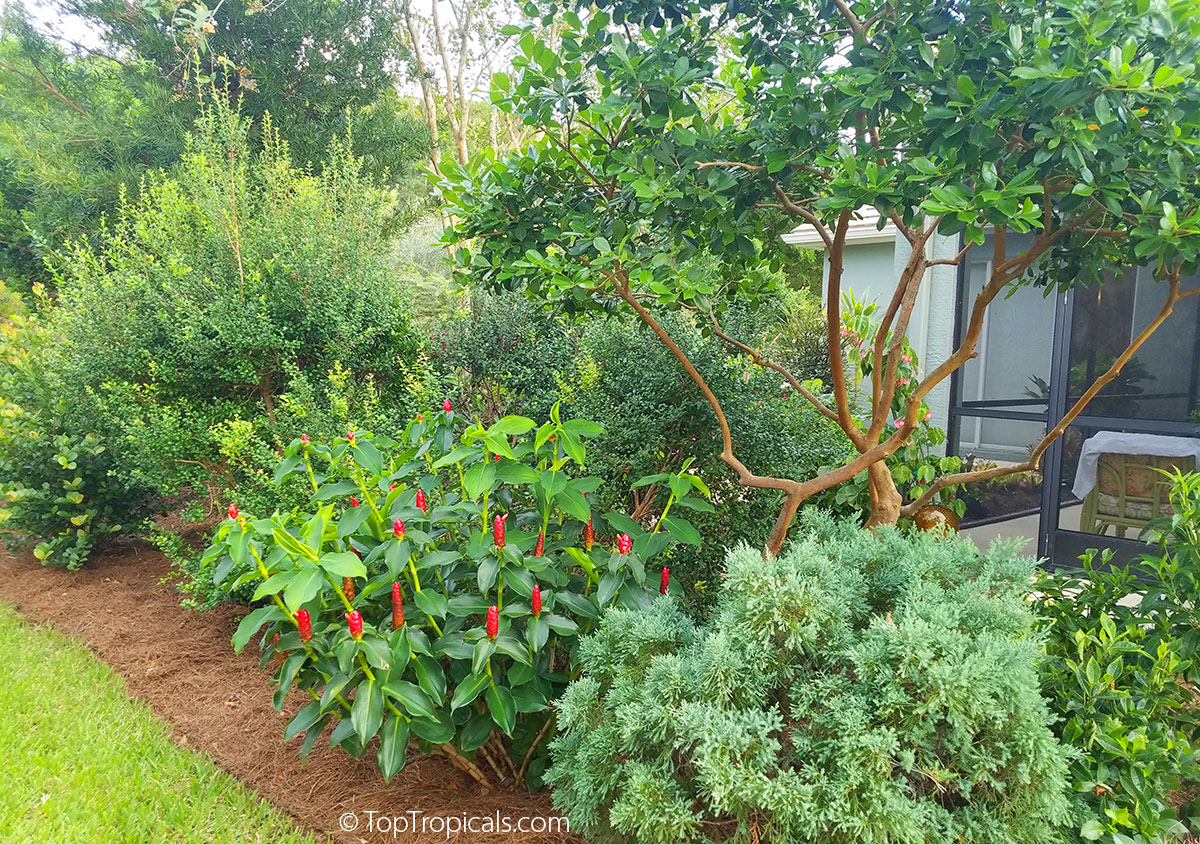
Photo above: Cattley Guava Tree is an elegant solution for small spaces. Red Button French Kiss Ginger
Date: 20 Feb 2026
What tropical plants survived Floridas historic freeze without protection
Florida historic freeze
In the first week of February 2026, arctic air pushed deep into Florida. For many areas, this was the coldest event in over a century.
We received one question over and over: How did your gardens do?
Top Tropicals Farm in Sebring, Florida is up and running - and this freeze became a real-world hardiness test for tropical and subtropical plants. Below is our initial field report after inspecting established plantings.
📊 Weather data - February 1-6, 2026
Sebring, Florida - 132 years of recorded observations
This was not a light frost. It was prolonged, windy, penetrating hard freeze.
🌡 Minimum temperature: 25F
❄️ Wind chill: 14F
⏳ Duration: 3 nights of 8-10 hour hard freeze
☀️ Daytime temperatures: around 50F for 7 days
🌀 Wind: sustained 20 mph, gusts 40-50 mph
Cold protection
In-ground trees: selected plants covered with frost cloth, especially mango and young avocado trees.
Tender container plants: moved into greenhouses with propane heat above 34F.
Hardy container plants: frost cloth and wind protection only - no plastic
Nutrition support: plants fertilized regularly during the growing season with Green Magic and Sunshine Boosters to maintain vigor and hardiness.
However, the plants listed below had no protection at all.
All were established trees 2-3 years in the ground.
The plants below had NO PROTECTION, established trees 2-3 years old
✅ Survived with no damage:
🍑 Tropical Fruit Trees and Edibles:
Citrus
Loquats
Mulberries
Macadamia Nut
Jaboticabas
Pomegranates
Avocado - cold hardy varieties
Feijoa - Pineapple Guava
Psidium littorale - Cattley Guavas
Eugenias (Grumichama, Rio Grande, Surinam and more)
Olive trees
Bay Leaf (Laurus nobilis)
Fig trees (Ficus carica)
Prunus sp - Peaches, Plums, Nectarines
Persimmons
Rubus (Blackberries) including Tropical Mysore Raspberry
Elderberry (Sambucus)
Yerba Mate - Ilex paraguariensis
Opuntia - Nopal Cactus, Prickly Pear
🌸 Flowering Trees and Shrubs:
Beaucarnea recurvata - Pony Tail
Callistemon - Bottlebrush
Yucca
Tabebuias
Magnolia figo and Little Gem
Calliandra tweedii - Red Powderpuff
Sophora tomentosa
Galphimia gracillis - Thriallis
Acacia trees
Osmanthus fragrans
Abutilon trees
Erythrina - several species
Monkey Ear tree - Enterolobium cyclocarpum
Bauhinia Orchid Trees - several species
Pseudobombax ellipticum - Shaving Brush Tree
Bulnesia arborea- Vera Wood
Caesalpinia mexicana, Mexican Bird of Paradise
Sansevieria - Snake Plant
Foxtail fern - Asparagus densiflorus
Lonicera - several varieties
Jacaranda tree
Eucalyptus
Plumbago Imperial Blue
Philodendron bipinnatum
Gardenias
Gingers (dormant rhizomes)
✳️ Minimal leaf damage only:
(These plants showed light cosmetic damage but no structural injury)
🍑 Tropical Fruit Trees and Edibles:
Glycosmis pentaphylla - Gin Berry
Black sapote tree
Tamarind tree
Syzygiums: Rose Apple and Java Plum
🌸 Flowering Trees and Shrubs:
Pandora vine
Jasminum - several species
Stenocarpus sinuatus - Firewheel Tree
Xanthostemon
Quisqualis indica
Schotia tree
Eranthemum pulchellum - Blue Sage
Hiptage benghalensis - Helicopter Flower
🏡 What this means for Florida gardeners
This freeze was a stress test few gardens are prepared for. Yet many species handled 25F, wind, and multi-night freeze conditions without protection.
Choosing proven survivors, planting in smart microclimates, and maintaining strong plant health during the growing season makes a measurable difference.
More updates will follow as full recovery continues - but these early results already help define a stronger plant palette for future winters.
🛒 Explore cold tolerant tropical plants and cold hardy Avocados
📚 Learn more:
- · To trim or not to trim? When and how to trim damaged plants after winter
- · Cold-hardy avocado varieties - what freezing they really survive
- · Cold-hardy avocado survival groups - what the numbers really mean
🎥 These Avocados survived 3 nights of 25F hard freeze, Florida Record Freeze
#Discover #How_to
🟢 Join 👉 TopTropicals
Date: 7 Oct 2025
🌸 Caring for Winter-Blooming Trees
Tips from Top Tropicals Plant Expert - Tatiana Anderson
When northern gardens fade into gray, our tropicals wake up. Winter is color season here - and even if you live up north, you can still enjoy these same flowering trees indoors or on a sunny patio.
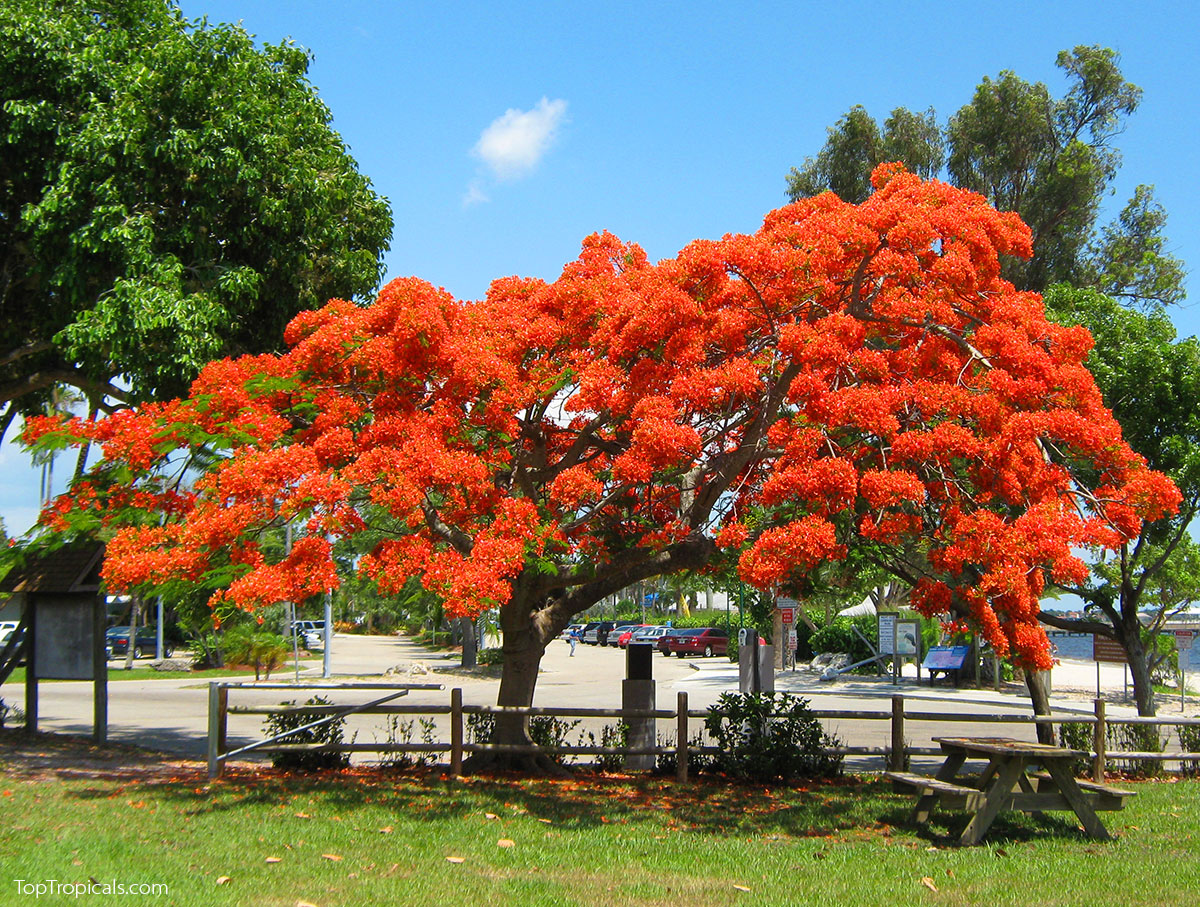
From the fiery Royal Poinciana to the golden Tabebuia and violet Jacaranda, these eight trees prove that winter can bloom anywhere
 How to Care for Winter-Flowering Trees
We're often asked, at Top Tropicals, “Can I really grow tropical trees in winter?” Yes — with the right light and care, you can. Here’s what works best both outdoors and indoors, according to our expert, Tatiana Anderson.
🌡️ Fall Planting Guide
Let’s talk about timing, because that’s the part most people get nervous about. Everyone asks: “Isn’t it too cool to plant now?” — and the answer is no! Fall and early winter are actually the best months for tropicals in Zones 9 to 11.
Here’s why: the air has cooled off, but the soil is still warm. Roots love that combination. They quietly spread underground while the rest of the plant takes a break. By spring, those roots are ready to feed a burst of new growth — and that’s when you’ll see the first big flush of flowers.
Pick a sunny spot that gets plenty of light — six to eight hours if you can. Loosen the soil and mix in compost or pine bark so it drains well. Dig a hole about twice as wide as the pot and just as deep. Set the plant level with the ground, backfill, and water it deeply to settle everything in. Then add mulch — two or three inches is plenty — but keep it away from the trunk so it can breathe.
Tatiana’s tip: “Fall planting builds roots while everyone else is resting. By spring, your tree wakes up ready to grow.”
🌳 Outdoor Care (Warm Climates Zones 9–11)
Now, let’s talk about what happens after planting — because real gardening starts once the plant is yours. Tropical trees thrive on routine: steady sunlight, deep watering, and just a bit of attention.
Water them about once a week when the weather is mild, more often if it’s dry or windy. Always check the soil first — if it feels dry two inches down, go ahead and water. Mulch helps more than most people realize — it keeps roots cool in summer and warm in winter, and it saves you from watering as often.
Now, for those of you in Zone 9, here’s the truth: your trees can take a chill, but they don’t love surprises. A quick night in the upper 20s F won’t hurt mature plants, but young ones appreciate a little help — a frost cloth or being planted at the south side.
And don’t underestimate the wind. Cold, dry gusts can burn leaves faster than frost. Use fences, hedges, or taller shrubs as windbreaks, and take advantage of microclimates — those warm pockets next to the house, brick patios, or corners that get extra afternoon sun.
Tatiana’s tip: “A tropical garden in Zone 9 isn’t about fighting nature — it’s about cooperating with it. Find the warm corners, protect from the cold wind, and your trees will thank you with flowers all winter.”
🏚️ Indoor & Patio Care (Cooler Climates)
For our northern friends — yes, you can grow tropicals indoors! You just need good light, warm air, and a little attention.
Pick a large pot, with drainage holes and a light tropical soil mix. Place it in a bright window — south or southwest if you can — or under grow lights for about 12–14 hours a day. Keep temperatures between 65 and 85 F, and water when the top inch of soil dries out.
Misting helps keep leaves clean and adds humidity. Rotate the pot every couple of weeks so all sides get sun. In summer, move your plant outdoors gradually so it can enjoy real sunlight — then bring it back in before nights drop below 40 F.
Tatiana’s tip: “Don’t be afraid of growing trees in pots. They adapt beautifully — just select the right trees and pay attention to their needs.”
✔️ Learn more: Secrets of Winter planting - tropical planting breaks the rules.
🎥 Watch short videos about Winter Bloomers:
💲 Special Offer – 20% off Winter Bloomers!
Get 20% OFF winter bloomers with code
BLOOM2025
Min order $100. Excluding S/H, valid online only, cannot be combined with other offers.
Hurry, offer expires October 13, 2025!