Garden Blog - Top Tropicals

Date: 11 Nov 2025

Fruits with the most vitamin E, according to dietitians

Fruits with the most vitamin E

Fruits with the most vitamin E

🥭 Fruits with the most vitamin E, according to dietitians


🔛 Vitamin E works as an antioxidant that helps fight inflammation throughout the body. While nuts and seeds top the charts, some fruits quietly add their share to your daily needs - especially when eaten with a bit of healthy fat. According to New York City Nutrition, vitamin E anti-inflammatory action supports heart, brain, and skin health.
🔛 Vitamin E is a fat-soluble vitamin that acts as an antioxidant, meaning it fights inflammation in the body. Because of this anti-inflammatory role, vitamin E is beneficial for immune health, heart health, eye health, brain health, and skin health.

🔛 Adults need about 15 milligrams a day, according to the National Institutes of Health. Deficiency is rare, but it’s smart to get vitamin E from a variety of foods. Fruits alone don’t provide large amounts, but they can complement vitamin-E-rich foods like almonds or sunflower seeds.

🔛 Since vitamin E needs fat for absorption, pair fruit with something creamy or crunchy - like yogurt, olive oil, nuts, or seeds - for best results.

🔛 Here are some fruits that naturally offer vitamin E:
  • 🍊 Sapote 1 cup = 3.7 mg vitamin E. A tropical favorite with rich orange flesh and a flavor somewhere between pumpkin pie and sweet potato, with hints of honey and almond, Sapote is great fresh, blended in shakes, or scooped over ice cream. It also packs calcium, iron, potassium, and vitamins A and C.
  • Blackberries 1 cup = 1.7 mg vitamin E. Deep color, bold flavor, and plenty of antioxidants, Blackberries are high in fiber and low in calories. Dietitian Keri Glassman calls them her top fruit for fighting inflammation.
  • 🥭 Mango 1 cup = 1.5 mg vitamin E. The “king of fruits” brings more than tropical sweetness, Mango supports digestion, helps you feel full longer, and delivers both vitamin A and E in one juicy package.
  • 🍉 Guava 1 cup = 1.2 mg vitamin E. This fragrant fruit has a flavor that lands between strawberry and pear, Guava is also one of the highest-fiber fruits and surprisingly rich in protein for a fruit.
  • 🍑 Persimmon 1 fruit = 1.2 mg vitamin E. An autumn favorite that looks like an orange tomato but tastes sweet and mellow, Persimmons are rich in vitamins A and C and make a colorful, fiber-filled snack or dessert.
  • Avocado 1 fruit = 0.9 mg vitamin E. Creamy, mild, and versatile, Avocado’s healthy fats help your body absorb vitamin E while protecting heart health. Try it on toast, in salads, or as a smooth butter substitute in baking.

🛒 Plant more remedies in your food forest

📚
Learn more:
Plant a fruit tree - and breathe easier: fruit might be the surprising key to healthier lungs
11 tropical fruits to eat instead of taking a fiber supplement
Tropical fruit health benefits guide - what fruit and edibles can help with health issues and vitamin deficiencies, Part 1 and Part 2.
Five best fruit trees to plant in Summer
10 best fruit trees to grow in Florida and Southern landscapes
Top 10 fruiting plants you'll ever need for your health benefits

#Food_Forest #Remedies #Discover

🟢 Join 👉 TopTropicals
Date: 22 Nov 2025

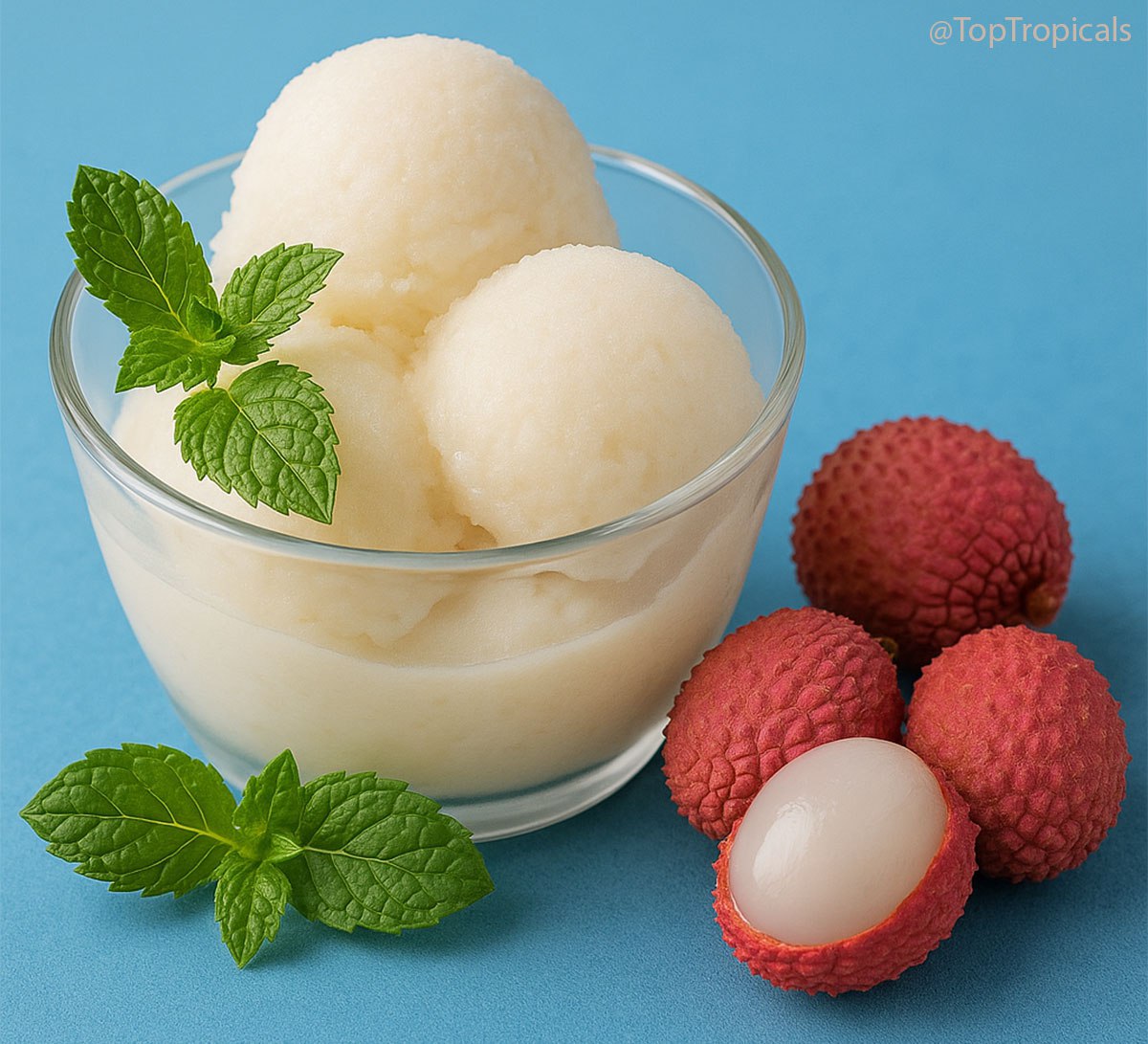
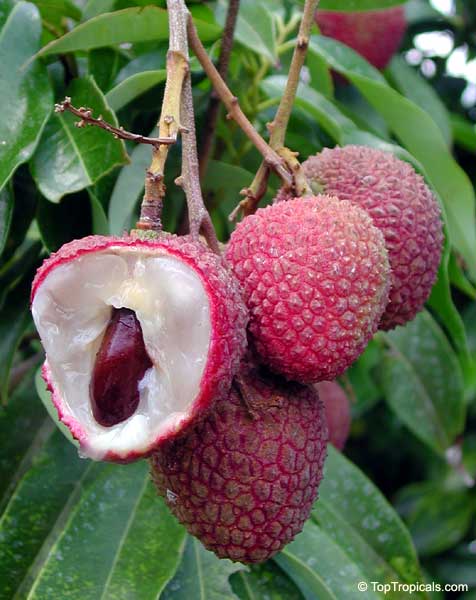
Lychee sorbet: quick-n-fun exotic recipes

Lychee - Litchi chinensis

Lychee - Litchi chinensis

Lychee sorbet

Lychee sorbet

🍴 Lychee sorbet: quick-n-fun exotic recipes


🔴Blend Lychee pulp with lime juice, freeze until firm.
🔴A refreshing tropical ice treat.

Lychee Sorbet Recipe

Ingredients

  • 3 cups fresh lychee flesh, peeled and seeded (or canned lychees, drained)
  • 1/3 cup sugar or honey
  • 2 tablespoons fresh lime juice
  • 1/4 cup cold water, as needed for blending
  • Fresh mint leaves for garnish (optional)

Instructions

  1. Prepare the lychees by peeling them, removing the seeds, and collecting the white flesh. If using canned lychees, drain them well.
  2. Place the lychee flesh, sugar or honey, lime juice, and 2 tablespoons of the cold water into a blender.
  3. Blend until completely smooth. If the mixture is too thick to move easily, add a little more water, 1 tablespoon at a time.
  4. Pour the mixture into a shallow freezer safe container. Cover tightly.
  5. Freeze for 2 to 3 hours, stirring with a fork every 30 to 45 minutes, until the sorbet is firm but scoopable.
  6. Scoop into bowls and garnish with fresh mint leaves and extra lychee fruit if desired. Serve immediately.

🛒 Plant your Lychee tree - Litchi chinensis

📚 Learn more:


How long until I get fruit from my Lychee tree?
Why I can't grow a Lychee tree from a seed?
How to grow a Lychee tree and have a reliable crop. Practical Guide to Growing Lychee.
What are the best varieties of Lychee Tree?
What is the best fruit in the world? How to grow your own Lychee tree.

#Food_Forest #Recipes

🟢 Join 👉 TopTropicals

Date: 4 Dec 2025

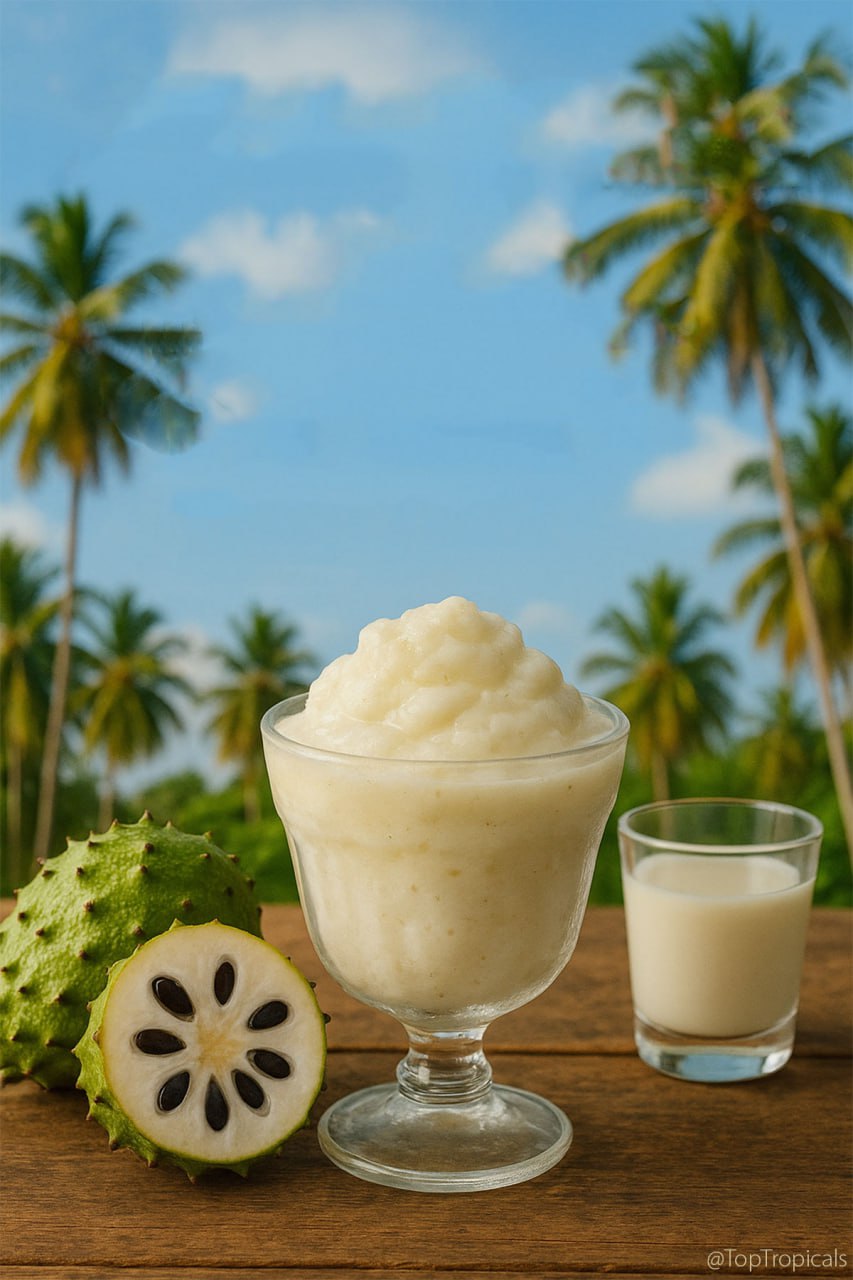
Soursop freezer whip: quick-n-fun exotic recipes

Soursop freezer whip

Soursop freezer whip

Guanabana, Soursop (Annona muricata)

Guanabana, Soursop (Annona muricata)

🍴 Soursop Freezer Whip

🔵Perfect for a hot day, this whip is instantly refreshing and cooling, like a little tropical breeze in a bowl.
🔵And on a cold winter day? It still tastes amazing - like a quick escape to the tropics!

Ingredients

  • 1 cup frozen soursop (guanabana) pulp
  • 2 to 3 tablespoons coconut milk

Instructions

  1. Place frozen soursop pulp into a blender.
  2. Add coconut milk and blend until smooth and thick.
  3. Transfer to a bowl and freeze for 15 minutes.
  4. Stir well to create a soft, slushy whip and serve immediately.

🛒 Grow your own delicious Guanabana Soursop

📚 Learn more:

Soursop Plant Facts

Botanical name: Annona muricata
Also known as: Soursop, Guanabana, Graviola, Korosol, Corosol
USDA Zone: 10 - 11
Highligths Large tree taller than 20 ftSmall tree 10-20 ftFull sunWatering: Moderate. Water when top soil feels dryWatering: Regular. Let topsoil dry slightlyEdible plant
Get personalized tips for your region

Annona muricata in Plant Encyclopedia
Guanabana - Soursop fruiting in apartment
The most delicious Annona fruit: Guanabana

#Food_Forest #Recipes

🟢 Join 👉 TopTropicals

Date: 24 Oct 2016

Overwintering Adeniums outside of tropics

Q: We bought several adenium plants from you. We are moving to the Denver area of Colorado. How can we make sure the plants survive? Should we use a green house?

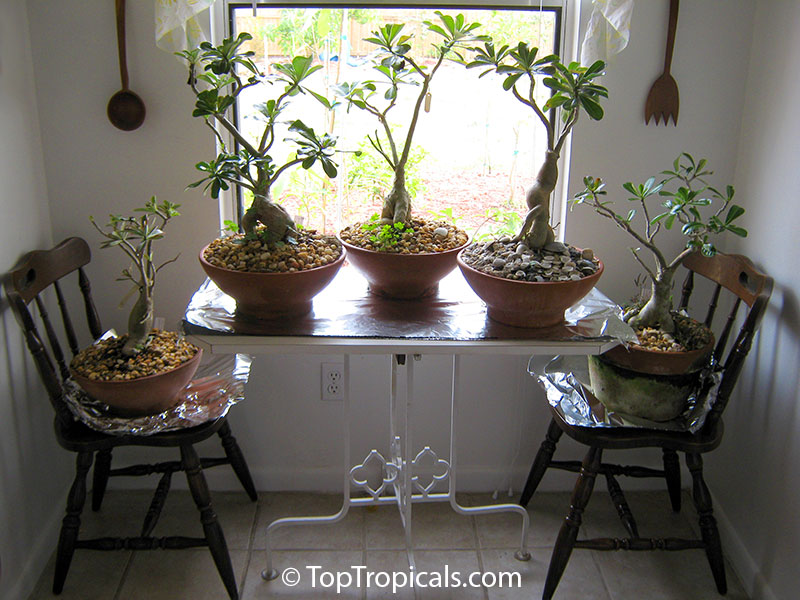
A: Adeniums are perfect container plants, and house plants. They can be easily grown outside of tropical climate. During winter, Adeniums drop leaves and go into dormancy which makes it easy to keep these plants in a dormant stage in a warm location of your house, or possibly even in well-lit spot of garage (with a window), with temperatures above 50-60F.
Here in South Florida, during time of cold, when chances of freeze are high, we move our own Adenium collection into lanai, with plastic sheet protection around lanai.

In colder climates, Adeniums can be kept indoors as house plants during winter. There are some requirements/tips for you:

  • Temperature. Move Adeniums indoors when temperature starts dropping below 45F.
  • SUNSHINE. Use SUNSHINE boosters to improve cold resistance of Adeniums, and essure healthy plant throughout winter. SUNSHINE-BC formula is specifically designed for plants with caudex, and bonsai.
  • Water. Reduce watering to minimum, especially when plants drop leaves - this means they went into dormancy. Once a week light watering is enough. Water very carefully during cooler months. When it is hot (85-100F), excessive water usually won't harm adeniums: it will be partially used by a plant, and partially will evaporate. Especially be careful with water when temperatures drop below 65F - then tropical plants simply stop growing process and go dormant. Once adeniums start losing leaves, this is a sign to reduce watering to once a week to once a month, and in very small quantity (couple tablespoons per pot).
  • Light. Bright light is not necessary, but do not keep them in dark either, even if all leaves dropped. Good light is necessary to maintain healthy stems and caudex. Keep in mind, the less light, the less watering too. Ideal spot is a windowsill, however if your space is limited and all windows occupied by other "leafy" plants, location close to window will be enough as long as watering is reduced, to avoid rot. We keep our big collection specimens on a roofed porch during winter, where level of light is very low. Last winter we haven't lost a single plant due to low light. They take shade pretty well considering minimum or no water. However bright light is always better - it creates healthier environment for a plant. We all know about space limitations for our large collections, especially in winter. So if you can afford a bright spot for adenium during winter - the plant will be lucky!
  • Soil. Use only well drained mix with much higher content of perlite than you would use for most tropical plants. For adeniums, we use mix with 30-40% of perlite in it, while regular mix has 10-15%. Adeniums like alkaline soil, unlike most of tropical plants (hard to say what else likes alkaline... Ficus for sure!). This means, regular mix with high content of peat moss may cause root rot. To increase alkalinity, you may add dolomite. Here in Florida where we have natural supply of shell rock handy, it is easy to add some shell to a potting mix (shell sand, rather than quartz sand). We always add a few large shells on top of a pots with a big specimen. Besides increasing soil pH (making it more alkaline), shells look very decorative.
  • Fertilizer. No fertilizer until Spring when plants start showing new growth and new leaves.
  • Move your Adeniums outside in Spring, when chances of freeze are zero. More sunlight and air circulation is beneficial for breaking the dormancy and providing plants with a quick growth start.

Date: 10 Apr 2016

Growing by the sea

Q: Please recommend me some interesting plants that can grow on my waterfront property and can withstand some salt wind. All my neighbors have Sea Grape trees and bougainvilleas, and I want something different and special. I would love to have some colorful or fragrant flowers, or fruit around my paradise home.

Q: Considering your neighbors successfully grow Sea Grape (Coccoloba), and Bougainvilleas, you have a mild, frost free climate. There is a number of spectacular and useful tropical plants that are salt tolerant. Orchid Trees - Bauhinias, Poincettia - Delonix, and Geiger trees - Cordias, are very showy flowering trees. For large size bushes, try Dwarf Poincianas - Caesalpinias, and Scarlet-Coral Erythrinas. Frangipani - Plumeria, come in different colors and bring you perfume fragrance from Hawaii. And of course, Desert Roses - Adeniums, can be grown and showy specimens anywhere in your yard, both in the ground or as potted bonsai.

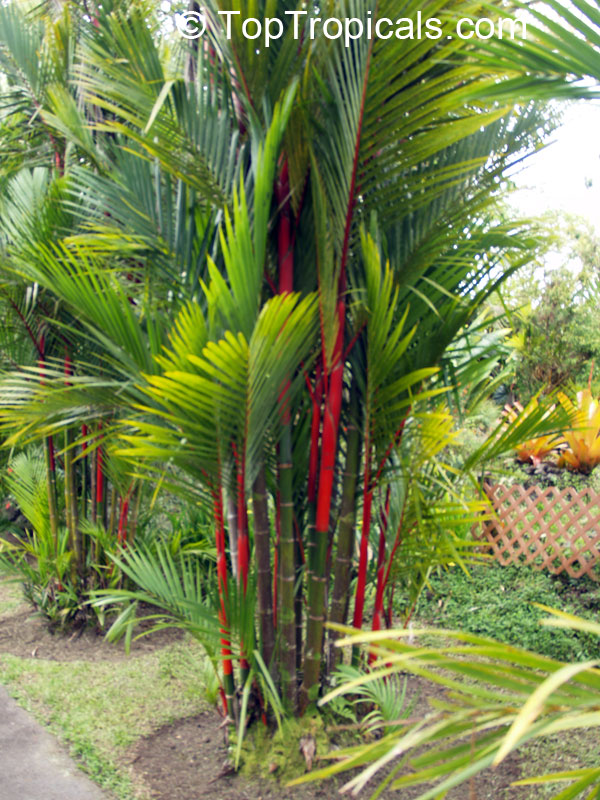
Most palms, especially popular Coconut Palm, source of tasty fruit and drink, are highly tolerant to salt breeze. If you are looking for something that nobody has, Lipstick palm, or Sealing wax palm - Cyrtostachys lakka, is definitely the most spectacular palm you can find. It is a stunning feather palm that develops a brilliantly red trunk. Palm is originally from Malaysia, but has been introduced to Costa Rica and other tropical areas of the world. Sealing Wax Palm seeds are very slow to germinate, up to a year, and large specimens are very rare and hard to find even in rare tropical plant nurseries. This palm will require a good overhead light, and constant warmth (above temperature 55F). It is definitely worth an effort to grow this beauty.

You may add more tropical accents to your landscape by the sea with many varieties of showy heliconias.

See full list of salt tolerant trees.