Garden Blog - Top Tropicals

Date: 21 Nov 2025

How to keep your house plants beautiful all year by feeding them right
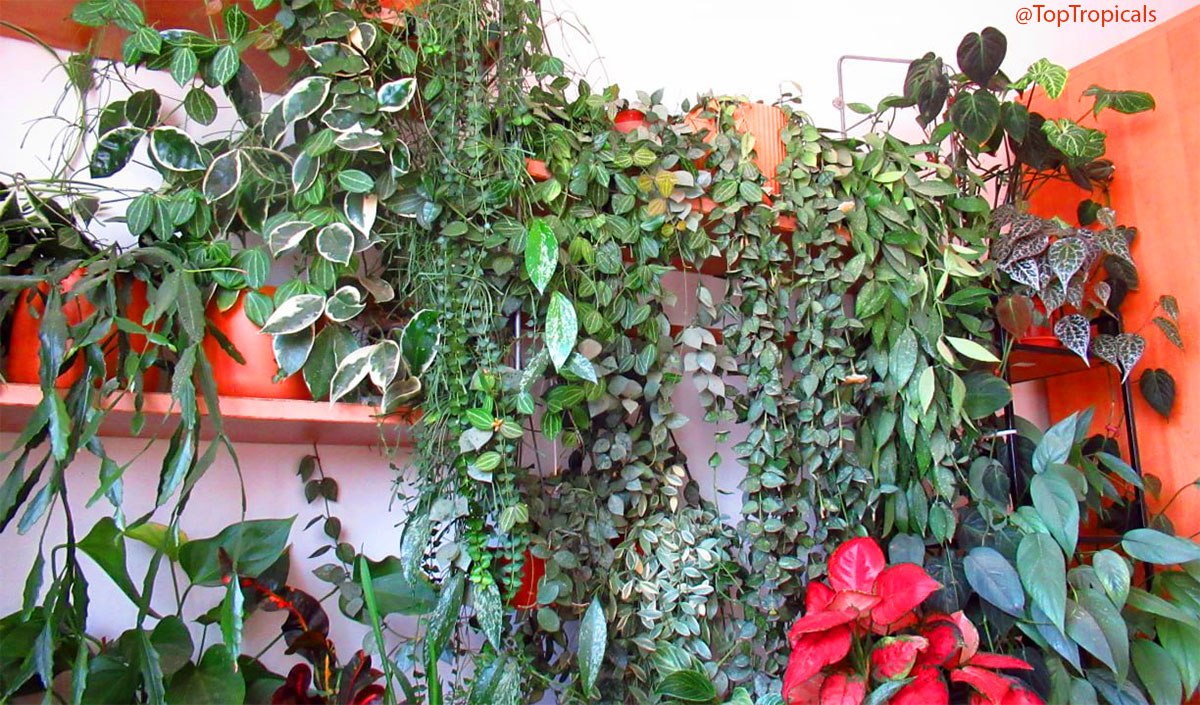
Indoor garden

Indoor garden

🍀 How to keep your house plants beautiful all year by feeding them right


🌱 Healthy house plants are not just about light and water. They need food, just like we do. A good fertilizer routine keeps them green, strong, and blooming through every season. Here is a simple guide to feeding indoor plants the right way.

🌱 General rules for fertilizing house plants


▪️Feed lightly but regularly. Indoor plants grow in limited soil, so nutrients run out faster. Small, frequent feedings work better than one heavy dose.
▪️Never fertilize dry soil. Water first, then feed.
▪️Reduce feeding in winter when growth slows.
▪️Watch your leaves. Pale, yellow, or slow-growing plants are asking for nutrients.
▪️Use a complete formula. House plants need both macro-elements (N-P-K) and micro-elements, not just nitrogen.

🌱 What fertilizer to use


Sunshine Boosters - the everyday diet.
Sunshine Boosters are simple, balanced liquid fertilizers you mix with water. They give your plants everything they need for steady, healthy growth. They contain the right blend of nitrogen, phosphorus, potassium, and trace minerals. They do not contain harsh chemicals, so they are safe for homes with pets and kids. Regular use keeps plants growing faster, stronger, and more resilient to stress.

Sunshine Superfood - the vitamin supplement.
If a plant turns yellow or looks weak, it often needs micronutrients. These are the plant version of vitamins, including iron, zinc, copper, and manganese. Sunshine Superfood delivers these quickly and in the right proportions. Mix it with water and apply when you notice yellowing or slow growth. It corrects deficiencies fast and keeps leaves lush and green.

Green Magic - the long-term slow feeder.
Green Magic is a controlled-release fertilizer that works for six months. It uses poly-on coating technology to release nutrients slowly, without burning roots. It is perfect for repotting or for plant owners who want a set-it-and-forget-it option. Mix one teaspoon per gallon of soil during repotting or every six months. Excellent for container fruit trees and ornamentals that need steady feeding.

🌱 The simple routine


▪️For regular watering: use Sunshine Boosters.
▪️Once a month: add Sunshine Superfood to prevent yellowing.
▪️Every six months: mix Green Magic into the soil for long-term support.

With the right diet, your house plants stay green, strong, and beautiful year-round. Feed them well, and they reward you every day.

📸 In the photo: Indoor garden of Marina Rybka, Israel, the Editor of TopTropicals.

🛒 Get your plants some food

📚 Learn more:
Why do you need Sunshine Boosters?
Which dry fertilizer to use - slow release or controlled release?
Green Magic effect: before and after
The SECRET growers never tell you: simple trick how to bring plants back to life and keep green
📱 What are Sunshine Boosters

#Fertilizers #How_to

🟢 Join 👉 TopTropicals

Date: 13 Jun 2026

Why June Is the Most Important Month for Potted Tropical Plants

Why June Is the Most Important Month for Potted Tropical Plants

Why June Is the Most Important Month for Potted Tropical Plants


For many tropical plants, June is the start of peak growing season. Days are longer, temperatures are warmer, and plants that spent winter indoors or in a greenhouse are suddenly growing at full speed.
A few simple tasks now can mean stronger growth, more flowers, and better fruit later in the season.


Smokey: Sunshine, why are you mixing fertilizer with coffee and donut crumbs?
Sunshine: I'm testing a new growth formula.
Smokey: Based on what research?
Sunshine: Based on a highly controlled breakfast study. I call it Hibiscus Turbo Boost Deluxe.


✅ 1. Repot Before Plants Become Root-Bound


·  If roots are circling the pot, growing through drainage holes, or the soil dries out unusually fast, it's time to move up one pot size.
·  Fresh potting mix provides new space, better drainage, and access to nutrients that older soil may no longer contain. Use professional soilless mix Abundance for best results.
·  Don't jump from a small pot to an oversized container. One size larger is usually enough.

✅ 2. Feed Hungry Summer Growth


· Tropical plants are no longer resting. They are actively producing roots, leaves, flowers, and fruit.
· June is the perfect time to begin regular feeding.
· A balanced fertilizer program helps support strong growth, while products such as Green Magic and Sunshine Boosters provide additional nutrients that fast-growing tropicals can quickly use during summer.
· A well-fed plant grows faster, recovers from stress better, and flowers more heavily.

✅ 3. Acclimate Plants to Full Sun


One of the most common mistakes is moving a plant directly from indoors or a greenhouse into full summer sun. Leaves that developed in shade can burn within hours.
Start with bright shade or morning sun, then gradually increase exposure over one to two weeks. Even sun-loving plants benefit from a transition period.

✅ 4. Prune for Shape and Strength


June is an excellent time to remove weak, damaged, or overly long branches.
Light pruning encourages branching and creates a fuller, stronger plant.
For fruit trees, selective trimming can also help maintain a manageable size for container growing.

✅ 5. Check for Pests Before They Multiply


·  Warm weather brings rapid plant growth - and rapid pest growth.
·  Inspect new leaves, stems, and undersides of foliage for aphids, scale, spider mites, mealybugs, and whiteflies.
·  Treat problems early before populations explode during the heat of summer. We recommend Sunshine NoBug all-natural pesticide.

✅ 6. Add Stakes, Trellises, and Supports


·  Many tropical plants can double or triple their size during summer.
·  Climbing plants, vanilla orchids, passion fruit, dragon fruit, mandevilla, and many vining species appreciate support before they become tangled.
·  Installing stakes or trellises now is much easier than trying to do it later.

✅ 7. Water for Active Growth


·  A tropical plant that needed water once a week in spring may need it every day during summer.
·  Higher temperatures mean faster growth, greater water use, and more nutrient uptake.
·  Check containers frequently, especially during hot or windy weather. Water thoroughly and allow excess water to drain away.

✅ 8. Refresh Mulch and Clean Up Pots


·  Remove weeds, old leaves, and debris from containers.
·  A thin layer of mulch helps moderate soil temperatures and slows moisture loss during the hottest months.
·  Clean pots also reduce hiding places for pests and disease.

✅ The Bottom Line


June is when potted tropical plants shift into high gear. Repot if needed, fertilize regularly, inspect for pests, provide support, and keep up with watering. A little attention now often produces the biggest growth, best blooms, and heaviest fruiting of the entire year.

🛒
Get fresh soilless mix and real food for your plants

📚
Learn more:
Sunshine Boosters: Complete Plant Nutrition System
Why young trees need staking?
The SECRET growers never tell you: simple trick how to bring plants back to life and keep green 
How to re-pot a plant properly?

#Discover #How_to

🟢 Join 👉 TopTropicals
Date: 19 Jan 2021

Healthy Plants: Q&A from Mr Booster

Fertilizing in Winter

Q: I have many tropical plants in my garden, both in the ground and in pots. I realize it is wintertime and some of them, the Hydrangea, Hibiscuses, and roses are in bloom but the rest of them seem wilty and droopy. Is it alright to fertilize them now, or should I wait for a few days? I have an all purpose tropical fertilizer and a 20-20-20 also. Please advise what to do.

A: During wintertime, tropicals may suffer from low temperatures and lack of sunshine which causes droopy leaves, and leaf loss.
Regardless of the cause and plant condition, you should NEVER apply traditional dry fertilizers during cool months. When cold, dry fertilizers (EDTA-chelated) may create nutrient lock up in soil and damage the roots. Dry fertilizers (both granulated and water-soluble) can be used only during hot season - when min temperatures stay above 65F for at least a week in a row, and daytime temperatures are over 75-80F. During hot, active growth season plant metabolism increases. This provides less chance for a chemical root burn, as the nutrients are used up quickly.

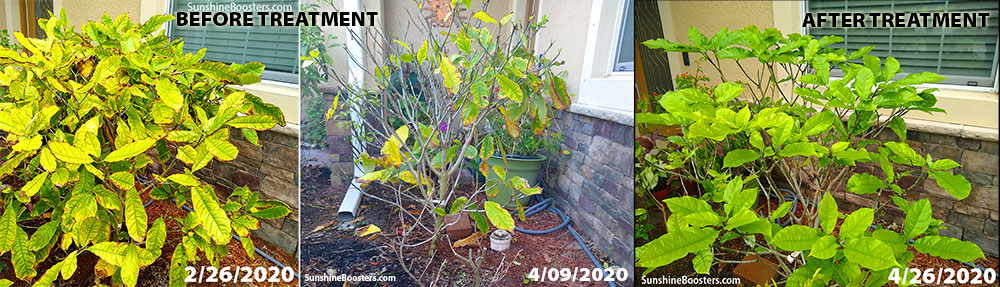
However, liquid fertilizers, as long as they are amino-acid based, can be used year round. From our own experience last winter, we discovered that fertilizing sickly looking plants (with signs of cold damage and root issues) with Sunshine Boosters actually revived those plants. Sunshine Boosters even brought back to life some hopeless specimens. Take a look at this gardenia that grows in our garden (picture above). See full article.
In your case, it would be beneficial to use a mild formula of liquid boosters in combination with Sunshine Epi -a natural plant hormone that boost their growth and helps to cope with cold-, temperature- and low-light-related stress.

These are the products we recommend:
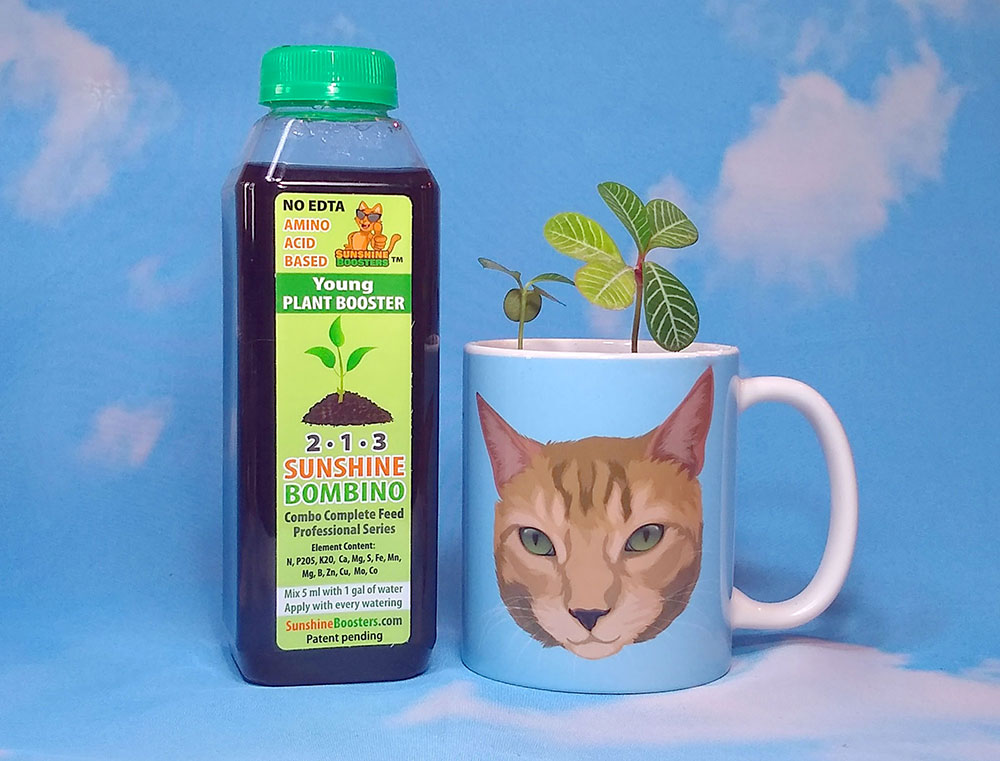
- Sunshine Bombino - add to every watering
- Sunshine Epi - twice a month as foliage spray

Since you grow plants in pots, feeding program is especially essential, because plants are limited with a container size where roots can't reach out to more food in the outer soil. In professional nursery set up with injector irrigation systems, container plants are fed daily (depending on season, more than once a day) with every watering. This is why greenhouse plants are so healthy looking.
So feel free to give your plants Sunshine boosters with every watering, dozing according to the label. During cold period, plants need less frequent watering, so fertilizer input will be balanced accordingly, it will depend on temperature and plant metabolism.

Sunshine Bombino - mild, "pampering" formula for young and tender plants, as well as plants recovering from stress and/or winter damage.

Date: 13 May 2023

NEW VIDEO:
ABC7 Fort Myers News:
Butterfly plants at Top Tropicals

Butterfly plants... what can be more romantic and sweet in your garden!
Watch the news segment by Rachel Anderson for ABC-7: Butterfly plants at Top Tropicals.

"...Spring has sprung, and if you're looking to spruce up your garden, Top Tropicals in Fort Myers has you covered! They have hundreds of exotic plants, fruit trees, fragrant flowers and plants that will attract butterflies to your garden!
If you're looking for a Mother's Day gift, plants are gifts that keep on giving!.."

Top

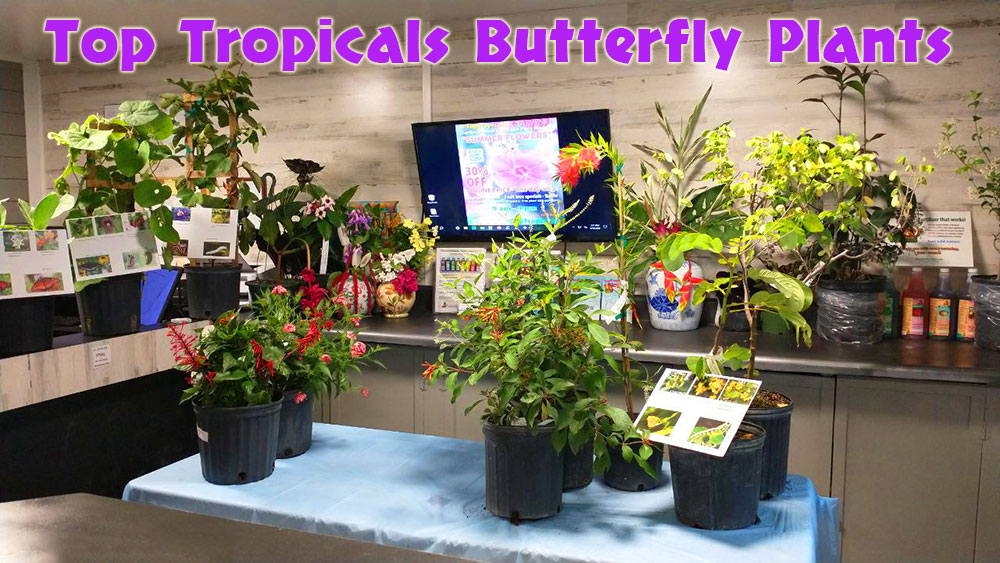
In the photo: Butterfly plants display in Top Tropicals office. Come and see our large selection of butterfly attractors in the nursery!

Subscribe to our Channel:

Stay updated with TopTropicals Videos by subscribing to our channel at YouTube.com/TopTropicals and get our latest video news of what is fruiting and blooming!

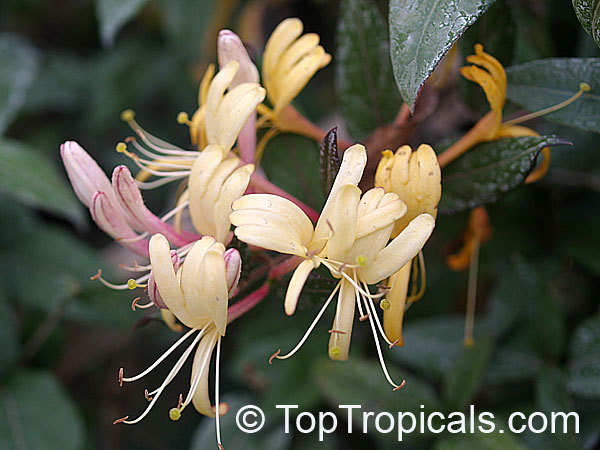
Lonicera  japonica  Purpurea  -  Japanese  Honeysuckle  flowers

In the photo: Lonicera japonica - Japanese Honeysuckle - a garden favorite, hardy, fast growing vine. Jasmine-sweet scented flowers attract butterflies, and hummingbirds, and berries attract birds!

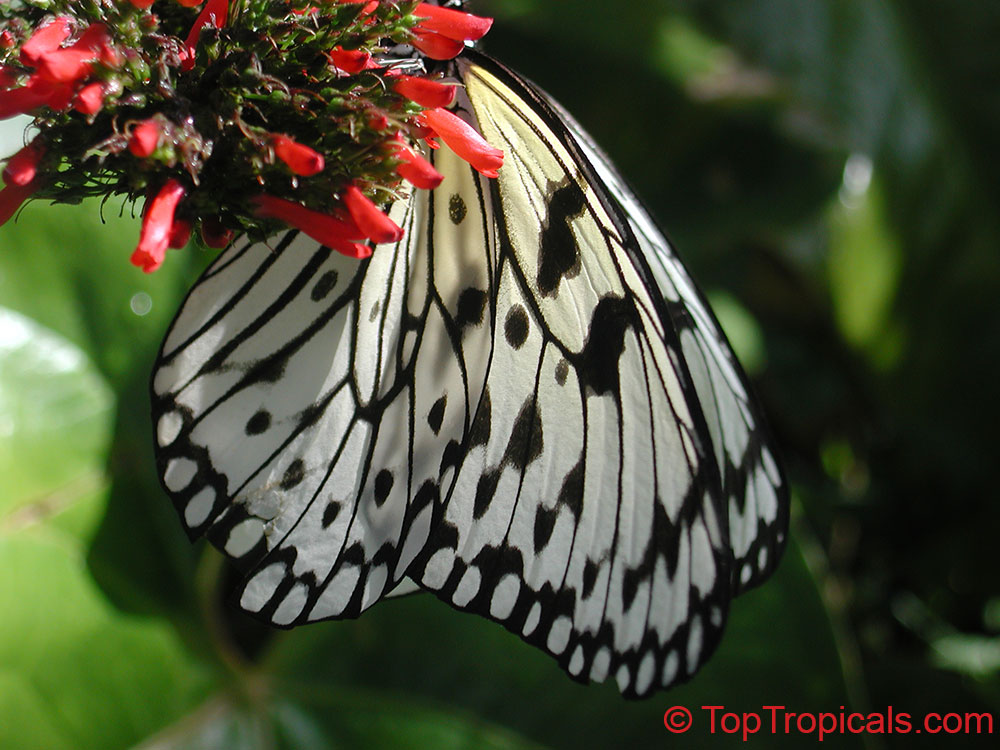
White  butterfly  on  Russelia  flower

Date: 26 Apr 2023

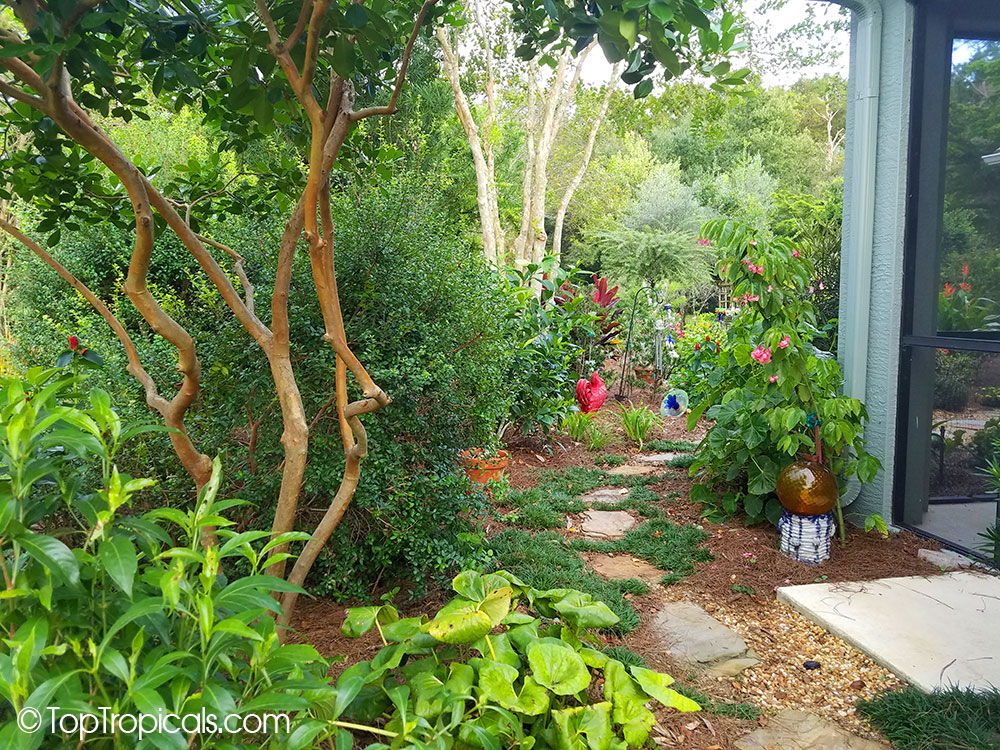
The Benefits of Companion Planting

Landscaped  garden  with  companion  planting

Q: What is companion planting?

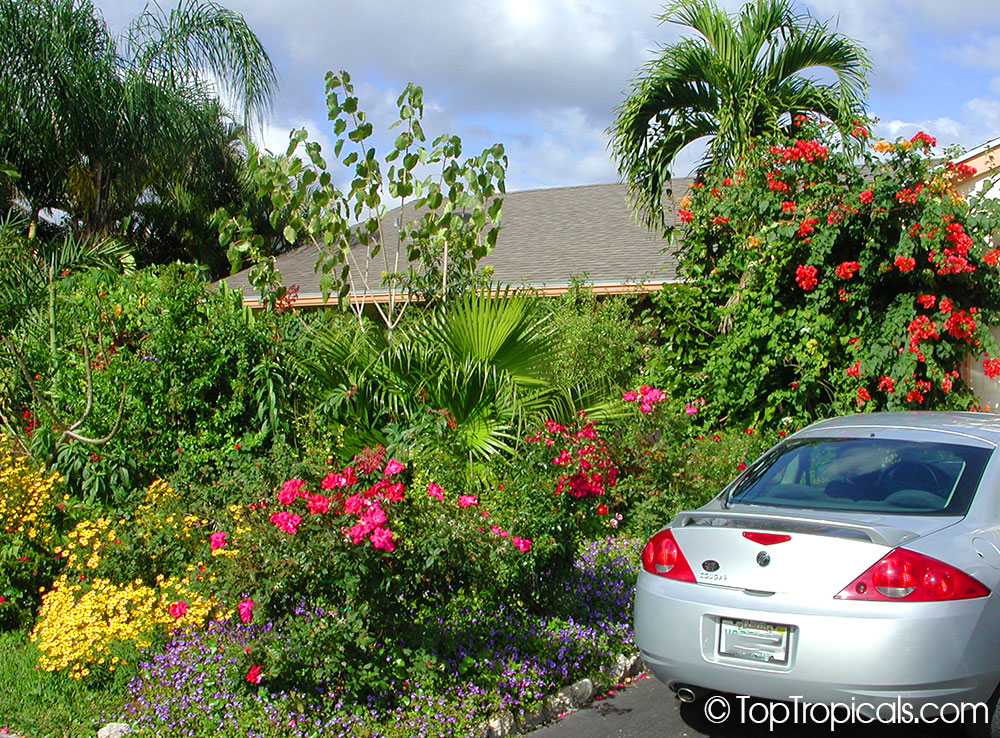
A: Companion planting is a gardening technique that involves planting different crops or types of plants together in a way that benefits all plants. This practice has been used for centuries, and it can be especially useful in tropical gardens where there is a diversity of plant life: trees, shrubs, vines and climbers, ground covers, fruit and edibles, and different flowering ornamentals. It is a great way to improve the health and yield of fruit tree crops while reducing the need for fertilizers and pesticides. By choosing the right companion plants and planning your garden layout carefully, you can create a vibrant and diverse ecosystem that will benefit both your plants and the environment.

Companion planting involves:

Planting different crops together to repel insects: adding such plants as Lemon grass, Patchouli leaf, or Moujean Tea near your vegetables can deter aphids and other pests.

Attracting pollinators - Butterfly plants. Many tropical crops, such as passion fruit, papaya, mango, and avocado, rely on pollinators to produce fruit. Companion planting can help to attract pollinators such as bees, butterflies, and hummingbirds to your garden.

Providing nutrients to the soil, adding mulch and low growing plants (ground covers) to preserve moisture.

Planting a variety of different types of plants together in order to create a more resilient ecosystem that is less susceptible to pests and diseases.

To get started, plan your garden layout and choose companion plants with similar water and light requirements.
For example, plant in the same group lush foliage plants, gingers, and flowering brunfelsias in shady areas; plant jasmines and gardenias in full sun and very well-drained spots.
Rotate annual crops regularly and experiment with combinations to find what works best. By doing this, you can create a thriving ecosystem that benefits both your plants and the environment, reducing the need for harmful chemicals.

Landscaped  front  yard  with  companion  planting

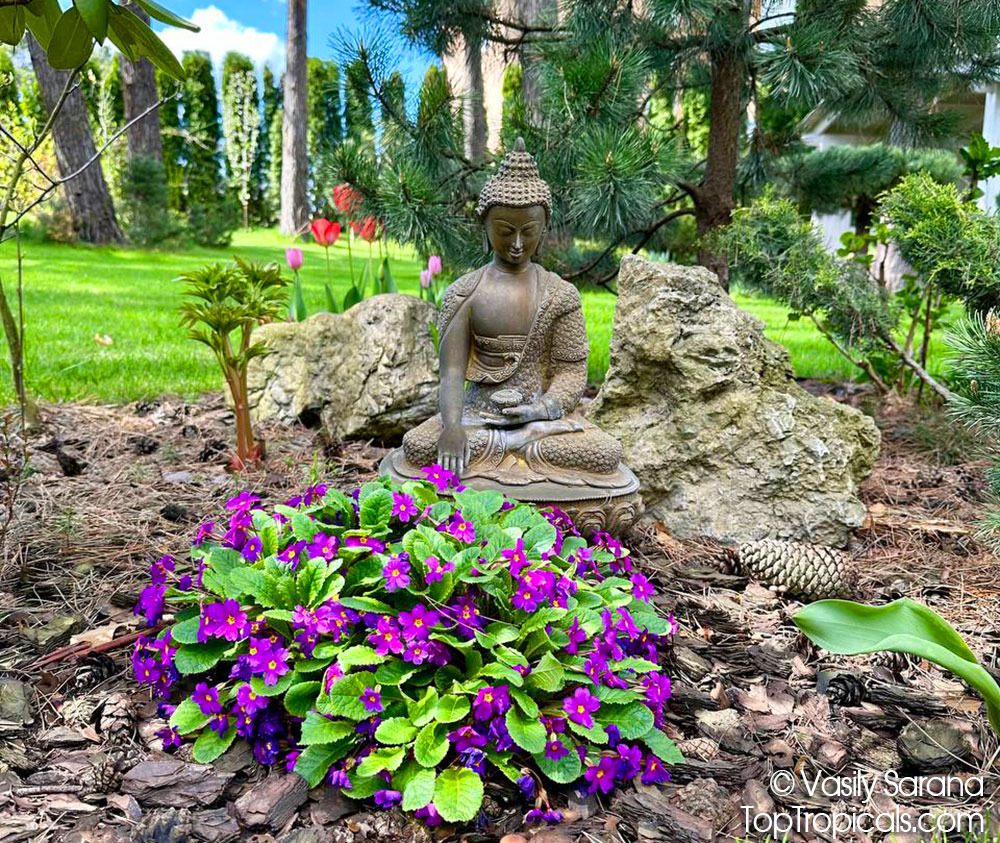
Buddah  and  flowers