Date: 10 Apr 2016
Growing by the sea
Q: Please recommend me some interesting plants that can grow on my waterfront property and can withstand some salt wind. All my neighbors have Sea Grape trees and bougainvilleas, and I want something different and special. I would love to have some colorful or fragrant flowers, or fruit around my paradise home.
Q: Considering your neighbors successfully grow Sea Grape (Coccoloba), and Bougainvilleas, you have a mild, frost free climate. There is a number of spectacular and useful tropical plants that are salt tolerant. Orchid Trees - Bauhinias, Poincettia - Delonix, and Geiger trees - Cordias, are very showy flowering trees. For large size bushes, try Dwarf Poincianas - Caesalpinias, and Scarlet-Coral Erythrinas. Frangipani - Plumeria, come in different colors and bring you perfume fragrance from Hawaii. And of course, Desert Roses - Adeniums, can be grown and showy specimens anywhere in your yard, both in the ground or as potted bonsai.
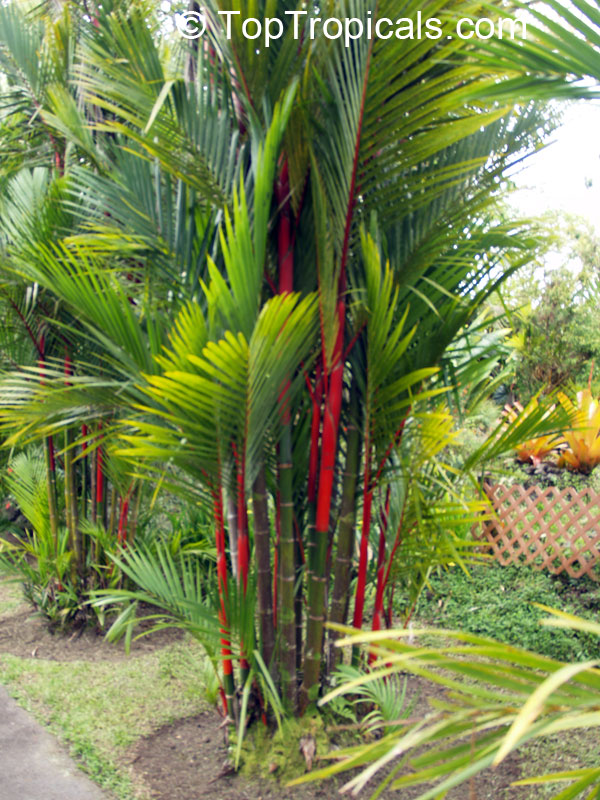
Most palms, especially popular Coconut Palm, source of tasty fruit and drink, are highly tolerant to salt breeze. If you are looking for something that nobody has, Lipstick palm, or Sealing wax palm - Cyrtostachys lakka, is definitely the most spectacular palm you can find. It is a stunning feather palm that develops a brilliantly red trunk. Palm is originally from Malaysia, but has been introduced to Costa Rica and other tropical areas of the world. Sealing Wax Palm seeds are very slow to germinate, up to a year, and large specimens are very rare and hard to find even in rare tropical plant nurseries. This palm will require a good overhead light, and constant warmth (above temperature 55F). It is definitely worth an effort to grow this beauty.
You may add more tropical accents to your landscape by the sea with many varieties of showy heliconias.
Date: 5 Apr 2016
Jungle on Windowsill 101
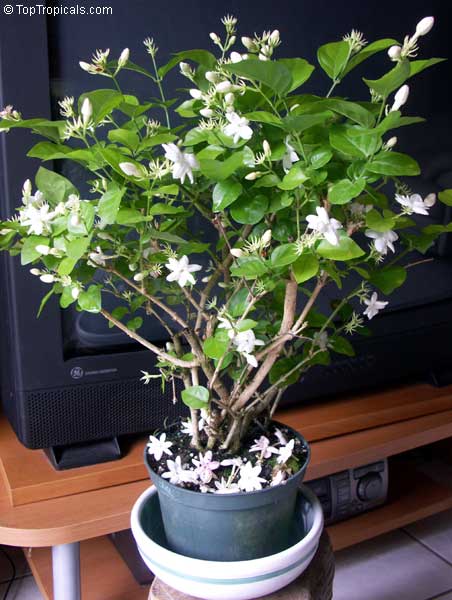
Q: I got a Jasmine Sambac and a Tahitian gardenia as presents, they are very cute plants with flowers and flower buds. I would like to be able to keep them alive and hopefully happy for a long time, but I don't know much about growing tropical plants, and I am not sure if my thumb is green enough to make everything right. What do they need? How much sun? How much water? What kind of soil? Sorry for all these (maybe silly) questions, but I want to keep them alive, please help! I live in Wisconsin and we had some snow again last week.
A: Growing tropicals is not a hard work, it is a lot of fun! These plants are actually a good starters for a beginner who wants to try growing tropical plants, no matter if you live in a mild frost-free climate, or up North where you can have these beauties as houseplants. Below are a few simple steps for you:
1. Read. Follow planting instructions included with your plants. Check plant names on the tags and learn more about them from our online catalog.
2. Soil. Plant in quality potting mix - it must be porous and well-drained, never use heavy soils (top soil or garden soil are no-no), in a pot exactly the size of the root system. You can step up your plants in the next size container once you notice vigorous new growth. Next size means: 4"pot can go into 6" pot, 6"pot into 10" pot, etc. Too big of a pot may create rotting environment, root system must fill the entire container to use all the moisture from the soil. Container must have good hole(s) for excess water to drain through. Put the pot in a saucer and get rid of excess water every time after watering.
3. Light. Most tropical plants require lots of light in order to produce flowers. If you ever visited Florida, remember the bright sun? - these are ideal light conditions for tropicals. Up North, provide as much light as possible: a bright spot on a windowsill of Southern or Western exposure would work the best. If the sun gets too hot in summer afternoon, you may shade the window a little bit with a sheet of white paper to avoid leaf burn.
4. Water. Keep soil slightly moist but not soggy. The best way is to wait until the top of the soil feels dry to touch - this is time to water again. Jasmines prefer to stay on a dry side; gardenias do not like soil to dry out - keep them slightly moist as long as soil is very porous and well-drained.
The main reason of most problems with potted indoor plants is over watering. With experience, you will feel the right balance of moisture in the soil: the brighter the light, the more water is consumed by a plant; the less light, the less frequent you should water.
5. Trimming. In low light conditions, plants tend to become leggy. Trim branches as they become too long: the more you trim, the busier the plant gets. New growth promotes more profuse blooming in many species.
6. Fertilizing. Fertilize indoor plants with slow-release granulated fertilizer from march to November.
7. Insects. Check for insects at least once a month, especially underneath the leaf. If notice any problems (deformed leaves, residue, holes, or tiny insects) - clean the leaves/stems with a solution of warm water (1 cup), vegetable oil (2 table spoons), and a few drops of a dish soap.
8. Fresh air and air humidity. As soon as air temperature gets above 65F, bring your tropicals outside in the sun and fresh air: porch, balcony, outside in the yard. Air circulation is essential for your plant health. Bright light and high air humidity will promote vigorous growth, and lots of flowers for you to enjoy!
For more information on growing Tropical Plants 101, see Problem solving with potted plants - how can we help them?
Date: 4 Mar 2016
Growing from seeds
Q: What is the best time to start tropical plants from seeds? Should I wait till summer?
A: Traditionally, people prefer sowing seeds in spring, especially temperate species for vegetable garden: tomatoes, peppers, cucumbers...
When dealing with tropical plants, you may want to start your babies indoors, providing additional heating when needed. If you keep your living space around 75F (ideal for many species), this is a perfect temperature to get your seeds started. Tropical plants are not like annual tomatoes that try to grow through the season as fast as possible. They may take time. So the sooner you start, the more chances to get small seedlings just in time when spring air outside is warm enough - at least in 70's F.
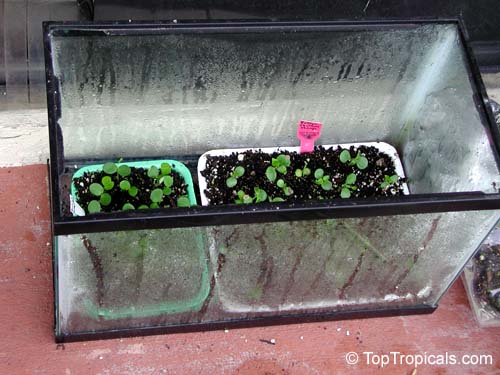
A great advantage of starting tropical seeds indoors is controlled temperature and moisture. In the plant world, environment extremes are not good for germination process. Mild conditions of your home or a greenhouse create better chances for successful growth. Seeds won't get overheated in hot summer sun, and won't get rotten because of a sudden heavy rain. Just keep in mind that some species require light for good germination. Using an old fish tank or covering with plastic wrap will help to keep constant humidity.
Date: 23 Sep 2025
Dragon fruit coconut parfait: quick-n-fun exotic recipes
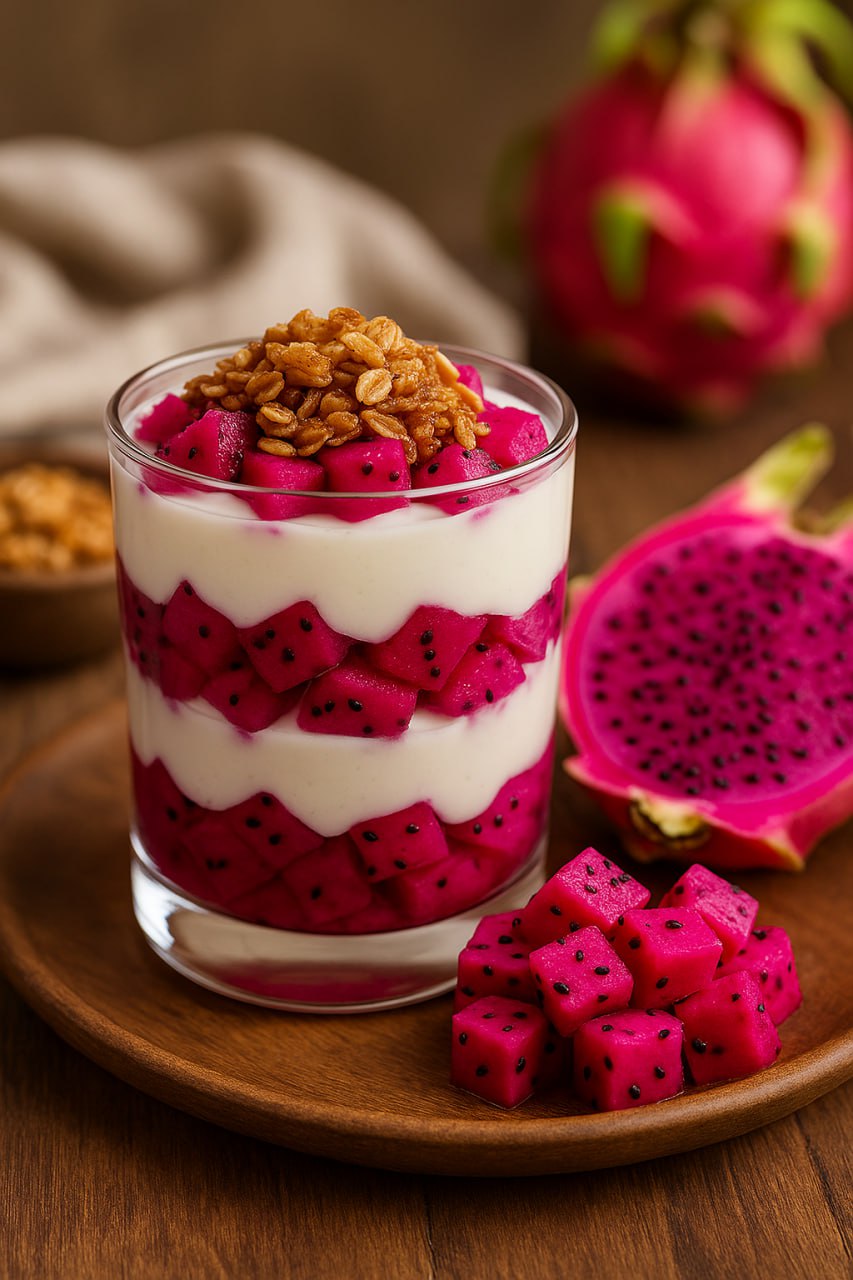
Dragon fruit coconut parfait
🍴 Dragon fruit coconut parfait: quick-n-fun exotic recipes
- 🔵Layer Dragon Fruit cubes with coconut cream and toasted granola.
- 🔵A tropical breakfast that looks neon and tastes fresh!
Dragon fruit coconut parfait recipe
Ingredients
- 1 fresh Dragon Fruit, diced into cubes
- 1 cup coconut cream
- 1/2 cup toasted granola
- Optional: honey or maple syrup for drizzle
Instructions
- Layer Dragon Fruit cubes in a glass or bowl.
- Add a layer of coconut cream, then sprinkle toasted granola.
- Repeat layers until glass is full, finishing with granola on top.
- Serve immediately for a refreshing tropical breakfast or snack.
🛒 Explore Dragon Fruit varieties
#Food_Forest #Recipes
🟢 Join 👉 TopTropicals
Date: 17 Nov 2023
Hedges
with Benefits
Reference Chart
Large and fast growing
Tithonia diversifolia - Sunflower tree
Acacia farnesiana
- Sweet Mimosa
Calliandra
surinamensis - Powderpuff
Aloysia virgata
- Almond Bush
Dombeya x wallichii - Tropical Hydrangea
Cornutia grandifolia - African lilac
Gmelina
philippensis - Parrots Beak
Hibiscus
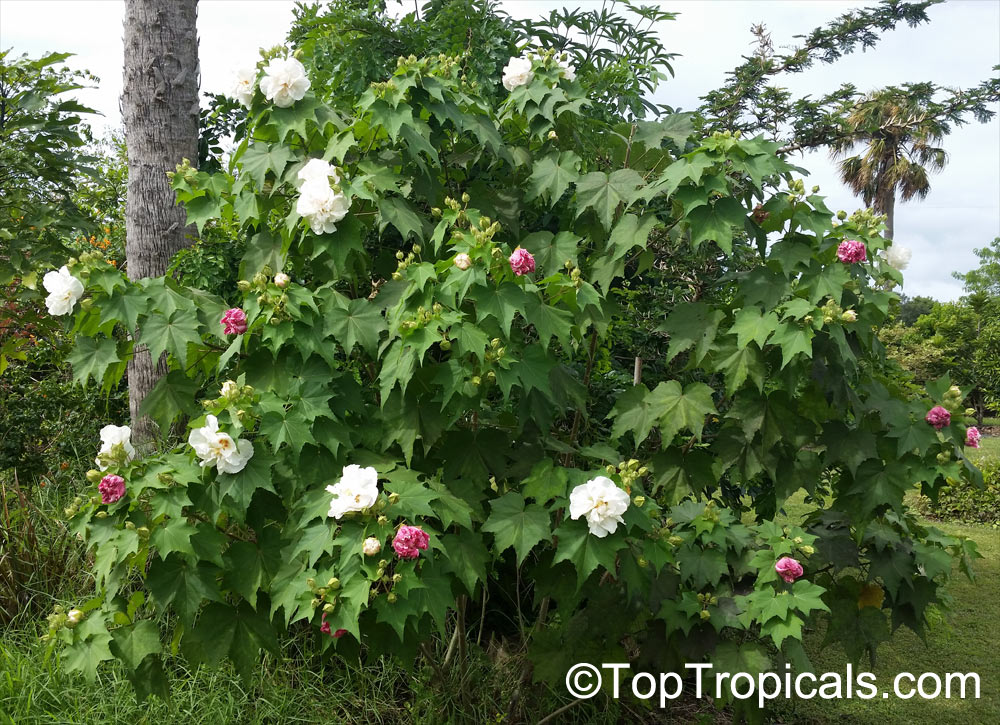
mutabilis Cotton Candy - Mallow Hibiscus
Senna alata -
Empress Candle, Candelabra Plant
Medium or easy-trim
Acalypha hispida - Cat tail, Chenille plant
Bauhinia galpinii - Pride of De Kaap
Cestrum nocturnum
- Night blooming jasmine
Dombeya seminole
- Tropical Rose Hydrangea
Gardenia thunbergia - Forest
gardenia
Hamelia patens - Fire Bush
Hibiscus variegated
Snow Queen
Jasminum sambac
Maid of Orleans
Ochna integerrima
- Vietnamese Mickey Mouse, Hoa Mai
Odontonema callistachyum - Lavender Butterfly Bush
Odontonema cuspidatum - Firespike, Red
Rondeletia
leucophylla - Panama Rose
Tecoma stans - Yellow Elder
Short or slow growing
Aglaia odorata - Chinese Perfume Plant
Allamanda
schottii - Dwarf Allamanda Bush
Brunfelsia pauciflora Compacta - Dwarf Yesterday-Today-Tomorrow
Clerodendrum
incisum - Musical Note
Calliandra schultzii -
Dwarf calliandra
Gardenia
vietnamensis - Vietnamese Gardenia
Leonotis leonurus
- Lions Ears
Neea psychotrioides - Pigeon Plum, Hoja de Salat
Plumbago auriculata Imperial Blue
Garden Specimens
Combretum constrictum Thailand, Ball of Fire
Caesalpinia
pulcherrima - Red Dwarf Poinciana, Bird of Paradise
Clerodendrum
quadriloculare - Winter Starburst
Euphorbia
leucocephala - Snows of Kilimanjaro, Pascuita
Gardenia nitida - Shooting Star Gardenia
Hibiscus schizopetalus - Coral Hibiscus
Jatropha integerrima compacta
Kopsia fruticosa - Pink Gardenia
Malvaviscus x penduliflorus
Variegata - Summer Snow
Mussaenda philippica
x flava - Calcutta Sunset (Marmelade)
Plumeria pudica - Bridal Bouquet
Semi-Shade to Shade
Clerodendrum bungei - Glory Bower
Clerodendrum
paniculatum - Pagoda Flower
Eranthemum pulchellum - Blue Sage, Lead Flower
Clerodendrum
speciosissimum - Java Glorybower Mary Jane
Justicia carnea
- Pink Brazilian Plume, Jacobinia
Magnolia figo -
Banana Magnolia
Megaskepasma erythrochlamys - Brazilian plume
Thunbergia erecta - Kings Mantle
Tibouchina lepidota - Ecuador Princess, Jules Dwarf
Edible Hedges
Eugenia uniflora - Black Surinam Cherry Lolita
Camellia sinensis
- Tea Leaf
Hibiscus
sabdariffa - Flor de Jamaica, Karkade Sorrel
Laurus nobilis - Bay Leaf
Manihot esculenta
- Yuca Root
Nashia inaguensis
- Moujean Tea, Bahamas Berry
Sauropus androgynus - Katuk, Tropical Asparagus
Sauropus Variegata - variegated Katuk