Which dry fertilizer to use - slow release or controlled release?
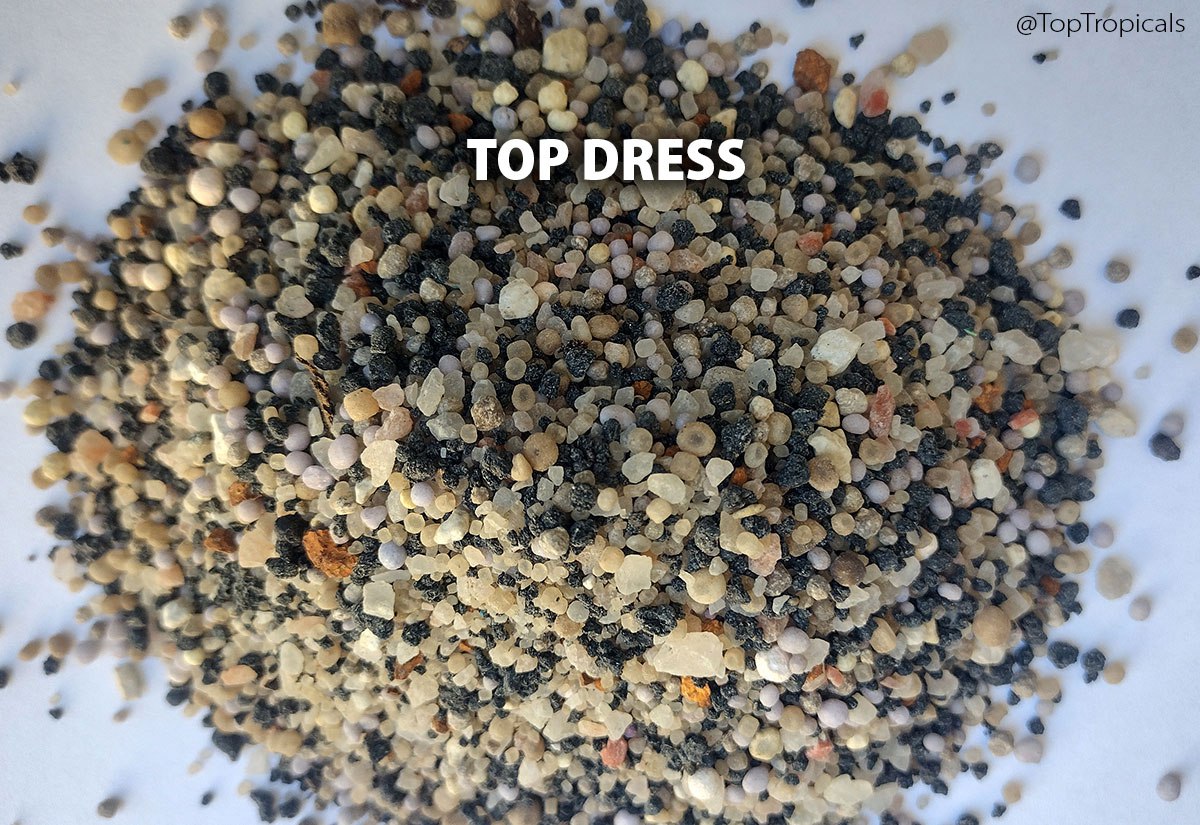
dry top dress fertilizer
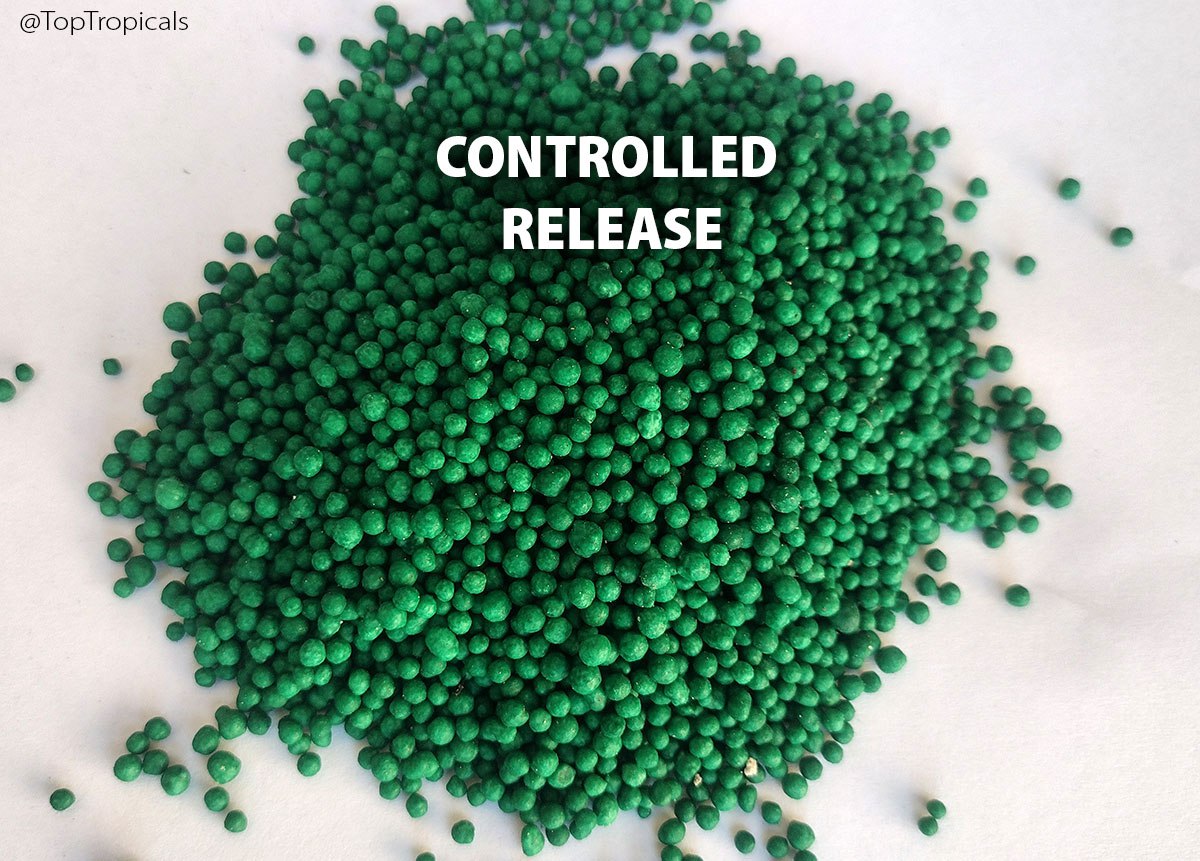
controlled release fertilizer Green Magic
🌳 Which dry fertilizer to use - slow release or controlled release?
❓ Q: You offer two kinds of dry fertilizers - Slow Release Trop Dress and Controlled Release Green Magic. What is the difference, and which one should I use? I used your water-diluted Sunshine Boosters with every watering, but now that I’ll be away for a few months, I just want to give my garden a long-lasting fertilizer.
✔️ A:Top Dress Slow Release Fertilizer is used for quick greening-up. Although it’s called “slow release,” the nutrients become available fairly fast. It contains soluble nitrogen (N), phosphorus (P), and potassium (K) that dissolve with rain or irrigation, acting within a week or a few weeks depending on temperature and rainfall. It’s great for giving your plants a quick boost of “fast food.”
We use Top Dress mainly for in-ground plants. It can be used in pots only during warm weather and active growth, but not in cooler months, as it may burn roots. Since we introduced Green Magic, we mostly use Top Dress only for garden beds and landscapes.
✔️ Green Magic Controlled Release Fertilizer is a true long-term, controlled-release fertilizer. Thanks to its PolyOn Technology coating, it provides steady, consistent feeding for 5-6 months. Unlike regular dry fertilizers that dump all nutrients at once, Green Magic releases them gradually - no burn, no guesswork, just steady nutrition.
Green Magic ideal for potted fruit trees, ornamentals, and houseplants. One handful keeps your plants fed for half a year. We use it for all container plants when potting up or refreshing soil every six months. It can also be used for in-ground plants if you want the best, most consistent results. Green Magic: try it out! (Sample here)
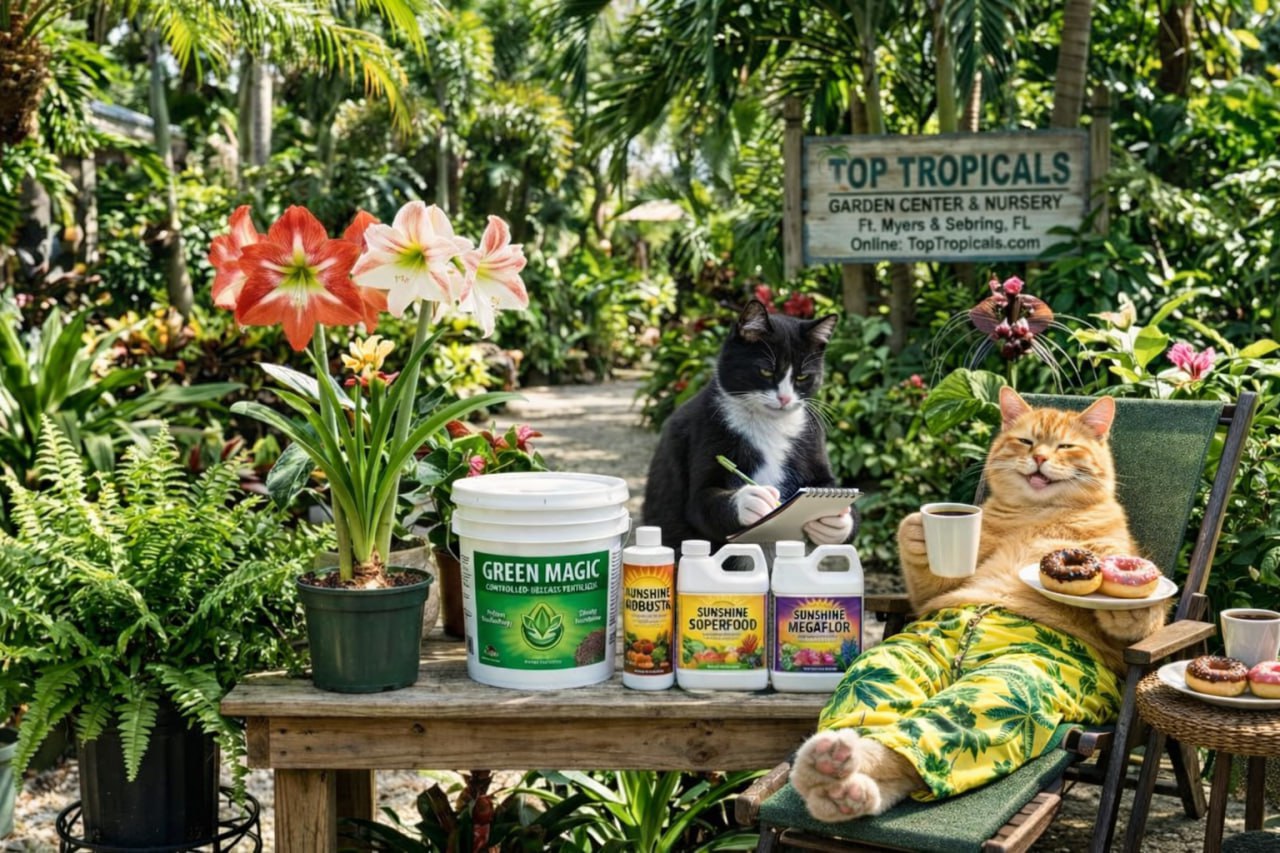
🐈 Sunshine: So Green Magic feeds the plant for months. Does that mean I can forget about Sunshine Boosters? 🐈 Smokey: Not quite. Green Magic is the steady base diet. Sunshine Boosters are the weekly power drink during active growth. 🐈 Sunshine: Ah. Like my regular meals and donuts on top. 🐈 Smokey: Exactly. Plants eat slowly from Green Magic, and once a week they get a fresh boost. 🐈 Sunshine: Sprinkle once, then boosters every week. The plant grows, I drink coffee, and nobody forgets anything important. 🐈 Smokey: Except where you left the donuts. 🐈 Sunshine: Smokey... nobody forgets donuts. Ever!
Meet PeopleCats of TopTropicals. Cat of the Day: Weasley the Immigrant
Weasley came from the neighborhood cat community (our neighbor takes
care of at least a dozen of cats). Whether TopTropicals dry food tastes better
than neighbor's, or simply he is such an enthusiast of tropical gardening, he
hangs out with us all the time.
When you see him in our Garden
Center drinking milk or chilling right on the walkway with other
PeopleCats, don't get him confused with other two ginger cats we have: Barcy and Snitch... as well as the Russian Blue cat with a similar name Wesley...
Although Weasley currently has a status of a legal immigrant, he feels
pretty confident around our greenhouses and will be happy to give you a tour. He
is still a volunteer here but has already applied for a permanent residence
and a full time position, so his food needs are being added to our cat
payroll.
When visiting TopTropicals nursery, feel free to add your donation to a Cat
Jar located in our office by customer's computer. We appreciate everybody's
help - every penny goes to PeopleCat's needs.
Q: Hope there is help for my beautiful amazing papaya tree! There
where a loooooooot of fruits on it, but it broke! First of all, it was
leaning and friends tried to straight my beautiful tree. What can I do? Will it
get fruits again?
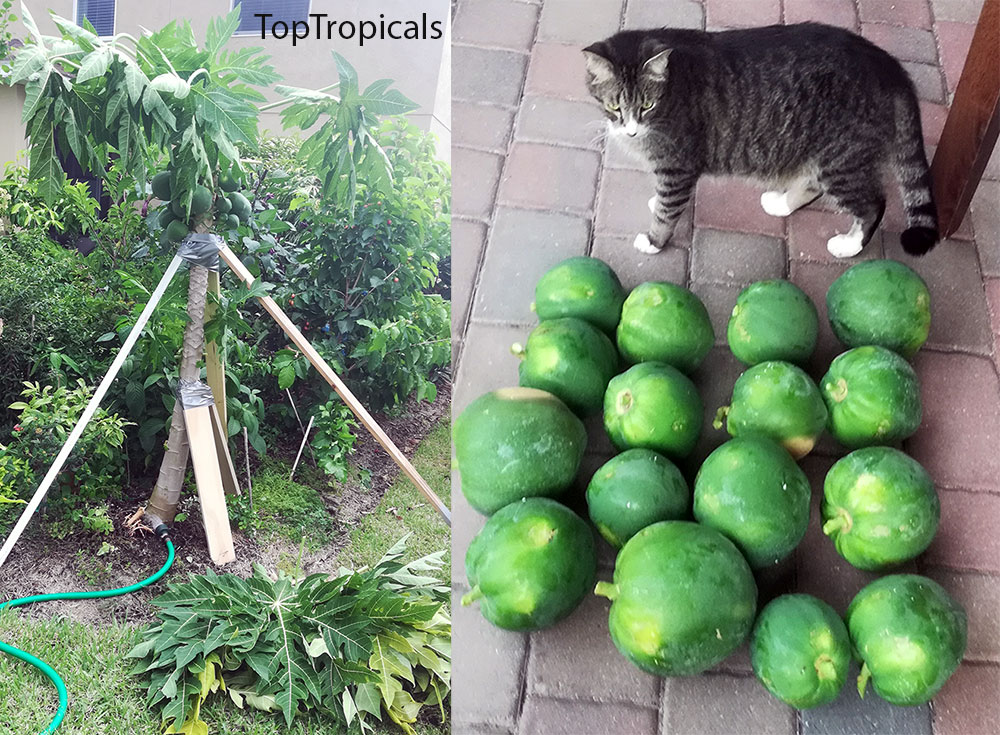
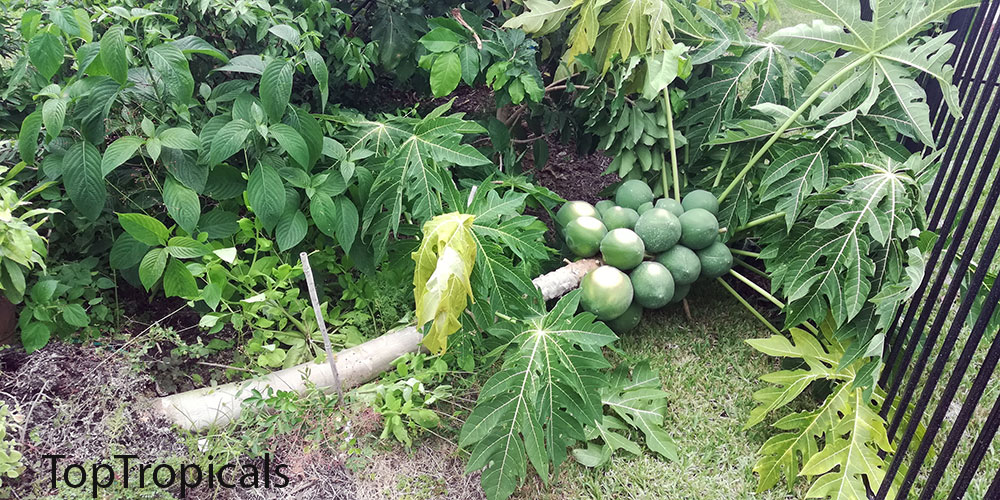
A: A couple months ago we also had a Papaya tree loaded with
fruit that fell down (see photos). It was heart-breaking. We secured it and it
continued growing for a couple of weeks but unfortunately, at the end the tree
still died, leaving us a million fruit.
The Papaya tree has a very sensitive root system and is hard to
re-establish once the roots are damaged.
However, if it just has a broken top, it has a good chance to grow back
from the side shoots.
Of course, remove all the fruit so they don't take energy from the
recovering tree.
When a tree is loaded with fruit, it is important to provide support for
heavy branches and for the trunk if needed. Always support the fruiting tree to
prevent from possible falling BEFORE it starts leaning down and may become
broken by even a light wind.
In the photo, you can see how we fixed boards around, but it was already
after the tree fell. Unfortunately, it was too late since the roots got
damaged. Always need to stake the tree up before the branches get too heavy!
The Secret to a Sharper Mind Might Be Growing in Your Backyard
Harvesting tropical fruits
The Secret to a Sharper Mind Might Be Growing in Your Backyard
Your garden shed might hold a more powerful tool for brain health than your medicine cabinet. What if the best defense against cognitive decline isn’t found in a pill bottle - but right outside your door? While we often think of gardening as just a hobby, new research suggests that the combination of physical "zone-pushing" and harvesting your own nutrient-dense tropical fruit could be a literal life-saver for your brain.
🍒 What the Research Actually Says
A massive study recently published in the journal Neurology followed more than 92,000 people to see how diet impacts the mind. The findings were clear: the quality of the plant-based foods you eat plays a massive role in your risk of dementia. It isn't just about "eating your veggies" - it's about which ones you choose.
(The full study: Plant-Based Dietary Patterns and Risk of Alzheimer Disease and Related Dementias in the Multiethnic Cohort Study)
🍒 Why Growing Your Own Fruit Changes the Game
If you grow your own fruit, you quietly solve two problems at once. It turns a "diet plan" into a natural part of your day.
1. Effortless Nutrition
When a ripe mango, a handful of mulberries, or a fresh guava is hanging within arm's reach, you eat it. It replaces processed, sugary snacks without any "willpower" required. You are naturally moving toward the high-quality, whole-food diet the research supports.
Mango Plant Facts
Botanical name: Mangifera indica Also known as: Mango
USDA Zone: 9 - 11
Highligths
2. Functional Fitness
Gardening doesn't feel like a workout, but it is. Bending, pruning, carrying pots, and digging are all forms of functional movement. It’s steady, useful physical activity that supports your heart and brain while you’re focused on your plants.
3. The "Outdoor" Effect
Sunlight and fresh air are natural mood boosters. The mental focus required to manage tropical plants - especially when you’re protecting them from a surprise freeze - provides a level of mental engagement and stress relief that you just can't get from a treadmill.
🍒 What to plant if you are just starting
You don’t need a massive orchard to start investing in your brain health. One or two plants can shift your habits immediately.
Botanical name: Carica papaya Also known as: Papaya
USDA Zone: 9 - 11
Highligths
For Small Spaces:Dwarf Mango varieties and Cherries (Eugenias or Acerola), Pineapples thrive in containers and provide massive doses of antioxidants.
Pineapple Plant Facts
Botanical name: Ananas comosus Also known as: Pineapple, Pina
USDA Zone: 9 - 11
Highligths
For the "Zone Pusher":Figs and cold-hardy Avocados offer healthy fats and fiber that are essential for long-term health.
Fig Tree Plant Facts
Botanical name: Ficus carica Also known as: Fig Tree, Brevo
USDA Zone: 7 - 10
Highligths
Avocado Plant Facts
Botanical name: Persea americana, Persea gratissima Also known as: Avocado, Alligator Pear, Aguacate, Abacate
USDA Zone: 9 - 11
Highligths
🍒 Start Small, Start Now
The research makes one thing clear: improving your food quality matters, and you can see results no matter your age. Planting a fruit tree changes what you eat, how you move, and how often you step outside.
That’s more than just gardening - that’s a lifestyle shift your brain will thank you for.
🍒 FAQ
Does fruit really support brain health?
Yes. Diets rich in whole, high-quality plant foods are linked to a lower risk of dementia, especially when they replace processed snacks and added sugars.
Is gardening enough to count as exercise?
Absolutely. Regular gardening provides steady, functional movement that improves circulation and supports overall physical health.
Is it too late for me to start?
No. The study showed that even participants who improved their diet quality in their 60s and 70s saw a measurable reduction in dementia risk.