Garden Blog - Top Tropicals

Date: 24 Jun 2018

TopTropicals

URBAN TROPICAL GARDENING:
10 secrets of successful Container Mango growing on a balcony.

Q: I live in Miami in apartment on a second floor, and I have a balcony with SE exposure. I wonder if I can grow a mango tree in a pot? Will it fruit for me? I recently moved to South Florida and I don't know much about tropical plants; but I tasted real fiberless mangos from someone's garden - it was so delicious and different from those in the grocery store. I wonder if I can have a fruiting tree on my balcony? And if yes, how do I plant and take care of it?

A: Yes, you can! Here is what you need to do:
1) Temperature. You are lucky to live in Tropics, keep it on a balcony year round.
2) Light. Position the pot in a spot with the most sun exposure. Mango trees can take filtered light too, but the less sun, the less fruit you will get.
3) Soil and Container. Use only well drained potting mix. Step up the purchased plant into next size container (3 gal into 7 gal, 7 gal into 15 gal). When transplanting, make sure to keep growth point (where roots meet the trunk) just at the top of the soil. Covering base of the trunk with soil may kill the plant.
4) Water. Water daily during hot season, but only if top of soil gets dry. If it still moist, skip that day. Mangoes (unlike Avocados!) prefer to stay on a dry side.
5) Fertilizer. Use balanced fertilizer once a month, 1 tsp per 1 gal of soil. Do not fertilize during fruiting - this may cause fruit cracks.
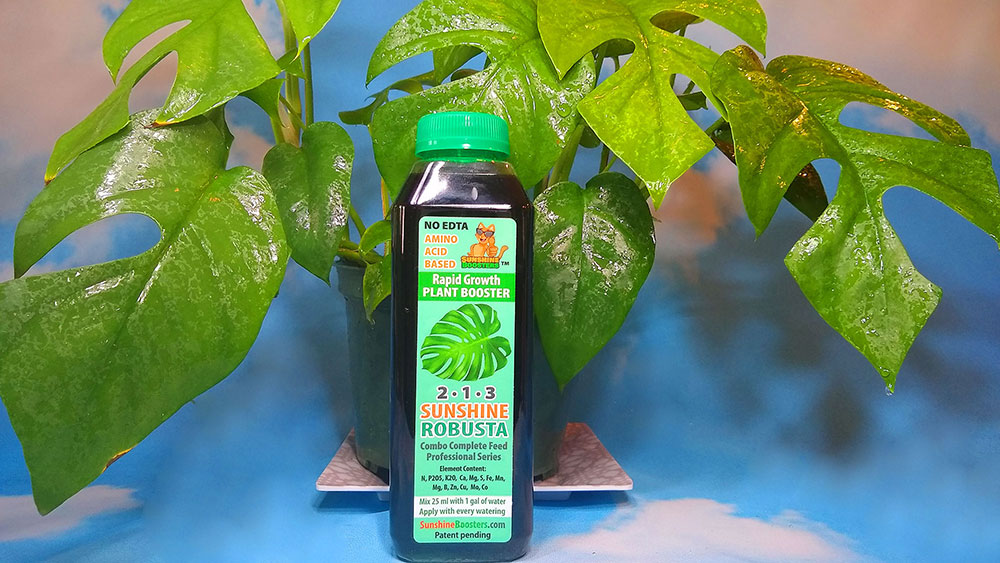
6) Microelements. Apply SUNSHINE-Superfood once a month. This will help your mango healthy, vigorous, and resistant to diseases. Use SUNSHINE-Honey to make your fruit sweeter.
7) Insect control. Watch for scales and mealybugs, clean with solution of soapy water + vegetable oil (may need to repeat 2-3 times with 10 days interval), or with systemic insecticide like imidacloprid only as needed (if non-harsh treatment didn't help). Most Flea shampoo for dogs contain that chemical, you may try that shampoo solution.
8) Trimming. Once potted, do not remove leaves that are discolored or have spots until new growth appears. Dark dots on mango leaves, especially in humid climate like Florida, may be signs of fungus. Treat with fungicide according to label, and remove only badly damaged leaves. Trim crown as needed after flowering and fruiting (by Fall). Train into a small tree, and you may remove some lower branches eventually.
9) Flower and fruit. Mangoes are winter bloomers with bunches of tiny flowers coming in thousands. Many of them set fruit (if pollinating insects present). Keep in mind that young trees can only bare a few fruit. Normally a tree will drop excessive fruit and keep only a few that it can manage. To save the young tree some energy, remove fruit if too many and leave only 2-3 for the first year. It will pay you next year with more abundant crop.
10) Variety. Last but not least: Choose the right variety for container culture! Pick from "condo" dwarf varieties such as Icecream, Nam Doc Mai, Carrie, Cogshall, Julie, Fairchild, Pickering, Graham, Mallika, and a few others - check out Mango Chart pdf and full list of our Mango varieties.

Date: 22 Oct 2025

💞 Cassia or Bauhinia?

Collage  of  Cassia  and  Senna  flowering  trees:


1  –  Cassia  bicapsularis  (Butterfly  Bush),


2  –  Cassia  x  natalensis  (Rainbow  Cassia),


3  –  Cassia  grandis  (Red  Cassia),


4  –  Cassia  didymobotrya  (Popcorn  Cassia),  similar  to  Senna  alata 


(Empress  Candles),


5  –  Cassia  javanica  (Apple  Blossom  Tree),


6  –  Cassia  roxburghii  (Ceylon  Senna),


7  –  Cassia  fistula  (Golden  Shower  Tree),


8  –  Cassia  x  nodosa  (Pink  Shower).

Looking for a small tree that blooms like fireworks but still fits on your patio? We hear this question all the time at Top Tropicals: Cassia or Bauhinia? Both are tropical showstoppers, but they shine in very different ways.

🌞 Cassias: Sunshine Fireworks

Cassia trees are some of the most rewarding tropical bloomers you can grow. Fast-growing, free-flowering, and surprisingly cold-tolerant, they thrive in full sun and summer heat. Their bright clusters come in shades of yellow, orange, pink, red, and even multicolor blends. The famous Rainbow Cassias show swirls of coral, gold, and rose on the same tree, creating a living fireworks display.

For gardeners in warm regions, these trees become spectacular focal points in the landscape. In containers, compact yellow forms like Cassia didymobotrya (Popcorn Cassia) and Senna alata (Empress Candles) stay manageable and bloom freely through summer.

Cassias can also be grown in pots with pruning and patience. Once mature, they reward you with breathtaking color that turns any patio or pool deck into a tropical show. Most showy cassias (numbers correspond to the photos in the collage above):

  1. Cassia bicapsularis (Butterfly Bush) - is a fast-growing, low-maintenance shrub covered in bright yellow, butterfly-like blooms from fall through winter.
  2. Cassia x natalensis (Rainbow Cassia)
  3. Cassia grandis (Red cassia) - a medium size tree having profuse blooms of dark pink to crimson flowers throughout the Spring.
  4. Cassia didymobotrya (Popcorn Cassia), small tree producing golden-yellow flowers with a distinct scent of peanut butter that open from brown buds in late summer and autumn. Similar to Senna alata (Empress Candles)
  5. Cassia roxburghii (Ceylon Senna) - graceful tree with spreading, drooping branches appearing to be overweighed by its wealth of clustering red blossoms.
  6. Cassia x nodosa (Pink Shower) - is a spectacular medium-sized, fast-growing tree with cascading clusters of fragrant pink-and-white appleblossom blooms in spring and summer.
  7. Cassia fistula (Golden Shower) - to many tropical gardeners, the most beautiful of cassias with masses of bright gold flower clusters appear on almost every branch.
  8. Cassia javanica (Apple Blossom) - dazzles with dense clusters of pink-to-white blossoms that change shades as they bloom, creating a spectacular display that lasts for months.
"Cassias love the heat and sunshine," says Tatiana Anderson, Top Tropicals Plant Expert. "They are perfect for anyone who wants big bursts of color and doesn’t mind giving them space and light to grow."

👉 Explore Cassia Trees

Bauhinia Magic: Orchid-Like Blooms in a Compact Size

Collage  of  Bauhinia  orchid  trees:  top  left  –  Bauhinia  acuminata 


(Dwarf  White  Orchid  Tree),  middle  left  –  Bauhinia  blakeana  (Hong  Kong 


Orchid  Tree),  bottom  left  –  Bauhinia  monandra  (Napoleon’s  Plume 


Orchid  Tree),  top  right  –  Bauhinia  madagascariensis  (Red  Dwarf  Orchid 


Tree),  and  bottom  right  –  Bauhinia  tomentosa  (Yellow  Orchid 


Tree)

Bauhinia orchid trees: top left – Bauhinia acuminata (Dwarf White Orchid Tree), middle left – Bauhinia blakeana (Hong Kong Orchid Tree), bottom left – Bauhinia monandra (Napoleon’s Plume Orchid Tree), top right – Bauhinia madagascariensis (Red Dwarf Orchid Tree), and bottom right – Bauhinia tomentosa (Yellow Orchid Tree)

Bauhinia trees known as Orchid Trees, bring a touch of tropical luxury to any space. Their butterfly-shaped leaves and orchid-like blossoms appear in shades of red, pink, purple, white, and yellow, often lasting up to ten months a year. Bauhinias are ideal for gardeners who want nonstop color in a manageable size. Most species grow well in large pots and bloom young, often within the first season.

The following compact varieties stay neat and flower almost continuously in warm weather:

The Hong Kong Orchid Tree is especially prized because it is sterile and produces no messy seed pods, keeping patios clean. Grafted Buhinia blakeana trees begin blooming while still small, making them perfect for containers or tight spaces.

"Bauhinias are generous bloomers," Tatiana explains. "They respond beautifully to regular feeding and full sun. If nights turn too cold, just move the pot to a sunny porch - they’ll keep their tropical charm most of the year."

Give them full sun, regular fertilizer, and a well-drained mix such as Sunshine Abundance, and they will reward you with months of vivid blooms. When nights turn too cold, simply move the pot to a sunny porch or bright window. Bauhinias adjust beautifully and keep their tropical grace year after year.

🎥 Watch Short Videos:

💲 Special Offer – 20% off Cassias and Bauhinias!

Get 20% OFF Cassias and Bauhinias with code

RAINBOW2025

Min order $100. Excluding S/H, valid online only, cannot be combined with other offers.

Hurry, offer expires October 30, 2025!

👉 Explore Bauhinias - Orchid Trees

Date: 10 Nov 2025

♥️ Honoring Veterans Day with Garden Savings

Two  anthropomorphic  cats  in  a  tropical  garden  at  sunset.  Smokey,  a 


black  and  white  tuxedo  cat  wearing  a  blue  cap,  holds  an  American  flag. 


Sunshine,  a  fluffy  orange  tabby,  rests  one  paw  on  a  blue  flower  pot  with  a 


Thank  You  Veterans  sign  and  white  plumeria  blooms,  surrounded  by  red 


hibiscus  plants.

Veterans Day is a time to honor those who served and protected our country. To show our gratitude, we are offering special discounts on plants, fertilizers, and garden supplies. It’s the perfect chance to add something new to your collection while celebrating those who made it possible for all of us to enjoy the peace of our gardens.

Celebrate Veterans Day with 20% OFF your entire order – our way of saying thank you.

Get 15% OFF tropical plants with code

VETERANS2025

Min order $100 (excluding S/H), valid online only, cannot be combined with other offers and not applicable to existing or past orders.

Hurry, offer expires November 15 2025!

Start shopping

Date: 17 Sep 2025

Mulberry Care and Growing Tips

Mulberry  fruit  on  a  plate

Mulberries are tough, low-maintenance fruit trees that adapt to many conditions.

  • Climate: Hardy from USDA zone 5 to 10.
  • Soil: Grow well in almost any soil; prefer good drainage.
  • Watering: Regular watering during dry spells; drought tolerant once etablished.
  • Growth: 3–5 feet per year, producing fruit early.
  • Pruning: Annual pruning controls size and improves branching.
  • Pot culture: Dwarf types thrive in containers, staying 6–7 feet tall. Use a large pot, water consistently, and prune lightly. Use Abundance potting mix for best results.
  • Fertilizer: For reliable production, fertilizer regularly. Apply Sunshine C-Cibus liquid booster with every watering, or Green Magic controlled release fertilizer every 5-6 months.

❓ Mulberry FAQ


How soon will a mulberry fruit?

One to two years, sometimes the very first season.

What climates are suitable?

USDA zones 5–10, from -20F winters to hot summers.

How tall do they get?

Standard trees 20–30 ft; dwarfs 6–10 ft in pots.

Do I need more than one tree?

No, they are self-pollinating.

What do they taste like?

Sweet and juicy, like a blend of blackberry and raspberry.

How long is the harvest?

Everbearing types ripen gradually from summer into fall.

Do birds eat them?

Yes, but trees are so productive there’s plenty to share.

Are they messy?

Dark-fruited varieties can stain; white mulberries do not.

Can I grow them in containers?

Yes, dwarf types (Dwarf Everbearing, Issai) fruit well in pots.

How long do they live?

Many live for decades; Illinois Everbearing can endure for generations.

What are the health benefits?

Mulberries are low-glycemic, support healthy blood sugar, improve heart health, and are rich in antioxidants.

Shop Mulberries

Date: 22 Nov 2025

Stop buying macadamias - plant this tree to enjoy your own nuts

Macadamia tree (Macadamia integrifolia)

🌰 Stop buying macadamias - plant this tree to enjoy your own nuts!
  • 🐿 How to grow a Macadamia tree and enjoy your own nuts - the priciest nuts in the world? Macadamia trees (Macadamia integrifolia) are surprisingly easy to grow once you know what they need. They handle a wide range of soils, prefer regular watering, and adapt well to warm, humid climates. Young trees appreciate consistent moisture, but once established, they can tolerate short dry spells and even brief flooding.
  • 🐿 The most important step is nutrition. Macadamias are heavy feeders and rely on balanced microelements for strong roots, steady growth, and reliable nut production. Use a liquid fertilizer Sunshine C-Cibus and add microelements on a regular schedule. Sunshine SuperFood plant supplement is especially helpful for preventing the leaf yellowing and slow growth that happen when microelements run low.
  • 🐿 Choose a sunny spot, give the tree room to grow, and mulch around the base to keep moisture steady. As the tree matures, it will bloom and form clusters of green husks that dry and split to reveal the sweet nuts inside.
  • 🐿 With the right care, a single tree can reward you with a generous harvest of rich, expensive macadamias right from your garden.


💖 Macadamia nut health benefits

  • 📍 Macadamia nuts are packed with healthy monounsaturated fats, antioxidants, vitamins, and minerals.
  • 📍 They support heart health by lowering total and LDL cholesterol, help steady blood sugar thanks to low carbs and good fiber, and aid digestion and weight management by keeping you full longer.
  • 📍 Their antioxidants, including tocotrienols, protect cells from damage and may reduce risks of diabetes, Alzheimer’s, and certain cancers.
  • 📍 Macadamia oil is great for skin and hair, offering moisturizing, healing, and strengthening benefits.
  • 📍 Even though they are calorie-rich, small daily portions can actually support healthy weight goals.
  • 📍 Enjoy them raw, roasted, ground, as nut butter, or added to both sweet and savory dishes.


🛒 Grow your own Macadamia Nuts

📚 Learn more:


📱 Video about growing Macadamia trees

#Food_Forest #Remedies #How_to #Discover

🟢 Join 👉 TopTropicals