Garden Blog - Top Tropicals

Date: 25 Nov 2019

Flavor of Feijoa Superfood

by Onika Amell, tropical plant specialist

Q: What exactly is Feijoa - Pineapple Guava? Does the fruit really taste like pineapple? I am curious to know if it is easy to grow.

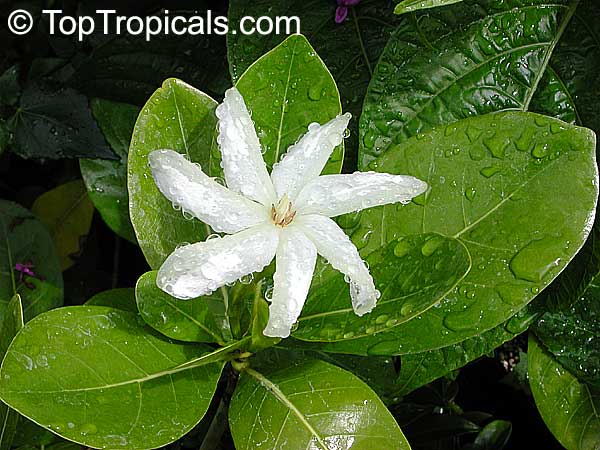
A: Feijoa is certainly one of the easiest fruit trees to grow as it does not require much care. It is an attractive, evergreen tree or large shrub with dark green, oval, leathery leaves. It has an abundance of uses in the garden and produces lovely edible flowers and fruit! The fruit is eaten fresh, added to smoothies or fruit salad and is also commonly used to make delicious jams and wicked chutneys. Feijoa fruit go a long way in flavor.
This plant is drought tolerant and will grow in almost any soil type. It loves full sun or partial shade and is wind resistant. A lot of gardeners like to grow it as a wind barrier for this reason. It can easily be shaped into a dense, informal hedge or screen that needs very little pruning. Because of this density, it provides excellent shelter for all kinds of wildlife. Butterflies, birds, and butterflies will all love you for growing Feijoa!
Space the plant five feet apart to create a wind barrier hedge. Heat does no not bother it at all and it will also withstand temperatures to 10 degrees F.
The plant gets its names from the delicious perfume it emits. Some folks seem the fruit taste like pineapple, with a slight minty undertone. Others feel the flavor reminds them of juicy fruit gum! The texture is described as smooth and slightly gritty - almost like a pear, but firmer.
If you prefer to grow this plant as a tree rather than a large shrub, simply remove the lower branches up to one-third of the tree's height over a period of time. The Pineapple Guava can grow up to 15 feet wide and tall. They also do really well as a container plant on patios where you can truly enjoy the lovely fragrance of the fruit. It prefers rich, organic, well-drained soil and will need light fertilization every other month in most soils.

We recommend:

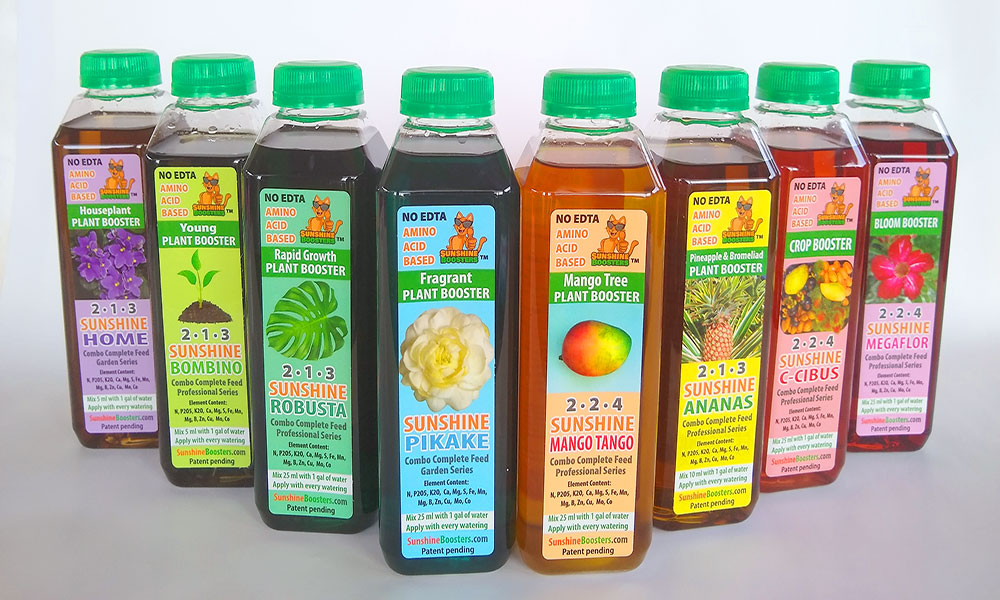
Fruit Festival Plant Food - Super Crop Booster
Mango-Food - Smart Release Fruit Tree Booster
SUNSHINE-Honey - Sugar booster
SUNSHINE C-Cibus - Crop Nutrition Booster

Pretty, pink, edible flowers will wow you from May to June, followed in late summer or fall by the delicious and fragrant fruit. An interesting thing about this fruit is that you don't pick it. It falls to the ground when it is ripe. Or simply place something under your tree, like a tarp, and shake the tree. The ripe fruit will fall off. You can store the fruit in your refrigerator for up to a week. And remember! The fruit of the Feijoa is not only a very rich source of soluble dietary fiber, but also an excellent source of Vitamin C, and very rich in antioxidants. They are also low in calories. Each fruit only holds 55 calories.

Date: 2 Nov 2018

Amazing root growth after treatment of SUNSHINE-SuperFood!

TopTropicals.com

This Sansevieria grandis leaflet planted indoors in a plastic cup was treated with SuperFood once a week, along with regular monthly N-P-K, for a couple of months. On the photo, you actually see not just a ginormous root but a whole new plant started forming through the colossal size root sucker trying to find its way out. A pretty impressive result for a small plastic cup! The cup was protected from the sunlight, sitting inside of a dark planter. The plant received filtered light sitting on a windowsill with Eastern exposure.

Check out SuperFood

TopTropicals.com

Date: 24 Jun 2018

TopTropicals

What you need for successful growing Adeniums

1) Adenium plants - from TopTropicals Endless selection of Adeniums. We have double flower, red, purple, yellow and even black flowers!
2) A small pot with excellent drainage is a must. Position the plant in a pot, size of root system.
3) Adenium soil mix. TopTropicals Adenium Soilless Mix. Use only well-drained soil.
4) Lots of light. Adeniums need lots of light for heavy flowering. However from our own experience, in super hot climates, they look healthier in filtered bright light. After initial planting, once the plant is established and starts growing new leaves (may take a few weeks), gradually move it into brighter light.
5) Little water. Adeniums like a neutral to hard water. Acidic water tends to sour the soil too fast and may cause root rot. Water plants preferably in the early morning, and allow them to drink up throughout the day. Watering can be done daily to every few days. Do not water again until soil dries on surface. Never allow your plants to sit in a saucer of water, but don't let them to dry out too often - this causes adeniums to go into early dormancy. Adeniums do not like both over-watering or drying-out.
6) Fertilizer. To make your plant develop a large swollen base/trunk, you'll need a good quality fertilizer. Use slow-release granulated fertilizer for overall plant health, and liquid water soluble fertilizer for swelling up trunks that is also used to increase flowering. It shouldn't be too high in nitrogen, the middle number should be the highest (similar to 10-50-10). Never apply fertilizer directly on roots and do not liquid feed when a plant is thirsty: always water first slightly to avoid root burn and leaf drop. Do not wet leaves.
7) SuperFood micro-elements. Besides macro-nutrients provided by fertilizer, Adenium needs micro-elements for balanced development of root system and especially caudex: Sunshine-SuperFood.
8) SUNSHINE-BC. Spray leaves with SUNSHINE-BC once a month to encourage young growth, profuse flowering and large caudex.
9) Growing caudex. There is a secret how to create a large swollen caudex: raise the plant a bit every time you re-pot it, so that the upper part of roots will be a little exposed. The plant will form more roots that will go down.

See full list of Adeniums - plants and seeds.

Date: 24 Jun 2018

TopTropicals

URBAN TROPICAL GARDENING:
10 secrets of successful Container Mango growing on a balcony.

Q: I live in Miami in apartment on a second floor, and I have a balcony with SE exposure. I wonder if I can grow a mango tree in a pot? Will it fruit for me? I recently moved to South Florida and I don't know much about tropical plants; but I tasted real fiberless mangos from someone's garden - it was so delicious and different from those in the grocery store. I wonder if I can have a fruiting tree on my balcony? And if yes, how do I plant and take care of it?

A: Yes, you can! Here is what you need to do:
1) Temperature. You are lucky to live in Tropics, keep it on a balcony year round.
2) Light. Position the pot in a spot with the most sun exposure. Mango trees can take filtered light too, but the less sun, the less fruit you will get.
3) Soil and Container. Use only well drained potting mix. Step up the purchased plant into next size container (3 gal into 7 gal, 7 gal into 15 gal). When transplanting, make sure to keep growth point (where roots meet the trunk) just at the top of the soil. Covering base of the trunk with soil may kill the plant.
4) Water. Water daily during hot season, but only if top of soil gets dry. If it still moist, skip that day. Mangoes (unlike Avocados!) prefer to stay on a dry side.
5) Fertilizer. Use balanced fertilizer once a month, 1 tsp per 1 gal of soil. Do not fertilize during fruiting - this may cause fruit cracks.
6) Microelements. Apply SUNSHINE-Superfood once a month. This will help your mango healthy, vigorous, and resistant to diseases. Use SUNSHINE-Honey to make your fruit sweeter.
7) Insect control. Watch for scales and mealybugs, clean with solution of soapy water + vegetable oil (may need to repeat 2-3 times with 10 days interval), or with systemic insecticide like imidacloprid only as needed (if non-harsh treatment didn't help). Most Flea shampoo for dogs contain that chemical, you may try that shampoo solution.
8) Trimming. Once potted, do not remove leaves that are discolored or have spots until new growth appears. Dark dots on mango leaves, especially in humid climate like Florida, may be signs of fungus. Treat with fungicide according to label, and remove only badly damaged leaves. Trim crown as needed after flowering and fruiting (by Fall). Train into a small tree, and you may remove some lower branches eventually.
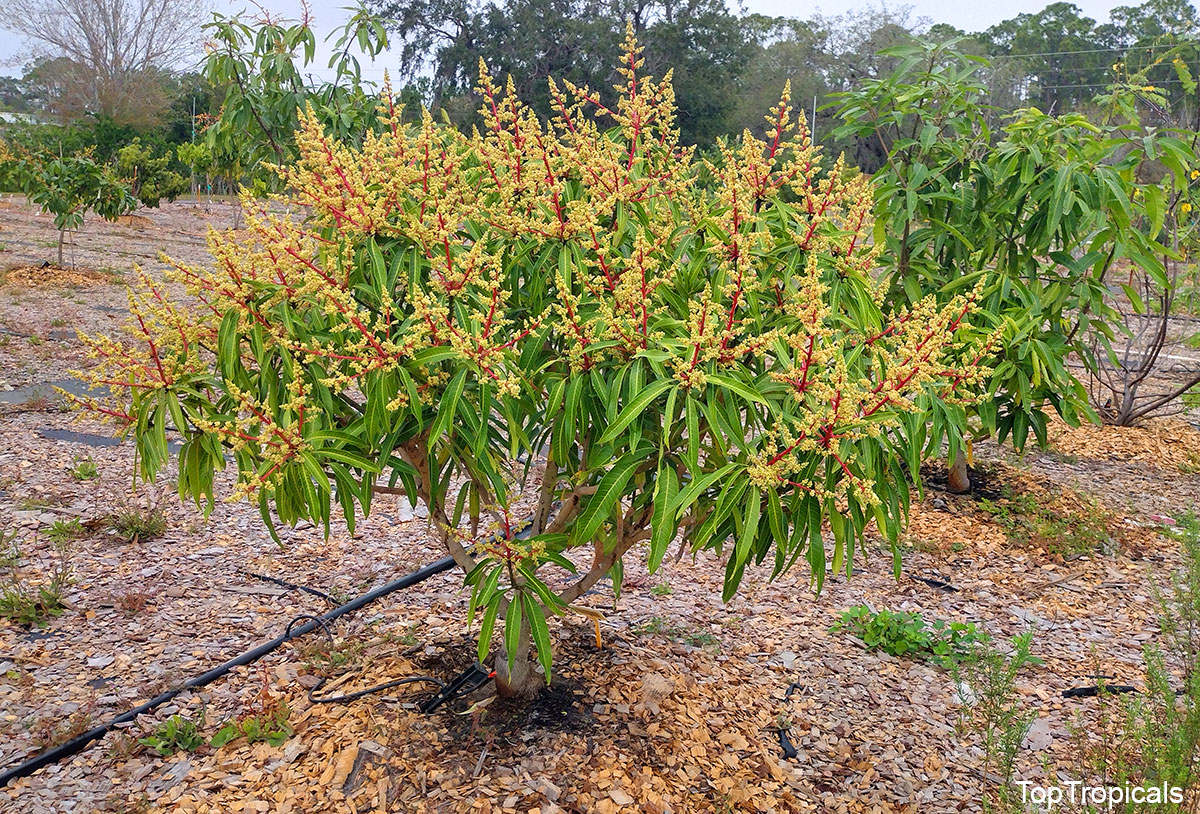
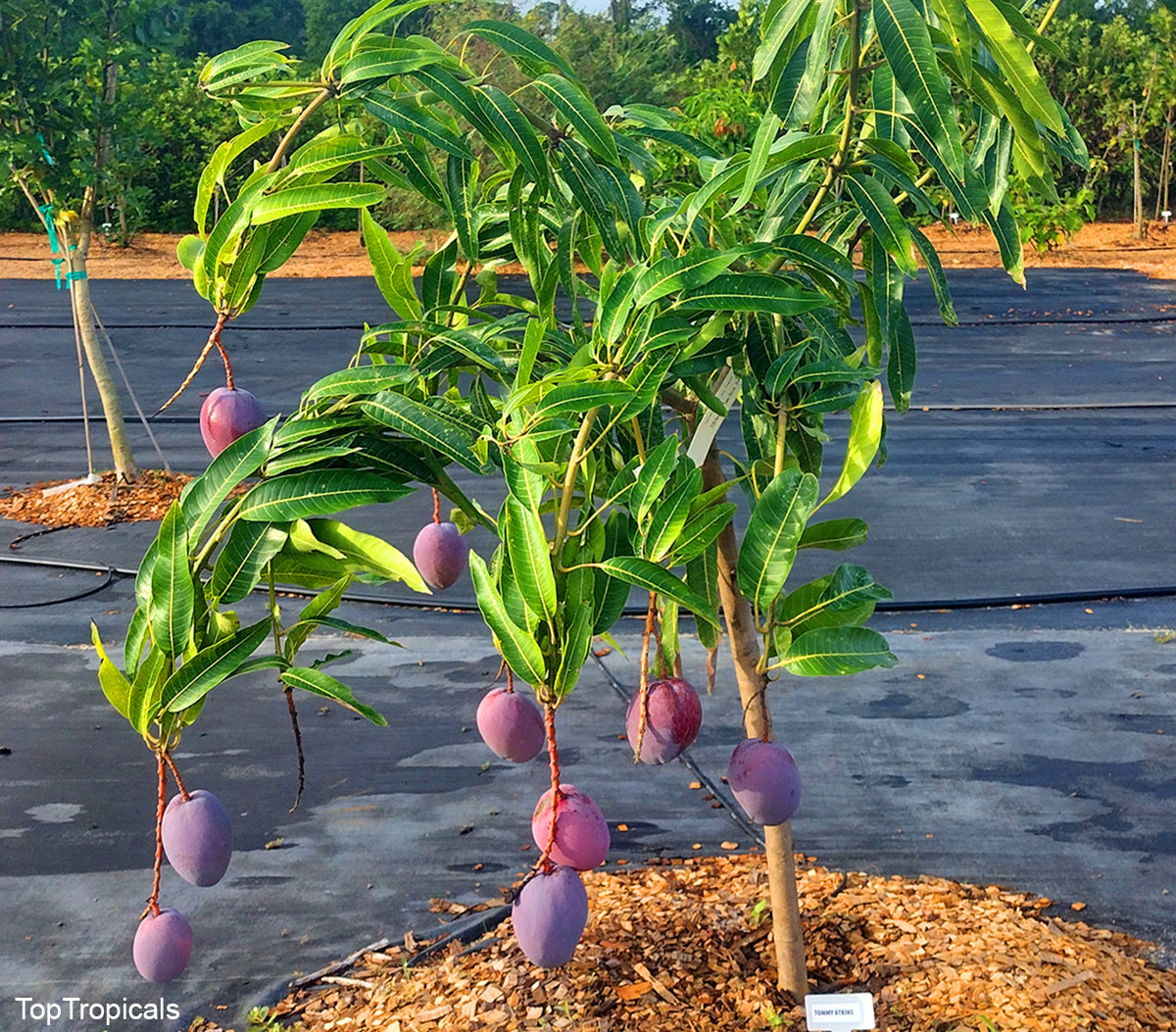
9) Flower and fruit. Mangoes are winter bloomers with bunches of tiny flowers coming in thousands. Many of them set fruit (if pollinating insects present). Keep in mind that young trees can only bare a few fruit. Normally a tree will drop excessive fruit and keep only a few that it can manage. To save the young tree some energy, remove fruit if too many and leave only 2-3 for the first year. It will pay you next year with more abundant crop.
10) Variety. Last but not least: Choose the right variety for container culture! Pick from "condo" dwarf varieties such as Icecream, Nam Doc Mai, Carrie, Cogshall, Julie, Fairchild, Pickering, Graham, Mallika, and a few others - check out Mango Chart pdf and full list of our Mango varieties.

Date: 22 Oct 2025

💞 Cassia or Bauhinia?

Collage  of  Cassia  and  Senna  flowering  trees:


1  –  Cassia  bicapsularis  (Butterfly  Bush),


2  –  Cassia  x  natalensis  (Rainbow  Cassia),


3  –  Cassia  grandis  (Red  Cassia),


4  –  Cassia  didymobotrya  (Popcorn  Cassia),  similar  to  Senna  alata 


(Empress  Candles),


5  –  Cassia  javanica  (Apple  Blossom  Tree),


6  –  Cassia  roxburghii  (Ceylon  Senna),


7  –  Cassia  fistula  (Golden  Shower  Tree),


8  –  Cassia  x  nodosa  (Pink  Shower).

Looking for a small tree that blooms like fireworks but still fits on your patio? We hear this question all the time at Top Tropicals: Cassia or Bauhinia? Both are tropical showstoppers, but they shine in very different ways.

🌞 Cassias: Sunshine Fireworks

Cassia trees are some of the most rewarding tropical bloomers you can grow. Fast-growing, free-flowering, and surprisingly cold-tolerant, they thrive in full sun and summer heat. Their bright clusters come in shades of yellow, orange, pink, red, and even multicolor blends. The famous Rainbow Cassias show swirls of coral, gold, and rose on the same tree, creating a living fireworks display.

For gardeners in warm regions, these trees become spectacular focal points in the landscape. In containers, compact yellow forms like Cassia didymobotrya (Popcorn Cassia) and Senna alata (Empress Candles) stay manageable and bloom freely through summer.

Cassias can also be grown in pots with pruning and patience. Once mature, they reward you with breathtaking color that turns any patio or pool deck into a tropical show. Most showy cassias (numbers correspond to the photos in the collage above):

  1. Cassia bicapsularis (Butterfly Bush) - is a fast-growing, low-maintenance shrub covered in bright yellow, butterfly-like blooms from fall through winter.
  2. Cassia x natalensis (Rainbow Cassia)
  3. Cassia grandis (Red cassia) - a medium size tree having profuse blooms of dark pink to crimson flowers throughout the Spring.
  4. Cassia didymobotrya (Popcorn Cassia), small tree producing golden-yellow flowers with a distinct scent of peanut butter that open from brown buds in late summer and autumn. Similar to Senna alata (Empress Candles)
  5. Cassia roxburghii (Ceylon Senna) - graceful tree with spreading, drooping branches appearing to be overweighed by its wealth of clustering red blossoms.
  6. Cassia x nodosa (Pink Shower) - is a spectacular medium-sized, fast-growing tree with cascading clusters of fragrant pink-and-white appleblossom blooms in spring and summer.
  7. Cassia fistula (Golden Shower) - to many tropical gardeners, the most beautiful of cassias with masses of bright gold flower clusters appear on almost every branch.
  8. Cassia javanica (Apple Blossom) - dazzles with dense clusters of pink-to-white blossoms that change shades as they bloom, creating a spectacular display that lasts for months.
"Cassias love the heat and sunshine," says Tatiana Anderson, Top Tropicals Plant Expert. "They are perfect for anyone who wants big bursts of color and doesn’t mind giving them space and light to grow."

👉 Explore Cassia Trees

Bauhinia Magic: Orchid-Like Blooms in a Compact Size

Collage  of  Bauhinia  orchid  trees:  top  left  –  Bauhinia  acuminata 


(Dwarf  White  Orchid  Tree),  middle  left  –  Bauhinia  blakeana  (Hong  Kong 


Orchid  Tree),  bottom  left  –  Bauhinia  monandra  (Napoleon’s  Plume 


Orchid  Tree),  top  right  –  Bauhinia  madagascariensis  (Red  Dwarf  Orchid 


Tree),  and  bottom  right  –  Bauhinia  tomentosa  (Yellow  Orchid 


Tree)

Bauhinia orchid trees: top left – Bauhinia acuminata (Dwarf White Orchid Tree), middle left – Bauhinia blakeana (Hong Kong Orchid Tree), bottom left – Bauhinia monandra (Napoleon’s Plume Orchid Tree), top right – Bauhinia madagascariensis (Red Dwarf Orchid Tree), and bottom right – Bauhinia tomentosa (Yellow Orchid Tree)

Bauhinia trees known as Orchid Trees, bring a touch of tropical luxury to any space. Their butterfly-shaped leaves and orchid-like blossoms appear in shades of red, pink, purple, white, and yellow, often lasting up to ten months a year. Bauhinias are ideal for gardeners who want nonstop color in a manageable size. Most species grow well in large pots and bloom young, often within the first season.

The following compact varieties stay neat and flower almost continuously in warm weather:

The Hong Kong Orchid Tree is especially prized because it is sterile and produces no messy seed pods, keeping patios clean. Grafted Buhinia blakeana trees begin blooming while still small, making them perfect for containers or tight spaces.

"Bauhinias are generous bloomers," Tatiana explains. "They respond beautifully to regular feeding and full sun. If nights turn too cold, just move the pot to a sunny porch - they’ll keep their tropical charm most of the year."

Give them full sun, regular fertilizer, and a well-drained mix such as Sunshine Abundance, and they will reward you with months of vivid blooms. When nights turn too cold, simply move the pot to a sunny porch or bright window. Bauhinias adjust beautifully and keep their tropical grace year after year.

🎥 Watch Short Videos:

💲 Special Offer – 20% off Cassias and Bauhinias!

Get 20% OFF Cassias and Bauhinias with code

RAINBOW2025

Min order $100. Excluding S/H, valid online only, cannot be combined with other offers.

Hurry, offer expires October 30, 2025!

👉 Explore Bauhinias - Orchid Trees