NEW
VIDEO:
ABC7 Fort Myers News:
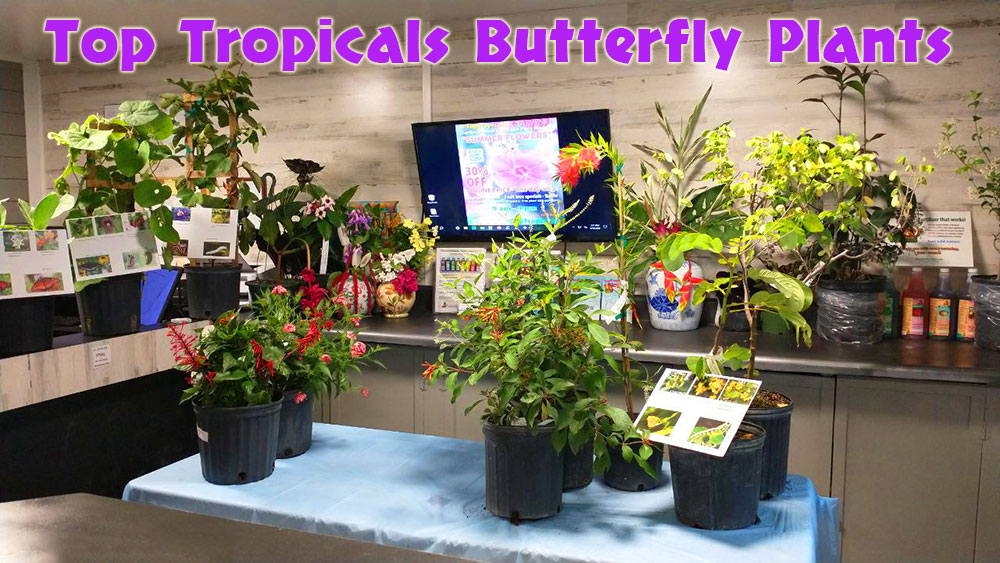
Butterfly plants at Top Tropicals
Butterfly plants... what can be more romantic and sweet in your garden!
Watch the news segment by Rachel Anderson for ABC-7: Butterfly plants at Top Tropicals.
"...Spring has sprung, and if you're looking to spruce up your
garden, Top Tropicals in Fort Myers has you covered! They have hundreds of exotic
plants, fruit trees, fragrant flowers and plants that will attract
butterflies to your garden!
If you're looking for a Mother's Day gift, plants are gifts that keep
on giving!.."
Stay updated with TopTropicals Videos by subscribing to our channel at
YouTube.com/TopTropicals
and get our latest video news of what is fruiting and blooming!
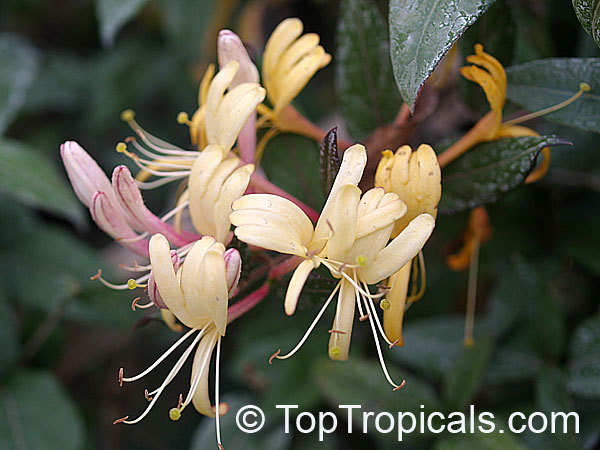
In the photo: Lonicera japonica - Japanese Honeysuckle - a garden favorite, hardy,
fast growing vine. Jasmine-sweet scented flowers attract butterflies, and
hummingbirds, and berries attract birds!
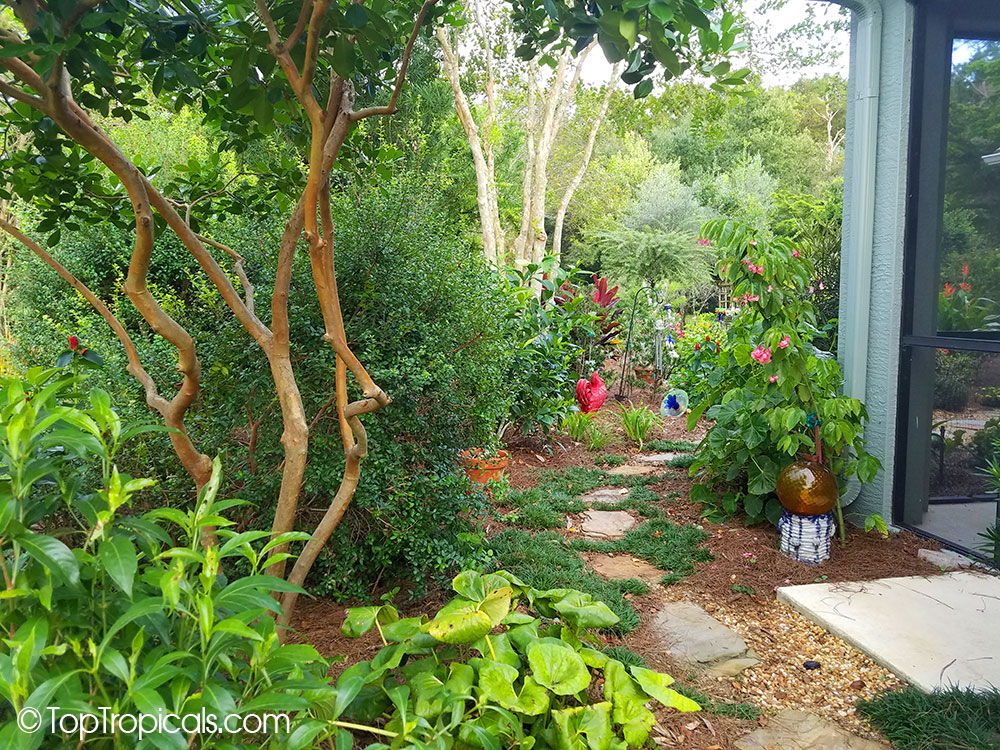
A:Companion planting is a gardening
technique that involves planting different crops or types of plants together in a
way that benefits all plants. This practice has been used for centuries, and
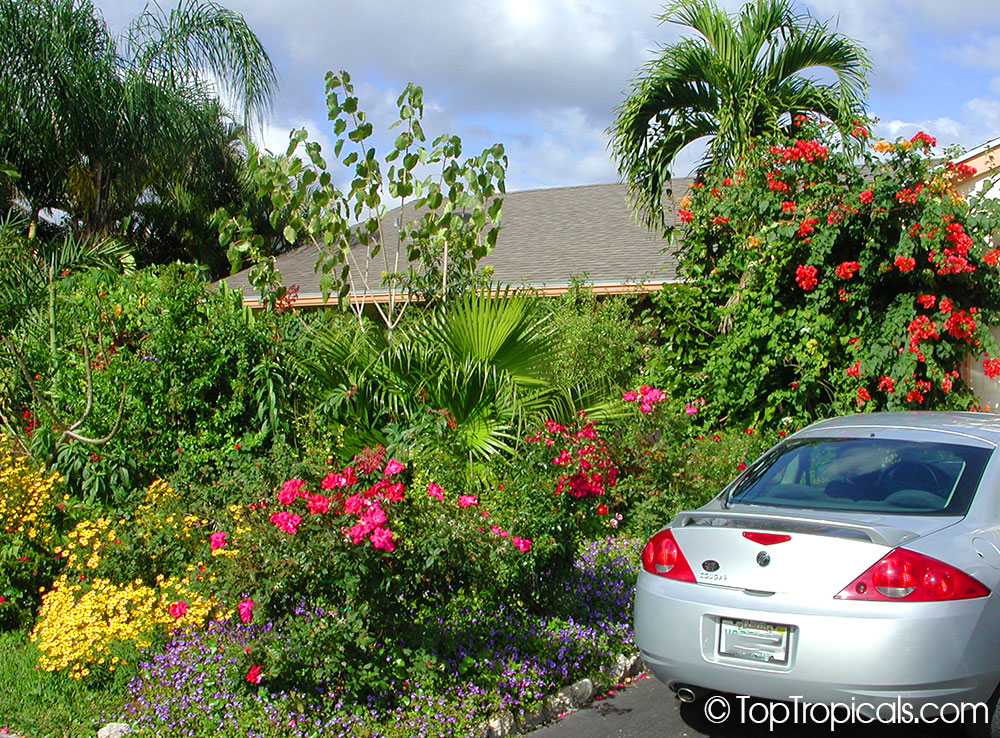
it can be especially useful in tropical gardens where there is a diversity of
plant life:
trees,
shrubs, vines and
climbers, ground
covers, fruit
and edibles, and
different flowering ornamentals. It is a great way to improve the health and
yield of fruit tree crops while reducing the need for fertilizers and
pesticides. By choosing the right companion plants and planning your garden layout
carefully, you can create a vibrant and diverse ecosystem that will benefit
both your plants and the environment.
Companion planting involves:
Planting different crops together to repel insects: adding such
plants as
Lemon grass, Patchouli leaf, or Moujean Tea near your vegetables can deter aphids and other pests.
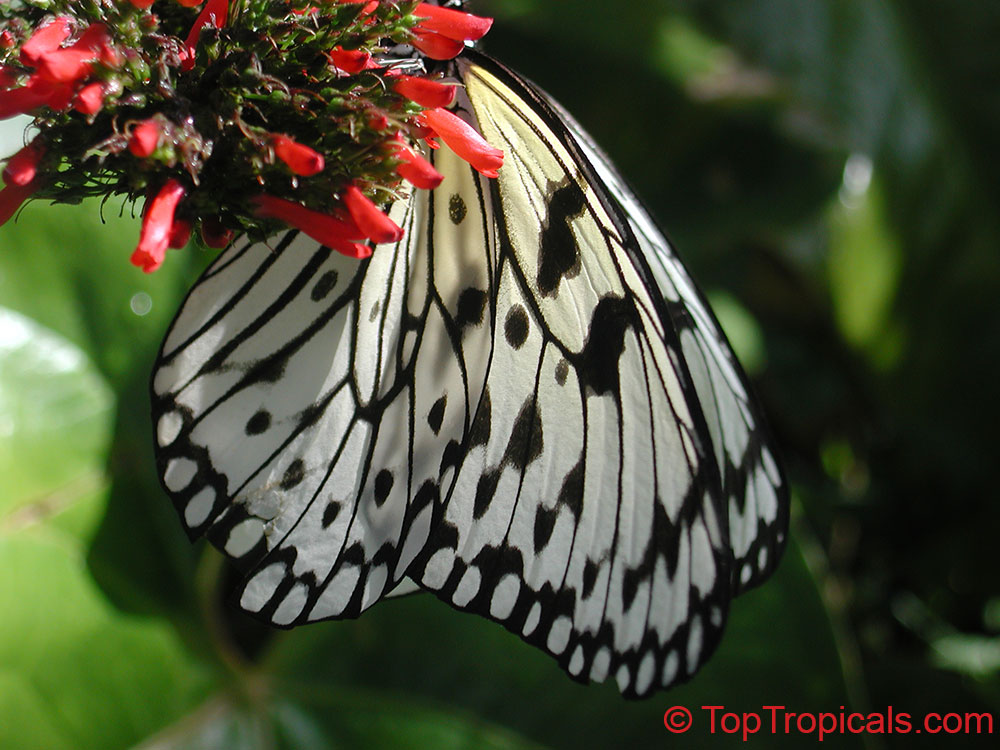
Attracting pollinators - Butterfly plants. Many tropical crops, such as passion fruit, papaya,
mango, and
avocado, rely on pollinators to produce fruit. Companion planting can help to
attract pollinators such as bees, butterflies, and hummingbirds to your
garden.
Providing nutrients to the soil, adding mulch and low growing plants (ground
covers) to preserve moisture.
Planting a variety of different types of plants together in order
to create a more resilient ecosystem that is less susceptible to pests and
diseases.
To get started, plan your garden layout and choose companion plants with
similar water and light requirements.
For example, plant in the same group lush foliage plants, gingers, and flowering brunfelsias in shady areas; plant jasmines and gardenias in full sun and very well-drained spots.
Rotate annual crops regularly and experiment with combinations to find what
works best. By doing this, you can create a thriving ecosystem that benefits
both your plants and the environment, reducing the need for harmful
chemicals.
Add a little Sunshine
to keep your plants looking their best
By Ed Jones, the Booster Guy
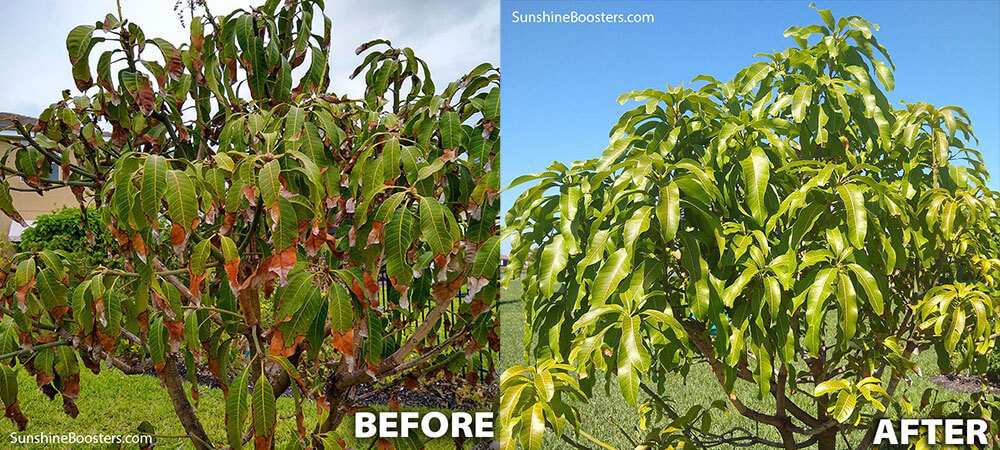
...Just like people, a little sunshine goes a long way in keeping them
happy. It is usually easier to keep a plant healthy than it is to fix it when
it is not well. Proper plant nutrition is often times the issue. The good
news is that it is easy to keep your plants looking good by following proper
nutrition practices...
...Feeding your plants with micronutrients that they just don't get in
regular fertilizers can prevent deficiencies. Let's get started on a regular
program of using foliar sprays to help keep your plants looking their best...
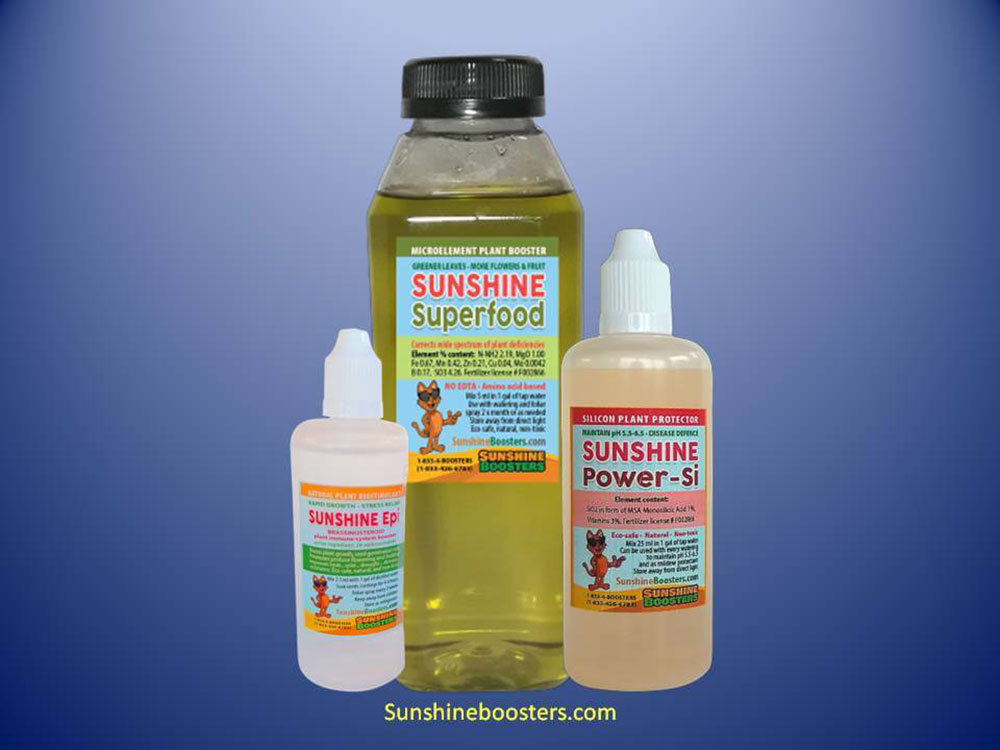
We recommend using three products in combination - the Complete SUNSHINE Microelement Supplement Kit that consists of:
We are recommending a foliar spray once per week to maintain optimal
health conditions. This is based on recent studies done in Ukraine by the scientist who invented Sunshine Boosters products... Continue reading to see an easy treatment schedule that will provide
your plants with:
- Increased photosynthetic activity
- Increased insect and disease resistance
- Reduced mineral toxicity
- Improvement of nutrient imbalance
- Enhanced drought and frost tolerance
- Enhanced plant growth
Sunshine Boosters are developed in Ukraine
and manufactured in the USA. We support Ukraine fight for freedom. All
profits from these fertilizers will be donated to support our Team in Ukraine.
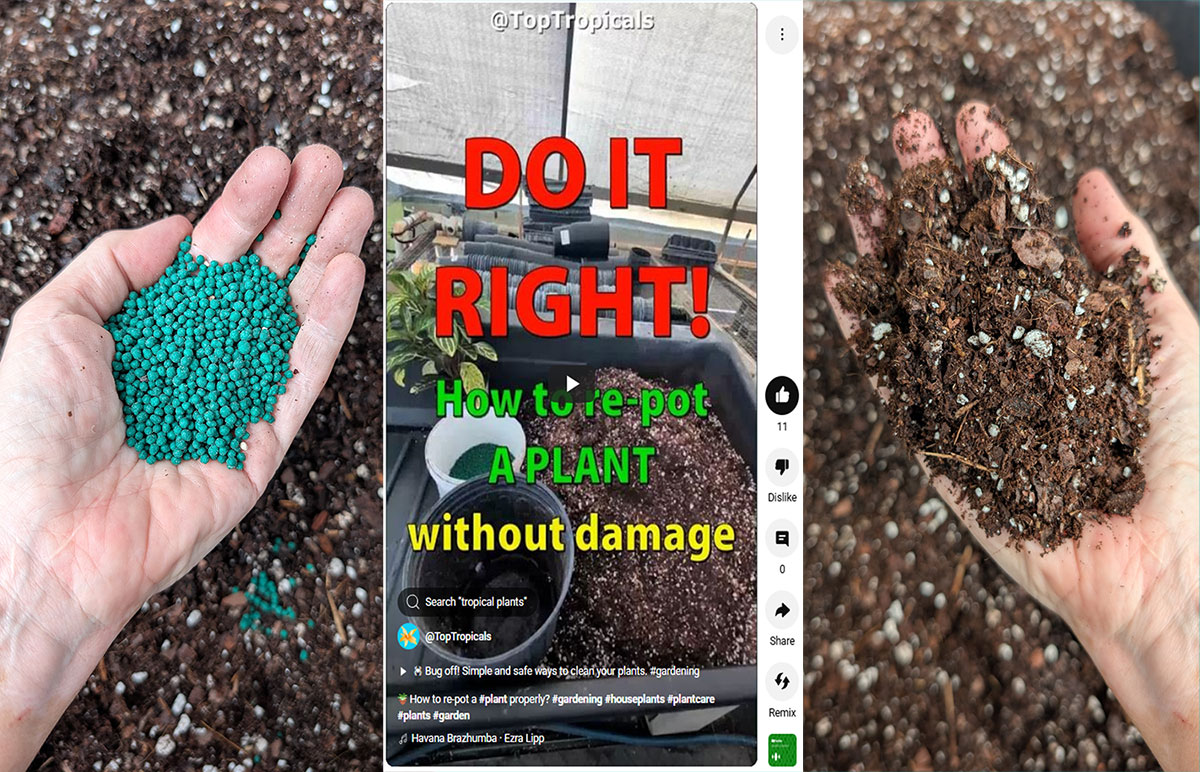
After a busy summer of growth, many potted plants are bursting out of their containers. Now is the perfect time to step them up into a slightly larger
pot.
🌱 Why now in August?
Repotting before fall gives roots room to expand, while
there’s still warmth for active growth. Plants have time to sprout new shoots, fill out, and build strength before cooler weather slows them down.
✂️ Trim and Shape
This is also your last chance to give plants a light trim.
Pinching or cutting back helps them branch, bush out, and get denser — exactly what you want going
into fall.
👉 Watch our
on how to step up your plant the right way, then check your pots
— some of your summer growers are ready to move up!
⚠️ Important Note on Timing
This advice is for gardeners in warm climates or for anyone who still has at least a month of warm weather left. Tropical plants go dormant when
temperatures drop below 75F, so planting in a larger pot at that time may cause root rot — roots stop growing in dormancy, and extra moisture in the soil can lead to rotting.
Pick a pot just a few inches larger than the old one.
✅ Make sure it has good drainage — tropical plants hate sitting in water. A pot without drainage holes can cause waterlogging and root rot.
Why plastic pots are better than fancy ceramic
Ceramic pots may look pretty, but they are heavy, breakable, and often lack proper drainage. Plastic pots are lightweight, easier to handle, and — most importantly — if a plant is root-bound and stuck, you can simply cut the plastic pot
to free it without harming the roots. For looks, slip the plastic pot inside a decorative cover pot.
Why turn it upside down? Gravity helps loosen the plant, and it
slides out more easily without tugging.
Never pull a plant by its head (stems or leaves). That can damage the crown and tear
roots.
If it doesn’t come out easily: lay the pot on its side and
gently squeeze or tap the pot to dislodge the soil. If it is really stuck,
cut the old pot instead of forcing the plant.
Check the Root System
If roots are circling tightly (pot-bound), gently untangle or
loosen the outside layer so they will grow outward into the new soil.
Do not shake off or remove old soil from the root ball. Roots have
tiny hairs that absorb water and nutrients, and damaging them will set the
plant back. Keep the root mass intact and disturb as little as possible.
Set at the Same Level
Place the plant in the new pot so it sits at the same soil level as
before.
👉 This is important: burying the stem too deep can suffocate it,
while setting the plant higher than before may expose roots and cause drying.
Keeping the level the same protects the root crown.
Fill and Firm
Add more soil and fertilizer around the sides. Press lightly around the
edges to remove air pockets.
Water Thoroughly
Give it a deep watering to help roots settle.
Aftercare
Don’t water again until the top inch of soil feels dry.
Freshly repotted plants are vulnerable to soggy soil and root rot if kept too
wet.
Smokey: Desert rose. One caudex. Multiple grafts. Different
flowers. Sunshine: So it is a team plant. Everyone blooms, nobody agrees. Smokey: Yet it grows just fine. Sunshine: That is the secret. Coffee and donuts.
🌸Featured Adeniums
Recommended by our Horticulturist, Tatiana
Anderson
Moung Kusuma
Deep magenta flowers with a velvety look and a darker, almost black edge. A
bold, elegant adenium that stands
out immediately.
Sunshine
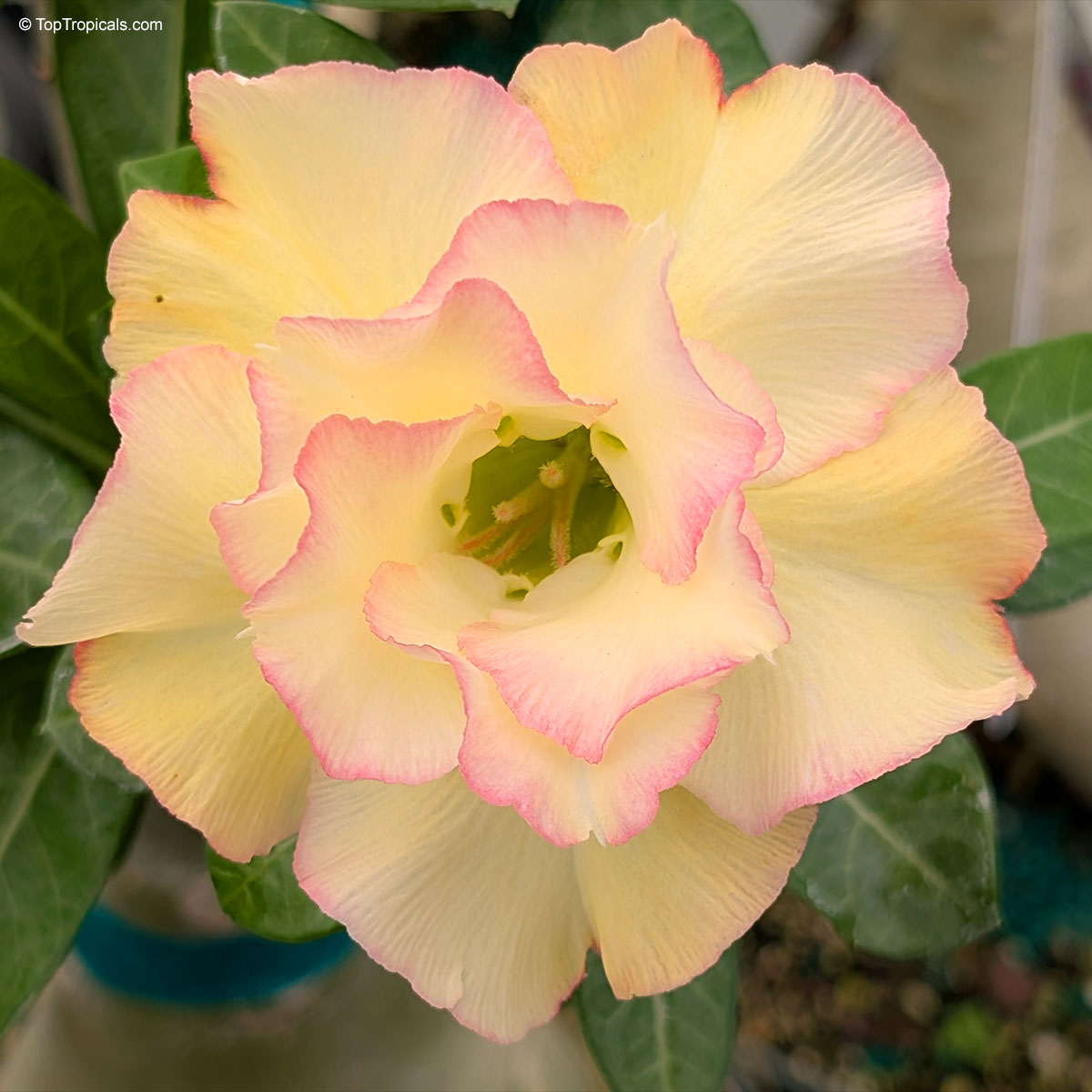
Bright yellow and mauve swirls across layered petals create a warm,
cheerful bloom that lives up to its name.
White Rabbit
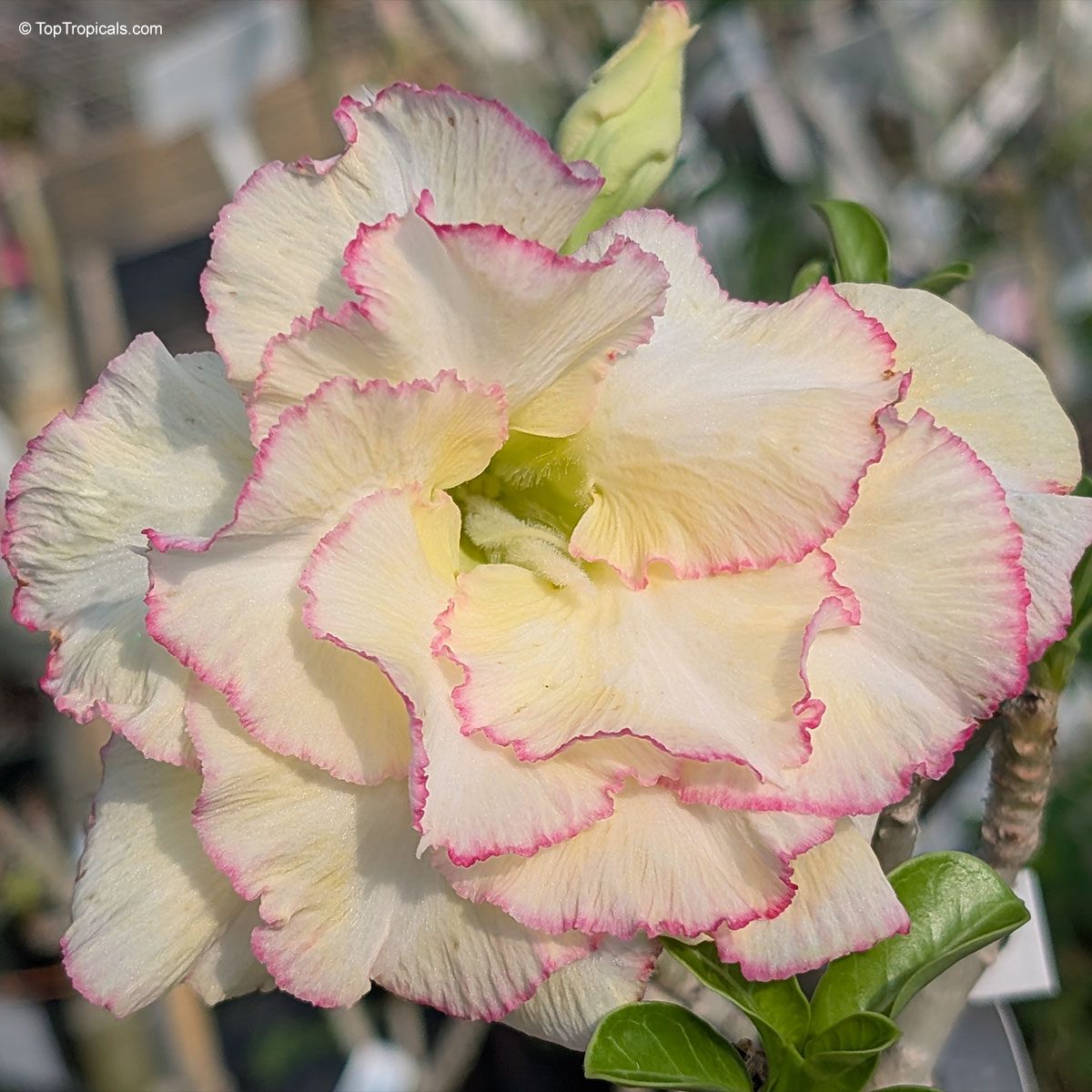
Clean white petals brushed with playful pink streaks. A reliable bloomer
with soft ruffled flowers.
Thong Samsee
Known for its three-color effect, shifting from yellow to pink to nearly
white on the same plant.
Candy
Cheerful yellow petals dipped in cherry red with bold ruffled layers.
Bright, playful, and impossible to miss.
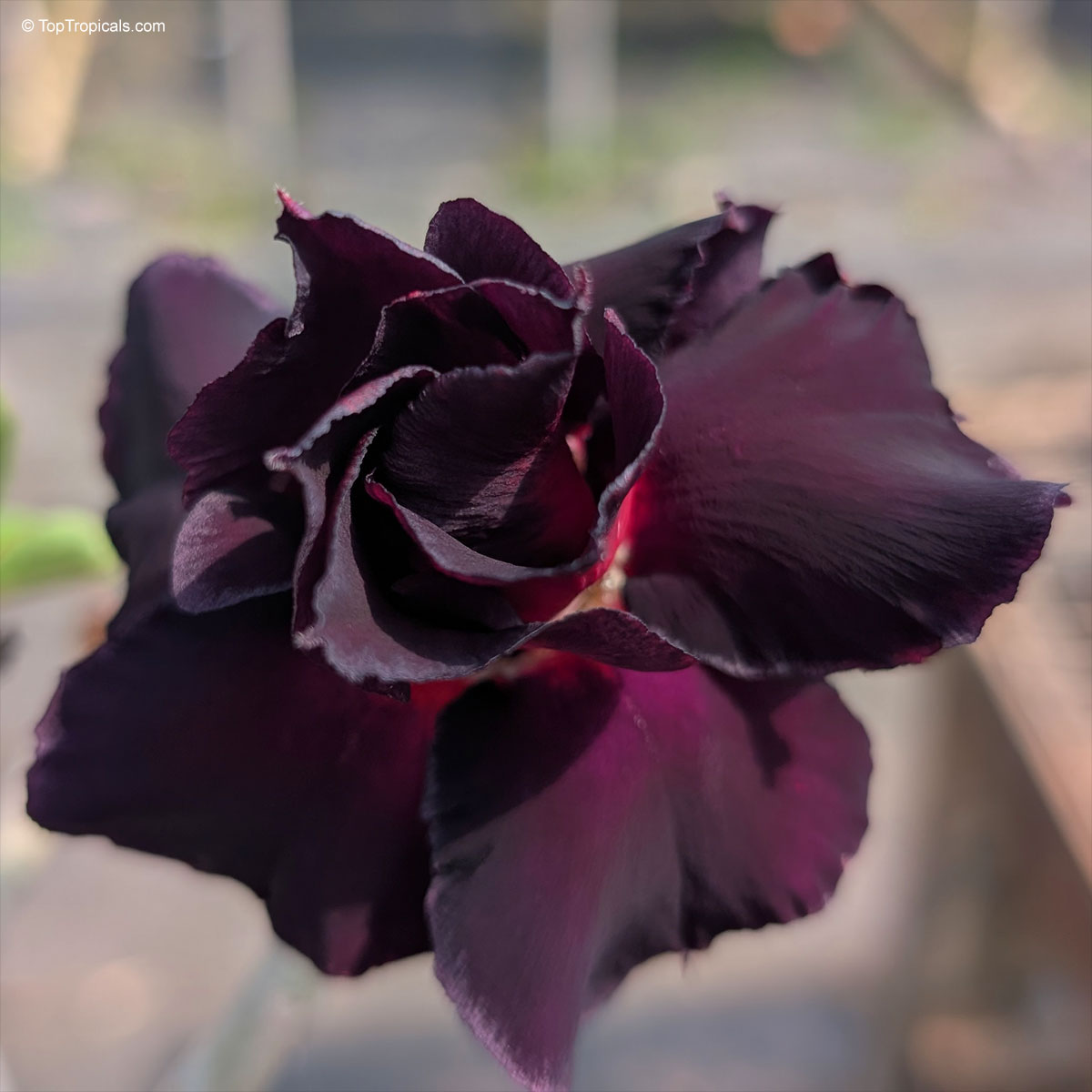
Black Sheep
Nearly black petals with a glowing red center. Dark, dramatic, and
different.
Free Adenium (Desert Rose) Shipping
Plant now, bloom soon. Get select Adenium (Desert Rose) varieties shipped to
you with FREE S&H.
Offer valid through 02/06/2026. Limited quantities. While
supplies last.
Free shipping applies to qualifying Adenium items only. Excludes other items
and prior orders.