Avocado, Lychee and Mango setting
fruit... give them some FOOD!
Q:
Do I need to fertilize tropical fruit when they set fruit?
A:
It is traditionally believed that mango and other tropical
fruit shouldn't be fertilized during fruiting period. It
is true to an extent: you don't want fruit to burst from
fast excessive growing. Instead, try to feed fruit trees
wisely, because they still need proper nutrition to
produce flowers and fruit.
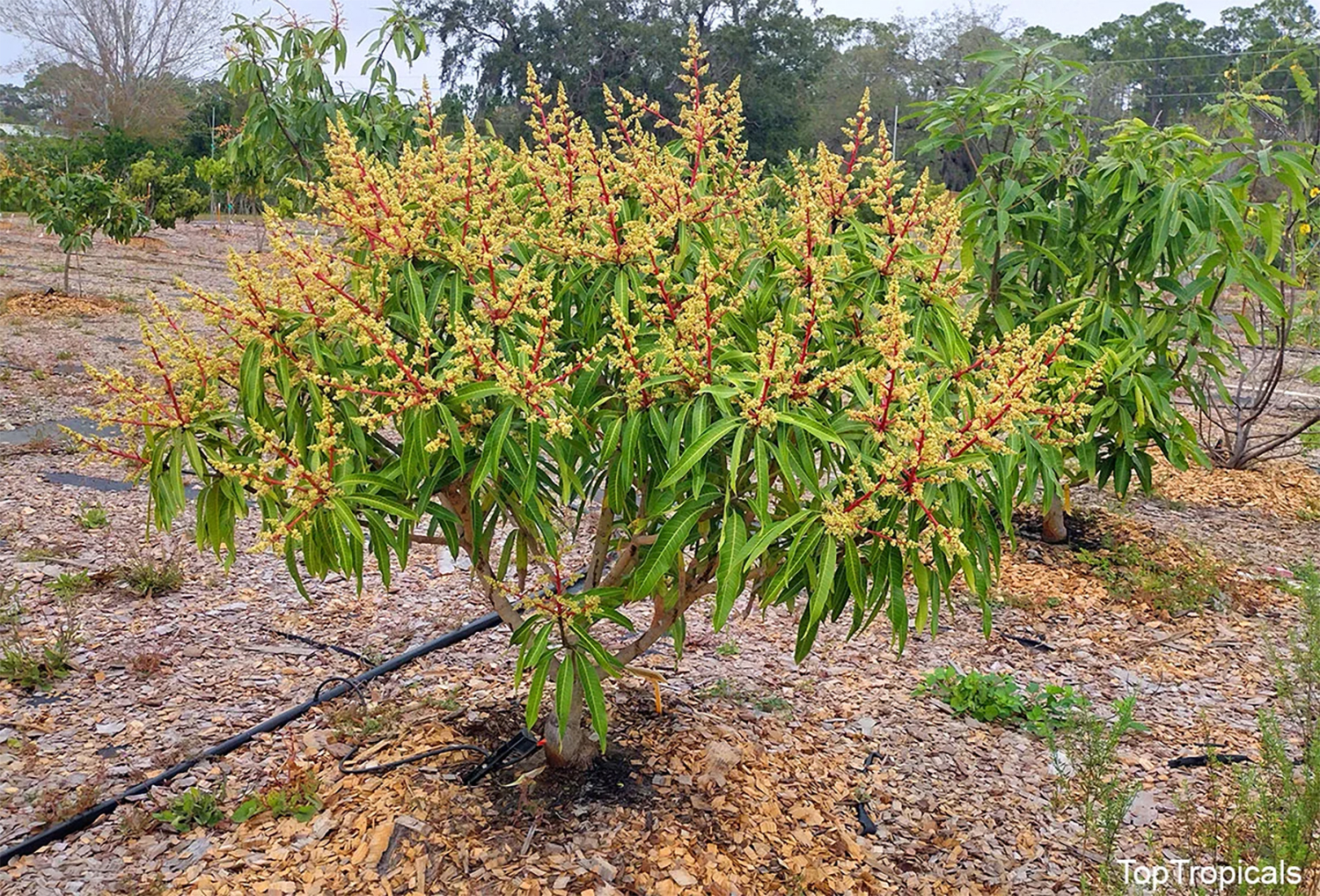
Our spring specials of Lychee, Avocado and Mango are full of buds and
some already set tiny fruit (see examples on the photo).
Here is the feeding plan for these plants once you receive
your mail order:
1) Once received the plant, pot it into container size of
the root ball and let establish for couple weeks. Use SUNSHINE-E to help the plant
recover from shipping stress and establish root system.
2) Apply SUNSHINE-Honey right before
flowering, and next time at setting fruit, to provide
sweeter and bigger fruit, eliminate fruit cracks and help
resist fungus and other fruit diseases.
3) Use balanced granulated fertilizer,
1 tsp per each gallon of soil. Apply once a month during
Spring-Summer season. This gives the plant balanced
macro-elements (NPK) necessary for overall plant health.
Do not use on fruit trees fertilizers with high Nitrogen
content.
4) Apply SUNSHINE SuperFood
micro-element booster to keep fruit trees vigorous,
develop strong root system and avoid deficiencies.
5) In case of signs of chlorosis (yellowing leaves with
darker veins), give the tree SUNSHINE-GreenLeaf and watch
the leaves turning green quickly.
After harvesting, don't forget to make another treatment
of SUNSHINE-Honey as a
preparation for the next year flowering and fruiting
season.
Date: 15 Nov 2016
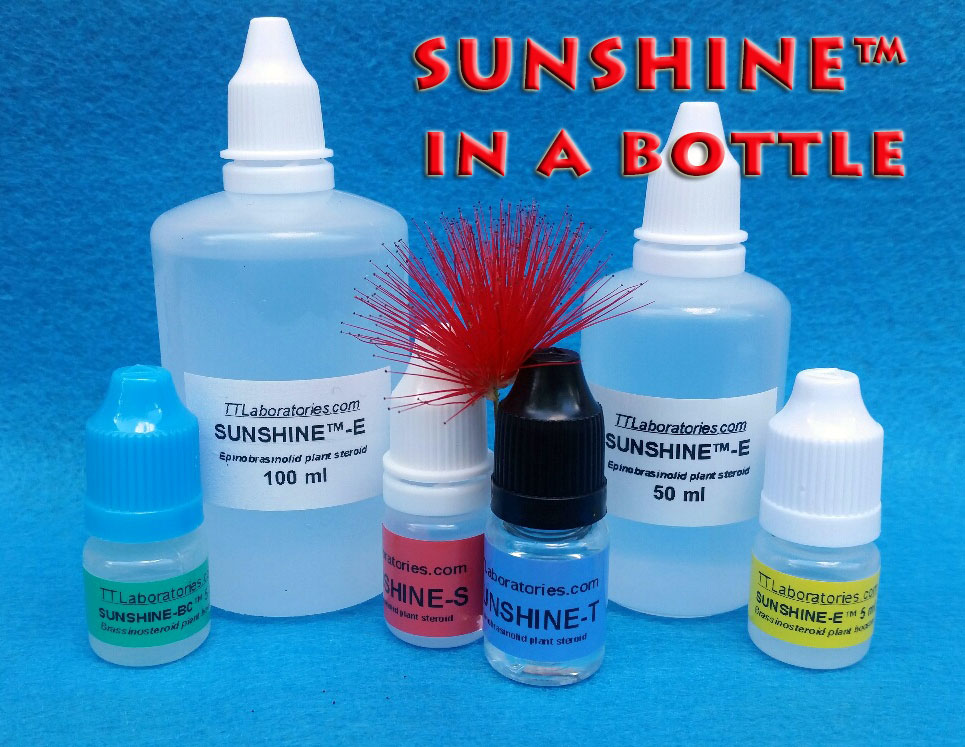
SUNSHINE in a bottle - your help during winter
Q:
I have been using your new plant hormone SUNSHINE
for plants after shipping, and I must admit it does make
a big difference! They recover right away. I order
plants online very often, and usually it takes up to a
week or more until they start showing new growth. After
SUNSHINE treatments, they look fresh within a day or
two. My question would be, for improving cold tolerance,
what do you recommend? I live in Florida and it is still
warm here, should I start spraying my garden now or
should I wait until cold spells?
A:SUNSHINE
is very effective plant stimulant that helps tropical
plants survive different kinds of stress, including
cold, heat, drought, low light, etc. At TopTropicals
gardens and nursery, we have been using this hormone for
many years to protect our plants from unfavorable
conditions, and it saved us many rare tender species,
and lots of money!
The sooner in Fall you start treatments, the better.
Don't wait until cold spell. SUNSHINE works slowly and
in very low doses. The mechanism is actually about
boosting, building up the plant's own immune system. Low
doses once a week, even every other week will work just
fine, so you will need very little of the product. For
less than $5 you can help expensive rare plants to go
through winter painlessly. Recommended application is
only 2.5 ml/1 gal of water, to spray every 1-2 weeks
throughout winter period.
Start spraying your plants with SUNSHINE now, to help
them survive short winter days, build up insect
resistance (especially for plants indoors), and what is
most important, to remain strong through lower
temperatures. These are our suggestions:
- SUNSHINE-T
- thermo-protection booster. It is specially
formulated for winter protection of tropical plants. To
improve cold hardiness even more, spray 1-2 days prior
to cold with 5 ml/1 gal solution and after that,
continue applications with 2.5 ml/1 gal solution every
10-15 days throughout winter period.
- For large plant collections, and in-ground gardens in
subtropical areas, take advantage of very cost effective
bulk items 50
ml and 100
ml bottles of SUNSHINE.
- Don't forget that SUNSHINE is only a stimulant, and
not a plant food. While regular fertilizer should be
avoided during winter months, it is always beneficial to
apply microelements through foliar spray. During cooler
period, chances of chlorosis increase, because at low
temperatures iron is difficult so absorb by roots
especially in moist soil, hence iron deficiency! Our new
Iron supplement SUNSHINE-Super-Iron
microelement booster will help to avoid yellowing leaves
and to maintain your plants strong and healthy during
slow growth period. Ultra-potent, highly absorbable iron
mix, with chelated Iron with DTPA (instead of usual
EDTA) that is better soluble in hard water and more
effective for chlorosis. This mix contains both EDTA +
DTPA chelated iron in higher concentration than regular
micro-elements mixes.
See all SUNSHINE
booster products in our store. For advanced
information on SUNSHINE plant boosters, history of use,
formulation, and frequently asked questions, visit our
manufacturer's website TTLaboratories.com.
Q: What is the best way to germinate seeds in summer? Should I keep trays indoors or put them outside?
A: Summer is the best growing season for plants, and for their propagation. Seed germination process of tropical plants usually benefits from warm, and even hot temperatures, so keeping pots with seeds outside in full or partial sun can be the best way. However some seeds may be more sensitive than others, or require slightly cooler or higher temperature for germination. These are a few tips that may help:
- For seed germination, use only well drained mixes, containing either peat moss or coconut fiber to retain moisture. Some succulents may require adding sand to the germination mix. You may also try our Professional Formula Seed Germination Mix.
- Large tropical seeds, like palms, or seeds of Fabaceae (Bean) family, can be grown in full sun. Their germination will benefit from higher temperatures (up to 90-95F). Make sure to keep soil moist. Cover them well, with 3/4 to 1 inch of soil.
- Fruit seeds (large size) should be germinated either in individual cells or small pots (3-4"diameter).
- Small to medium size seeds can be grown in so-called community pots. Seedlings can be separated after they establish their first roots.
- Tiny seeds should be planted closer to the surface, covered with only 1/4-1/8 inch of soil; some seeds require bright light for germination, so full sun will be a plus. Some small seeds like Ficus for example, prefer to be broadcasted on the surface, uncovered. Put containers with such seeds in bright shade, as you don't want the surface of the soil to dry out.
- Once your seeds sprouted, move them in filtered light - bright to medium shade depending on tenderness of the species. (Gingers prefer shade, while succulent sprouts can stay in brighter light). Regardless of water/sun needs of the species, all young sprouts and first leaves are sensitive to hot sun and may get burned or even killed. Once a baby plant has a few leaves and well-branched root system, you may start moving trays into a brighter light.
- Do not overwater young seedlings, keep soil slightly moist but not soggy.
By Tatiana Anderson, Horticulture Expert at Top
Tropicals with
Smokey & Sunshine help
Sunshine Boosters for different types of plants
Here is why SUNSHINE Boosters are the smart choice for your garden this
spring:
Amino Acid Stability: Unlike traditional fertilizers that
use synthetic EDTA chelators, our formulas are amino-acid based. This means
100% of the nutrients are bioavailable and consumed by the plant, leaving
zero
toxic residues or salt build-up in your soil.
Safe for Every Watering: Because our concentrations are
scientifically balanced and mild, they are safe for daily use. This
eliminates the "feast or famine" cycle of dry fertilizers and prevents
accidental root burn.
Pure Taste for Edibles: Our delicate formulas do not
contain excess salts, urea, or ammonium salts that can ruin the flavor of
your harvest. Your fruit and vegetables will retain their pure, natural
taste.
Pollinator Friendly: Our boosters are designed to be safe
for honeybees and other beneficial insects, making them the responsible
choice for an organic-style garden.
🌿For Potted Plants: Breaking the "Foodless" Cycle
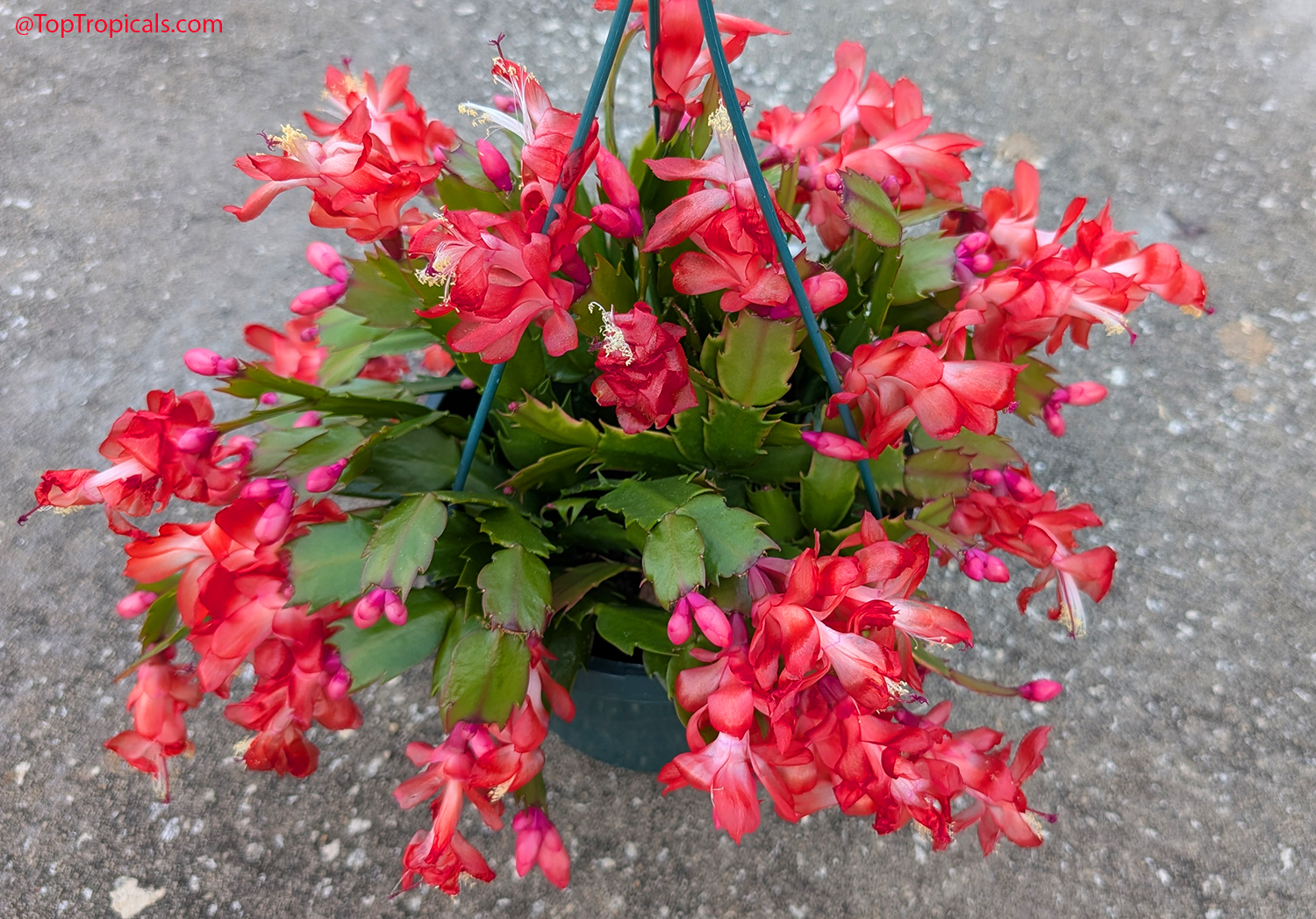
Schlumbergera - Christmas cactus - after boosting
flowers with Sunshine
Megaflor
Container-grown plants are trapped in soilless mixes (peat, bark,
perlite) that are structurally great but naturally nutrient-deficient.
Total Nutrition: Since pots lack the natural "buffet"
of the ground, SUNSHINE Boosters™ provide every
essential mineral the plant cannot find on its own.
No Salt Build-up: Our amino-acid based formulas are
consumed entirely by the plant, leaving zero toxic residue or root-burning
salts behind.
Daily Safety: Our mild concentrations eliminate the
"feast
or famine" cycle of dry fertilizers, making them safe for use with every
single watering.
Even in the ground, plants often struggle to absorb what they need
because soil compounds can "lock up" nutrients.
Enhanced Solubility: SUNSHINE Boosters create a
slightly acidic environment that helps dissolve stubborn salts in the soil,
making them accessible to roots again.
Precision Delivery: We provide mobile elements like
Nitrogen precisely when the plant needs to push new spring growth.
🌿The Foliar Advantage: Direct-to-Leaf Delivery
Did you know a plant leaf can absorb nutrients even more efficiently than
the roots? Foliar feeding is your "emergency button" for instant results.
Quick Fix: Foliar applications with Sunshine
Superfood are the fastest way to correct yellowing leaves or visible
deficiencies.
Metabolism Boost: Sprays like SUNSHINE-Epi act
as a bio-regulator, helping plants recover from the stress of spring
temperature swings.
Better Fruit:SUNSHINE Honey is applied to
leaves to naturally move sugars to the fruit, increasing sweetness and
flavor.
🌿The Calcium Problem: Solved
As your plants wake up this Spring, they need structural strength. Think
of Calcium as the "cement" that holds plant cells
together. Without it, new spring growth is doomed to fail.
Signs Your Plant is Starving for Calcium:
Deformed Leaves: New growth looks twisted, hooked, or
curled.
Blackened Tips: The very edges of young leaves turn white,
then quickly blacken and die.
The Industry Secret: The "Missing" Mineral
Most fertilizers, both dry and liquid, completely skip Calcium. Why?
Because it’s a chemical nightmare to keep stable in a concentrated
solution. Most manufacturers rely on your irrigation water to deliver
Calcium, but tap water is inconsistent and often fails to provide what a
hungry, growing plant needs.
The SUNSHINE Boosters: Stable Calcium in Every Bottle
We have successfully stabilized Calcium directly into every single
Sunshine Booster formula.
Whether you are using Bombino, Robusta, or Megaflor, you are delivering a
precise, stable dose of Calcium with every watering. No lockout, no
sediment, and no relying on the "luck" of your tap water. Just strong,
healthy cell walls and perfect spring growth.
🌿SUNSHINE-Epi: The Year-Round Bio-Regulator
Whether it’s the transition of spring, the extreme heat of summer,
or the dry air of indoor wintering, SUNSHINE-Epi is your
plant’s primary defense. This natural Brassinosteroid acts as a
powerful immune booster, helping plants navigate stress wherever it comes
from.
Universal Stress Shield: Protects against temperature
swings (both heat and cold), drought, and transplant shock.
Vigorous Development: Dramatically improves root growth
and speeds up the metabolism of young seedlings and cuttings.
Eco-Safe: 100% non-toxic to humans, pets, and
pollinators.
Note: While Epi is highly effective, it is a
performance booster, not a substitute for proper care. It works best when
paired with the right light, water, and a consistent feeding program. It
won't bring a dead plant back to life, but it will help a struggling one
find its footing.
Don't
let your garden wake up to an empty nutrition plate.
Smokey: Save your gas money for donuts. We're
shipping the boosters for free. Sunshine: Agreed. My charm covers the delivery
cost.
No coupon code required: The free shipping is automatically applied
at checkout.
Complete Nutrition: Stock up on Robusta, Superfood, and Epi for the Spring
growth push.
Offer
valid through 03/14/2026. Free shipping offer is valid on
SUNSHINE Boosters liquid products only. Not valid on previous purchases and
cannot be combined with any other offers, coupons, or discounts. Offer
subject to change or cancellation without notice.
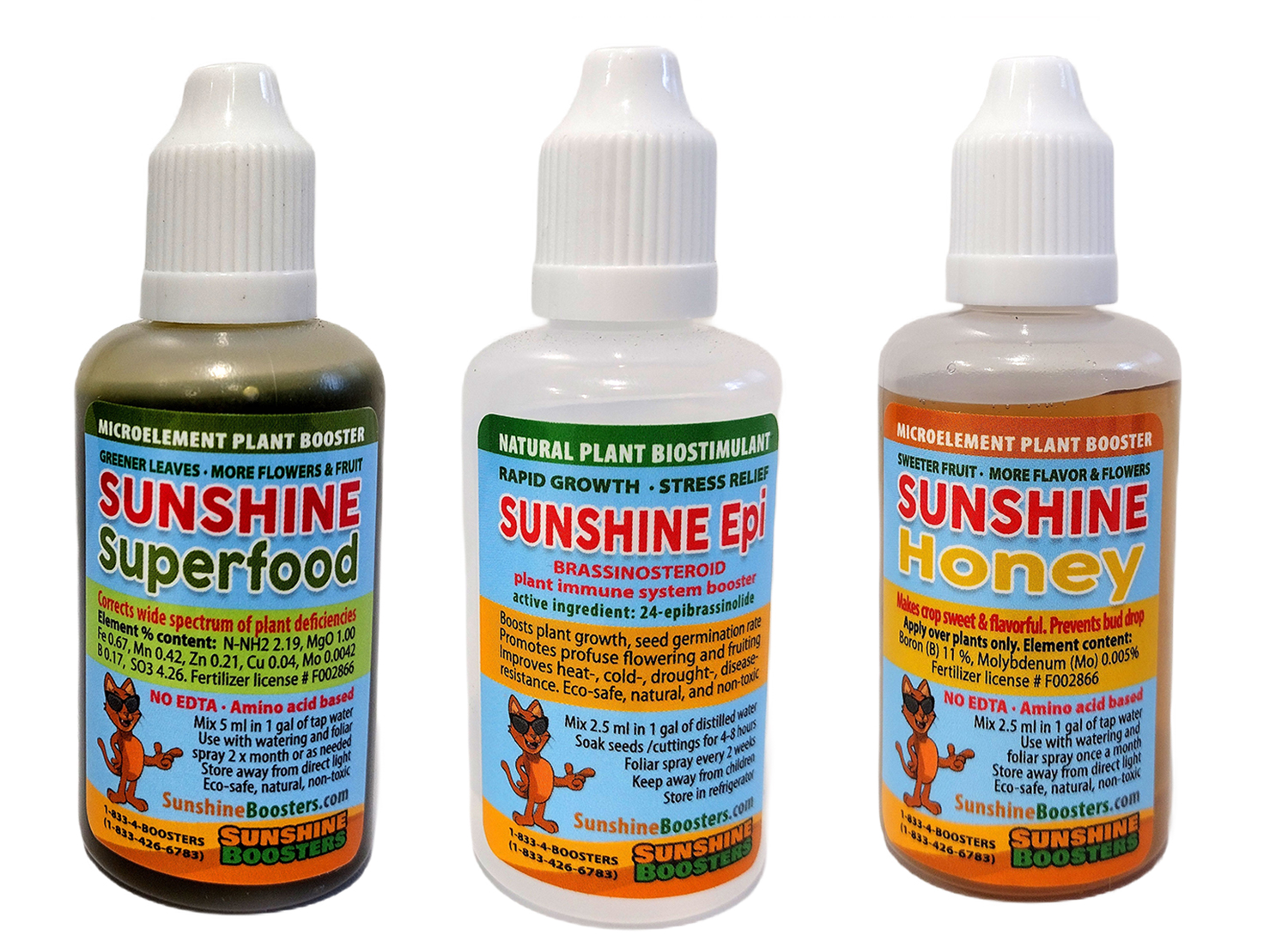
Sunshine Boosters micro
elements and supplements - Superfood micro-element complex, Sunshine Epi
biostimulant and Sunshine Honey supplement for better fruit
❓Frequently Asked Questions: SUNSHINE Boosters™
What water should I use for foliar spraying?
Tap water works perfectly for most. However, if your water is very "hard"
(leaving white mineral spots on leaves), switch to distilled water for a
cleaner finish and better absorption.
How long does a diluted solution last?
For maximum potency and to avoid nutrient degradation, try to use your
diluted mixture
within a few hours of preparation. Keep away from direct sun. Fresh is
always best!
Can I use SUNSHINE Boosters as a daily foliar spray?
Yes! You can mist your plants daily to maintain high vigor, but you must
reduce the dosage (use half the recommended strength) to avoid over-feeding.
Can I mix boosters with pesticides or fungicides?
It is best to apply them separately. Mixing fertilizers with chemical
pesticides in one tank can trigger reactions that "lock out" nutrients or
reduce the efficacy of the treatment.
Will the liquid stain my patio or hands?
No. Unlike traditional fertilizers with heavy blue or pink dyes, our
solutions are clear or very light-colored. If you spill it, simply rinse
with water—no stains, no mess.
Can I mix different SUNSHINE Boosters together in one sprayer?
Yes. All SUNSHINE Boosters are chemically compatible. You can combine a
"growth" booster like Robusta with a "micro-element" complex like Superfood
in the same water to save time.
Are these products safe to use around my pets?
Absolutely. Our formulas are 100% non-toxic and amino-acid based. Just ask
Smokey and Sunshine—they are perfectly safe for households with
curious cats, dogs, and children.
Can I use these boosters on indoor plants?
Yes. They are ideal for indoor use because they don't produce a "fertilizer
smell" and won't cause salt crusting on your decorative pots or furniture.
Is it safe to use on fruit and vegetables I plan to eat?
Yes. Because our formulas contain no urea, nitrates, or harsh salts, they
don't leave a "chemical" aftertaste. They actually help improve the natural
sugars and flavor profile
of your harvest.
What is the best temperature for foliar spraying?
Apply when temperatures are below 85°F. Early morning or late evening
is best; this allows the leaves to remain wet longer, giving the plant more
time to absorb the nutrients.
What Fertilizer to Use and How?
Green
Magic controlled release fertilizer keeps plants green during active
growth season - apply only once in 6 months.
Sunshine: Smokey, you saved my coffee tree. But what do I
do now so it stays happy?
Smokey: Simple. Spray Sunshine Robusta every five days
during active growth.
Sunshine: Five days? Smokey, I barely remember where I left
my coffee
mug five minutes ago.
Smokey: That is exactly why we use Green Magic.
Sunshine: Fertilizer for forgetful gardeners?
Smokey: Controlled release. Sprinkle once and it feeds the
plant for six months.
Sunshine: Six months? I can have a very good nap in that
time.
Smokey: Exactly. The plant keeps eating slowly while you
keep napping.
Sunshine: Perfect. Remember, I will bring the coffee. You
bring the donuts.
Smokey: And next week we will show you exactly how Green
Magic works and why plants love it. Stay tuned.
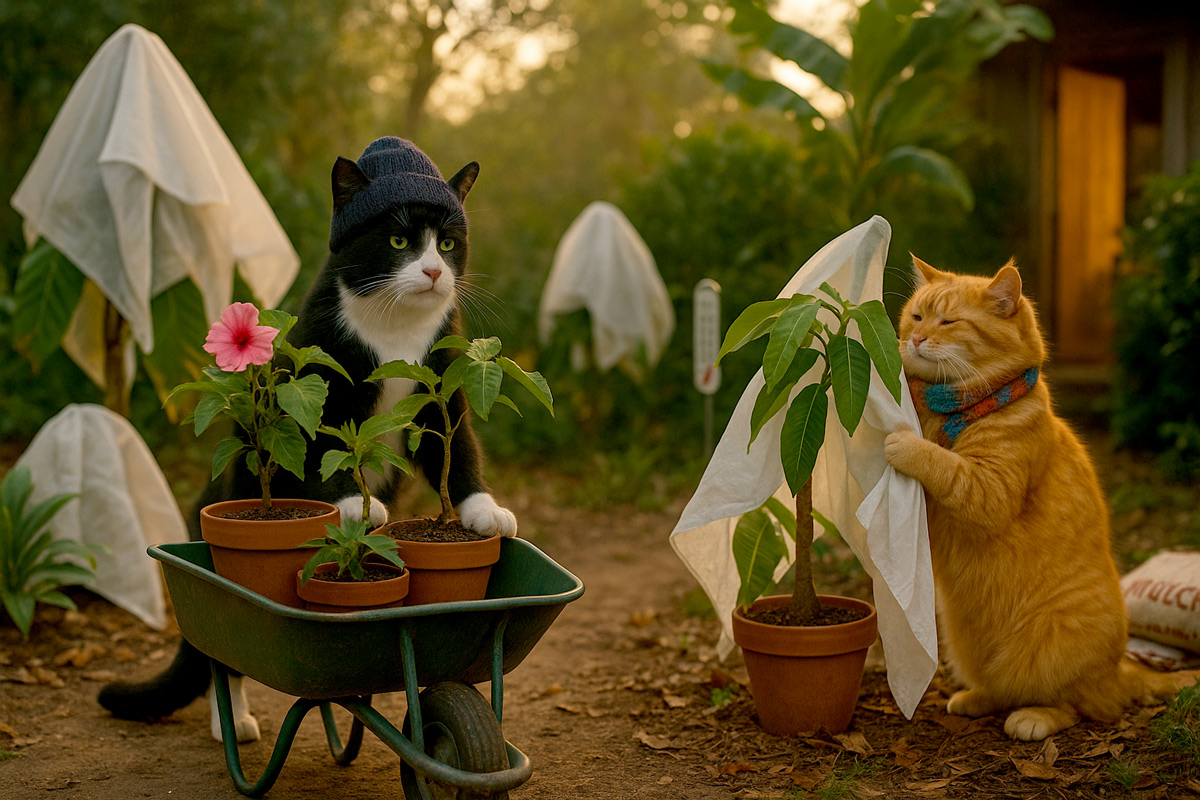
Smokey and Sunshine Prepare Plants for the Cold Night.
Smokey: Come on, Sunshine, help me move these plants inside before it gets
dark!
Sunshine: I am helping... see? I’m supervising the mango
tree.
Smokey: You call that supervising? The frost cloth’s upside down!
When the forecast drops into the 30s, panic is not a plan. This is your
simple, clear checklist to protect every tropical in your garden. Think of
it as the quick emergency manual that goes hand in hand with the previous
cold-weather newsletter.
"We
all love our tropical flowers, mangoes, bananas, and rare fruit trees. A
single cold night does
not have to be a disaster. The key is knowing what to do, when to do it, and
what mistakes to avoid." - Tatiana Anderson, Top Tropicals Plant
Expert
🌡️ FROST AND FREEZE
A frost and a freeze are not the same. A frost is when you see ice crystals
on leaves or grass, while a freeze is when the air temperature drops below
32 F. The tricky part is that you can get
frost even when the air is above freezing, and you can have a freeze with no
frost at all. It all depends on humidity and the dew point. If the dew
point
is below freezing, the ground can cool faster than the air, letting frost
form even when your thermometer reads 35 or 36 F. And once the air itself
drops below 32 F, even for an hour, tender tropicals can be damaged. For
plants, a freeze is far more dangerous, because freezing air pulls heat out
of stems, branches, and roots. Frost usually burns leaves, but a true freeze
can injure wood, kill buds, and damage the entire plant.
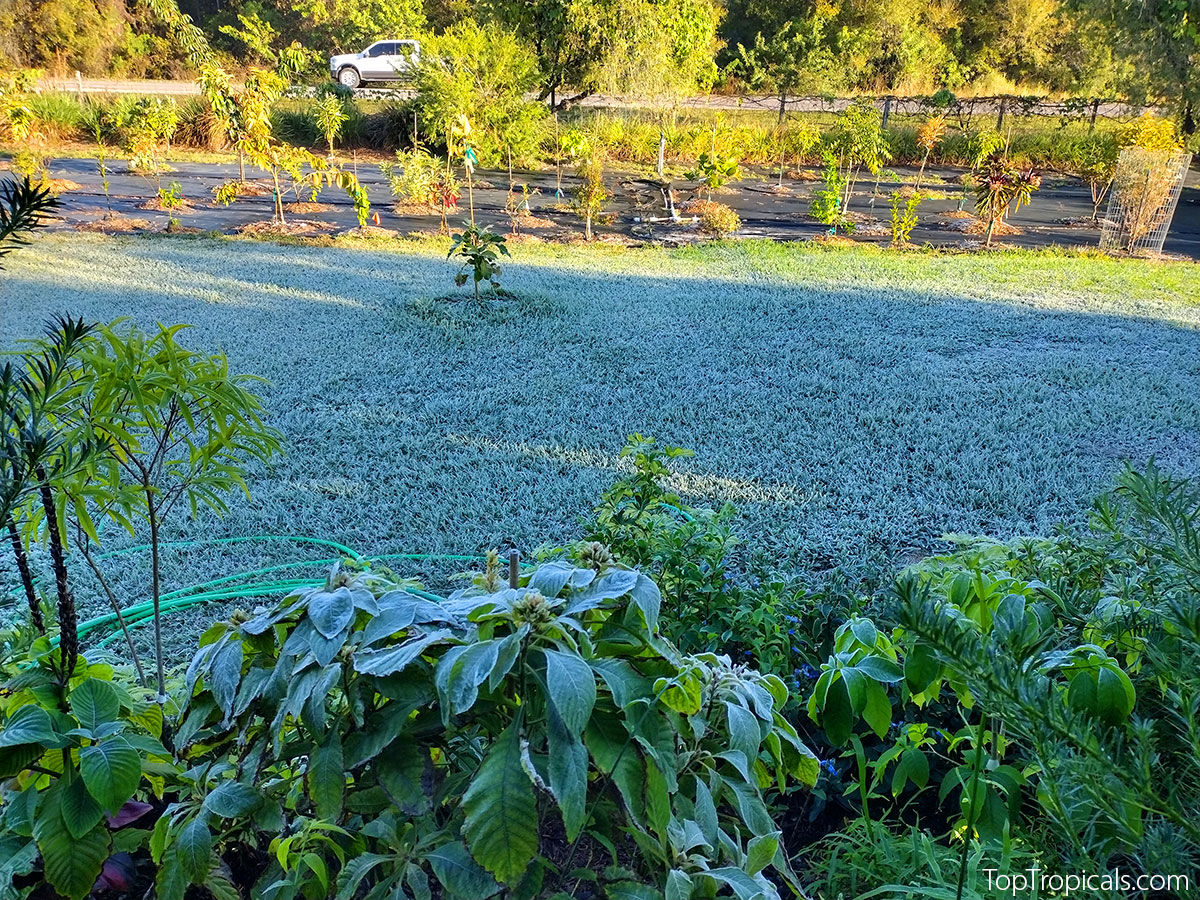
Frost on the grass and leaves on Winter morning in Central
Florida
WHAT TO DO
AND NOT TO DO BEFORE A COLD SNAP
✔️ 5 THINGS TO DO:
Water well. Hydrated plants tolerate cold better than dry, stressed
ones.
Add mulch. A thick layer around the base keeps roots warm.
Block the wind. Move pots to a sheltered corner or patio.
Cover at night, uncover in the morning. Let plants breathe and get
light.
Add gentle heat if needed. Non-LED Christmas lights or a small old style
15-20W light can raise temps a few degrees.
❌ 5 THINGS NOT TO DO:
Do not prune or trim. Fresh cuts freeze first.
Do not overwater. Wet, cold soil invites root rot.
Do not let plants dry out either. Wilted plants freeze more easily.
Do not use dry fertilizer. Gentle liquid feeds like Sunshine
Boosters are safe to use with every watering: its intake naturally slows
down as watering decreases.
Do not look only at the thermometer. A long, windy night can be worse
than a short freeze.
TEMPERATURE
ACTION GUIDE (40 to 25 F)
40 to 38 F: Move potted plants to shelter, water soil, and cover
tender tropicals.
37 to 33 F: Use frost cloth and anchor it down so the wind does
not lift it.
32 to 30 F: Add a heat source like non-LED lights.
29 to 25 F: Double-cover sensitive plants, wrap trunks, and
protect roots heavily.
COLD
TOLERANCE BY PLANT TYPE
Before a cold night, it really helps to know your plant’s exact
cold limits. Every species is different, and young plants are always more
sensitive than mature ones. Take a few minutes to look up your varieties in
our Tropical
Plants Encyclopedia
— it will tell you the safe temperature range, how much protection
each plant needs, and which ones must be covered or moved before the next
cold snap hits.
Bananas: leaf burn below 37 F
Mango, Annona: hurt around 32 F
Cold hardy avocados: Mature tree can take about 25 F. Young trees must
be protected
Olives, Citrus, Guava, Jaboticaba: usually OK outside with mulch
QUICK-ACTION
TABLE
Before the cold arrives, make yourself a quick list of every plant and
what action each one needs. It saves time when temperatures start dropping
and keeps you from scrambling in the dark. Check that you have enough frost
cloth, blankets, and supplies on hand so you can cover everything without
rushing. Planning ahead makes cold nights much less stressful.
Bring Indoors: Cacao, Bilimbi, Coffee. They need warm, bright
light.
Cover Outdoors: Mango, Jackfruit, Banana, Annona. Use frost cloth, not
plastic on leaves.
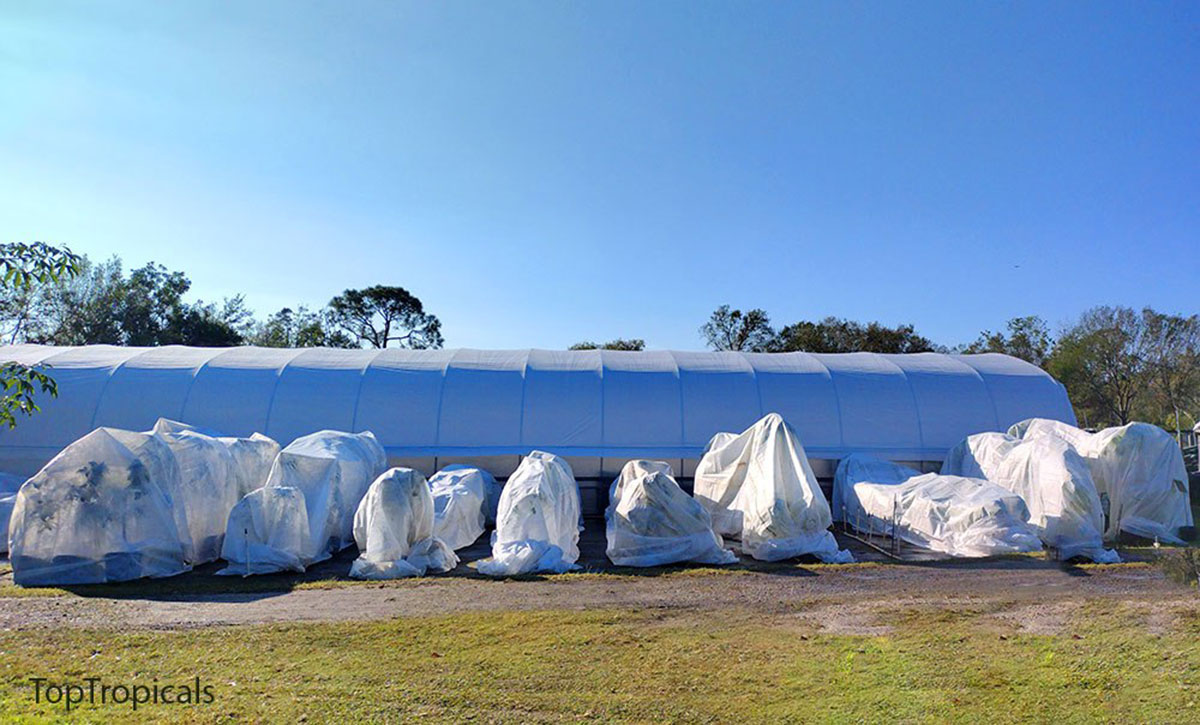
Covering large mango and avocado trees in pots at TopTropicals during
cold nights
GADGETS AND
TOOLS THAT HELP
Indoor helpers: LED lights, small heaters, bottom-heat mats,
timers.
Outdoor helpers: frost cloth rolls, mini greenhouses, non-LED Christmas
lights or small incandescent lights, smart thermometers.
Always keep electrical safety in mind, especially if you are using extension
cords outdoors. Use only weather-rated cords, keep all connections off the
ground, and protect plugs from moisture. Make sure heaters and lights are
stable, secured, and never touching fabric covers. A few minutes of safety
check
can prevent a dangerous situation on a cold, wet night.
And if you want to keep plants strong through winter, add Sunshine
Boosters to your watering routine. It is gentle, safe in cold weather,
and gives plants an extra edge.
AFTER THE
COLD PASSES
In the morning, uncover plants. Leaving covers on during the day can trap
heat and cook the tender new growth, especially under the sun. The only
exception is true frost cloth designed for all-day use, which allows air,
light, and moisture to pass through. Regular blankets, sheets, and plastic
must come off as soon as the sun rises.
Do not cut anything yet. A plant can look completely dead after a freeze,
but many branches are still alive under the bark. Cutting too soon removes
wood that would recover on its own. Wait until new growth begins in spring.
That is when you can see exactly which branches are truly dead.
Use the scratch test. Gently scratch the bark with your nail or a small
knife. If the layer underneath is green, the branch is alive. If it is brown
and dry, it is likely dead. But even then, wait until warm weather to be
sure, because sometimes only the tips die back while the lower part of the
branch survives.
Once the weather stabilizes, resume light feeding. Plants coming out of cold
stress need gentle support, not heavy fertilizer. A mild liquid feed like
Sunshine
Boosters helps them rebuild roots and push new growth without burning
tender tissue.
Your tropical garden can survive any cold night if you prepare right. Cold
snaps always feel stressful in the moment, but once you know your plants,
have the right supplies, and follow a simple plan, it becomes routine. A few
minutes of preparation before dark can save months of growth and keep your
collection healthy all winter.
Frost cloth is the true workhorse of cold protection: it keeps heat in,
keeps frost off, and will not suffocate plants the way plastic or blankets
can. Having a few rolls ready means you never have to scramble at the last
minute. Sunshine
Boosters give your plants gentle support during the colder months so
they stay strong enough to bounce back quickly when warm weather
returns.
A little planning now will pay off in spring, when your mango, banana,
citrus, and all your favorite tropicals come back happy and ready to
grow.