Garden Blog - Top Tropicals

Date: 19 Feb 2026

10 ways to enjoy Wild Medlar - Spanish Tamarind

Vangueria infausta (Spanish Tamarind, Wild Medlar)

Vangueria infausta (Spanish Tamarind, Wild Medlar)

🍊 10 ways to enjoy Wild Medlar - Spanish Tamarind


Vangueria infausta (Spanish Tamarind, Wild Medlar) from Africa to your backyard: the fruit, the medicine, the tradition.

Spanish Tamarind may look like a small, unassuming fruit - but don’t let it fool you. In its native Africa, this tree is a food staple, a home remedy, and a cultural favorite, all wrapped into one. And now, it’s ready to bring that same magic into your garden and kitchen. People have used this fruit for generations - and how you can too.

🍊 1. Eat it fresh, off the tree


When ripe, the fruit turns golden brown and softens slightly. Its flavor is sweet-tart, almost like a tangy apple or tamarind with a hint of citrus. Just peel and eat!

🍬 2. Dry it for snacks


In many African regions, the fruit is sun-dried and enjoyed like natural fruit leather. It keeps well, travels well, and makes a great healthy snack.

🍵 3. Brew it into a fruit tea


Dried fruit can be steeped into a tart, refreshing tea that’s packed with vitamin C and antioxidants. Add honey or ginger for a soothing drink.

🍷 4. Ferment it into traditional beer or wine


In some local cultures, the fruit is fermented into a mild alcoholic drink, similar to fruit wine or beer. This is one of the tree’s oldest known traditional uses.

🍧 5. Make jams and preserves


Boil the pulp with sugar and lemon juice to make tangy medlar jam. Spread it on toast, stir into yogurt, or use it in baking.

6. Add to porridge or smoothies


Crushed or juiced medlar fruit is added to traditional maize porridge for a nutrient boost. You can do the same with oatmeal or smoothies.

7. Try traditional fruit pudding


A simple medlar mash with a little sweetener makes a rich, apple-like pudding with hints of spice. Great as a chilled dessert.

🌿 8. Use the leaves and bark medicinally


In folk medicine, leaves are brewed into a tea for treating fever, colds, and stomach aches. Bark is used for chest congestion and coughs. Roots are sometimes used for even stronger remedies like malaria treatment.

9. Clean your teeth the traditional way


Believe it or not, people use medlar leaves to clean their teeth! The leaves are antimicrobial and have a slight astringent taste that leaves your mouth feeling fresh.

🎨 10. Dye fabric naturally
Crush the bark or boil the leaves to create natural dyes in yellow, green, and even purple tones. This use is still practiced in rural areas of southern Africa.

✍️ Why this tree belongs in your life


Wild Medlar is more than just a fruit. It’s a versatile, resilient, and deeply cultural plant that connects generations. It’s food, it’s healing, it’s art—and now it can be part of your garden story.
Grow it for the fruit, the medicine, the tradition… or just for the joy of growing something wild and wonderful.

🛒 Plant Spanish Tamarind and enjoy exotic fruit benefits

📚 Learn more:

Plant Facts

Vangueria infausta
Wild Medlar, Spanish Tamarind
USDA Zone: 9-11
Small tree 10-20 ftFull sunModerate waterEdible plantDeciduous plantEthnomedical plant.
Plants marked as ethnomedical and/or described as medicinal, are not offered as medicine but rather as ornamentals or plant collectibles.
Ethnomedical statements / products have not been evaluated by the FDA and are not intended to diagnose, treat, cure, or prevent any disease. We urge all customers to consult a physician before using any supplements, herbals or medicines advertised here or elsewhere.Subtropical plant. Mature plant cold hardy at least to 30s F for a short time
  • Vangueria infausta - Spanish Tamarind in Plant Encyclopedia
  • 7 steps for a care-free Spanish Tamarind - the easiest rare fruit to grow
  • The wild fruit with a secret: health benefits of rare Spanish Tamarind - the exotic fruit you've never heard of

  • #Food_Forest #Remedies #Recipes #Discover

    🟢 Join 👉 TopTropicals

    Date: 22 Oct 2025

    Which dry fertilizer to use - slow release or controlled release?

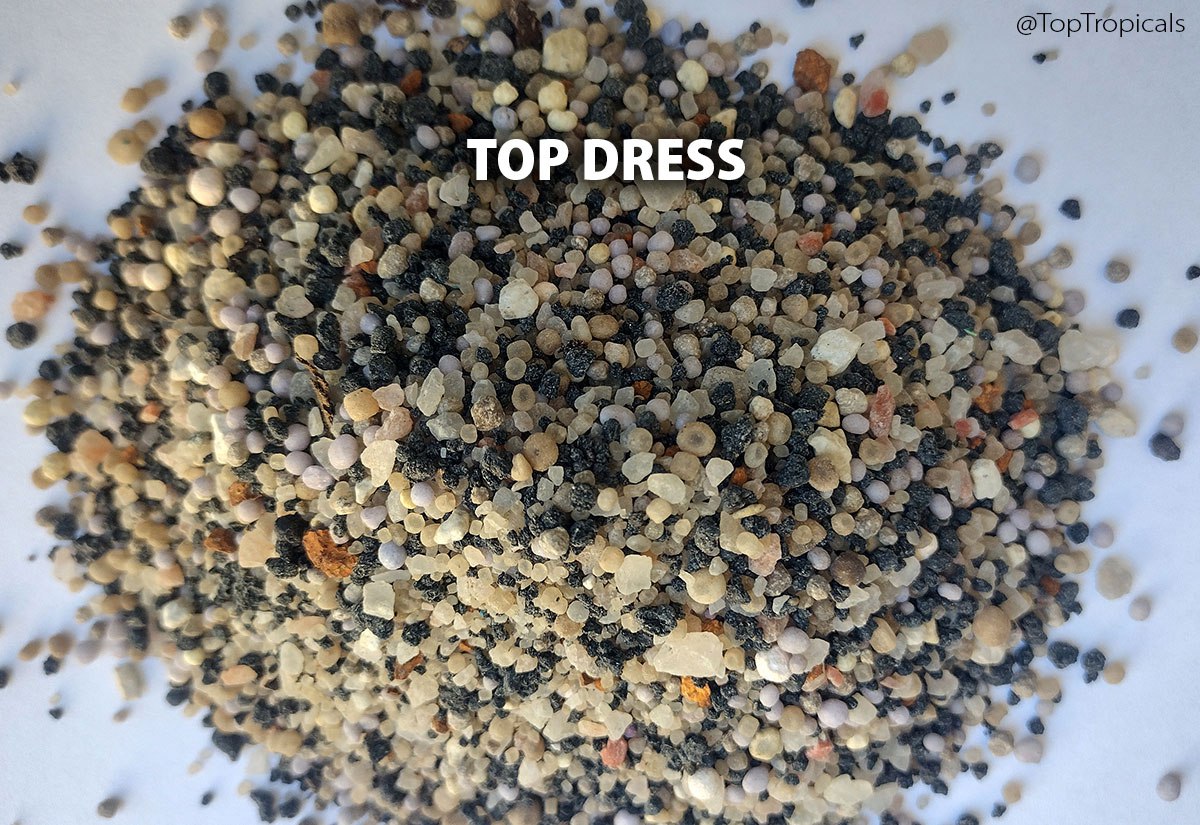
    dry top dress fertilizer
    dry top dress fertilizer

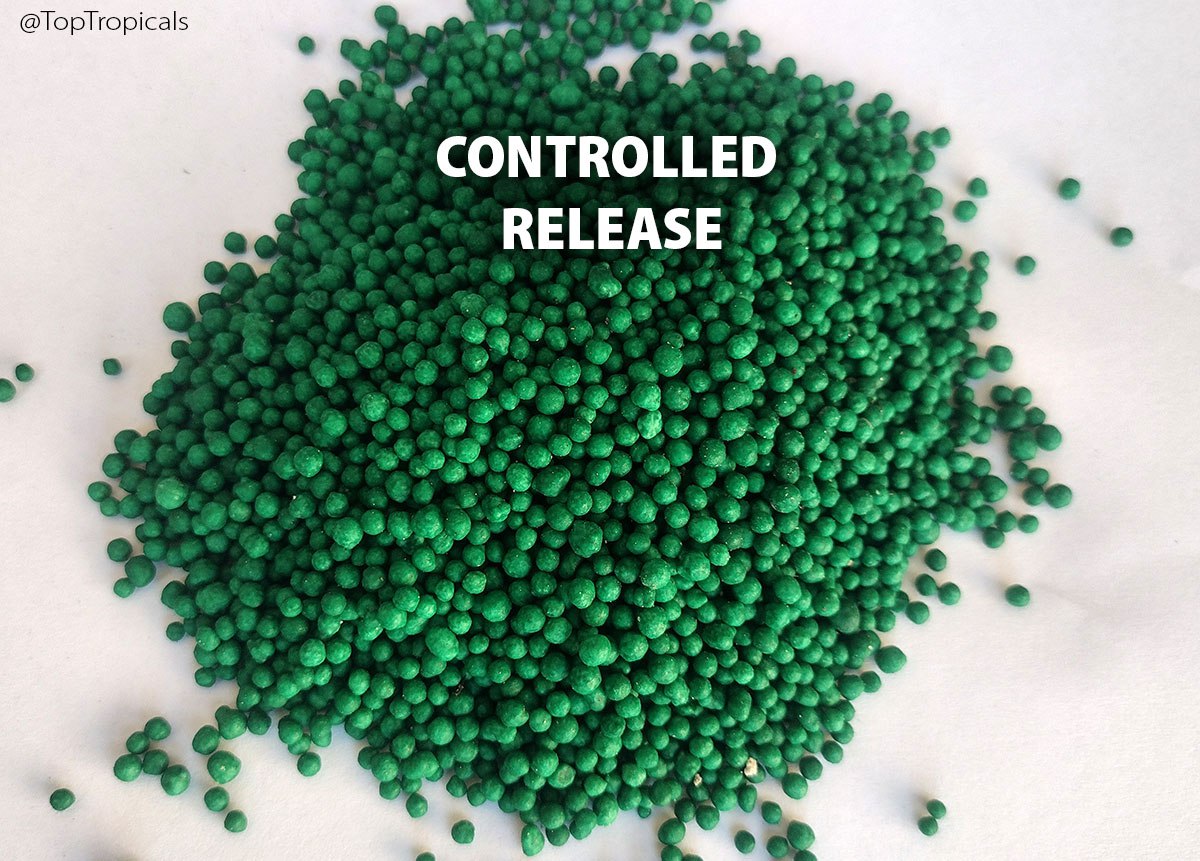
    controlled release fertilizer Green Magic

    controlled release fertilizer Green Magic

    🌳 Which dry fertilizer to use - slow release or controlled release?


    Q: You offer two kinds of dry fertilizers - Slow Release Trop Dress and Controlled Release Green Magic. What is the difference, and which one should I use? I used your water-diluted Sunshine Boosters with every watering, but now that I’ll be away for a few months, I just want to give my garden a long-lasting fertilizer.
    • ✔️ A: Top Dress Slow Release Fertilizer is used for quick greening-up. Although it’s called “slow release,” the nutrients become available fairly fast. It contains soluble nitrogen (N), phosphorus (P), and potassium (K) that dissolve with rain or irrigation, acting within a week or a few weeks depending on temperature and rainfall. It’s great for giving your plants a quick boost of “fast food.”
    • We use Top Dress mainly for in-ground plants. It can be used in pots only during warm weather and active growth, but not in cooler months, as it may burn roots. Since we introduced Green Magic, we mostly use Top Dress only for garden beds and landscapes.
    • ✔️ Green Magic Controlled Release Fertilizer is a true long-term, controlled-release fertilizer. Thanks to its PolyOn Technology coating, it provides steady, consistent feeding for 5-6 months. Unlike regular dry fertilizers that dump all nutrients at once, Green Magic releases them gradually - no burn, no guesswork, just steady nutrition.
    Green Magic ideal for potted fruit trees, ornamentals, and houseplants. One handful keeps your plants fed for half a year. We use it for all container plants when potting up or refreshing soil every six months. It can also be used for in-ground plants if you want the best, most consistent results. Green Magic: try it out! (Sample here)

    🛒 Shop Plant Food & More

    📚 Learn more:


    #Fertilizers #How_to
    🟢 Join 👉 TopTropicals
    Date: 17 Mar 2026

    Green Magic - 15% Off This Week!

    Smokey and Sunshine running a sale of fertilizers at Top Tropicals

    Smokey and Sunshine running a sale of fertilizers at Top Tropicals

    Green Magic - 15% Off This Week!💲

    Give Your Plants a Strong Start This Spring:
    • 🟢Green Magic - 15% OFF 🟢

    • Build the foundation for the entire growing season with a steady, long-lasting nutrient base!

      No coupon needed. The discount is automatically applied at checkout.
      Offer valid through 03/21/2026.
      Discount applies to Green Magic products only.


    🛒 Get your plants some food
    • 🐈 Sunshine: So Green Magic feeds the plant for months. Does that mean I can forget about Sunshine Boosters?
    • 🐈 Smokey: Not quite. Green Magic is the steady base diet. Sunshine Boosters are the weekly power drink during active growth.
    • 🐈 Sunshine: Ah. Like my regular meals and donuts on top.
    • 🐈 Smokey: Exactly. Plants eat slowly from Green Magic, and once a week they get a fresh boost.
    • 🐈 Sunshine: Sprinkle once, then boosters every week. The plant grows, I drink coffee, and nobody forgets anything important.
    • 🐈 Smokey: Except where you left the donuts.
    • 🐈 Sunshine: Smokey... nobody forgets donuts. Ever!
    • 🐈🐈 More about Smokey & Sunshine


    📚 Learn more about plant food:
    📱 What are Sunshine Boosters

    #Fertilizers #PeopleCats
    🟢 Join 👉 TopTropicals

    Date: 22 Mar 2026

    Do Fruit Trees Increase Property Value? Tropical Plants That Pay Off

    Yard with fruiting tropical trees

    Yard with fruiting tropical trees

    Landscaped yard in Florida

    Landscaped yard in Florida

    Mango tree fruiting in the garden

    Mango tree fruiting in the garden

    Do Fruit Trees Increase Property Value? Tropical Plants That Pay Off 🏡

    Can your backyard pay for itself? Learn which 12 tropical fruit trees real estate experts say are the smartest investment for your landscape. Discover how tropical fruit trees like mango and avocado add "edible equity" and curb appeal to your property, making it more desirable to future buyers. Turn your yard into a private paradise that lowers grocery bills and boosts home value.

    In warm climates like Florida, a mango tree isn't just landscaping - it’s a food-producing asset. Mature tropical fruit trees offer "edible equity," saving homeowners hundreds in grocery bills while creating a unique, memorable aesthetic for buyers.
    • 🥭 1. Focus on "Instant Recognition" Favorites


      Trees buyers already know and love provide the strongest ROI. They signal that the yard is already productive - something new builds can’t offer.

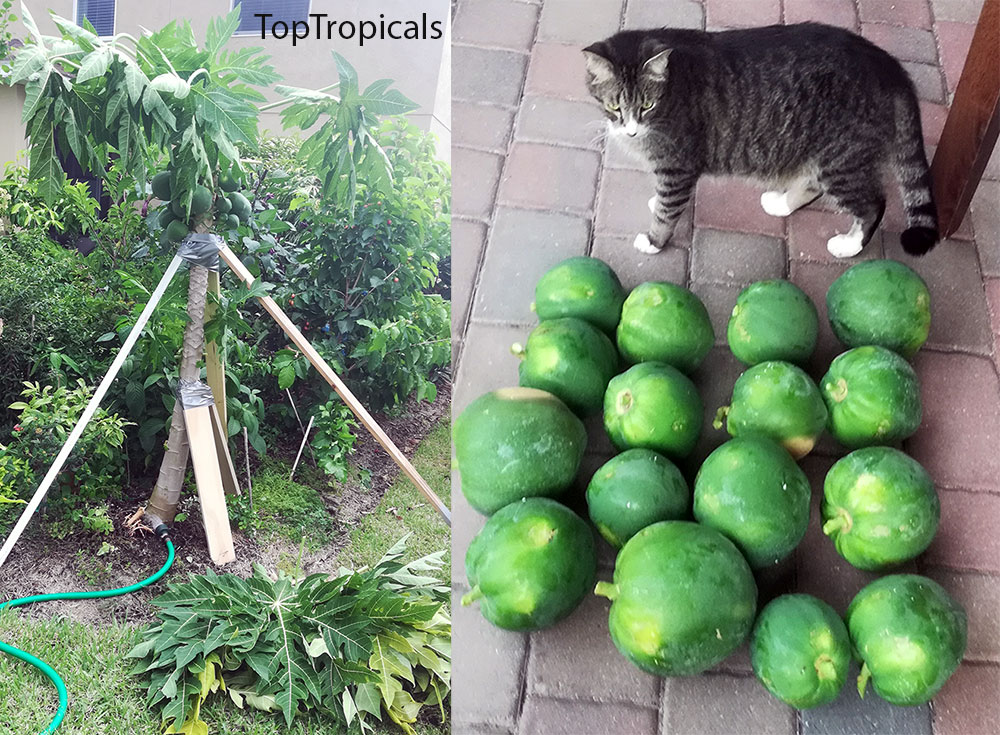
    • •  Top Picks: Mango, Avocado, Papaya, Banana, Guava, and Loquat.
    • •  The Value: A single mature avocado or mango tree can yield hundreds of pounds of fruit annually.


    🥭 2. Create a "Memorable Discovery" with Exotic Varieties


    Unusual fruits turn a standard yard into a tropical orchard, acting as a conversation piece during home tours.
    • •  The Exotic List: Jackfruit, Sugar Apple, Soursop, Sapodilla, Ice Cream Bean, and Star Fruit.


    🥭 3. Strategic Placement for Energy Savings


    Large-canopy trees like jackfruit or mango do more than provide food; they act as natural insulation.
    • •  Natural Cooling: Strategic planting reduces afternoon sun exposure and lowers AC costs.
    • •  Indoor/Outdoor Flow: Use trees to frame window views, block neighbors, and create private "outdoor rooms."


    🥭 4. The Power of the "Mini Orchard"


    A collection of 3–5 trees creates a stronger emotional pull than a lone plant. Buyers begin to visualize a lifestyle of smoothies and harvests.
    • •  Winning Combos: Mango + Avocado + Papaya or Guava + Star Fruit + Banana.


    🥭 5. Maintenance: Health Equals Value


    Fruit trees only add value if they look manageable. A neglected tree suggests a neglected home.
    • •  Pre-Sale Prep: Prune for tidiness, mulch the base, and clear fallen fruit.
    • •  Spacing Matters: Avoid overcrowding; ensure buyers can walk comfortably through the yard without feeling "closed in."


    🥭 The Long-Term Play


    Unlike decorative plants that may need frequent replacement, fruit trees appreciate over time. Because a mango tree takes years to reach peak production, the best time to plant for future resale value is now. By the time you list, your yard will offer shade, privacy, and a harvest that buyers find hard to resist.

    🛒 Start Growing Your Edible Equity - Find the Perfect Fruit Tree for Your Yard

    📚 Learn more:

    Plant Facts

    Mangifera indica
    Mango
    USDA Zone: 9-11
    Large tree taller than 20 ftSmall tree 10-20 ftFull sunModerate waterYellow, orange flowersPink flowersEdible plantSeaside, salt tolerant plant

    Mango trees in Plant Encyclopedia

    #Food_forest #How_to #Discover

    🟢 Join 👉 TopTropicals

    Date: 20 Sep 2025

    How to make lots of Insulin Ginger plants quickly and get more health benefits

    Costus igneus (Chamaecostus cuspidatus) - Fiery Costus or Spiral Flag

    💚 How to make lots of Insulin Ginger plants quickly and get more health benefits

    • Costus igneus (Chamaecostus cuspidatus) - Fiery Costus or Spiral Flag is believed to help lower blood glucose levels naturally and managing diabetes.
    • Have you heard of Insulin Ginger? Everyone wants to have it in the garden!
    • Gardeners in India grow it not just for its pretty spiral leaves, but for what those leaves do. People with diabetes often chew them fresh or brew them into tea, saying it helps keep their blood sugar under control.
    • Researchers have found something interesting: the leaves contain an insulin-like compound, along with antioxidants and anti-inflammatory properties. In animal studies, extracts from the plant lowered blood sugar, protected the liver and kidneys, and even made the body more sensitive to insulin.
    • The way folks use it is simple. You can chew a leaf right off the plant, steep dried leaves for tea, or find it in powders and capsules. It's one of those plants that shows how tradition and science sometimes meet in the garden.
    • Its lush, turmeric-like leaves spiral around upright stems, with a glossy dark green top and a striking light purple underside. In warm months, it produces bright orange, cone-like flowers that stand out beautifully in the garden.
    • Beyond its beauty and natural insulin effects, the insulin plant is credited with aiding digestion, reducing cholesterol, boosting energy, improving skin health, supporting weight loss, relieving stress, and promoting heart wellness. A real botanical multitasker!


    🎥 In this video, we’ll show you how to multiply Insulin Ginger fast, so you’ll have plenty of plants for yourself and even extras to share with friends and family.

    ✅ Don’t forget to use Green Magic fertilizer for the best results. Gingers absolutely love this plant food - they thrive on it and respond better than any other plant, with vigorous growth, lush foliage and loads of leaves you’ll need for all the benefits.

    🛒 Grow your own sugar-fighter - the Insulin Ginger

    📚 Learn more:


    #Food_Forest #Remedies #Shade_Garden #Discover

    🟢 Join 👉 TopTropicals