Garden Blog - Top Tropicals

Date: 11 Nov 2025

Fruits with the most vitamin E, according to dietitians

Fruits with the most vitamin E

Fruits with the most vitamin E

🥭 Fruits with the most vitamin E, according to dietitians

  • 🔛 Vitamin E works as an antioxidant that helps fight inflammation throughout the body. While nuts and seeds top the charts, some fruits quietly add their share to your daily needs - especially when eaten with a bit of healthy fat. According to New York City Nutrition, vitamin E anti-inflammatory action supports heart, brain, and skin health.
  • 🔛 Vitamin E is a fat-soluble vitamin that acts as an antioxidant, meaning it fights inflammation in the body. Because of this anti-inflammatory role, vitamin E is beneficial for immune health, heart health, eye health, brain health, and skin health.
  • 🔛 Adults need about 15 milligrams a day, according to the National Institutes of Health. Deficiency is rare, but it’s smart to get vitamin E from a variety of foods. Fruits alone don’t provide large amounts, but they can complement vitamin-E-rich foods like almonds or sunflower seeds.
  • 🔛 Since vitamin E needs fat for absorption, pair fruit with something creamy or crunchy - like yogurt, olive oil, nuts, or seeds - for best results.
  • 🔛 Here are some fruits that naturally offer vitamin E:

  • 🍊 Sapote 1 cup = 3.7 mg vitamin E. A tropical favorite with rich orange flesh and a flavor somewhere between pumpkin pie and sweet potato, with hints of honey and almond, Sapote is great fresh, blended in shakes, or scooped over ice cream. It also packs calcium, iron, potassium, and vitamins A and C.
  • Blackberries 1 cup = 1.7 mg vitamin E. Deep color, bold flavor, and plenty of antioxidants, Blackberries are high in fiber and low in calories. Dietitian Keri Glassman calls them her top fruit for fighting inflammation.
  • 🥭 Mango 1 cup = 1.5 mg vitamin E. The “king of fruits” brings more than tropical sweetness, Mango supports digestion, helps you feel full longer, and delivers both vitamin A and E in one juicy package.
  • 🍉 Guava 1 cup = 1.2 mg vitamin E. This fragrant fruit has a flavor that lands between strawberry and pear, Guava is also one of the highest-fiber fruits and surprisingly rich in protein for a fruit.
  • 🍑 Persimmon 1 fruit = 1.2 mg vitamin E. An autumn favorite that looks like an orange tomato but tastes sweet and mellow, Persimmons are rich in vitamins A and C and make a colorful, fiber-filled snack or dessert.
  • Avocado 1 fruit = 0.9 mg vitamin E. Creamy, mild, and versatile, Avocado’s healthy fats help your body absorb vitamin E while protecting heart health. Try it on toast, in salads, or as a smooth butter substitute in baking.

🛒 Plant more remedies in your food forest

📚
Learn more:
#Food_Forest #Remedies #Discover

🟢 Join 👉 TopTropicals
Date: 22 Nov 2025

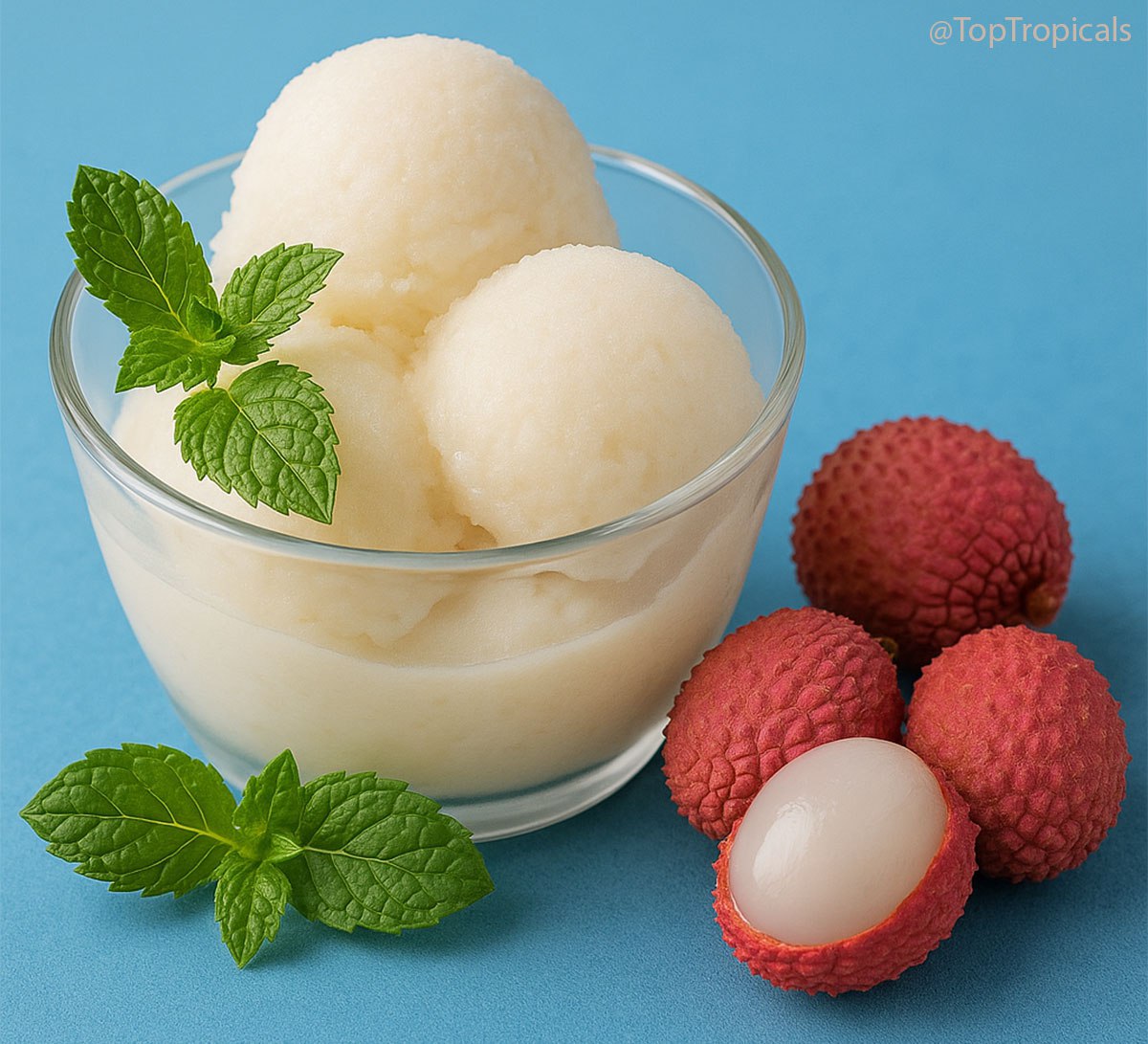
Lychee sorbet: quick-n-fun exotic recipes

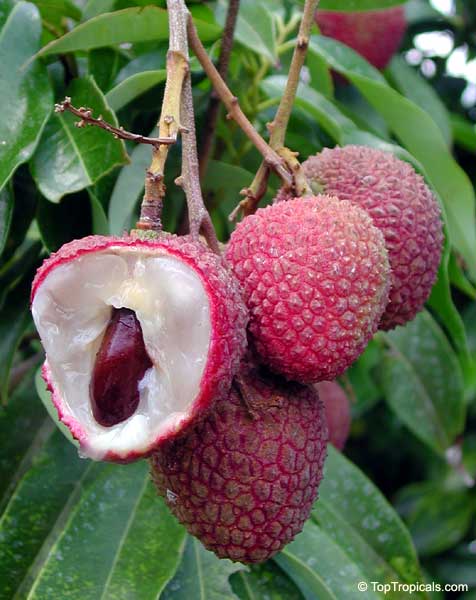
Lychee - Litchi chinensis

Lychee - Litchi chinensis

Lychee sorbet

Lychee sorbet

🍴 Lychee sorbet: quick-n-fun exotic recipes

  • 🔴Blend Lychee pulp with lime juice, freeze until firm.
  • 🔴A refreshing tropical ice treat.

Lychee Sorbet Recipe

Ingredients

  • 3 cups fresh lychee flesh, peeled and seeded (or canned lychees, drained)
  • 1/3 cup sugar or honey
  • 2 tablespoons fresh lime juice
  • 1/4 cup cold water, as needed for blending
  • Fresh mint leaves for garnish (optional)

Instructions

  1. Prepare the lychees by peeling them, removing the seeds, and collecting the white flesh. If using canned lychees, drain them well.
  2. Place the lychee flesh, sugar or honey, lime juice, and 2 tablespoons of the cold water into a blender.
  3. Blend until completely smooth. If the mixture is too thick to move easily, add a little more water, 1 tablespoon at a time.
  4. Pour the mixture into a shallow freezer safe container. Cover tightly.
  5. Freeze for 2 to 3 hours, stirring with a fork every 30 to 45 minutes, until the sorbet is firm but scoopable.
  6. Scoop into bowls and garnish with fresh mint leaves and extra lychee fruit if desired. Serve immediately.

🛒 Plant your Lychee tree - Litchi chinensis

📚 Learn more:


#Food_Forest #Recipes

🟢 Join 👉 TopTropicals

Date: 4 Dec 2025

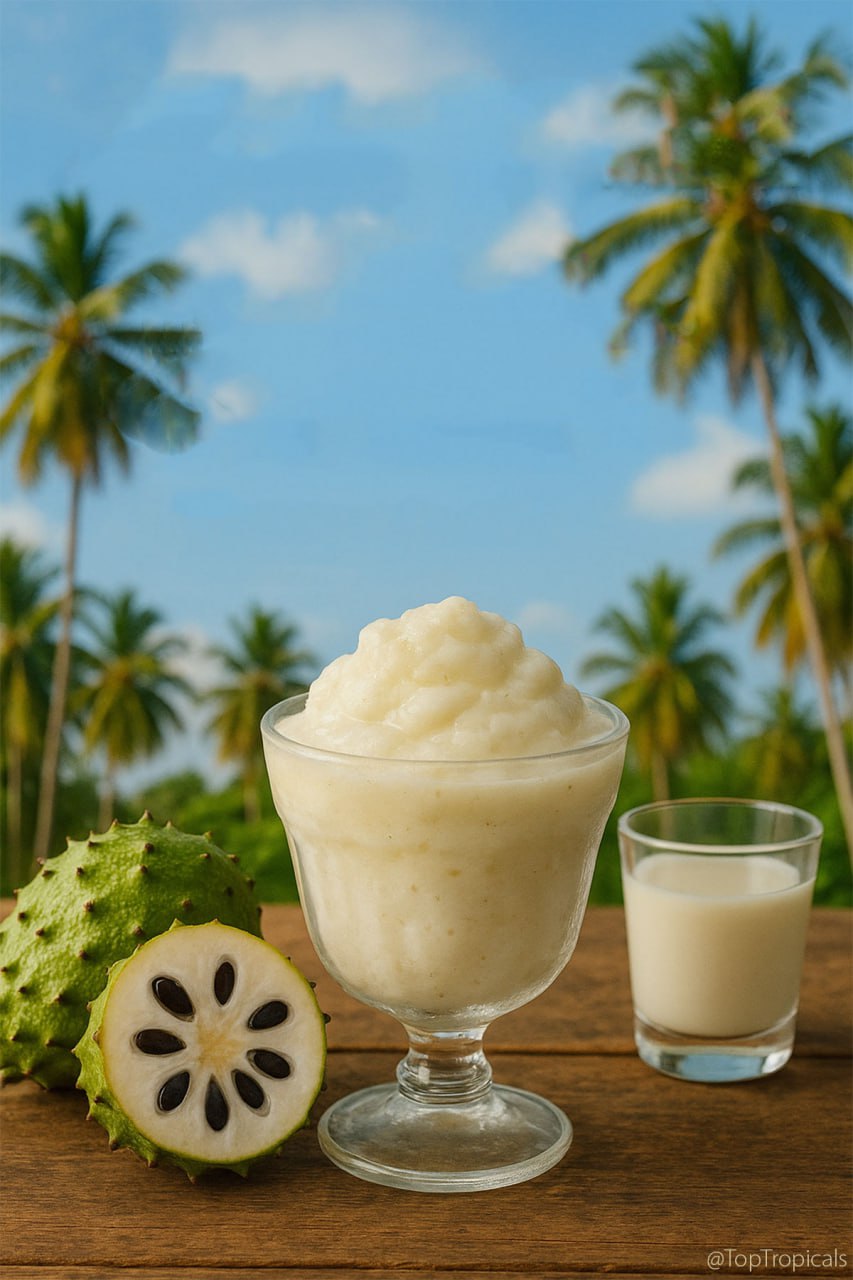
Soursop freezer whip: quick-n-fun exotic recipes

Soursop freezer whip

Soursop freezer whip

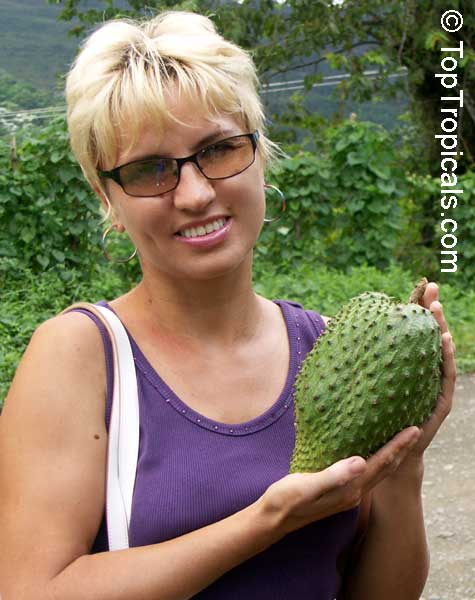
Guanabana, Soursop (Annona muricata)

Guanabana, Soursop (Annona muricata)

🍴 Soursop Freezer Whip

🔵Perfect for a hot day, this whip is instantly refreshing and cooling, like a little tropical breeze in a bowl.
🔵And on a cold winter day? It still tastes amazing - like a quick escape to the tropics!

Ingredients

  • 1 cup frozen soursop (guanabana) pulp
  • 2 to 3 tablespoons coconut milk

Instructions

  1. Place frozen soursop pulp into a blender.
  2. Add coconut milk and blend until smooth and thick.
  3. Transfer to a bowl and freeze for 15 minutes.
  4. Stir well to create a soft, slushy whip and serve immediately.

🛒 Grow your own delicious Guanabana Soursop

📚 Learn more:

Plant Facts

Annona muricata
Soursop, Guanabana, Graviola, Korosol, Corosol
USDA Zone: 9-11
Large tree taller than 20 ftSmall tree 10-20 ftFull sunModerate waterRegular waterEdible plant
  • Annona muricata in Plant Encyclopedia
  • Guanabana - Soursop fruiting in apartment
  • The most delicious Annona fruit: Guanabana

  • #Food_Forest #Recipes

    🟢 Join 👉 TopTropicals

    Date: 21 Jan 2026

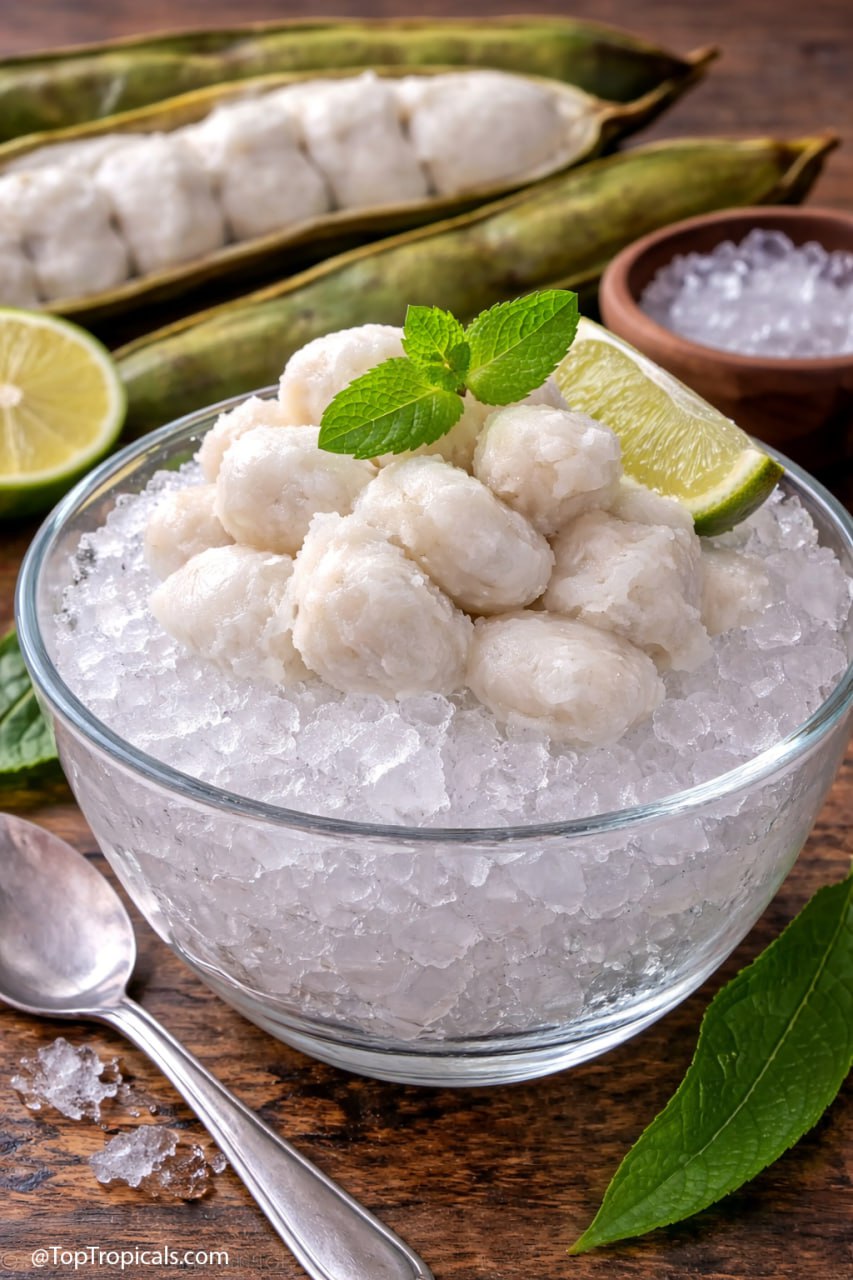
    Ice Cream Bean cool fluff: quick-n-fun exotic recipes

    Ice Cream Bean cool fluff

    Ice Cream Bean cool fluff

    Ice cream bean tree (Inga edulis) - fruit

    Ice cream bean tree (Inga edulis) - fruit

    🍴 Ice Cream Bean Cool Fluff

    Ingredients

    • Fresh Ice Cream Bean pulp (Inga edulis)
    • Crushed ice
    • Optional: lime wedge or mint leaf for garnish

    Instructions

    1. Open ripe Ice Cream Bean pods and scoop out the sweet white pulp.
    2. Remove and save the seeds if you want to plant more Ice Cream Bean trees.
    3. Chill the pulp for 20 to 30 minutes.
    4. Serve the chilled pulp over crushed ice as a natural shaved-ice dessert.

    🌿 About the plant:


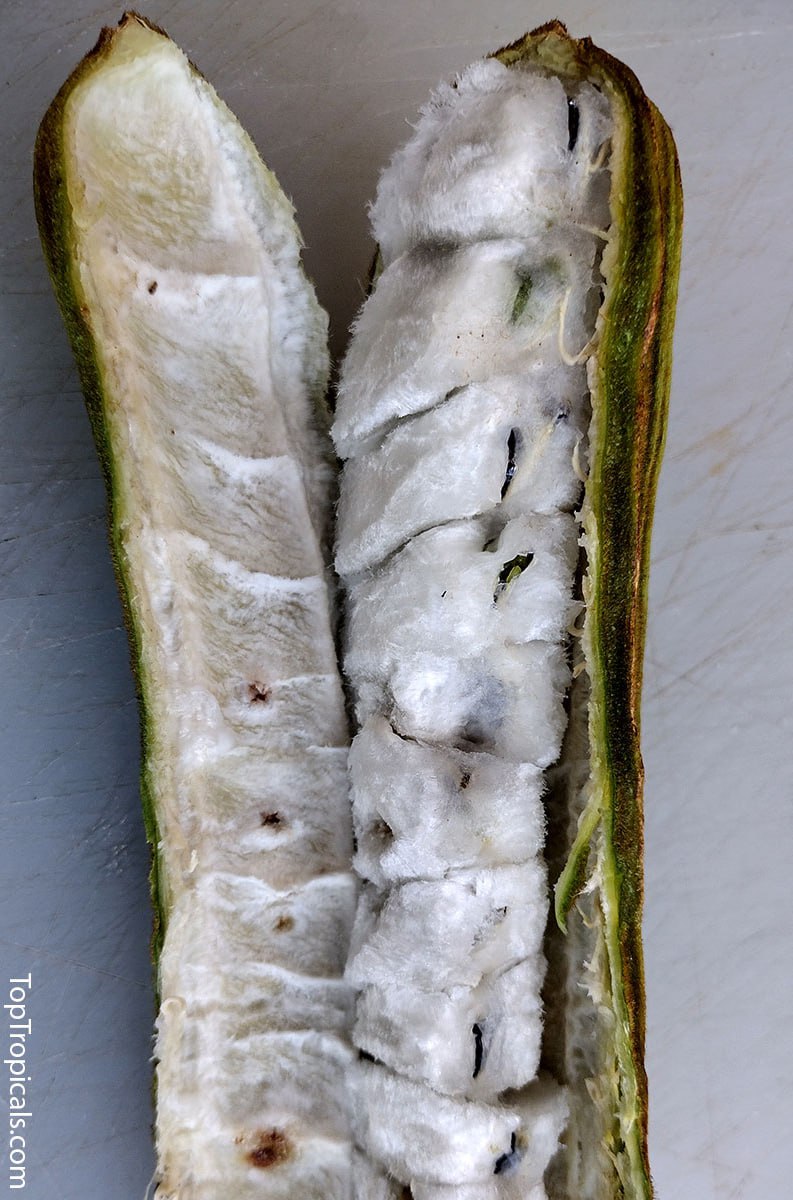
    Ice cream bean (Inga edulis) produces long pods filled with sweet, cottony white pulp surrounding dark seeds. The flavor is mild, vanilla-like, and naturally creamy. The pulp is eaten fresh and used as a natural dessert across South and Central America.

    🌱 In the garden:


    Inga edulis is a fast-growing tropical tree with lush foliage and nitrogen-fixing roots that improve soil health. It is a perfect tree for a quick shade solution in just one season. While large in the ground, it can be managed with pruning in home orchards.

    🛒 Plant Ice Cream Bean tree

    📚 Learn more:

    Plant Facts

    Inga edulis, Inga feuilleei
    Ice Cream Bean, Inga, Guama, Guaba
    USDA Zone: 9-11
    Large tree taller than 20 ftFull sunRegular waterWhite, off-white flowersEdible plantSubtropical plant. Mature plant cold hardy at least to 30s F for a short time
  • Ice Cream Bean tree (Inga edulis) in Plant Encyclopedia
  • Did you know that ice cream actually grows on a tree?
  • What does Ice Cream Bean fruit taste like?
  • Ice Cream Bean Tree: Eating the fruit and planting the tree

  • #Food_Forest #Recipes

    🟢 Join 👉 TopTropicals

    Date: 20 Feb 2026

    Florida freeze damage - what to replant after a record cold winter

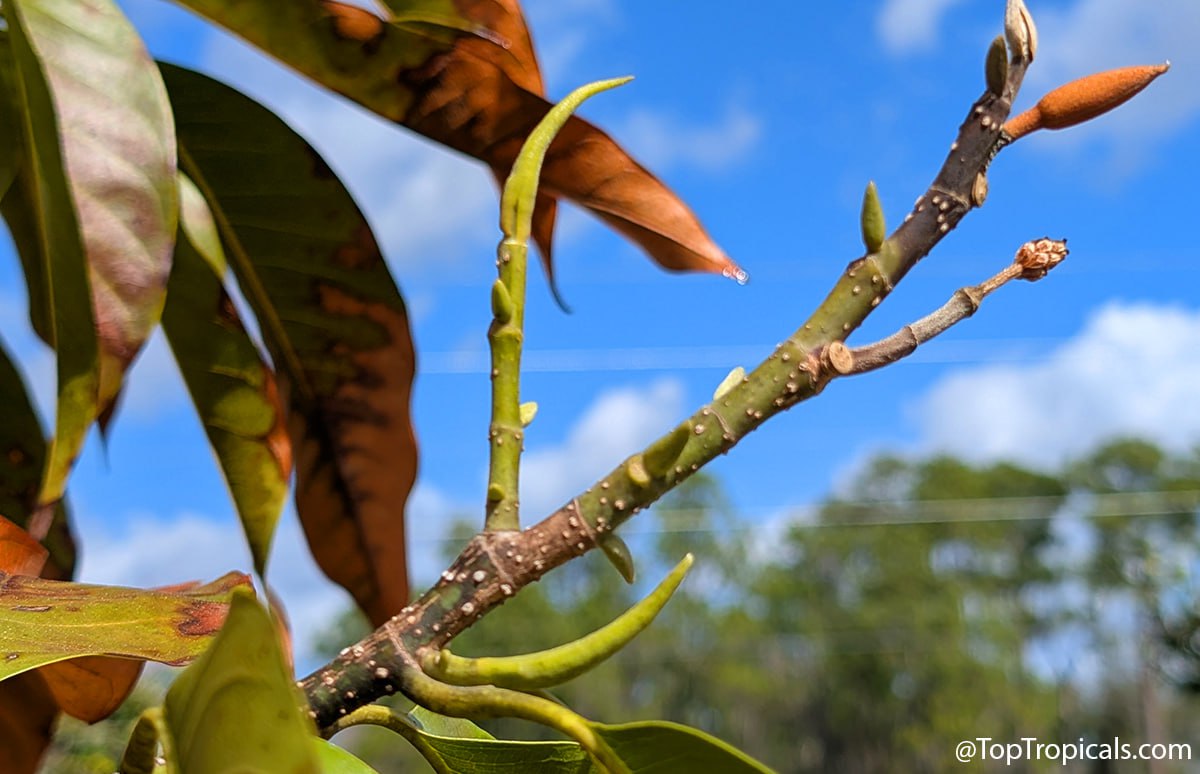
    Magnolia champaka new shoots

    Magnolia champaka new shoots

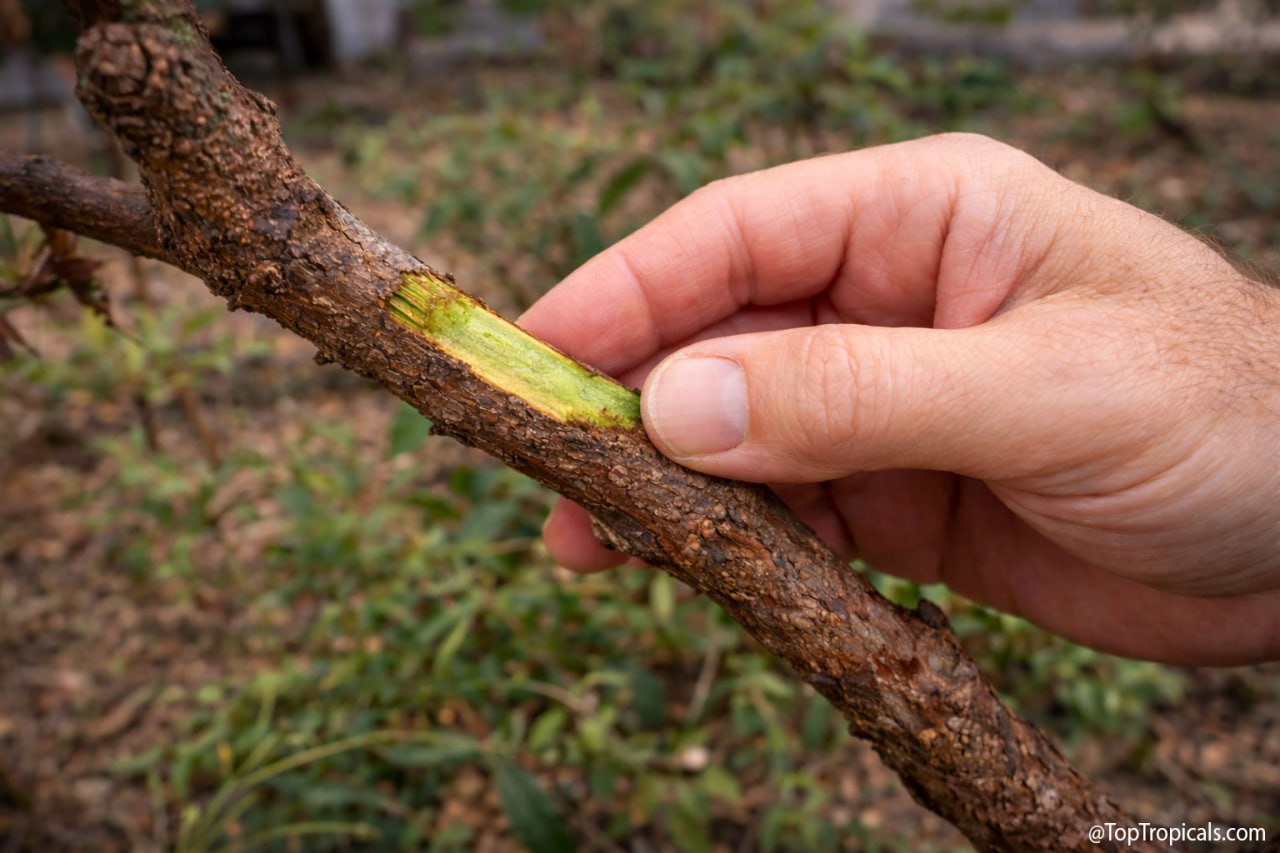
    Scratch test on a bark

    Scratch test on a bark

    ❄️ Florida freeze damage - what to replant after a record cold winter

    • 🌱 A record freeze changed Florida gardens


      After the recent record cold across Florida, many gardeners are now seeing the real damage - browned leaves, split stems, collapsed shrubs, and fruit trees that may not recover.
      Some plants surprised us with new growth. Others are clearly gone.
      The practical question is simple: what should you replant so it does not happen again next winter?
      The good news - you can build a more frost-resilient garden without giving up beauty or fruit.
    • 🌱 First - do not rush to rip everything out


      Before replacing anything, check carefully:

    Scratch the bark lightly - green underneath means the branch is alive.
    • Wait for consistent warm weather - some plants re-sprout weeks or even months later.
    • Look for growth higher on the stem, not just at the base.
    After freezes, many tropicals look worse than they are. Patience often saves money.
    • 🌱 Why some plants survived and others did not


      Freeze survival depends on several factors:

    Duration of cold - 2 hours vs 8 hours makes a major difference
    • Microclimate - south-facing walls, wind protection, canopy cover
    • Plant maturity - established roots handle stress better
    • Pre-freeze health - overfertilized, soft growth freezes faster
    This explains why two identical plants in the same yard can perform very differently.
    • 🌱 What to replant for a frost-resilient garden


      Instead of replacing losses with the same tender species, consider:

    Cold-hardy fruit trees
    • Proven freeze survivors from this winter
    • Shrubs that tolerate brief dips below freezing
    • Layered planting for wind protection

    • When redesigning:
    • Plant tender species closer to structures.
    • Use hardy trees as windbreaks.
    • Avoid low frost pockets.
    • Improve drainage - wet roots freeze faster.
    You do not have to remove tropical character. You just have to plant smarter.

    ✍️ Check the list of freeze survivors:


    What tropical plants survived Florida's historic freeze without protection
    • 🌱 Rebuild with strategy, not emotion


      After freeze damage, many gardeners replant quickly - only to repeat the same losses.
      A better approach:

    Identify what truly died.
    • Learn which species survived locally.
    • Choose varieties proven in your climate zone.
    • Design with cold in mind.
    One freeze can become a turning point. Many Florida gardens become stronger after a hard winter because the plant list gets refined.

    🌱 Spring Equinox - a natural reset


    The Spring equinox marks equal day and night and the astronomical start of spring. From this point forward, daylight increases and active growth accelerates.
    For Florida gardeners, it is a natural reset.
    New growth begins. Roots wake up. Replacement planting becomes safer.
    This is the right time to rebuild.

    🛒 Explore cold tolerant tropical plants and cold hardy Avocados

    📚 Learn more:


    #Discover #How_to

    🟢 Join 👉 TopTropicals