Date: 2 Nov 2018
Happy Hobby: growing tropicals from seeds
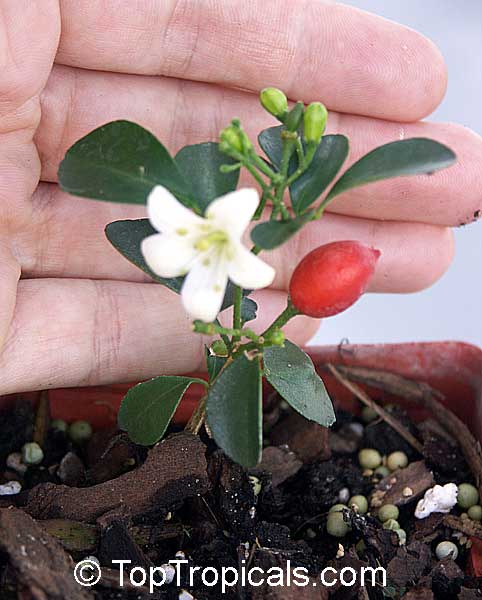
Q: What is the best time to start tropical plants from seeds? Should I wait till spring?
A: If you
want to feel happier, get into gardening. If you want to feel God, start
plants from seeds and watch New Life grow from a tiny grain. Fall is a perfect
time to start tropicals from seed.
Traditionally, people prefer sowing seeds in Spring, especially
temperate species for a vegetable garden: tomatoes, peppers, cucumbers... My
grandmother up North started them in early Spring in paper cups on a windowsill,
then once the temperatures went just above freezing, she planted them out in the
garden beds, and that early start always helped her to have the best early
crop in the neighborhood.
When we deal with tropical plants, "just above freezing" is not warm
enough. Which means you have to grow small babies indoors for quite a while,
providing additional heating when needed. Heating pads always work best. If you
keep your living space around 75F (ideal for many species), this is a
perfect temperature to get your seeds started. Tropical plants are not like annual
tomatoes that try to grow through the season as fast as possible. They take
time. So the sooner you start, the more chances to get small seedlings just in
time when Spring air outside is "warm enough" for those tropicals - at least
in 70's.
A great advantage of starting tropical seeds indoors is controlled
temperature and moisture. In the plant world, environment extremes are not good
for the germination process. Mild conditions of your home or a greenhouse
create better chances for successful growth. Seeds won't get overheated in the
hot Summer sun, and won't rot because of a sudden heavy rain. Just keep in mind
that some species require light for good germination.
For the best seed germination:
- Use only well-drained mix - we recommend special Seed Germination Mix #3, professional grade. Put seeds not too deep
(1/2 inch deep or less) to allow air circulation
- Soak large seeds for a few hours with Sunshine-S solution
- Keep warm (75-85F) and in bright light
- Keep soil slightly moist but not soggy
- Apply micro-element booster SuperFood
Date: 24 Jun 2018

Growing tropicals from seeds.
From Kristi the Wizard of Rose: I grow many plants from seeds, both for my personal collection, and for TopTropicals. I receive many questions from customers who want to grow tropical plants from seeds. Some of them live in colder climates and try to extend growing season of their tropical collections by starting new varieties early in the year from seeds. These are a few tips that may be helpful.
Q: What do I need to do to speed up germination process?
A:
Many factors affect germination. Considering you get fresh
seeds (for example from TopTropicals) and Mother Nature
gives them a good kick start, there are a few things that
may speed up germination:
1) Scarification. Large seeds with a hard outer
shell can be slightly sanded down just enough for moisture
to get inside to wake up the seed during the pre-soaking.
Be careful not to damage the seed. See example of Lotus seed
scarification.
2) Pre-soaking. We recommend pre-soaking most of
the seeds for only a few hours (3-8 depending on species.
Some seeds are very sensitive to moisture and may start
rotting if stay wet without air circulation. Small seeds,
especially tiny ones like dust, should not be soaked.
3) SUNSHINE-S treatment. Adding a few drops of SUNSHINE-S booster when
pre-soaking seeds increases their germination rate 3-5
times.
4) Temperature. Warm temperatures help germination.
If grown indoors, put seeds containers or trays in the
warmest spot of your house; you may use heat pads.
Outdoors, putting them in full sun helps a lot, just don't
let soil to dry out.
Use only special porous seed germination mix
Date: 19 Jul 2022
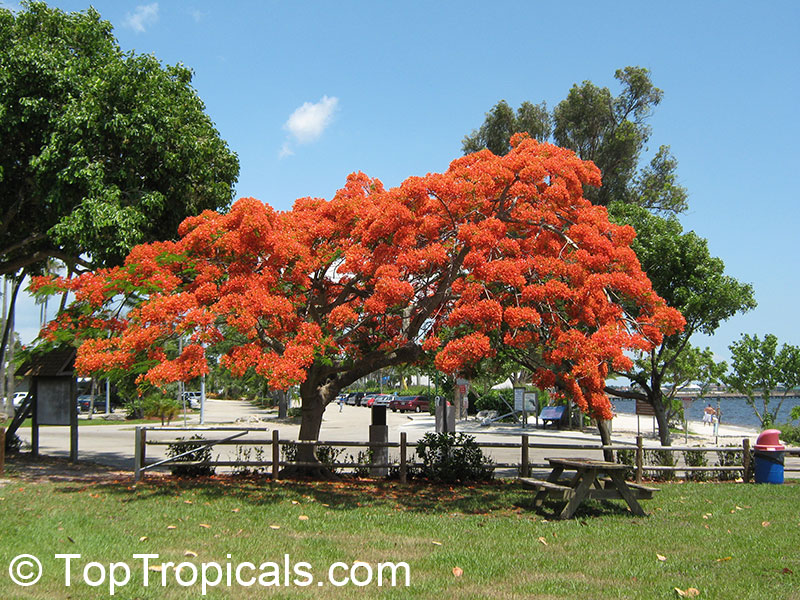
New video: Royal Poinciana
The most beautiful tropical shade tree
"The Royal Poinciana is one of the most spectacular flowering trees
in the USA, and probably among the top 10 on this planet. In full bloom, it is
like a regal elephant caparisoned in red and yellow brilliance." (Larry
M. Schokman, The Kampong, National Tropical Botanic Garden)
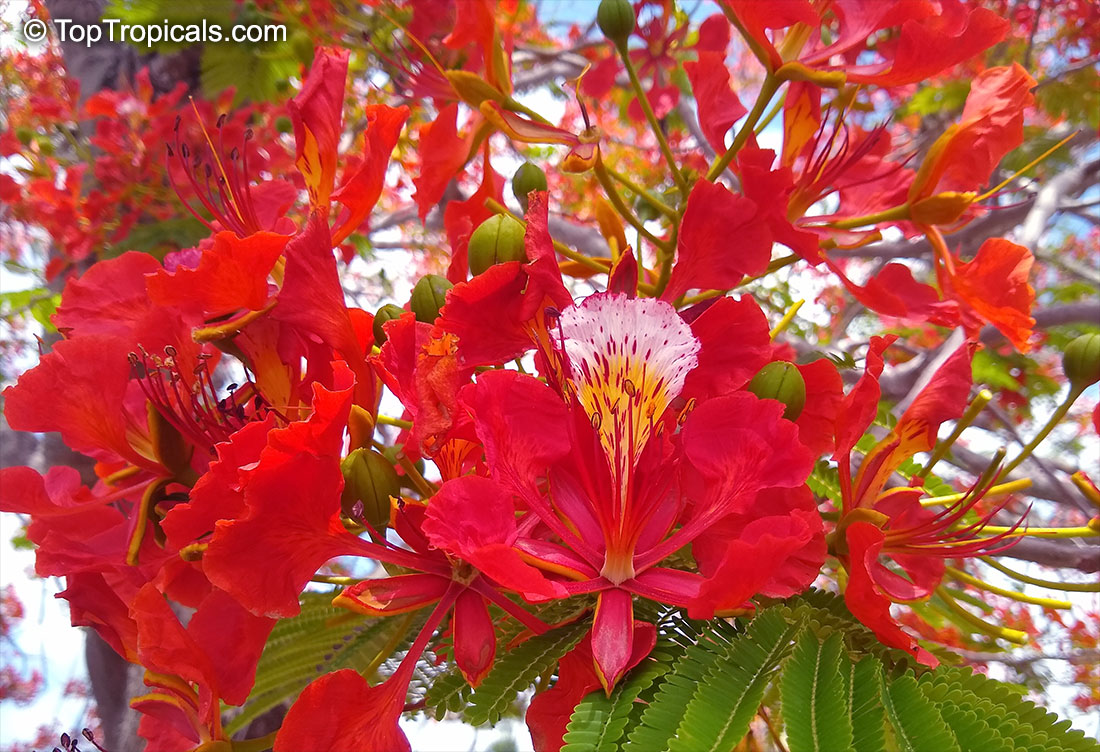
One of the most conspicuous flowering trees seen in the tropics, Royal poinciana (Delonix regia) has bright fiery red/orange
blossoms cover its mimosa type leaves which close up and go to sleep for the
night.
This large tree, which naturally assumes a spreading umbrella shape, is now
found in gardens, parks, and planted along streets throughout the tropics.
In late spring, as the new leaves appear, the tree is covered with masses of
five-petalled red flowers resembling orchid flowers. Blooming is followed by
long, flattened, leathery dark brown or black seed pods. Delonix requires full
sun and adequate space to take its characteristic form....
Read Article about this tree.
Subscribe to our Channel:
Stay updated with TopTropicals Videos by subscribing to our channel at YouTube.com/TopTropicals and get our latest video news of what is fruiting and blooming!
Date: 24 Oct 2025
Guava fudge: quick-n-fun exotic recipes
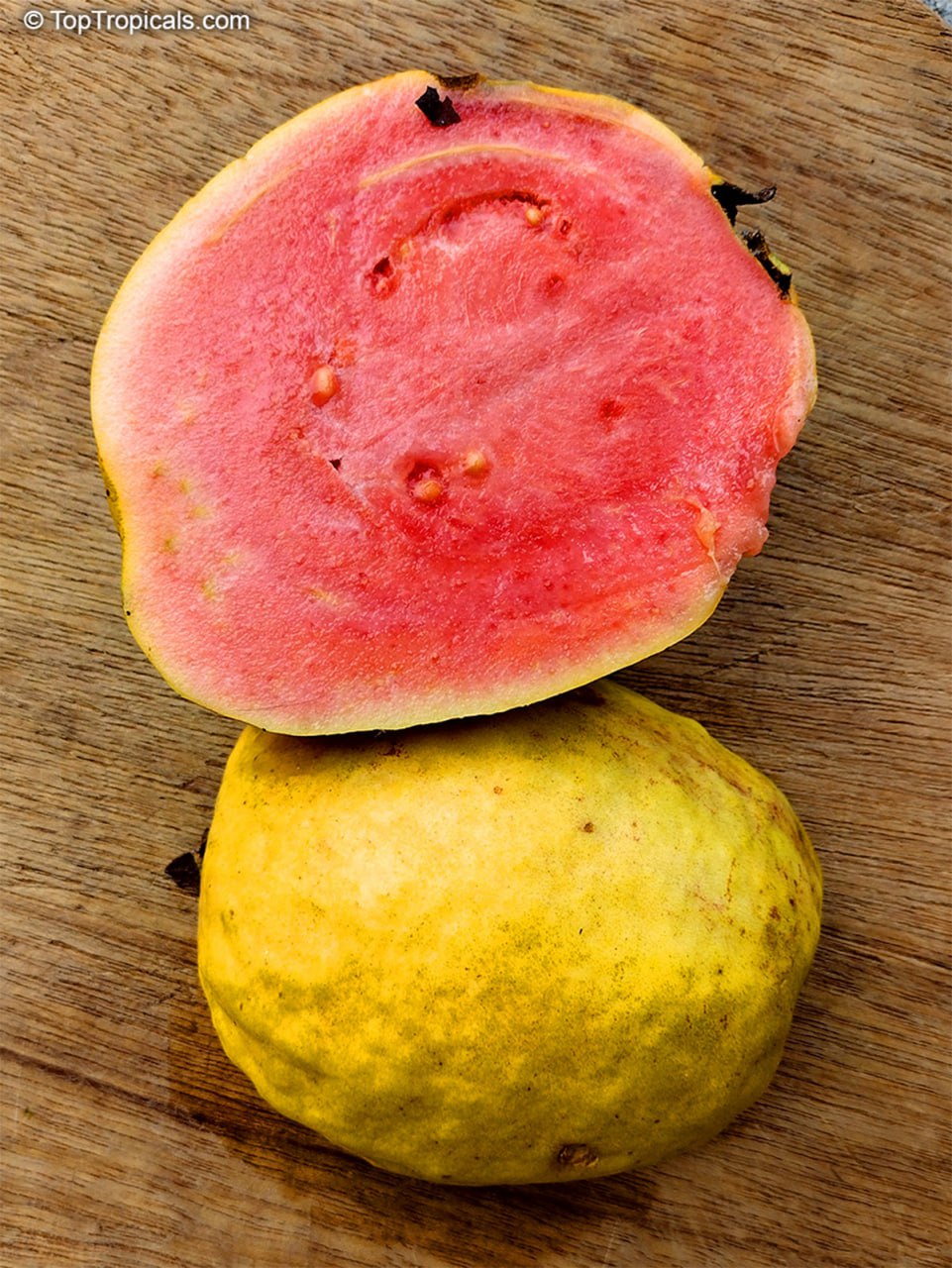
Guava fruit
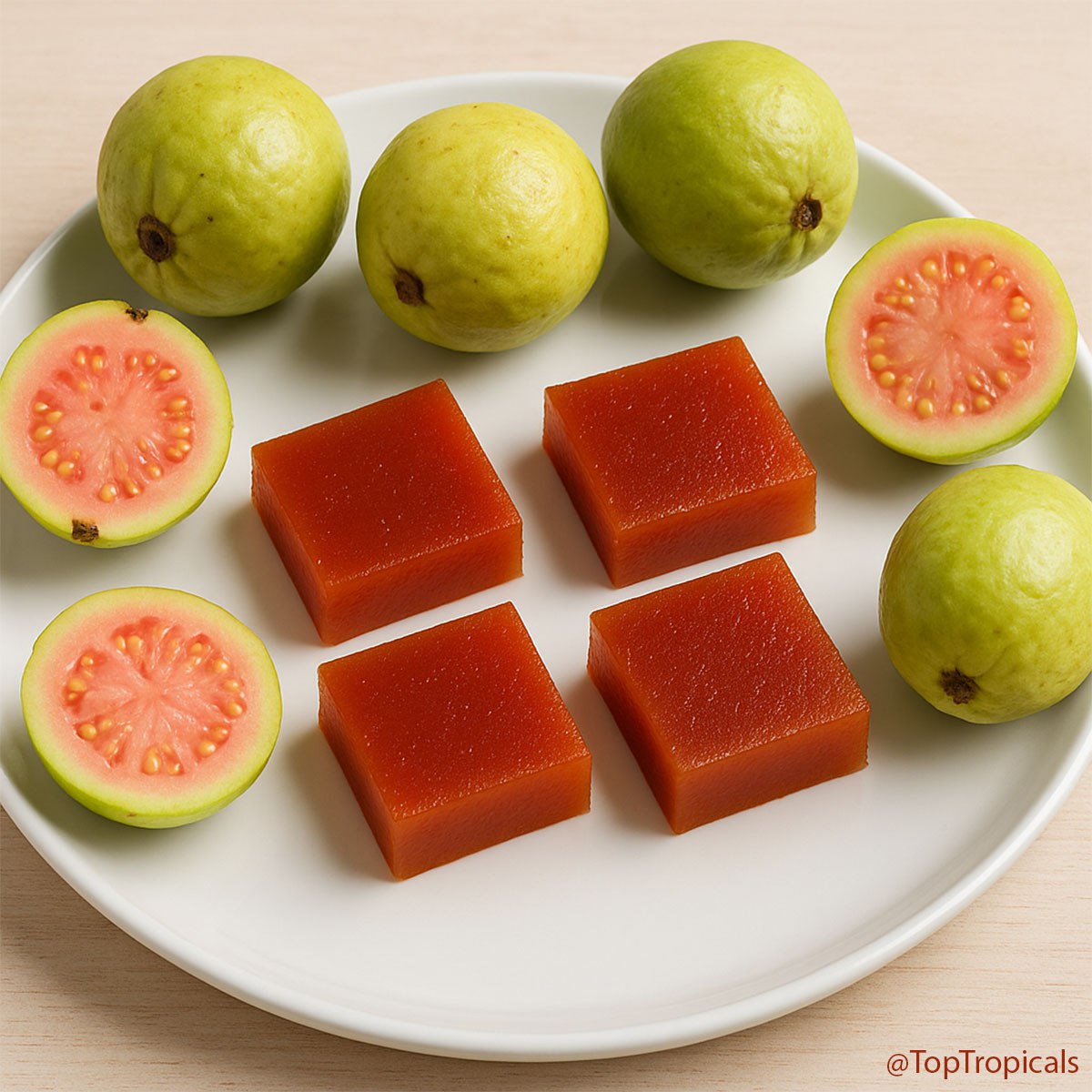
Guava fudge
🔴A tropical fudge-like sweet.
🍴 Guava fudge: quick-n-fun exotic recipes
Ingredients
- 2 cups ripe guava pulp
- 1½ cups sugar
- 1 tbsp lemon juice (optional)
Instructions
- Cook guava pulp with sugar in a pan over medium heat.
- Stir constantly until mixture thickens and pulls away from sides.
- Pour into a greased pan and let it cool.
- Cut into small squares and enjoy your tropical fudge.
🛒 Grow your own sweet guava fruit
📚 Learn more:
- Six guava varieties that will keep you picking year-round
- How to grow a Guava Tree: Practical Guide to Growing Guava
- More about #Guava
#Food_Forest #Recipes
🟢 Join 👉 TopTropicals
Date: 4 Nov 2025
The secret Brain Food growing in my backyard (and it tastes like green peas!)
Tropical Asparagus (Sauropus androgynus)
🏆 The secret Brain Food growing in my backyard (and it tastes like green peas!)
- 🌿 Katuk, or Tropical Asparagus (Sauropus androgynus), is one of the most underrated edible plants you can grow. This leafy tropical shrub is a superfood in disguise. It grows fast, looks lush, and its tender young shoots taste just like green peas.
- 🌿 Native to Southeast Asia, Katuk is a kitchen staple in places like Vietnam, Malaysia, and Thailand. The leaves and shoots are used in soups, stews, and stir-fries with egg or seafood. It’s not only delicious but also incredibly nutritious - rich in nutrients linked to improved memory and reduced cognitive aging: folate, lutein, and especially vitamin K, which is rare in plants.
- 🌿 Katuk thrives in sun or partial shade, needs little care, and grows into a dense, bushy plant that gives you edible greens all year round. If you want something that feeds both your garden and your health, this one’s a winner!
🛒 Add Katuk Superfood to your Food Forest
Lean more:
🍴 Katuk egg stir-fry: Quick-n-Fun exotic recipes
✔️ Discover the health benefits of Katuk: a Superfood for your mind and body
📚 Tropical Asparagus, Katuk: Grow your own food
📱 How to cook with Katuk
#Food_Forest #Remedies #Discover
🟢 Join 👉 TopTropicals