Date: 7 Oct 2019
Fertilizing in Winter?
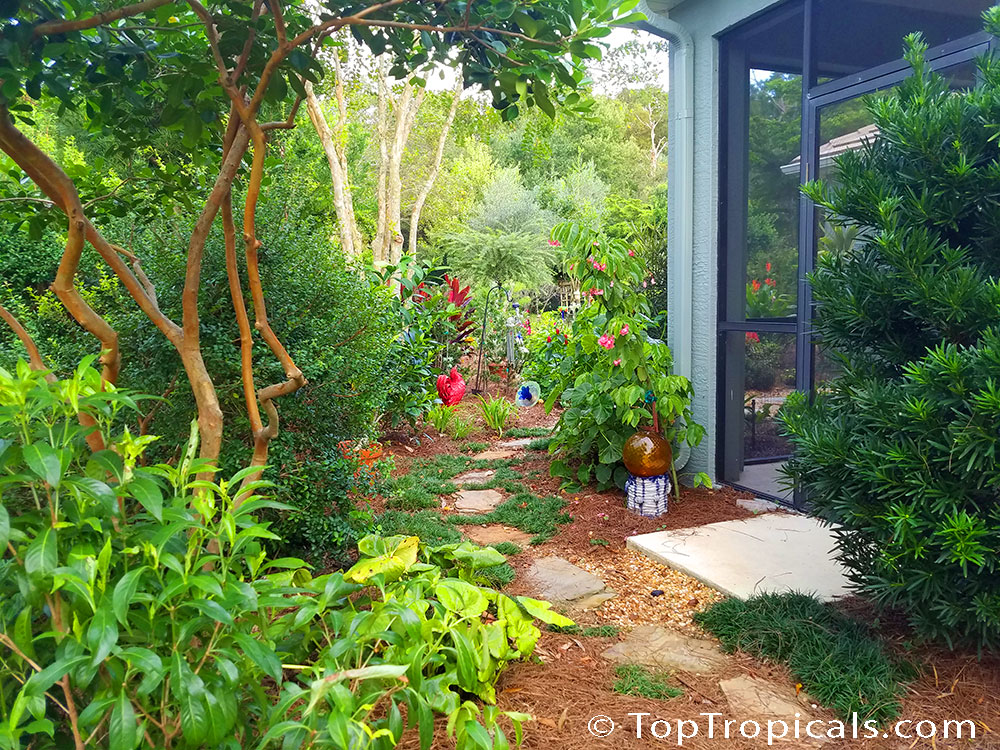
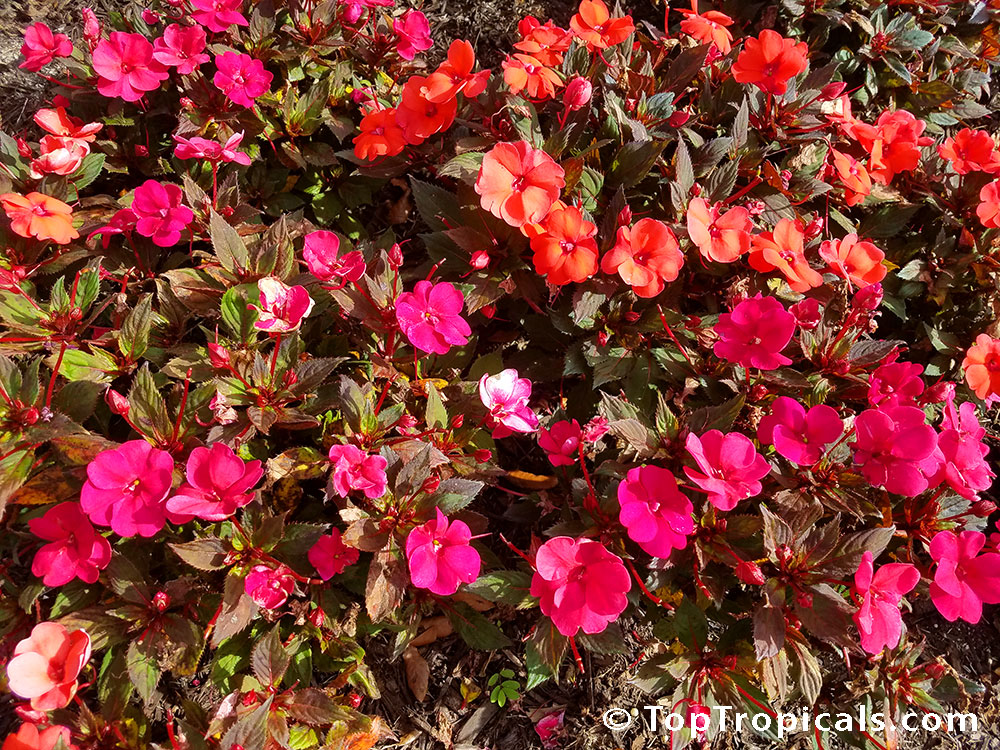
Q: I'm a bit confused about what winter fertilization schedule I should follow in South Florida. For blooming plants, usually, I use a monthly granular bloom booster fertilizer as well as a liquid fertilizer every 10 days or so. Should I continue that schedule in the winter as well? Should I stop fertilizing altogether in the winter? How about fruit trees? What fertilization schedule should I follow in the winter?
A: Here is a general fertilizing schedule for established plants that we follow here
in SW Florida.
The rule of thumb is, do not fertilize (with macro- NPK elements) when
minimum temperatures drop below 65F and stay at that level for more than 7
days. At this temperature point, most of the tropical and subtropical plants
slow down their metabolism and some of them going into dormancy. This means,
nutrients are not consumed as much as during active growth period, and built-up
nutrient supply within a plant plus whatever is available in the soil is
just enough to get by through the winter. So additional fertilizing is not
necessary. You may continue micro-element supplements and bio-stimulants
throughout the year. In fact, it is highly recommended to do so, to help the plant
survive cold spells. These are very effective tropical plant protectors:
SUNSHINE-Epi - Brassinosteroid plant hormone
SUNSHINE-Power-Si - Advanced plant protector with Silicon
SUNSHINE SuperFood - Complex microelement supplement
This rule is applied to both flowering and fruiting plants, in general. However, some species are winter-flowering and winter-fruiting. For those, you can make an exception and provide extra nutrients for flowering and fruiting, as long as the weather stays warm. During cold spells, avoid any NPK fertilizers and use only bio-stimulants and micro-elements. If you apply NPK during cold, it won't be consumed by a plant, build up in the soil, and may create a root burn situation.
In simple words, fertilize from March to October. Give plants some rest from November to February.

Date: 28 Sep 2019
Fragrance of Angel Hair Jasmine
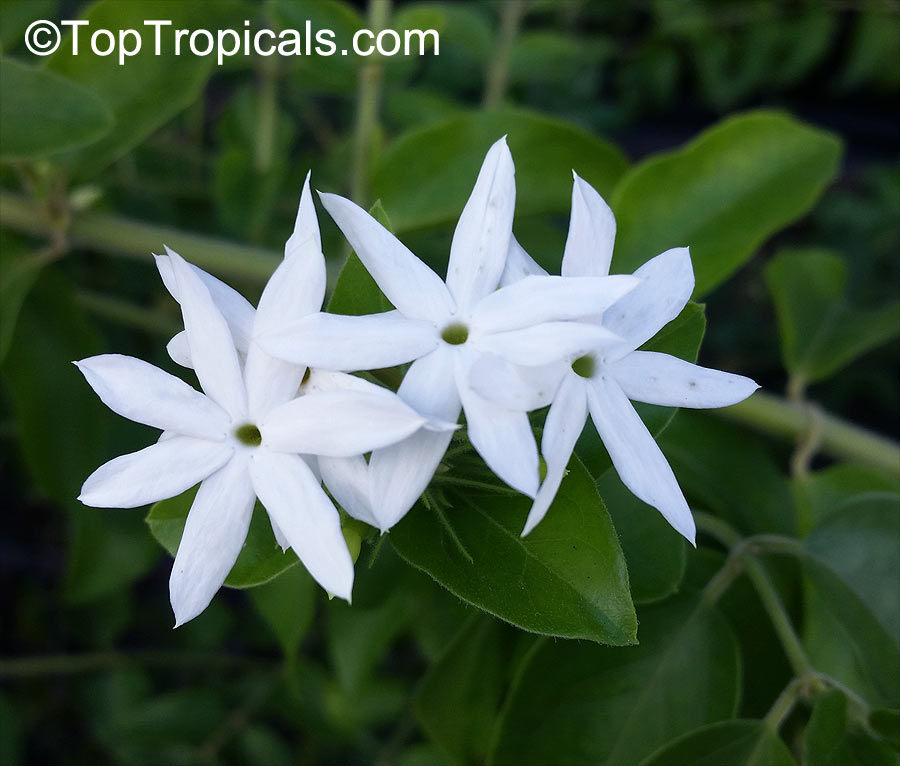
Q: I got angel hair jasmine, it started flowering, but it does not have any smell. What can be done?
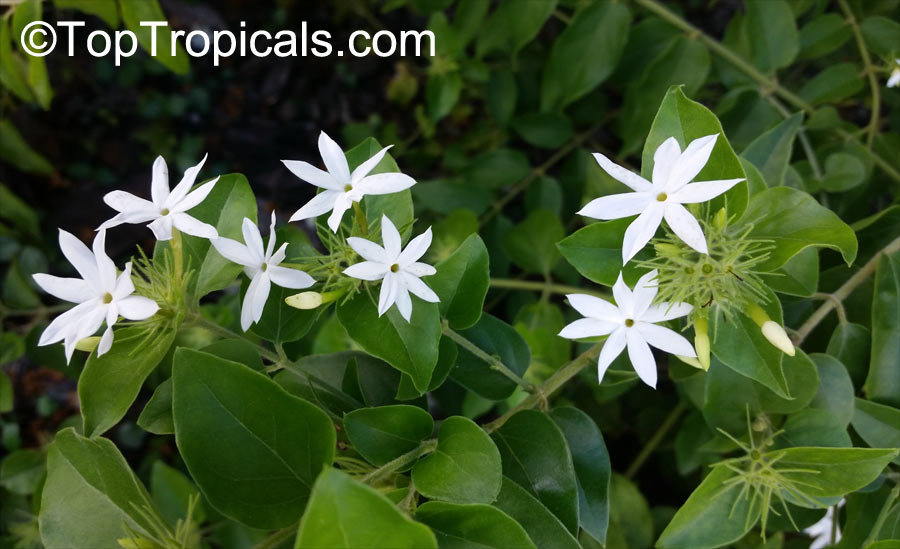
A: Jasminum pubescens - Angel Hair Jasmine has very fine fragrance. It is
not as strong as some other jasmines like Sambac for example. However flowers do have a sweet scent especially in
the early morning hours, as long as the plant is well-established, grows in
a warm and humid environment. Keep in mind that flowers on young small plants
that do not have a developed root system, may not be as fragrant as on
mature vigorous specimens. Also, this jasmine needs a full sun location and
regular fertilizer for profuse flowering.
We recommend the following fertilizers to boost flowering energy:
- Pink N Good Daily Plant Food - Flower Booster
- Plumeria Top Dress - Smart-Release Booster
Use microelements at least once a month to improve plant vigor and quality
of flowers
Date: 29 Aug 2019
How to fertilize a Mango Tree

Q: I bought a Mango tree from you last month and planted it soon after it arrived. When is the best time to fertilize it? (I am in Florida)
A: We always recommend to wait on fertilizing until the plant is
well established. If you planted your tree a month ago and it is doing well,
showing new growth, then this is the time to start giving it some food.
For a mango tree, we recommend using 2 fertilizers - water-soluble and
granulated:
Fruit Festival Plant Food
Mango-Food
Remember micro-elements that are essential for healthy and vigorous
growth:
SUNSHINE SuperFood - plant booster
Date: 13 Aug 2019
Caring of Soursop in container
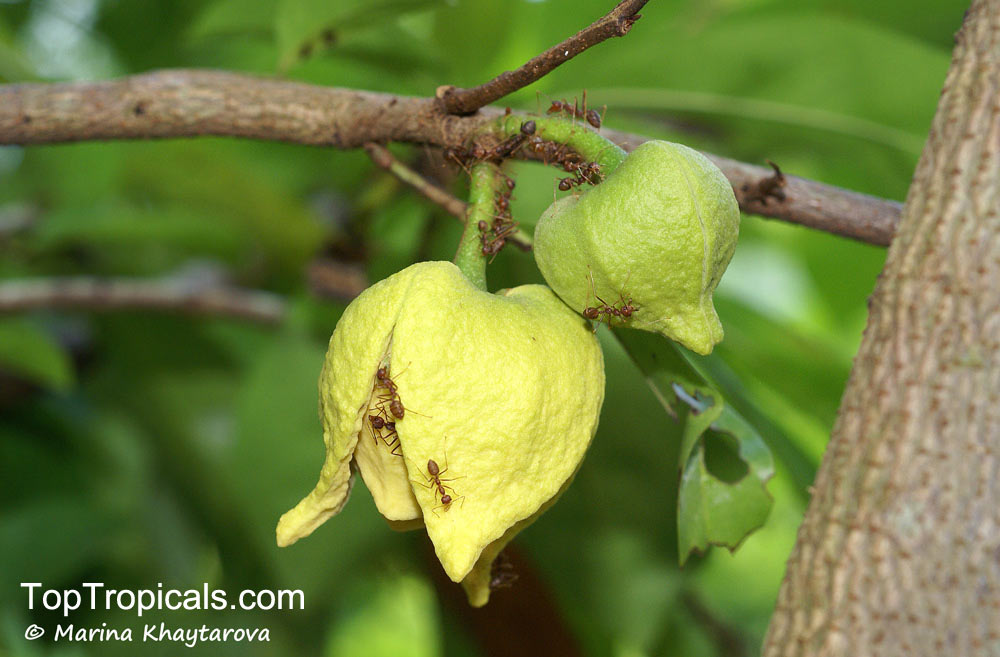
Q: I have ordered dozens of trees from you and have a question about Soursop. I have a Soursop in a container and ants and aphids are under new leaves. Do Soursop like little water? I water almost everyday living in southern Los Angeles it's been around 76-80F. I spray the aphids and ants off with a mist setting on my hose. They come back every day. They're only on new leaves...
A: First of all, you don't have to remove the ants iа they
don't bother you. Ants are good insects, they do not harm plants; most likely
they are attracted by a sweet sap - aphid by-product. Ants clean up a plant,
and they may even take care of some bad insects.
It is not difficult to get rid of aphids. Use a safe treatment: in a
small spray bottle, mix 1 cup of warm water, 1 teaspoon of dish soap and 2
tablespoons of any cooking oil (if you have Neem oil or Horticultural oil - even
better, but prepare, they are pretty stinky). Spray the leaves with this
solution to a dripping point. Repeat in a few days if needed. This simple remedy
will take care of the aphids.
Daily water may be ok for the plant during hot weather, as long as the
soil is not constantly moist. Let the surface of the soil get a little dry
between waterings.
Recommended fertilizers for fruit trees:
Fruit Festival Plant Food - Super Crop Booster
Mango-Food - Smart Release Fruit Tree Booster
SUNSHINE-Honey - for sweeter fruit
SUNSHINE SuperFood - microelement supplement

Date: 8 Aug 2019
How to grow Parijat indoors in winter
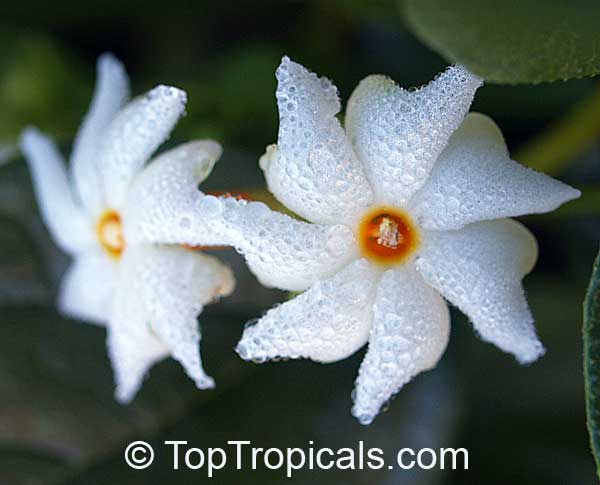
Q: I purchased Parijat plant last year spring. It had good growth in Summer, after that I kept the plant inside the house in winter. A couple of weeks it was ok, after that the plant lost leaves. What is a better idea for growing Parijat plant indoors in Winter?
A: Nyctanthes arbor-tristis, Parijat - is a semi-deciduous plant, which
means, it may lose its leaves during unfavorable conditions such as drought,
cold, low light and/or humidity. In your case, the plant dropped leaves because
of the stress of moving indoors that includes reducing light and humidity
levels. When a tropical plant loses leaves during winter, this means it goes
into a dormant stage. If this happens, you need to reduce watering and keep the
plant on a dry side, water in only when the top level of the soil feels dry
to touch. Do not fertilize.
Try to place the plant in a well-lit spot such as a windowsill. If the
windowsill and the window glass feel too cold for touch during wintertime,
you may place a sheet of a Styrofoam underneath the pot, and a sheet of a
bubble-wrap between the plant and the window glass, to create an extra barrier
from cold. The plant may re-leaf during wintertime; if not, it may wait until
spring, be patient.
Bring it back into outdoor light when minimum temperatures rise above
65F and resume fertilizing.
Recommended fertilizers for fragrant plants:
Pink N Good Daily Plant Food - Flower Booster
Plumeria Top Dress - Smart-Release Booster
SUNSHINE SuperFood - microelement supplement