Garden Blog - Top Tropicals

Date: 12 Jul 2024

How to protect fruit in your garden from greedy competitors

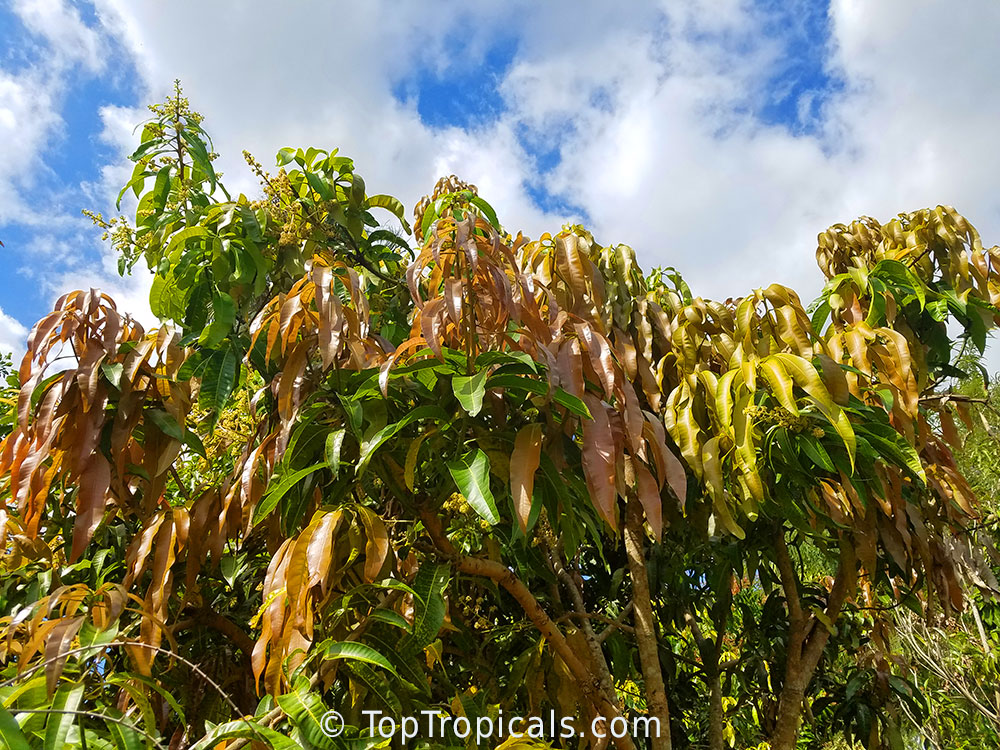
Mango Orange Essence fruiting

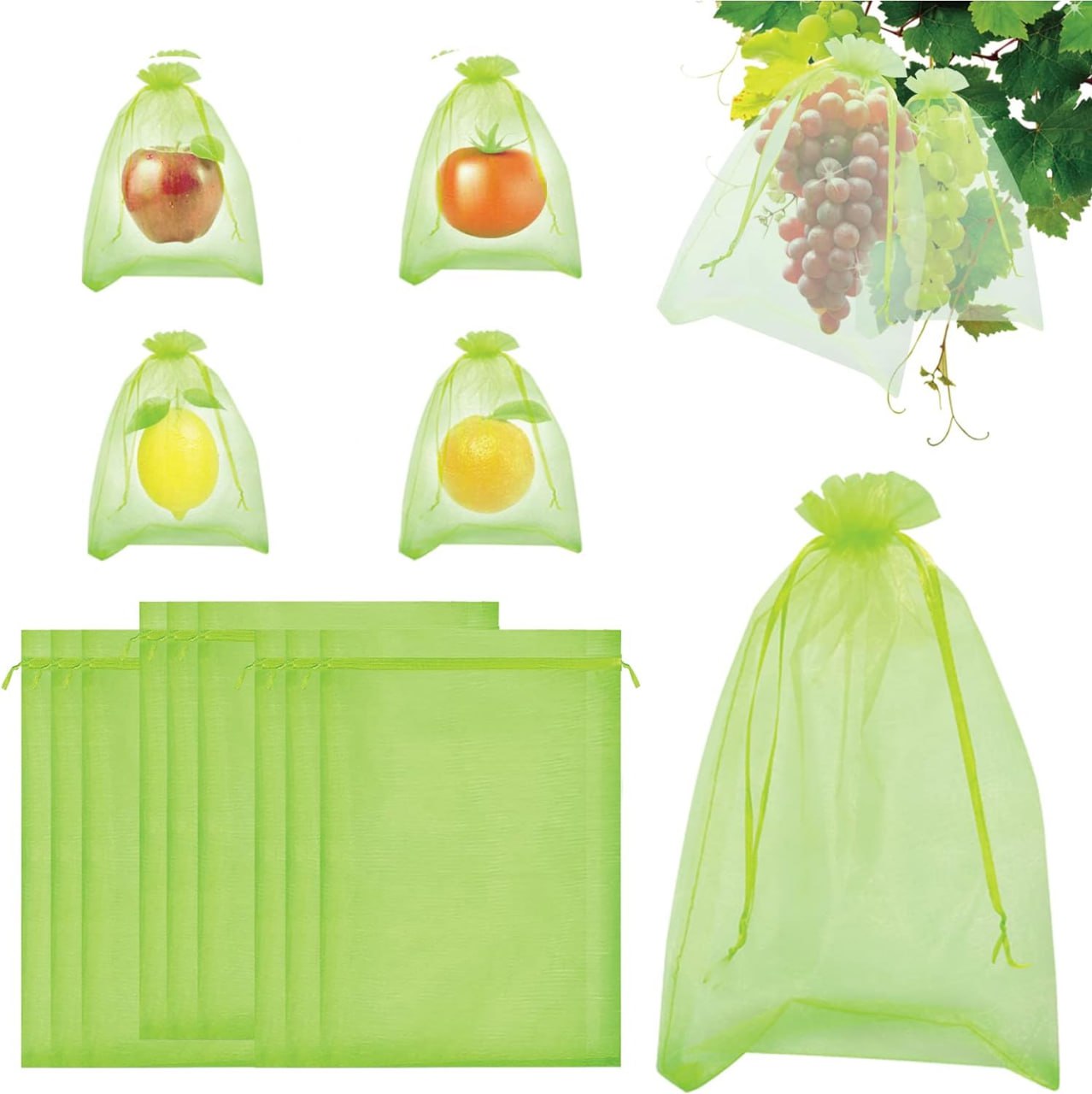
Fruit bags

Fruit bags

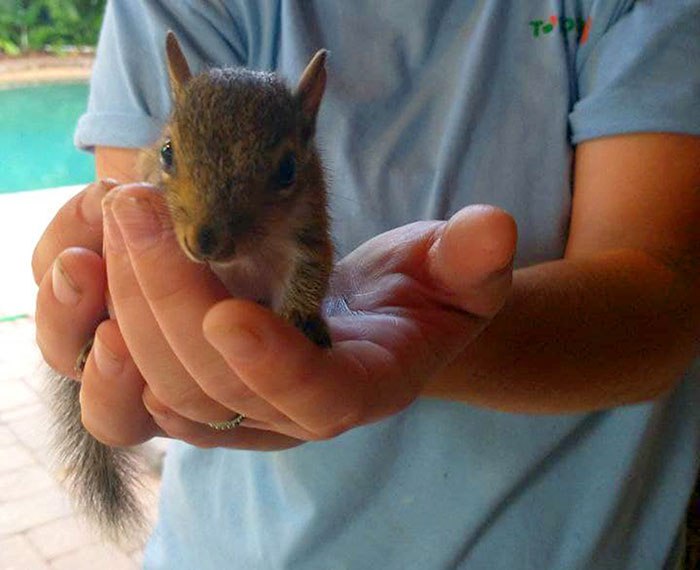
Squirrel

Squirrel

🐰🐁🐿 How to protect fruit in your garden from greedy competitors
  • 🥭 Mango season is here, and so are squirrels, bunnies, birds, rats, and raccoons... They also love the delicious fruit but don't like to share. So you may end up getting their leftovers if anything!

Here is how we protect our mango and avocado fruit - so far it works great:
  • 💰💰💰 Fruit Protection Bags


    These mesh netting bags/covers are made of strong nylon and have an easy drawstring, helping to protect developing fruit on a tree from insects, birds, and rodents. With drawstring closures on both ends, you can easily tighten bag around the fruit. Available from Amazon for only 15 cents a piece.


🥭🍒 Enjoy your fruit!

🛒 Dont's have your own mango tree? Plant one now to enjoy fruit tomorrow.

📚 Fun reading: Penelope, the Squirrel Cat

#How_to #Food_Forest

🏵 TopTropicals

Date: 30 Jul 2025

Why tipping mango trees makes them fruiting machines (DIY Garden Tip)

🥭 Why tipping mango trees makes them fruiting machines (DIY Garden Tip)


📱

🌳 Want more mangoes from your backyard tree?
In this step-by-step guide, Ed from Top Tropicals in Fort Myers, Florida, shows how to tip mango trees to boost branching, improve structure, and increase fruit production. Whether you're growing Valencia Pride, Orange Sherbet, or Glen mangoes - this method works!

✔️ You'll learn:


  • When and how to tip branches
  • What tools to use (and how to clean them)
  • Real before-and-after results from trees in our Florida garden
  • Tips for shaping young trees for long-term success


🛒 Get your own mango trees

🌱 More garden tips and tropical fruit care

#Food_Forest #Mango #Mango_Rainbow

🟢 Join 👉 TopTropicals

Date: 24 Jun 2018

TopTropicals

How to make a Mango tree bloom and fruit

Mango trees are especially beautiful during spring time when they flush out multi-color new leaves! But you want your mango be not only beautiful but fruitful as well. Here are some tips:

1) Fertilize Mango tree with a balanced slow release fertilizer starting March. Use 1 tsp of granulated fertilizer per 1 gal of soil, or a handful or two for an in-ground tree. You may add one application of foliar spray of a water-soluble bloom booster fertilizer (the one for Roses or Azaleas will work). This will give your tree a good macro-nutrient kick-start.

2) Spray entire tree with SUNSHINE-Superfood solution. This will provide all necessary micro-elements and keep the plant healthy and strong throughout the season. Repeat treatment once a month until harvest time.

3) For sweeter fruit, apply SUNSHINE-Honey solution several times:
- early spring before flowering
- at setting buds
- right at the beginning of setting fruit
- after harvesting, to provide the tree with all good micro-nutrients before resting season.

Date: 14 Oct 2025

Yes, you can grow a tropical fruit tree in a pot!

Yes, you can grow a tropical fruit tree in a pot! Yes, you can grow a tropical fruit tree in a pot!

🥭 Yes, you can grow a tropical fruit tree in a pot!


  • 🍒 If you dream of picking fresh tropical fruit - Mango, Avocado, exotiс Annona and more - but only have a patio, balcony, or small yard, you’re not out of luck. Many tropical fruit trees grow perfectly well in large containers. The key is choosing the right variety, pot, and care routine.

  • 🍒 Pick a compact tree type

Start with a dwarf or semi-dwarf variety. Regular tropical trees can grow huge, but container-sized cultivars stay under 8–10 feet and are much easier to manage. For example, Condo varieties of Mango like Pickering or Ice Cream stay small and still produce full-sized fruit. The same goes for Dwarf Avocados like Wurtz (also called Little Cado) and Sugar apples. Blackberry Jam fruit tree (Randia formosa) and Peanut Butter Fruit tree (Bunchosia argentea) are also excellent choices.

  • 🍒 Choose the right pot

Begin with a 5-gallon container and move up as the tree grows. A mature plant will be happy in a 20–25-gallon pot. Drainage is critical - roots will rot if the pot stays soggy. Use a sturdy plastic, ceramic, or wooden container with multiple holes in the bottom.

  • 🍒 Soil and watering

These trees all like loose, well-draining soil. Mix potting soil with perlite or pine bark for better aeration. Water deeply but not too often - let the top few inches dry before watering again. Overwatering is the quickest way to kill a potted tropical.

  • 🍒 Light and feeding

Full sun is a must - aim for at least 6 hours daily. Fertilize during the growing season with a balanced fruit tree or slow-release fertilizer like Green Magic or liquid Sunshine Boosters. Many tropicals appreciate an extra boost of micronutrients like iron and magnesium to keep their leaves green.

🍒 Cold protection and pruning


If you live where winters get chilly, move the pot indoors or into a greenhouse before frost. Prune lightly in spring to keep shape and airflow. Container trees can fruit heavily if given light, warmth, and consistent care.

At the end of the day, container culture lets you grow the tropics anywhere - from a city balcony to a backyard deck.

Next: The best tropical fruit trees for containers...

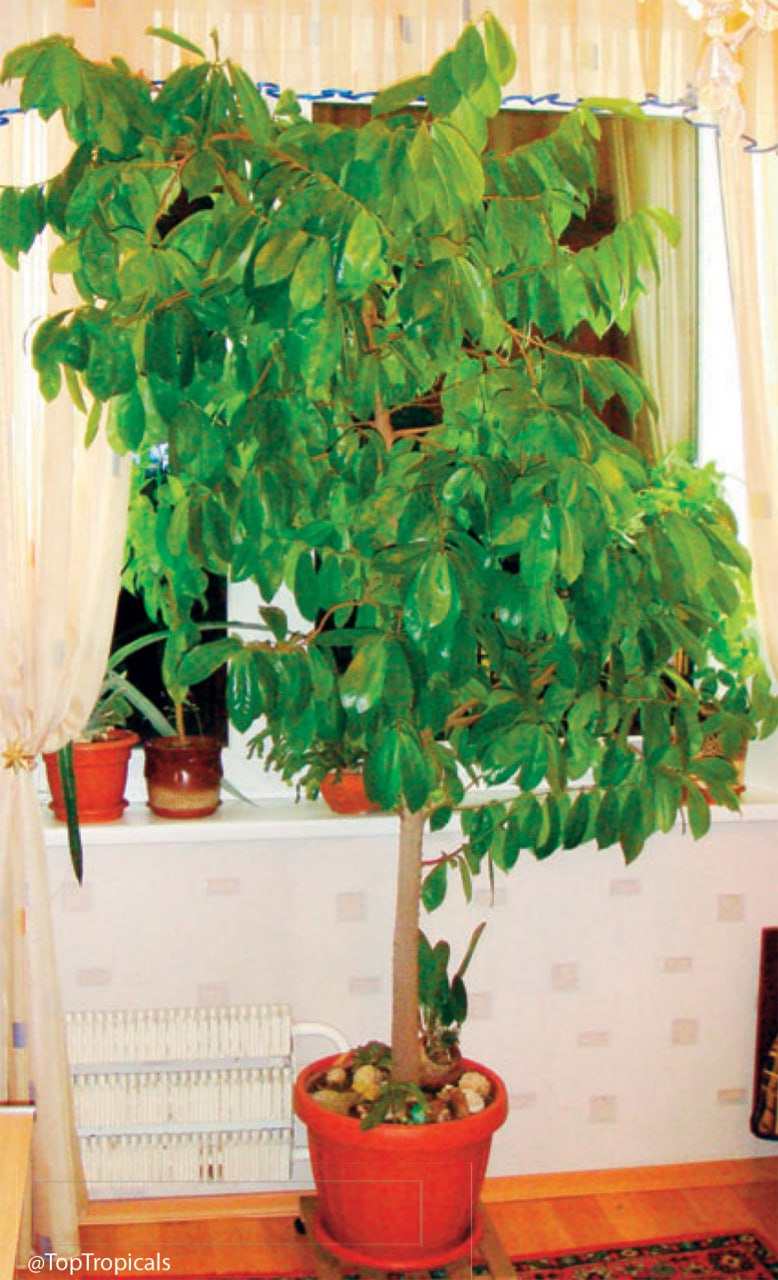
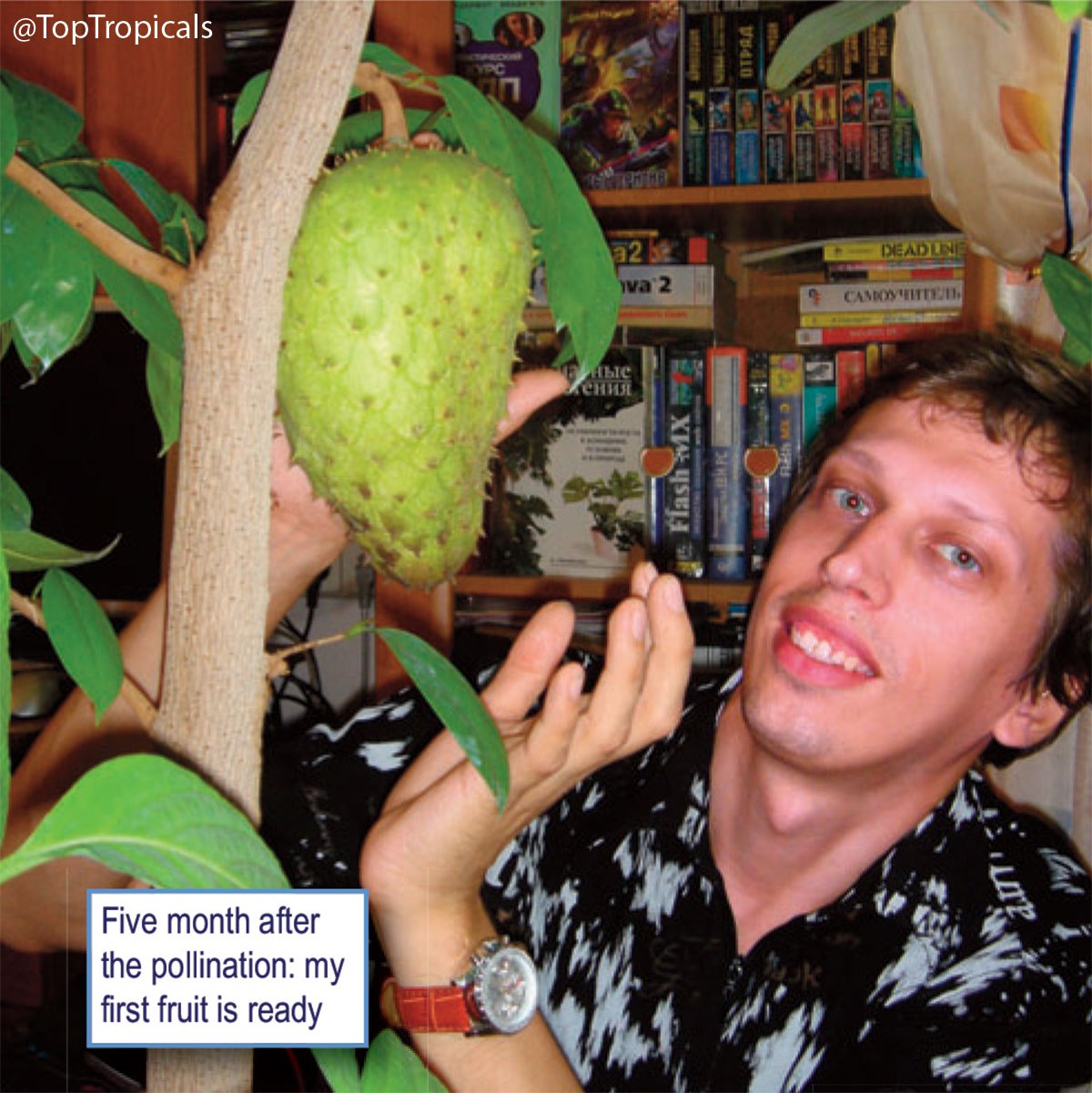
📸 Growing and fruiting Soursop in apartment (PDF download)

🛒 Explore tropical fruit trees

#Food_Forest #How_to #Discover

🟢 Join 👉 TopTropicals

Date: 22 Sep 2025

Dragon Fruit Plant Care – Tips from the Garden Expert
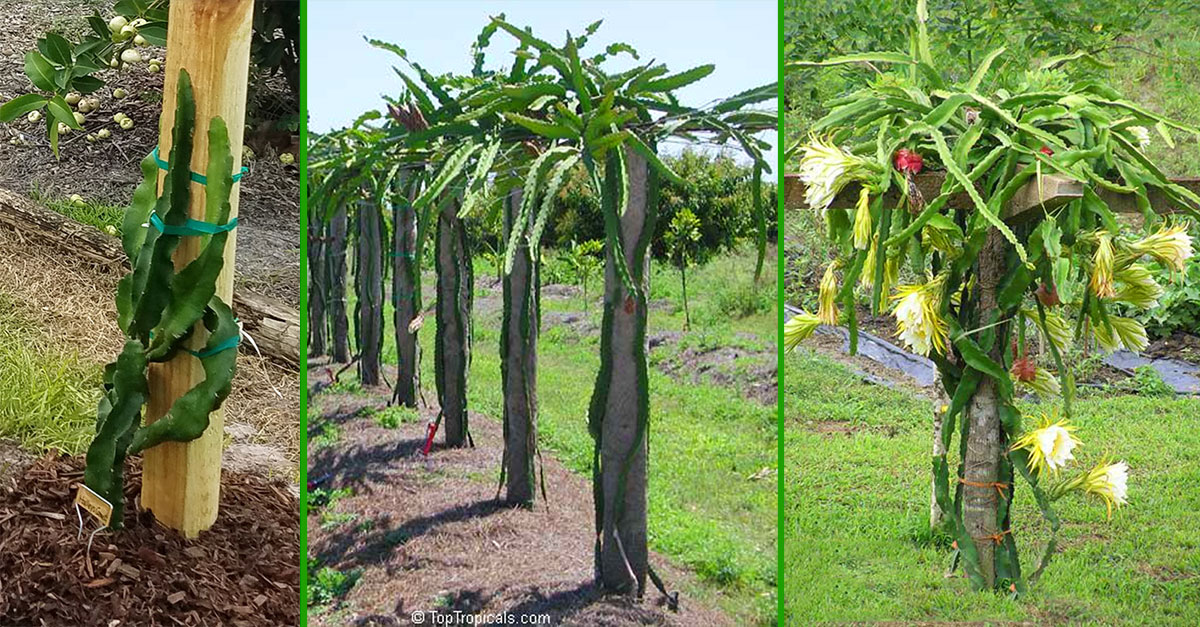
Stages  of  dragon  fruit  pitaya  plant  growth  and  trellis  support 
 system

Dragon fruit is one of those plants that look exotic but are surprisingly easy once you know the basics. Here is what works best in the garden:

  • Soil: They hate wet feet. A sandy, fast-draining soilless-mix is your friend. If water sits around the roots, rot comes fast.
  • Watering: Deep watering is better than frequent sips. Let the soil dry between waterings. In rainy season they cope well, but in pots you need to be careful.
  • Sunlight: Full sun is great, but in very hot places a touch of afternoon shade keeps them happy.
  • Support: They are natural climbers. A wooden post, concrete pole, or trellis will give them something to grab and makes harvest easier.
  • Fertilizer: Feed lightly but often. A gentle liquid like Sunshine C-Cibus liquid booster with every watering, or Green Magic controlled release fertilizer every 5-6 months. It encourages strong roots, lush growth, and lots of flowers.
  • Pruning: Trim off tangled or weak stems. This guides energy into strong branches that will flower and fruit.

Think of it as training a cactus vine into a small tree. Once it settles in, it almost takes care of itself — and pays back with fruit you can’t buy in stores.

🌱 Dragon Fruit Plant Care – Outdoors and Indoors

Outdoors: Dragon fruit thrives in USDA Zones 10–11 year-round. In warm regions like Florida, Texas, California, and Hawaii, you can grow it outside in the ground. Give it fast-draining soil, full sun with a little afternoon shade in the hottest months, and a sturdy trellis or post to climb. Deep watering with drying periods in between keeps roots healthy. A yearly pruning shapes the plant and boosts flowering.

Indoors or Patio Pots: Gardeners in cooler zones can still enjoy dragon fruit in containers. Use a large pot with sandy, well-draining mix or soilless-mix and a pole for support. Place the pot in the brightest spot — a greenhouse, sunroom, or patio that gets 6+ hours of light daily. Move pots inside when temperatures drop below 40F. Even indoors, a healthy plant can bloom and fruit if it has enough light and warmth.

❓ Dragon Fruit FAQ


How soon will a dragon fruit start producing?

Cuttings can flower and fruit in as little as 2–3 years. Seed-grown plants take longer, often 4–6 years. Large developed specimens can start flowering and fruiting within a year or even the same season.

Do I need more than one plant for pollination?

Some varieties are self-fertile, others need a second plant for cross-pollination. Even self-fertile types usually set more fruit with a partner nearby.

How big do they get?

In the ground, dragon fruit can climb 15–20 ft if you let it. With pruning and a trellis, you can keep it shaped like a small tree, 6–8 ft tall.

Can I grow it in a pot?

Yes. A large container with sandy mix or soilless-mix and a pole for climbing works well. Indoors it will need bright light or a grow lamp.

What does a dragon fruit taste like?

Sweet and juicy, like a blend of blackberry and raspberry. Varieties differ: flesh can be white, pink, deep red, or purple, wrapped in skins of red, pink, or yellow. White flesh is mild and refreshing, red flesh is sweeter, and yellow flesh is the sweetest with a honey-pineapple flavor.

What zones can I grow dragon fruit outside?

USDA Zones 10–11 are best for year-round outdoor planting. In cooler areas, grow it in containers and bring inside for winter.

How often should I water?

Deep water, then let the soil dry. Too much water causes root rot. Think “desert cactus with a taste for rain.”

Is dragon fruit easy to grow?

Yes. Pitayas grow like cactus trees on strong supports, but they are easy to care for — little water, sun or semi-shade, and they thrive.

How long do they live?

A healthy dragon fruit cactus can produce for 10 years or more with proper care.

What are the health benefits?

Dragon fruit is high in fiber, supports digestion, and is low in calories. It is rich in antioxidants and vitamin C, making it good for immunity and overall wellness. Many gardeners enjoy it as a healthy snack or in smoothies.

Explore Dragon Fruit varieties