Garden Blog - Top Tropicals

Date: 23 Jan 2025

Discover 10 best fruit trees to grow
in Florida and Southern landscapes
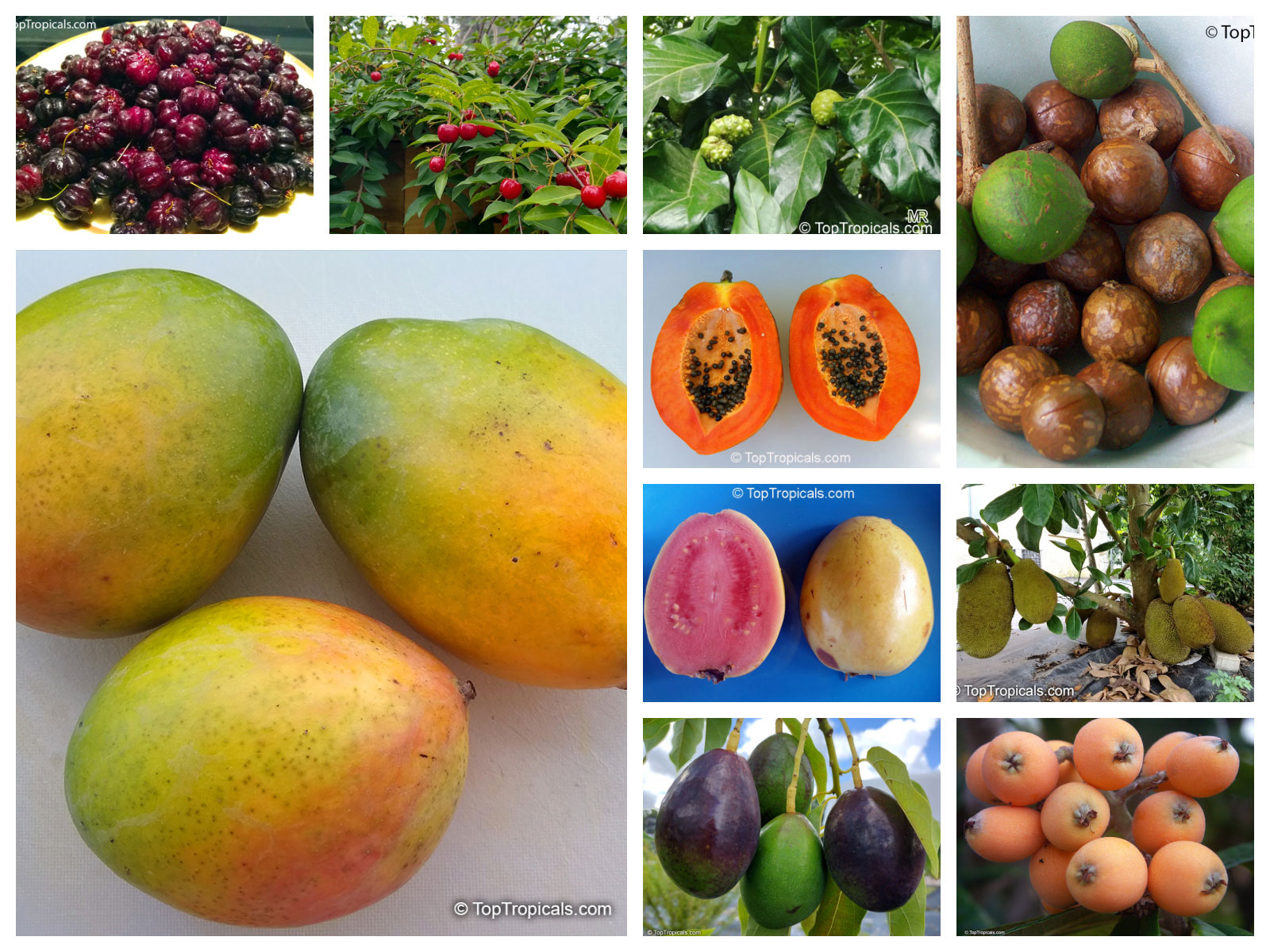
10  best  fruit  trees  to  grow  in  Florida,  collage

Q: We recently moved into our new home in Florida, and the property is a great size - 5 acres - but it currently has no trees, just a few palms. I'm looking to plant some productive fruit trees to start building our own Food Forest. What fruit trees would you recommend as a good starting point?

A: With five acres of space, you have a fantastic opportunity to create a fruitful garden that can provide for your family for many years to come. Below are our top recommendations for must-have, easy-to-grow fruit trees that thrive in Florida's climate, grow quickly, and start producing right away.

1. Mango Tree
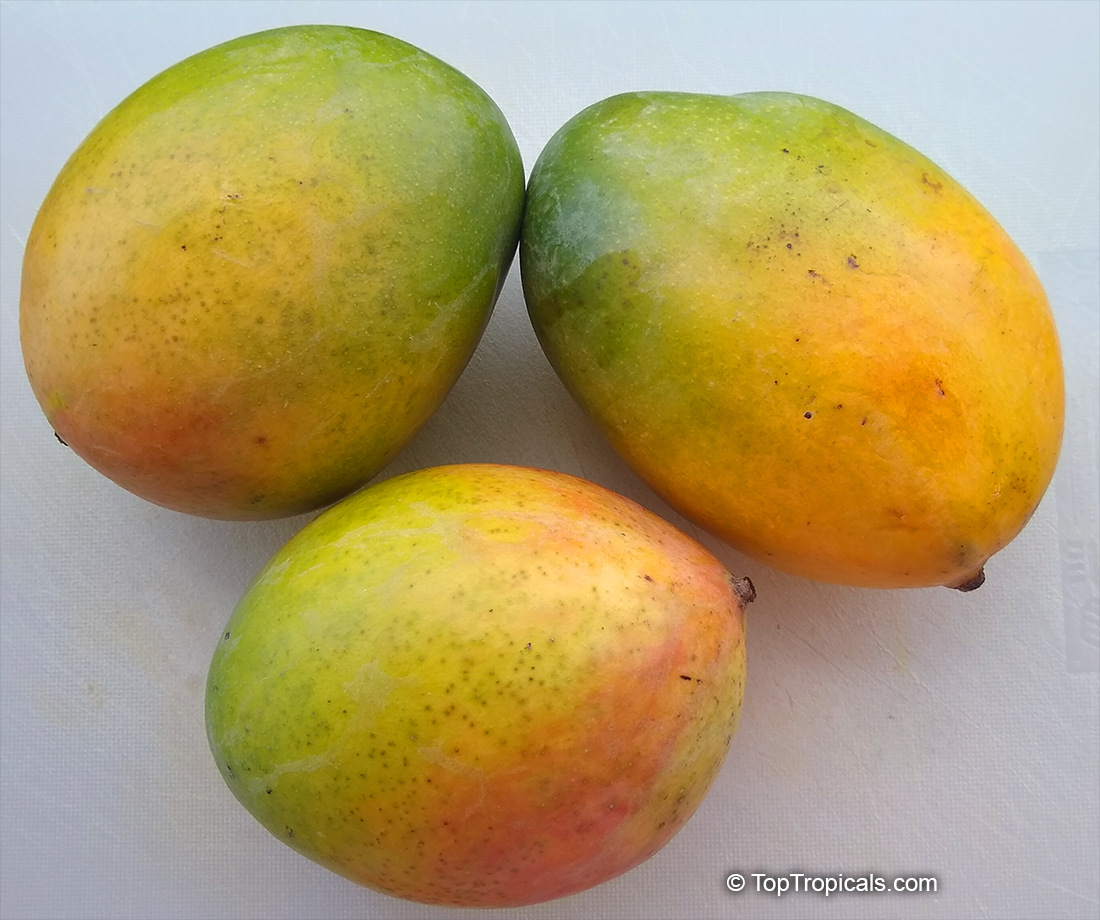
Mango  fruit

Mango trees (Mangifera indica) are a must-have for any Florida garden, embodying the essence of the Sunshine State with their delicious and nutritious fruit packed with vitamins and fiber. These fast-growing, low-maintenance trees thrive with minimal water and are heat-tolerant. Grafted varieties produce high-quality, fiberless fruit in just 2-3 years, while dwarf "condo" mangoes are perfect for smaller spaces or containers. While young trees need frost protection, mature trees handle cold better. Grafted mangoes offer rich taste that you won't find in commercially grown, fibrous varieties, ensuring a sweet and vibrant harvest from your own garden.

2. Avocado Tree
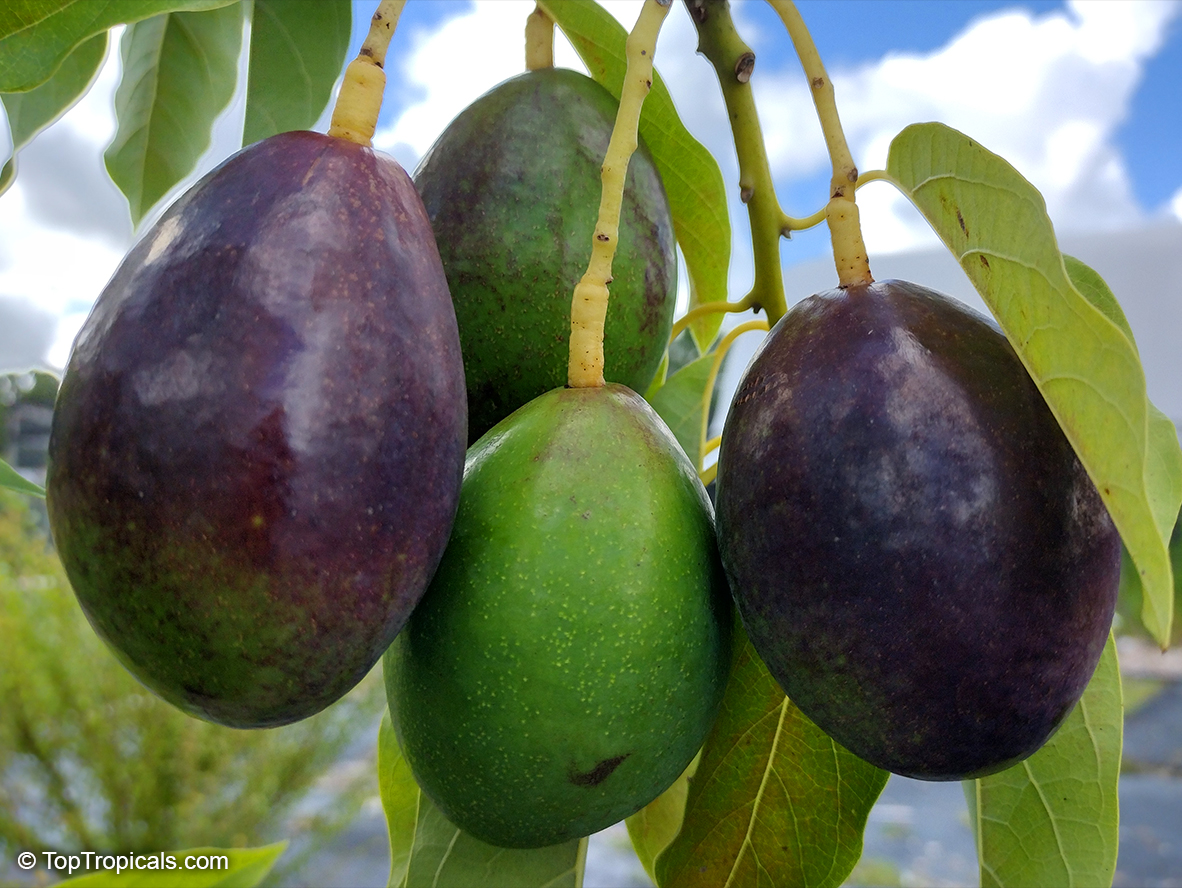
Avocado  fruit

The Avocado tree (Persea americana) is an essential addition to any tropical or subtropical garden. Known for its health benefits and superfood status, it's a favorite fruit that's not only productive but also a beautiful ornamental tree. Some avocado varieties are more cold-tolerant than mango trees, with the ability to survive temperatures below 25F. While many enjoy growing avocado from seed, only grafted trees guarantee quality fruit and immediate production, as seedlings can take 7-8 years to bear fruit. To successfully grow avocado, ensure good drainage by planting on a raised mound (4-6 inches) and keep the soil consistently moist. There are also compact varieties like Wurtz and Fuerte that thrive in containers or small spaces, making them ideal for patios and small gardens.

3. Tropical Cherries
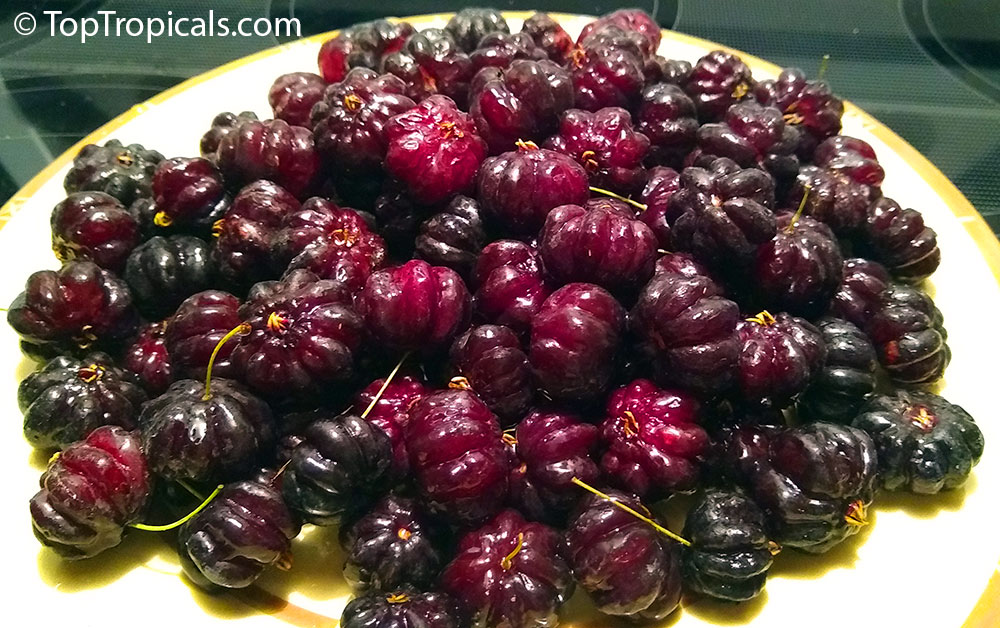
Eugenia  Lolita  cherry  fruit

Tropical cherries, such as Cherry of the Rio Grande (Eugenia aggregata), Grumichama (Eugenia brazilensis), Pitomba (Eugenia luschnathiana), and Black Surinam Cherry (Eugenia uniflora var. Lolita), are popular and easy-to-grow fruit trees that offer fast growth and excellent fruit production. These compact, versatile trees thrive in both the ground and containers, starting to produce fruit almost immediately. Eugenias are low-maintenance, requiring minimal water, thriving in various soil types, and being pest-free. They are heat-tolerant and can endure cool winters, surviving light frosts. Birds love the fruit, but don't worry - there will always be plenty for everyone.

4. Barbados Cherry Tree
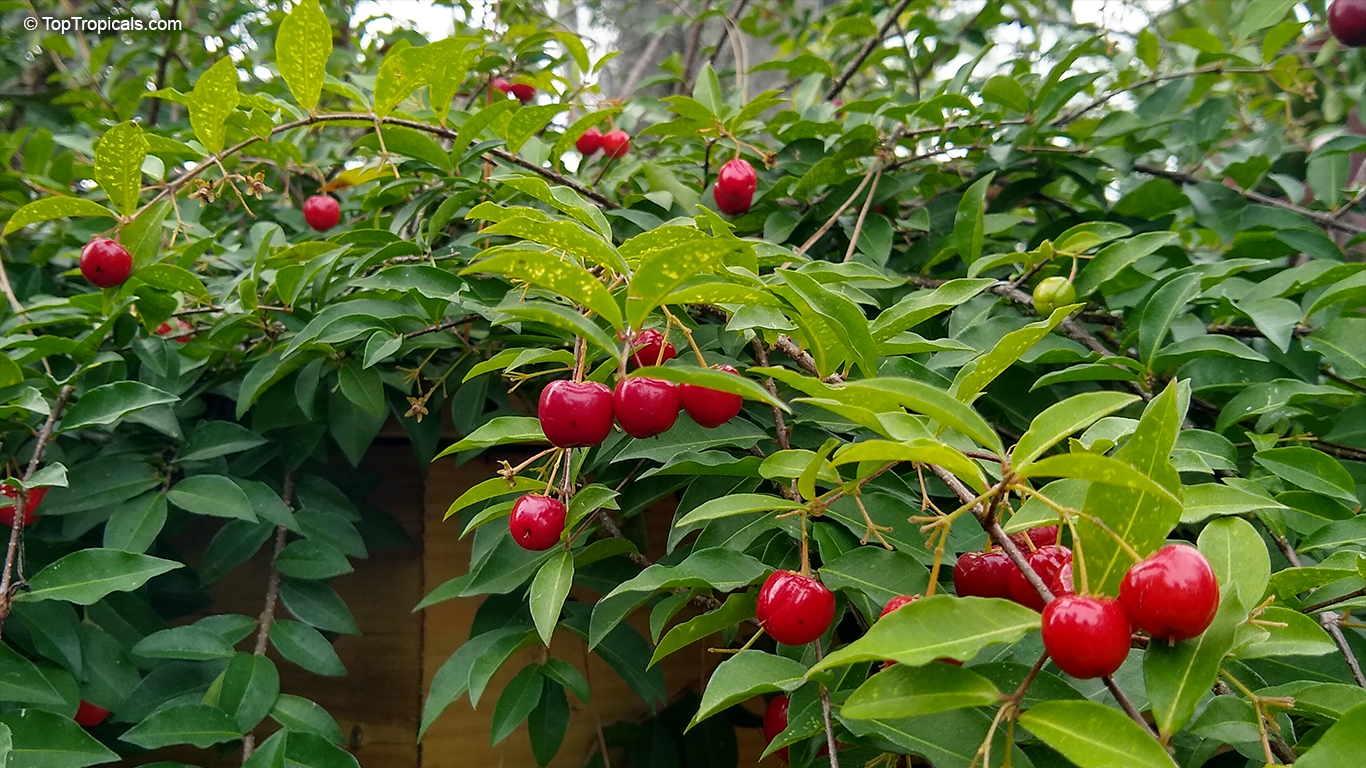
Malpighia  Barbados  cherry  fruit  on  a  branch

Barbados Cherry (Malpighia glabra), also known as Acerola, is a tropical cherry renowned for having the highest vitamin C content of any fruit. This nutrient-packed fruit is perfect for jellies, jams, and freezing without losing its vitamin C. The Barbados Cherry is a fast-growing, dense shrub that fruits multiple times a year, providing abundant harvests for gardeners seeking quick results. It thrives in alkaline soil, tolerates drought, and is relatively cold-hardy, withstanding light freezes. Birds love the fruit, making it a great addition to wildlife-friendly gardens. The dwarf variety, Nana, with its small leaves and fruit, is perfect for containers, borders, or even bonsai, adding ornamental value to any space.

5. Noni Tree
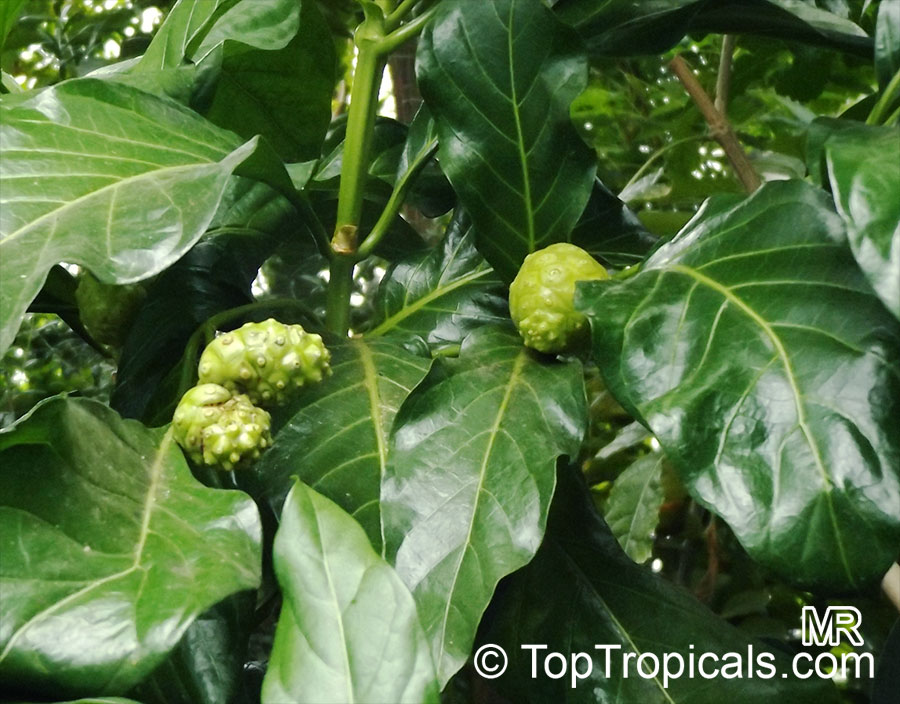
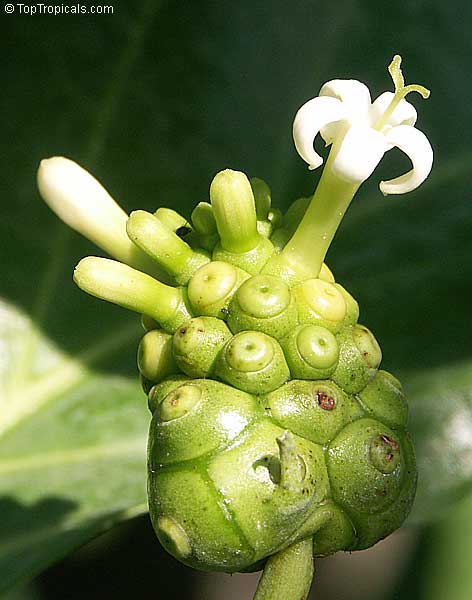
Morinda  Noni  fruit  on  a 
 branch

The Noni Tree (Morinda citrifolia) is a top superfood plant that makes a fantastic addition to any Southern garden. Known for its numerous medicinal benefits, Noni fruit offers anti-inflammatory properties, relief from arthritis, and support for conditions like diabetes, metabolism, and weight loss. It's even believed to help fight cancer. Noni trees grow quickly and begin producing fruit within 2 years from seed. This tough, resilient plant thrives in poor soil, endures summer heat, and withstands drought conditions. Despite its tropical appearance, Noni is surprisingly cold-hardy, recovering well after leaf damage in cooler weather. In addition to its health benefits, the Noni tree has ornamental value, with large, waxy leaves and unique fruit, where the flower appears to grow directly on the fruit!

6. Macadamia Nut Tree
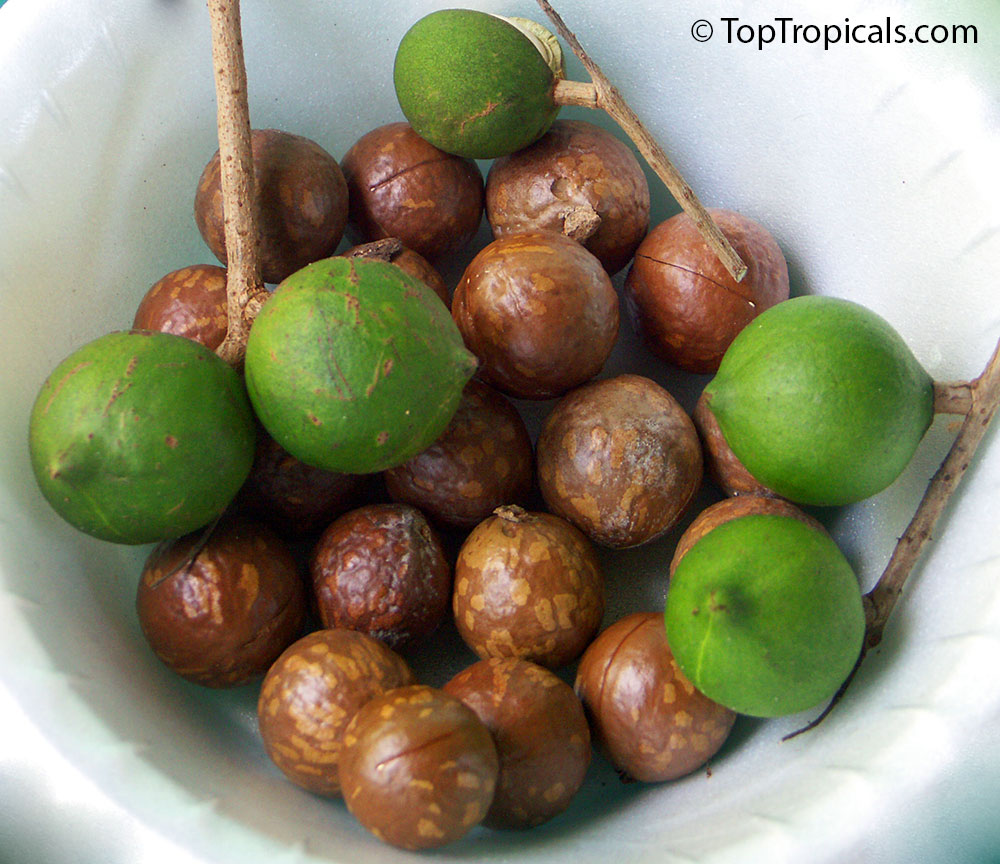
Macadamia  nuts  on  a  plate

The Macadamia Nut Tree (Macadamia integrifolia) is a fantastic addition to any garden, allowing you to grow these delicious, high price tag, nutrient-rich nuts right at home. These trees are cold-hardy, grow quickly, and thrive in all Florida soil types. Once established, they are productive and can tolerate both flooding and drought. Older trees can survive colder winters, while young trees need protection from temperatures below 25-26F. Macadamia trees like plenty of water and a special fertilizer program, including liquid fertilizers and microelements, to ensure healthy root development and optimal production. Aside from being rich in healthy fats, vitamins, and minerals, macadamia nuts offer numerous health benefits, such as improved digestion, heart health, weight management, and blood sugar control. They are also packed with tocotrienols - antioxidants which may protect against cancer and brain diseases.

7. Papaya Tree
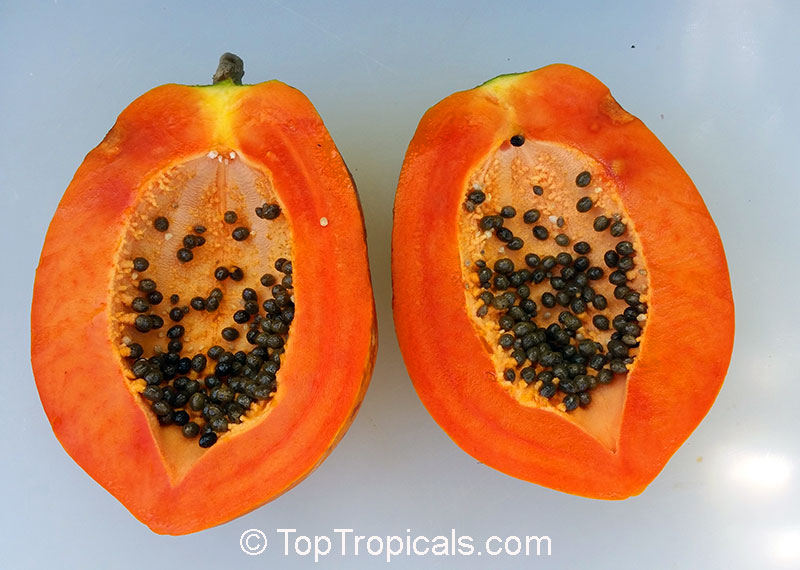
Papaya  fruit  with  seeds

Papaya trees (Carica papaya) are resilient, easy to grow, and produce fruit year-round. Rich in papain, a digestive enzyme, papayas are a superfood that promotes gut health. These fast-growing trees often begin producing fruit within the same year they're planted, providing quick rewards for gardeners. Many varieties, especially dwarf papayas, are space-efficient, reaching only 6-8 feet tall while still yielding large crops, making them perfect for small gardens. Surprisingly hardy for a tropical plant, papayas can withstand light freezes and strong winds (tested in hurricanes!). While they are self-fertile, planting 2-3 different cultivars improves pollination and increases yields. "Solo" cultivars, with their smaller, round or oval fruits, are sweet and less susceptible to fruit flies.

8. Guava Tree
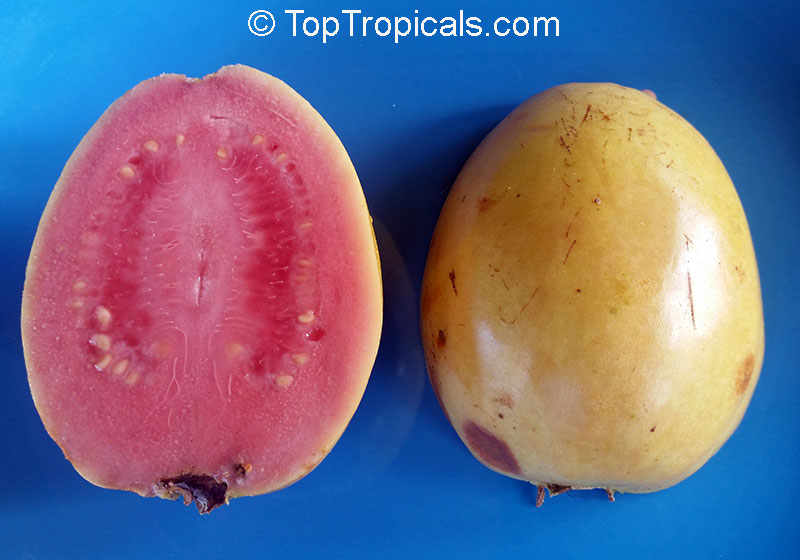
Pink  Guava  fruit

Guava trees are beloved for their flavorful fruit, commonly used in juices, drinks, and desserts. Popular varieties include Tropical Guava (Psidium guajava), Cattley Guava (Psidium littorale), Cas Guava (Psidium friedrichsthalianum), and Pineapple Guava (Feijoa sellowiana). Despite their tropical nature, guavas are surprisingly cold-hardy, suitable for cooler climates and occasional frost. These trees thrive in moist conditions and can tolerate some flooding, while their compact growth makes them easy to maintain at any height or shape. Guavas are fast-fruiting, often producing fruit within a year of planting, and even some varieties in 1 gal containers. The dwarf Nana variety is perfect for container culture, producing full-sized fruit in a compact form. Guava trees are mostly pest-resistant, though mealybugs may require occasional treatment with neem oil in humid, rainy areas. Planting multiple guava trees ensures a continuous supply of fresh, juicy fruit and delicious guava juice for everyone to enjoy.

9. Jackfruit Tree
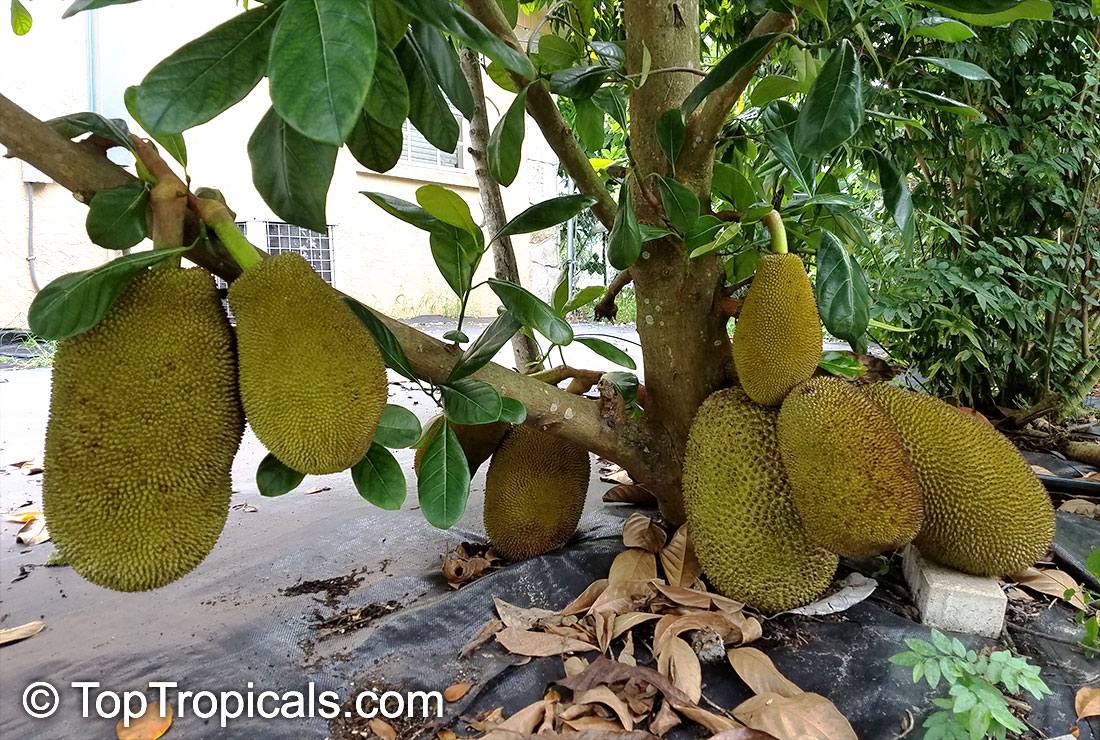
Jackfruit  fruit  at  the  base  of  the  tree

The Jackfruit tree (Artocarpus heterophyllus) is a striking, fast-growing tree known for producing the largest fruit grown on a tree, making it a showstopper in any garden. Nutrient-packed and often used as a meat substitute in South Asian cuisine, Jackfruit is also delicious in curries, chutneys, and as dehydrated chips. These trees grow quickly, have large waxy leaves, and can be maintained at a compact height of 7-8 feet, making them ideal for smaller spaces and easier cold protection. Despite being a tropical species, Jackfruit trees are relatively cold-tolerant and can survive light frost (although on the account of production volume), with established trees being more hardy than seedlings. Jackfruit trees begin producing fruit within 3-4 years from seed, and varieties come true to seed, eliminating the need for grafting, though it can be done for specific varieties.

10. Loquat Tree
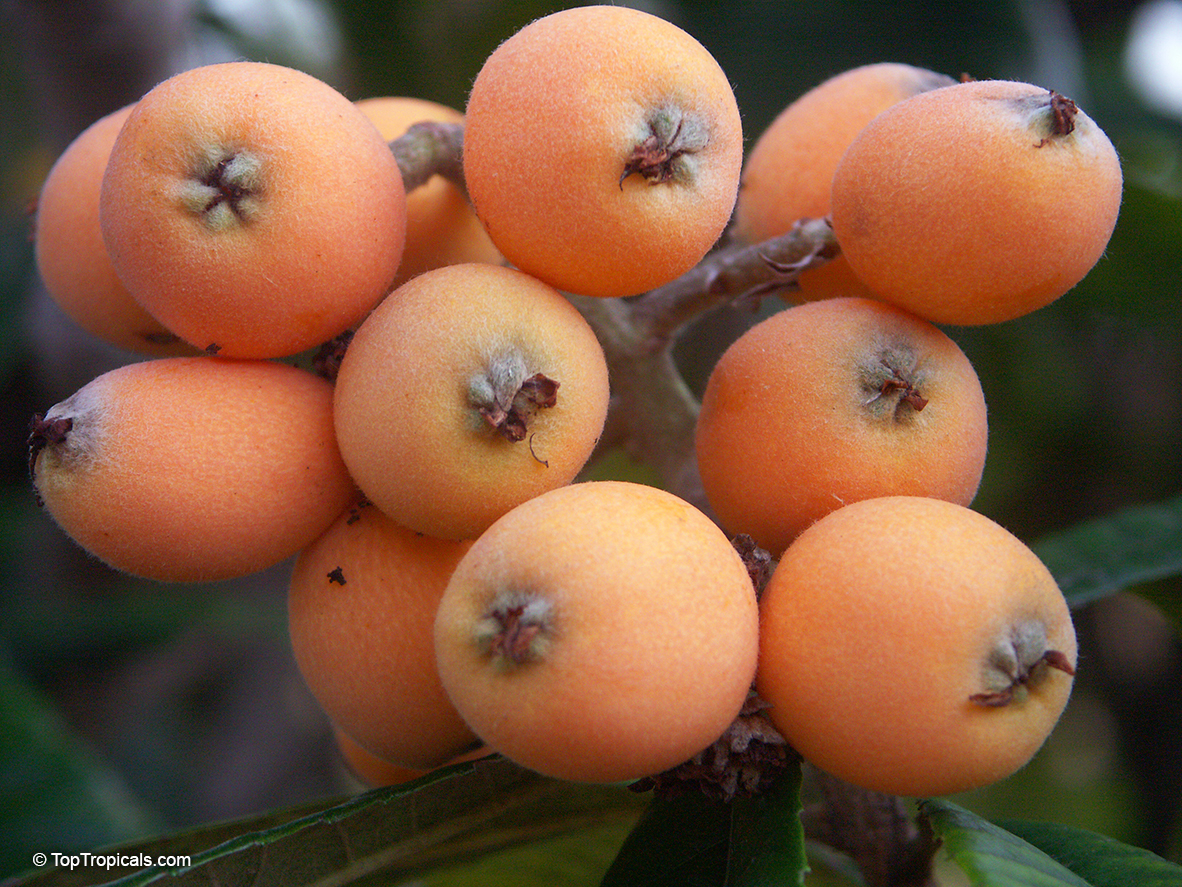
Loquat  fruit  on  a  branch

The Loquat tree (Eriobotrya japonica) is a fast-growing, drought-tolerant, and highly cold-hardy tropical fruit tree that thrives in Florida gardens. Loquats are heavy producers, with juicy, aromatic fruit that ripens from early spring to early summer, offering a delicious apricot-like flavor. This compact tree is perfect for small gardens, beginners, and those with limited space. Loquats are undemanding, thriving in any soil and withstanding summer heat, winter cold, heavy rains, and occasional flooding. Nutrient-rich, they are high in sugar, acids, vitamins B and C, minerals, and pectin. Loquats are versatile, enjoyed fresh or used in fruit salads, jams, jellies, chutneys, pies, sauces, and even wine-making, and they are often used as a natural sweetener.

Date: 21 Jun 2019

The Flower of Gold

By Onika Amell, tropical plant specialist

Q: I am concentrating on adding more fragrance to my garden. I've had great success growing gardenias and I have many different varieties, but their flowers are all white, and I would like to add some colors to my garden too. Are there any gardenias available in different colors? I live in Waipio Acres, Hawaii.

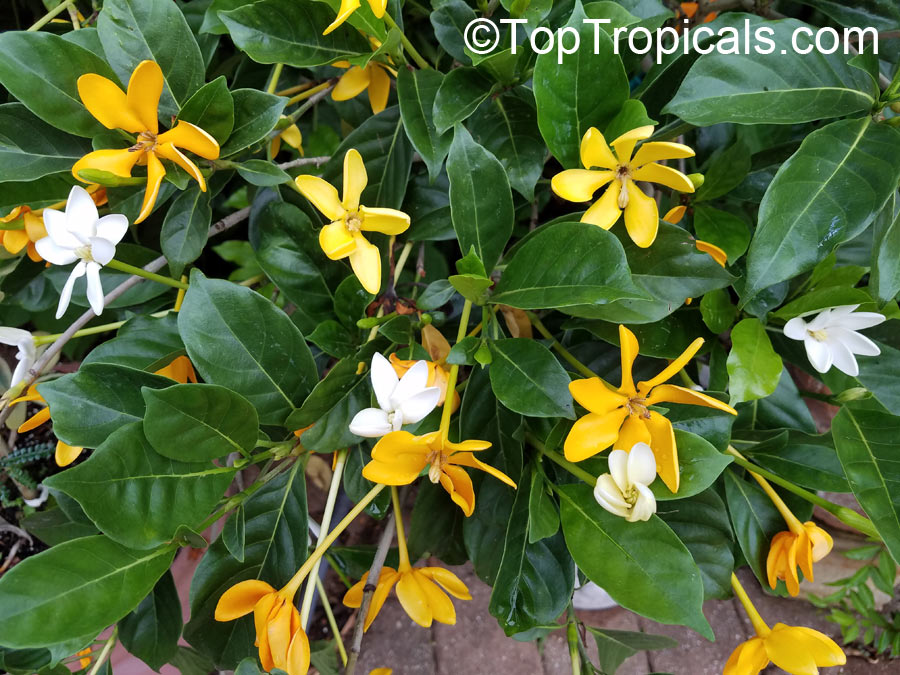
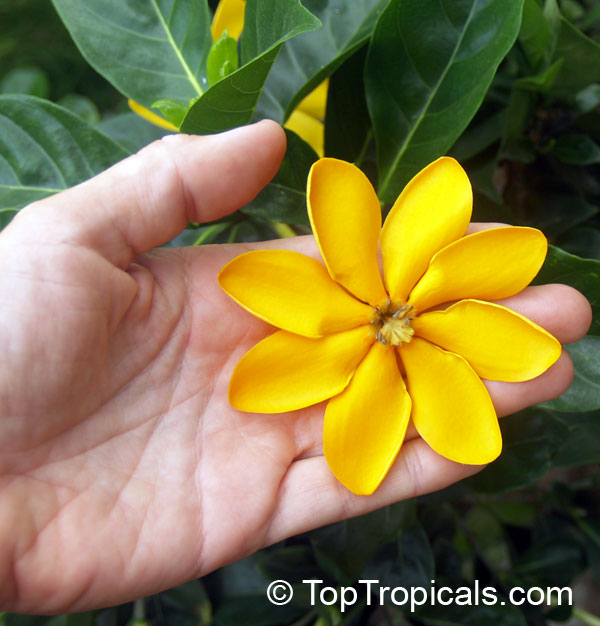
A: Meet the very rare and highly fragrant, tropical Gardenia tubifera Kula or Golden gardenia. Kula flowers change color as they mature, which is a unique feature! Kula flowers start out as cream, then change to yellow and finally to a beautiful gold. In addition to the spectacular flowers, this gardenia also has beautiful, leathery, deep green foliage.
This is a slow-growing and compact plant. Like all the other members in the Gardenia family, the Golden gardenia will do best in an acidic, well-drained, and fertile soil. It will appreciate a good deal of direct sunlight but will be very happy if provided with midday and afternoon shade. As with with gardenias, the more sunlight the more flowers.
It will eventually grow into a rounded shrub if left unpruned, but also can be trained into a small tree, maintainable to a height of under 7-8 feet. Blooms will appear from spring onward. Prune after flowering, this will encourage more flowers in a few months.
Gardeners living in colder areas, do not fret. Gardenias make perfect container plants and can be grown indoors in colder climates. Just be sure to provide high light when bringing them indoors.
The fragrance and changing colors of a Gardenia Kula is unforgettable. They are most fragrant near sunset and during early evening hours. Plant them near walks and patios where their lovely fragrance can be enjoyed.
This rare tropical Gardenia is sure to be a conversation piece in any garden. Great collector's plant!

Recommended fertilizers:
Pink N Good Daily Plant Food - Flower Booster
Tropical Allure - Smart-Release Booster

Limited time special offer:
Instant $5 OFF Golden Gardenia!

Date: 7 Aug 2025

Blackberry Jam Fruit - the sweetest surprise

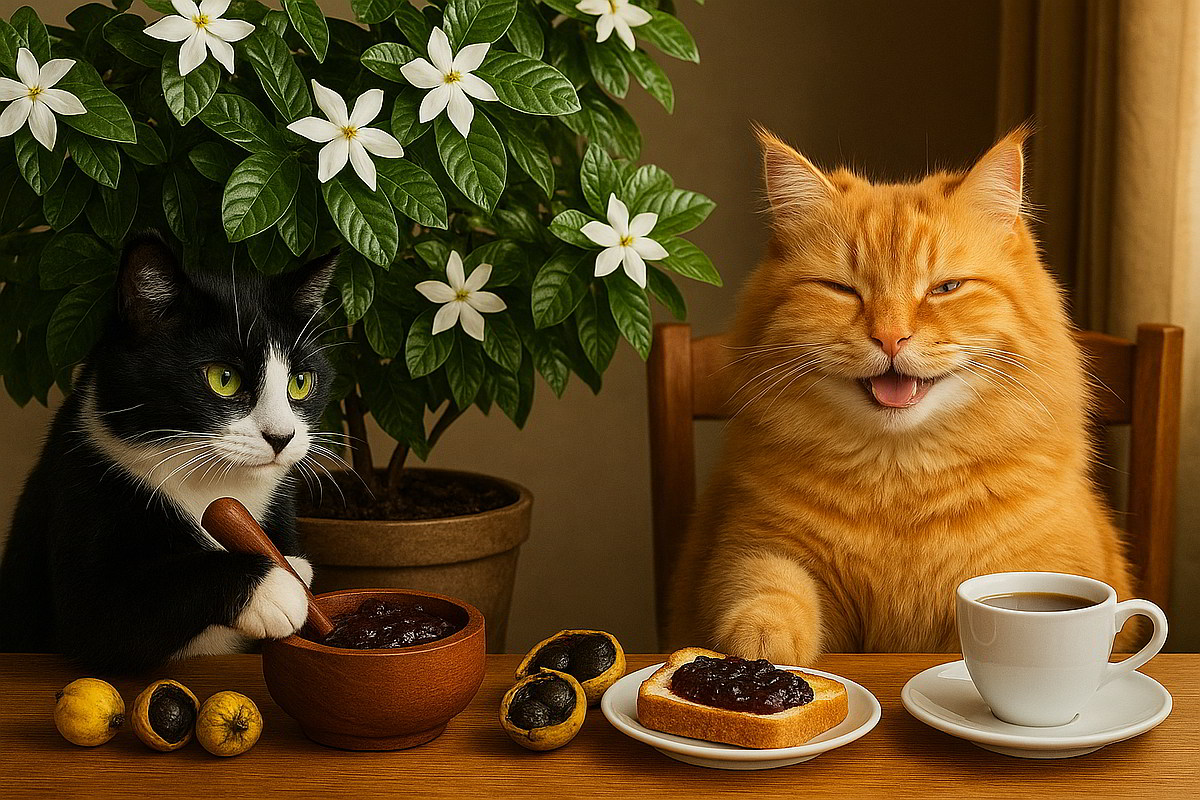
A  tuxedo  cat  making  jam  from  Blackberry  Jam  Fruit  (Randia  formosa)  while  an  orange  cat  smiles  in  a  chair,  sipping  tea  beside  a  large  flowering  Randia  plant  in  a  cozy,  sunlit  room.

Tea and Jam with the PeopleCats – A Tropical Afternoon Beneath the Randia

Meet the cats behind the jam! The tuxedo cat is none other than Google-the-cat - our beloved elder and one of the original cat-fathers of Top Tropicals PeopleCats.garden. At 18 years old, he’s still sharp, curious, and very much in charge. The orange fluffball? He represents the universal image of cat joy - and we’ve got a few real-life orange sunshine residents just like him.

Why do you include cats in a plant newsletter?

Because they’re part of the garden. Our rescued PeopleCats live among the plants, nap under the mango trees, inspect new arrivals, and occasionally steal a sunspot meant for seedlings. They’re not mascots — they’re part of our team. Sharing their presence is like showing a part of the soul of our space.🐈

Are the cat images real or AI-generated?

All our cats are real! We take lots of pictures and videos. And a few images are AI-generated illustrations inspired by our real PeopleCats.garden residents. While not literal photographs, they are creative interpretations that capture the spirit of our tropical home and its furry citizens.🐾

Are the stories about the cats true?

Mostly! The jam-making, tea-drinking, and greenhouse meetings are creative interpretations - but inspired by real personalities. We use AI scenes to bring their spirit to life. Real cats. Real plants. Imagined adventures.🐱

Watch Top Tropicals videos about PeopleCats

Shop Blackberry Jam Plants

Date: 19 Dec 2025

13 festive shrubs with bright flowers that bring color to your Winter Garden when everything else is dormant

13 festive shrubs for Winter Garden

13 festive shrubs for Winter Garden

💐 13 festive shrubs with bright flowers that bring color to your Winter Garden when everything else is dormant


Southern Living points to colorful berries as winter garden standbys. Tropical plants take it a step further, filling the cool season with real flowers, not just fruit. From vivid reds to electric blues, these plants prove winter does not have to be dull.

🌈 1. Gloxinia sylvatica - Bolivian Sunset


This plant waits for cool weather, then suddenly lights up the shade with fire-red blooms. Flowers appear almost overnight and continue through fall and winter. It rests in summer, returns in fall, spreads gently, and makes an easy, festive ground cover that is perfect for sharing.
👉 Learn more

🌈 2. Pereskia aculeata - Barbados gooseberry


An unusual vine that surprises in cool weather with delicate, star-shaped blooms followed by tasty fruit. It flowers steadily from fall through winter, adding light, airy color to fences and trellises when most vines are quiet.
👉 Learn more

🌈 3. Mansoa alliacea - garlic vine


Best known for its garlicky scent, this vine really shines in winter. Cooler temperatures bring clusters of lavender-purple flowers that brighten fences and trellises with very little effort.
👉 Learn more

🌈 4. Dombeya wallichii - tropical hydrangea


Large pink pompom blooms hang from bare branches in winter, creating a true holiday look. Lightly fragrant and impossible to miss, it brings hydrangea-style drama to the cool season.
👉 Learn more

🌈 5. Brunfelsia pauciflora Compacta - dwarf yesterday-today-tomorrow


Compact and cheerful, this shrub opens purple flowers that fade to lavender and white. The color shift makes it look like several plants blooming at once, perfect for pots or small garden spaces.
👉 Learn more

🌈 6. Clerodendrums


Long, cascading sprays of white flowers of Clerodendrum minahassae - fountain clerodendrum - spill from the plant during the cooler months. It brightens shaded areas and adds movement when the garden slows down. Most clerodendrums bloom through Winter!
👉 Learn more

🌈 7. Tibouchina multiflora - glory bush


Soft, fuzzy purple blooms cover this shrub in winter, backed by velvety leaves that look good year-round. It adds strong color and texture during the cool season.
👉 Learn more

🌈 8. Holmskioldia sanguinea - Chinese hat


Bright red, orange or yellow, hat-shaped bracts surround small flowers and hold their color through the cool months. The shape alone makes this shrub a standout in winter.
👉 Learn more

🌈 9. Barleria cristata - Philippine violet


This tough shrub blooms heavily in winter with rich purple flowers. It delivers dependable color when many plants take a break. There is a golden variety too!
👉 Learn more

🌈 10. Eranthemum pulchellum - blue sage, lead flower


Few plants offer true blue in winter. Electric-blue flower spikes appear in cool weather, adding rare color with minimal care.
👉 Learn more

🌈 11. Petrea volubilis - queen's wreath


In winter, this woody vine erupts into cascading sprays of lavender star-shaped flowers. It creates a wisteria-like effect right when the garden needs it most.
👉 Learn more

🌈 12. Tabebuia varieties - dwarf golden and dwarf pink


These trees save their show for winter, blooming on bare branches. Golden forms glow yellow, while pink varieties cover themselves in soft trumpet-shaped flowers.
👉 Learn more

🌈 13. Bauhinia trees - pink butterfly and Hong Kong orchid trees


Butterfly-shaped blooms open on leafless branches, giving bauhinias their signature winter elegance. The Hong Kong orchid tree stands out with especially large, vivid flowers.
👉 Learn more

🛒 Explore Winter bloomers

📚 Learn more:


8 best flowering trees that will bloom for you in Winter
Ten shrubs you need to have for winter colors
Cassia vs Bauhinia: which is better as an everblooming container tree?

#Hedges_with_benefits #Discover

🟢 Join 👉 TopTropicals

Date: 7 Mar 2026

SUNSHINE Boosters: The Professional Advantage

By Tatiana Anderson, Horticulture Expert at Top Tropicals with Smokey & Sunshine help

Sunshine  Boosters  plant  fertilizers  lineup  including  Bloom,  Pikake, 
 Robusta,  Omnibus,  Ananas,  Mango  Tango,  Citrus,  and  MegaFlor

Sunshine Boosters for different types of plants

Here is why SUNSHINE Boosters are the smart choice for your garden this spring:

  • Amino Acid Stability: Unlike traditional fertilizers that use synthetic EDTA chelators, our formulas are amino-acid based. This means 100% of the nutrients are bioavailable and consumed by the plant, leaving zero toxic residues or salt build-up in your soil.
  • Safe for Every Watering: Because our concentrations are scientifically balanced and mild, they are safe for daily use. This eliminates the "feast or famine" cycle of dry fertilizers and prevents accidental root burn.
  • Pure Taste for Edibles: Our delicate formulas do not contain excess salts, urea, or ammonium salts that can ruin the flavor of your harvest. Your fruit and vegetables will retain their pure, natural taste.
  • Pollinator Friendly: Our boosters are designed to be safe for honeybees and other beneficial insects, making them the responsible choice for an organic-style garden.

🌿For Potted Plants: Breaking the "Foodless" Cycle

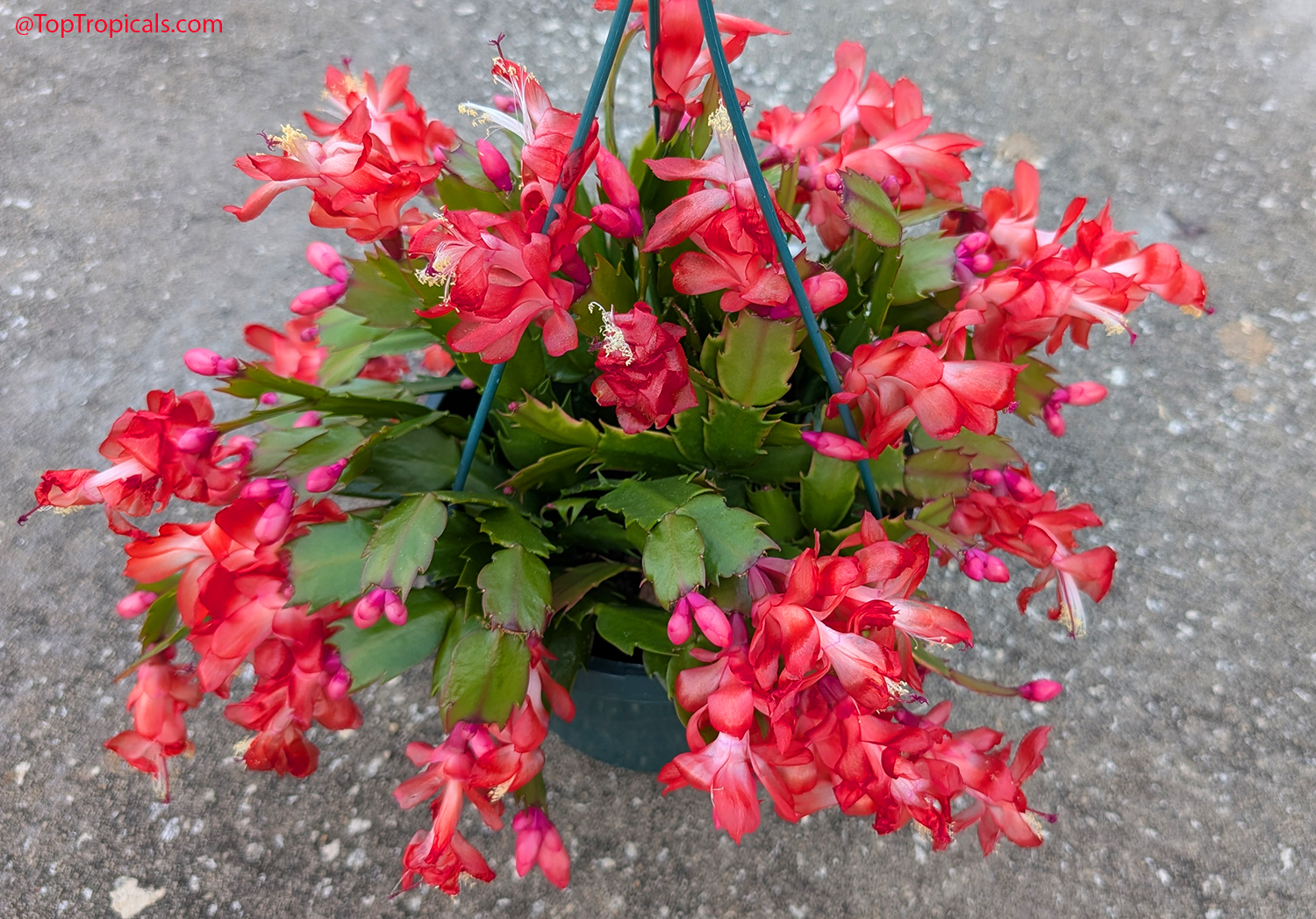
Schlumbergera  Christmas  cactus  with  abundant  red  blooms  after  feeding 
 with  Sunshine  Megaflor  fertilizer

Schlumbergera - Christmas cactus - after boosting flowers with Sunshine Megaflor

Container-grown plants are trapped in soilless mixes (peat, bark, perlite) that are structurally great but naturally nutrient-deficient.

  • Total Nutrition: Since pots lack the natural "buffet" of the ground, SUNSHINE Boosters™ provide every essential mineral the plant cannot find on its own.
  • No Salt Build-up: Our amino-acid based formulas are consumed entirely by the plant, leaving zero toxic residue or root-burning salts behind.
  • Daily Safety: Our mild concentrations eliminate the "feast or famine" cycle of dry fertilizers, making them safe for use with every single watering.

For In-Ground Plants: Unlocking the Soil

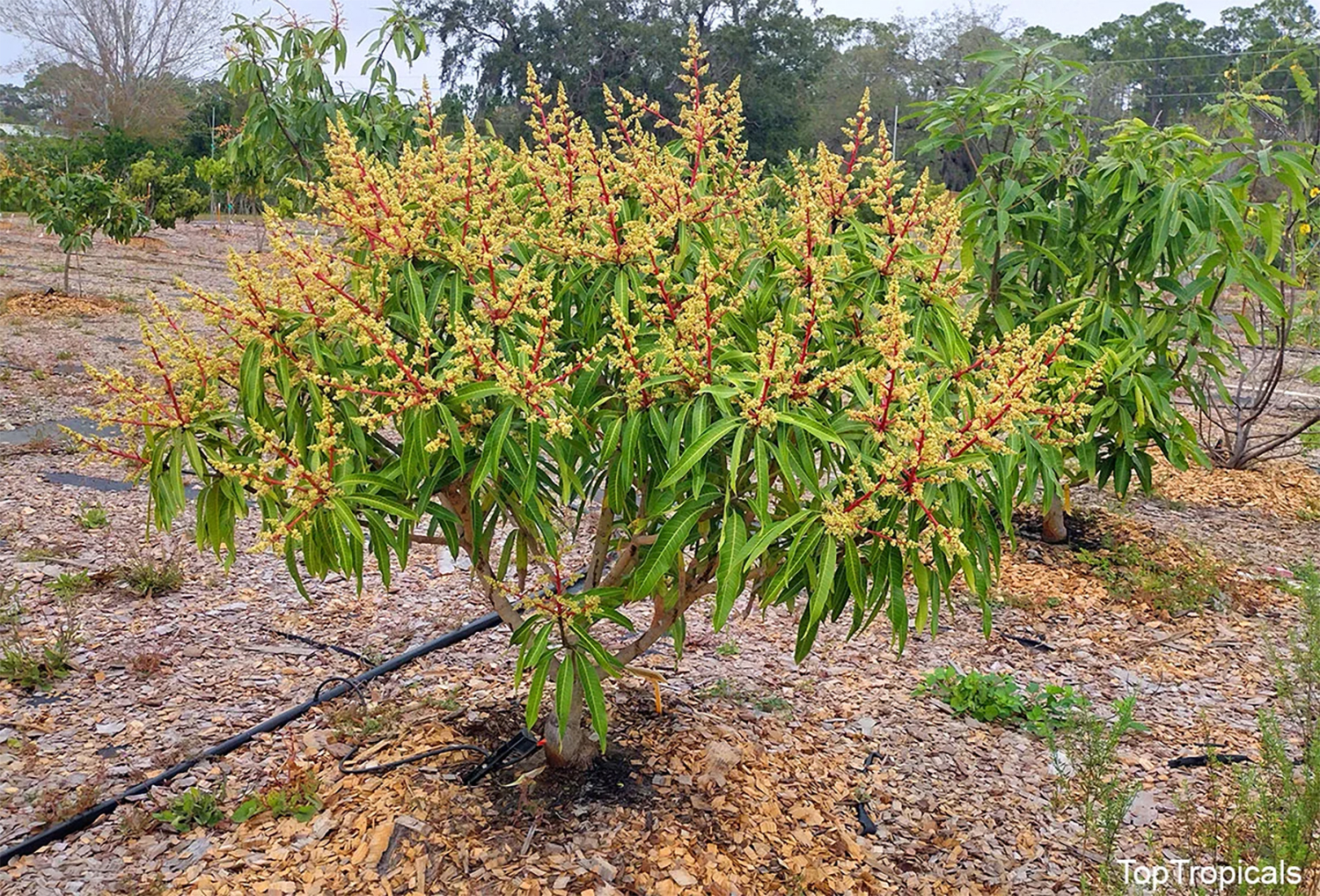
Mango  tree  blooming  produsely  after  applying  Sunshine  Mango  Tango 
 Booster

Mango tree blooming produsely after applying Sunshine Mango Tango Booster

Even in the ground, plants often struggle to absorb what they need because soil compounds can "lock up" nutrients.

  • Enhanced Solubility: SUNSHINE Boosters create a slightly acidic environment that helps dissolve stubborn salts in the soil, making them accessible to roots again.
  • Precision Delivery: We provide mobile elements like Nitrogen precisely when the plant needs to push new spring growth.

🌿The Foliar Advantage: Direct-to-Leaf Delivery

Did you know a plant leaf can absorb nutrients even more efficiently than the roots? Foliar feeding is your "emergency button" for instant results.

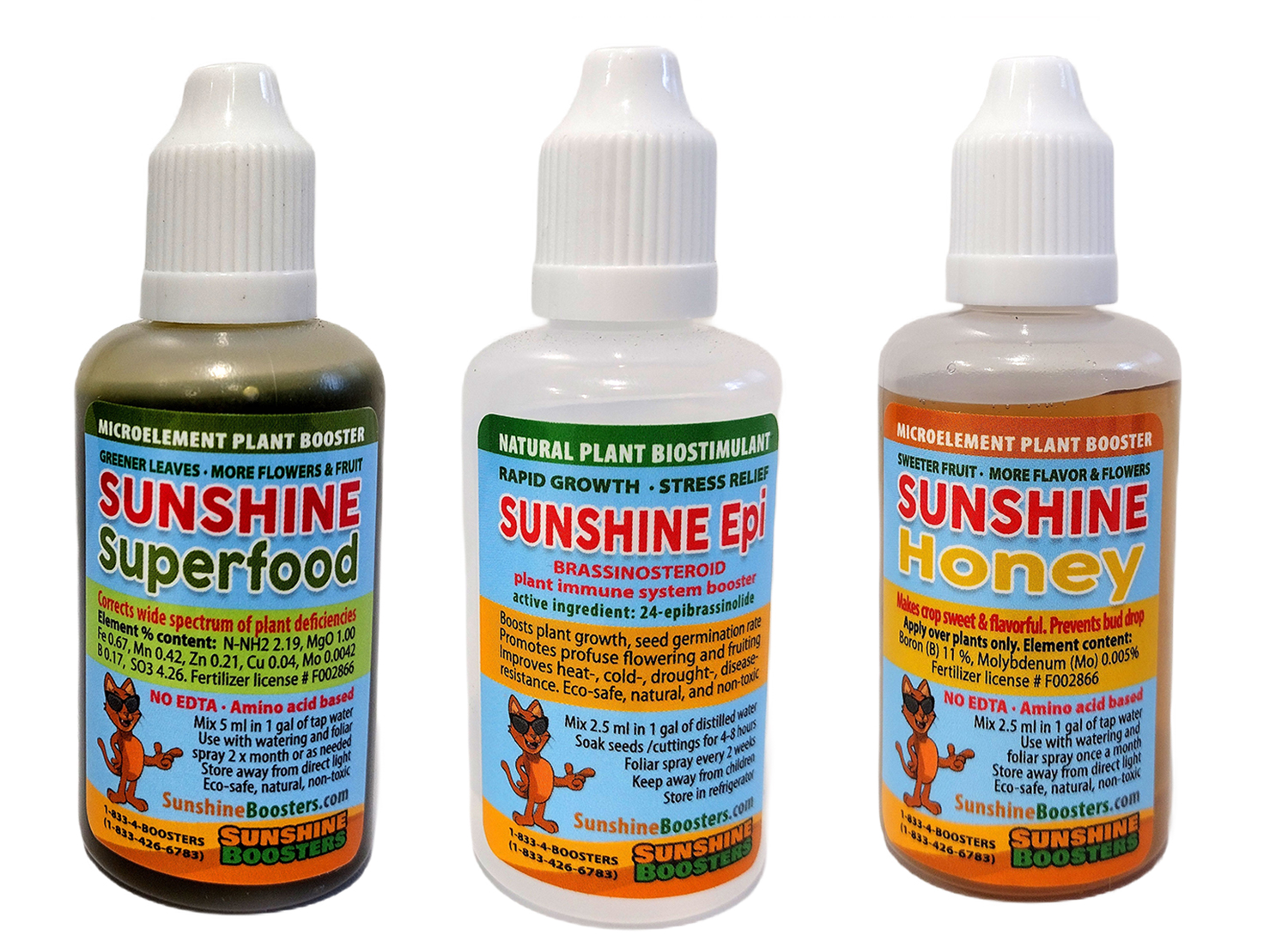
  • Quick Fix: Foliar applications with Sunshine Superfood are the fastest way to correct yellowing leaves or visible deficiencies.
  • Metabolism Boost: Sprays like SUNSHINE-Epi act as a bio-regulator, helping plants recover from the stress of spring temperature swings.
  • Better Fruit: SUNSHINE Honey is applied to leaves to naturally move sugars to the fruit, increasing sweetness and flavor.

🌿The Calcium Problem: Solved

As your plants wake up this Spring, they need structural strength. Think of Calcium as the "cement" that holds plant cells together. Without it, new spring growth is doomed to fail.

Signs Your Plant is Starving for Calcium:

  • Deformed Leaves: New growth looks twisted, hooked, or curled.
  • Blackened Tips: The very edges of young leaves turn white, then quickly blacken and die.

The Industry Secret: The "Missing" Mineral

Most fertilizers, both dry and liquid, completely skip Calcium. Why? Because it’s a chemical nightmare to keep stable in a concentrated solution. Most manufacturers rely on your irrigation water to deliver Calcium, but tap water is inconsistent and often fails to provide what a hungry, growing plant needs.

The SUNSHINE Boosters: Stable Calcium in Every Bottle

We have successfully stabilized Calcium directly into every single Sunshine Booster formula. Whether you are using Bombino, Robusta, or Megaflor, you are delivering a precise, stable dose of Calcium with every watering. No lockout, no sediment, and no relying on the "luck" of your tap water. Just strong, healthy cell walls and perfect spring growth.

🌿SUNSHINE-Epi: The Year-Round Bio-Regulator

Whether it’s the transition of spring, the extreme heat of summer, or the dry air of indoor wintering, SUNSHINE-Epi is your plant’s primary defense. This natural Brassinosteroid acts as a powerful immune booster, helping plants navigate stress wherever it comes from.

  • Universal Stress Shield: Protects against temperature swings (both heat and cold), drought, and transplant shock.
  • Vigorous Development: Dramatically improves root growth and speeds up the metabolism of young seedlings and cuttings.
  • Eco-Safe: 100% non-toxic to humans, pets, and pollinators.

Note: While Epi is highly effective, it is a performance booster, not a substitute for proper care. It works best when paired with the right light, water, and a consistent feeding program. It won't bring a dead plant back to life, but it will help a struggling one find its footing.

🛒 Feed your plants

Don't let your garden wake up to an empty nutrition plate.
Smokey: Save your gas money for donuts. We're shipping the boosters for free.
Sunshine: Agreed. My charm covers the delivery cost.

No coupon code required: The free shipping is automatically applied at checkout.

Complete Nutrition: Stock up on Robusta, Superfood, and Epi for the Spring growth push.
Offer valid through 03/14/2026. Free shipping offer is valid on SUNSHINE Boosters liquid products only. Not valid on previous purchases and cannot be combined with any other offers, coupons, or discounts. Offer subject to change or cancellation without notice.

Sunshine  Boosters  plant  supplements  including  Superfood  micro  element 
 complex,  Epi  biostimulant,  and  Honey  fruit  enhancer

Sunshine Boosters micro elements and supplements - Superfood micro-element complex, Sunshine Epi biostimulant and Sunshine Honey supplement for better fruit

❓Frequently Asked Questions: SUNSHINE Boosters™

  • What water should I use for foliar spraying?
    Tap water works perfectly for most. However, if your water is very "hard" (leaving white mineral spots on leaves), switch to distilled water for a cleaner finish and better absorption.
  • How long does a diluted solution last?
    For maximum potency and to avoid nutrient degradation, try to use your diluted mixture within a few hours of preparation. Keep away from direct sun. Fresh is always best!
  • Can I use SUNSHINE Boosters as a daily foliar spray?
    Yes! You can mist your plants daily to maintain high vigor, but you must reduce the dosage (use half the recommended strength) to avoid over-feeding.
  • Can I mix boosters with pesticides or fungicides?
    It is best to apply them separately. Mixing fertilizers with chemical pesticides in one tank can trigger reactions that "lock out" nutrients or reduce the efficacy of the treatment.
  • Will the liquid stain my patio or hands?
    No. Unlike traditional fertilizers with heavy blue or pink dyes, our solutions are clear or very light-colored. If you spill it, simply rinse with water—no stains, no mess.
  • Can I mix different SUNSHINE Boosters together in one sprayer?
    Yes. All SUNSHINE Boosters are chemically compatible. You can combine a "growth" booster like Robusta with a "micro-element" complex like Superfood in the same water to save time.
  • Are these products safe to use around my pets?
    Absolutely. Our formulas are 100% non-toxic and amino-acid based. Just ask Smokey and Sunshine—they are perfectly safe for households with curious cats, dogs, and children.
  • Can I use these boosters on indoor plants?
    Yes. They are ideal for indoor use because they don't produce a "fertilizer smell" and won't cause salt crusting on your decorative pots or furniture.
  • Is it safe to use on fruit and vegetables I plan to eat?
    Yes. Because our formulas contain no urea, nitrates, or harsh salts, they don't leave a "chemical" aftertaste. They actually help improve the natural sugars and flavor profile of your harvest.
  • What is the best temperature for foliar spraying?
    Apply when temperatures are below 85°F. Early morning or late evening is best; this allows the leaves to remain wet longer, giving the plant more time to absorb the nutrients.

What Fertilizer to Use and How?

Green Magic controlled release fertilizer keeps plants green during active growth season - apply only once in 6 months.
Sunshine: Smokey, you saved my coffee tree. But what do I do now so it stays happy?

Smokey: Simple. Spray Sunshine Robusta every five days during active growth.

Sunshine: Five days? Smokey, I barely remember where I left my coffee mug five minutes ago.

Smokey: That is exactly why we use Green Magic.

Sunshine: Fertilizer for forgetful gardeners?

Smokey: Controlled release. Sprinkle once and it feeds the plant for six months.

Sunshine: Six months? I can have a very good nap in that time.

Smokey: Exactly. The plant keeps eating slowly while you keep napping.

Sunshine: Perfect. Remember, I will bring the coffee. You bring the donuts.

Smokey: And next week we will show you exactly how Green Magic works and why plants love it. Stay tuned.

🛒 Feed your plants

✍️ Learn more about fertilizers