Garden Blog - Top Tropicals

Date: 21 Aug 2025

🍒 Tropical Cherries – Eugenias

Two  cats  enjoy  Grumichama  fruit  indoors  —  a  tuxedo  cat  picks  berries  from  a  potted  tree  while  an  orange  fluffy  cat  smiles,  sitting  by  tea  cups  and  plates  of 


fruit.

Tropical Tea Time with Grumichama

Eugenias have earned a spot in many Southern gardens because they’re easy, dependable, and surprisingly versatile. These small trees and shrubs grow well in the ground or in containers, and they don’t waste time before setting fruit.

15% Off Eugenias – Limited Time

Use code EUGENIA15 at checkout.
Excluding S/H. Offer expires 08/28/2025

👍 Popular Choices:


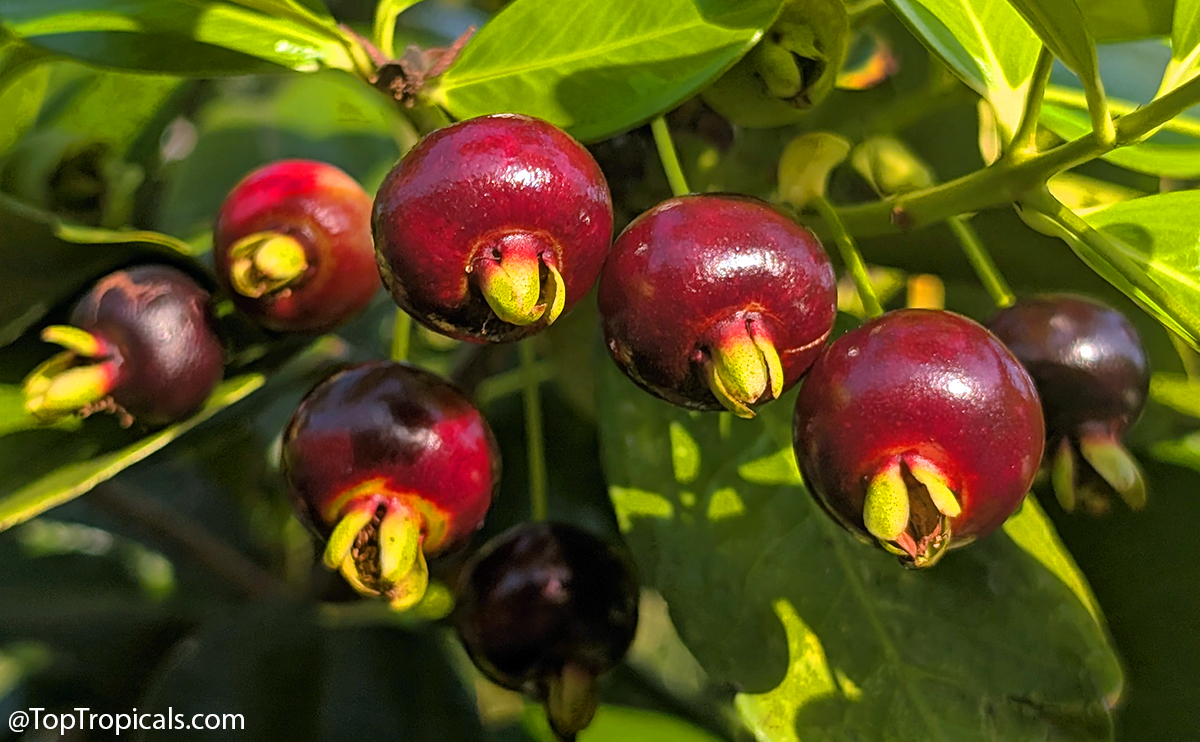
Eugenia  aggregata  Fruit  plant,  Cherry  of  the  Rio 


Grande
4148 Eugenia aggregata Fruit plant, Cherry of the Rio Grande
Grown in
6"/1 gal pot

$49.95
  
Sale $39.95


Buy  Eugenia  aggregata  Fruit  plant,  Cherry  of  the  Rio  Grande   from  Top 


Tropicals

Eugenia  brasiliensis  fruit  tree  -  Grumichama
1079 Eugenia brasiliensis fruit tree - Grumichama
Grown in
6"/1 gal or larger pot

$39.95


Buy  Eugenia  brasiliensis  fruit  tree  -  Grumichama   from  Top  Tropicals

What Makes Eugenia Cherries Stand Out

  • Start producing fruit in just a couple of years
  • Compact size — easy to keep 6–12 ft tall, smaller in pots
  • Low-care — tolerant of most soils and resistant to common pests
  • Strong in hot weather, yet can handle a light frost down to the mid-20s °F
  • Plenty of fruit for people and birds alike

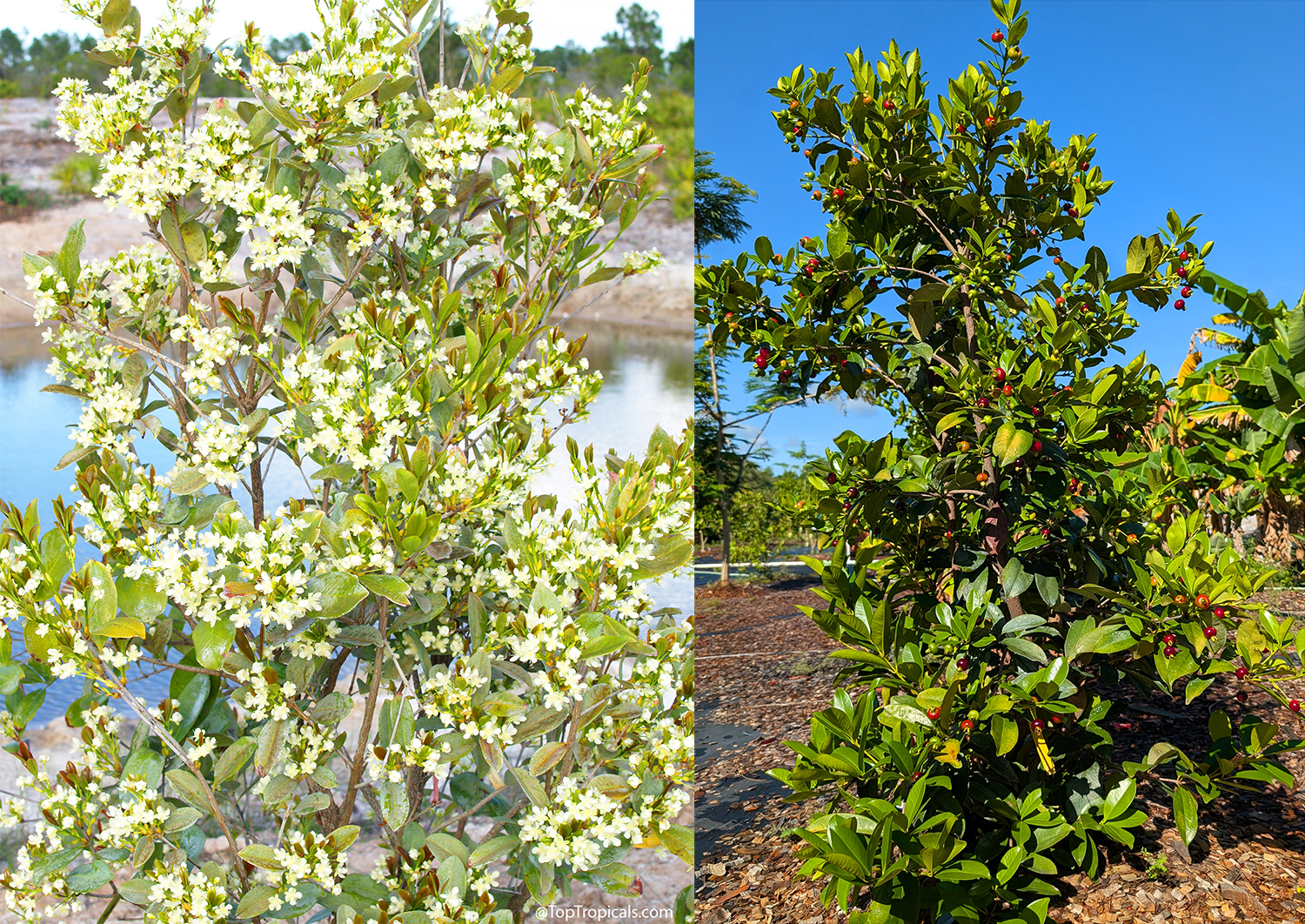
Close-up  of  Grumichama  tree  branches  with  clusters  of  small  white  flowers  among  glossy  green 


leaves. Grumichama Tree in Bloom – Eugenia brasiliensis

Growing & Care

Outdoors

  • Best in USDA Zones 9–11
  • Sun or partial shade; more sun usually means sweeter fruit
  • Plant in well-drained soil; avoid heavy, wet spots
  • Withstands summer heat and humidity, and can take a light freeze

Container / Indoor

  • Do well in 5–10 gallon pots on patios or balconies
  • Need bright light indoors — a sunny window or grow lights
  • Can flower and fruit in containers if kept warm and well lit
  • In cooler zones, bring plants indoors for winter and back out in spring

General Care

  • Water: Keep soil evenly moist; drought-tolerant once established but best yields with regular watering
  • Soil: Use good potting mix - LINK TO SOIL
  • Fertilizer: Balanced slow-release LINKL TO FERTILIZER Sunshine Boosters
  • Pruning: Light trimming keeps plants bushy and productive
  • Pollination: Self-fertile; one plant will fruit on its own

Read Garden Blog about Tropical Cherries

Shop Tropical Cherries

Date: 22 Oct 2025

Detailed Cassia and Bauhinia Care Guide

Young  Bauhinia  monandra  tree  blooming  with  clusters  of  pink  and  white 


orchid-like  flowers,  growing  at  Top  Tropicals  nursery  with  fresh  mulch  and 


drip  irrigation 


setup

Outdoor Cassia and Bauhinia Care

  • Light: Both Cassia and Bauhinia need at least 6 hours of direct sunlight daily. Cassias handle intense heat; Bauhinias can take light afternoon shade.
  • Soil: Use loose, fast-draining soil. Mix equal parts garden soil, coarse sand, and compost.
  • Watering: Keep evenly moist but never soggy. Cassias tolerate dry spells once established; Bauhinias prefer steady moisture. Water when the top inch feels dry.
  • Feeding: For profuse flowering, feed with liquid Sunshine Boosters Megaflor that is safe to use with every watering, year around. You may also apply Green Magic controlled release fertilizer every 6 months. Bauhinias and Cassias respond quickly to feeding.
  • Pruning: After flowering, prune lightly to shape and remove dead tips. Cassias can be trimmed to shrub form; Bauhinias stay bushy with pinching.
  • Mulch: Add a 2-inch mulch layer around the base to conserve moisture and prevent weeds, but keep mulch off the trunk.
  • Cold protection: Most Cassias handle brief frost; some Bauhinias like B. acuminata and B. monandra must be sheltered below freezing. For cold nights, cover with frost cloth or move containers into shelter.
  • Dormancy: Outside of tropics, most Bauhinias drop leaves in winter for a short period of time, right before flowering and are called "semi-deciduous". Cassias stay evergreen.

Indoor or Porch Care (cool-climate growers)

  • Container: Choose a sturdy pot with several drainage holes, one size larger than the root ball. Unglazed clay or thick plastic pots work best for heat regulation. Use a light, well-drained mix such as professional soilless mix Abundance. Both Cassias and Bauhinias dislike soggy roots. Add a thin layer of coarse gravel at the bottom to improve drainage. Repot every 1–2 years in spring
  • Light: Brightest spot possible - south-facing window or heated sunroom. Supplement with a grow light if sunlight is weak.
  • Temperature: Keep potted trees in warm environment for best results. The optimum temperature for Cassias and Bauhinias is between 60–85 F, although many species can tolerate cooler temperatures. Avoid cold drafts and sudden drops.
  • Humidity: Average indoor humidity is fine; occasional misting keeps foliage glossy.
  • Watering: Water sparingly in winter when growth slows; allow the top inch to dry between waterings. Do not let roots sit in water.
  • Fertilizing: Feed with Sunshine Boosters Megaflor that is safe to use with every watering, year around, to maintain flowering indoors. You may also apply Green Magic controlled release fertilizer every 6 months.
  • Pest watch: Check undersides of leaves for aphids or whitefly. A light spray of neem oil or insecticidal soap clears them fast.

"Whether you crave golden summer fireworks or soft orchid blooms that last nearly all year, both Cassia and Bauhinia bring pure joy to the garden. 💖 Bring color that never quits."

Did you know: Fall is the best planting season — roots grow faster and you’ll have flowers by spring!

✔️ Fall Planting Guide

🛒 Shop Tropical Flowering trees

Date: 4 Dec 2021

Sunday Breakfast with Peanut Butter and Blackberry Jam...

It's time for our favorite day and another Easy stroll through Top Tropicals' Garden with savings of 50% and MORE! What a wonderful way to start the day.

Speaking of wonderful, is there any memory as wonderful as a peanut butter and jelly sandwich from back in the day?! PB&J's, a true Classic, easy, savory and delicious and a universal favorite... And for a truly Top Tropicals variation of the Classic sandwich, have we got something special for you...
Bunchosia argentea and Randia Formosa. OK, we admit it may not roll off the tongue quite as easily as PB&J, but your tongue and taste buds will be thankful for the delicious flavors of the Peanut Butter Fruit Tree - Bunchosia argentea, and Blackberry Jam Fruit - Randia formosa.

Combine the rich and creamy delicious Peanut Butter with the not too sweet and fresh pulp of the Blackberry Jam Fruit and you have a unique and tasty combination destined to be a classic of its own while making your garden look even more beautiful!

Saving on your favorite plants is Easy.
Easy like Sunday Morning...

For this Easy Sunday we have priced these at incredible savings:
The Peanut Butter Tree, regularly $49, is on Easy Sunday sale for only $24
The Blackberry Jam, regularly $39, is on Easy Sunday Sale for only $19

Classic Combination

Combine the two for your own Classic Combination and save even more, instead of full price $88, it's only only $39 for the set!

Blackberry Jam Fruit

Randia formosa - Blackberry jam fruit, Jasmin de Rosa - fragrant white flowers of this Gardenia relative and edible fruit that tastes like blackberry jam... Kids love the fruit! Many claim that it's even better than preserves. This exotic shrub will fruit in a container within a year and produces as many as 25 to 30 fruits at a time. It is relatively cold hardy, blooms for a few months in the fall and winter, so fruiting and flowering can be enjoyed when many other plants are dormant.

Picture of 2 y.o. plant full of fragrant flowers, ready to set fruit:

Peanut Butter Tree

Bunchosia argentea - Peanut Butter Tree.
One of the most fascinating exotic fruit, as amazing as Miracle fruit, Peanut Butter Fruit is loved by both kids and adults. Yes, it tastes exactly like peanut butter! Sweet, soft pulp with peanut flavor. The tree is small in size, grows 10-15 ft max, or can be kept as a bush. Starts fruiting within 2-3 years from seed! Keep it in a pot if you have limited space, it can be grown indoors, too. The fruit can be eaten fresh or made into milk shakes. Very rare in cultivation, and relatively cold hardy.

Picture of 2 y.o. tree full of fruit:

Remember, the special prices are good for only 24 hours and expire Monday morning at 7 am EST.
Limited to availability, while supply lasts, hurry up!

Enjoy!

Date: 18 Feb 2025

Unlock Your Carefree Tropical Paradise:
Discover Our Useful Succulent Sale!

Red  plumeria  flower

Beautiful flowers and Edibles

It's no secret that everyone's dream plant is the one that requires little to no care yet still blesses us with the beauty of flowers or the bounty of fruits. Does such a plant exist? Some might say, "Sure, get a plastic one!" But the truth is, some tropical plants, which typically need a lot of water and nourishment, can thrive with minimal effort.

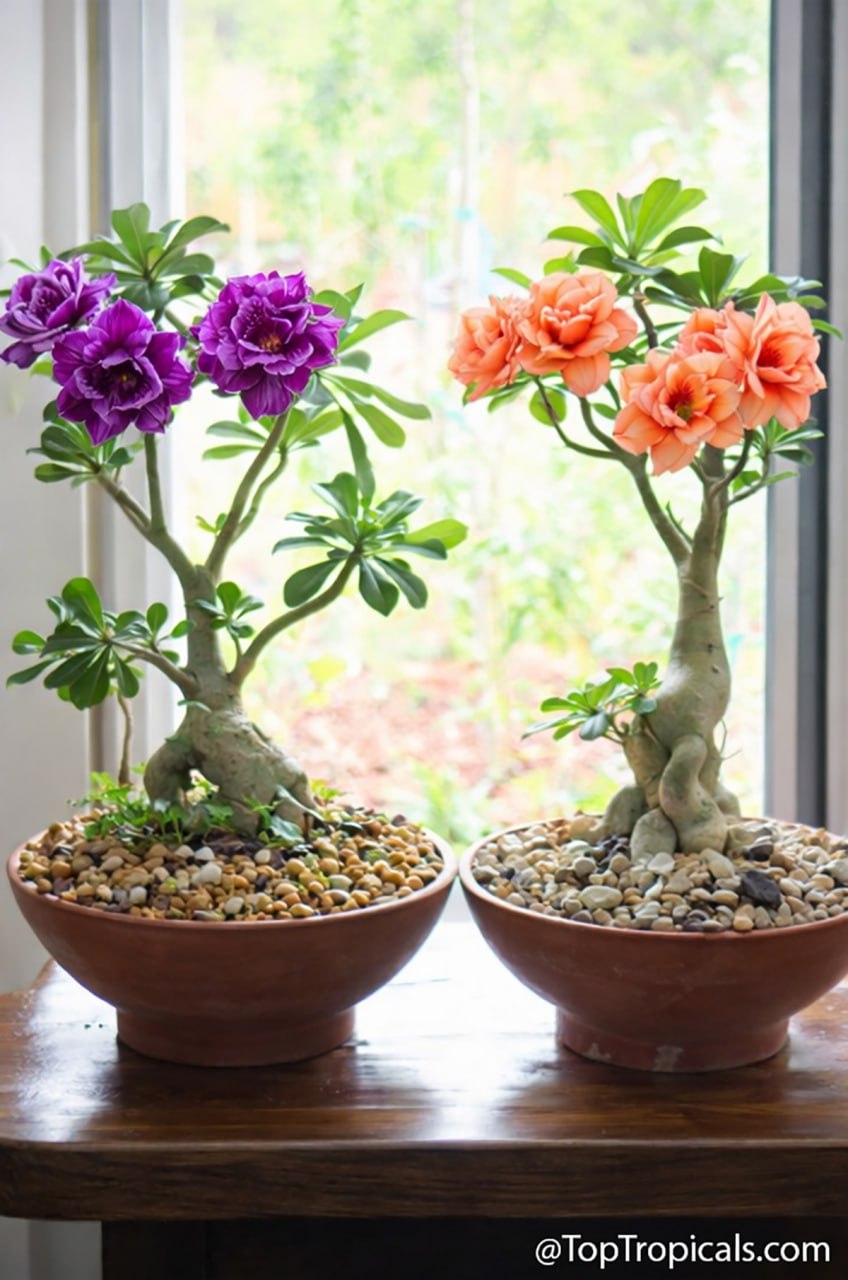
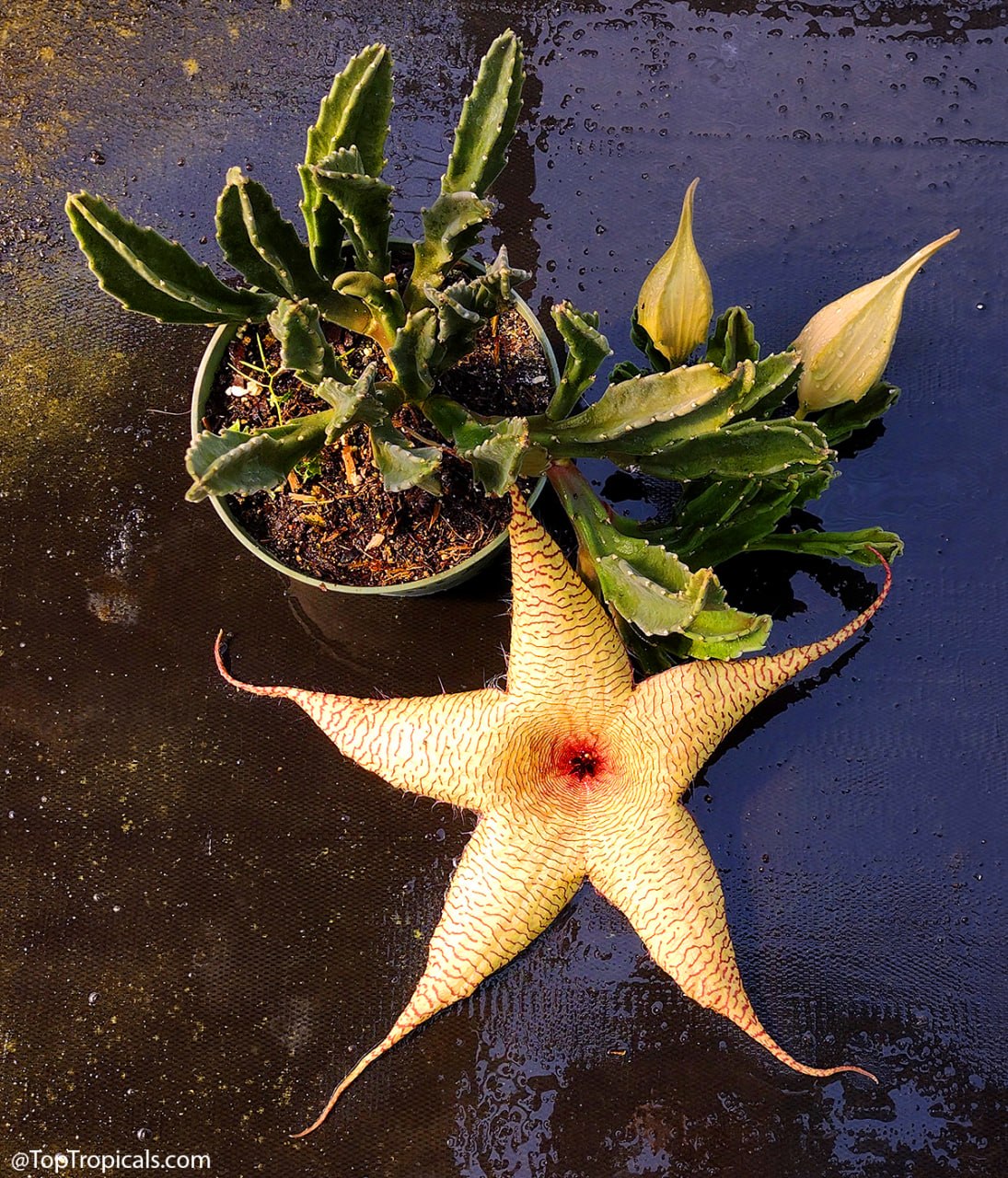
Dive into our Useful Succulent Sale, where you'll find plants like the enchanting Plumerias, the striking Adeniums (Desert Roses) and Starfish Flower, fragrant Epiphyllums (Queen of the night), delicious Dragon Fruits, and exotic Barbados Gooseberries that promise a low-maintenance slice of paradise. These hardy succulents need just sunshine, occasional watering, and a splash of our liquid Sunshine Boosters for flourishing flowers and fruits. Take advantage of our INSTANT 15% discount on all these splendid succulents - one week only!

Instant 15% discount to start your carefree tropical garden today!

No code required!

No min order. Exp. 2-25-25

Reminder: use our FREE and DISCOUNTED SHIPPING for qualified orders

Dragon  fruit  cat

Dragon Fruit, or Pitaya - a striking member of the cactus family known for its spectacular night-blooming flowers and vibrant fruit. This climbing cactus can stretch up to 30 feet, producing fruit with flesh in shades of white, red, or magenta. Rich in antioxidants, it offers health benefits such as reducing the risk of cancer and heart disease. A staple in both traditional and modern cuisine, it's featured in products from major brands like Tropicana and Snapple. According to the legend the fruit was created thousands of years ago by fire breathing dragons.

Epiphyllum  oxypetalum  -  Queen  of  the  Night

Epiphyllum oxypetalum - Queen of the Night - exotic cactus from tropical rainforests with large, meaty leaves and spectacular, huge white flowers that bloom nocturnally, filling the night with their powerful fragrance. A truly mesmerizing addition to any Southern or indoor garden.

Stapelia  gigantea  -  Starfish  Flower

Starfish Flower (Stapelia gigantea), or Zulu Giant - Large, up to 12" wide flowers in shape of Star Fish. The plant looks like a cactus, but it's really not, belonging to Milkweed family. Makes a stunning container plant and a conversation piece!

Date: 14 Jul 2019

A Cup of Tea Plant

By Onika Amell, tropical plant specialist

A: I live in Ave Maria, Florida. I want to try my hand at growing my own tea. Which plant do I need?

A: Most people do not realize they are actually enjoying camellias when they sip their cup of tea. True tea comes from the Camellia sinensis plant, an evergreen shrub or small tree.
In the fall and winter, the plant will produce small white flowers with a lovely fragrance. The foliage is shiny and dark green with a very nice informal and open look. Camellia sinensis (or tea plant, as it is commonly known) prefers a temperature between 65 and 86 degrees, which makes Florida an ideal area to grow them. However, if you live in colder zones, you can certainly succeed growing your own tea plants using a greenhouse. Alternatively, you can use containers which can be brought inside when temperatures start falling. Tea plants will usually survive a very slight freeze, though the leaves may be damaged or killed. It will not tolerate a hard freeze. They prefer full sun or light shade in the garden.
Tea plants will become small trees or large bushes if not pruned. Hardcore tea growers trim back the shoots repeatedly to a height of around 4 feet to encourage new growth and to contain the size.
Make sure to pick an area of your landscape where it does not flood or remain wet during our rainy season. Camellia sinensis does not like wet feet at all. They prefer well-drained, sandy and slightly acidic soil. If grown in a container, add some sphagnum moss to the potting mix. They will benefit from frequent applications of small amounts of fertilizer.
You will need some patience, too. Your plant should be around 3 years old before you start harvesting leaves.

Recommended fertilizers:

Tropical Greenhouse Plus - Plant Booster
Tropical Allure - Smart-Release Booster

Harvesting recipes

Now that you know how to grow the Tea, you need to check this out: the Harvesting recipes how to harvest and make different kinds of real tea: Green Tea, Japanese Style Green Tea, Oolong Tea, Black Tea, Orthodox Indian Tea... Continue reading...