Garden Blog - Top Tropicals

Date: 23 May 2020

Perfumed Milky Way Tree

Stemmadenia litoralis

by Onika Amell, tropical plant expert

What is a garden without fragrance? Unknown to so many gardeners because of its rarity, the Milky Way tree or Stemmadenia litoralis is one of those trees that are simply unforgettable. This is without a doubt one of the most fragrant flowering trees you can plant in the tropics or warm greenhouse conditions...
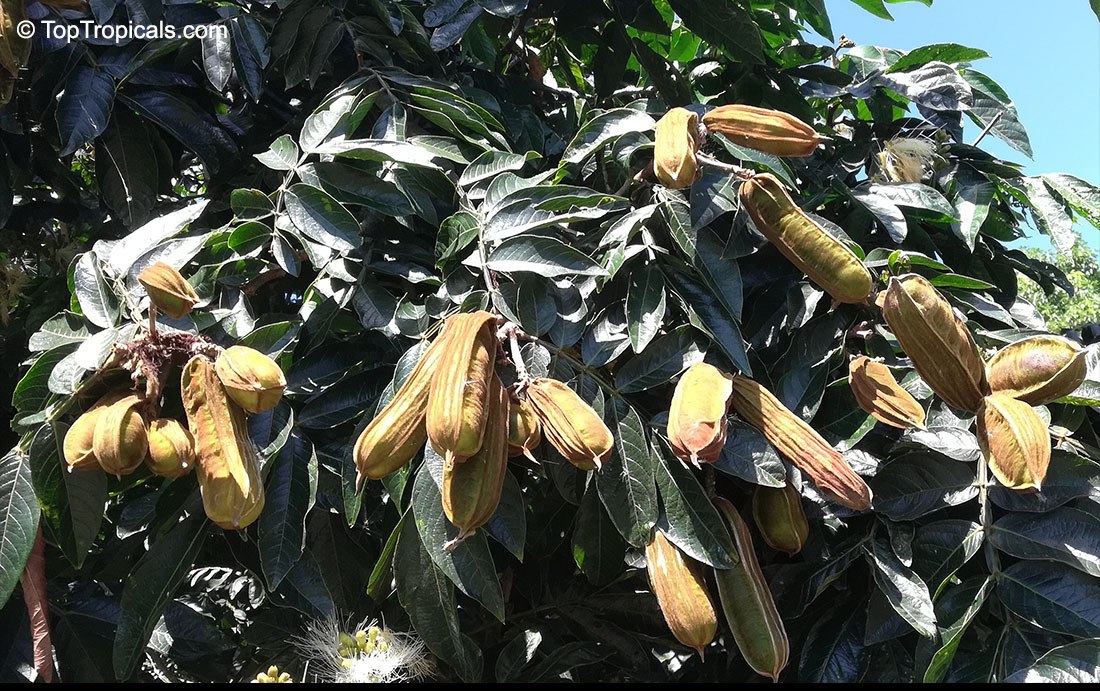
When this tree is in full bloom, masses of large, white, tornado-shaped flowers cover the branches. The fragrance is something to behold… soft, vanilla sweet and musky. Leaves are dark green and sparkly and a striking contrast against the large, white flowers. Even the seed pods are pretty, double-horned and orange-gold, born in pairs and hanging from the tree. This tree is so ornamental!..

CONTINUE READING >>

Date: 29 Oct 2025

Grow your own brain food: Avocado and Cocoa

Avocado and Cocoa recipes

Avocado and Cocoa recipes

Chocolate tree fruit (Cocoa, Cacao beans) - Theobroma cacao

Chocolate tree fruit (Cocoa, Cacao beans) - Theobroma cacao

Avocado fruit

Avocado fruit

☕️ Grow your own brain food: Avocado and Cocoa

  • Avocado and cocoa aren't just a delicious combo - they’re also great for your brain. Studies show that Avocado's healthy fats improve blood flow and memory, while Cocoa’s flavonoids boost attention, mood, and overall cognitive performance. Together, they help protect brain cells from inflammation and aging.
  • Avocados are rich in monounsaturated fats and lutein, nutrients that support sharp thinking and long-term brain health. Cocoa, meanwhile, enhances circulation in the brain and has been linked to lower risk of stroke and dementia. So, growing your own avocado and cacao trees means growing your own natural brain boosters right in your garden.
  • Try blending the two in simple treats like avocado chocolate mousse or a smoothie with banana and almond milk - creamy, rich, and packed with brain-loving nutrients.


🍽 Delicious Avocado-Chocolate recipes:

  • 🍵 Avocado Chocolate Mousse


    To make this, simply blend ripe avocado, unsweetened cocoa powder, honey (or maple syrup), and a splash of vanilla for a rich, creamy mousse that feels indulgent yet guilt-free.
  • 🍵 Avocado Chocolate Smoothie


    This is perfect for breakfast and to make it, combine avocado, cocoa powder, banana, almond milk, and a touch of nut butter for a thick, chocolatey breakfast smoothie.
  • 🍵 Avocado Brownies


    This one is for the sweet tooth lovers, use mashed avocado in regular brownie batter, add cocoa powder, and bake for fudgy, nutrient-dense brownies.
  • 🍵 Chocolate Avocado Pudding Pops


    To make this bite-size snack, blend avocado, cocoa powder, dates (or honey), and coconut milk, then freeze in molds for refreshing delights.


🛒 Plant your own Chocolate tree (Cocoa, Cacao), and Avocado tree for long lasting brain power

📚 Learn more:
#Food_Forest #Remedies #Discover #Recipes

🟢 Join 👉 TopTropicals

Date: 21 Jan 2026

Ice Cream Bean cool fluff: quick-n-fun exotic recipes

Ice Cream Bean cool fluff

Ice Cream Bean cool fluff

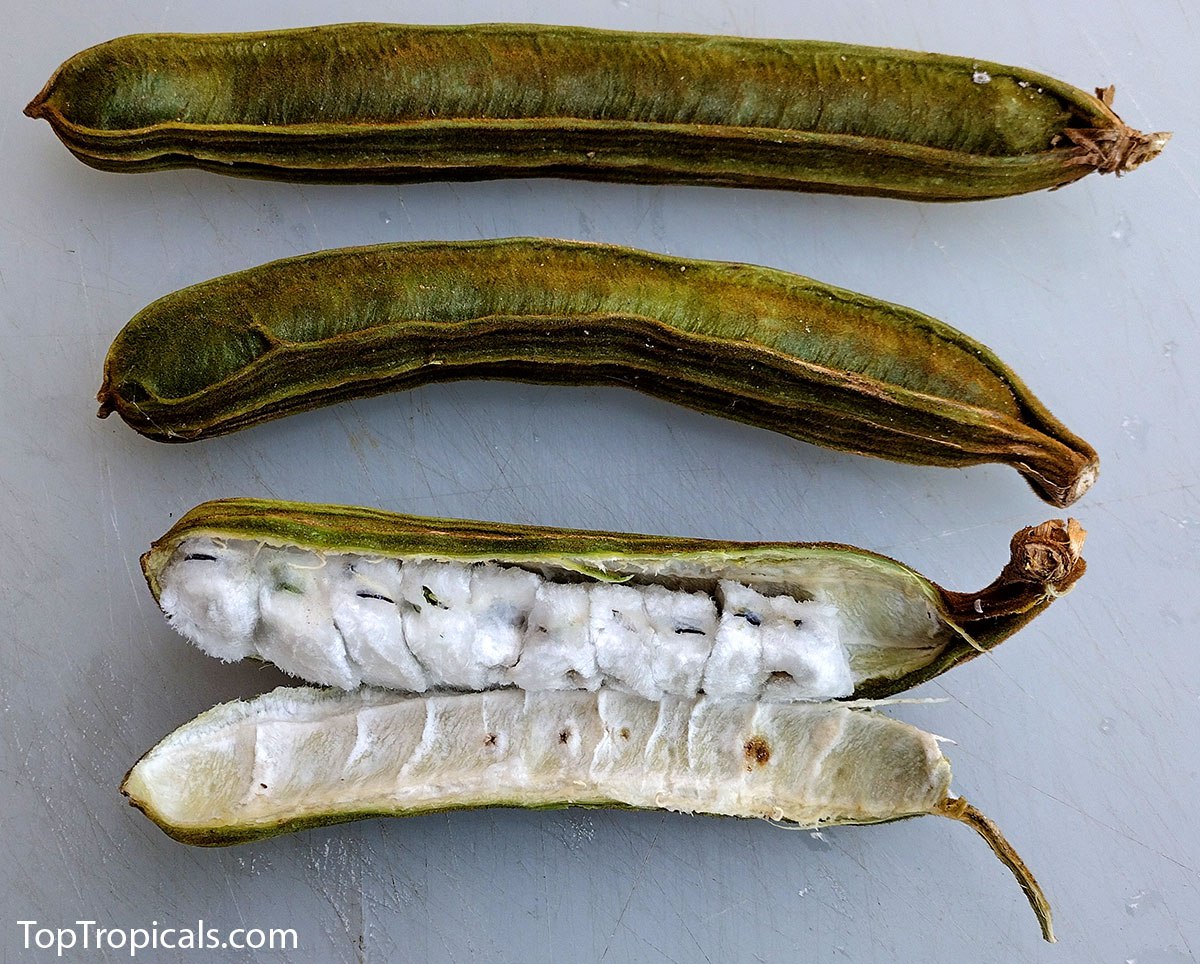
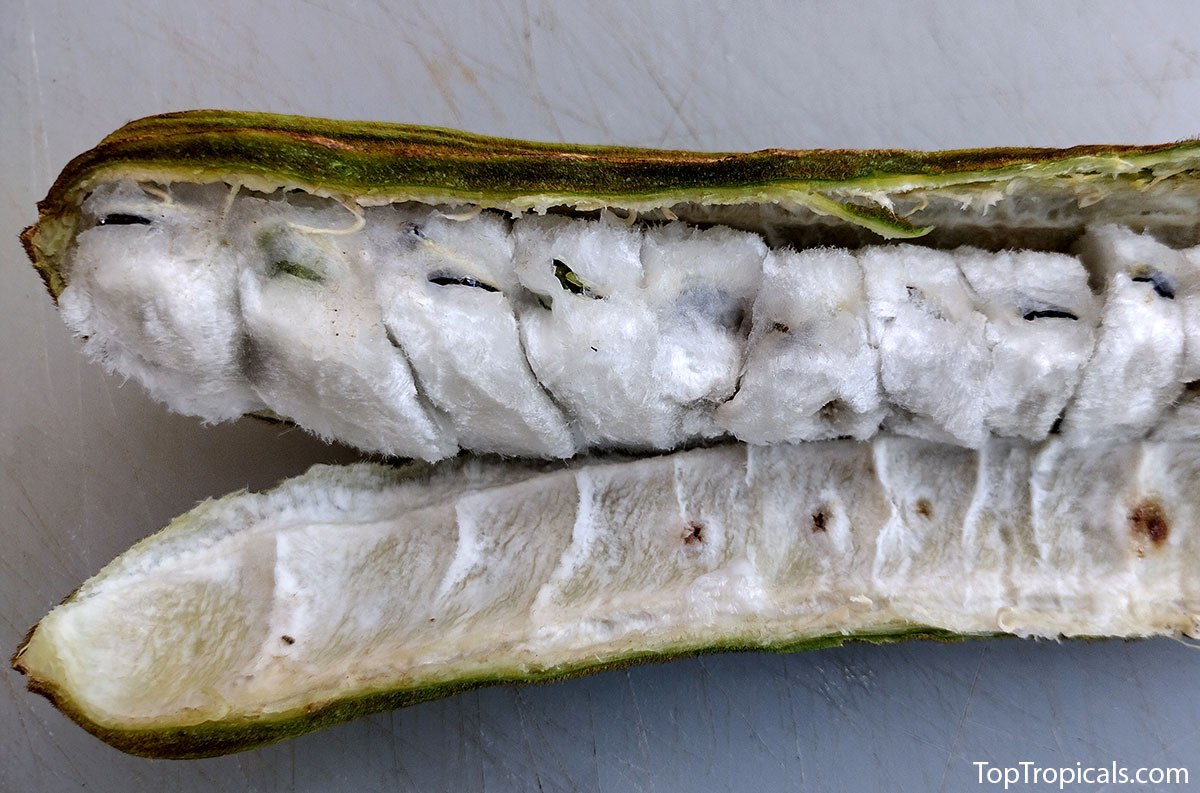
Ice cream bean tree (Inga edulis) - fruit

Ice cream bean tree (Inga edulis) - fruit

🍴 Ice Cream Bean Cool Fluff

Ingredients

  • Fresh Ice Cream Bean pulp (Inga edulis)
  • Crushed ice
  • Optional: lime wedge or mint leaf for garnish

Instructions

  1. Open ripe Ice Cream Bean pods and scoop out the sweet white pulp.
  2. Remove and save the seeds if you want to plant more Ice Cream Bean trees.
  3. Chill the pulp for 20 to 30 minutes.
  4. Serve the chilled pulp over crushed ice as a natural shaved-ice dessert.

🌿 About the plant:


Ice cream bean (Inga edulis) produces long pods filled with sweet, cottony white pulp surrounding dark seeds. The flavor is mild, vanilla-like, and naturally creamy. The pulp is eaten fresh and used as a natural dessert across South and Central America.

🌱 In the garden:


Inga edulis is a fast-growing tropical tree with lush foliage and nitrogen-fixing roots that improve soil health. It is a perfect tree for a quick shade solution in just one season. While large in the ground, it can be managed with pruning in home orchards.

🛒 Plant Ice Cream Bean tree

📚 Learn more:


#Food_Forest #Recipes

🟢 Join 👉 TopTropicals

Date: 2 Mar 2026

😼😺 The Story Behind Smokey and Sunshine 🐾

Smokey  and  Sunshine  in  office  presentation  about  Cherry  of  the  Rio 


Grande  freeze  survival,  with  Sunshine  pointing  at  polar  bear  and  penguin 


marketing  poster,  coffee  and  donuts  on  table,  tropical  plants  on  shelves  in 


background.
Sunshine: You know, February 27 was International Polar Bear Day. I just learned about it and got a brilliant marketing idea. Cherry of the Rio Grande survived 25F. With wind. Real wind. That means we go north. Let them taste this magic. I even have a donut recipe with the fruit. It’s a bomb, Smokey. We expand. Trust me. Finally you can afford that new watering timer.

Smokey: Not so fast, genius. Twenty five degrees is not the North Pole. And polar bears and penguins do not share zip codes.

Sunshine: You always pour cold water on my brilliance. Fine. Where do we start?

Smokey: Well, first you go talk to Tatiana. She graduated from the Geography Department. She can explain climate zones. Cherry of the Rio Grande can grow in North Florida, Texas, and similar climates. Let’s master that before we conquer Arctic.

Sunshine: So… Phase One: Geography?

Smokey: Exactly.

Some stories are easier to tell with a little humor. Smokey and Sunshine were never just mascots. They represent the two forces behind every decision we make here: bold ideas and careful reality. One dreams big. The other checks the climate zone map. Together, they remind us that growing plants is part science, part optimism, and always personal. If you have ever wondered why they keep appearing in our newsletters, you can read their full story on the Smokey and Sunshine page. They have been with us longer than most people realize.

🐾 Learn the Story of Smoky and Sunshine

Freeze Testing of Grumichama and Cherry of Rio Grande 🍒❄️

Grumichama  tree  (Eugenia  brasiliensis)  showing  white  flowers  and  ripe 


red  fruits  in  tropical  garden 


conditions

Eugenia brasiliensis - Grumichama tree flowering and fruiting

When temperatures dropped to 25F, with wind chill near 14F, winter made it clear which tropical trees were truly resilient. Some plants burned back. Tender growth collapsed. But our established Eugenia cherries stood steady. Leaves held. Branches stayed flexible. The canopy remained intact.

Cherry of the Rio Grande (Eugenia aggregata) and Grumichama (Eugenia brasiliensis) are among the most cold-hardy tropical cherries for Southern gardens. Both are native to Brazil and thrive in USDA Zones 9b–11, and even protected 9a sites.

Cherry of the Rio Grande produces dark ruby fruit that ripens almost black, with a rich, full cherry flavor. It flowers early in spring and can fruit well into summer. Mature trees can tolerate brief drops into the low 20s once established. Trees typically grow 8 to 15 feet tall, remain naturally compact, and often begin fruiting within 2 to 3 years.

Grumichama is an evergreen tree known for both beauty and productivity. In spring, it covers itself in white starburst flowers that attract pollinators. Within about four weeks, glossy purple-black fruit develops. Established trees tolerate temperatures into the upper 20s and grow well in the ground or in 5–10 gallon containers. Mature trees can produce hundreds of fruits per season.

Across the Eugenia group, strengths are consistent: early bearing, compact growth, heat tolerance, light freeze endurance, and low pest pressure. They are adaptable to different soils, need modest water once established, and perform in full sun or partial shade. Birds enjoy the fruit, but there is usually plenty to share.

Nutritionally, Eugenia cherries provide Vitamin C, fiber, antioxidants, and notable Vitamin A that supports eye health. They offer sweetness with real dietary value.

In the kitchen, they are simple and rewarding. Cherry of the Rio Grande makes an easy compote. Simmer the fruit with a small amount of water until soft, mash lightly, and spoon over pancakes or warm bread. Grumichama turns into a deep red jam with sugar and lime, or can be blended into a bright spoon drizzle over vanilla ice cream.

Even when not fruiting, both trees remain attractive year-round with glossy evergreen foliage and clean structure. They fit well into edible landscapes, small yards, and container gardens.

Winter will return. The difference lies in planting fruit trees that can handle heat, humidity, and the occasional cold snap. If you are building a food forest for lasting harvests, cold-hardy tropical cherries like Cherry of the Rio Grande and Grumichama deserve a place in your garden.

Ripe  Grumichama  fruits  (Eugenia  brasiliensis)  hanging  on  a  branch  with 


glossy 


leaves

Ripe Grumichama (Eugenia brasiliensis) fruits developing on the tree, turning deep red to nearly black when fully mature.

Cherry  of  the  Rio  Grande  (Eugenia  aggregata  cv.  Calycina)  fruits 


ripening  from  green  to  dark  purple  on  the 


branch

Eugenia aggregata (cv. Calycina), Cherry of the Rio Grande

🛒 Plant hardy Eugenia cherries

Date: 20 Aug 2020

PeopleCats of TopTropicals. Cat of The Month: Greenhouse King

King continues being on top of the poll... thanks to his adventurous nature. This Purrrson just loves to travel! He likes driving and biking. How many times we pulled him out of customer's car or delivery truck!
Sure thing, he just did it again, joining contractor's team. Luckily he was noticed hiding in the back of the truck before the driver hit the highway!

ATTENTION VISITORS!

We are reminding you, please check your vehicles for cats before you leave!

On a bright side, King has been very helpful, helping to plant newly arrived plant shipment from Thailand.
For those of you who has been waiting for rare plants, after a long delay due to airlines lockdown, we finally got lots of rare stuff and it will be ready for shipping soon.
Please make sure to add to your wish-list these coming-soon rare plants, this is the only way we can ensure you will get notified when they are available for sale, on first come first serve basis.
These are limited quantities, high demand plants!
Don't miss your dream plant! Just click on "Notify me when available" and add your email to waiting list.

Limited quantities - will be ready soon
(planted with King's help)

- Amherstia nobilis - Pride of Burma
- Artabotrys siamensis - Climbing Ylang-Ylang
- Barringtonia acutangula - Indian Putat
- Barringtonia asiatica - Fish Poison Tree
- Bauhinia aureifolia - Fragrant Gold Leaf Orchid Vine
- Brownea ariza - Rose of Venezuela
- Brownea grandiceps - Scarlet Flame Bean
- Cananga fruticosa - Dwarf Ylang-Ylang
- Couroupita guianensis - Cannonball Tree
- Cyrtostachys lakka - Lipstick Palm, Red Sealing Wax
- Desmos chinensis - Ylang Ylang Shrub
- Dillenia philippinensis - Katmon, Philippines Elephant Apple
- Garcinia mangostana - Mangosteen
- Ixora congesta Thai Flame
- Melodorum fruticosum - Hot Lips Ylang-Ylang
- Monstera variegata Thai Constellation (available now for pick up only)
- Gustavia augusta - Heaven Lotus
- Posoqueria longiflora - Needle Flower Tree
- Rauwenhoffia, Melodorum siamensis
- Saraca declinata - Red Saraca
- Terminalia catappa - Tropical Almond
- Vallaris glabra - Bread Flower
- Wrightia vietnamensis - Dwarf

TopTropicals PeopleCat Club and Zoo

Thank you for supporting us in helping PeopleCat Community!
Make your kind donation today and receive a surprise gift from us! Every little bit helps. Thank you and God bless you and your pets!