Garden Blog - Top Tropicals

Date: 1 Jul 2026

Why is this banana called DOUBLE?

The remarkable Double Mahoi banana naturally produces two fruiting stalks from a single flower stem, creating an impressive display and the potential for a much larger harvest without taking up extra garden space.

The remarkable Double Mahoi banana naturally produces two fruiting stalks from a single flower stem, creating an impressive display and the potential for a much larger harvest without taking up extra garden space.

🍌 Why is this banana called DOUBLE?


Most banana plants produce one flower stalk and one bunch of fruit before that stem is finished.
Double Mahoi Banana changes the rules. It's the Banana that grows two bunches instead of one!
This unusual Cavendish banana is famous for often producing two flower stalks from a single fruiting stem after its first crop, giving gardeners the chance to harvest significantly more bananas without planting another tree. It's one of those rare plants people discover once - and immediately want in their collection.


🟡 What makes Double Mahoi so special?


🔸
Two bunches instead of one
The feature that made Double Mahoi famous is its ability to frequently produce a second flower stalk after the first harvest. While not every stem does it every time, this remarkable trait can nearly double the fruit produced from a single plant - something very few bananas can do.

🔸 Big harvests from a compact plant


Don't let its size fool you.
Double Mahoi grows only about 6-8 feet tall, making it easy to fit into smaller gardens, patios, or large containers. Yet a healthy plant can produce large, heavy bunches totaling up to 100 sweet bananas during a fruiting cycle.
That's an impressive harvest from such a manageable plant.

🟡 Classic banana flavor everyone loves


Double Mahoi belongs to the Cavendish group, so the fruit has the familiar sweet, creamy flavor people already know and enjoy.
Fresh-picked bananas often develop a richer aroma and better texture than store-bought fruit, making homegrown harvests especially rewarding.

🟡 Perfect for small gardens and containers


Not everyone has room for a giant banana grove.
Because Double Mahoi stays relatively compact, it's one of the easiest fruiting bananas for:
· Small backyards
· Patio containers
· Courtyards
· Poolside tropical gardens
· Greenhouses and bright sunrooms in cooler climates
With enough warmth, sunlight, water, and fertilizer, it rewards growers surprisingly quickly.

🟡 Fast, productive, and beginner-friendly


Double Mahoi is popular with both experienced collectors and first-time banana growers because it checks nearly every box:
· Fast fruiting, often in 12-18 months
· Self-pollinating
· Heavy producer
· Compact growth
· Easy to maintain
· Excellent container performance
It's one of the most productive dwarf bananas available for home gardens.

🟡 Why gardeners keep choosing Double Mahoi


If your goal is to harvest the most bananas from the least amount of space, Double Mahoi is hard to beat.
Its compact size, dependable production, delicious Cavendish-style fruit, and unique ability to often produce two flower stalks make it one of the smartest banana varieties you can grow.
Whether planted in the ground or a large container, it's the kind of banana that quickly becomes the centerpiece of a tropical garden.

Ready to grow twice the bananas from one amazing plant?
Get Double Mahoi and bring home one of the most productive dwarf bananas available 👉 Grow More in Less Space

🛒 Explore Banana Varieties

📚 Learn more:

Chinese Yellow Banana Plant Facts

Botanical name: Ensete lasiocarpum, Musella lasiocarpa, Musa lasiocarpa
Also known as: Chinese Yellow Banana, Golden Lotus Banana
USDA Zone: 7 - 10
Highligths Large shrub 5-10 ft tallSmall plant 2-5 ftSemi-shadeFull sunWatering: Regular. Let topsoil dry slightlyYellow, orange flowersSubtropical plant. Mature plant cold hardy at least to 30s F for a short time
Get personalized tips for your region

Bananas (Musa) in plant encyclopedia
How to double your banana crop without extra space
Why every garden needs a banana tree (or three!)
The best varieties of edible Bananas

#Food_Forest #Bananas #Discover

🟢 Join 👉 TopTropicals
Date: 30 Jun 2026

Baked guava halves: quick-n-fun exotic recipes

Baked guava halves: quick-n-fun exotic recipes Baked guava halves: quick-n-fun exotic recipes

🍴 Baked guava halves: quick-n-fun exotic recipes


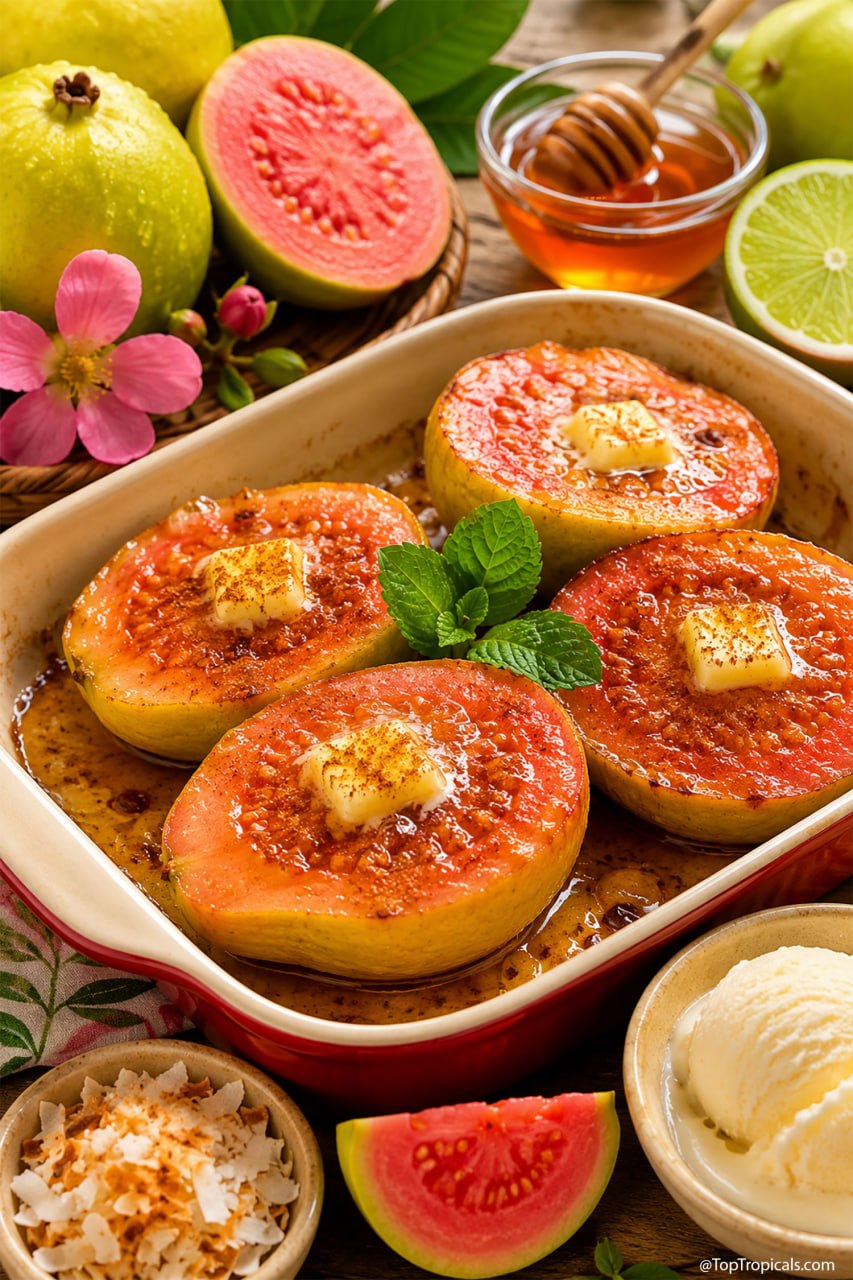
🔴Cut ripe guavas in half and arrange them cut-side up in a baking dish.
🔴Drizzle with honey, add a small dab of butter if desired, and sprinkle with a pinch of cinnamon or nutmeg.
🔴Bake at 375°F (190°C) for 20-30 minutes until the fruit is soft and the honey is bubbling.
🔴A squeeze of lime juice brightens the flavor.
🔴Serve warm on its own, with vanilla ice cream, yogurt, or a sprinkle of toasted coconut.
🔴The guavas become soft, fragrant, and almost jam-like as they bake.

🌿 About the plant:


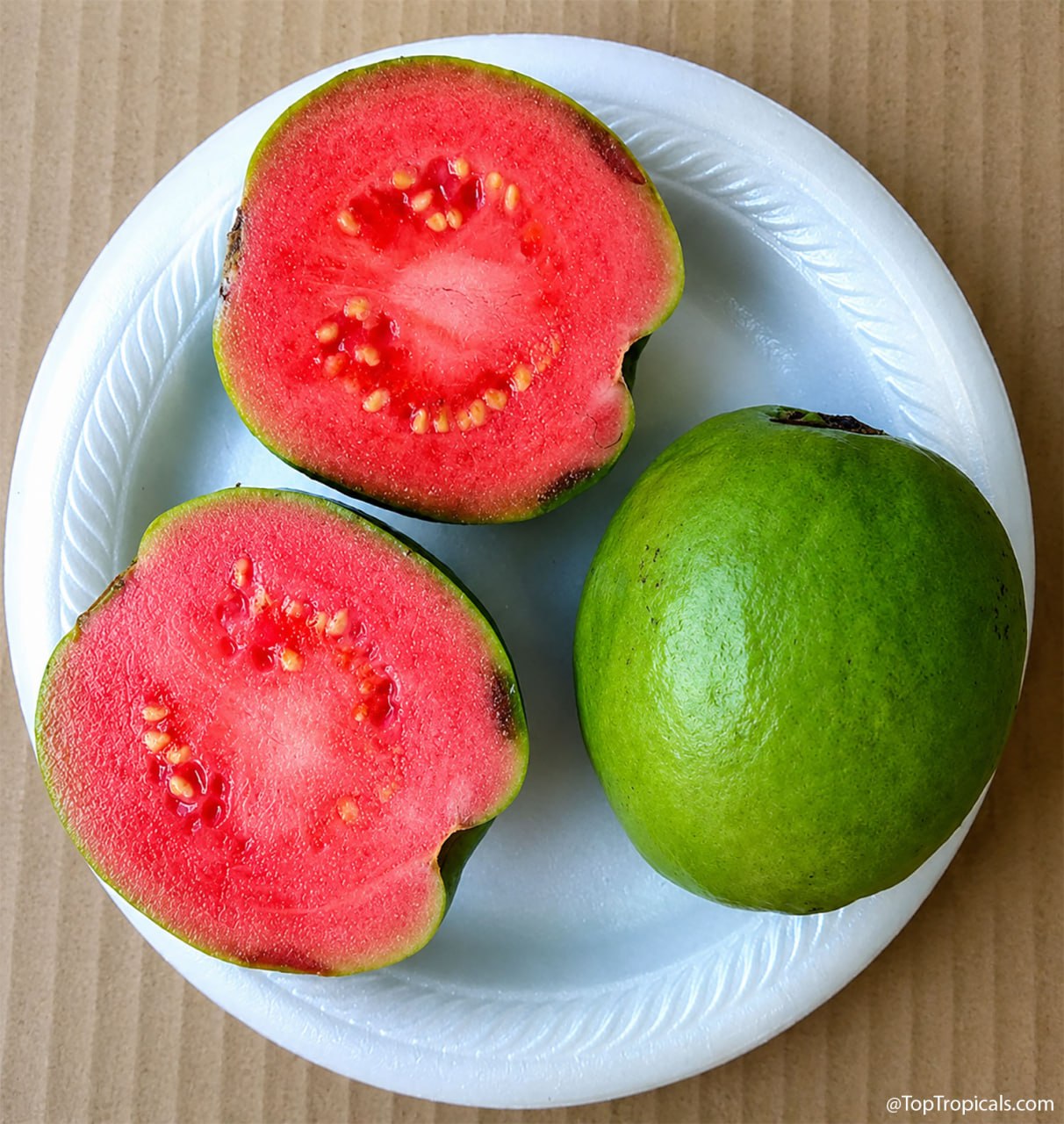
Guava, Psidium guajava, belongs to the myrtle family and produces white, pink, or deep coral flesh depending on the variety. The fruit develops a strong, sweet fragrance as it ripens.

🏡 In the garden:


Guava trees flower on new growth, so light pruning encourages more blooms and fruit. They adapt well to different soils as long as drainage is good.

🛒 Grow your own guava tree

📚 Learn more:

Brazilian Guava Plant Facts

Botanical name: Psidium acutangulum
Also known as: Brazilian Guava, Araca Pera, Bayabas
USDA Zone: 9 - 11
Highligths Large shrub 5-10 ft tallSmall tree 10-20 ftFull sunWatering: Regular. Let topsoil dry slightlyWhite, off-white flowersEdible plant
Get personalized tips for your region

Guava trees in Plant Encyclopedia
Guava chili glaze: quick-n-fun exotic recipes
Guava fudge: quick-n-fun exotic recipes
Six guava varieties that will keep you picking year-round
How to grow a Guava Tree: Practical Guide to Growing Guava
More about #Guava

#Food_Forest #Recipes

🟢 Join 👉 TopTropicals

Date: 30 Jun 2026

The Vine That Changes Color Before Your Eyes: Mansoa

The Vine That Changes Color Before Your Eyes: Mansoa

😈 The Vine That Changes Color Before Your Eyes: Mansoa


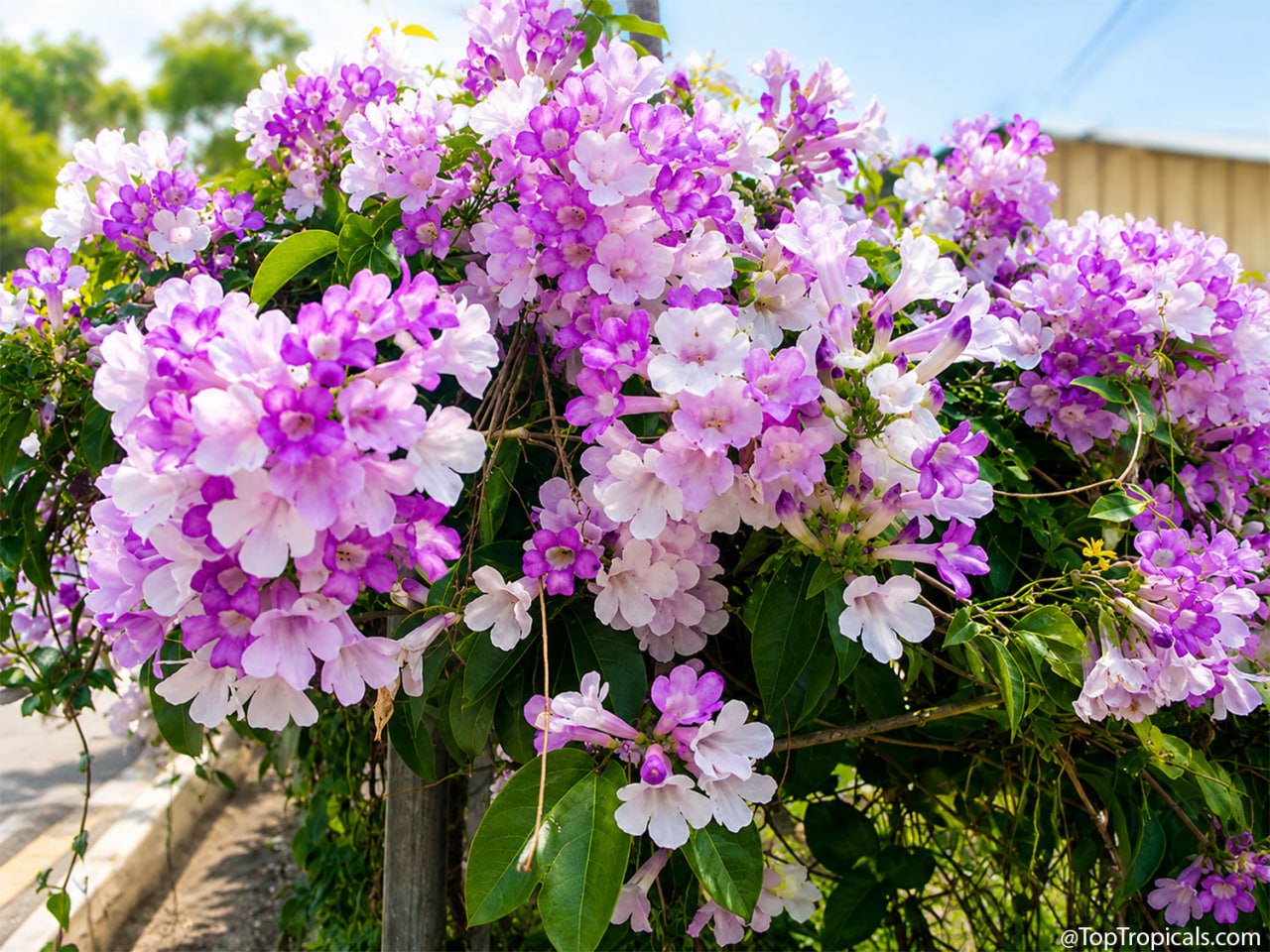
One day it’s a deep, dramatic purple; a few days later, it's a soft, pale lavender: during peak bloom, the Garlic Vine puts on a remarkable, shape-shifting show. With flowers blooming in several shades at once, the entire plant looks like a living watercolor painting.

😈 Why Gardeners Are Obsessed


The Garlic Vine (Mansoa alliacea) is one of the most sought-after tropical climbers available, and it’s easy to see why. When in full bloom, it creates a cascading waterfall of purple hues tumbling over fences, arbors, and trellises.

· The Color-Changing Trick: The flowers open a deep, rich lavender with a white throat. As they age, they gradually fade to softer pastel shades. Because new and old flowers share the vine simultaneously, a single plant displays three distinct colors at the exact same time.
· The Secret Scent: Crush a leaf between your fingers, and you’ll instantly smell garlic. This unusual trait didn't just give the plant its common name—it also inspired local folklore. In some tropical regions, hanging Garlic Vine is said to ward off bad luck, negative energy, and even vampires!

😈 Low-Maintenance and High Reward


Unlike many aggressive tropical vines that threaten to take over your entire yard, the Garlic Vine has a moderate growth rate and is incredibly well-behaved.

· Versatile Styling: It can climb a trellis, drape over a fence, or stay surprisingly compact in a large patio container.
· Overwintering: Gardeners in cooler climates can easily grow it in pots and bring it indoors for the winter, where it can even double as a unique houseplant.
· Off-Season Blooms: As an added bonus, this vine typically saves its biggest floral displays for the cooler months, injecting vibrant color into your garden when most other tropicals have gone dormant.

😈 Quick Care Guide at a Glance


· Light: Full sun to partial shade (more sun = more blooms!)
· Watering: Moderate; allow topsoil to dry slightly between waterings
· Hardiness: USDA Zones 9–11 (must bring indoors if temperatures drop below freezing)
· Soil: Well-draining, fertile mix

If you're looking for a flowering vine that's unusual, stunningly colorful, and a guaranteed conversation starter, the Garlic Vine is tough to beat.
Are you thinking about planting this in the ground as a permanent garden feature, or are you looking to grow it in a container for flexibility?

🛒
Plant a Living Watercolor

📚 Learn more:

Garlic Vine Plant Facts

Botanical name: Mansoa alliacea, Pachyptera hymenaea, Pseudocalymma alliacea, Cydista aequinoctialis
Also known as: Garlic Vine, Cipo de Alho, Equinox Vine, Cydista, Cydisia
USDA Zone: 9 - 11
Highligths Vine or creeper plantSemi-shadeFull sunWater Requirement: Low. Allow soil to dry out between wateringsWatering: Moderate. Water when top soil feels dryBlue, lavender, purple flowersPink flowersPlant attracts butterflies, hummingbirdsSubtropical plant. Mature plant cold hardy at least to 30s F for a short timeSeaside, salt tolerant plant
Get personalized tips for your region

Mansoa alliacea in Plant Encyclopedia
Ten shrubs you need to have for winter colors
Top 20 plants for a Butterfly Haven
What color is garlic vine flower
How to get rid of a bad luck with the Garlic Vine
🎥 Why Garlic vine keeps away the vampires

#Hedges_with_benefits #Butterfly_Plants #Discover

🟢 Join 👉 TopTropicals

Date: 29 Jun 2026

Lifetime with you

Lifetime with you

❤️ Lifetime with you


"I would rather spend one lifetime with you, than face all the ages of this world alone."
- J.R.R. Tolkien

🐈📸 Vasily & Matilda from indoor PeopleCats.Garden of Tatiana I.

#PeopleCats #Quotes

🟢 Join 👉 TopTropicals

Date: 29 Jun 2026

Which Passion Fruit Vine should you grow - 3 top varieties

Which Passion Fruit Vine should you grow - 3 top varieties

🍊 Which Passion Fruit Vine should you grow - 3 top varieties


There are few plants that reward gardeners as quickly as a Passion Fruit Vine (Passiflora edulis). In just a season or two, a single vine can transform a fence, arbor, or trellis into a lush green wall covered with spectacular flowers, followed by dozens of delicious tropical fruits.
Passion fruit combines beauty and productivity like few other plants. The flowers look almost too exotic to be real, attracting butterflies and pollinators, while the aromatic fruit is perfect for fresh eating, smoothies, desserts, juices, and jams.

3 top varieties of Passion Fruit

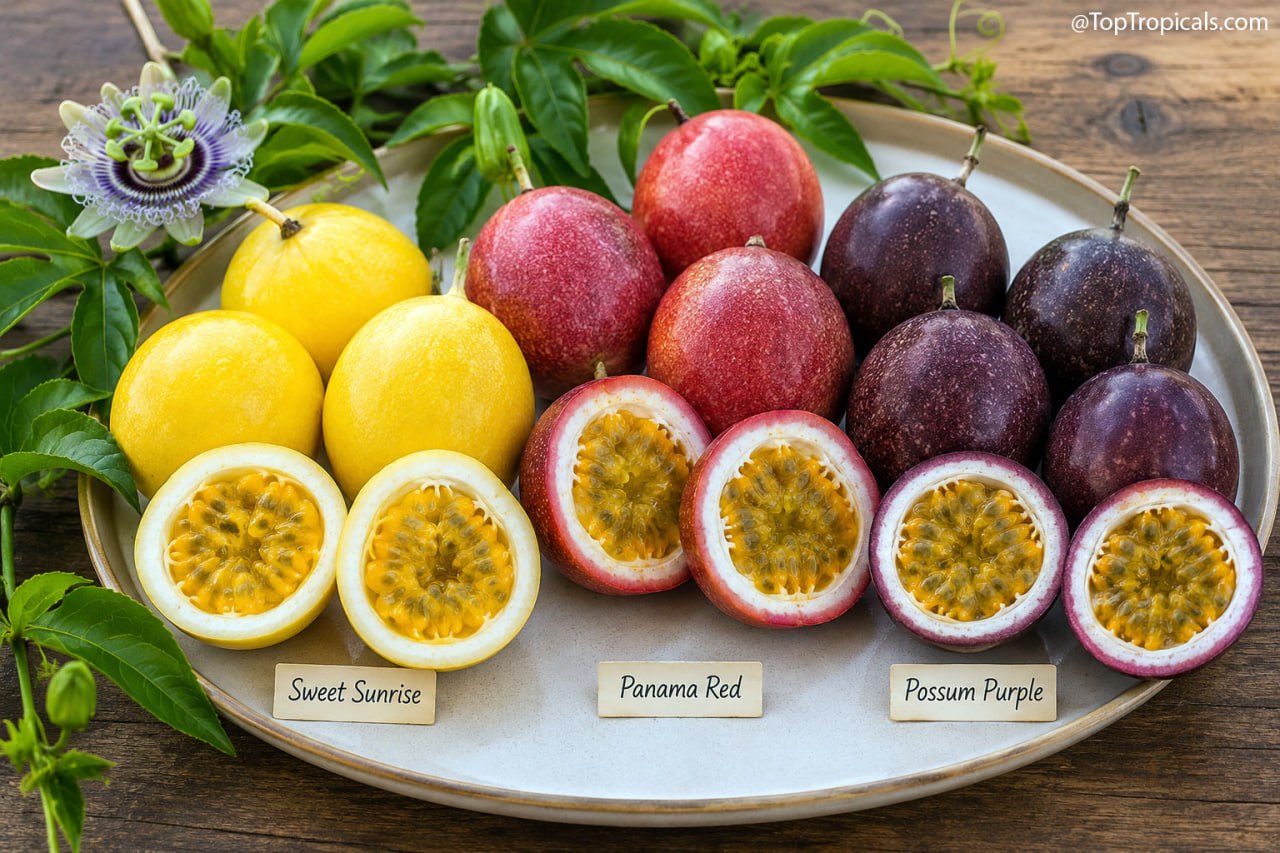
🟡 Sweet Sunrise: the sweetest choice


Large golden-yellow fruit with bright orange pulp and a smooth, sweet tropical flavor. Lower acidity makes it especially enjoyable fresh, right out of the shell.
Perfect for: Fresh eating, smoothies, desserts, and juice.

🟣 Possum Purple: the classic purple passion fruit


Medium-sized deep purple fruit with the traditional sweet-tart flavor and intense tropical aroma that passion fruit lovers expect. The most cold hardy variety.
Perfect for: Fresh eating, juices, desserts, jams, and all-around garden performance.

🔴 Panama Red: go big with giant fruit


Produces impressive burgundy-red fruits that are much larger than standard passion fruits. A vigorous vine known for heavy crops and bold tropical flavor.
Perfect for: Gardeners who want oversized fruit and abundant harvests.

🏡 Why gardeners love passion fruit


📌 No matter which variety you choose, all three are vigorous tropical vines that quickly cover fences, pergolas, arches, and trellises with attractive glossy foliage and some of the most unusual flowers in the plant world.
📌 Once established, passion fruit vines can produce generous harvests over a long season. The fragrant orange pulp is packed with sweet-tart tropical flavor and can be eaten fresh, scooped into yogurt, blended into drinks, or used in countless desserts and preserves.
📌 They thrive in full sun with fertile, well-drained soil and regular watering during active growth. In frost-free climates they can fruit for many years, while gardeners in cooler regions often enjoy growing them in large containers that can be protected during winter.

✅ Which one is right for you?


Choose Sweet Sunrise if you love sweeter, less acidic fruit.
Choose Possum Purple if you want the classic passion fruit experience with outstanding balance of sweetness and tang.
Choose Panama Red if your goal is giant, show-stopping fruit and heavy harvests.

Whichever you plant, you'll enjoy one of the fastest-growing and most rewarding edible vines you can add to your garden.

🛒 Plant Passionfruit - fast growing and rewarding

📚 Learn more:

Passion Fruit Plant Facts

Botanical name: Passiflora edulis
Also known as: Passion Fruit, Parcha, Maracuya, Granadilla
USDA Zone: 8 - 11
Highligths Vine or creeper plantFull sunWatering: Moderate. Water when top soil feels dryBlue, lavender, purple flowersWhite, off-white flowersEdible plantSubtropical plant. Mature plant cold hardy at least to 30s F for a short time
Get personalized tips for your region

Passiflora edulis in Plant Encyclopedia
Passion fruit butter glaze: quick-n-fun exotic recipes
The truth about Passion flower and Passion fruit.

#Food_Forest #Recipes

🟢 Join 👉 TopTropicals