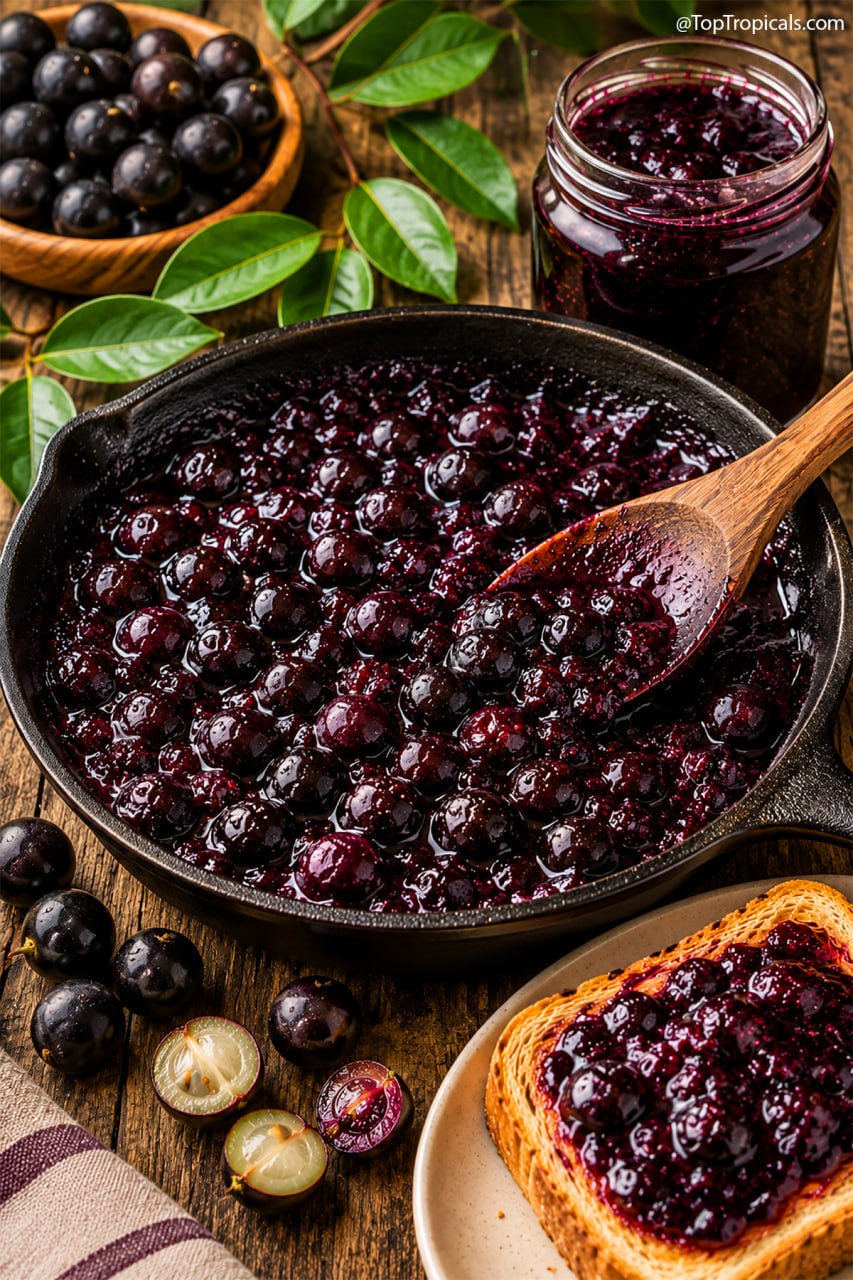
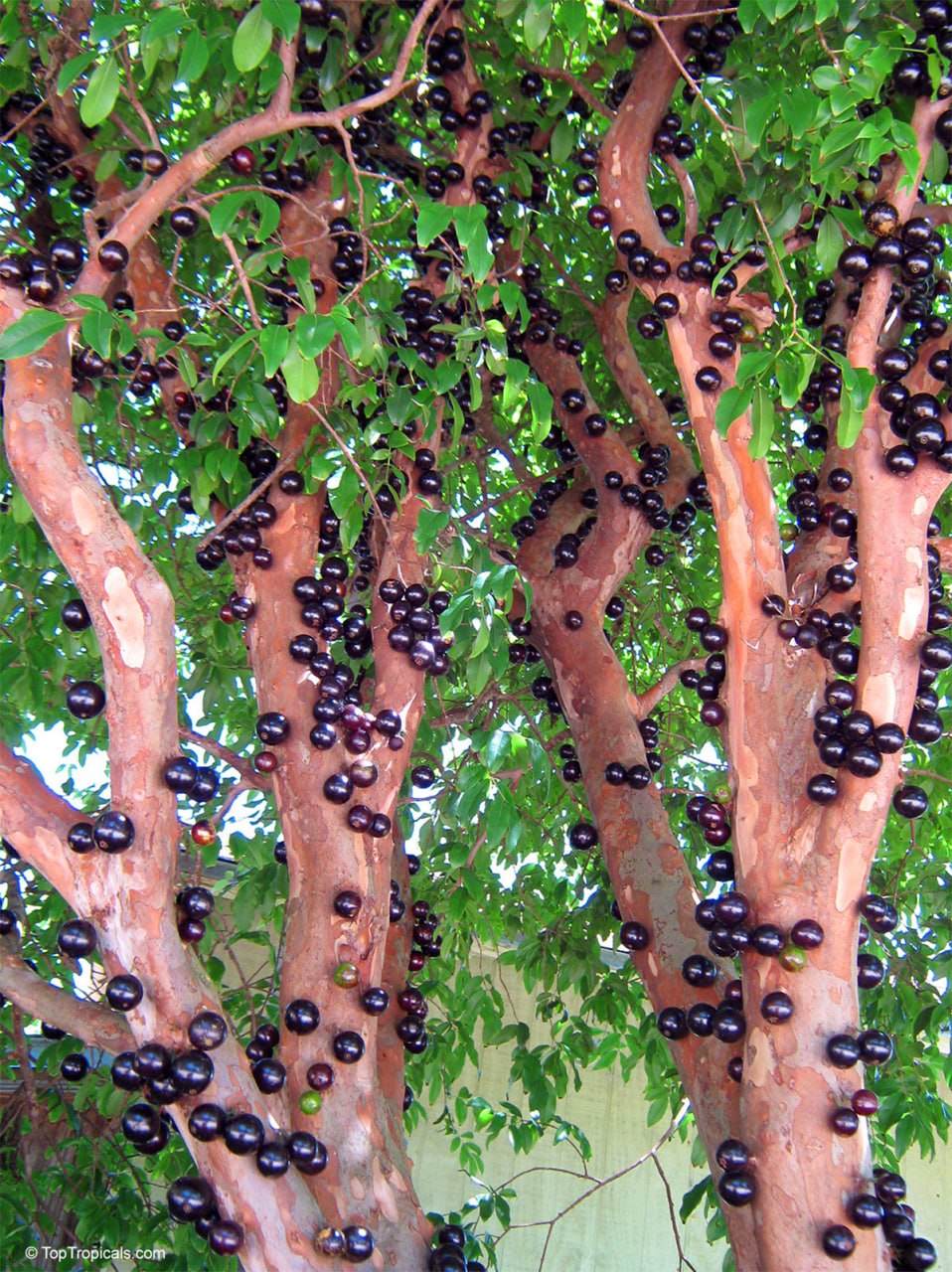
🔵Add whole jaboticabas and a spoonful of sugar to a skillet over medium heat. 🔵Cook until the skins burst and the fruit releases its deep purple juice. 🔵Stir gently as the mixture thickens into a glossy jam. 🔵Spread warm over toast, biscuits, or even pancakes while still slightly syrupy.
🌿 About the plant:
Jaboticaba, Plinia cauliflora, is famous for its cauliflorous habit - fruit forming directly on the trunk and older branches. During heavy fruiting, the bark can look almost studded with dark purple beads.
🏡 In the garden:
It prefers slightly acidic soil and steady moisture. Mulching helps maintain humidity around the roots. Though slow growing, it can fruit while still relatively small.
💕 Why is this shrub everywhere in Southern landscapes?
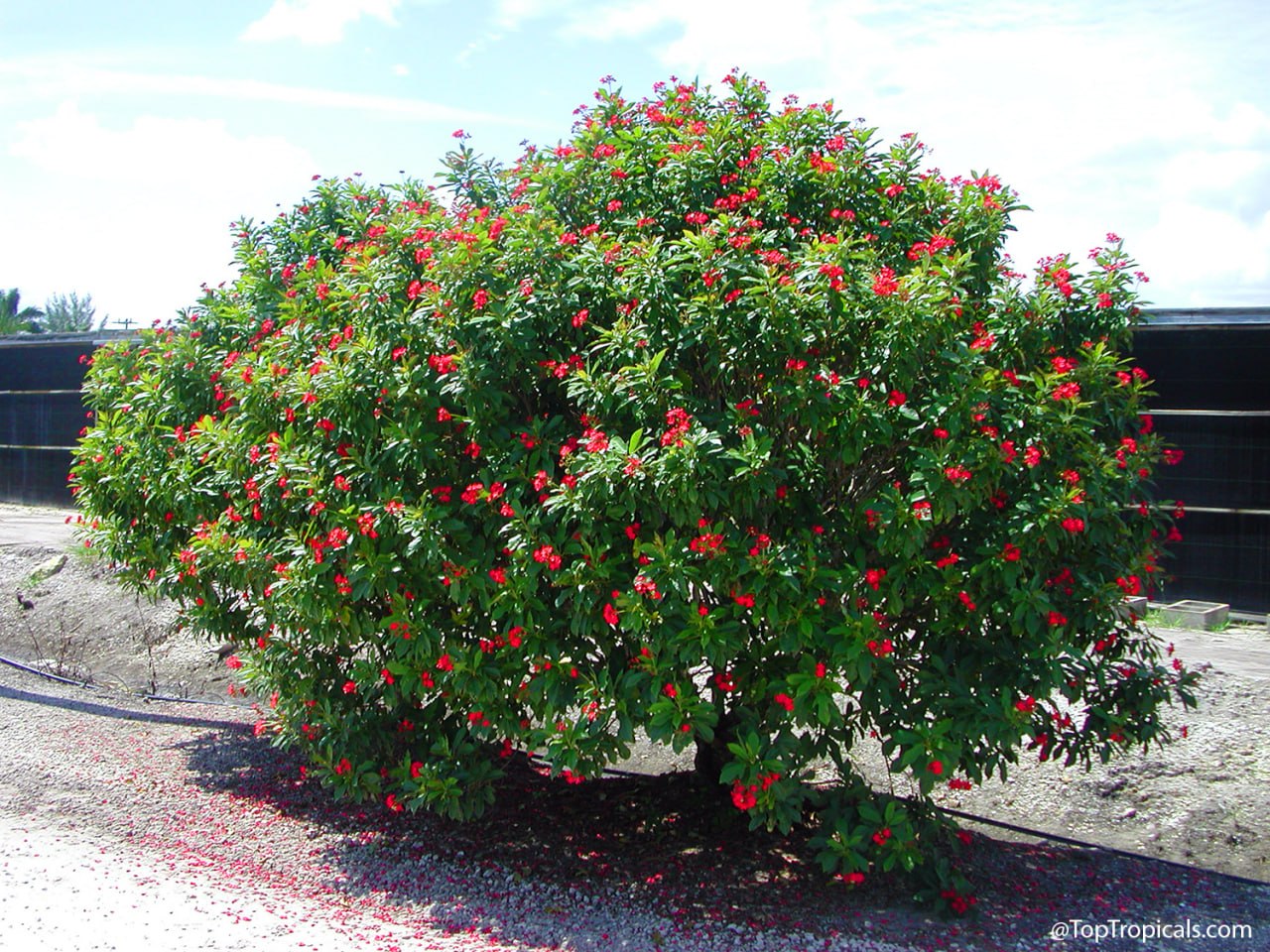
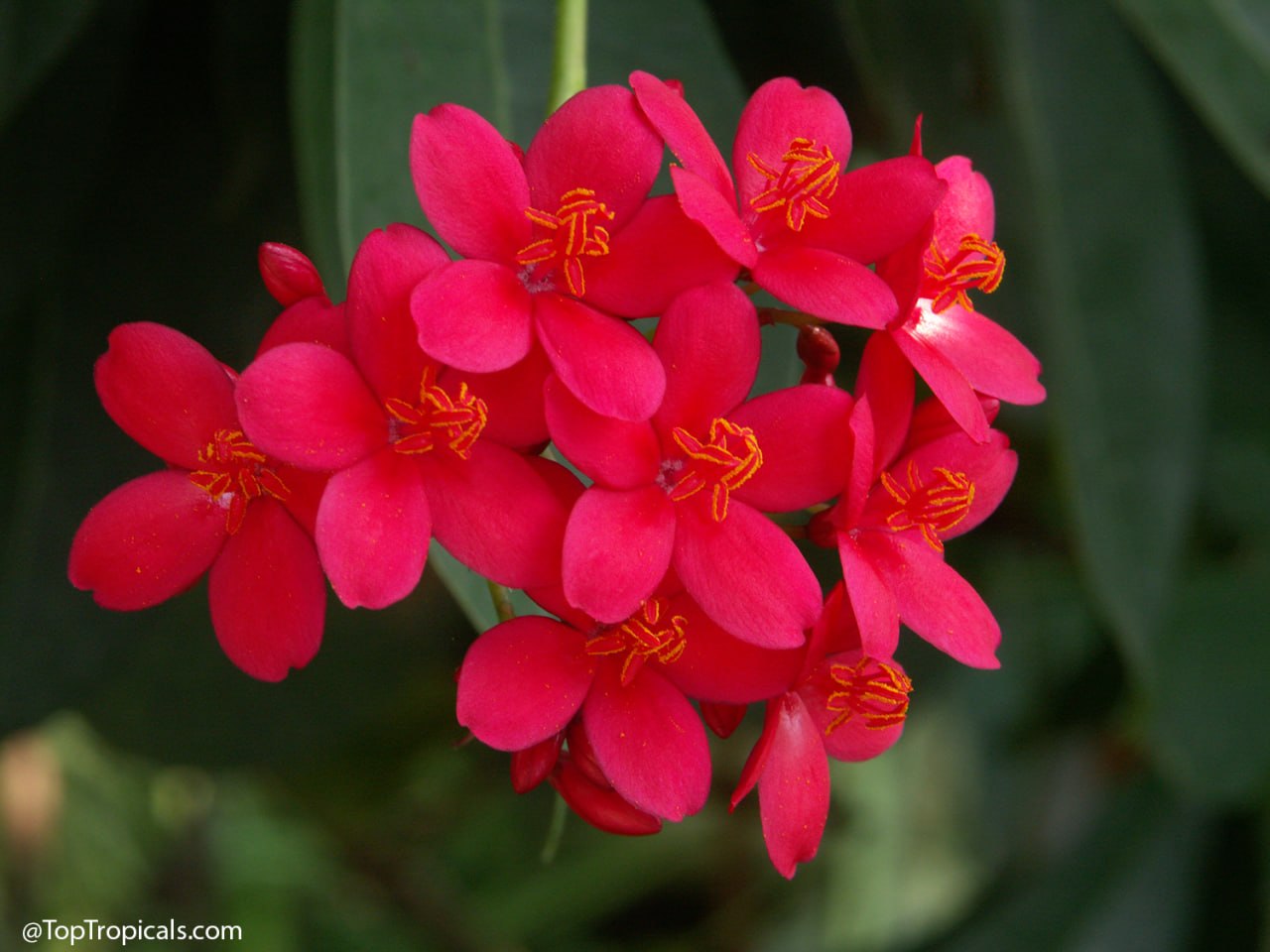
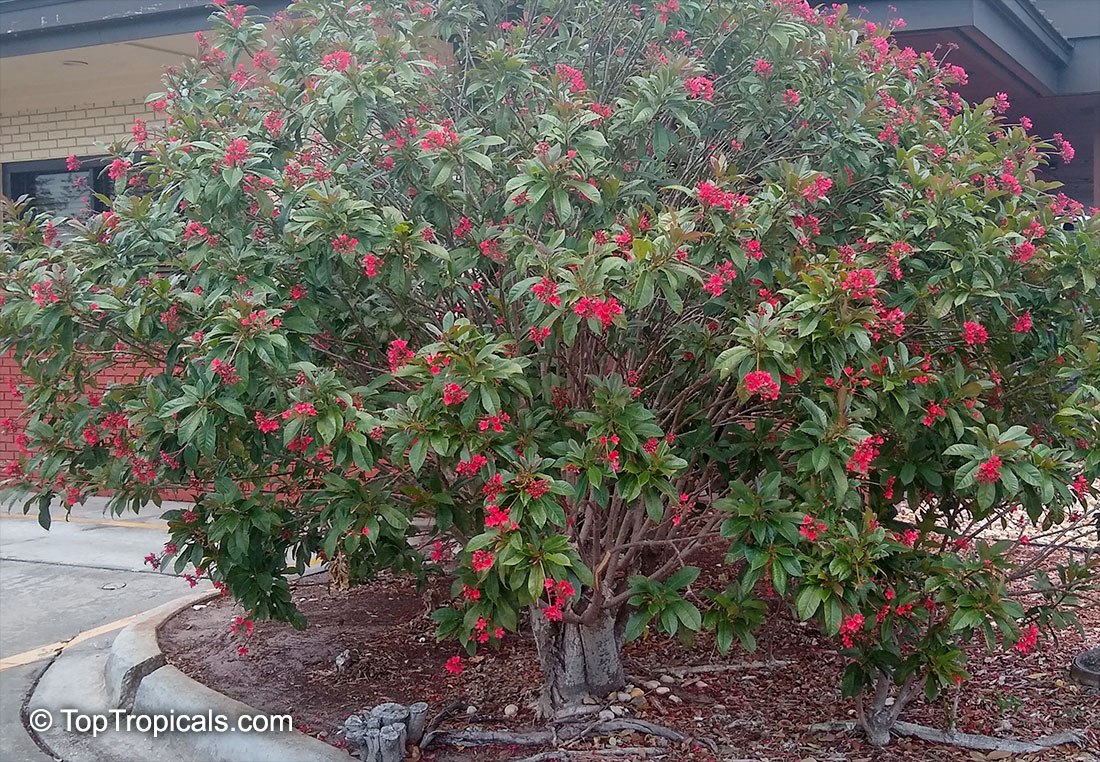
🌸 Nonstop blooms One look at Jatropha integerrima compacta - Peregrina and the answer becomes pretty obvious. This compact tropical shrub or a dwarf tree blooms almost nonstop with clusters of bright scarlet star-shaped flowers that butterflies can't seem to resist. In warm climates, it keeps adding color when many other plants take a break.
Peregrina Plant Facts
Botanical name: Jatropha integerrima, Jatropha pandurata Also known as: Peregrina, Spicy Jatropha, Coral Plant, Physic Nut
USDA Zone: 9 - 11
Highligths
🌸 Compact size, big impact Compacta stays smaller and fuller than the regular Peregrina, which makes it especially popular for foundation plantings, pool areas, patios, and smaller gardens where oversized shrubs become a headache. The glossy green leaves stay attractive year round, giving it a clean, lush look even when it's between bloom cycles.
🌸 Surprisingly low maintenance Another reason gardeners love it - this plant is surprisingly easygoing. It tolerates many soil types as long as drainage is good, handles heat well, and can be pruned almost anytime because it flowers on new growth. Want a tidy shrub? Trim it. Want a small tropical tree shape? It can do that too.
🌸 A Southern landscape favorite For Southern gardeners looking for reliable color without constant fuss, Peregrina has quietly become one of those "plant it and enjoy it" landscape favorites.
🍑 From the Garden: Why I Always Recommend
Growing
Your Own Peaches
by Tatiana Anderson, Top Tropicals Garden
Expert
Peach trees are beautiful long before harvest day - glossy green
leaves,
colorful fruit, and that classic fuzzy peach look straight from the branch.
I'll be honest with you. The first time I bit into a peach straight off
the tree, still warm from the afternoon sun, I understood why people get
obsessed with this fruit. There is no comparison to what you find in a
grocery
store. Store peaches are picked hard, shipped cold, and by the time they
reach
you, something important is already gone. A tree-ripened peach is soft,
fragrant, juicy, and sweet in a way store peaches rarely are. Eat it fresh,
slice
it into a cobbler, throw it on the grill - it holds up beautifully either
way.
Peach Plant Facts
Botanical name: Prunus persica, Amygdalus persica Also known as: Peach
USDA Zone: 5 - 10
Highligths
So let's talk about how to actually get there.
Planting
Peaches are not difficult. Give them sun, drainage, and room for air
movement, and they will usually tell you very quickly that they are
happy.
Full sun is essential - 8 hours minimum, and more is
better.
Drainage matters - peach roots do not like sitting
wet.
If your soil stays wet, plant on a mound - simple fix,
big difference.
Water deeply, then pause - let the soil partially dry
before watering again.
Prune every year - it keeps the tree open, improves
airflow, and helps the tree put energy into fruit instead of tangled
growth.
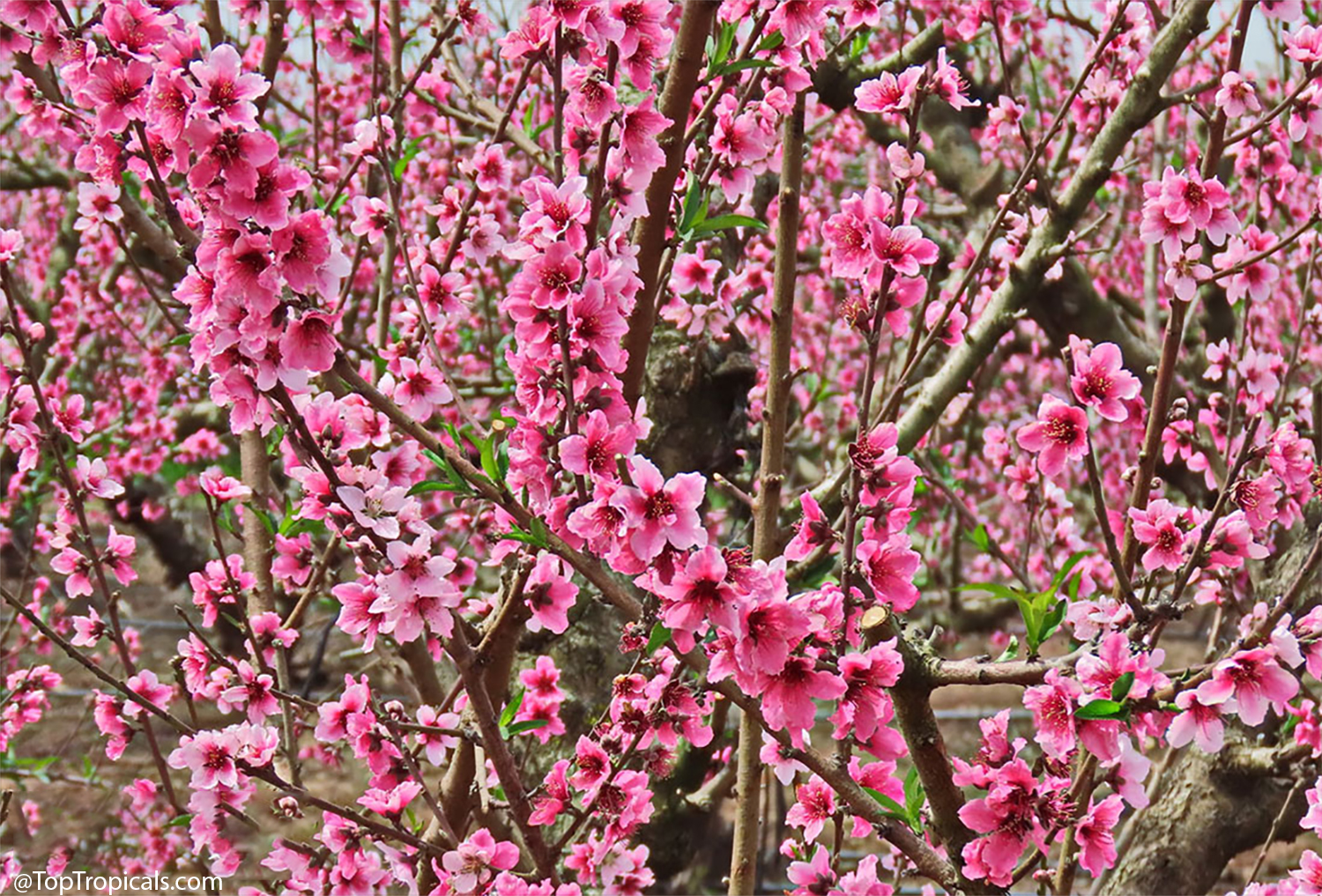
Peach trees put on one of spring's prettiest shows - clouds of pink
blossoms before the fruit season even begins.
What If You Do Not Have Room?
You can still grow peaches in a large container. This is a great option
for patios, small yards, renters, or gardeners who want better control over
soil and drainage.
Place the container in the sunniest spot you have.
Water more often than in-ground trees, but never let the pot stay
soggy.
Prune to keep the tree compact and easy to manage.
Fertilizing
Peach trees are generous plants, but producing vigorous growth and a
heavy crop of sweet fruit takes energy. Regular feeding makes a noticeable
difference in tree health, flowering, and fruit quality.
I prefer a simple two-part approach that provides both steady background
nutrition and quick, readily available nutrients when the tree is actively
growing.
Green Magic controlled-release fertilizer provides a steady
supply of nutrients for months and serves as the foundation of the feeding
program.
Sunshine Boosters liquid fertilizers deliver amino
acid-based nutrients that are quickly absorbed and especially useful during
periods of active growth, flowering, and fruit development. Sunshine C-Cibus formula is the best for fruit trees.
During the growing season, this combination helps build stronger
branches, healthier leaves, better flowering, and sweeter, higher-quality
fruit.
If your tree shows yellowing leaves or weak growth, consistent feeding
often makes a dramatic difference within a few weeks.
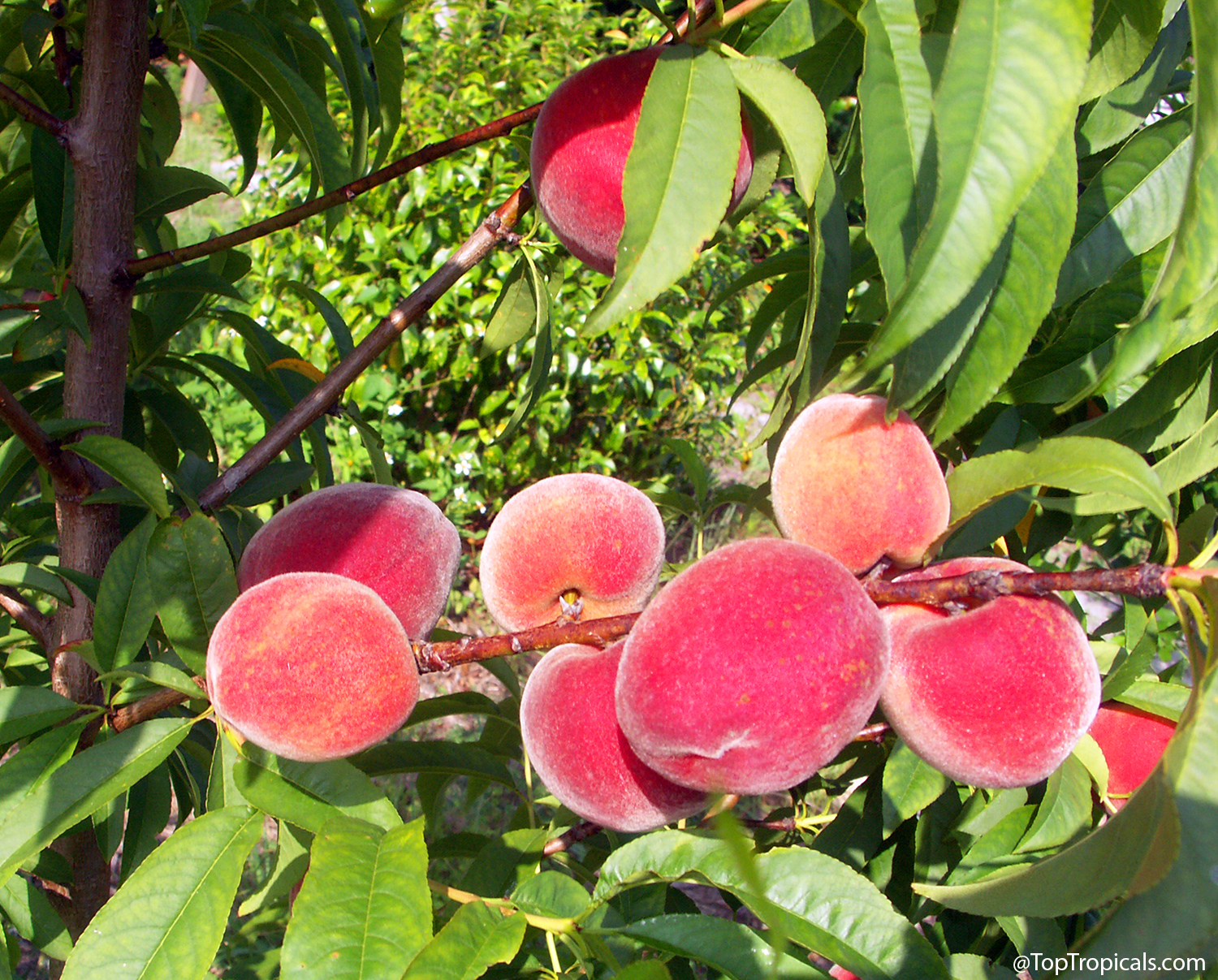
Tree-ripened Tropic Beauty peaches warming in the sun - fuzzy,
colorful,
and almost ready to pick straight from the branch. Tropic
Beauty variety is one of the most colorful and sweet.
Sunshine absolutely loves peach cobbler, especially when someone else
does all the peeling, slicing, mixing, and baking. But when he is left to
prepare dessert on his own, his standards become much more practical. Why
turn on
the oven when perfectly ripe peaches already taste amazing? His
philosophy
is simple: if a recipe takes less than five minutes and ends with peaches
and vanilla ice cream in the same bowl, it is a masterpiece.
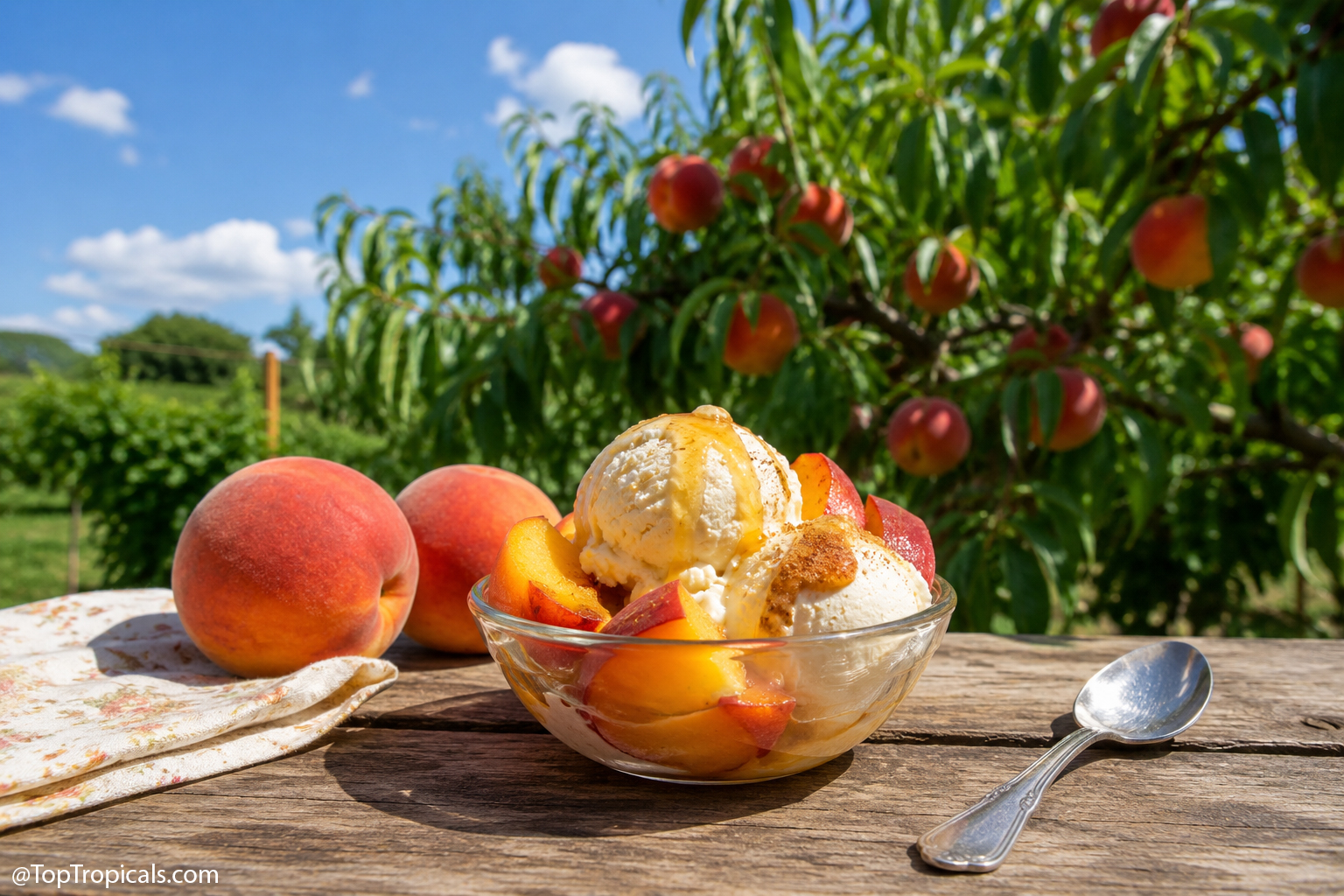
Sunshine's Lazy Peach Sundae - fresh peaches, cold ice cream, and zero
effort on a perfect sunny day.
Sunshine's Lazy Peach Sundae
This is not cooking. This is assembly.
Ingredients
2 ripe homegrown peaches
2 big scoops of vanilla ice cream
A drizzle of honey (optional)
A pinch of cinnamon (optional)
Instructions
Slice the peaches.
Put them in a bowl.
Add vanilla ice cream.
Drizzle with honey and sprinkle with cinnamon if you feel
ambitious.
Eat immediately while smiling.
Sunshine's Review
"I peeled exactly nothing and still got dessert. This is my kind of
gardening."
Want this?
Start with a low-chill peach tree. That is usually how it begins.
🔮 When the World Around Becomes Too
Gray: Plant a Tree. Eat a Donut. Keep going.
Sunshine: Smokey, what do we do when the world around
becomes too gray? Smokey: Plant a tree. Sunshine: And if that does not help? Smokey: Plant another one. Sunshine: And eat a donut. Smokey: Not strictly necessary, but statistically
beneficial.
If you have been feeling a little worn down lately, you are not
alone.
You already know about the headlines. We do not need to list them. You
have probably seen them today before breakfast.
We are not here to pretend that is not happening. It is happening. And
it is a lot.
But here is the thing we keep coming back to, the thing that has been true
for as long as people have had hands and a patch of ground: when the world
feels out of control, you can still plant something.
Gardening is not an escape. It is an answer. When you put a tree in the
ground, you are making a quiet statement. You are saying that you expect
there to be a future. That you intend to be in it. That shade and fruit and
flowers still matter, and you are going to make sure they exist in your
corner of
the world.
That is not naive. That is courageous in the most ordinary and
underrated way.
One tree, planted this season, might give you fruit in a few years. It
might give butterflies somewhere to stop. It might give a bird a place to
nest. It will almost certainly give you something to look at on a hard day
that
reminds you the world still contains beauty, and that you put some of it
there.
And if one tree does not quite do it? Plant another one.
Dostoevsky said beauty will save the world. We think a mango fruiting in
your backyard counts. So does a Magnolia opening on a quiet morning.
Do not skip the donut.
A donut is a small, simple, completely unnecessary thing. That is
exactly the point. It is not productive. It does not solve anything. It is
just
good, and sometimes that is the whole reason. In a world that constantly
demands
you be useful and informed and concerned, eating a donut is a quiet act of
being human. You are allowed to enjoy a small thing on a hard day. You do
not
have to earn it.
Rest a little. Then go put something in the ground. Anything that will
grow and flower and remind you that beautiful things are still happening
whether the headlines mention them or not.
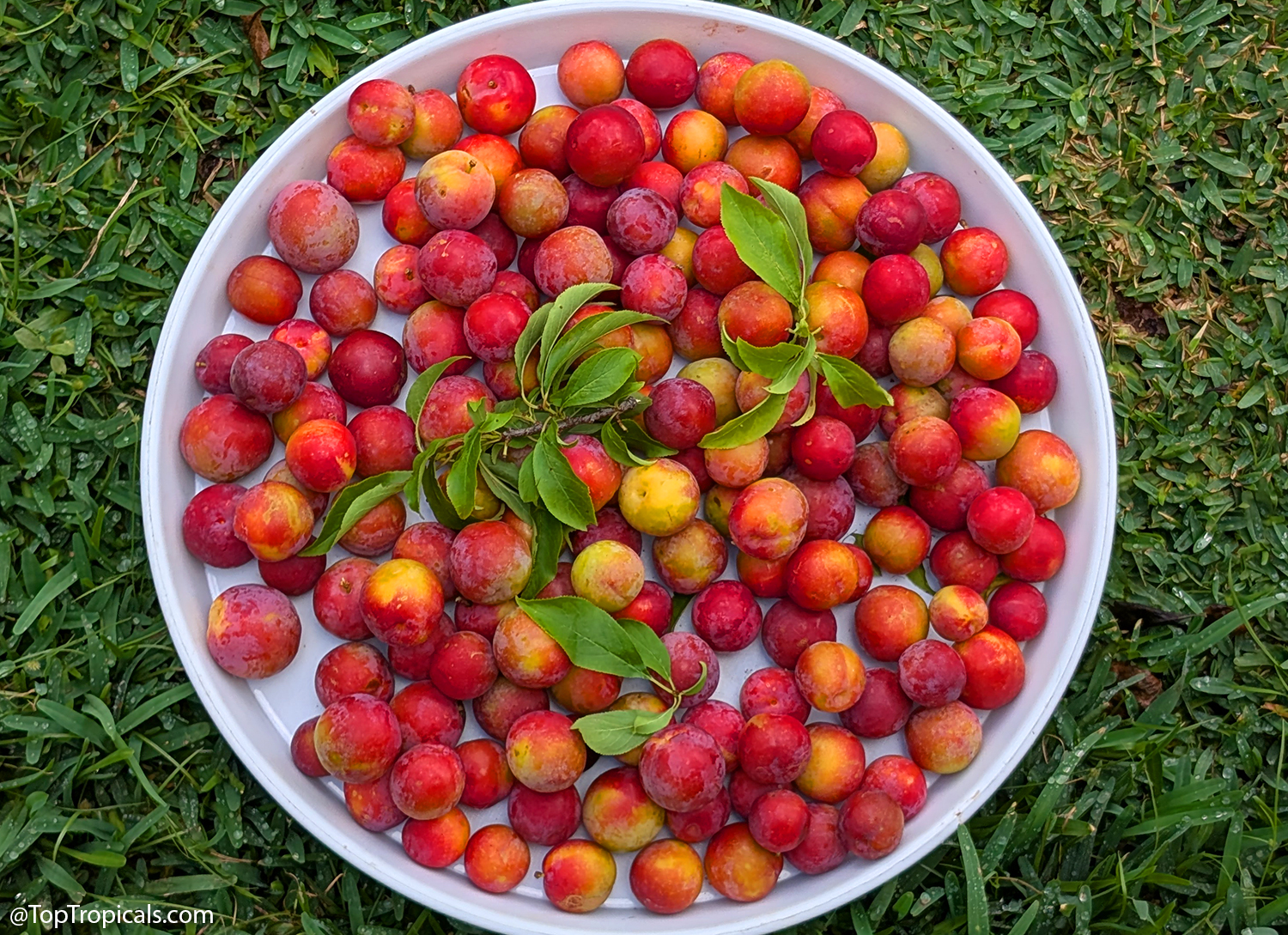
We just finished harvesting loquats
and mulberries,
and now another wave is coming in - low chill plums,
peaches, and nectarines fresh from the garden. This is one of
the most rewarding times of the year, when every season brings the fruit of
your labor and all that work finally turns into something sweet.
7 best exotic dwarf trees for maximum impact in small tropical landscapes 🏡
For a yard that feels like a tropical escape but doesn't have the space for a massive jungle, these seven selections from TopTropicals are game-changers, chosen for their compact size, high "curb appeal," and unique tropical flair.
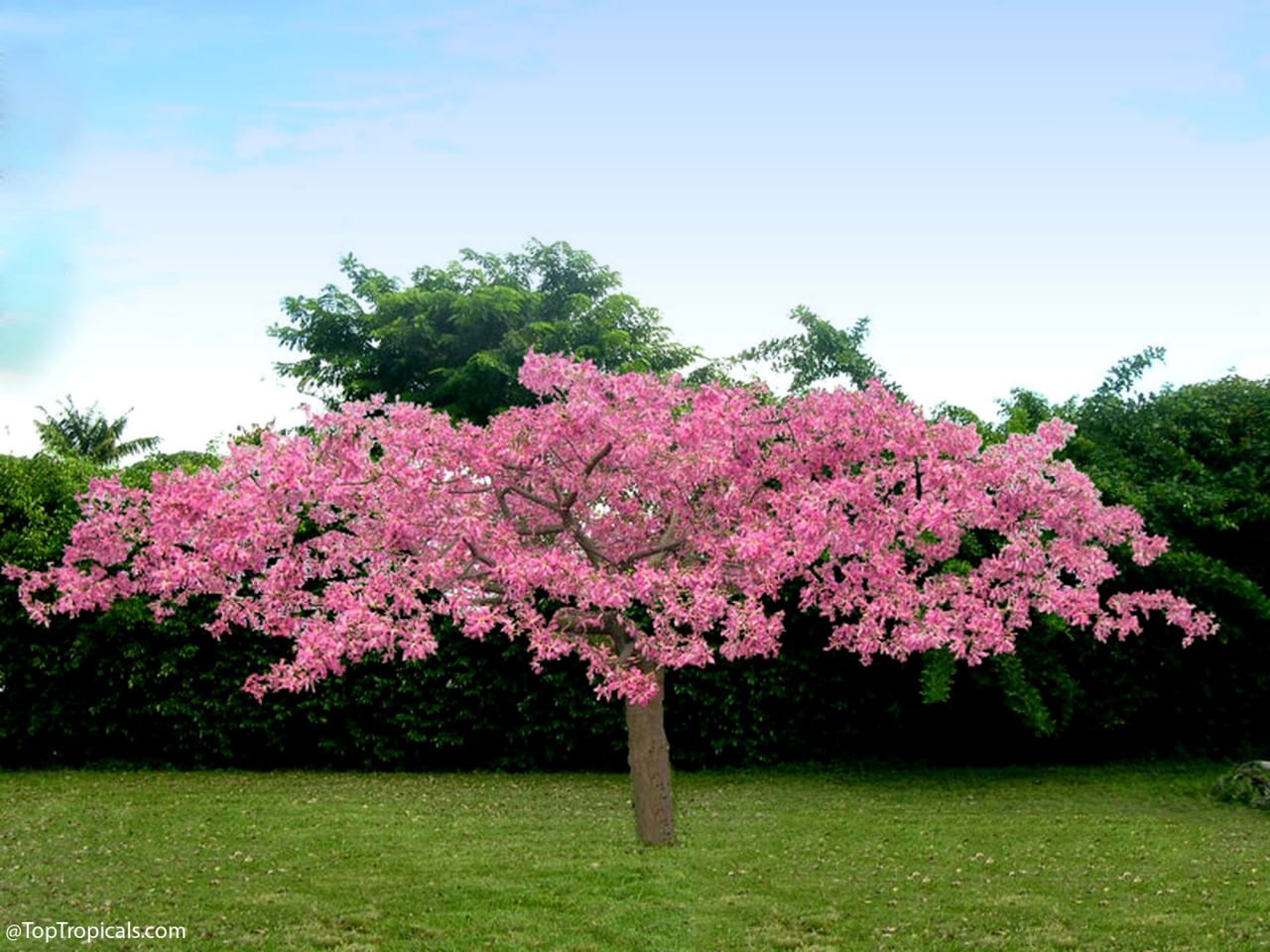
1. Dwarf Pink Princess Silk Floss Tree (Ceiba hybrid)
🌳 A spectacular grafted hybrid of the famous Silk Floss tree, but in a much smaller package: a unique, often "fat" or bottle-shaped trunk and large, showy pink flowers with white centers. 🏡 Unlike the standard Ceiba which can become a giant, the 'Pink Princess' is grafted to stay compact (usually under 10 - 12 feet), allowing you to enjoy those exotic, orchid-like blooms even in a tiny garden.
Ceiba Plant Facts
Botanical name: Ceiba sp. Also known as: Ceiba, Floss Silk Tree, Kapok Tree
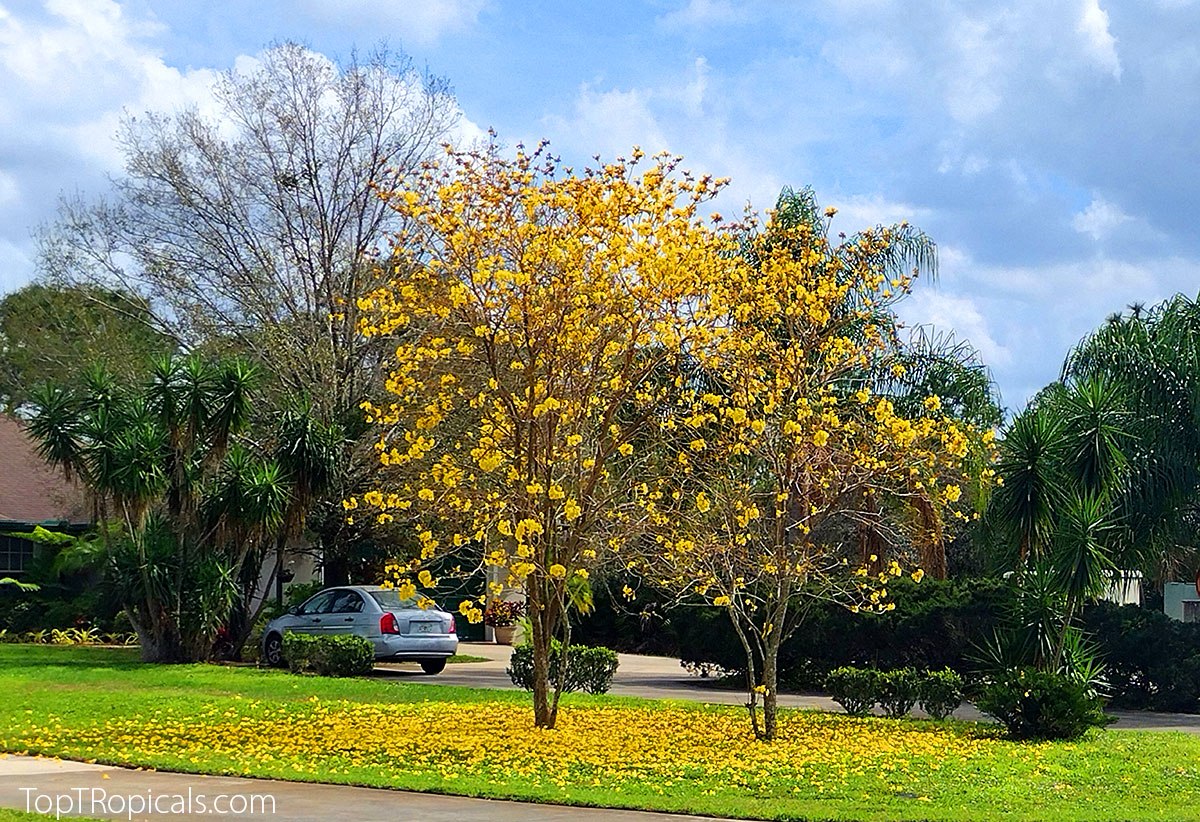
🌳 Known as the "Golden Trumpet Tree," this dwarf selection puts on one of the most brilliant displays in the plant kingdom. Before the leaves emerge in spring, the entire tree is covered in bright, trumpet-shaped yellow flowers. 🏡 This specific dwarf form stays much smaller and more manageable than the standard Tabebuias seen on city streets. Its silver-green foliage and rounded canopy make it an ideal "specimen" tree that acts as a focal point for your front yard.
Dwarf Golden Tabebuia Plant Facts
Botanical name: Handroanthus chrysotrichus, Tabebuia chrysotricha, Tabebuia chrysantha Also known as: Dwarf Golden Tabebuia
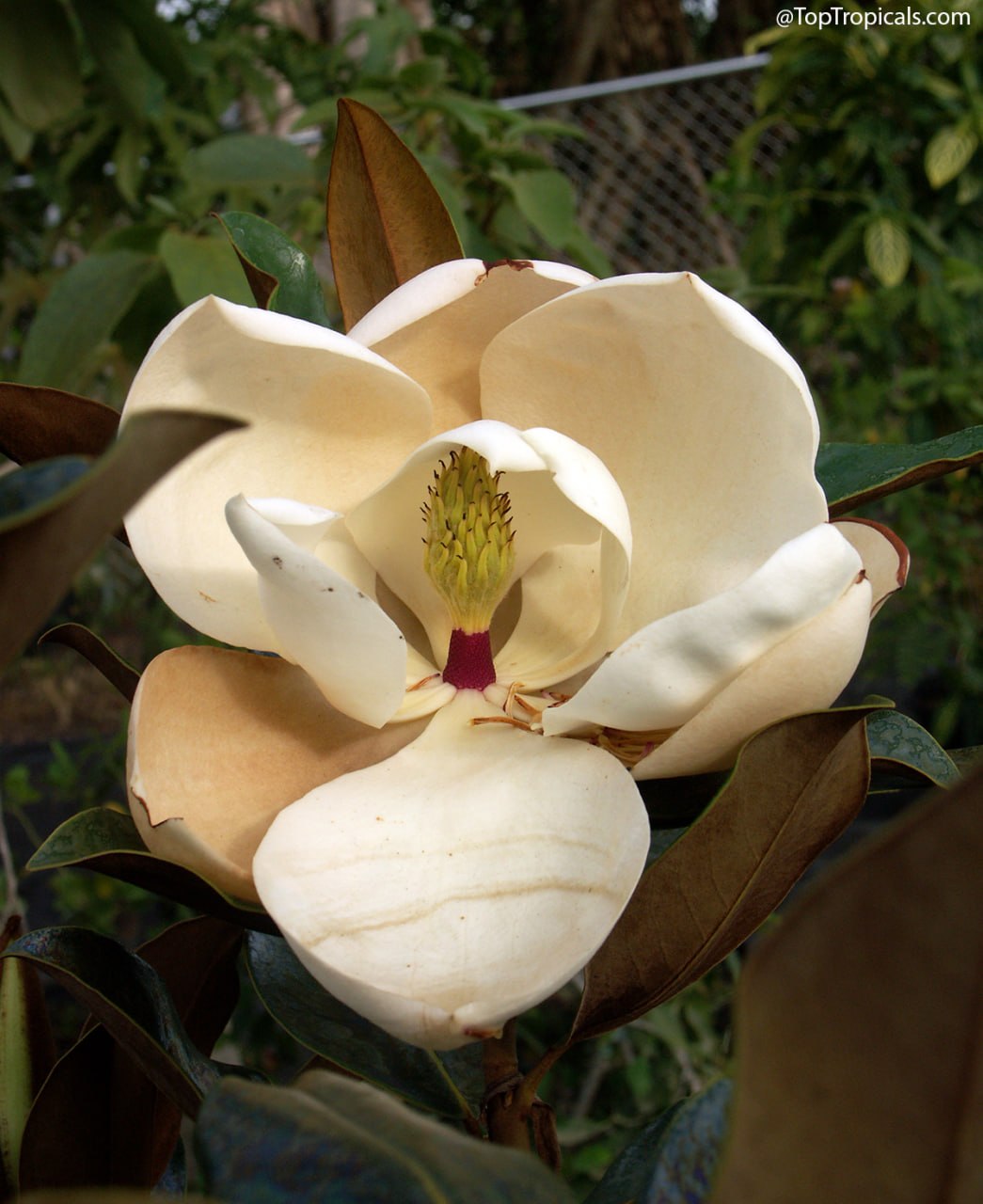
3. Little Gem Southern Magnolia (Magnolia grandiflora)
🌳 All the elegance of a classic Southern Magnolia but in a miniaturized version. It has the iconic waxy white, lemon-scented flowers and glossy leaves with fuzzy bronze undersides. 🏡 'Little Gem' is narrow and columnar, typically reaching only 15-20 feet (half the size of the standard species). It starts blooming at a very young age, so you don't have to wait years for those famous fragrant flowers.
Southern Magnolia Plant Facts
Botanical name: Magnolia grandiflora Also known as: Southern Magnolia, Bull Bay
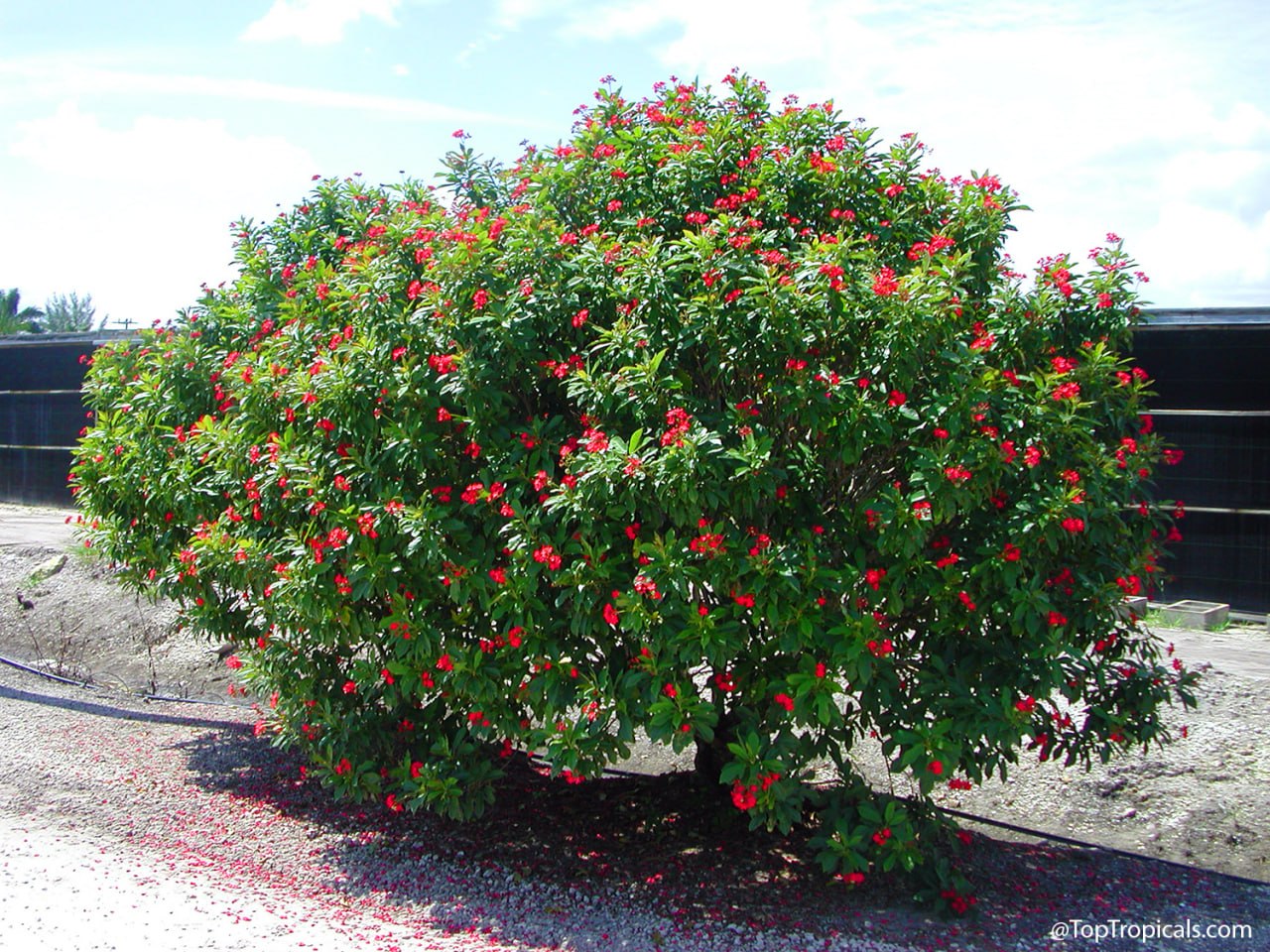
🌳 This "ever-blooming" small tree is a butterfly magnet. It features clusters of bright, cherry-red star flowers against glossy, fiddle-shaped leaves. 🏡 The Compacta variety is specifically bred to stay bushy and small. It blooms almost 365 days a year in warm climates, providing a constant splash of red that draws in hummingbirds and pollinators.
Peregrina Plant Facts
Botanical name: Jatropha integerrima, Jatropha pandurata Also known as: Peregrina, Spicy Jatropha, Coral Plant, Physic Nut
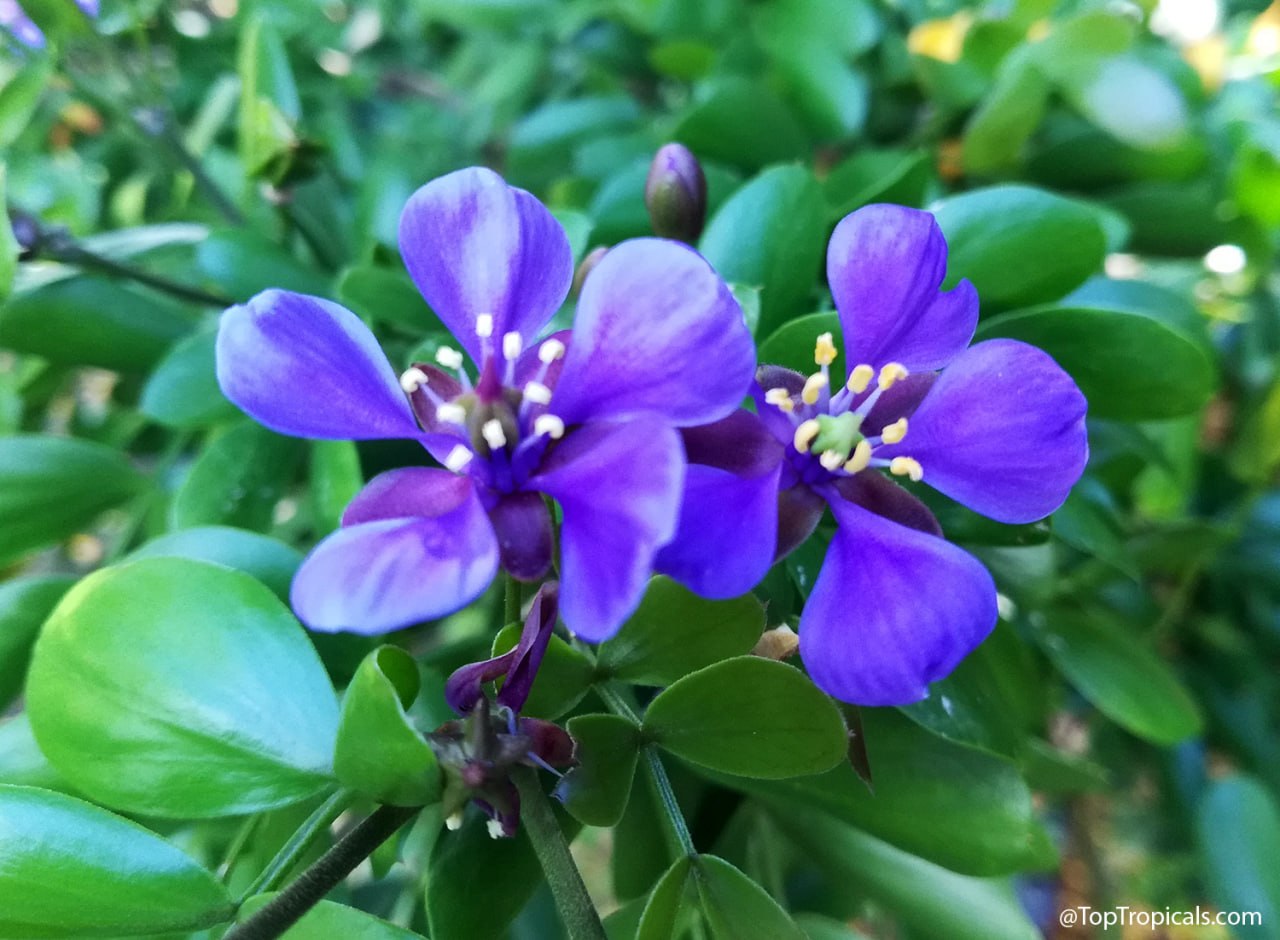
🌳 Known as the "Wood of Life," this is one of the slowest-growing trees in the world. It has fine-textured, dark green foliage and produce stunning, small blue flowers that fade to white, followed by bright orange seed pods. 🏡 Because it grows so slowly, it will never outgrow its space. It is extremely hardy, salt-tolerant, and hurricane-resistant, making it a "plant it and forget it" heirloom tree for coastal or small urban lots.
Lignum Vitae Plant Facts
Botanical name: Guaiacum sanctum Also known as: Lignum Vitae, Tree of Life, Gaiac tree
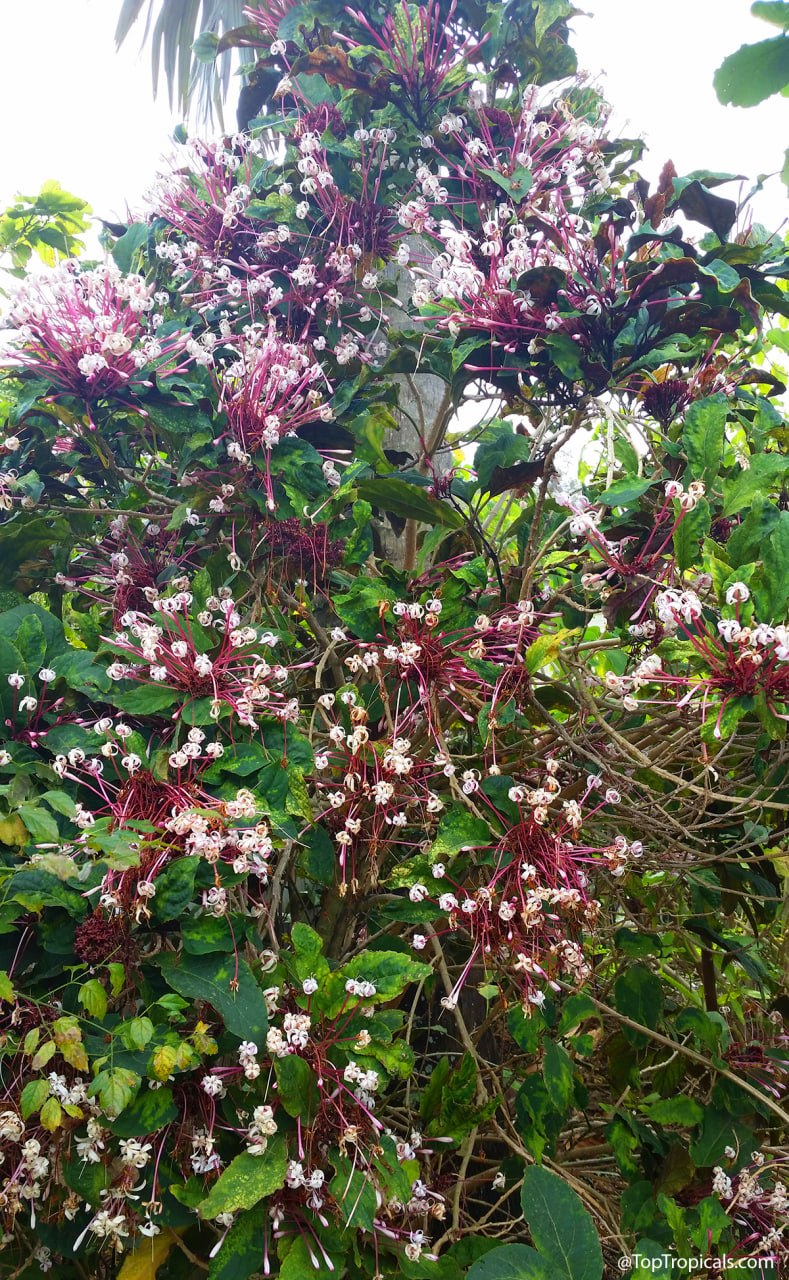
🌳 A visual firework display. The leaves are deep green on top and rich purple underneath. In late winter, it produces massive, 8-inch wide clusters of tubular pink-and-white flowers that look like an exploding star. 🏡 It is easily pruned to a single-trunk tree form. The purple foliage provides "curb appeal" year-round, while the winter blooms provide a much-needed pop of color when other plants are dormant.
Winter Starburst Plant Facts
Botanical name: Clerodendrum quadriloculare Also known as: Winter Starburst, Fireworks, Clerodendron
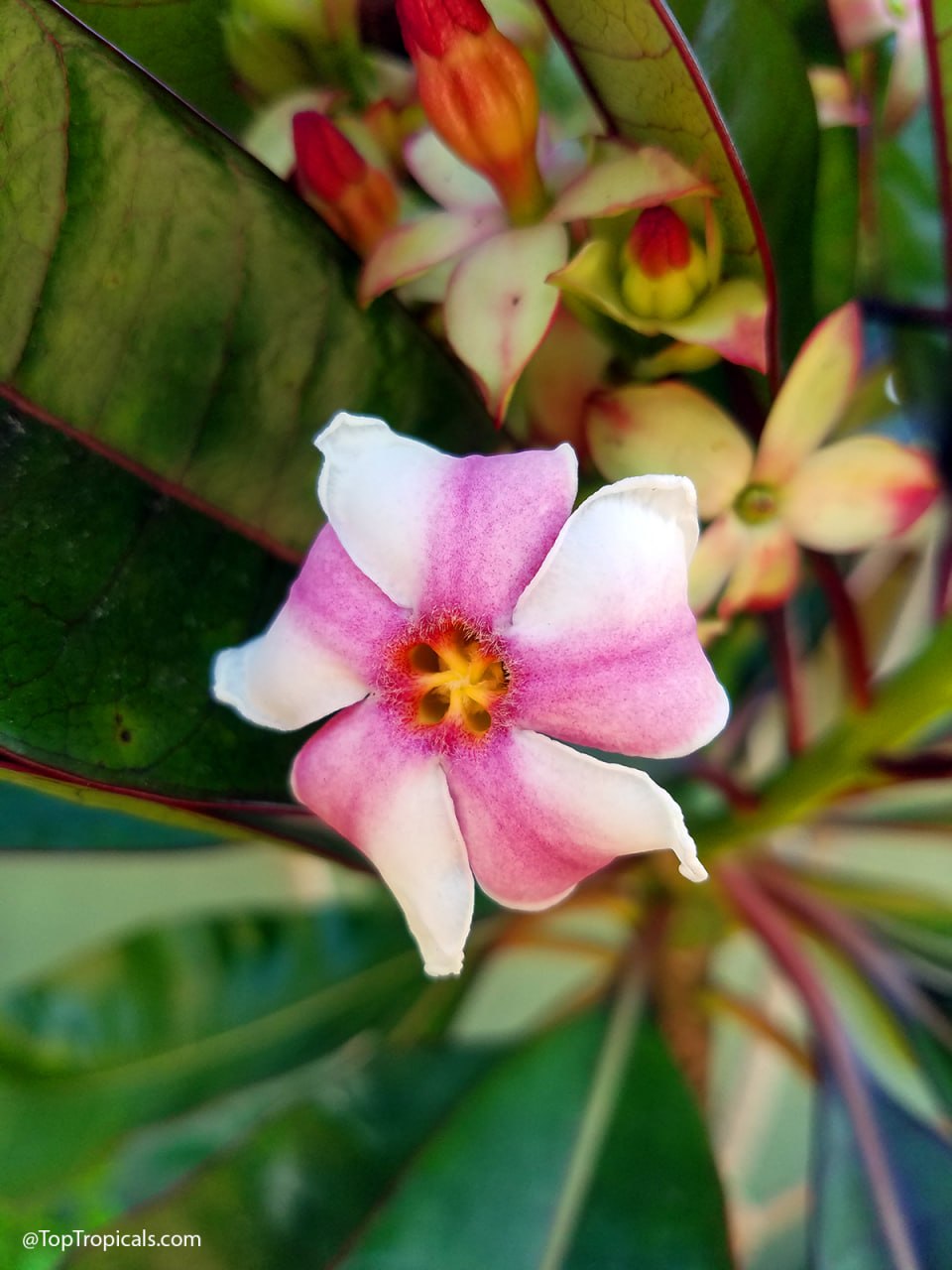
🌳 This is a rare, small evergreen tree with glossy, dark green leaves and clusters of highly fragrant, star-shaped white flowers with a red "eye." 🏡 It has an naturally architectural, upright habit. The fragrance is incredible - sweet and heavy - making it a perfect "sensory" tree to plant near a patio where you can enjoy the scent on summer evenings.
👉 more




 Planting