Garden Blog - Top Tropicals

Date: 24 Jun 2018

TopTropicals

Spring is coming, plants need food! Time to fertilize...

Last winter was long and snowy in the most part of our country. Hold on fellow gardeners up North, it is almost over!
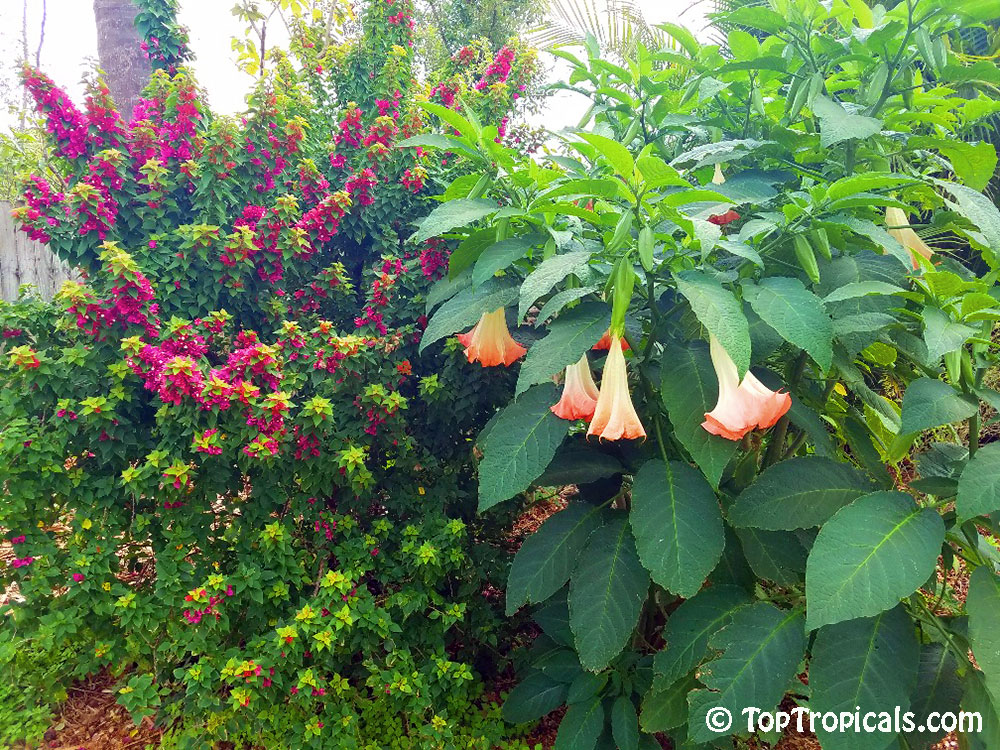
Here in Florida we have been blessed again with a mild winter without serious cold snaps. Early Spring that is already in the air. Look at this picture of flowers in our front yard now.
If the weather is already warm in your area (low temperatures above 55), it is time to start fertilizing. We are sending our love and support to tropical Puerto Rico suffered from hurricane last year, and will be happy to help you guys to restore your lost gardens!

CHECK LIST

what to do to give your garden a good kick start:

1. Slow release granulated food. Apply Slow Release Fertilizer and continue once a month. 1 tsp per gallon of pot, or a handful for in-ground plants. This will provide essential macro elements (NPK) required for a plant growth.

2. Water soluble micro-elements. Besides macro-elements, plants need many other elements that most of the time missing in soil. A lack of micro-elements causes different deficiencies, resulting in weak root systems, slow growth, deformed leaves, leaves yellowing, lack or no flowers/fruit. Apply these supplements as a foliar spray once a month to induce healthy growth and flower/fruit development. We recommend the following micro-element products to keep your plants healthy and vigorous year round:
a) SUNSHINE SuperFood - plant health booster. This revolutionary new liquid complex contains ALL microelements needed and can fix all possible problems occuring to your tropical plants - from roots to flowers and fruit. We have convenient dropper bottles of 5 ml for small plant collections, 50 ml for larger gardens, and 100 ml for professional landscape applications.
b) SUNSHINE-Micro - Microelement booster - for common iron deficiency (pale leaves)
c) SUNSHINE-Super-Iron - Microelement booster - for severe iron deficiency (severe yellowing leaves)

3. SUNSHINE plant boosters - SUNSHINE-E, -BC (caudex plants and bonsai), -H (house plants). Apply these natural plant stimulants to help plants recover from cold, dormancy, increase plant's metabolism and make a plant more readily absorb both Macro- and Micro-elements. SUNSHINE boosters also will help plants grow vigorously, withstand Summer heat and drought, and produce bigger and better flowers and fruit.

4. Kickstart a sweeter fruit. To get a better and sweeter crop in Summer and Fall, you need to start first application now. SUNSHINE Honey - is natural, Amber-colored, honey-like liquid microelement product for fruiting and edible plants that will make them sweeter, tastier and more flavorful! Very effective for tropical fruits, tubers, vegetables. Great for tropical fruit trees: Mango, June Plum, Annonas, Tropical Cherries, Carambola, Citrus; subtropical fruit trees: Peaches, Apricots, Loquat and berry plants (blackberry, mulberry, etc.)

5. SUNSHINE-S. Don't forget to plant seeds! It's a perfect timing now to start your tropical garden indoors even if it is still cold outside. Soak them in SUNSHINE-S solution to increase germination rate.

See full list of SUNSHINE boosters. All these products are essential plant elements. They are not toxic and can be used safely for edible landscapes.

Date: 24 Jun 2018

TopTropicals

Secrets of perfect mulch

Poor man's mulch... or natural solution? With warmer weather weeds started spreading around the garden... pulling, spraying, mulching them... that helps. Here are a few tips about natural mulch based on our own experience.

1) Do not rake dry leaves and pine needles, use them as natural mulch. A leaf is a part of a plant with the highest nitrogen content which is a major plant nutrient. After breaking down, leaves will work as a fertilizer. If you prefer to have a fancy mulch, put it on top of those leaves.

2) Do not dispose cut grass. Spread it around trees and shrubs. Hay is one of the best mulching materials. It has at least 2 exceptional benefits: a) after couple rains it becomes dense, creating perfect protection from sprouting weeds, and b) grass is actually also a leaf - so it had built up lots of nitrogen too, and works as a fertilizer.

3) Be careful with "bulk mulch" that sometimes offered by local tree service companies (usually for free). It often contains bugs, plant parts that are infested with bad insects, or simply fleas. Natural mulch from your own garden is always the best choice, proven organic and safe solution.

4) A few layers of newspaper (or even better - cardboard from your endless Amazon deliveries) placed underneath the mulch work as a great weed barrier and will make your mulching work results last 4-5 times longer. Water drains through them, and paper products are ecologically safe and biodegradable.

Date: 24 Jun 2018

TopTropicals

How to make a Mango tree bloom and fruit

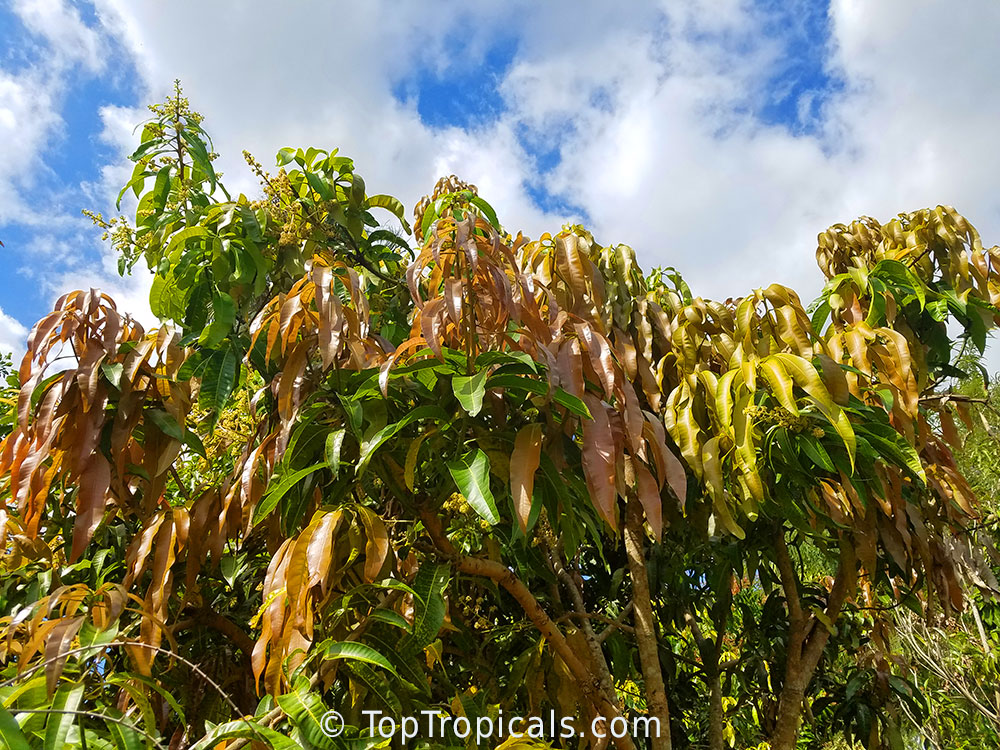
Mango trees are especially beautiful during spring time when they flush out multi-color new leaves! But you want your mango be not only beautiful but fruitful as well. Here are some tips:

1) Fertilize Mango tree with a balanced slow release fertilizer starting March. Use 1 tsp of granulated fertilizer per 1 gal of soil, or a handful or two for an in-ground tree. You may add one application of foliar spray of a water-soluble bloom booster fertilizer (the one for Roses or Azaleas will work). This will give your tree a good macro-nutrient kick-start.

2) Spray entire tree with SUNSHINE-Superfood solution. This will provide all necessary micro-elements and keep the plant healthy and strong throughout the season. Repeat treatment once a month until harvest time.

3) For sweeter fruit, apply SUNSHINE-Honey solution several times:
- early spring before flowering
- at setting buds
- right at the beginning of setting fruit
- after harvesting, to provide the tree with all good micro-nutrients before resting season.

Date: 24 Jun 2018

TopTropicals

Varieties of Guava

Q: We were just in Australia where guava juice was available in the markets. Pretty sure I can grow different varieties of Guava's here, as I have 3 already, but wondering if it would be psidium guajava or littorale as the best bet for making the pink juice we enjoyed. Thanks so much, your plants are so healthy when they arrive!

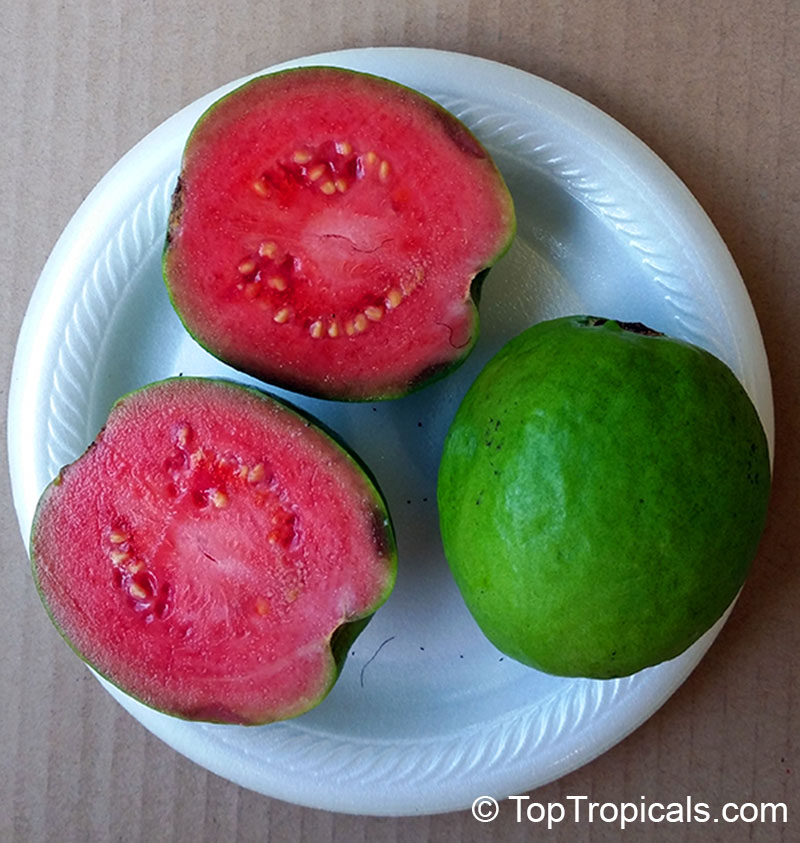
A: Both species are used for commercial juice making. We grow lots of Psidium littorale - Cattley Guava, Strawberry Guava - and we make delicious juice. Psidium guajava - Tropical Guava, Guajava - is less juicy, fruit is somewhat dry, but it still has a great flavor; you may need to add water to blended pulp. And sugar - add it to both kinds of fruit!

Check out our Guavas!

Date: 24 Jun 2018

TopTropicals

Mango Fralan - a new exciting discovery

Q: I am looking for a special mango called Fralan. It is the most popular mango in Vietnam where I am from. Do you have this variety?

A: Fralan is a relatively new variety of Mango, originated from Thailand, with green skin. In Thai, "Fralan" means "Thunder" - as the fruit cracks when peeled. It also has another meaning "Foreigner" as people from the West seem to speak too loud for Thai ears. This mango has no turpentine aftertaste unlike some other varieties. Its flavor is superior. The flat seed is similar to Nam Doc Mai, it has no seed coat which is a good advantage, leaves more room for flesh and makes it easier to eat.
Fralan can be eaten:
a) when green - it is crunchy, sweet, producing cracking sounds (=Thunder)
b) when yellow (fully ready) - very soft, no fiber whatsoever
The tree is early-middle harvesting season depending on climate and has a DWARF habit! Which make is excellent choice for potting culture. See full list of Mango varieties from our store.