Garden Blog - Top Tropicals

Date: 13 Aug 2025

🌸 Orchid Tree - Bauhinia: Winter Blooms & Year-Round Beauty
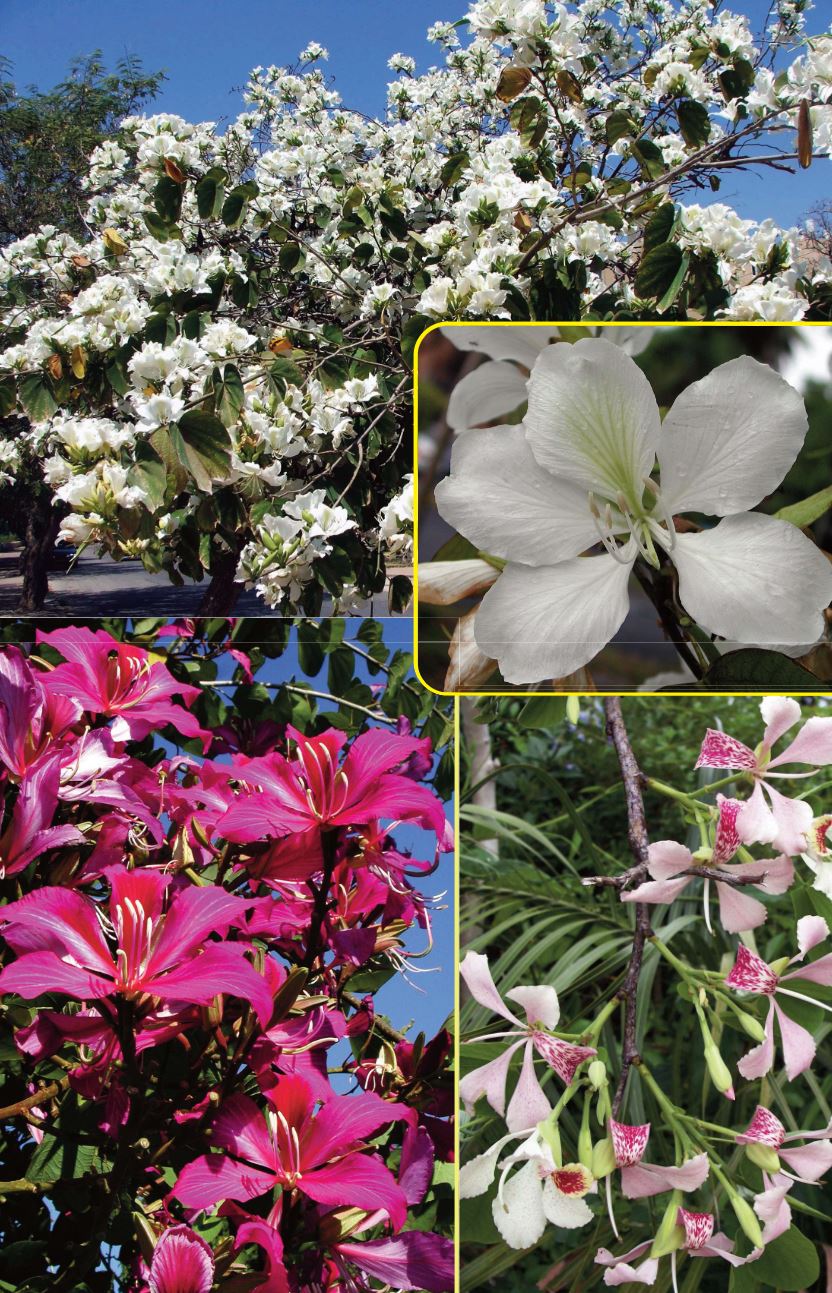
Collage  showing  Bauhinia  blakeana  with  magenta  flowers,  Bauhinia  variegata  var.  candida  with  white  blooms,  and  Bauhinia  monandra  with  pink  speckled  flowers;  all  suitable  for  gardens,  with  some  varieties  adapted  to  container  growing  if 
 trimmed.
Bauhinia blakeana, Bauhinia variegata var. candida, and Bauhinia monandra – Orchid Trees in Bloom

Sometimes a plant stops you midwalk. Flowers so bright they almost glow, leaves shaped like butterflies — that’s a Bauhinia, the Orchid Tree. These fast growers bring color when many gardens are quiet, with some blooming in the heart of winter.

🌟 Why Grow Bauhinia?

  • Exotic blooms in colors from white to deep magenta
  • Distinctive leaves — nature’s own butterfly design
  • Many varieties flower in the cooler season
  • Fast growth, easy shaping, more blooms after pruning
  • Varieties for large yards, small gardens, and sunny patios
  • Tolerant of heat, drought, and poor soils

Bauhinia Care Tips

🌞 Outdoor

Full sun for best flowering, well-draining soil, deep watering once established. Light pruning after bloom keeps shape and encourages more flowers. Protect young plants from frost. During the growing season (Spring - Fall), apply a balanced fertilizer - like top-dress slow release fertilizer or controlled-release Green Magic. Liquid fertilizer Sunshine Boosters Megaflor can be used year around - to promote vigorous growth and abundant blooms.

🏡 Indoor / Patio

Bright sun (south window or outdoors in warm months), large pot with drainage, even moisture during growth, and a bloom-booster feed in season. Feed regularly with a balanced fertilizer controlled-release Green Magic. Liquid fertilizer Sunshine Boosters Megaflor can be used year around - to promote vigorous growth and abundant blooms. Bring indoors before frost.

🍂 Seasonal Note – Bauhinias are Deciduous

Bauhinias drop their leaves in winter — even in warm climates. This is normal and part of their rest cycle. Bare branches in the cool season will leaf out again in spring, often just as flowers begin.

📝 Quick choice guide

Shop Bauhinas

Watch videos about flowering trees

Date: 19 Nov 2025

5 fruits that help manage gout (high uric acid)

5 fruits that help manage gout

5 fruits that help manage gout

🍒 5 fruits that help manage gout (high uric acid)


💥 High uric acid, hyperuricemia, also called gout, causes painful swelling in joints and can affect kidney health over time. Medicine helps, but so does what you grow and eat. Some fruits can naturally flush out excess uric acid and reduce inflammation. Here are five easy fruit trees and plants that can help:

🍋 Citrus


Citrus trees are great to grow in pots or sunny yards. Lemons and oranges are rich in vitamin C, which helps kidneys remove uric acid and keeps the body’s pH balanced. A glass of lemon water in the morning or a fresh orange during the day can help. Studies in Science Direct show lemon juice lowers uric acid levels in the blood.

Berries (mulberries, blackberries, blueberries, strawberries)


Berries are packed with antioxidants that fight inflammation and support kidney health. Mulberry trees are perennial trees and bushes that produce berries year after year. They grow well in both temperate and warm areas, and are an easy choice for all backyard gardeners. Mulberry high water content helps flush out toxins. Research from the National Institute of Health shows berries rich in polyphenols can lower uric acid naturally.

🍒 Cherries


Cherries are one of the best fruits for gout. They’re rich in anthocyanins, compounds that reduce inflammation and uric acid levels. National Institute of Health studies have found regular cherry intake helps lower gout attacks. Dwarf cherry trees can grow in large pots if space is limited.

🍌 Bananas


Bananas are rich in potassium, which helps the kidneys remove uric acid more efficiently, according to PubMed central. They’re also low in purines, the compounds that form uric acid. Dwarf banana varieties grow well in containers and add a tropical look while supporting healthy digestion and uric acid balance.

🍍 Pineapple


Pineapple contains bromelain, a natural enzyme that eases swelling and pain caused by gout. It’s also refreshing and supports kidney function. Studies by global health science group show pineapple juice can help reduce inflammation and uric acid. It’s easy to grow in a pot or sunny garden bed.

These fruits won’t replace medicine, but they can support your body’s natural detox system. Grow them, eat them fresh, and enjoy both their flavor and health benefits.

🛒 Explore Fruit trees and grow your own natural remedies

📚
Learn more:
Grow your own brain food: avocado and cacao
Plant a fruit tree - and breathe easier: fruit might be the surprising key to healthier lungs
11 tropical fruits to eat instead of taking a fiber supplement
Tropical fruit health benefits guide - what fruit and edibles can help with health issues and vitamin deficiencies, Part 1 and Part 2.
Top 10 fruiting plants you'll ever need for your health benefits

#Food_Forest #Mango #Remedies #Discover

🟢 Join 👉 TopTropicals

Date: 28 Dec 2025

Mango tree tipping - Quick Field Guide: why it improves flowering and production

Mango tree tipping - Quick Field Guide

Mango tree tipping - Quick Field Guide

🥭 Mango tree tipping - Quick Field Guide: why it improves flowering and production


📊 Mango Tree Tipping - Quick Field Guide


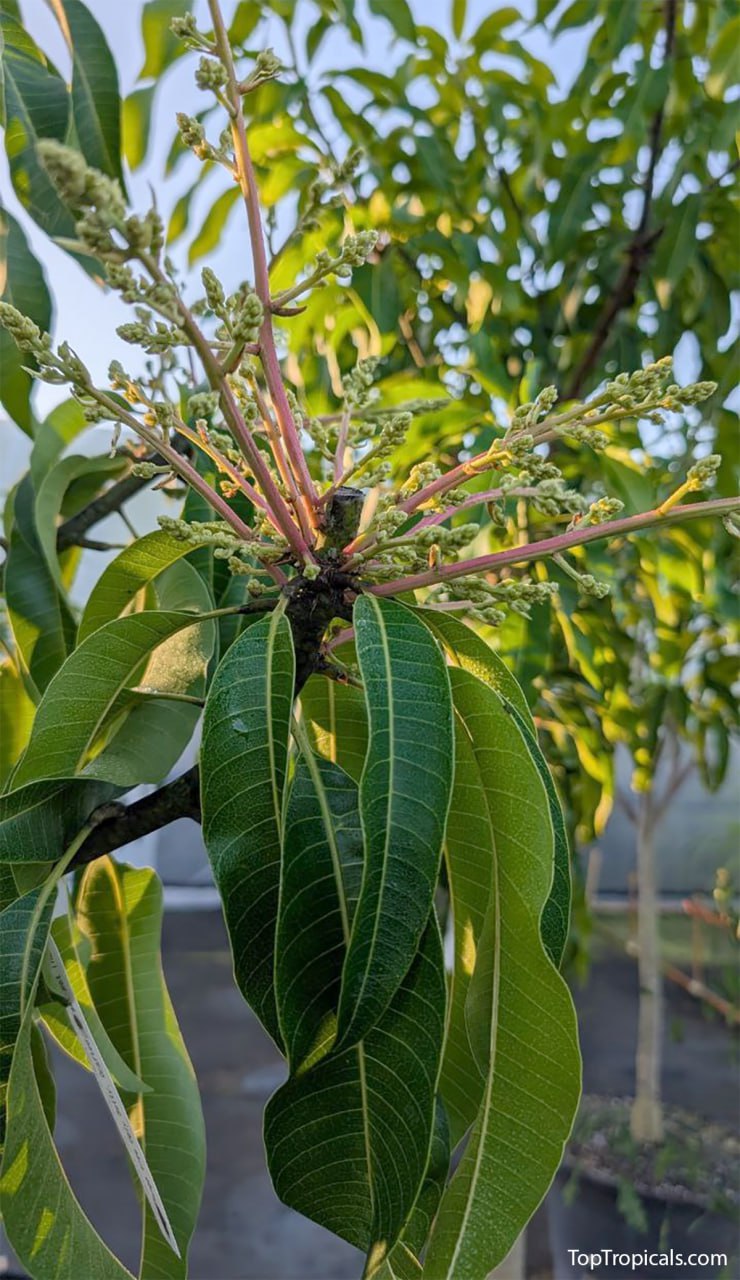
It is mid-winter. While early mango varieties like Nam Doc Mai are already flowering, late varieties still have a month or two before they start. Trees such as Keitt, Honey Kiss, Kent, Venus, Beverly, Palmer, and Neelam bloom later in the season. In warm climates without expected cold snaps, this is still a good window for tipping before flowering begins. Tipping encourages more branching, more flower tips, and better fruit production. If cold weather is still possible, save this guide and tip after the risk of cold has passed - but always before the tree enters the flowering stage.

✔️ What tipping is


Tipping is the removal of the soft growing tip of a mango branch once it reaches about 20 inches long. This simple cut stops straight upward growth and forces the branch to split into multiple side shoots.

✔️ When to tip


· Young, actively growing trees
· After a flush hardens slightly (not brand-new soft growth)
· Warm weather when the tree is growing strongly
· Best during the training years, not heavy fruiting years

✔️ How to tip (step-by-step)


· Let a branch grow to about 20 inches
· Using clean pruners, remove 1-2 inches from the tip
· Cut just above a node (leaf joint)
· Do not cut into thick woody growth - this is a light heading cut

✔️ What happens next


· 2-4 new branches usually form below the cut
· The tree becomes shorter, wider, and stronger
· More branch tips = more flowering points
· Better light penetration inside the canopy

✔️ Why it improves flowering and production


· Mango flowers form at branch tips
· More branches = more tips
· A well-shaped tree puts energy into fruiting, not height
· Easier harvesting and long-term structure

❌ Common mistakes to avoid


· Letting branches get too long before tipping
· Tipping weak or stressed trees
· Over-tipping all at once (stagger cuts)
· Doing it right before cold weather
· Doing it too close to flowering

✍️ Simple rule to remember


→ grow 20 inches → tip → repeat
This builds a compact, productive mango tree from the start.

🛒 Explore mango trees

📚 Learn more:


Tipping mango trees
📱 Why tipping mango trees makes them fruiting machines (DIY Garden Tip)

#Food_Forest #Mango #How_to

🟢 Join 👉 TopTropicals

Date: 7 Jul 2016

Growing fruit trees in containers

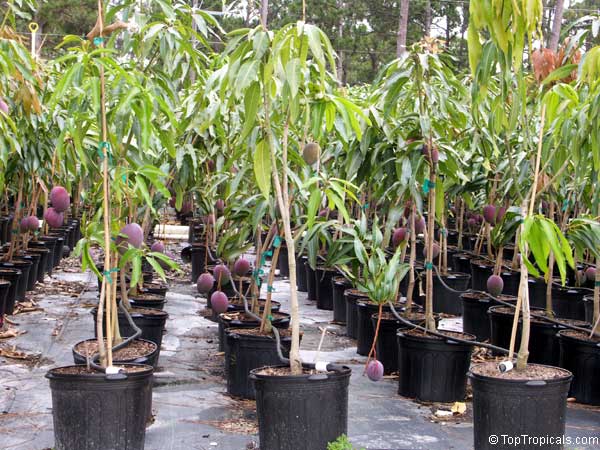
Will it fruit in a pot? YES! Many tropical fruit trees can be grown in a pot. We get many calls from customers in cooler climates asking if our tropical trees can grow and fruit in a pot. The answer is yes!

Several plants fruit well in pots. Blackberries and raspberries, barbados cherries, blueberries and many more start fruiting even in their 1 gallon containers. We are especially excited about our new Pixie grapes, which are heavily laden with grapes even at only a foot long!

While some plants are small and will fruit easily in a container, others are large trees. For the tree type fruits, we recommend growing only non-seedling plants for pot culture. We have cuttings, air layers and grafted plants that are great options. These have the ability to fruit right away, as they are the same age as the parent tree. Some horticulturists recommend removing the first year fruit to allow the plant to focus on growth and establishing. If the plant is being kept in a pot, this is not necessary.

We also have several dwarf varieties of fruit trees that will thrive in a pot. For avocados, we carry the Wurtz variety which is a dwarf tree... read more...

Date: 22 Apr 2026

When Mango Ripens on the Tree, Everything Changes

Smokey  and  Sunshine  enjoying  fresh  homegrown  mango  harvest  in  garden
Sunshine: Never understood the passion for Mango. I tried store Mangoes. I really tried. Just disappointment. So this is what real Mango is supposed to taste like?

Smokey: Now you know.

There is a moment when a Mango is perfectly ripe — soft to the touch, warm from the sun, fragrant before you even cut it open. The skin gives way, and suddenly there is color, juice, and a sweetness that feels almost unreal. Not sugary, but deep and layered, like something that took its time to become what it is. In that moment, it feels less like fruit and more like something truly given, exactly as it should be.

Mango Plant Facts

Botanical name: Mangifera indica
Also known as: Mango
USDA Zone: 9 - 11
Highligths Large tree taller than 20 ftSmall tree 10-20 ftFull sunWatering: Moderate. Water when top soil feels dryYellow, orange flowersPink flowersEdible plantSeaside, salt tolerant plant
Get personalized tips for your region

What you find in most supermarkets is something else entirely. Picked early so it can survive shipping, it never gets the chance to finish ripening process. It softens, it turns yellow, but the depth never comes. The flavor stays thin, and the texture often turns fibrous — strings in the flesh that get stuck in your teeth instead of melting away. That fiber is not an accident. It helps the fruit stay firm enough to handle transport without damage. It looks like a Mango, but it never becomes one.

The only way to close that gap is simple — let the fruit ripe where it belongs. On the tree. When you grow your own Mango, you control that moment. You pick it when it is actually ready, not when it has to survive a truck ride across the country. And that one difference is everything you taste.

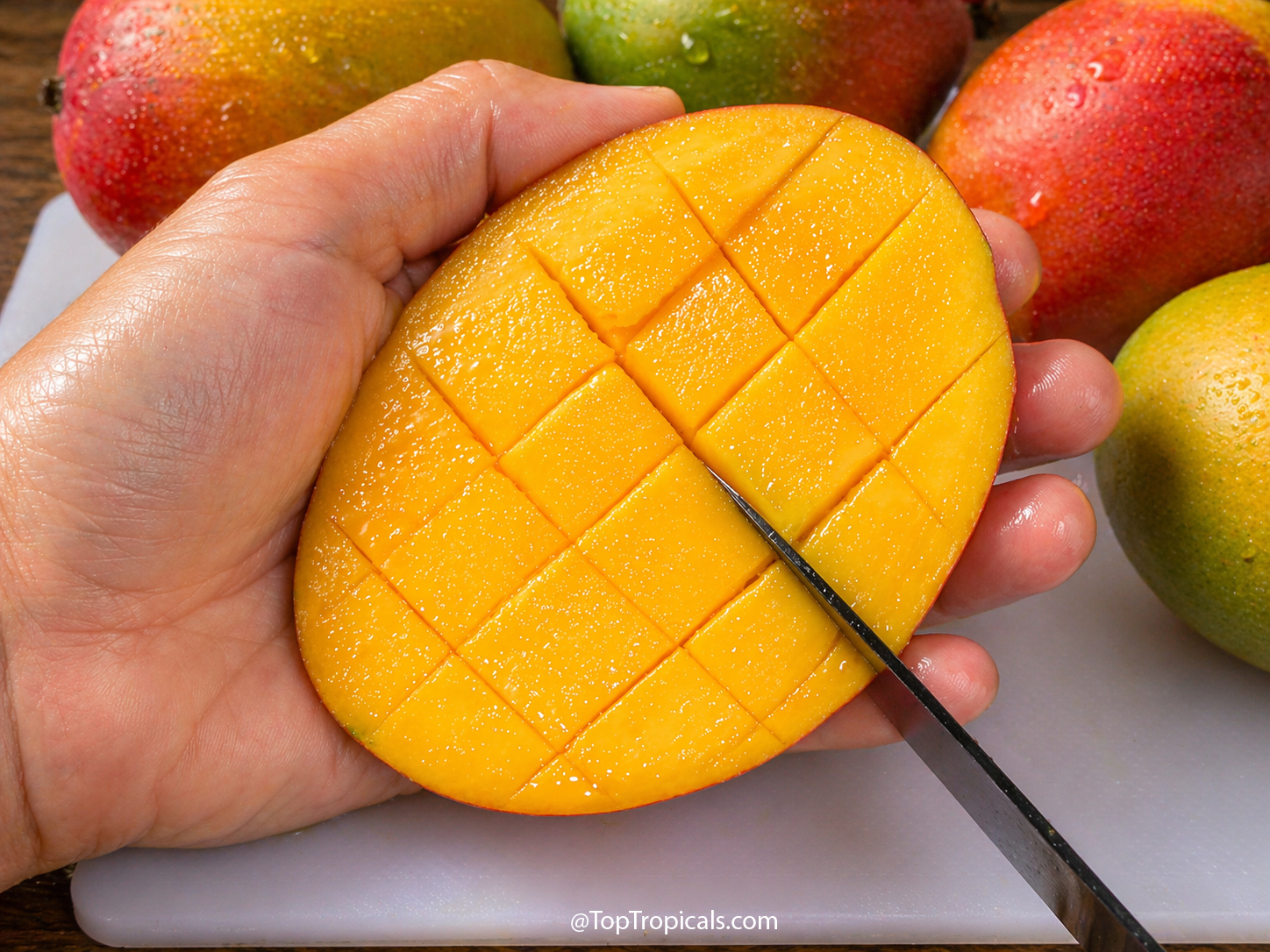
Close-up  of  a  hand  holding  a  mango  cheek  while  scoring  the  bright 
 orange  flesh  into  a  grid  pattern  with  a  knife,  with  whole  mangoes  in  the 
 background.

Scoring a Mango cheek into cubes - the easiest way to prepare clean, ready-to-eat pieces.

📚 Learn more about Mango varieties

🛒 Shop Mango Trees

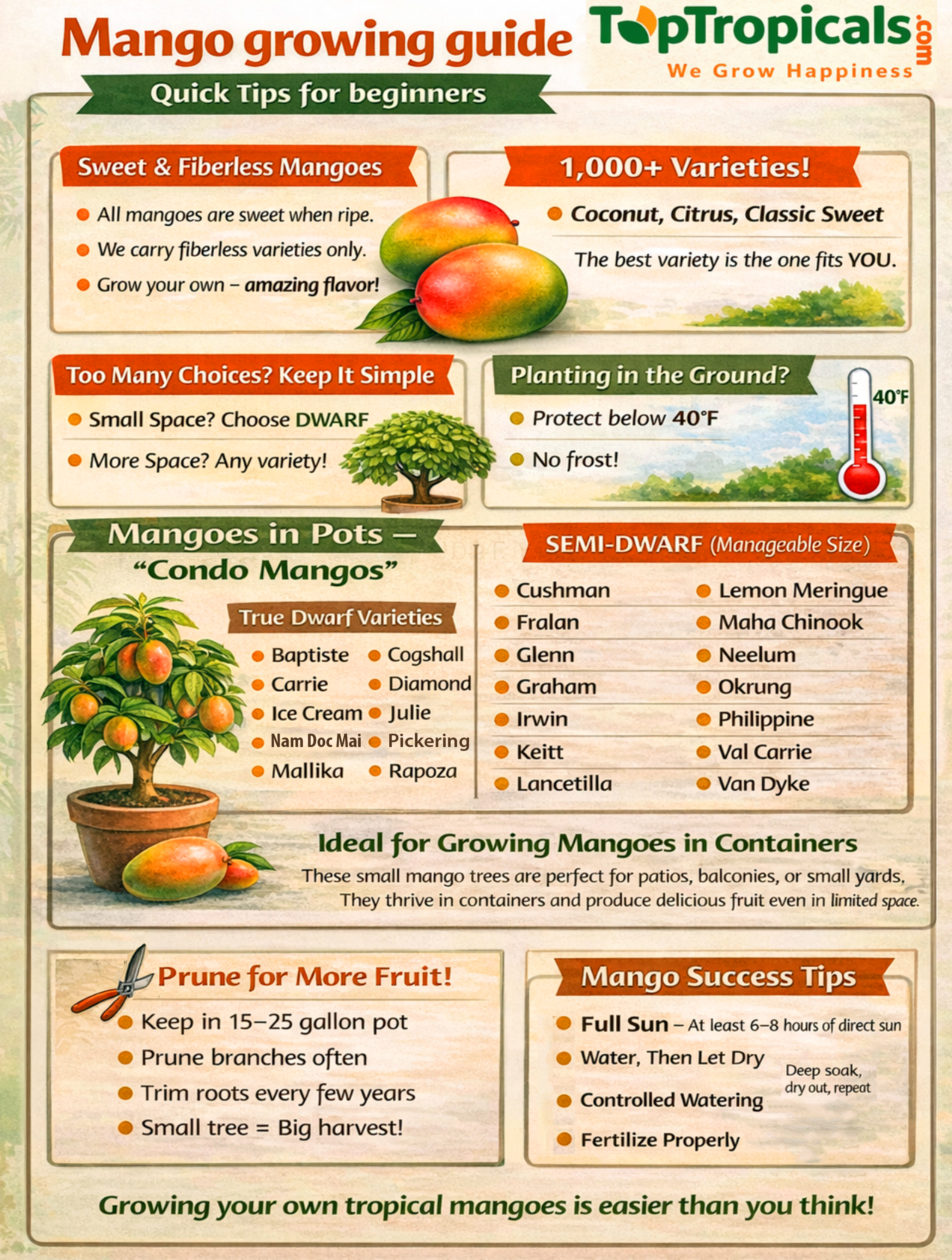
Educational  infographic  titled  mango  growing  guide  showing  beginner 
 tips  for  growing  mango  trees,  including  sweet  fiberless  varieties,  dwarf  and
   semi-dwarf  options  for  containers,  planting  tips,  pruning  advice,  watering,
   sunlight,  and  fertilizing  recommendations,  with  illustrated  mango  trees  and
   fruit.

Quick beginner guide to growing Mango trees - from choosing the right variety to pruning, watering, and container growing tips.