Garden Blog - Top Tropicals

Date: 25 Jun 2019

How soon will Guava tree fruit?
Q: Can you tell me how your Guava trees are propagated? Grown from seed vs. air grafted, etc.? I'm interested especially in the Barbie variety. In particular, I'd like to know how long it takes them to bear fruit - I live in Southern California zone 10b, with good sunlight.

A: Guavas can be propagated by seed, air layers, or grafting. Propagation method depends on the species.
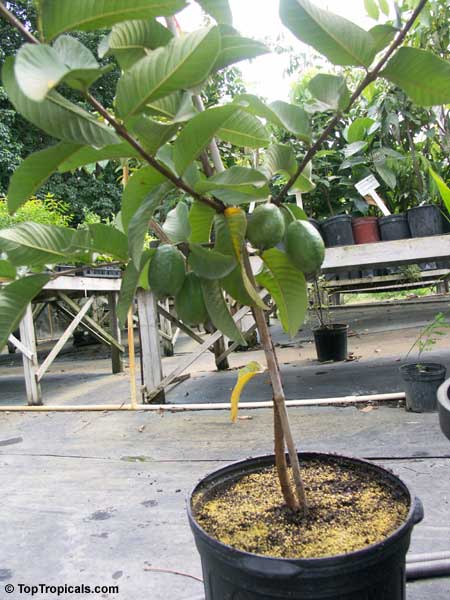
Cattley guavas - Psidium littorale - are usually grown from seeds and start flowering and producing as early as in 2-3 years from seed. Tropical guavas, Psidium guajava - especially named varieties, are propagated usually by air layers, and the rarest varieties like Variegated Honey Moon are often grafted, although they will come true from seed (it's just takes them longer to fruit). Both air-layered and grafted plants start producing right away, usually on the same year of planting or next year, depending on growing conditions.
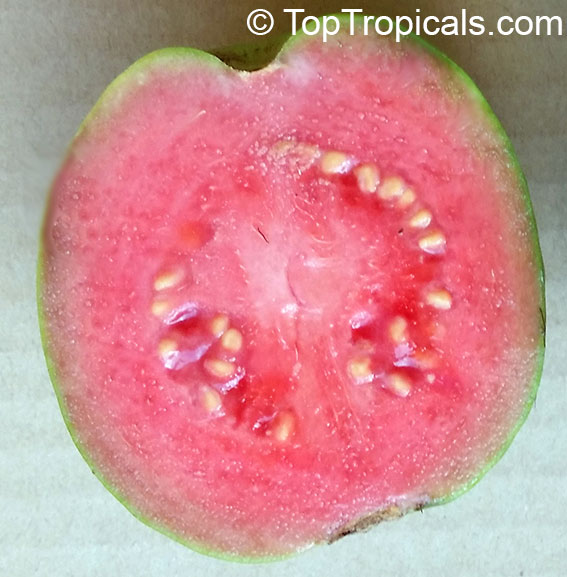
Barbie Pink is a superior variety, very popular among fruit lovers. It produces large aromatic fruit with a bright pink pulp and very few seeds. This variety is air-layered; in our nursery, these plants start flowering and setting fruit in 3 gal containers.
Plant this tree in full sun and provide regular watering, guavas don't like to dry out. Use fertile soil, with at least 50% of compost, and add some soil conditioning components for better drainage: bark, sand, perlite, etc. Mulch well, just make sure to keep mulch 2-3" away from the trunk. Follow our detailed planting instructions that come with every plant, and you are good to go!

Recommended fertilizers:

Fruit Festival Plant Food - Super Crop Booster
Mango-Food - Smart Release Fruit Tree Booster

Date: 17 May 2019

Grafted Guanabana - what is the trick?

TopTropicals.com

Q:Should I buy grafted Guanabana or a seedling? It is a big price difference. I have heard that Annonas fruit within 3 years from seed, why do I need a grafted tree?

A: Annona muricata - Guanabana, or Soursop - is known as the best tasting Annona fruit. Many fruit lovers and gardeners want to have this tree in their plant collection, and the first question they always ask is: "How soon will it fruit? I can't wait to enjoy its deliciousness!"
Most Annonas start flowering and fruiting at a young age, 3-4 years from seed. Annona muricata seedling takes longer. You may read more information on how to grow Guanabanas from seed, even in a pot, even indoors - in Tropical Treasures Magazine issue # 7. Although it may take up to 15 years to see the fruit...
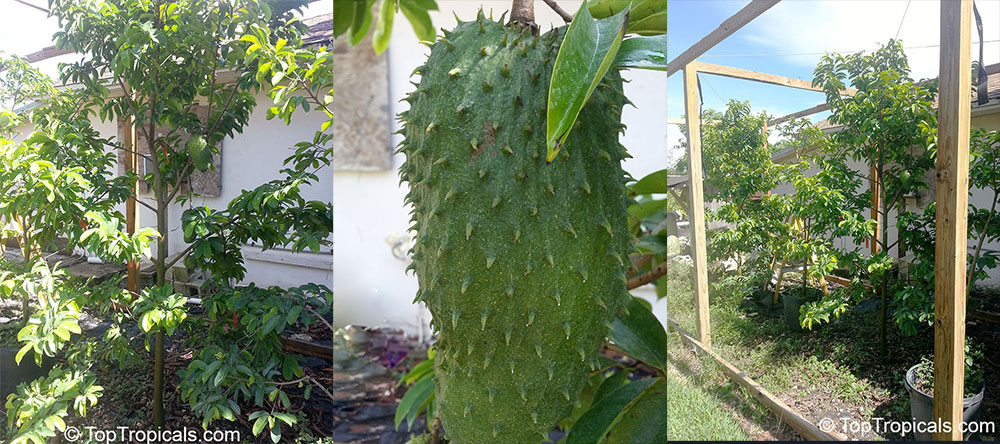
Now we have a solution to get this fruit sooner - a grafted tree! It will fruit within a year after planting. The secret of grafting Guanabana was almost lost (it's a tricky one to graft) and grafted plants were nearly impossible to find. Now we have them! Quantities are limited.
Keep in mind that Guanabana is very cold sensitive and won't tolerate even light freeze. However it is still relatively easy to grow even in subtropical areas: the tree is small, and if tree grown in ground, a simple cold protection structure can be built around it using basic wood or pipes (metal or PVC) and covered with plastic for a few weeks of cold weather. Grafted Guanabana is also a perfect choice for container culture (hand-pollinating maybe required).

Photo: This grafted tree was planted less than a year ago, and was covered in winter with cold protection for about 8 weeks. Within a year, it has 4 large fruit on it!

Date: 16 Jan 2019

Climate change is wiping out the Baobab, Africa's tree of life...

TopTropicals.com

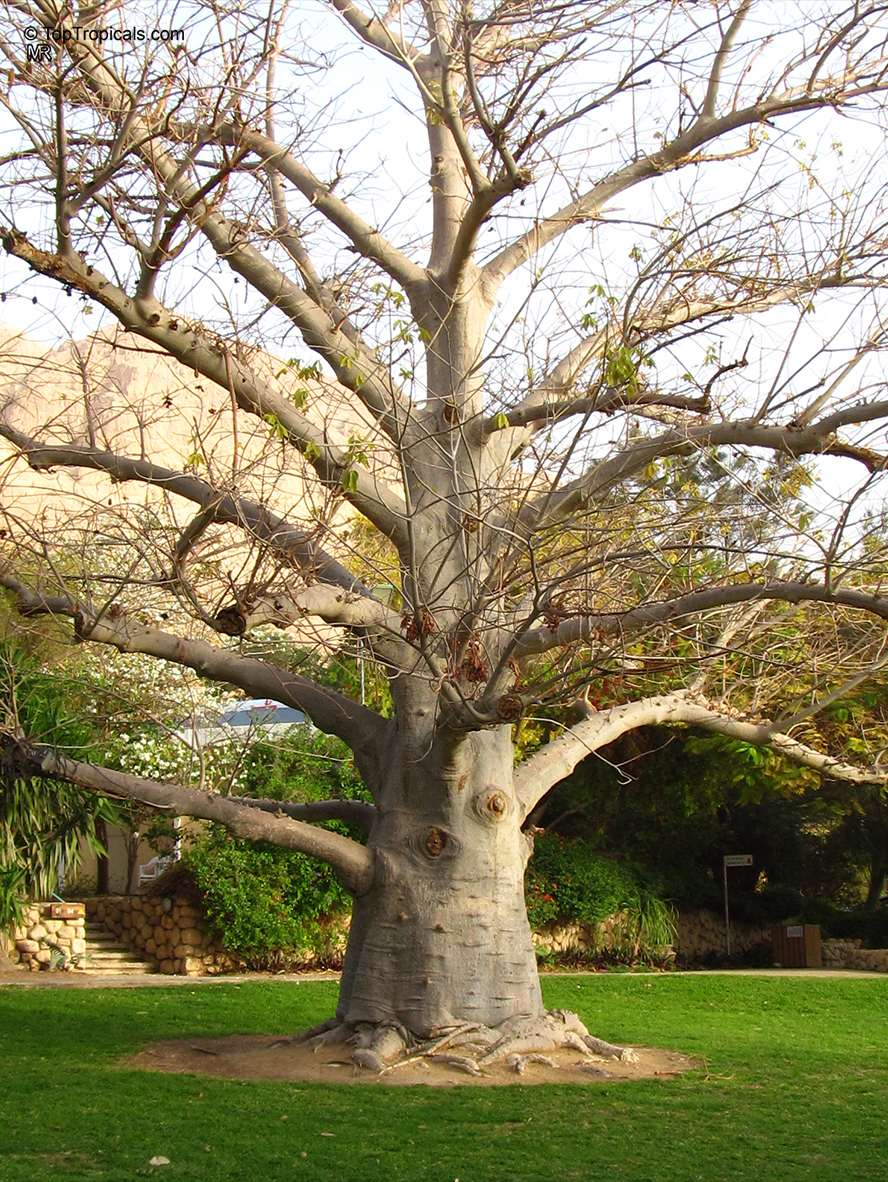
According to The Guardian News and Media, Africa's "tree of life" may not have much longer left... These highly important species are threatened with extinction, due to climate change and human development. Some species may not survive the next century. While plants have generally adapted to extended droughts, climate change is different, and with the Anthropocene, we are already witnessing the loss of these impressive trees. Africa's largest, oldest inhabitants, that have played silent witness to numerous generations, are already paying a heavy price for the environmental crimes of foreign lands.
Baobab forms an integral part in people's livelihoods. In West Africa, it is also called the "palaver tree" because of its social functions: when there is a problem in the community, meeting under the Baobab tree with the chief or the tribesmen would be synonymous with trying to find a solution to that problem; it reinforces trust and respect among members of the community. Its extinction would not simply be an environmental tragedy...

Every tropical gardener should have a Baobab to help to save this amazing species for the planet!

Date: 18 Nov 2018

How to grow the biggest fruit on Earth...

TopTropicals.com

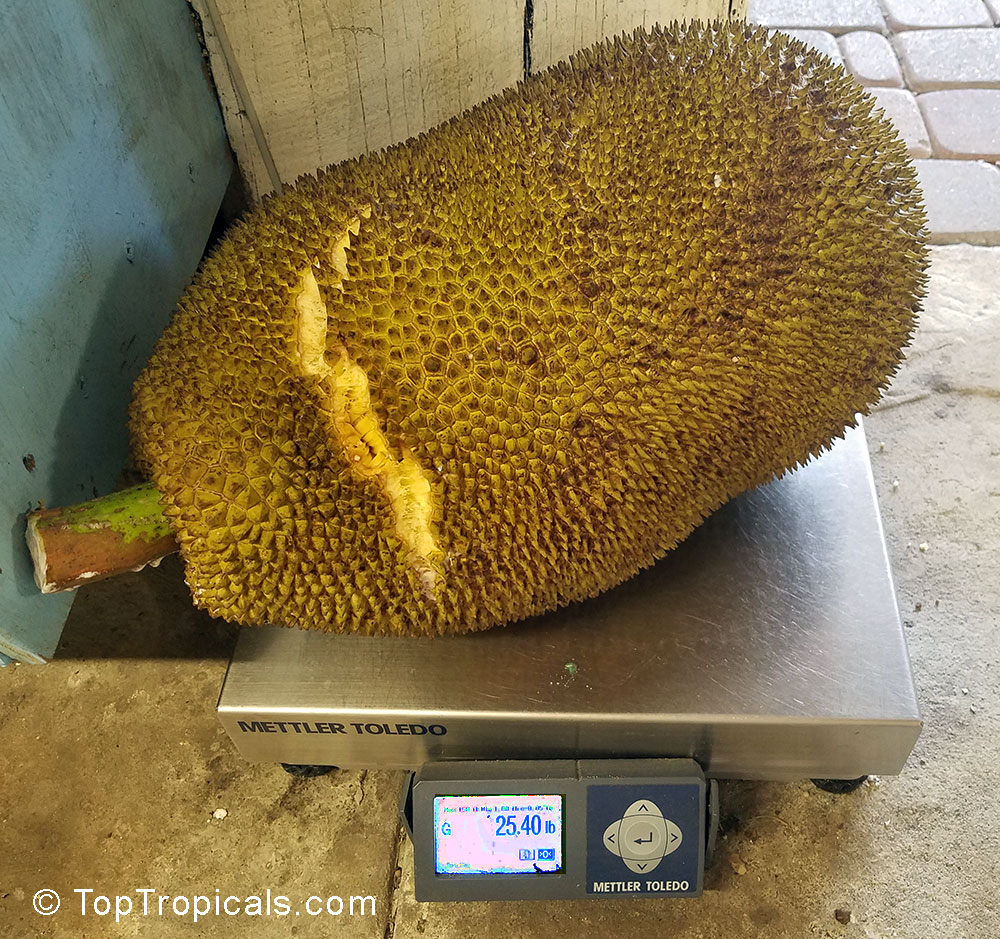
Q: When I visited Thailand I bought this huge fruit at the market and the taste was amazing and unique! Now I see you have this Jackfruit tree for sale. I am excited to grow it but not sure if it will survive our winters. I live in Huston, TX. Also are there any special conditions required for successful fruiting?

A: Jackfruit indeed is one of the most fascinating tropical fruit. In spite of reputation being ultra tropical, the tree is not as cold sensitive as everyone believes. Mature trees can withstand light frost for a few hours without significant damage. The only thing, after cold snaps it may be not as profuse producer as in frost-free climates. Keeping Jackfruit in a pot is also an option in colder areas. The tree is quite unique not only about fruit but also about growth habit. The fruit is so large and heavy that the tree has a smart feature to produce only at the base of the trunk. This makes it possible to keep Jackfruit tree at very short height - 6-7 ft tall. We have many varieties of Jackfruit, and all of them can be grown in containers considering regular topping/pruning.

5 secrets of Jackfruit successful production:
1) Frost free temperatures (occasional cold spells are not critical if SUNSHINE-T cold protection booster is used)
2) Soil rich of organic matter (compost, manure, peat moss)
3) Moist soil and regular watering
4) Constant pruning and keeping under 7-10 ft
5) Regular application of fertilizer, microelements and SUNSHINE-Honey for better quality fruit.

Read more about Jackfruit tree
See video of the fruit
See

Date: 25 Jul 2018

Looking for the rarest plant? This is the one!

TopTropicals

Stifftia chrysantha - Pompom, Rabo-de-Cutia

Looking for the rarest plant? This is the one!
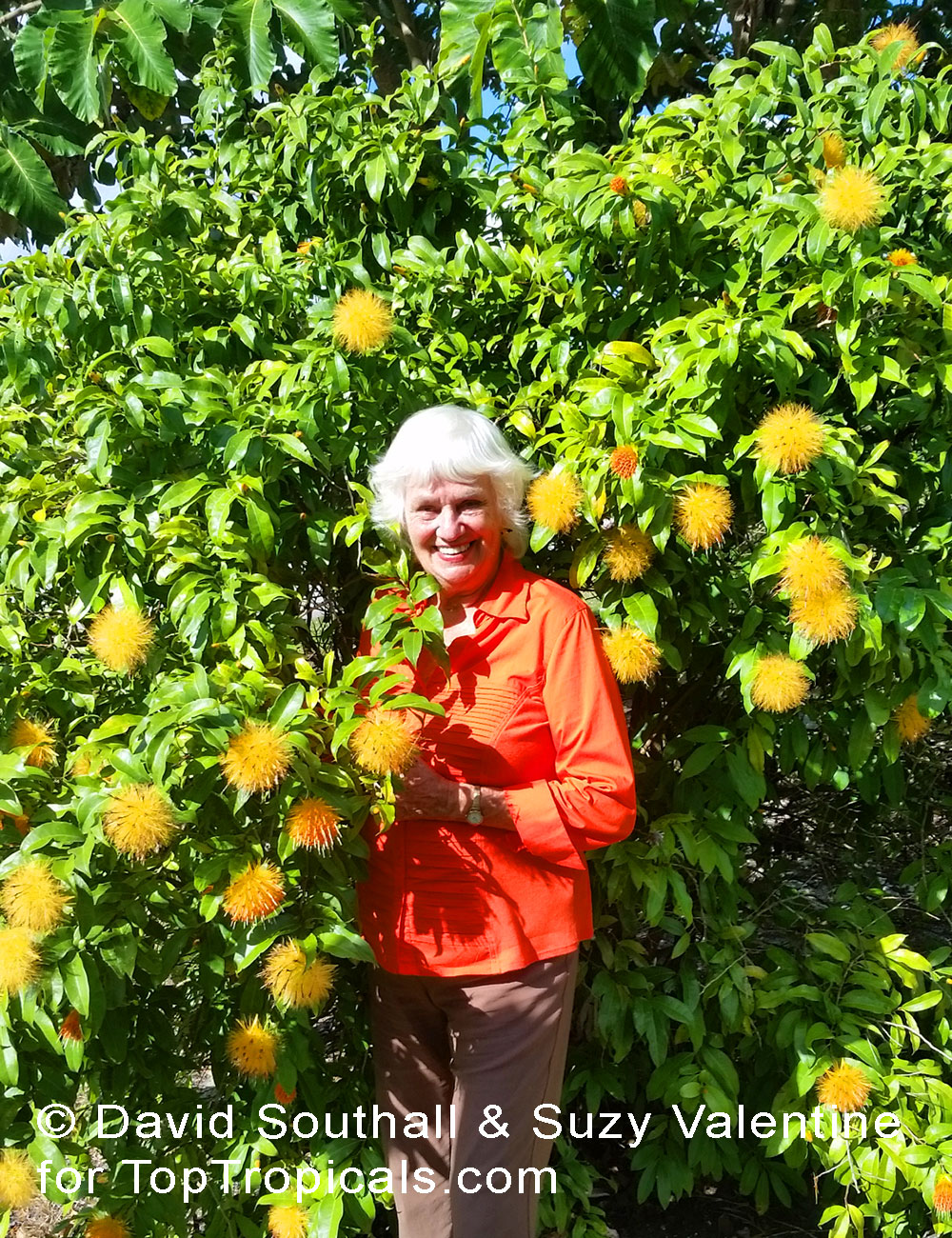
Stifftia chrysantha is an exotic, rare flowering small tree with spectacular flowers, endemic to the vast tropical savanna ecoregion of Brazil called Cerrado. It grows into a bushy, attractive tree between 8 and 15 ft tall and starts flowering within 1.5 - 2.5 years from seed. It is a very rewarding plant that blooms 9 months out of the year, starting in Winter with great intensity during July-September, with each flower staying on the plant for several weeks. Seeds ripen from September through November.
The tree belongs to Aster family (Compositae) and has nothing to do with Powderpuffs which are from Bean (Fabaceae) family. The flower has 30 to 40 green, imbricated scales with short hairs, and actinomorphic corollas are orange below and darker above. After flowering, the inflorescence blows apart, which would scatter seeds. The dried center remaining is very attractive, like a small dried flower, and lasts for many months.
Stifftia can be grown in full sun to partial shade and is relatively cold tolerant, can take short cold spells.
The plant doesn't like wet feet and heavy/soggy soils; requires very well drained, acidic soil. We strongly recommend to use our professional soilless mix. Let soil slightly dry between waterings. It can be grown in full sun to partial shade and is relatively cold tolerant, can take short cold spells. If grown in a pot, try to keep the container shaded because roots don't like to be overheated. The plant needs monthly applications of slow release fertilizer as well as extra iron - use micro-nutrients to keep leaves green and healthy.
See more pictures of this beauty.

Check out this plant...