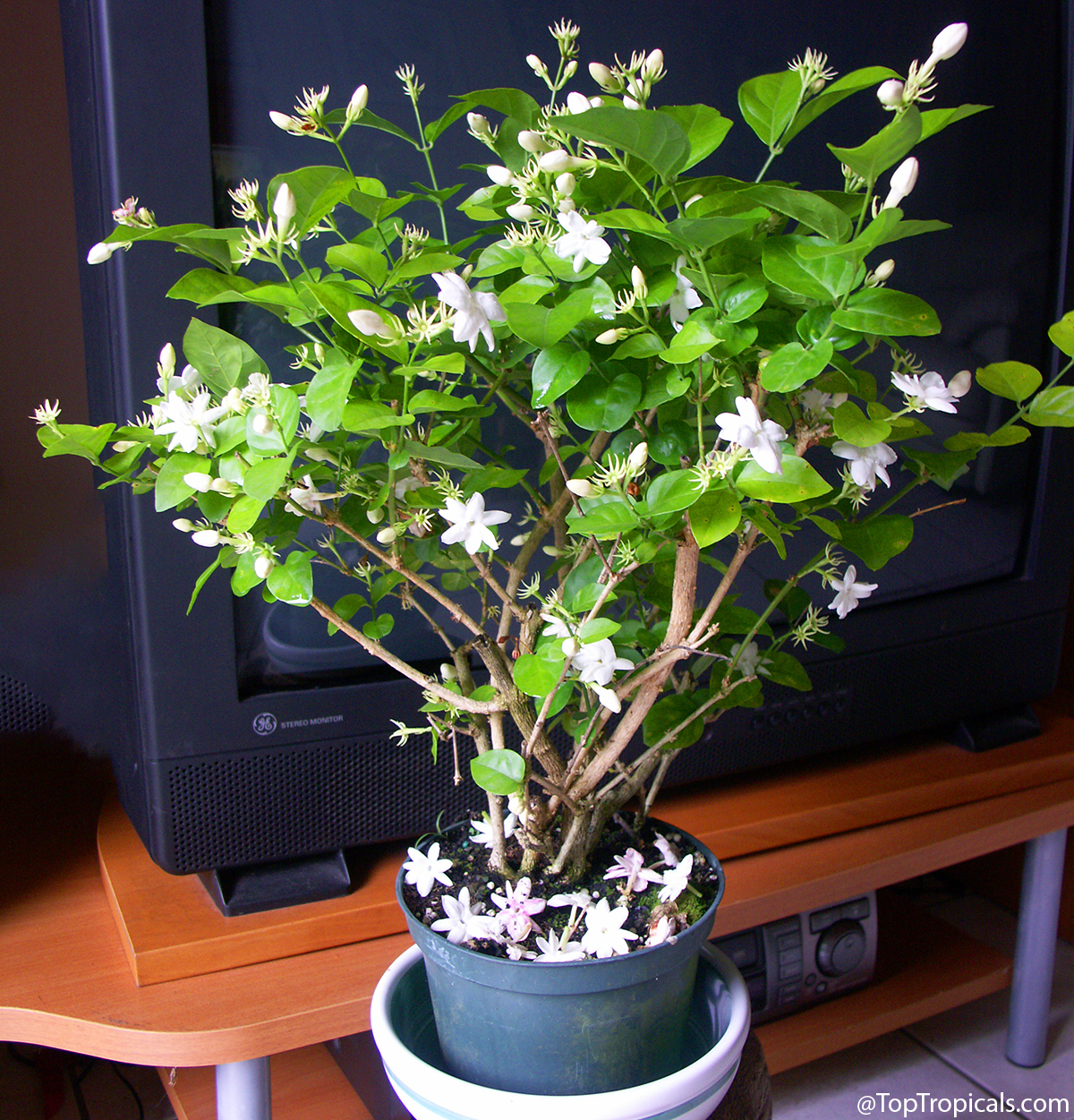
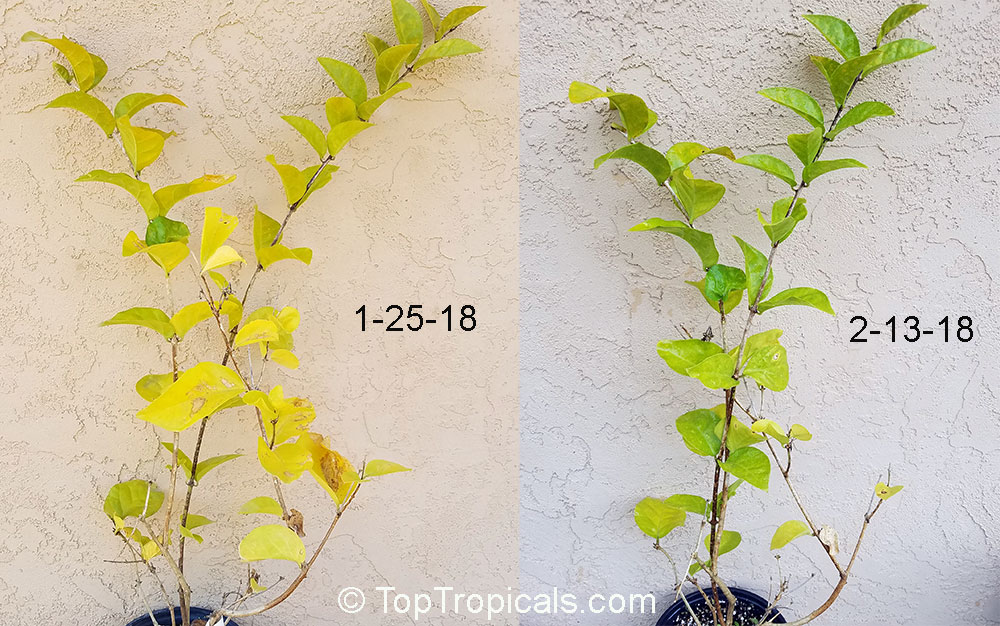
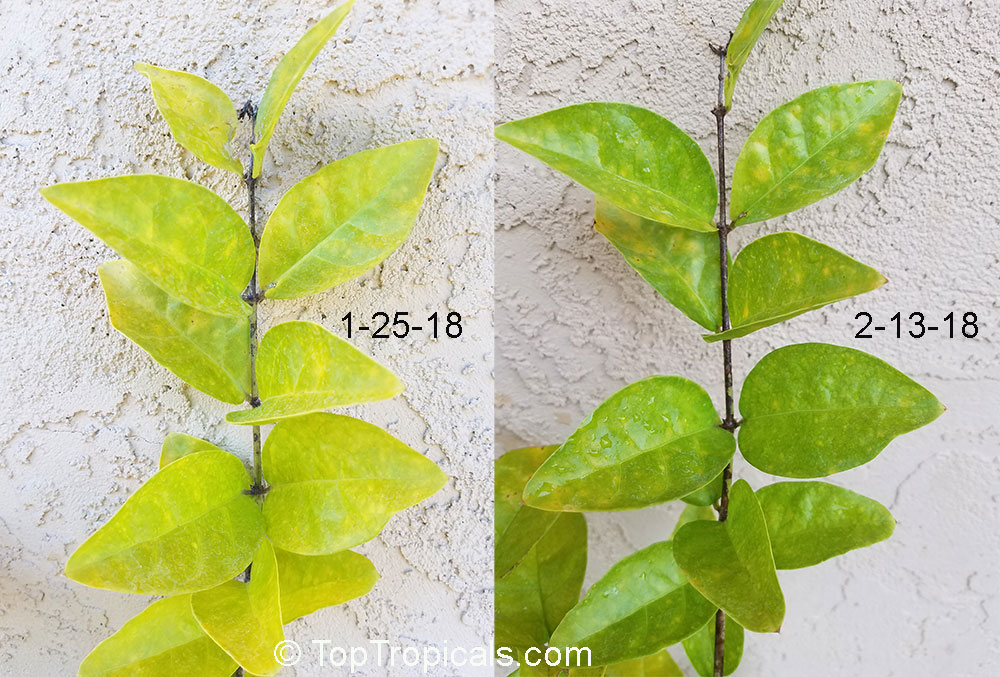
We continue experimenting with a new plant health boosterSUNSHINE SuperFood. Couple
weeks ago we grabbed a very sad looking jasmine with
completely yellow leaves... It suffered from winter cool
night temperatures plus some overwatering that caused weak
roots and due to that - a number of deficiencies. The plant
looked pretty hopeless as far as turning yellow leaves back
to green. The best bet to revive it was to cut it short,
remove old leaves and wait for new healthy growth... but we
decided to try SuperFood. And it worked! Since the plant was
almost hopeless, we put it in a far corner and forgot about
it. Imagine the surprise when we looked again and it was
green! See full plant photo of this
jasmine.
Avocado, Lychee and Mango setting
fruit... give them some FOOD!
Q:
Do I need to fertilize tropical fruit when they set fruit?
A:
It is traditionally believed that mango and other tropical
fruit shouldn't be fertilized during fruiting period. It
is true to an extent: you don't want fruit to burst from
fast excessive growing. Instead, try to feed fruit trees
wisely, because they still need proper nutrition to
produce flowers and fruit.
Our spring specials of Lychee, Avocado and Mango are full of buds and
some already set tiny fruit (see examples on the photo).
Here is the feeding plan for these plants once you receive
your mail order:
1) Once received the plant, pot it into container size of
the root ball and let establish for couple weeks. Use SUNSHINE-E to help the plant
recover from shipping stress and establish root system.
2) Apply SUNSHINE-Honey right before
flowering, and next time at setting fruit, to provide
sweeter and bigger fruit, eliminate fruit cracks and help
resist fungus and other fruit diseases.
3) Use balanced granulated fertilizer,
1 tsp per each gallon of soil. Apply once a month during
Spring-Summer season. This gives the plant balanced
macro-elements (NPK) necessary for overall plant health.
Do not use on fruit trees fertilizers with high Nitrogen
content.
4) Apply SUNSHINE SuperFood
micro-element booster to keep fruit trees vigorous,
develop strong root system and avoid deficiencies.
5) In case of signs of chlorosis (yellowing leaves with
darker veins), give the tree SUNSHINE-GreenLeaf and watch
the leaves turning green quickly.
After harvesting, don't forget to make another treatment
of SUNSHINE-Honey as a
preparation for the next year flowering and fruiting
season.
Date: 18 Feb 2026
⭐️ Choosing the Right Variety of Jasmine
Sambac
By Tatiana Anderson, Horticulture Expert at Top
Tropicals
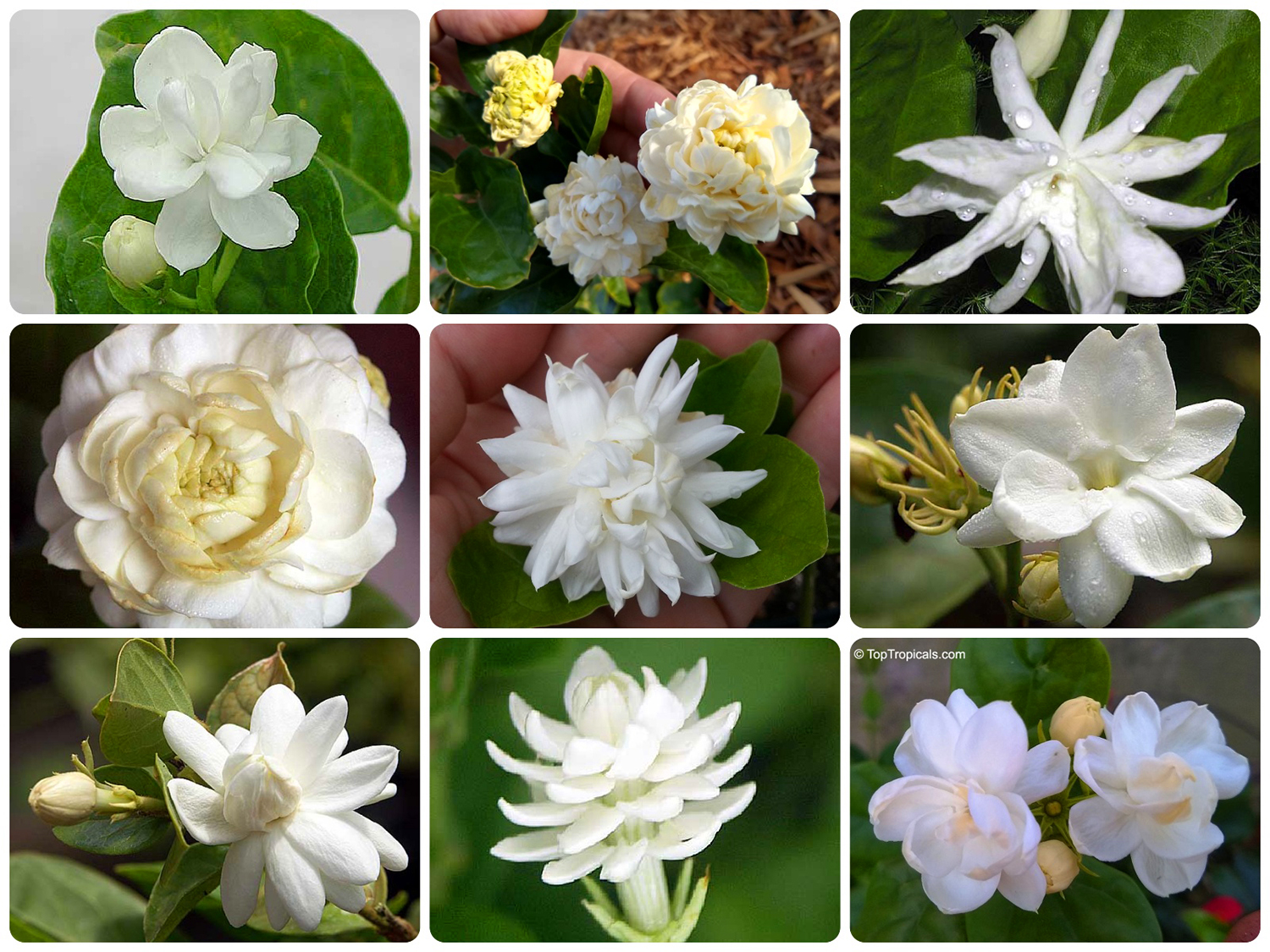
Jasmine Sambac varieties: Arabian
Nights, Little Duke, Belle of India, Grand Duke, Duke Supreme, Maid of
Orleans, Mysore Mulli, Malichat, Gundu Mallii
One of the reasons Jasmine Sambac is so fascinating is that it does not
come in just one form. Each variety has its own personality.
If you want a compact patio plant, Arabian Nights or Little
Duke are excellent choices. They stay tidy, bloom generously, and are
easy to manage in containers.
If you prefer elegant, elongated petals and a refined look, Belle of
India is a favorite. It can be grown as a small bush or trained lightly
as
a vine.
For those who love full, carnation-like double flowers, Grand Duke of
Tuscany and Grand Duke Supreme are classic
selections. They are vigorous and make impressive shrubs in warm
climates.
If you need a stronger climber for fences or hedges, Maid of
Orleans performs beautifully in full sun while Mysore Mulli
prefers semi-shade.
Collectors often enjoy rare forms like Mali Chat or newer hybrids
such as Gundu Malli, which combine traits from different lines.
How to Grow Jasmine Sambac Successfully
Sambac is not difficult, but it responds best to consistency.
Light: Full sun produces the most flowers. In very hot
climates, light
afternoon shade is acceptable. Indoors, place it in the brightest window
available.
Soil: Use a well-draining potting mix such as Sunshine
Abundance. Sambac does not
like heavy, constantly wet soil.
Water: Water thoroughly, then allow the top layer to dry
slightly before watering
again. Reduce watering during cooler months.
Pruning: Light trimming after a bloom cycle encourages
branching. More branches mean more flower buds.
Feeding: Sambac is a heavy bloomer, and fragrance takes
energy. During active growth, feed regularly with a balanced fertilizer that
supports flowering such as Green Magic (controlled release every 6 months) or liquid Sunshine
Boosters Pikake (formulated especially for fragrant flowers) - with
every watering. I prefer formulas slightly higher in potassium to encourage
stronger bud formation and richer bloom cycles. Consistent feeding during
warm months makes
a visible difference in both flower count and intensity of scent.
With proper care, Jasmine Sambac will reward you not just with flowers,
but with perfume that changes the atmosphere of your entire garden.
Jasmine Sambac Maid of
Orleans flowering indoors in a container under bright light.
❓Frequently Asked Questions About Jasmine Sambac
Does Jasmine Sambac need full sun?
It flowers best in full sun. In very hot climates, light afternoon shade
is acceptable. Indoors, give it the brightest window possible.
Can I grow it in a pot?
Yes. Sambac performs beautifully in containers. Many gardeners prefer pots
because it is easier to control size and move during cold weather.
How often does it bloom?
With proper light and feeding, it blooms in cycles throughout the warm
season. Consistency in care makes flowering more reliable.
Why is my plant not blooming?
The most common reasons are insufficient light or irregular feeding.
Increase light first, then review your fertilizing routine.
Is it difficult to grow indoors?
Not if you provide strong light and good air circulation. Compact varieties
adapt especially well.
Is it frost tolerant?
No. Jasmine Sambac is tropical. Protect it from temperatures below 40F and
bring it indoors before frost.
🌸 Year of
the Horse Special – Jasmine Bonus
Celebrate 2026 with the fragrance of Jasmine plants. For a limited time,
enjoy special savings when you grow one of
the most wanted perfume plants in cultivation.
Jasmine Sale - 15% Off
Save 15% on all Jasmine plants.
Discount is already applied in the online store - no code needed.
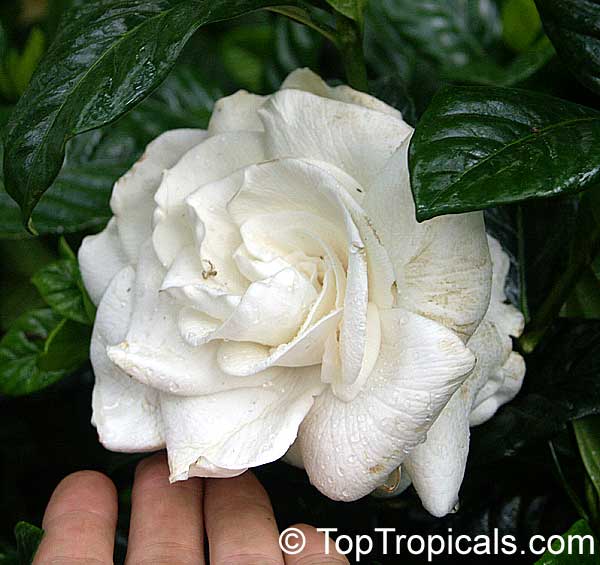
Q: I have tried to grow gardenia in pots for years and never keep
them alive. When i look on camellia websites they say fertilize potted
plants twice a year. I'm confused as I tend to kill them with kindness haha. Also, if our tap water has high cal/mag and that stops the gardenia getting other nutrients why would I make up the feed with tap water? So confusing and online is mixed messages...
A: Gardenias are not the easiest plants to grow, however, they are easier
in pots than in the ground: they prefer acidic soils, and in many areas soils
are alkaline. The most important factor is balanced and sufficient
nutrients. In the ground, plants have no limits to reach out to different elements by
spreading their root system. In a pot, once all the good stuff is consumed,
plants start suffering nutrient deficiency. This is why a balanced feeding
program is important.
Generally speaking, Cal/Mag in tap water cannot be bad, because they are
essential elements, good for plants (in proper amounts). However, just
Cal/Mag is not enough. This is why you need a balanced liquid fertilizer for plants that prefer acidic soil.
Excessive Cal/Mag alone can create nutrient lock up, especially if they are chelated
with EDTA like in dry fertilizers, which are not fully accessible for
plants.
We recommend natural, Amino-Acid based fertilizers that are completely
consumed by a plant and are safe to use with EVERY watering, even in Winter. They
are scientifically formulated and cover all plant needs.
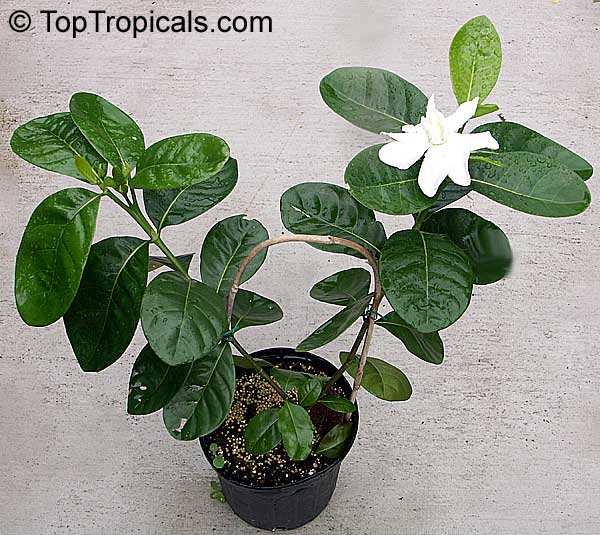
For your gardenias, you should use SUNSHINE Pikake - Fragrant Flower Booster.
Another important factor is proper watering. Gardenias like regular water
but don't like wet feet = well drained potting mix is a must, similar to Abundance professional growing mix.
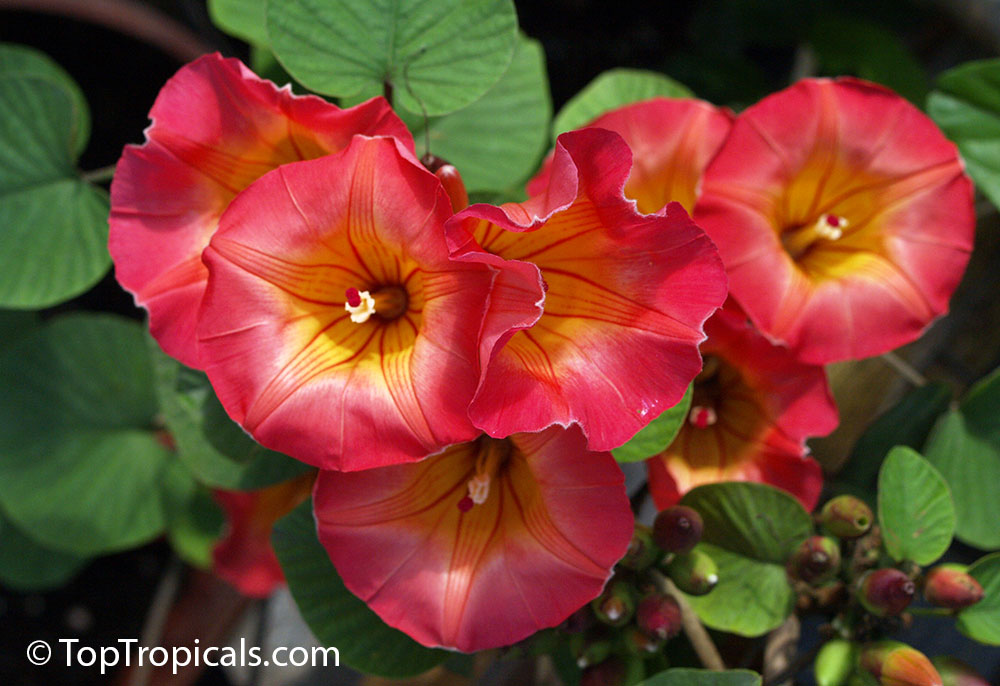
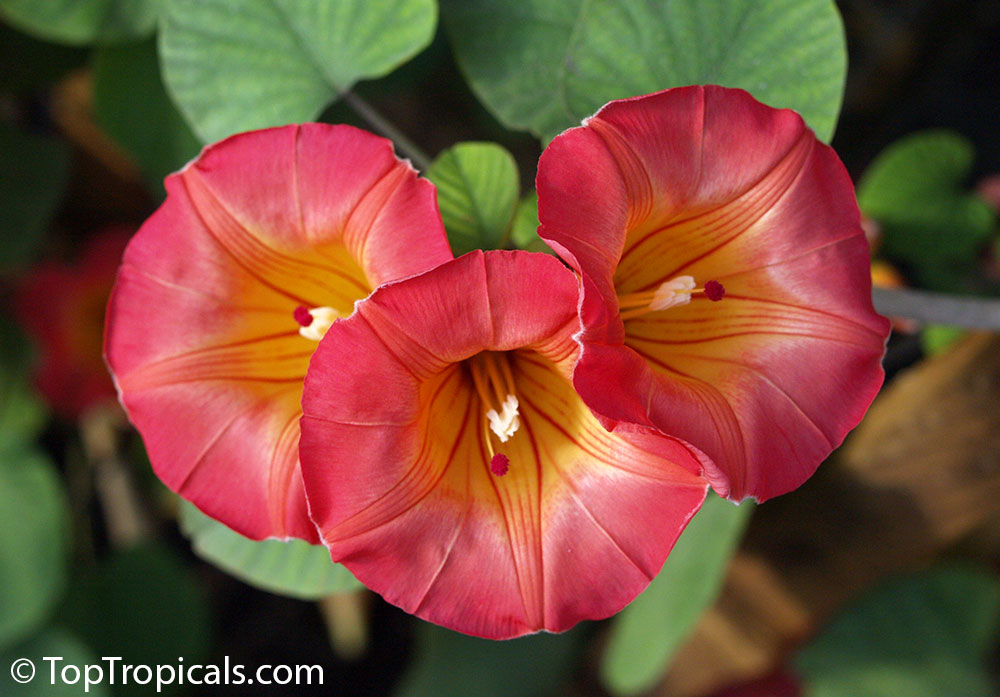
Encouraging blooms on the Hawaiian Sunset Bell Vine
Q: Please can you advise how to encourage the Stictocardia beraviensis the Hawaiian Sunset Bell
vine blooms? Mine is all beautiful leaves and full sun in Miami.
A: Providing full sun, Stictocardia blooms profusely. In your area, it
should be happy and thriving. However, keep in mind that these flowers can be seasonal (meaning, not ever-blooming). The good
news it, Hawaiian Sunset Bell usually blooms several times a year on and off. In our garden, we have a large plant growing in
the ground and covering a whole fence; we see flowers 3 times a year:
- Early Spring
- Summer (sporadically)
- Late Fall to early Winter
Make sure to provide proper fertilizer to encourage blooms. It is especially important if
you grow this plant in container (where nutrients are very limited). We suggest the following fertilizer for your
Stictocardia:


 How to Grow Jasmine Sambac Successfully