Garden Blog - Top Tropicals

Date: 16 Feb 2026

Yes, you can grow a mango tree on your patio - here is how to do it right
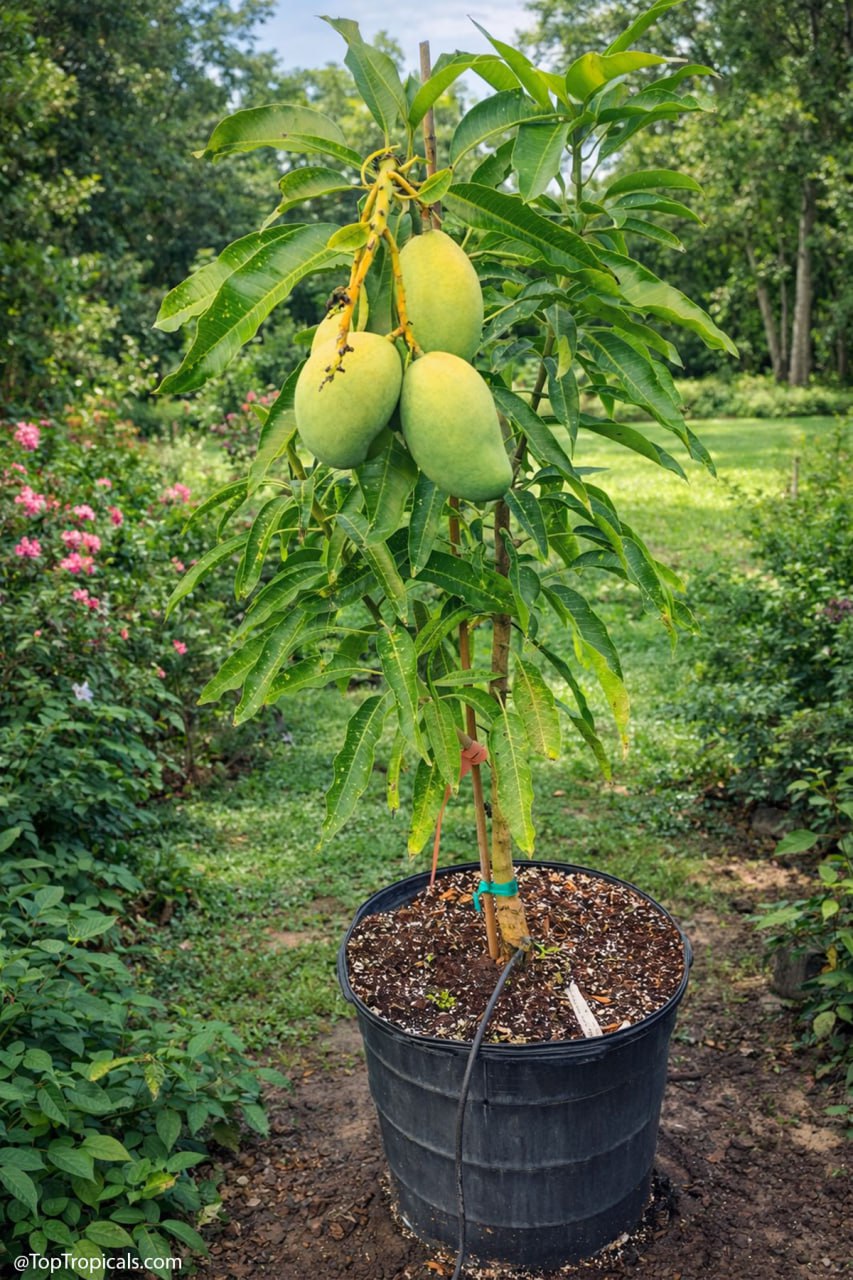
Mango fruiting in container

Mango fruiting in container

🥭 Yes, you can grow a container mango tree on your patio - here is how to do it right


Think you need a backyard orchard to grow mangoes? You don't. Mango trees grow very well in containers. Compact varieties, often called condo mangoes, stay naturally smaller and are well suited for pots, patios, and small yards. We grow and ship mango trees nationwide and have seen which varieties perform best in containers.

Mango Plant Facts

Botanical name: Mangifera indica
Also known as: Mango
USDA Zone: 9 - 11
Highligths Large tree taller than 20 ftSmall tree 10-20 ftFull sunWatering: Moderate. Water when top soil feels dryYellow, orange flowersPink flowersEdible plantSeaside, salt tolerant plant
Get personalized tips for your region


Growing mangoes in pots is also practical in cooler climates. The tree can be moved to protection during cold weather while still producing real fruit. Here is how to do it right.

🥭 Pick the right condo mango tree variety


Choose condo or semi-dwarf mango varieties that stay smaller and respond well to pruning. These mango trees usually stay 6 to 10 feet tall in containers with light pruning. Fruit size is full-size, just fewer than on large trees.

Good mango choices for pots include:
· Cogshall - compact and productive
· Pickering - naturally small and reliable
· Carrie - manageable size, great flavor
· Ice Cream - slow growing, narrow canopy
· Julie - classic Caribbean type
· more condo varieties...

🥭 Choose the right pot


Start small. Young mango trees do best in a 5- to 7-gallon pot. Oversized containers too early often cause overwatering and root issues.

Increase size gradually:
First pot: 5-7 gallons
Next size: 10-15 gallons
Mature container: 20-25 gallons

The pot must drain well. Mango roots dislike wet soil. Add holes if needed. Plastic, ceramic, and fabric pots all work.

🥭 Use fast-draining soil


Mango trees need air around their roots.
Use a loose, fast-draining mix, such as Abundance Professional Soilless Mix. Improve drainage with perlite, pine bark, or coarse sand. Avoid heavy or water-holding soils. Drainage matters more than fancy ingredients.

🥭 Water carefully


Mango trees prefer a wet-dry cycle.
Water deeply, then allow the top few inches of soil to dry before watering again. Always check with your finger first.
In warm weather, water once or twice a week. In winter, much less. Overwatering is the most common container mistake.

🥭 Give plenty of sun


Mango trees love sun and heat.
Place the pot in full sun with at least 8 hours daily. More sun improves growth and flowering.
If overwintered indoors, use the brightest window possible. Grow lights help, but outdoor sun is best when weather allows.

🥭 Fertilize lightly but consistently


Potted mango trees benefit from regular feeding during active growth.
Use a balanced mango or fruit tree fertilizer such as Sunshine Mango Tango (safe to use with every watering, year-around). Controlled-release fertilizer Green Magic (every 6 months) work well too. Avoid excess feeding, which promotes leaves over flowers.
If leaves pale, check watering first, then nutrition.

🥭 Prune to stay compact


Pruning is essential for mangoes in pots.
Light tipping and trimming control size, encourage branching, and increase flowering points. Keep the canopy open and balanced. Watch how simple tipping works in real life: .
Avoid heavy pruning before flowering. Most pruning is best right after harvest.

🥭 Protect from cold


Mango trees are tropical and cold-sensitive.
When temperatures drop below 40F, move the pot to protection or indoors. Young trees are especially vulnerable.
During winter, reduce watering and stop fertilizing. Growth slows and the tree rests.
When warm weather returns, reintroduce the tree to sun gradually to prevent leaf burn.

🥭 Final thoughts


Growing a mango tree in a pot is practical and rewarding. With the right variety, good drainage, full sun, and careful watering, a potted mango can thrive and fruit for years, even in small spaces.
Ready to start? Choose a compact mango variety.


🛒 Discover Condo Mango

📚 Learn more:
Mango in Plant Encyclopedia
Mango Tree for Zone 5: top 15 Condo Mango for growing in cold areas
How long does it take for a mango tree to bear fruit?
What are the Condo Mangos - a practical guide
Top 10 Dwarf "Condo" Mango, great for container culture
Yes, you can grow an avocado tree on your patio - here is how to do it right

Avocado Plant Facts

Botanical name: Persea americana, Persea gratissima
Also known as: Avocado, Alligator Pear, Aguacate, Abacate
USDA Zone: 9 - 11
Highligths Large tree taller than 20 ftSmall tree 10-20 ftFull sunWatering: Regular. Let topsoil dry slightlyEdible plantSubtropical plant. Mature plant cold hardy at least to 30s F for a short time
Get personalized tips for your region


#Food_Forest #How_to #Discover #Mango

🟢 Join 👉 TopTropicals
Date: 9 Aug 2021

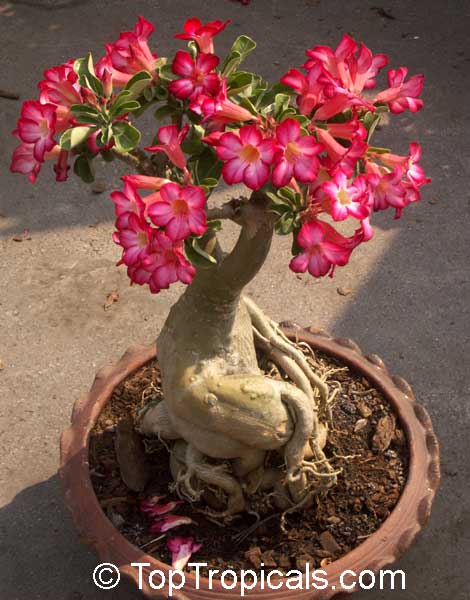
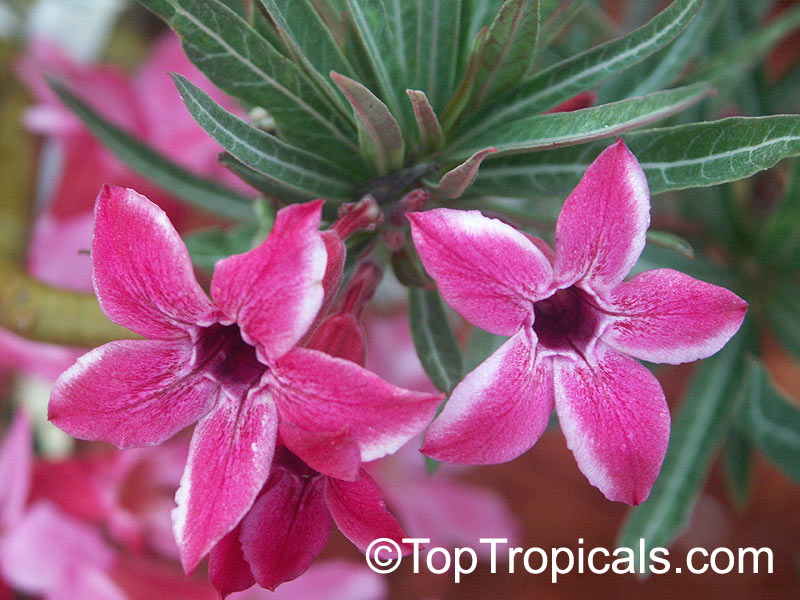
Care of Desert Roses

Q: I am looking forward to my three desert roses I just ordered from you and I am wondering how to take care of them, especially during winter time. Should I put the pots in full sun or shade? What kind of soil do they like? How often should I water them? When it gets cooler, should I bring them inside? We do have occasional frost here during winter.

A: Here are a few tips for your desert roses:

1. When received Adenium from mail-order, unpack carefully; branches are fragile. Plant in well-drained potting mix. Cactus mix will do, but we recommend special Adenium mix. If using regular acidic peat-based potting mix, you may add sea-shells on top of soil to neutralize acidity: adeniums prefer alkaline soils. Using clay pots is beneficial. Water once and do not water again until soil gets dry. Place in bright shade until new leaves sprout, then the plant can be moved to full sun.

2. Adenium is a succulent, but not a cactus. It needs watering, however let soil dry before waterings. Reduce watering during cool season and discontinue when plant gets dormant (drops all leaves in winter).

3. Bright light is the best for profuse flowering. However, adeniums look much healthier in slightly filtered light rather than in all-day full sun.

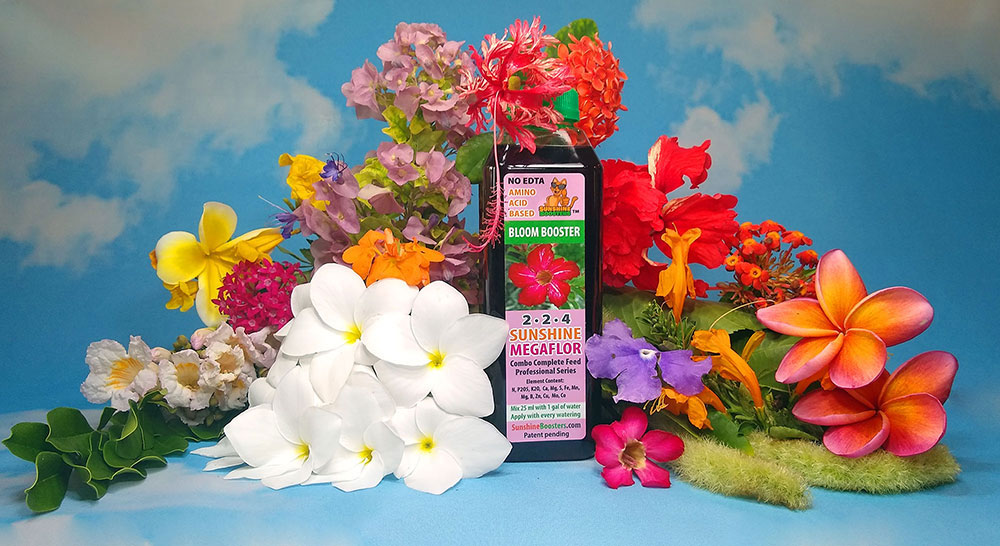
4. Fertilize and spray leaves with liquid fertilizer SUNSHINE Megaflor - Nutrition Bloom Booster. Phosphorous is responsible both for flowering and caudex development. Avoid caudex, spray over foliage only. Dry fertilizer can be used only during hot months.

5. Watch for spider mites during hot and dry season.

6. Give plants a break during winter dormant season. Keep in bright shade and reduce watering to 1-2 per month or stop watering if temperature is below 65F.

More info on growing Desert Roses:
What you need for successful growing Adeniums
Overwintering Adeniums outside of tropics
Growing Exotic Adeniums - Growing Exotic Adeniums

Date: 4 Jun 2021

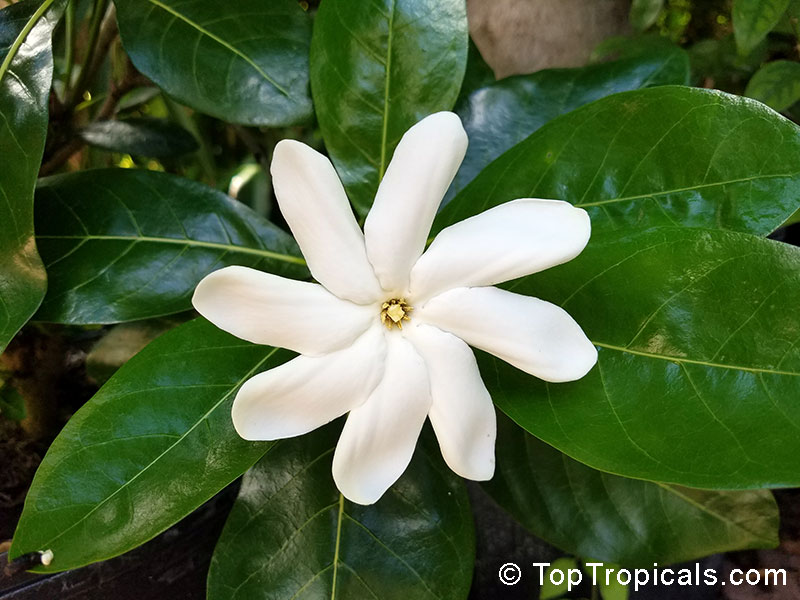
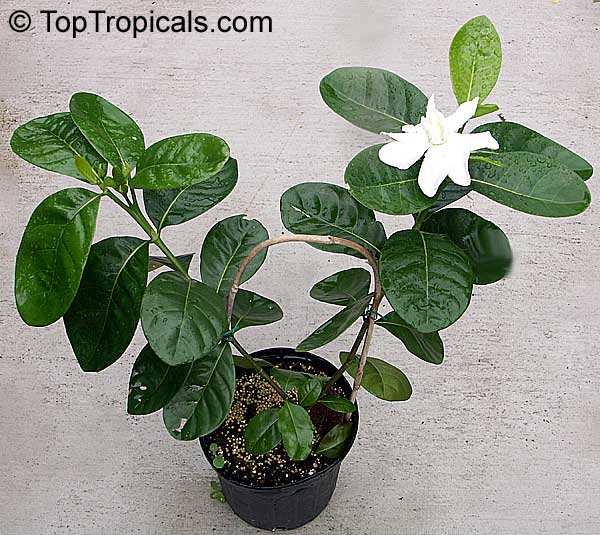
Tahitian Gardenia

Q: I am interested in your Tahitian Gardenia and I would love to try and grow this plant in a large container/fabric pot. The soil here where I live is terrible as it's hard rock, clay, and sand! So I'm not sure if amending the soil would help to plant in the ground? Can you tell me if this will do okay in a container or best in ground? I live here in Las Vegas, NV (zone 9a). Any information would be great to help me make a this decision, I love the selection of cool tropical plants you offer! Also my daughter does Tahitian/Polynesian dance and this would be a cool "topping on the cake" if she could have a live Tiare flower in her performances.

A: Tahitian Gardenia will be doing best if grown in container in your area. In its natural habitat, it grows full sun but also it enjoys mild weather conditions and high air humidity. All gardenias prefer acidic soils. In your area, if planted in the ground, it may be exposed to some harsh conditions: too high temperatures, too hot sun, dry air, and as you mentioned - heavy clay and sandy soil. You can enjoy this plant grown in container, which can be moved as needed away from too much sun during summer months. Use well-drained potting mix. Use plastic pot, do not use fabric or clay pots - soil will dry out too quickly.
Also remember to fertilize this plant on regular basis with a liquid fertilizer SUNSHINE Pikake - Fragrant Flower Booster.
Grow gardenia in full sun or semi-shade during the hottest months. You may spray it with pure water if the air too dry and hot. Enjoy your Tropical Beauty and good luck!

Date: 4 Sep 2020

Healthy Plant Food: Q&A from Mr Booster

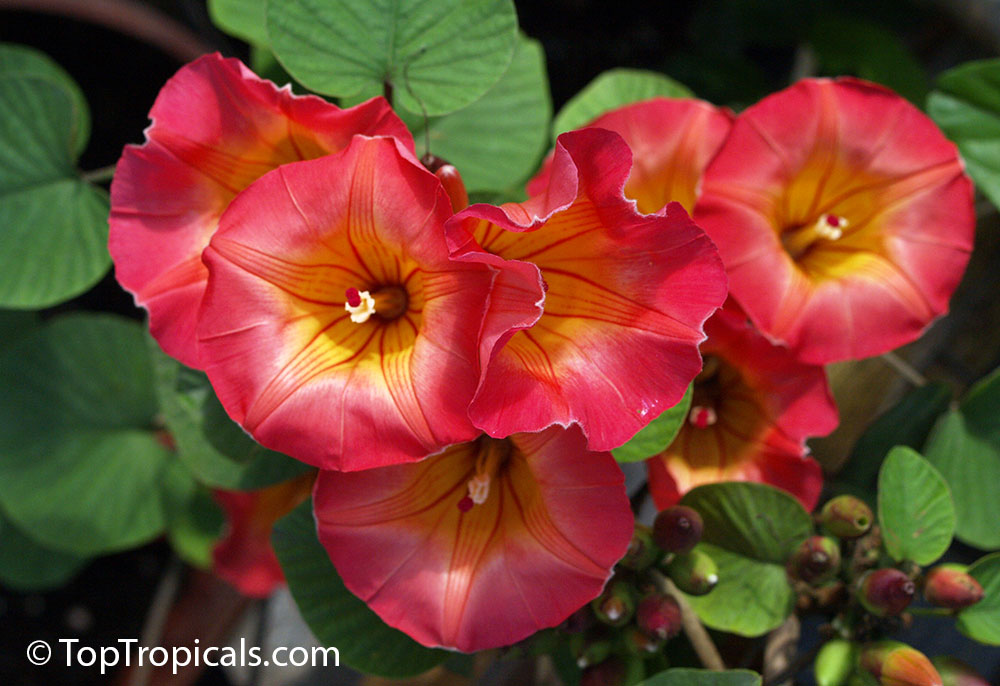
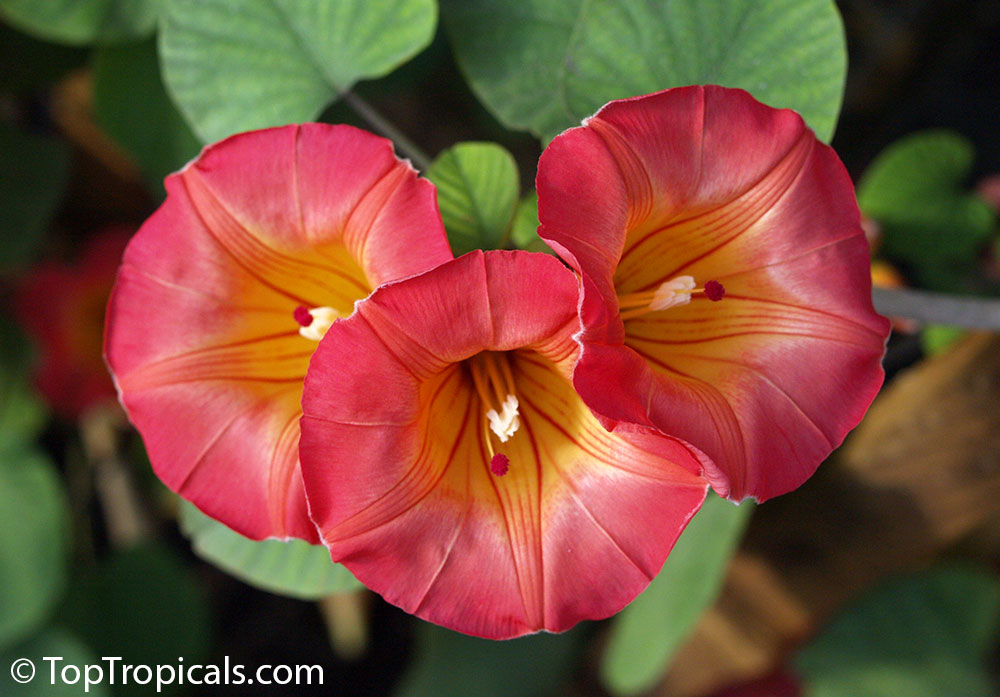
Encouraging blooms on the Hawaiian Sunset Bell Vine

Q: Please can you advise how to encourage the Stictocardia beraviensis the Hawaiian Sunset Bell vine blooms? Mine is all beautiful leaves and full sun in Miami.

A: Providing full sun, Stictocardia blooms profusely. In your area, it should be happy and thriving. However, keep in mind that these flowers can be seasonal (meaning, not ever-blooming). The good news it, Hawaiian Sunset Bell usually blooms several times a year on and off. In our garden, we have a large plant growing in the ground and covering a whole fence; we see flowers 3 times a year:
- Early Spring
- Summer (sporadically)
- Late Fall to early Winter

Make sure to provide proper fertilizer to encourage blooms. It is especially important if you grow this plant in container (where nutrients are very limited). We suggest the following fertilizer for your Stictocardia:

SUNSHINE Megaflor - Bloom Nutrition Booster

Date: 25 Dec 2021

Easy Sunday Morning Deals: Tropical Asparagus

Saving on your favorite plants is Easy.
Easy like Sunday Morning...

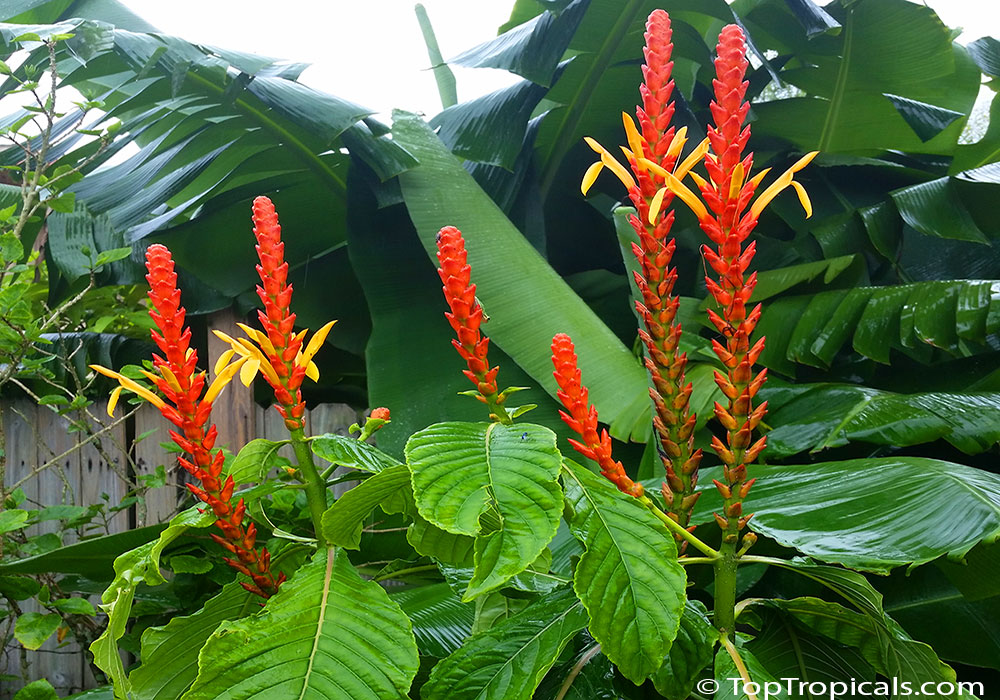
Photo above: Aphelandra hartwegiana - is at peak of its flowering season now. Spectacular flower for a shade garden.


It's time for our favorite day and another Easy stroll through Top Tropicals' Garden with savings of 50% and MORE! Christmas Day has come and gone, and now it's time to treat yourself with our Easy Sunday Deal!

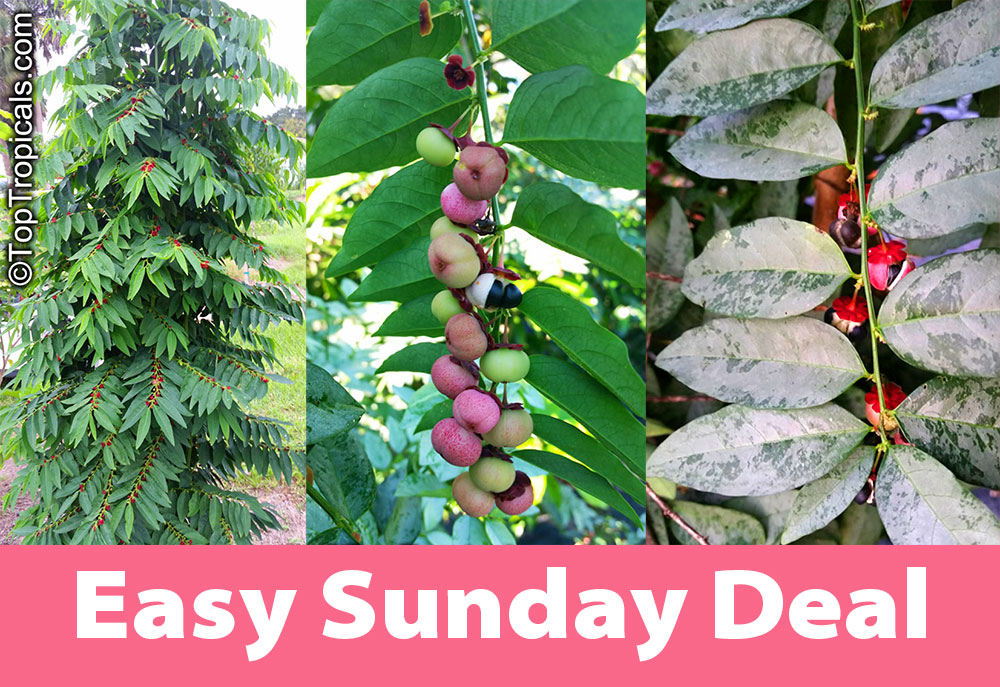
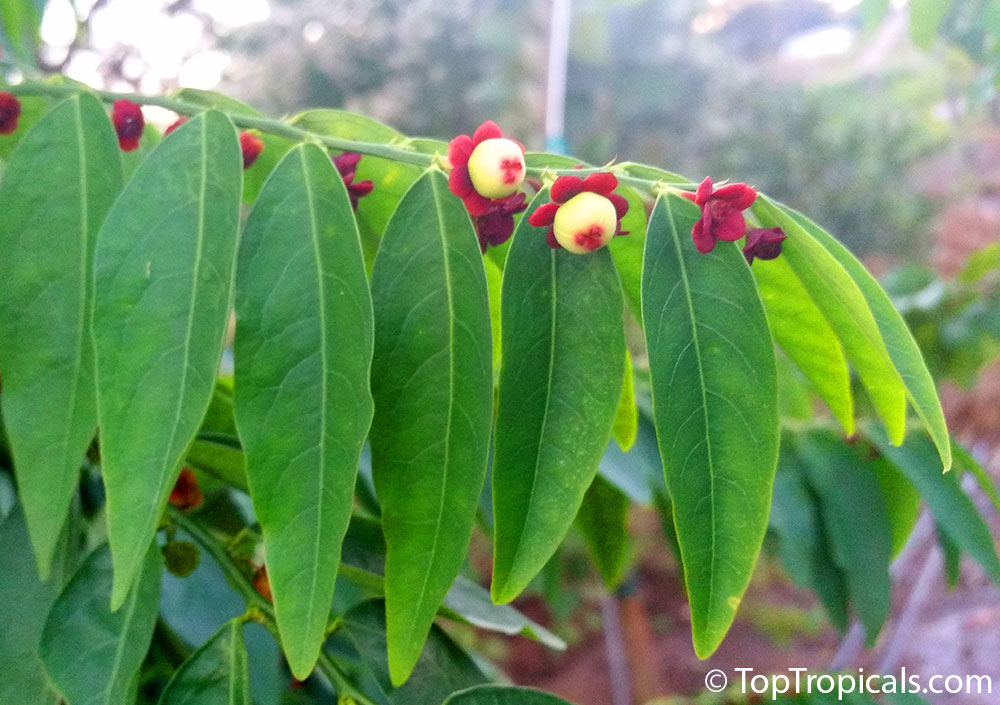
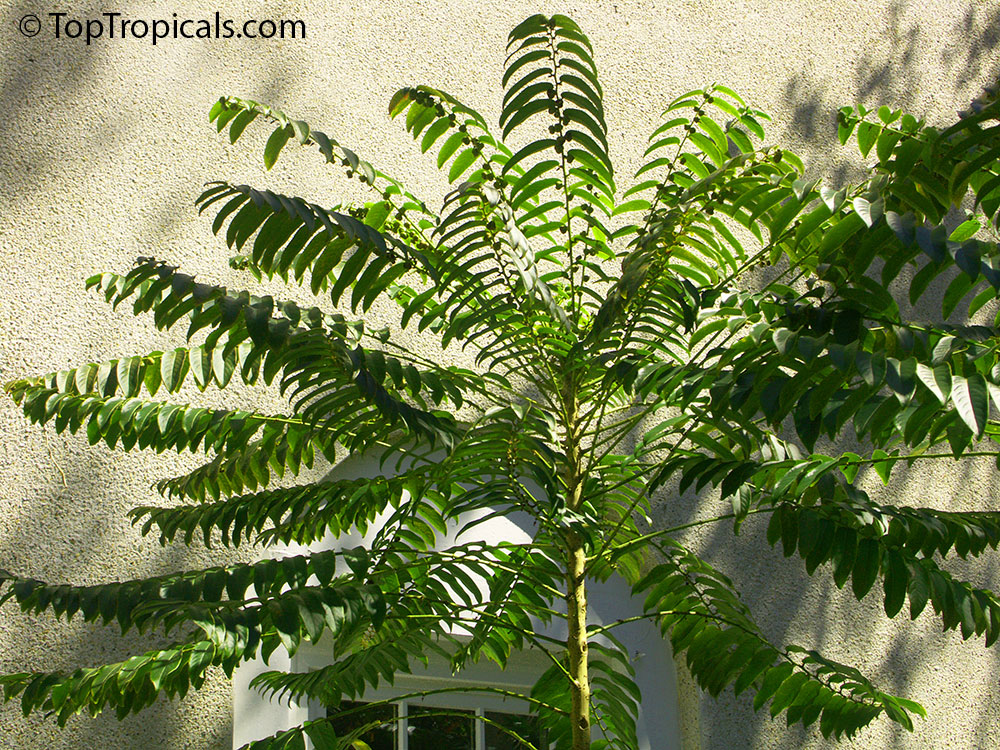
This week we bring you one of the most popular leaf vegetables in South Asia and Southeast Asia, the Tropical Asparagus - Sauropus androgynus. Notable for its high yields and palatability, Tropical Asparagus is a favorite with crab meat, minced pork, dried shrimp, or to make soup... and has delicious young shoots!

Tropical Asparagus
50% OFF and MORE!

For this Easy Sunday we have priced these at incredible savings:
Sauropus androgynus, regularly $39, is on Easy Sunday sale for only $19
Sauropus Variegata, regularly $39, is on Easy Sunday Sale for only $19.
Combine the two for your own Tropical Asparagus Kit and save even more, only $29 for the kit!

While supply lasts.

About Sauropus androgynus - Katuk, Tropical Asparagus

Sauropus, or Katuk, is a perennial shrub grown in some tropical regions as a leaf vegetable. It is one of the most popular leaf vegetables in Southeast Asia. It is among only a few flora containing vitamin K. Leaves and stemmed can be cooked as vegetable; young shoots are delicious eaten out of hand and taste just like sweet peas, they can be added to salads. The plant has many medicinal properties.

Katuk is fast growing and keeps growing as you trim it for your kitchen needs. Multiple upright stems can reach 6-7 ft high. It has great ornamental value, has pretty red flowers and ornamental fruit showing shiny black seeds when they crack open. Varieties with green leaves and variegated leaves have slightly different flavor but are equally good for your healthy, fiber-rich diet.

Remember, the Easy Sunday Deal expires on Wednesday December 29th.

Enjoy your Hot Deals!

December 26th - Boxing Day

Remember, December 26th is Boxing Day, with different theories on the roots of Boxing Day, but one commonality: Boxing Day is a day for charity and kindness. Let's all continue to be charitable and kind humans!