Garden Blog - Top Tropicals

Date: 24 Jun 2018

TopTropicals

Avocado, Lychee and Mango setting fruit... give them some FOOD!

Q: Do I need to fertilize tropical fruit when they set fruit?

A: It is traditionally believed that mango and other tropical fruit shouldn't be fertilized during fruiting period. It is true to an extent: you don't want fruit to burst from fast excessive growing. Instead, try to feed fruit trees wisely, because they still need proper nutrition to produce flowers and fruit.
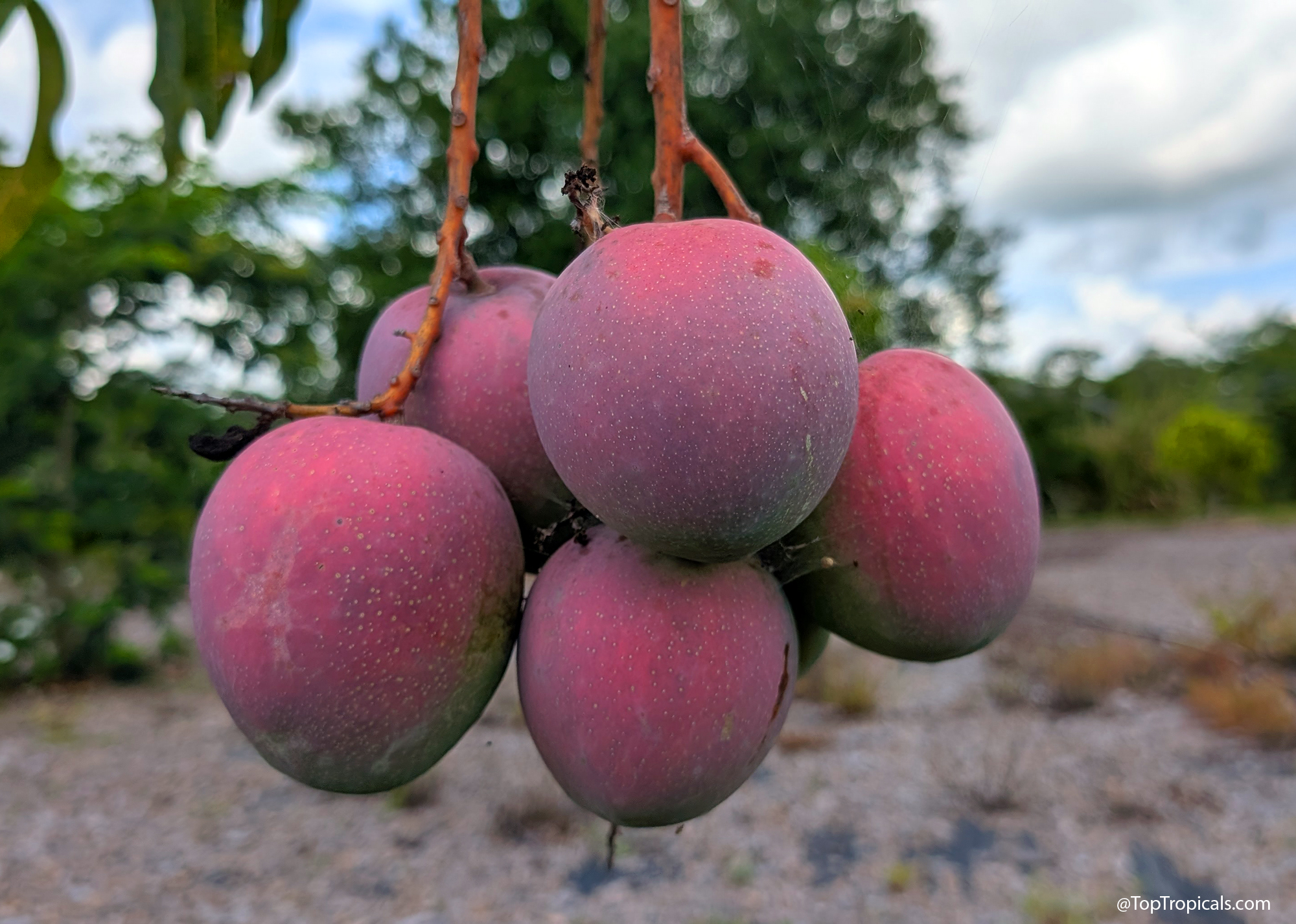
Our spring specials of Lychee, Avocado and Mango are full of buds and some already set tiny fruit (see examples on the photo). Here is the feeding plan for these plants once you receive your mail order:
1) Once received the plant, pot it into container size of the root ball and let establish for couple weeks. Use SUNSHINE-E to help the plant recover from shipping stress and establish root system.
2) Apply SUNSHINE-Honey right before flowering, and next time at setting fruit, to provide sweeter and bigger fruit, eliminate fruit cracks and help resist fungus and other fruit diseases.
3) Use balanced granulated fertilizer, 1 tsp per each gallon of soil. Apply once a month during Spring-Summer season. This gives the plant balanced macro-elements (NPK) necessary for overall plant health. Do not use on fruit trees fertilizers with high Nitrogen content.
4) Apply SUNSHINE SuperFood micro-element booster to keep fruit trees vigorous, develop strong root system and avoid deficiencies.
5) In case of signs of chlorosis (yellowing leaves with darker veins), give the tree SUNSHINE-GreenLeaf and watch the leaves turning green quickly.
After harvesting, don't forget to make another treatment of SUNSHINE-Honey as a preparation for the next year flowering and fruiting season.

Date: 26 Oct 2025

Plant a fruit tree - and breathe easier: fruit might be the surprising key to healthier lungs

Plant a fruit tree - and breathe easier: fruit might be the surprising key to healthier lungs

🍒 Plant a fruit tree - and breathe easier: fruit might be the surprising key to healthier lungs


🥭 Fresh fruit doesn’t just taste good - it can literally help you breathe better!

🥭 A new study presented at the European Respiratory Society Congress found that women who ate at least four portions of fruit a day had slower declines in lung function compared to those who ate less. Researchers believe antioxidants in fruit may help protect the lungs from the damaging effects of air pollution.

🥭 Air pollution is everywhere, and more than 90% of people worldwide are exposed to levels above safe limits. But the good news is, your diet can make a difference. Fruits are packed with antioxidants and anti-inflammatory compounds that help your body fight off the oxidative stress caused by tiny airborne particles.

🥭 The study showed that women who ate plenty of fruit had stronger lungs despite being exposed to fine particulate pollution (PM2.5) from cars and industry. The difference wasn’t small either - their lung capacity dropped significantly less over time than in those with low fruit intake.

🥭 So planting fruit trees isn’t just about homegrown flavor or saving a trip to the store. It’s about protecting your health in a polluted world. Whether it’s mangoes, avocados, guavas, or starfruit, every harvest brings you cleaner nutrition and a cleaner breath of life.

🛒 Grow fruit - grow your health

📚 Learn more:
11 tropical fruits to eat instead of taking a fiber supplement
Tropical fruit health benefits guide - what fruit and edibles can help with health issues and vitamin deficiencies, Part 1 and Part 2.
Five best fruit trees to plant in Summer
10 best fruit trees to grow in Florida and Southern landscapes
Top 10 fruiting plants you'll ever need for your health benefits

#Food_Forest #Remedies #Discover

🟢 Join 👉 TopTropicals

Date: 27 Oct 2025

🌳 Why Large Grafted Trees Are Better

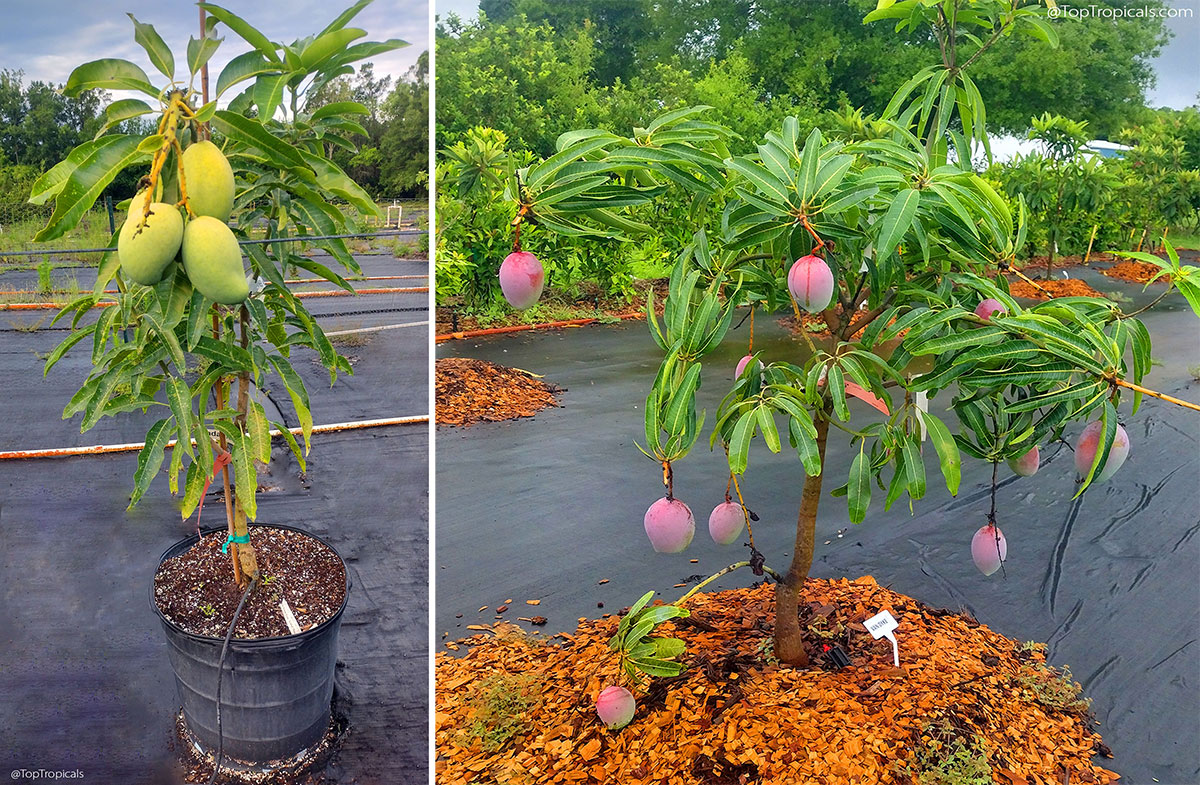
Comparison  of  Mango  trees  growing  in  container  and  in  ground  at  Top 
 Tropicals  nursery  -  potted  tree  with  large  green  fruit  and  in-ground  tree 
 with  ripe  purple  fruit  ready  for 
 harvest

These are not seedlings — they’re grafted trees, which means you get the true variety with known flavor, quality, and performance. Large grafted trees give you a real head start:

  • Already mature with a strong root system.
  • Handle transplanting and weather shifts with ease.
  • Can bloom and fruit in the first or second season.

No guessing, no waiting years — you’ll get the exact fruit you want, sooner.
👉 Learn more: How long does it take for a mango tree to bear fruit?

For Indoor and Patio Growers

No space for a full orchard? You can still grow your own tropical paradise! Our large grafted Condo Mango trees adapt beautifully to big containers on patios, balconies, and sunrooms. They stay compact, flower sooner, and can fruit even in pots when given good light and warmth.
👉 Learn more: What are the Condo Mangos?

Bring the tropics indoors — move your tree outside for summer sun, then back inside before frost. It’s the perfect way to enjoy homegrown fruit wherever you live.

Give your garden a smart start this season. Large grafted Mango trees are ready — but only for a short time before winter.

👉 Plant now, harvest sooner, and enjoy the true variety!

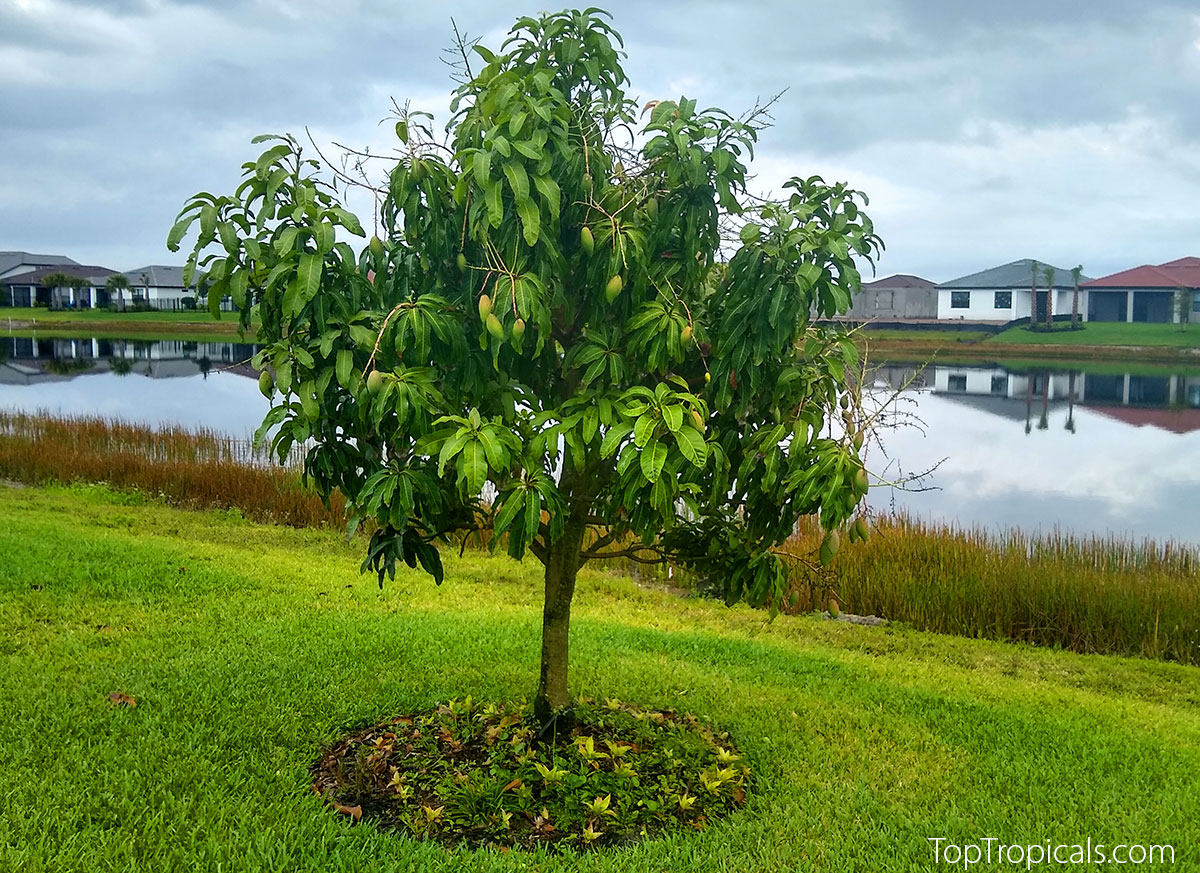
Mango  tree  growing  by  a  lake  in  a  Florida  backyard,  healthy  green 
 foliage  and  young  fruit  developing  on 
 branches

Plant Care Tips by Top Tropicals Plant Expert Tatiana Anderson

Large grafted Mango trees are easy to establish.

  • Soil: Well-drained, rich mix — avoid heavy clay.
  • Water: Deeply once or twice a week after the tree is established; keep soil evenly moist during the first few weeks after planting.
  • Light: Full sun or bright patio spot.
  • Feeding: Use balanced fertilizer Sunshine Boosters Mango Tango with every watering and Green Magic controlled release fertilizer every 6 months for steady growth.
  • Protection: Cover on cold nights for the first winter.
  • 👉 Learn more: How to take care of a mango tree in winter.

Plant once, care lightly, and your tree will reward you with fast growth and early fruit.

🌳 Big Trees, Local Pickup Only

For our local gardeners, we have something special. Extra-large 15- and 25-gallon Mango trees. These are full, mature specimens that simply can’t be shipped, but they’re perfect for local pickup or delivery.

Instant Impact and Faster Fruit

These trees already have strong trunks, big root systems, and start blooming next Spring. Plant one in your yard and it instantly looks like it’s been there for years.

Delivery and Installation

We offer local delivery and professional installation for large trees in the nearby area. Our team can bring the tree to your garden, position it correctly, and help with planting and setup.

👉 Contact us to arrange delivery and installation for your 15- or 25-gallon tree.

Limited Availability: Quantities are small, and these big trees go fast — once sold, they won’t be available again until next growing season.

"Large grafted trees give you a head start — they’re stronger, settle in faster, and can reward you with fruit the very next season," says Tatiana Anderson

🎥 Watch Short Videos:

🛒 Shop Mango trees

Date: 22 Apr 2026

Secrets of Real Mango Flavor

Top-down  view  of  a  white  tray  filled  with  assorted  mango  varieties  in 
 different  shapes  and  colors,  including  green,  yellow,  red,  and  orange, 
 arranged  outdoors  on  a  textured  surface.

A colorful mix of mango varieties - different shapes, colors, and flavors all in one harvest.

Mango Plant Facts

Botanical name: Mangifera indica
Also known as: Mango
USDA Zone: 9 - 11
Highligths Large tree taller than 20 ftSmall tree 10-20 ftFull sunWatering: Moderate. Water when top soil feels dryYellow, orange flowersPink flowersEdible plantSeaside, salt tolerant plant
Get personalized tips for your region

Mango Practical Growing Tips (Keep It Simple)

  • Sun: Full sun is key. 6–8+ hours daily for best growth and fruiting.
  • Soil: Excellent drainage is critical. In pots, use well-draining mix with added perlite or sand. Mango does not like wet roots.
  • Watering: Water deeply, then let soil dry slightly before watering again. Avoid constantly wet soil.
  • Containers: Excellent for pots. Condo mango varieties stay compact and are easy to manage on patios.
  • Feeding: Light but consistent feeding during active growth makes a big difference. Use controlled-release Green Magic for steady nutrition, and supplement with liquid Sunshine Boosters Mango Tango during warm months to push growth and fruiting.
  • USDA Zones: Best suited for Zones 9b–11. In Zone 9b, choose a warm, protected microclimate (south-facing wall, patio, or near structures) and be prepared to protect during cold snaps. In Zones 10–11, mango grows reliably in-ground. If you live in colder zones, grow in a pot so you can move the tree indoors or protect it during cold weather.
  • Cold Protection: Protect young trees during cold nights. Use cover or place near a wall or warm microclimate. Mature trees are more tolerant.
  • Airflow: Good airflow helps prevent disease and keeps growth clean.
  • Spacing: Give the tree room for light and airflow. Even compact trees benefit from space.

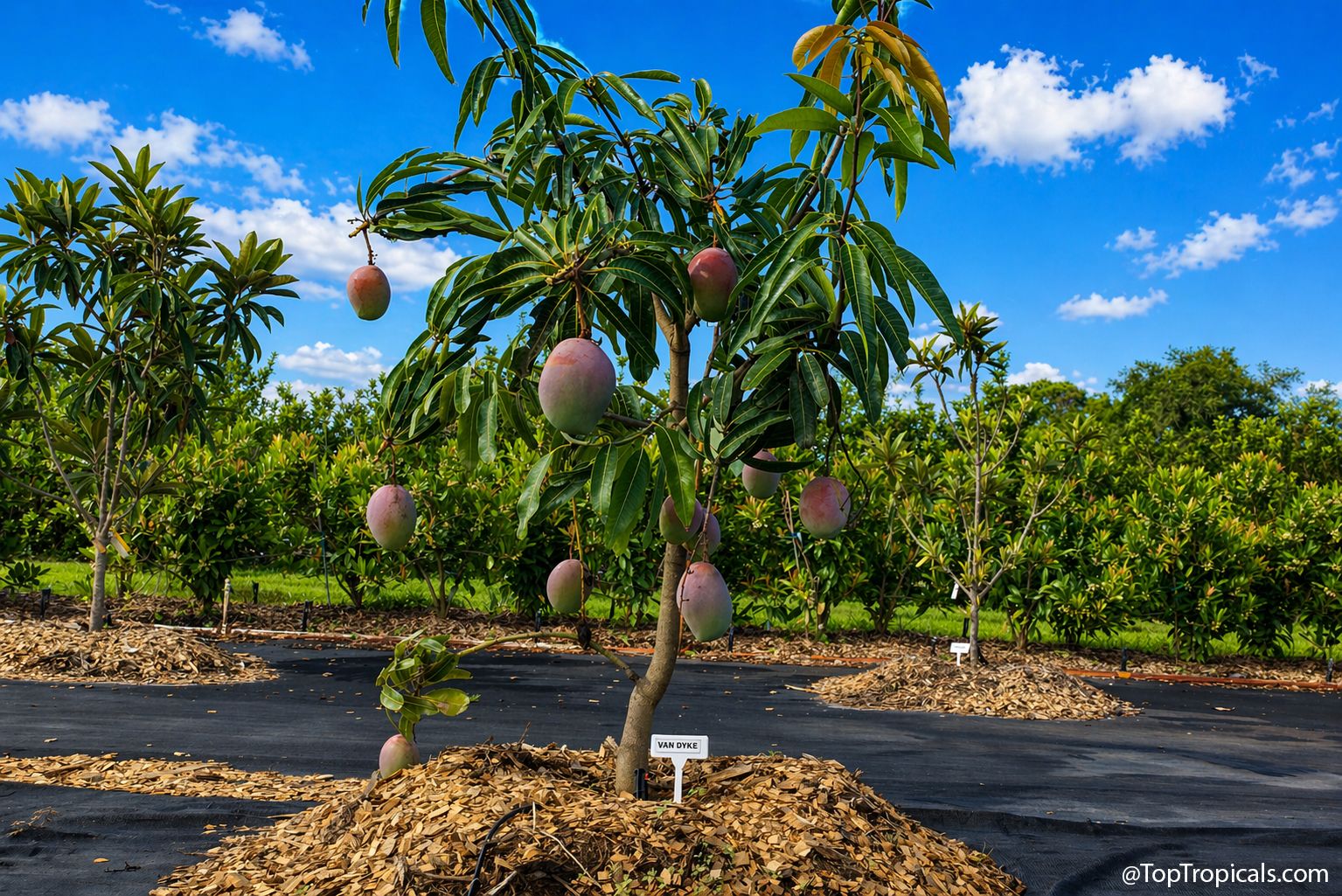
Mango  tree  Van  Dyke  growing  in  an  orchard,  loaded  with  ripening  mango 
 fruits,  surrounded  by  mulch  and  irrigation,  under  a  bright  blue  sky  with 
 scattered  clouds.

A fruiting mango tree Van Dyke in the grove, heavy with developing mangoes and enjoying full sun.

Mango Winter Care (Very Important)

Mango is not a truly cold-hardy plant. It performs best in USDA Zone 9b and warmer, where freezes are rare and short. In borderline areas, winter protection becomes part of the routine. Mango trees should be covered during cold nights, and planting near a south-facing wall helps protect from cold winds. That small microclimate can make a real difference. If your winters are less predictable, growing mango in a container becomes the simplest solution. It gives you full control — you can move the tree to a protected space when temperatures drop, and bring it back into the sun when conditions improve.

That is where condo mango varieties make the most sense. They are naturally compact, easier to manage in pots, and still produce full-size, high-quality fruit. You get all the benefits of a mango tree without needing a large yard or perfect climate — just sun, a container, and a bit of seasonal movement when needed.

📚 Mango tips from our Blog

Growing Mango in a Pot (Condo Mango Made Easy)

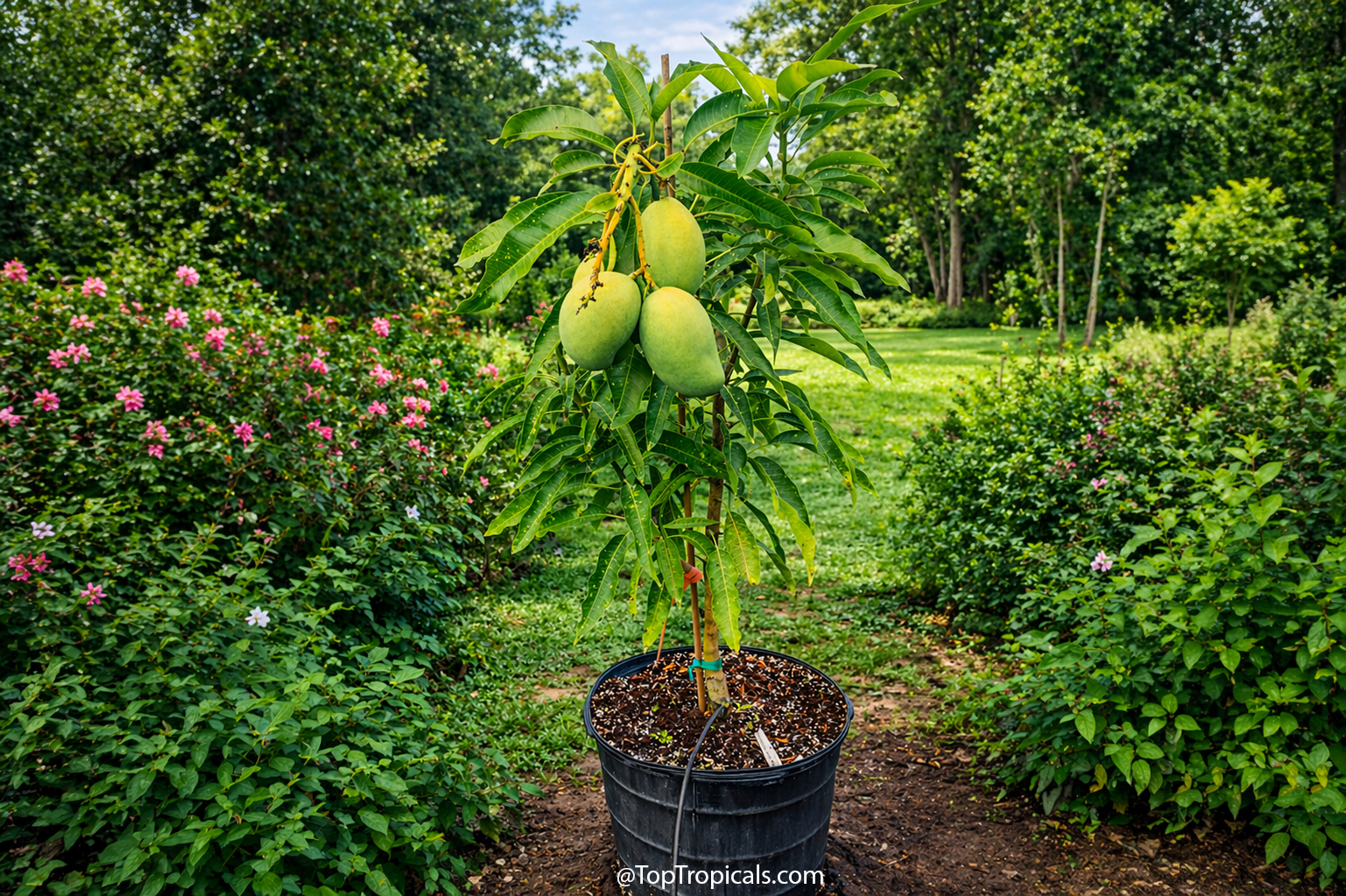
Young  mango  tree  growing  in  a  large  black  nursery  pot,  supported  with 
 stakes  and  drip  irrigation,  bearing  several  green  mango  fruits,  set  in  a 
 lush  garden  with  flowering  shrubs  and  a  sunny  lawn  in  the  background.

Young mango tree in a container, already holding fruit and thriving in a sunny garden setting.

Growing mango in a container is one of the easiest ways to control size, soil, and winter protection. Condo mango varieties stay naturally compact and adapt well to pots, making them ideal for patios, small spaces, or colder climates. You get full flexibility — move the tree when needed, manage its growth, and still enjoy real tree-ripened fruit.

  • Pot size: Start with 3–7 gallon, move up to 15–25 gallon as the tree grows.
  • Soil: Use fast-draining mix such as Abundance soilles mix.
  • Sun: Place in full sun. More light = better growth and fruiting.
  • Watering: Water deeply, then let soil dry slightly before next watering.
  • Feeding: Use controlled-release Green Magic for steady nutrition, plus liquid Sunshine Boosters Mango Tango during active growth.
  • Climate Flexibility: Can be grown in any USDA zone when kept in a container. Simply move indoors or to a protected area during cold weather to keep the tree safe.
  • Pruning: Light pruning keeps the tree compact and productive.

Once you taste a real mango from your own tree, everything changes. It is no longer something you buy — it is something you grow, wait for, and look forward to every season. What felt like hype suddenly makes sense. The passion people have for mango is not exaggerated — it just comes from a completely different experience.

And for people who have never tasted a fresh, juicy mango warmed by the sun, that moment comes as a surprise — the first time they realize what mango is actually supposed to taste like.

As Smokey quietly puts it: Now you know.

📚 More about Condo Mango

🛒 Shop Condo Mango

Landscape  infographic  showing  how  to  cut  a  mango  in  five  steps.  Step  1 
 -  slicing  along  each  side  of  the  pit.  Step  2  -  separating  the  two  cheeks  and
   the  pit.  Step  3  -  scoring  the  mango  flesh  in  a  grid  pattern.  Step  4  - 
 turning  the  cheek  inside  out  to  create  cubes.  Step  5  -  scooping  or  slicing 
 the  cubes  to  eat.  Bright  yellow  background  with  whole  and  cut  mangoes  and 
 green  leaves  decorating  the  layout.

Simple step-by-step guide to cutting a mango into clean, easy cubes - from slicing off the cheeks to popping and scooping the fruit.

🎥 Watch Mango videos

🛒 Shop Mango Trees

Close-up  of  a  cluster  of  ripening  mangoes  hanging  from  a  branch, 
 showing  red  and  purple  blush  tones  against  a  blurred  outdoor  background.

Cluster of ripening mangoes developing rich color on the tree just before harvest.

Taste the Mango Difference - Save 10%

Once you taste a real mango from your own tree, everything changes. Now you know. Get 10% off with coupon code MANGO2026 on 3 gal mango trees.
Offer valid through 04/28/2026.
Discount applies to 3 gal plants only. Not valid on previous purchases and cannot be combined with other promotions or discounts. Offer subject to change without notice.

Date: 21 Feb 2026

The best time to plant a fruit tree was 20 years ago - here is why you need to plant it now

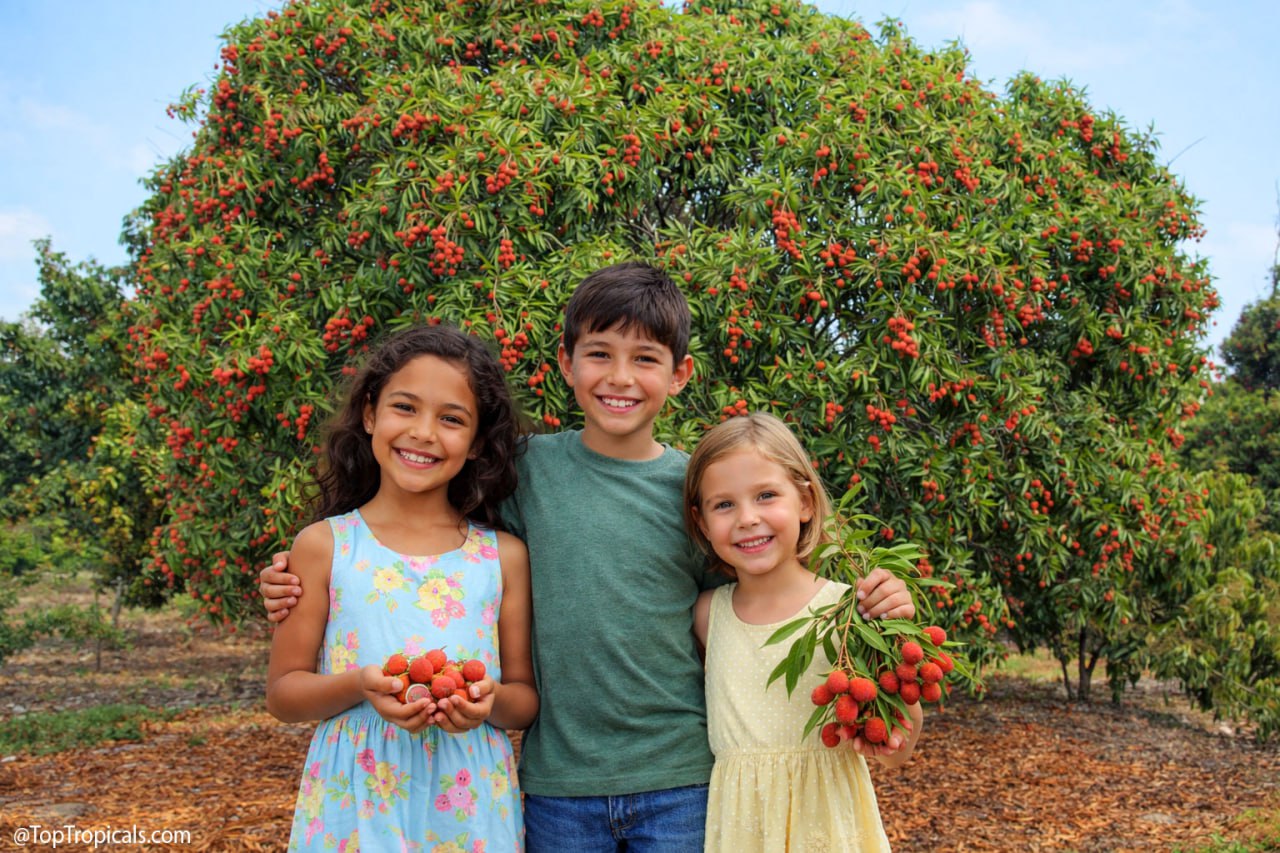
Litchi chinensis - Smiles under the Lychee tree

Litchi chinensis - Smiles under the Lychee tree

🍑 The best time to plant a fruit tree was 20 years ago - here is why you need to plant it now


They say the best time to plant a fruit tree was 20 years ago.
The second best time is today.

A fruit tree is not a seasonal purchase. It is not a decoration. It is a decision that stretches far beyond you.

When you plant a mango, an avocado, a loquat, a lychee tree - you are not just planting for this summer. You are planting for children who will climb that tree. For neighbors who will ask for a basket of fruit. For someone who may live in your house long after you are gone.

Mango Plant Facts

Botanical name: Mangifera indica
Also known as: Mango
USDA Zone: 9 - 11
Highligths Large tree taller than 20 ftSmall tree 10-20 ftFull sunWatering: Moderate. Water when top soil feels dryYellow, orange flowersPink flowersEdible plantSeaside, salt tolerant plant
Get personalized tips for your region

Avocado Plant Facts

Botanical name: Persea americana, Persea gratissima
Also known as: Avocado, Alligator Pear, Aguacate, Abacate
USDA Zone: 9 - 11
Highligths Large tree taller than 20 ftSmall tree 10-20 ftFull sunWatering: Regular. Let topsoil dry slightlyEdible plantSubtropical plant. Mature plant cold hardy at least to 30s F for a short time
Get personalized tips for your region


Fruit trees are quiet investments in the future.
Unlike annual crops that come and go, a tree deepens its roots every year. Many fruit trees - especially mangoes - can live for decades, even a century. They outlive trends, owners, renovations, even mortgages. They stand there, steady, producing.

Even if you sell the house, the tree remains.
The next family will walk into the yard and discover fruit hanging overhead. Imagine buying a home and realizing someone before you planted abundance!

That is a gift.

In many parts of the world, mango trees are called generational crops. One farmer plants them. His children harvest them. His grandchildren sell the fruit. A single decision continues to feed and support a family long after the planter is gone.
There is something deeply grounding about that.

We live in a fast world. Quick returns. Quick moves. Quick upgrades.
A fruit tree moves at a different pace. It asks for patience. It rewards consistency. It teaches you to think long term.

Planting a fruit tree says:
I believe in tomorrow.
I believe this land will matter.
I believe someone will stand here after me.

And even if you never taste the fullest harvest, someone will.
Passing fruit trees through generations is more than horticulture - it is legacy. It is continuity. It is resilience. It is saying that this space, this soil, this home will keep giving.

So plant it now.
Plant it for your children.
Plant it for the next homeowner.
Plant it for shade you may never sit under.
Plant it for fruit you may never pick.
Because one day, someone will walk into that yard, look up, and thank the person who thought ahead.
Let that person be you.

🛒 Explore fruit trees for your orchard

👉 Tropical Fruit favorites:


🥭 Mango
Avocado
🍒 Cherry
🍊 Loquat
🍈 Jackfruit
🍑 Peach tree
🍉 Guava
🍏 Sugar apple
🍇 Mulberry
🍐 Sapodilla

#Food_Forest #Discover

🟢 Join 👉 TopTropicals