Garden Blog - Top Tropicals

Date: 30 Jun 2025

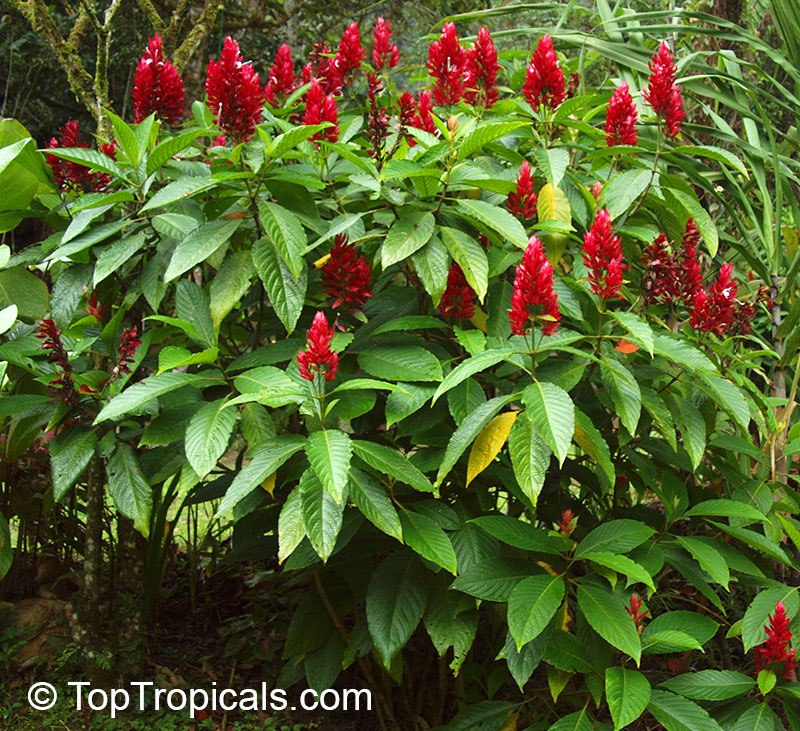
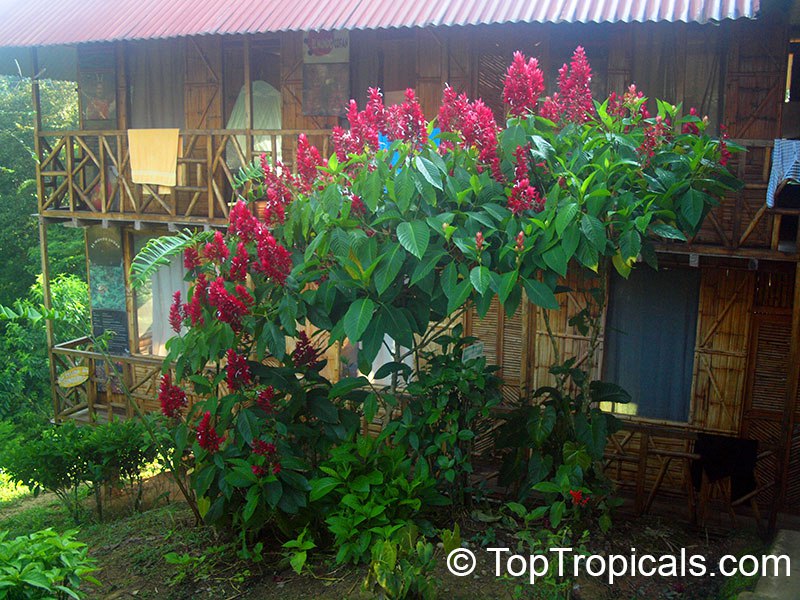
Turn up the color in your garden with the bold everblooming Brazilian plume

Megaskepasma erythrochlamys - Brazilian plume or Red Cloak

Megaskepasma erythrochlamys - Brazilian plume or Red Cloak

Megaskepasma erythrochlamys flowers

Megaskepasma erythrochlamys flowers

♨️ Turn up the color in your garden with the bold everblooming Brazilian plume

  • ❣️Looking to add nonstop color, tropical flair for shade or sun, and pollinator appeal to your garden?
  • Megaskepasma erythrochlamys - Brazilian plume or Red Cloak, is the ultimate show-stopper shrub that takes both sun or shade.
  • ❣️ With its big, bold leaves and eye-catching crimson-to-mauve flower spikes, this plant brings exotic beauty - without the need for a steamy jungle.
  • ❣️The best part? It's surprisingly cold hardy. This lush-looking tropical can handle brief dips into the 30s (F), making it a top pick for USDA zones 9-11. Plant it in full sun or partial shade, and with regular watering, it rewards you with a steady burst of blooms that butterflies and hummingbirds can't resist.
  • ❣️Reaching 5-7 ft tall in the ground, it fills out beautifully to anchor beds or soften fences. In colder regions, it can still thrive in large pots - just give it a sheltered spot, bring it indoors when temperatures drop, and enjoy its vivid flower show all winter long.
  • ❣️If you want a garden that doesn’t fade with the season, the Brazilian plume delivers color, volume, and wildlife appeal - all year round.


🛒 Make your garden pop with color of Brazilian plume

#Hedges_with_benefits #Butterfly_Plants

🟢 Join 👉 TopTropicals

Date: 18 Mar 2019

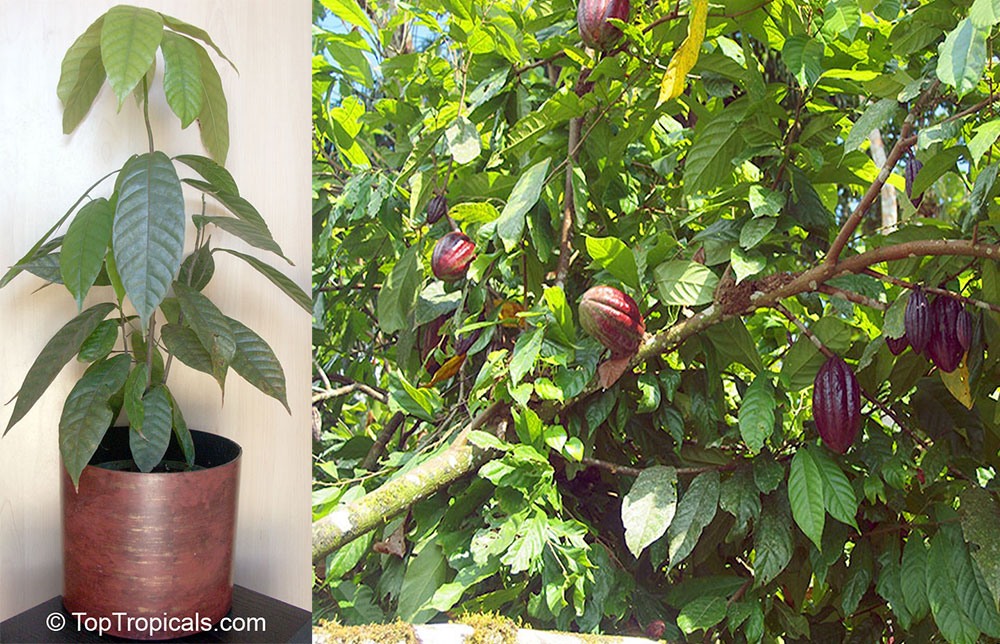
Cocoa plant after winter

TopTropicals.com

Q: I purchased the Theobroma cacao

Date: 25 Dec 2025

Do not throw out your poinsettia - 4 simple tips how to keep it alive for next Christmas

Poinsettia - Euphorbia pulcherrima veriegated leaves

Poinsettia - Euphorbia pulcherrima veriegated leaves

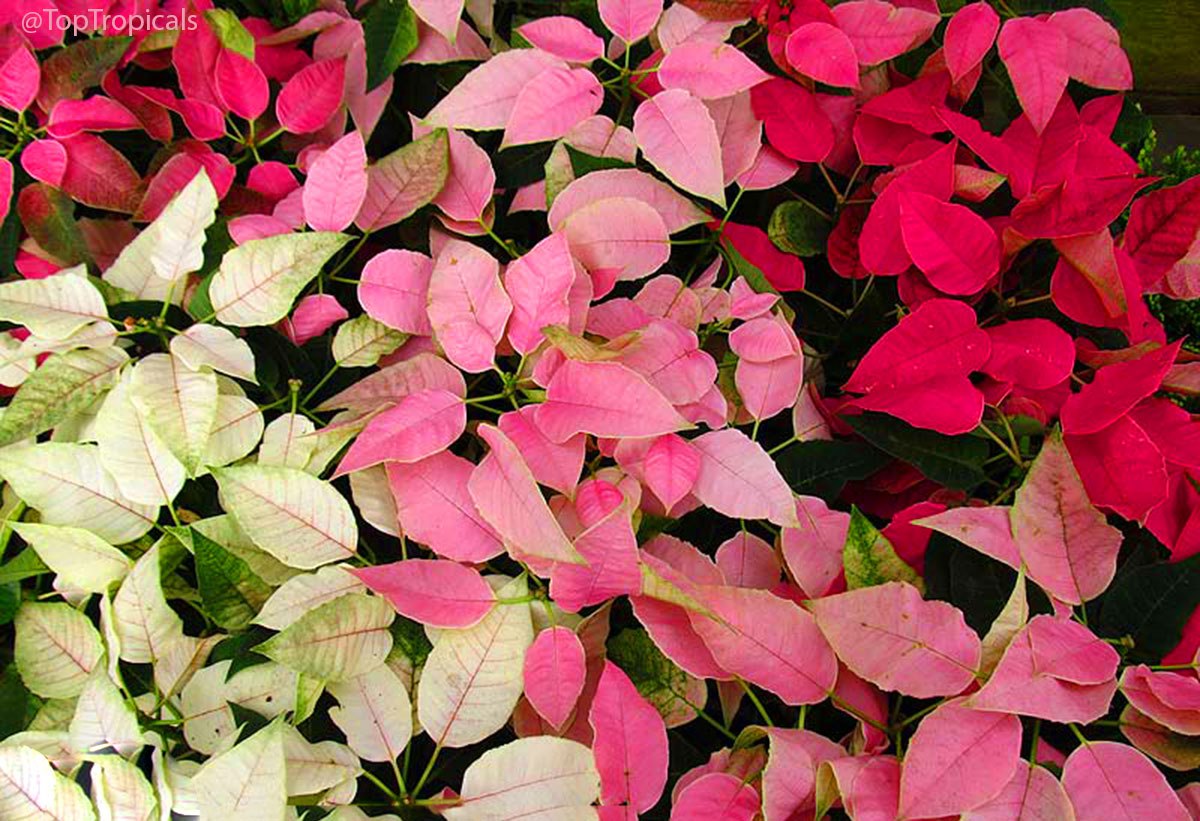
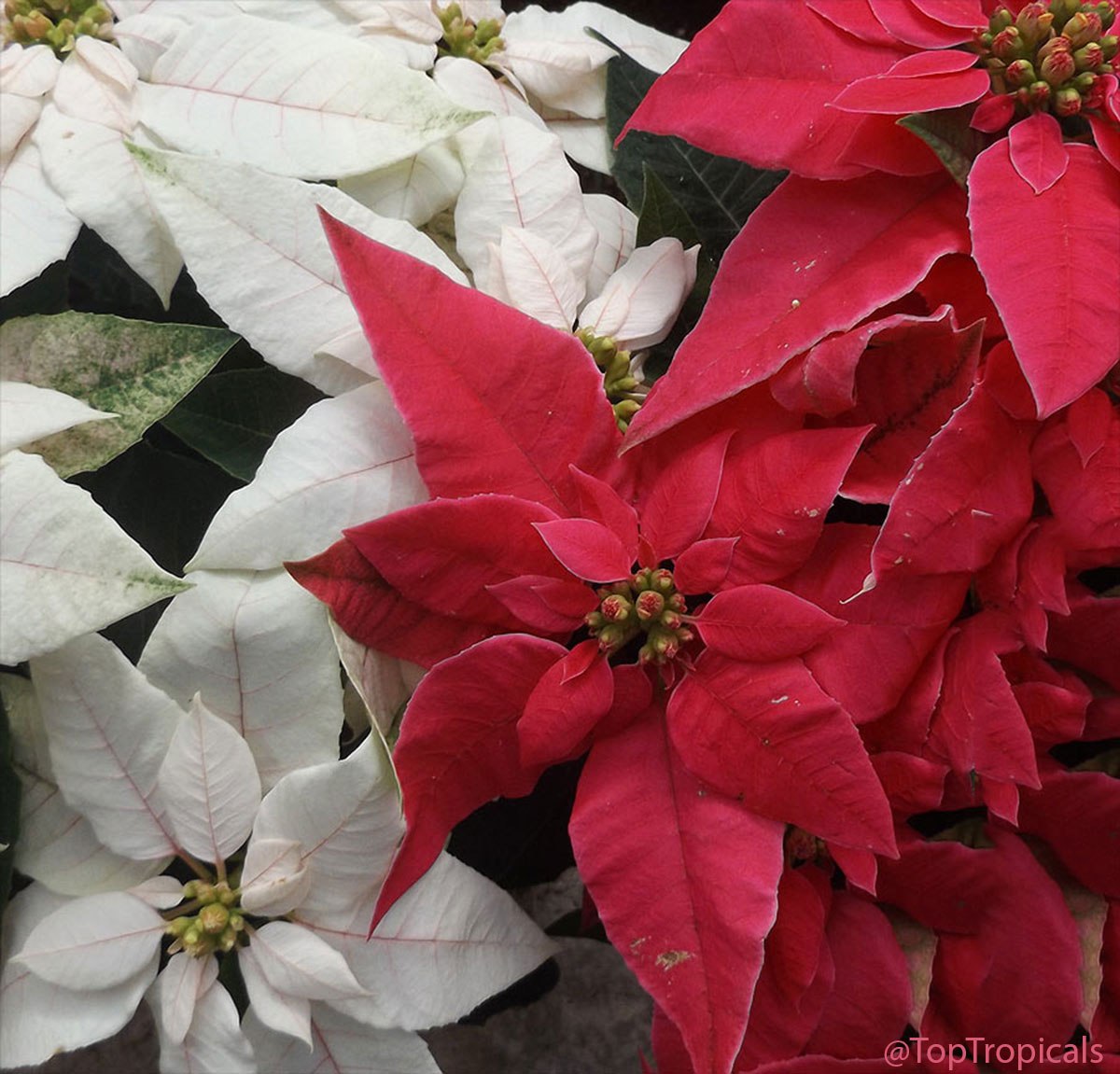
Poinsettia - Euphorbia pulcherrima - white, pink and red

Poinsettia - Euphorbia pulcherrima - white, pink and red

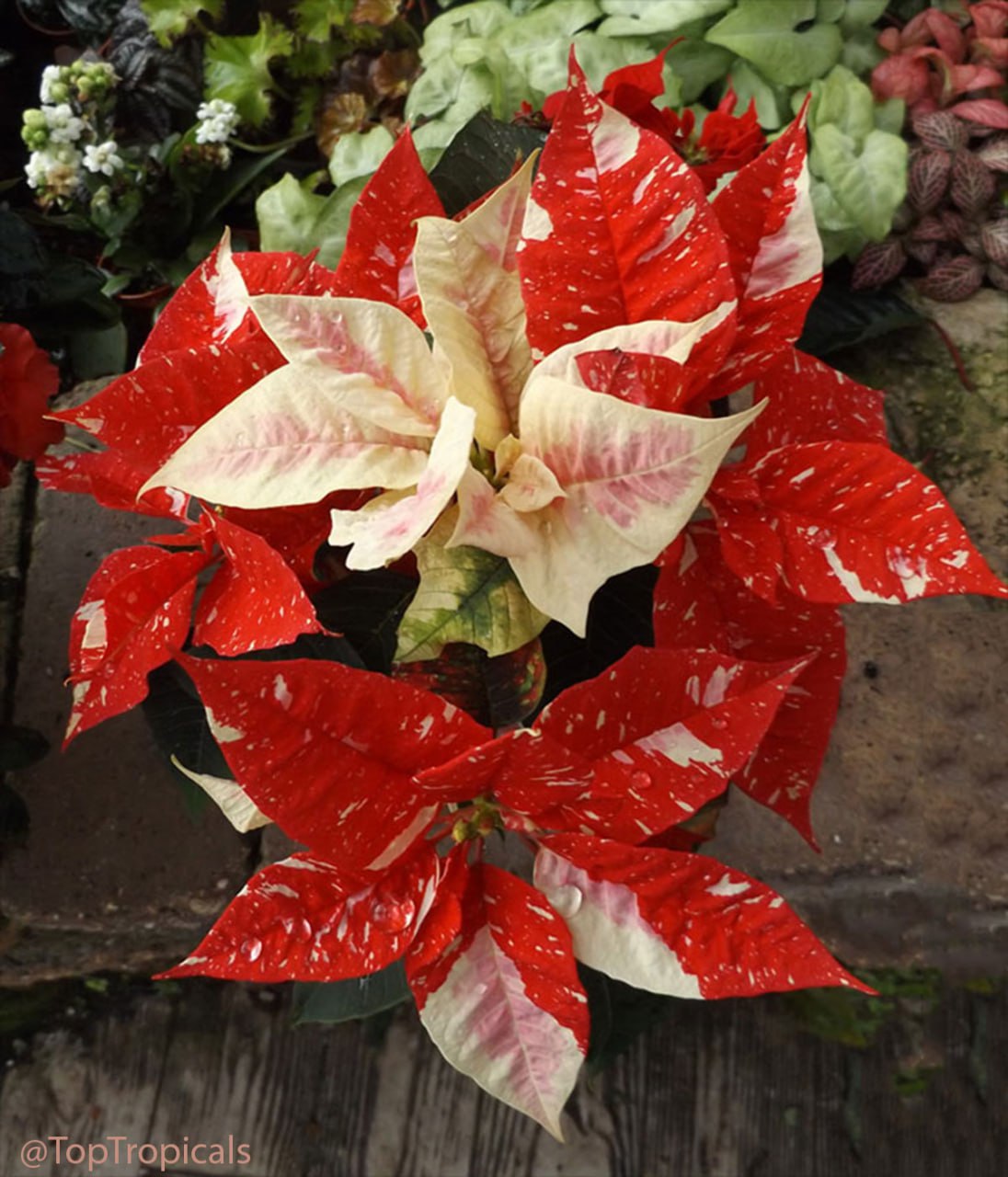
Poinsettia - Euphorbia pulcherrima - white and red

Poinsettia - Euphorbia pulcherrima - white and red

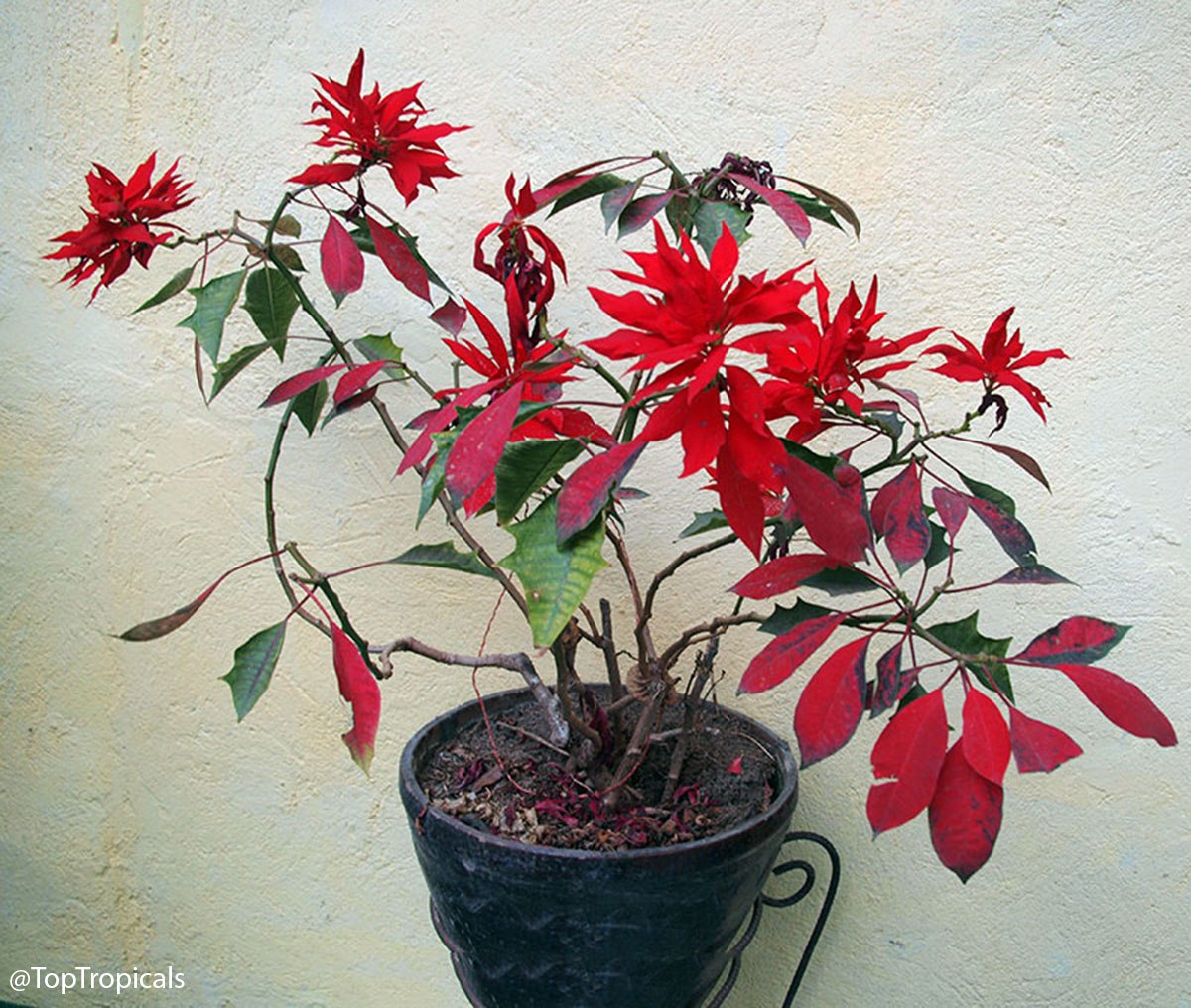
Poinsettia - Euphorbia pulcherrima - in a pot

Poinsettia - Euphorbia pulcherrima - in a pot

🎄 Do not throw out your poinsettia - 4 simple tips how to keep it alive for next Christmas


Poinsettias - Euphorbia_pulcherrima - are tender perennials, not one-season plants. After the holidays they naturally fade, rest, and regroup. With a few simple care tweaks, a healthy plant can live all year and rebloom next winter.
  • 🎄 1. Let it rest after the holidays


  • ✦ Flowering ends naturally - faded bracts and some leaf drop are normal.
  • ✦ Prune when bracts fall: cut stems back by 1/3 to 1/2, leaving 4-5 inches.
  • ✦ Wear gloves - the sap can irritate skin.
  • ✦ Move to a cooler, bright spot for 4-6 weeks.
  • ✦ Ideal temp: 55-60°F
  • ✦ Reduce watering.
  • ✦ Water only when the top 2 inches of soil are dry.
  • ✦ Avoid soggy soil.


🎄 2. Repot in late spring

  • ✦ New growth usually starts in late spring.
  • ✦ Repot at this stage to refresh nutrients and give roots space.
  • ✦ Use a well-draining, slightly acidic potting mix.
  • ✦ Choose a pot only slightly larger, with drainage holes.
  • ✦ Loosen roots gently and remove old compacted soil.
  • ✦ Water lightly, then place in a bright, warm spot.
  • ✦ Resume regular watering and light feeding through spring and summer.


🎄 3. Adjust care during the growing season

  • ✦ Increase temperature gradually to 64-68°F.
  • ✦ Water more often once growth resumes.
  • ✦ Wilted or curling leaves signal thirst.
  • ✦ Water thoroughly and evenly.
  • ✦ Bright light is key, but avoid harsh direct sun.
  • ✦ Use sheer curtains or a grow light if needed.
  • ✦ Fertilize periodically with a balanced houseplant fertilizer.
  • ✦ Pinch back new shoots in late spring for a fuller, bushier plant.


🎄 4. Preparing for winter color

  • ✦ In fall, poinsettias need long nights to bloom.
  • ✦ Provide 12-14 hours of complete darkness nightly for 6-8 weeks.
  • ✦ This triggers colorful bracts in time for the holidays.


❓ Quick FAQ


Can it go outside?
Yes, in warm months only. Bring it indoors before temps drop below 50°F.

Winter outdoors?
No - poinsettias are cold-sensitive and must stay inside.

🎄 Poinsettias don't die after Christmas - they just take a nap. Give them rest, light, and patience, and they will reward you next year.

✍️ Expert reference: Homes and Gardens

🛒 Explore plants for containers

📚 Learn more:

Plant Facts

Euphorbia pulcherrima
Ponsettia, Poinsettia, Christmas Plant, Poincettia
USDA Zone: 9-11
Large shrub 5-10 ft tallSemi-shadeShadeModerate waterOrnamental foliageIrritating plantSeaside, salt tolerant plant
  • Poinsettia - Euphorbia_pulcherrima in Plant Encyclopedia
  • Can Poinsettia grow for years? 5 most common mistakes with new container plants

  • #How_to #Container_Garden

    🟢 Join 👉 TopTropicals

    Date: 9 Feb 2025

    How to grow Mandevilla: Practical Guide to Growing Mandevilla Vine

    Mandevilla amabilis
Thai Rose
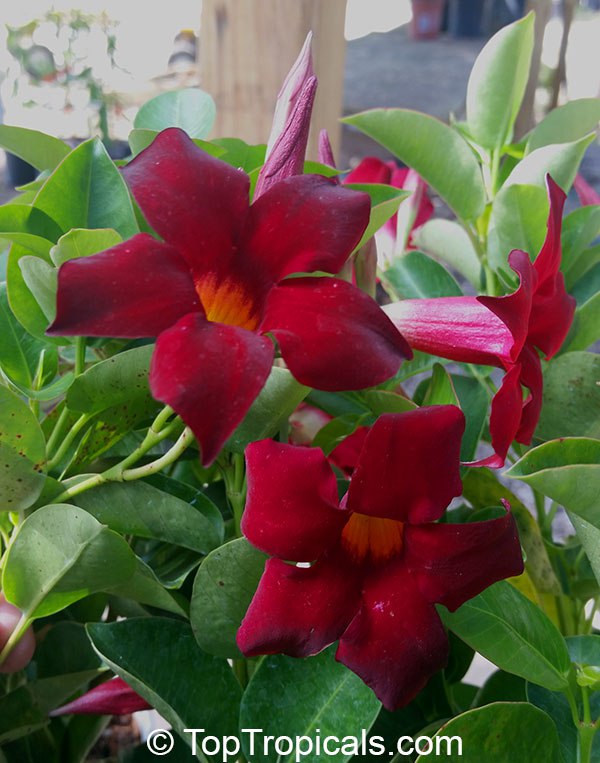
    Mandevilla amabilis Thai Rose

    Mandevilla Sun Parasol Crimson
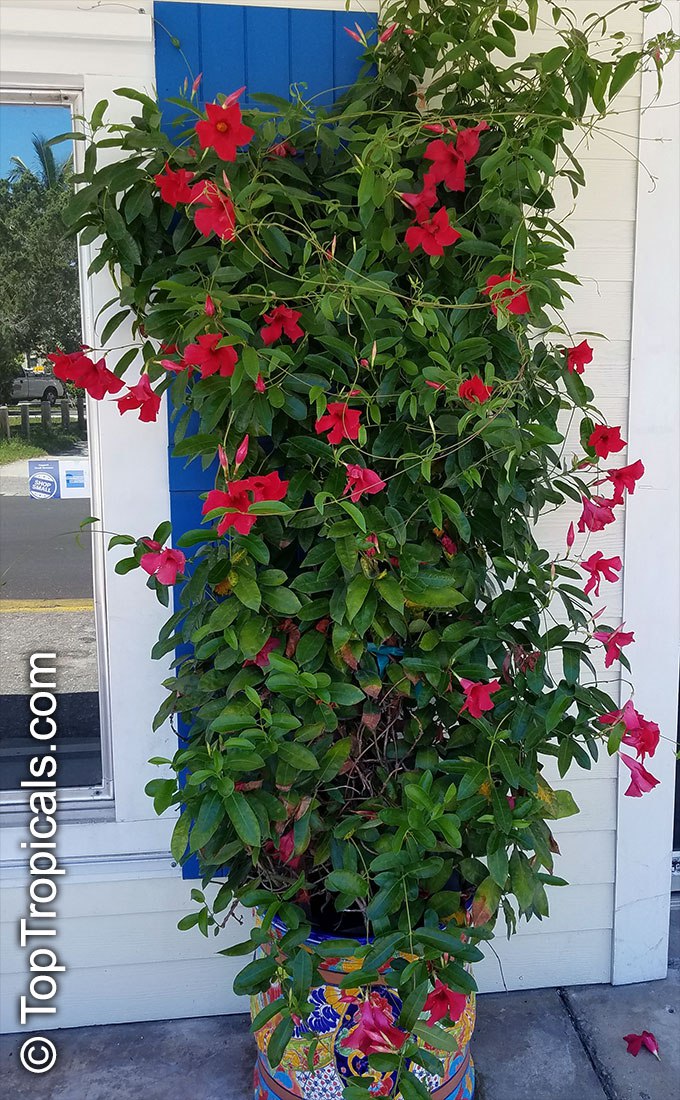
    Mandevilla Sun Parasol Crimson

    Mandevilla Sun Parasol Crimson on a trellis
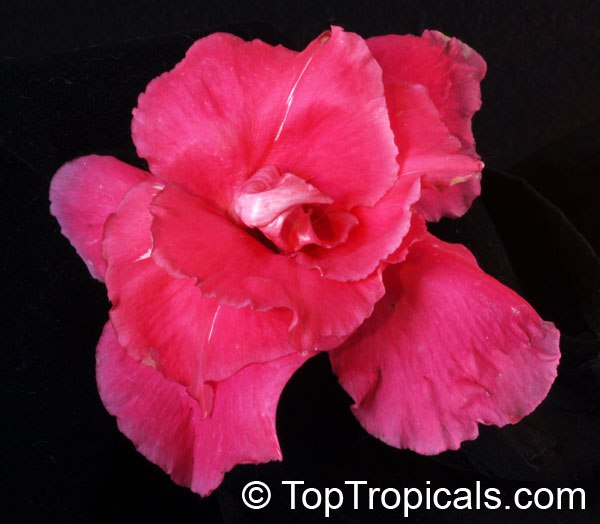
    Mandevilla Sun Parasol Crimson on a trellis

    Mandevilla amabilis
Thai Rose
    Mandevilla amabilis Thai Rose

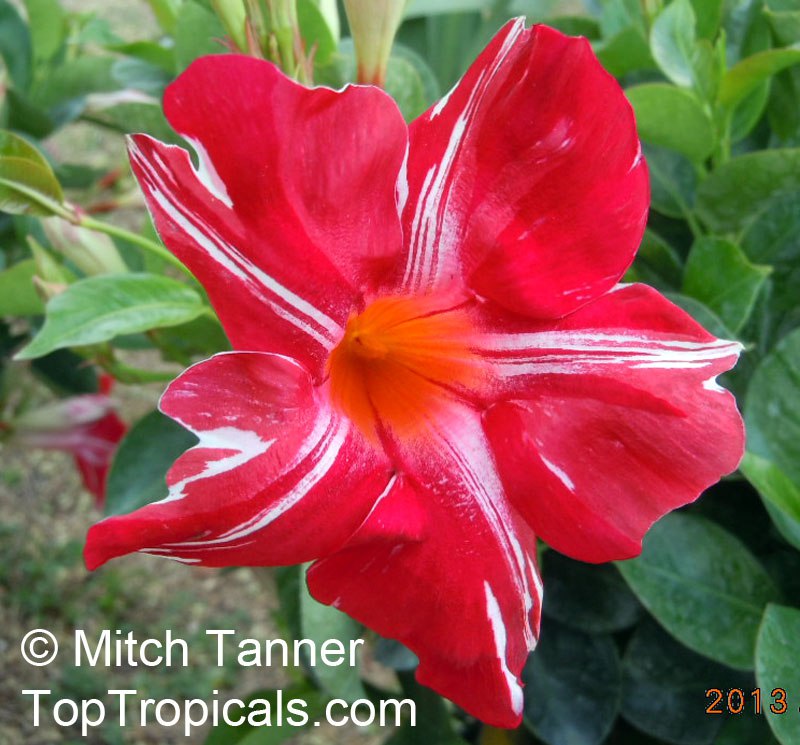
    Mandevilla Stars and Stripes

    Mandevilla Stars and Stripes

    🌺 How to grow Mandevilla: Practical Guide to Growing Mandevilla Vine

    • 🌺 Mandevilla is a tropical vine known for its vibrant, trumpet-shaped flowers that bloom throughout the warm months. This fast-growing climber thrives in warm climates and adds a stunning display of color to gardens and patios.
    • 🌺 Difference Between Mandevilla and Dipladenia


      The names Mandevilla and Dipladenia are often used interchangeably, creating confusion. While they are closely related, there are key differences. Mandevilla is a vigorous woody vine with large, stiff leaves, ideal for trellises and fences. Dipladenia, on the other hand, has a more compact growth habit with smaller, smooth leaves. Dipladenia can be also trained on a trellis but also thrives in hanging baskets or as a compact specimen plant. As a bushier type of Mandevilla, its smaller, more compact varieties are excellent for mixed containers.
    • 🌺 Growing in the Ground


    💋Soil. Mandevilla prefers well-draining soil enriched with organic matter. A mix of garden soil, compost, and sand ensures good drainage and fertility. Both Mandevilla and Dipladenia require acidic soil. If your native soil contains limestone, consider growing them in containers with a peat-based potting mix to maintain a lower pH.
    • 💋Light. Plant in a location with full sun to partial shade; at least 6 hours of direct sunlight promotes the best blooms.
    • Water Mandevilla regularly, keeping the soil moist but not soggy. During hot months, water deeply a few times a week. Reduce watering in cooler seasons.
    • 💋Feeding and Encouraging More Blooms: Feed Mandevilla with Sunshine Boosters Megaflor with every watering to encourage more blooms. Prune lightly after flowering to promote new growth and continuous flowering.

    • 🌺 Most Interesting Varieties
    • Mandevilla flowers come in a wide range of colors, including shades of red, mauve, pink, white, and even yellow. For vibrant color and impact, consider these varieties:

    💋Mandevilla ‘Alice du Pont’– A classic pink variety with large flowers and vigorous growth.
    • 💋Mandevilla ‘Sun Parasol’ Series – Offers compact plants in deep red, pink, or white, great for containers or small spaces.
    • 💋Mandevilla ‘Crimson Red’– Deep red blooms stand out against glossy green foliage.
    • 💋Dipladenia ‘Stars and Stripes’ - features striking red-and-white striped blooms.
    • In Florida, Sun Parasol and Alice du Pont perform exceptionally well, thriving in the heat and humidity while providing season-long blooms.

    • 🌺 Pests and Problems
    Mandevilla is relatively pest-resistant but can attract aphids, spider mites, and whiteflies. To manage pests:
    • 💋Spray with a neem oil solution weekly if pests are present.
    • 💋Encourage beneficial insects like ladybugs to control aphids naturally.
    • 💋Remove affected leaves and rinse plants with a strong stream of water.
    • 💋Watch for fungal diseases in humid climates; ensure good air circulation and avoid overhead watering.


    🌺 Growing Mandevilla in Pots and Winter Care


    Mandevilla grows beautifully in containers, making it a great option for cooler climates where it can be brought indoors for winter.
    • 💋Pot Growing Tips:

    · Use a well-draining potting mix with added perlite for aeration.
    • · Choose a pot at least 12-16 inches in diameter, with several drainage holes, for vigorous growth.
    • · Water when the top inch of soil feels dry, avoiding waterlogged conditions.


    💋Winter Care:
    • · In regions with frost, move potted Mandevilla indoors to a bright, cool location (50-60°F).
    • · Reduce watering and stop fertilizing during cooler season.
    • · Prune lightly before bringing indoors to maintain shape and size.
    • · Repotting: Repot every 2-3 years in early spring before active growth begins, refreshing the soil and upgrading to a slightly larger container if needed.

    With the right care, Mandevilla provides stunning, long-lasting blooms and thrives in gardens or pots, making it a versatile and rewarding addition to any space.

    📚 Learn more from previous post:


    How to overwinter Mandevilla indoors

    🛒 Shop flowering vines

    #How_to #Container_Garden #Hedges_with_benefits

    🔴 Join 👉 TopTropicals
    Date: 7 Jun 2025

    From seed to fruit. How to grow Loquat from seeds, step-by-step guide. Part 2: after germination

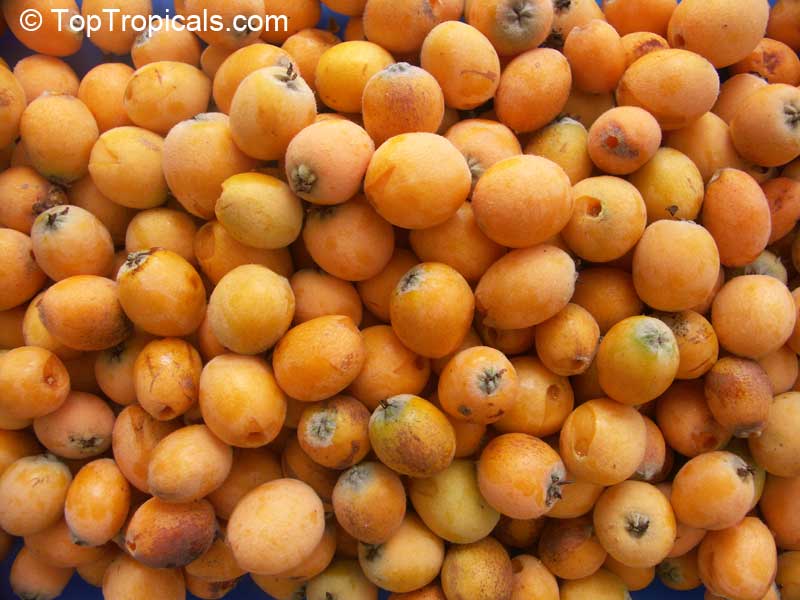
    Loquat tree (Eriobotrya japonica) - fruit

    Loquat tree (Eriobotrya japonica) - fruit

    ✍️ From seed to fruit. How to grow Loquat from seeds, step-by-step guide. Part 2: after germination


    Continued from previous posts⤴️
    • 🍑 4. Transplanting Seedlings


    • When to Transplant: Once seedlings reach about 2-4” (5-10 cm) in height.
    • Transplanting and fertilizing: Move each seedling to its own pot and add controlled release fertilizer (Green Magic is the best), or use liquid balanced fertilizer Sunshine Boosters after 1-2 weeks once the seedlings establish.
    • Watering. Keep soil in a pot slightly moist but not soggy
    • Temperature. Keep seedling warm - above 70F (21C), and protect from extreme heat over 90F (35C) . For small plants, avoid freezing temperatures during winter. As the seedlings get bigger, they get higher drought-, heat- and cold tolerance. Established Loquat trees (2-3 years and older) may take light freezing temperatures.
    • Planting in the ground. You can plant the seedling in the ground when it reaches 2-3 ft tall (50-100 cm) in frost-free areas. During chill winter nights, young seedlings can be cold protected until established.


    🍑 5. Sunlight Requirements

    • Light Exposure: Loquat established seedlings thrive in full sun but can tolerate partial shade. Start seedlings in bright shade and protect from afternoon hot sun to avoid leaf burn. Once seedlings are established and new growth appears (2-4 weeks), gradually move them to full sun.
    • Why adequate sunlight (full sun) is important:
    - promotes healthy growth
    - helps to avoid fungus and insect problems
    - is critical for future flowering and fruit production

    🍑 6. Fruit production

    • Loquat seedlings start producing seed within 3-4 years from seed, providing adequate sunlight, warm temperatures and regular irrigation.
    • Grafted Loquats start producing right away or the next year
    • Fruit will develop over the winter and ripen from March through May depending on location


    🛒 Shop Loquat Trees and enjoy fresh fruit benefits

    📚 Learn more:


    🎥 YouTube video about Loquat
    📁 Overlooked fruit: tasty Loquat recipes (PDF)

    #Food_Forest #Loquat

    🔴 Join 👉 TopTropicals