Date: 17 Dec 2024
How to care for your mango tree in winter
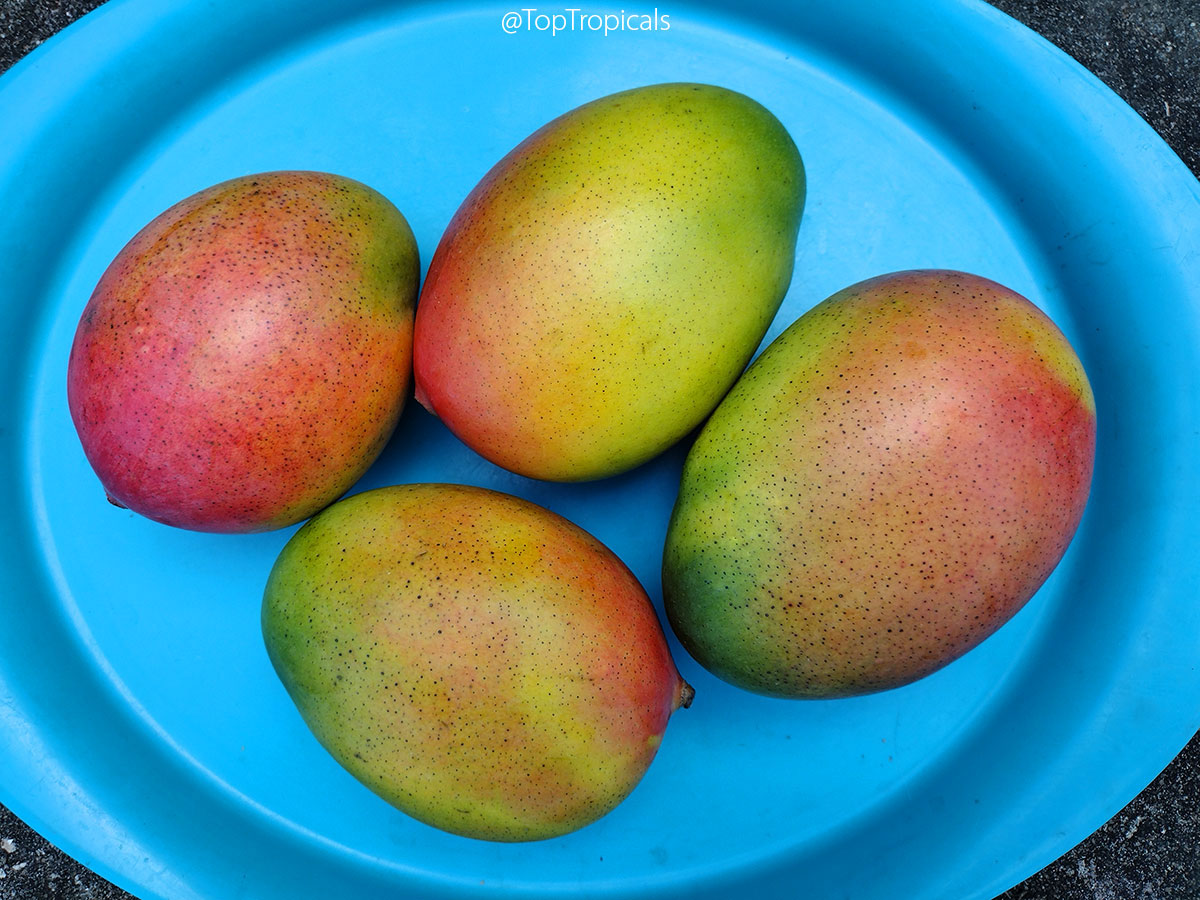
Q: I bought a few mango trees from you this year, and they're doing great! So far, winter's been pretty mild here in Florida, but I know January and February can get chilly. Is there anything special I should do to keep my trees happy so I can enjoy fruit next year?
A: If you want to enjoy mangoes like ours (in the photo) next summer, protecting your tree in winter is a must! Give it the care it needs now, and you'll reap sweet rewards when the warm weather returns.
Keep it cozy and protected: Mango trees love warmth, so when winter comes, they need extra care to stay happy.
Temperature: Mango trees are sensitive to cold. If temperatures drop below 35F, cover the tree with frost cloth or burlap to protect it. For potted mango trees, move them indoors or to a greenhouse.
Watering: Reduce watering during winter. Mango trees don't like soggy roots in cold weather. Let the soil dry slightly between waterings.
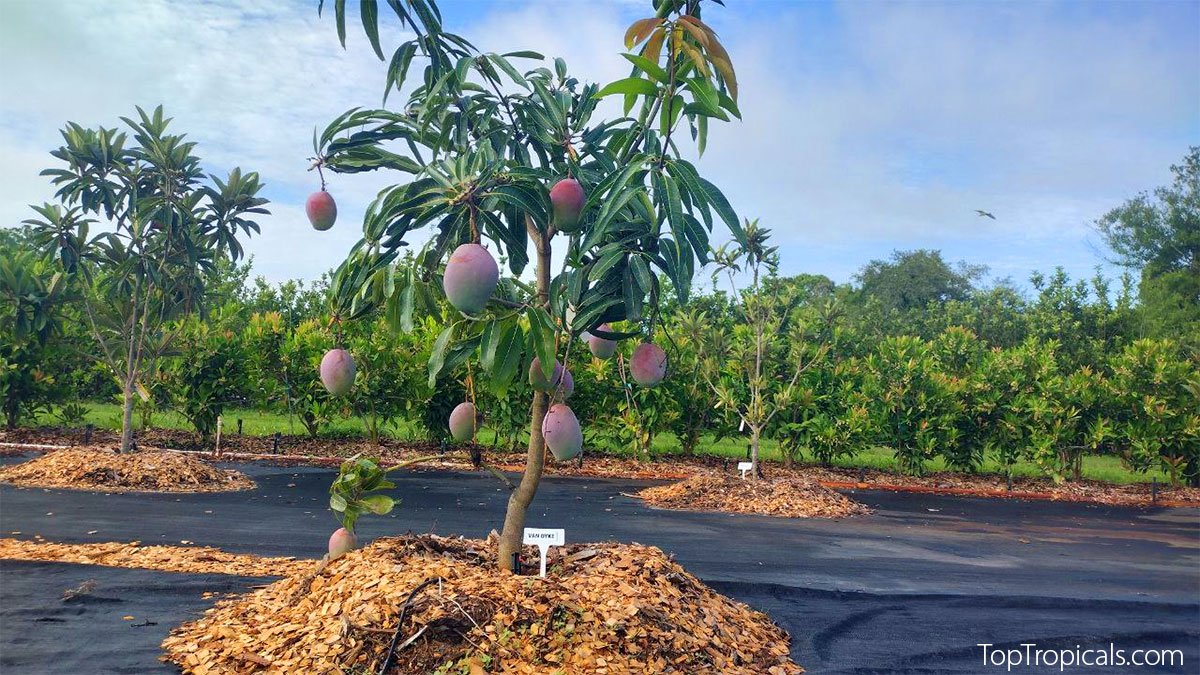
Mulching: Add a thick layer of mulch around the base of the tree to insulate the roots and retain warmth. Keep the mulch a few inches away from the trunk.
No pruning: Avoid heavy pruning in winter, as it can stress the tree. Besides, pruning promotes young tender growth that may get cold damaged. Save major trimming for spring.
Feeding: Stop dry fertilizer in winter. The tree slows its growth, so too much dry fertilizer can do more harm than good. You can continue using Sunshine Boosters Mango Tango year-round because it is water-soluble and natural, and the amount of food needed will adjust with reduced watering.
Date: 24 Jun 2018

Florida winters and gardening
From
Anna Banana, our Garden Center customer advisor.
Cool weather - no sweat. Here in Florida we are
blessed to have warm winters. We just went to the beach
for Christmas! Winter time is not only a good beach time,
but also the best planting time here. Why? I always refer
my customers to Murray Corman's article Tropical Planting Breaks the
Rules. "...Wintertime does not just mean hard work
for tropical gardeners. It is also a time to enjoy the
fruits of our labor. Winter-blooming plants and the
visitors they attract - birds, bats and butterflies - make
the garden as enjoyable in winter as any other time of
year. Tasks performed during the spring and summer up
north have to be done during the fall and winter here.
Why? The answer is elementary: It's too hot! Taking
advantage of the coolest months of the subtropical year
for heavy chores like planting trees has a twofold
benefit: The gardener can make hay while the sun shines
without getting heat stroke and the plants appreciate the
moderate temperatures, enjoying a break from the stress of
93 degrees in the shade..."
Continue reading...
Winter flowering plants - are a blessing for a tropical gardener. See below what's blooming now! See our recommendations for winter flowering and fruiting plants (PDF)
Date: 15 Nov 2016
SUNSHINE in a bottle - your help during winter
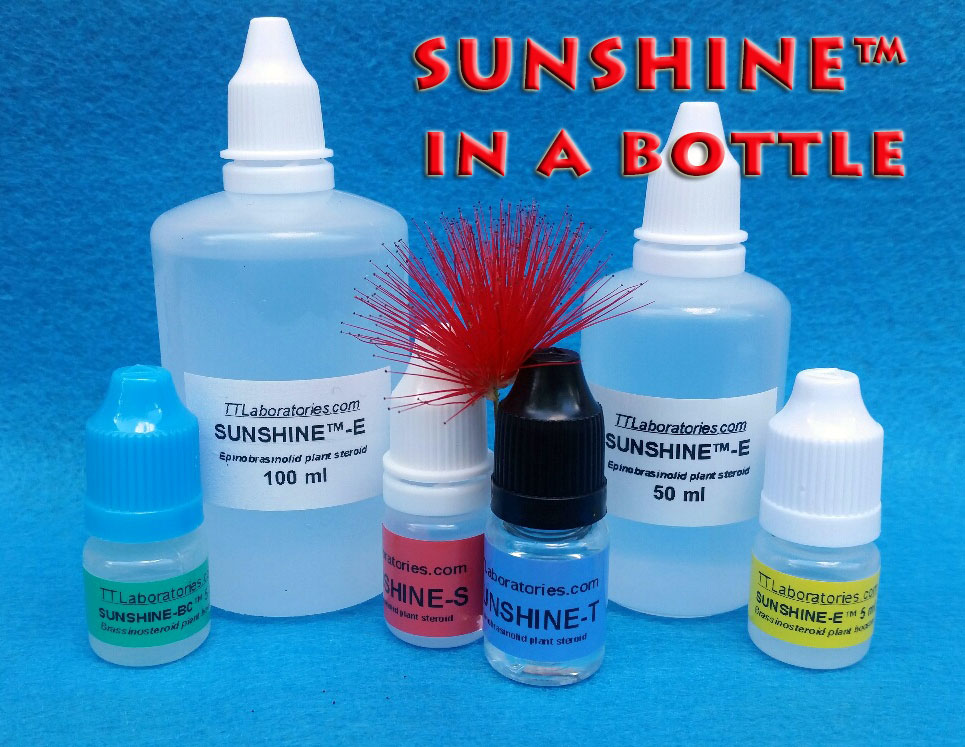
Q: I have been using your new plant hormone SUNSHINE for plants after shipping, and I must admit it does make a big difference! They recover right away. I order plants online very often, and usually it takes up to a week or more until they start showing new growth. After SUNSHINE treatments, they look fresh within a day or two. My question would be, for improving cold tolerance, what do you recommend? I live in Florida and it is still warm here, should I start spraying my garden now or should I wait until cold spells?
A:
SUNSHINE
is very effective plant stimulant that helps tropical
plants survive different kinds of stress, including
cold, heat, drought, low light, etc. At TopTropicals
gardens and nursery, we have been using this hormone for
many years to protect our plants from unfavorable
conditions, and it saved us many rare tender species,
and lots of money!
The sooner in Fall you start treatments, the better.
Don't wait until cold spell. SUNSHINE works slowly and
in very low doses. The mechanism is actually about
boosting, building up the plant's own immune system. Low
doses once a week, even every other week will work just
fine, so you will need very little of the product. For
less than $5 you can help expensive rare plants to go
through winter painlessly. Recommended application is
only 2.5 ml/1 gal of water, to spray every 1-2 weeks
throughout winter period.
Start spraying your plants with SUNSHINE now, to help
them survive short winter days, build up insect
resistance (especially for plants indoors), and what is
most important, to remain strong through lower
temperatures. These are our suggestions:
- SUNSHINE-T
- thermo-protection booster. It is specially
formulated for winter protection of tropical plants. To
improve cold hardiness even more, spray 1-2 days prior
to cold with 5 ml/1 gal solution and after that,
continue applications with 2.5 ml/1 gal solution every
10-15 days throughout winter period.
- For large plant collections, and in-ground gardens in
subtropical areas, take advantage of very cost effective
bulk items 50
ml and 100
ml bottles of SUNSHINE.
- Don't forget that SUNSHINE is only a stimulant, and
not a plant food. While regular fertilizer should be
avoided during winter months, it is always beneficial to
apply microelements through foliar spray. During cooler
period, chances of chlorosis increase, because at low
temperatures iron is difficult so absorb by roots
especially in moist soil, hence iron deficiency! Our new
Iron supplement SUNSHINE-Super-Iron
microelement booster will help to avoid yellowing leaves
and to maintain your plants strong and healthy during
slow growth period. Ultra-potent, highly absorbable iron
mix, with chelated Iron with DTPA (instead of usual
EDTA) that is better soluble in hard water and more
effective for chlorosis. This mix contains both EDTA +
DTPA chelated iron in higher concentration than regular
micro-elements mixes.
See all SUNSHINE
booster products in our store. For advanced
information on SUNSHINE plant boosters, history of use,
formulation, and frequently asked questions, visit our
manufacturer's website TTLaboratories.com.
Best plants suitable for containers. Check out our large selection of plants that are easily grown in containers
Date: 14 Nov 2025
What is a Dwarf Condo Avocado that fruits at 3 ft tall?
Dwarf Condo Avocado Fuerte
What is a Dwarf Condo Avocado that fruits at 3 ft tall?
- Every fruit lover dreams of growing lots of avocado varieties, but space often gets in the way. The good news is that some avocado trees stay naturally small and compact, making them perfect for patios, balconies, and even indoor growing. These are called Condo Avocados.
- They have the same tasty fruit as full-sized trees but take up much less room. You can easily grow them in large pots or containers. They begin to fruit when it's just 2-3 feet tall and remain under 10-12 feet, even after 10 years of growth.
The most popular condo avocados are:
🟢 Wurtz (Little Cado): A true dwarf avocado tree that stays small and grows well in containers. It can even produce fruit indoors near a sunny window.
- 🟢 Fuerte: A semi-dwarf variety that’s easy to manage and does well in pots or small yards.
- 🟢 Joey: Not a true dwarf, but naturally compact. With a bit of pruning, it can stay small and fit nicely in limited spaces.
Condo avocados are a great way to enjoy homegrown avocados even if you don’t have a big yard. Just give them sun, good soil, and regular care - and you’ll have fresh avocados right on your porch!
✔️ Check outAvocado Variety Guide interactive chart. Sort them by flower type A or B, tree habit, fruit shape and quality, cold hardiness, origin, season and more!
🛒 Shop Avocado varieties
📖 Our Book: Avocado Variety Guide, Snack or Guacamole?
- ·
📚 Learn more:
- Five most popular Avocado cultivars
- More posts on #Avocado
#Food_Forest #Avocado
🟢 Join 👉 TopTropicals