Garden Blog - Top Tropicals

Date: 19 May 2025

What fruit can reduce your blood pressure. Tropical fruit and plants that help keep blood pressure in balance
Tropical fruit that can reduce your blood pressure

Tropical fruit that can reduce your blood pressure

❤️ Tropical fruit and plants that help keep blood pressure in balance.
Part 1: What fruit can reduce your blood pressure?


💲 You don’t need to spend $$$ on doctors and medications to stay healthy and young. By eating right and adding a few powerful plants and fruits to your diet, you can naturally keep your blood pressure in check. Plant them today and harvest your own medicine tomorrow! And don’t forget - gardening itself is therapeutic! It keeps you active, reduces stress, and helps your whole body stay in balance.

💚 Tropical fruit that help reduce blood pressure:

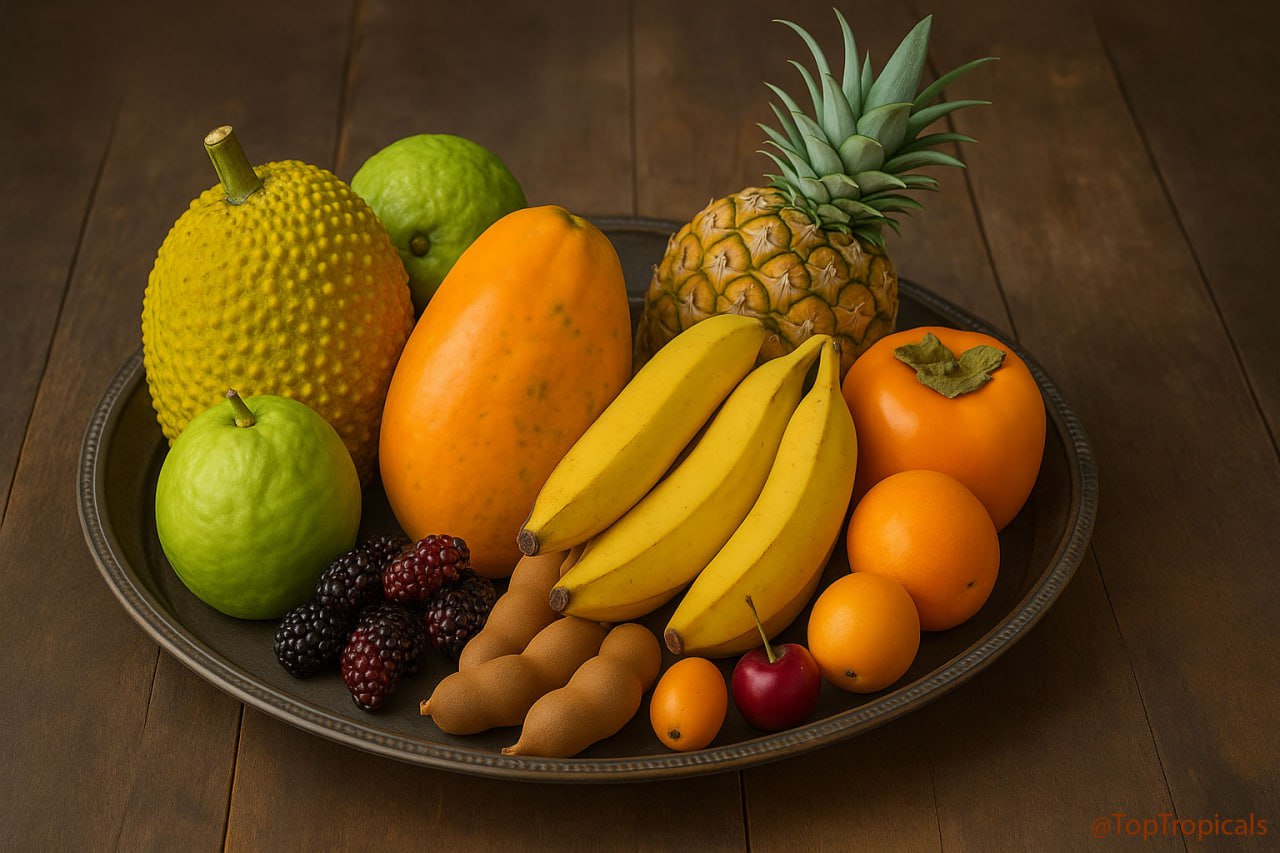
  • Jackfruit (Artabotrys hexapetallus) - Contains potassium and magnesium, which help relax blood vessels and regulate blood pressure.
  • Guava (Psidium sp.) - Rich in potassium and fiber, supports vascular health and may help lower blood pressure.
  • Papaya (Carica papaya) - High in potassium and antioxidants, promoting healthy blood pressure.
  • Banana (Musa sp.) - Well-known for its high potassium content, which helps counteract sodium and lower blood pressure.
  • Pineapple (Ananas comosus) - Contains potassium and bromelain, which may support circulation and reduce inflammation.
  • Persimmon - High in fiber and antioxidants, which can contribute to better heart and vascular function.
  • Mulberry (Morus sp.) - Contains resveratrol and other antioxidants linked to heart health and blood pressure support.
  • Tamarind (Tamarindus indica) - Rich in potassium and fiber, may help regulate blood pressure and support arterial health.
  • Loquat (Eriobotrya japonica) - Contains potassium, aiding in fluid balance and blood pressure control.
  • ✅🍒 Tropical Cherry (Eugenia) - Contains antioxidants and supports healthy circulation.

Part 2: Edible plants reducing blood pressure - see next post⤵️

🛒 Shop tropical fruit trees that boost your health

📚 Learn more:


Tropical fruit health benefits guide
#Disover more #Remedies and #Fruit_Forest

🔴 Join 👉 TopTropicals
Date: 19 May 2025

What edible plants and herbs can reduce your blood pressure. Tropical fruit and plants that help keep blood pressure in balance

Edible plants and herbs reducing blood pressure

Edible plants and herbs reducing blood pressure

💚 Tropical fruit and plants that help keep blood pressure in balance.
Part 2: What edible plants and herbs can reduce your blood pressure?


Continued from previous post ⤴️
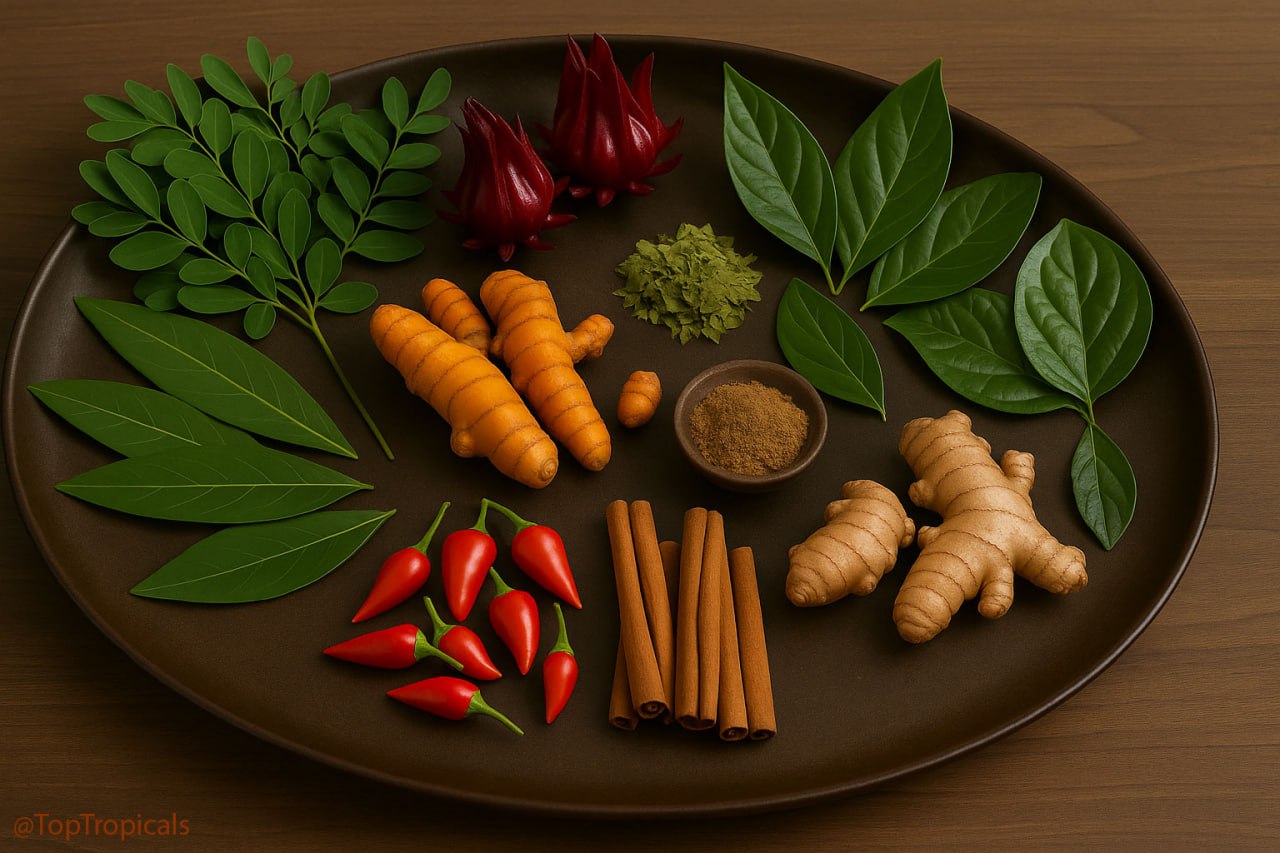
  • 🌿 Moringa (Moringa oleifera, Horseradish tree) - Contains potassium and antioxidants, shown in studies to help reduce blood pressure.
  • 🌿 Curry Leaf (Murraya koenigii) - Traditionally used for blood sugar and blood pressure regulation; contains cardio-protective compounds.
  • 🌿 Hibiscus sabdariffa (Karkade) - Famous for hibiscus tea, clinically shown to lower blood pressure naturally.
  • 🌿 Camellia sinensis (Tea Plant) - Green and black tea can support vascular health and slightly reduce blood pressure over time.
  • 🌿 Turmeric (Curcuma) - Contains curcumin, which may support vascular relaxation and improve circulatory health.
  • 🌿 Yerba Mate (Ilex paraguariensis)- Contains antioxidants and vasodilating compounds that may support blood pressure regulation.
  • 🌿 Bay Leaf (Laurus nobilis) - Traditional uses include heart and circulatory support, with mild diuretic properties.
  • 🌿 Piper sarmentosum (Vietnamese Pepper Leaf) and Piper betel (Betel Leaf) - Used traditionally to help with hypertension and circulation.
  • 🌿 Cinnamon (Cinnamomum sp.) - May improve insulin sensitivity and support vascular relaxation, contributing to lower blood pressure.
  • 🌿 Allspice (Pimenta dioica) - Contains anti-inflammatory compounds that support heart and circulatory health.
  • 🌿 Ginger (Alpinia, Costus, Zingiber, etc.)- Known to help relax blood vessels and improve blood flow, which can reduce blood pressure.
  • 🌿 Wiriwiri and Biquinho Peppers (Capsicum sp.) - Their capsaicin content may support vasodilation and improve circulation.


🛒 Shop tropical herbs and spice plants that boost your health

📚 Learn more:


Tropical fruit health benefits guide
#Disover more #Remedies and #Fruit_Forest

🔴 Join 👉 TopTropicals
Date: 4 Mar 2016

Growing from seeds

Q: What is the best time to start tropical plants from seeds? Should I wait till summer?

A: Traditionally, people prefer sowing seeds in spring, especially temperate species for vegetable garden: tomatoes, peppers, cucumbers...

When dealing with tropical plants, you may want to start your babies indoors, providing additional heating when needed. If you keep your living space around 75F (ideal for many species), this is a perfect temperature to get your seeds started. Tropical plants are not like annual tomatoes that try to grow through the season as fast as possible. They may take time. So the sooner you start, the more chances to get small seedlings just in time when spring air outside is warm enough - at least in 70's F.

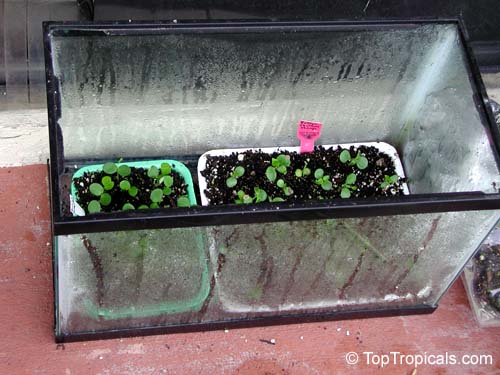
A great advantage of starting tropical seeds indoors is controlled temperature and moisture. In the plant world, environment extremes are not good for germination process. Mild conditions of your home or a greenhouse create better chances for successful growth. Seeds won't get overheated in hot summer sun, and won't get rotten because of a sudden heavy rain. Just keep in mind that some species require light for good germination. Using an old fish tank or covering with plastic wrap will help to keep constant humidity.

See full list of all seeds - all on sale, one day only!

Date: 7 Mar 2016

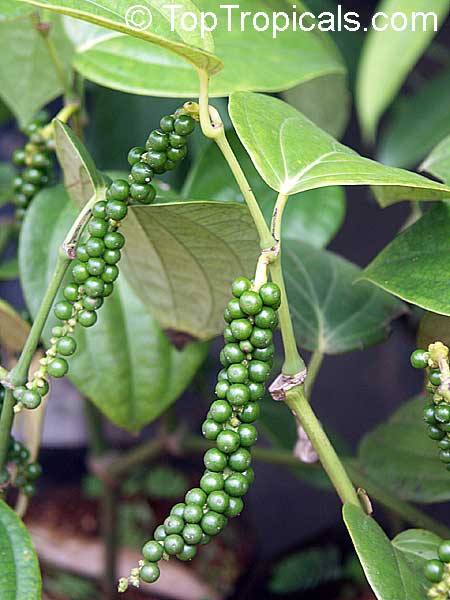
Black Pepper Vine - grow a real spice at home!

Q: What plants are used for commercial production of black pepper, red pepper, and green pepper? I started organic garden and would like to try growing pepper. I live in Georgia, will it survive here?

A: Pungent and aromatic Pepper is grown in Southern India since more than two thousand years, has always been much valued all over the world. Along with other spices from India and lands farther east, it changed the course of world history. Depending on harvest time and processing, peppercorns can be black, white, green and red (reddish-brown). So, the same fruit is also used to produce white pepper, red/pink pepper, and green pepper. The pungency is strongest in white pepper and weakest in green pepper, while black and green pepper are more aromatic than the white one.

The vine can be easily grown in a pot on a trellis, in mild (frost-free) climates it can be grown in the ground providing a tree support. Try growing this legendary plant and taste the real spice!

For more info, see article about Black Pepper.

See full list of spice and herbs

Date: 10 Mar 2016

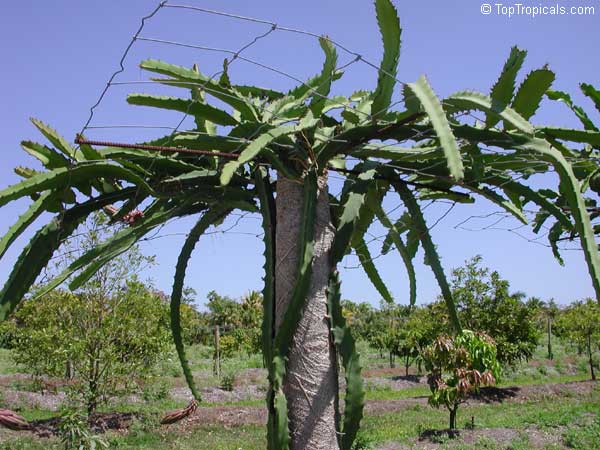
Do-It-Yourself Support Structure for Dragon Fruit

This interesting do-it yourself project was sent to us by our customer from South Florida. Many tropical gardeners want to grow fascinating Dragon Fruit, and their most common question is - what kind of support I should use for this amazing fruiting cactus? We hope you find this information very useful. Happy Gardening!

Dragon fruit is a terrestrial/epiphytic fruit baring cactus, which may grow fleshy stems up to 30 ft high, given sturdy support. However, downward hanging or horizontal branches stimulate production of flowers at the tips of the branches. Commercial groves in different parts of the world use different method to achieve this. The traditional Vietnamese way is to train the plant into a “fountain”, which consists of a vertical central trunk about 8ft tall and a horizontal structure, such as a wagon wheel on top of it to support the horizontal branches (see picture on the right).

This picture served as my inspiration to build my own structure. I used five 4”x4” 10ft wood beams as the trunk, shaped as a cross. I attached the beams to each other with 10” long screws.

I dug a 2 ft deep 12”x12” hole in the ground and positioned the trunk inside, such that about 8ft are above ground. I covered it with several layers of burlap top to bottom.

The horizontal structure on top is made of four 4ft long 2”x2” wood beams and two 12”x12” wood plates to hold them together. I attached this structure to the top of the trunk.

I used old watering pipe to form two rings around the trunk to support the branches. Here is the result!... See step-by-step full size pictures and the rest of the article...