Garden Blog - Top Tropicals

Date: 25 Jun 2020

Plant of the Month: Golden Dewdrop - Duranta erecta
Stevie's Pick: what's in bloom?

Our exotic plant grower Steven Gowdy is featuring the most interesting plants he discovers and recommends today while working in TopTropicals greenhouses.

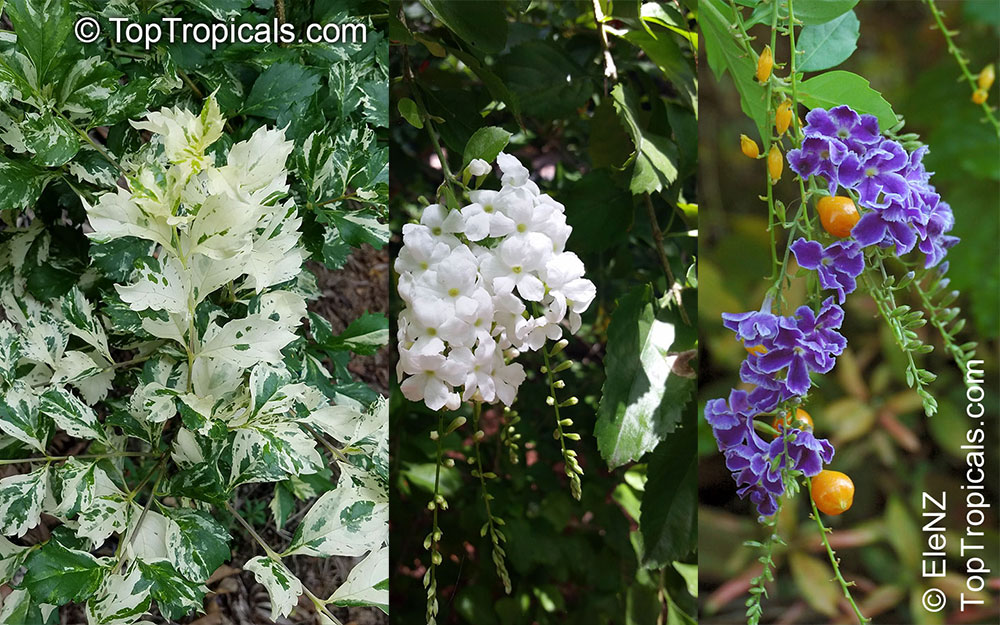
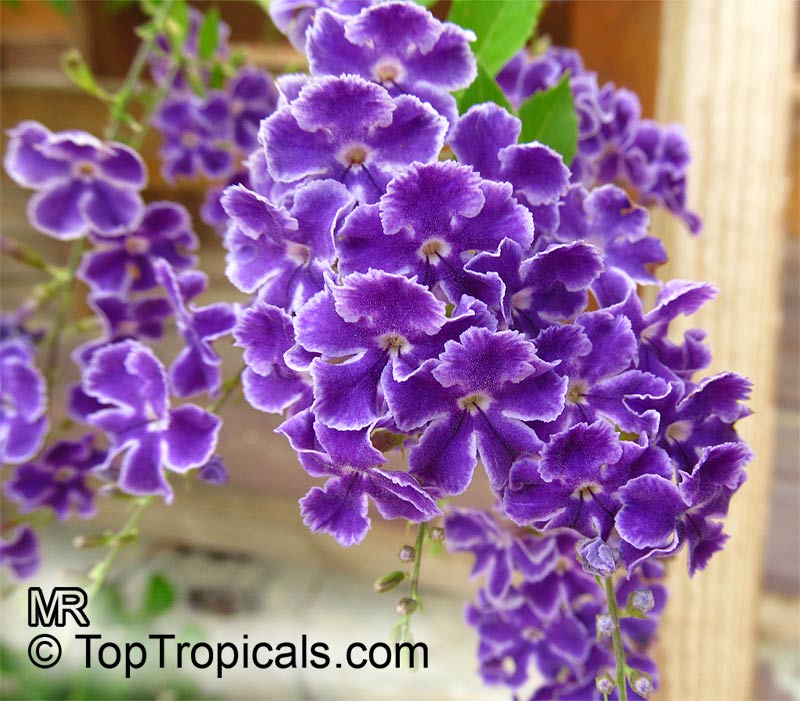
Duranta - Golden Dewdrop - is simply stunning with cascading flowers in abundance. Either it has lavender, blue, or solid white flowers, it is a sight to behold. The popular name Golden Dewdrop is inspired by the clusters of bright orange-yellow berries that follow the flowers, in such quantities that they often cause the slender branches to droop gracefully.
Duranta erecta blooms off and on all year and can be pruned to size as a bush or a standard tree. If let go, it can grow up to 20 feet tall and wide.
Durantas are excellent butterfly and hummingbird attractors. They will complement your tropical garden or a stand alone in your Southern landscape. Great for providing a color contrast in the landscape, they are especially well-suited as a bright-colored background or screening.
White Golden Dewdrop has pure white flowers that appear in loose clusters, and both berries and blossoms are often seen on a plant. This evergreen fast growing shrub spreads and arches to 10 feet tall and wide and is great for live hedges and covering fences and corners.
Variegated variety, also called Variegated Sky Flower, is grown for its summer flowers, and very showy leaves that are dark green with bright white variegation and creamy-yellow margins around the one inch long serrated leaves.. In the summer, cascading clusters of blue tubular flowers appear followed by wonderfully contrasting orange-yellow berries.
In mild climates, Durantas can be in flower nearly year round with flowers and fruit appearing at the same time. It does best in full sun with frequent deep watering and is pretty hardy, to about 20-25F. It is a good choice for espaliers, as a small tree or large bush; all forms benefit from frequent selective pruning. Prune back in late-winter to encourage a more compact shape and strong flush of fresh spring foliage. Requires moderate watering in a well-drained soil.

Date: 4 Jun 2020

Plant of the Month: Tecomaria capensis Apricot

Stevie's Pick: what's in bloom?

Today we are starting a new column about the most spectacular specials that are in bloom or in fruit today. Our exotic plant grower Steven Gowdy will spotlight the most interesting plants he discovers and recommends today while working in TopTropicals greenhouses.

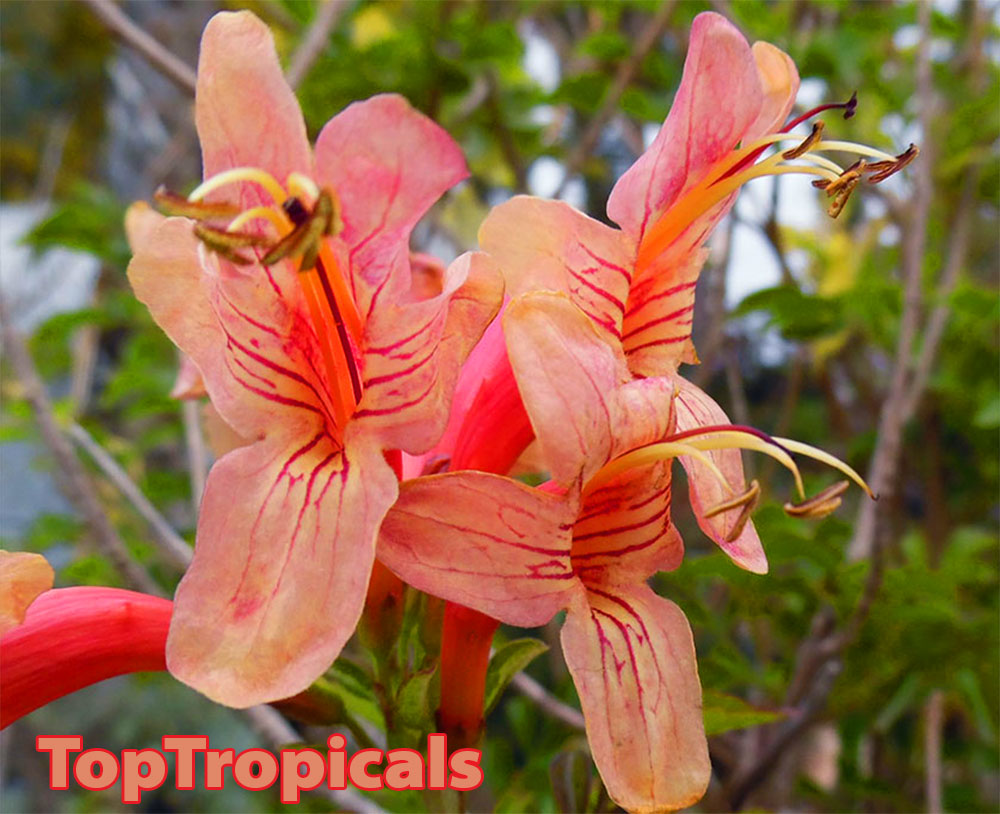
Summer is in full bloom and everyone is wanting dirt under there nails after being quarantined for two months! Enjoy warm tropical breezes with Apricot flowers of this showy African Tecomaria in your garden.
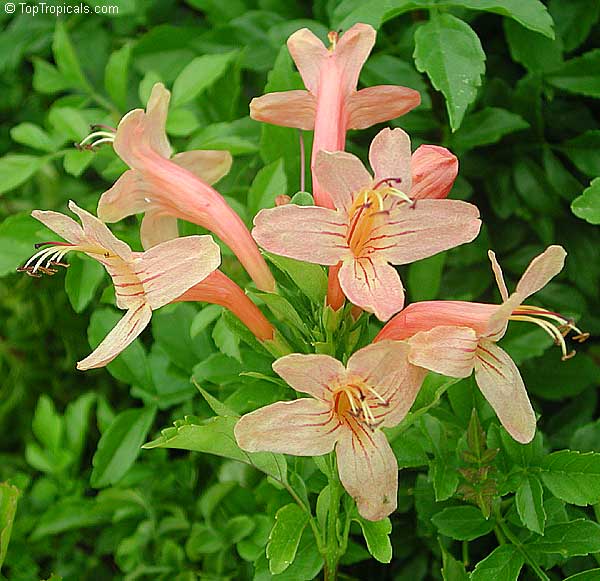
Tecomas and Tecomarias make a wonderful splash of color in any garden, and apricot is no exception. Tecomaria Apricot has pretty unusual color of flowers, ranging from bright apricot color to light-salmon. Ever blooming in warmer climates, it can grow 3-4 feet high and a whopping 4-5 feet wide. In addition to its beautiful flowers, this plant has many medicinal benefits. An easy fast growing addition to any landscape, it is a great hummingbird and butterfly attractor. It is pretty cold hardy and can tolerate light frost which is a great benefit for gardeners living in subtropical climates with cooler winters.

Date: 20 May 2020

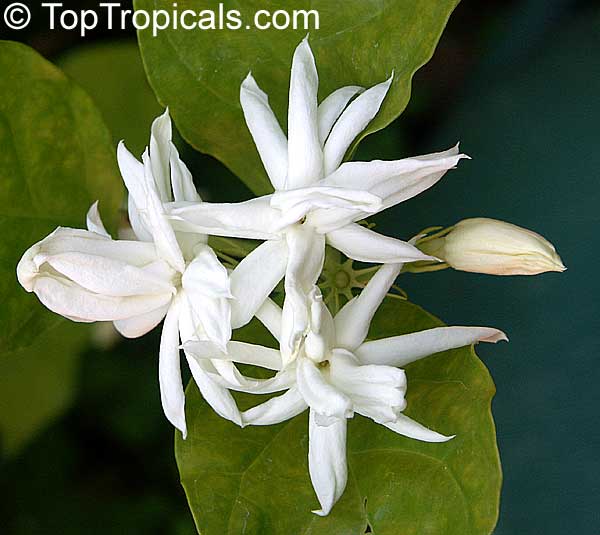
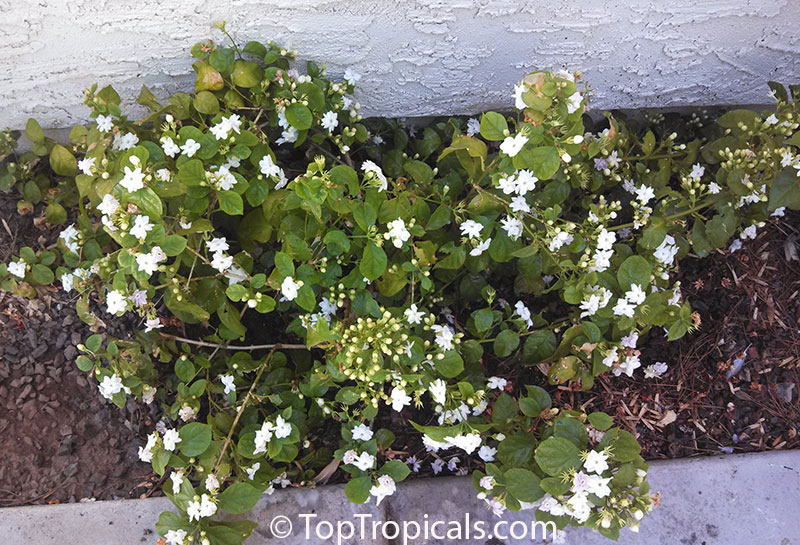
How to prevent Jasmine flower drop

Q: My jasmine buds turn purple to brown and drop before it blooms. What should I do to get the jasmines to bloom fully. Appreciate your help & suggestions.

A: At this time of the year in Florida, jasmines may drop flowers because of the sudden hot weather. The plants didn't have a chance yet to change their metabolism to summer type. The high temperatures promoted early bloom, but the plant is not strong enough to support the flowers. It needs extra food. To improve flower quality and reduce bud drop, we recommend these supplements:
SUNSHINE Pikake - Fragrant Plant Booster
Sunshine Honey
and Sunshine Superfood

Date: 27 Apr 2020

How to feed a Mango tree...
and to grow a Dwarf Mango

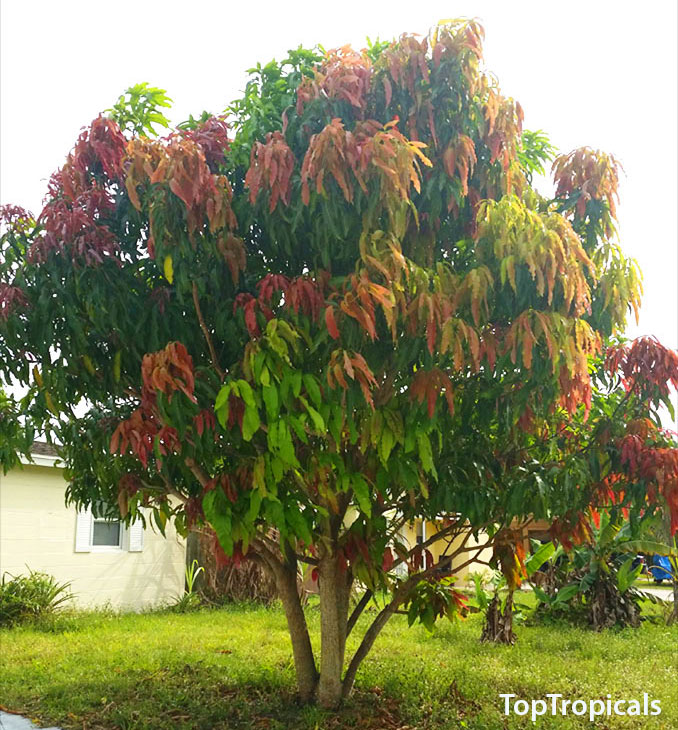
How to fertilize a Mango tree

Q: My mango trees that I bought and planted last august now have fruit. I bought 2 types of fertilizer from you and never used it. Should I use your fertilizer now?

A: It is a perfect time now to fertilize your plants as they start active growth. For mango trees, we recommend liquid fertilizer Sunshine Booster - Mango Tango. It is formulated for Mango trees, especially for container grown. It improves quantity and quality of flowers and ability to set fruit, reduces bud-flower-fruit drop. Can be used as often as with every watering. For best results, use in combination with Sunshine Honey and Sunshine Superfood plant supplements. Its scientifically-balanced stable formula is organic Amino-acid based and has NO EDTA chelators to eliminate nutrients lockup; it does not affect crop taste.
Additionally, you may use slow-release granulated fertilizer Mango-Food once a month during hot season only. Dosage: 1 teaspoon per each gal of soil. Water-soluble fertilizers can be also used, however, those are usually EDTA-chelated which is not as efficient as Amono-acid based Sunshine Boosters and may create nutrients build up, especially if overdosed in containers.
For in-ground mango trees, you may use all the above, and slow-release granulated fertilizer can be applied in larger quantities: spread a handful around the drip line.

Remember that only liquid Sunshine Boosters can be applied year around. With other fertilizers, you need to be careful not to overdose, and apply only during hot weather (when night temperatures are steadily above 65F).

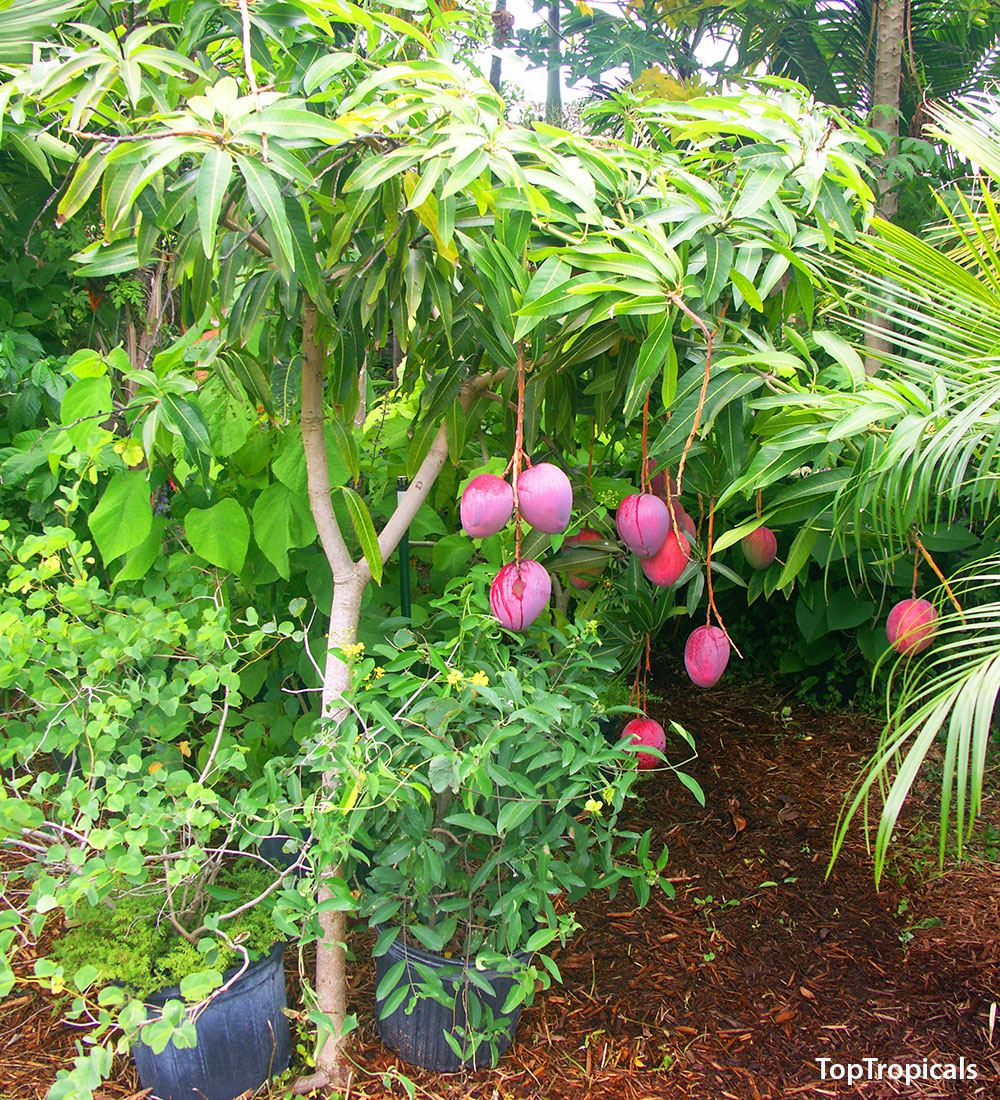
How to grow a Dwarf Mango tree

Q: I received the Ice cream mango tree in great condition (thank you for the ingenious packing job) on Wednesday and have planted it in a pot slightly bigger than the root ball. I plan to grow the tree on my front porch, so how big a container should I ultimately use when the tree outgrows this pot? How big a container does it need to fruit? I hope to keep it around 6-7 feet high, if possible. I live in Hawaii.

A: Ice Cream mango is a perfect variety for container culture, and it should be happy in Hawaii. You did everything right. Keep it in this small pot for now and wait until it starts vigorous growth in Summer. Once it starts growing (and you will notice roots growing too, sometimes they try to grow through the holes in the bottom of the pot), then it's time to step up into a bigger container (7-10 gal). Eventually you may use container size as large as 15 gal. Ice cream mango is slow growing and compact, and you will be able to maintain it under 7 ft with very minimal pruning if any.

Date: 18 Apr 2020

Fast-fruiting trees

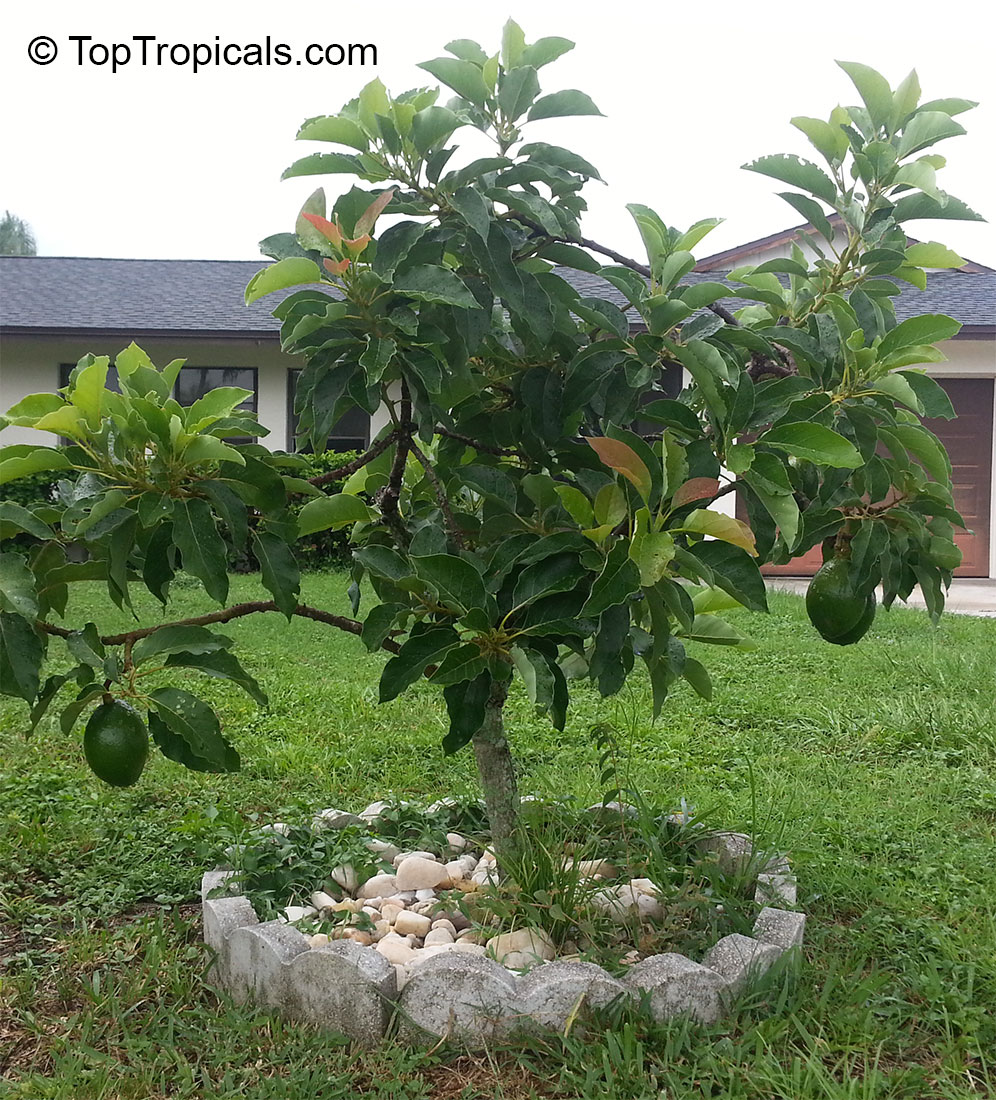
Grafted trees, including Mango and Avocado, will start flowering and fruiting right away

Q: It would be easier for us buyers, if we could search for plants that produce fruit in 2 years or less... I don't have the patience to wait longer than that for fruit. I'm trying to buy for a fairly good sized garden but want some fast growers and fruit produced in 2 yrs. Can you help me out?

A: Fruiting time depends on many factors (growing conditions, fertilizing, and even specific variety), this is why we can not just put a simple icon "will fruit within 2 years". However, most grafted and air-layered fruit trees, including all Mango, Avocado, Loquat, Sapote, Sapodilla, Longan, Peaches and Nectarines - will fruit right away.
If you see in our store "grafted" or "air-layered" in plant description - these trees will fruit soon. Some of them are already flowering and fruiting!

Some non-grafted trees will fruit within a couple of years or even sooner (those from cuttings, root division or even seedlings) - such as: Annona, Artocarpus (Jackfruit), Eugenia, Guava, Banana, Dragon fruit, Mulberry, Blackberry/Raspberry. Banana, Mulberry, Dragon fruit, Blackberry-Raspberry - usually fruit within a year. You may refer to our store directory page for fruit specials.

Also, all spice trees like Bay Leaf, Bay Rum, Allspice and many more - will produce spice for you right away, so you don't need to wait at all!

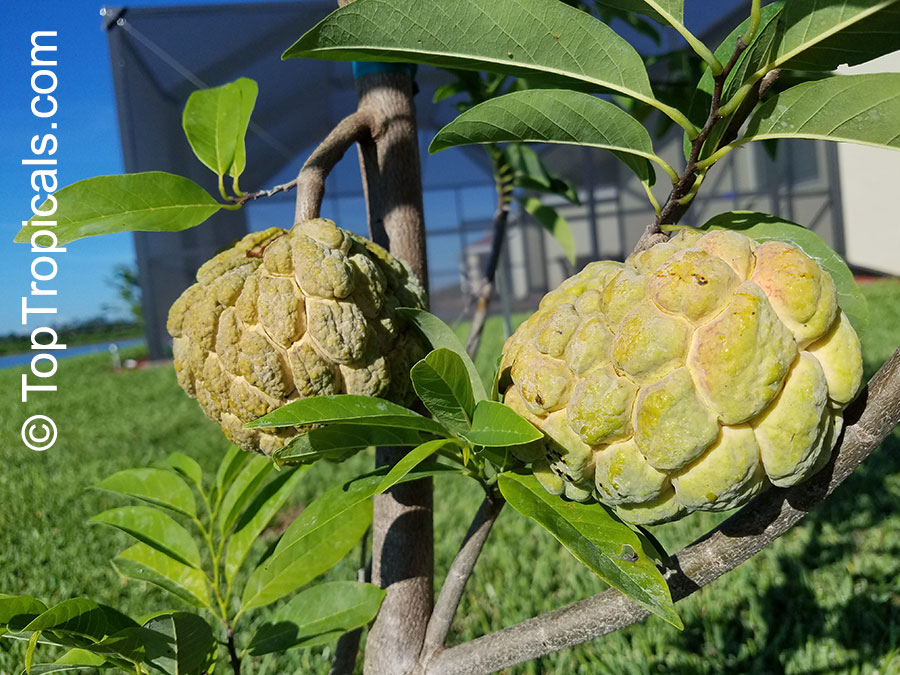
Annonas start fruiting within 3 years from seed and are the most popular fruit trees for both container culture and small gardens.

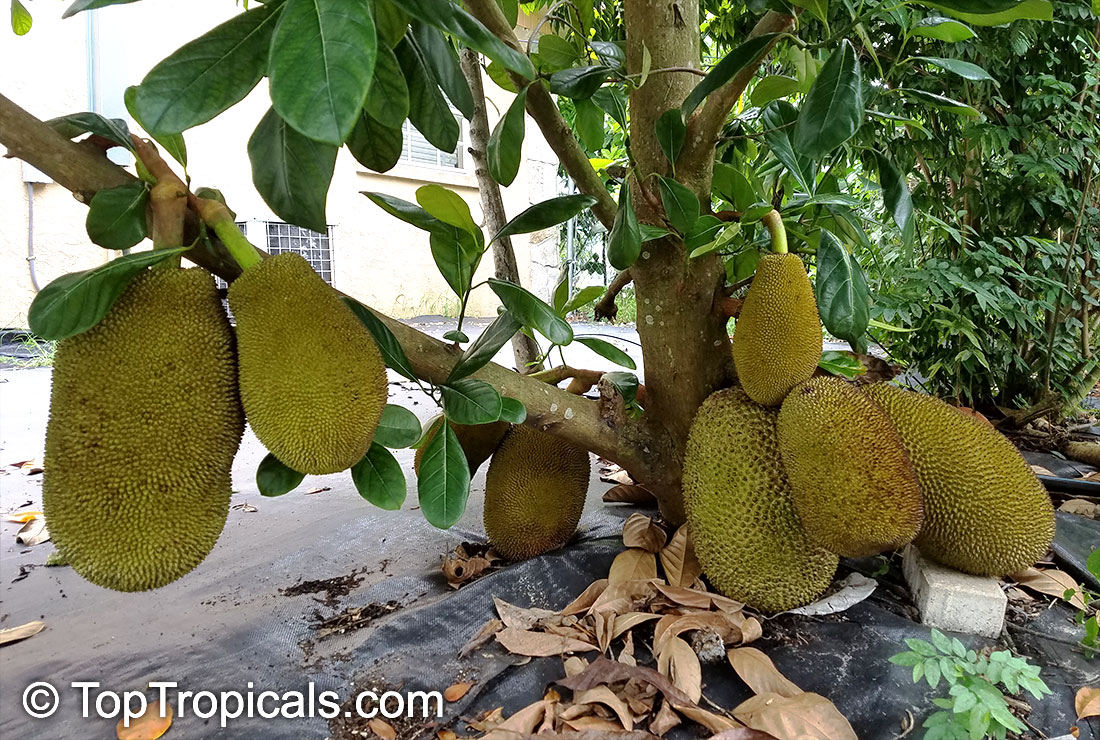
This Jackfruit started fruiting on the second year after planting in the ground.

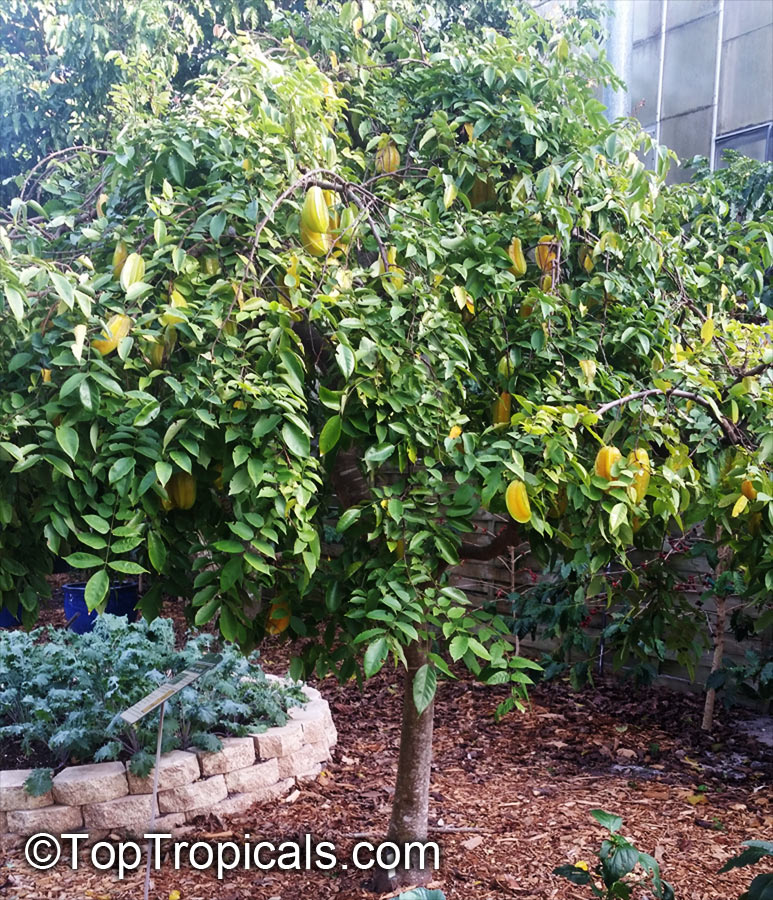
Carambola - Start Fruit - will start producing fruit the same year or next year. We have them fruiting in pots, sometimes as small as 1 gal pots!