Garden Blog - Top Tropicals

Date: 21 Aug 2025

🍒 Tropical Cherries – Eugenias

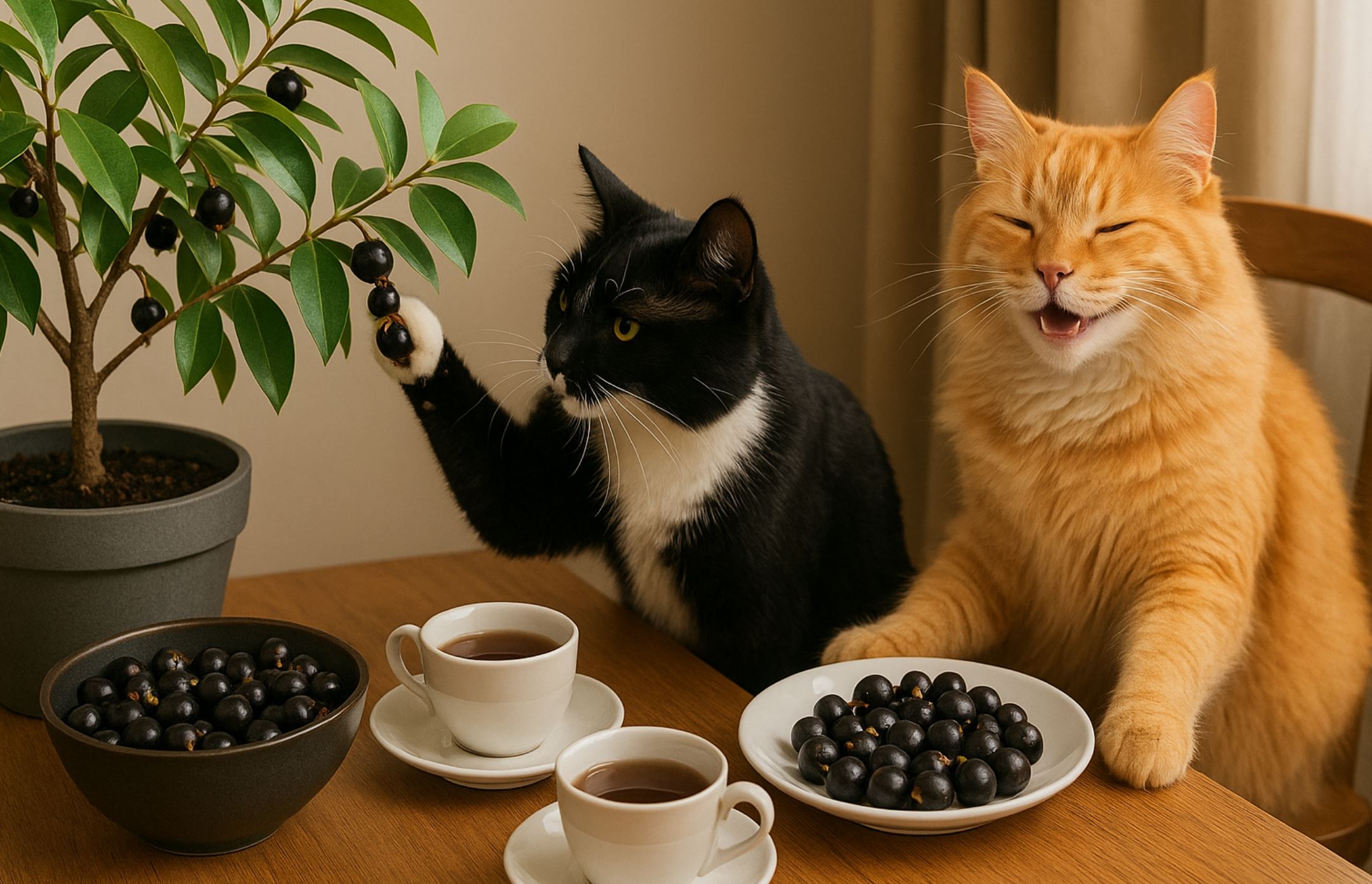
Two  cats  enjoy  Grumichama  fruit  indoors  —  a  tuxedo  cat  picks  berries  from  a  potted  tree  while  an  orange  fluffy  cat  smiles,  sitting  by  tea  cups  and  plates  of 
 fruit.

Tropical Tea Time with Grumichama

Eugenias have earned a spot in many Southern gardens because they’re easy, dependable, and surprisingly versatile. These small trees and shrubs grow well in the ground or in containers, and they don’t waste time before setting fruit.

15% Off Eugenias – Limited Time

Use code EUGENIA15 at checkout.
Excluding S/H. Offer expires 08/28/2025

👍 Popular Choices:

What Makes Eugenia Cherries Stand Out

  • Start producing fruit in just a couple of years
  • Compact size — easy to keep 6–12 ft tall, smaller in pots
  • Low-care — tolerant of most soils and resistant to common pests
  • Strong in hot weather, yet can handle a light frost down to the mid-20s °F
  • Plenty of fruit for people and birds alike

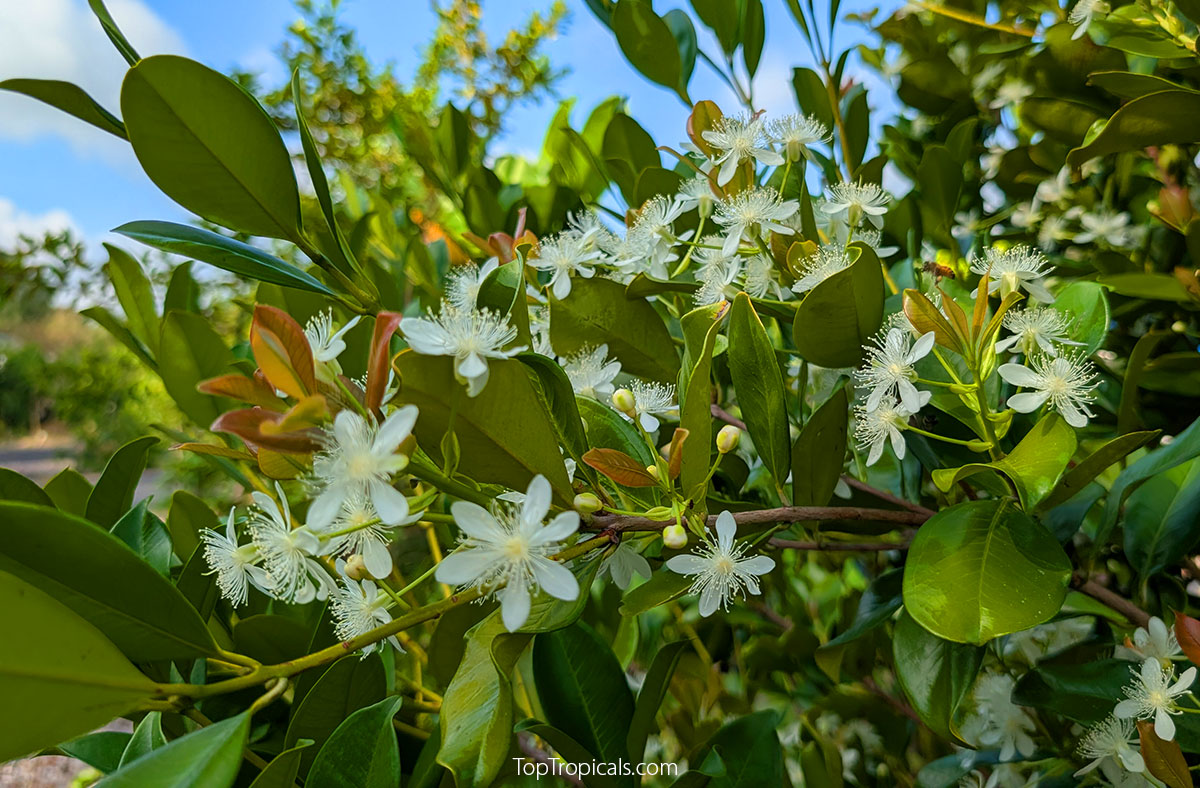
Close-up  of  Grumichama  tree  branches  with  clusters  of  small  white  flowers  among  glossy  green 
 leaves. Grumichama Tree in Bloom – Eugenia brasiliensis

Growing & Care

Outdoors

  • Best in USDA Zones 9–11
  • Sun or partial shade; more sun usually means sweeter fruit
  • Plant in well-drained soil; avoid heavy, wet spots
  • Withstands summer heat and humidity, and can take a light freeze

Container / Indoor

  • Do well in 5–10 gallon pots on patios or balconies
  • Need bright light indoors — a sunny window or grow lights
  • Can flower and fruit in containers if kept warm and well lit
  • In cooler zones, bring plants indoors for winter and back out in spring

General Care

  • Water: Keep soil evenly moist; drought-tolerant once established but best yields with regular watering
  • Soil: Use good potting mix - LINK TO SOIL
  • Fertilizer: Balanced slow-release LINKL TO FERTILIZER Sunshine Boosters
  • Pruning: Light trimming keeps plants bushy and productive
  • Pollination: Self-fertile; one plant will fruit on its own

Read Garden Blog about Tropical Cherries

Shop Tropical Cherries

Date: 7 Jun 2026

Which jaboticaba to grow: a quick guide to the most popular varieties

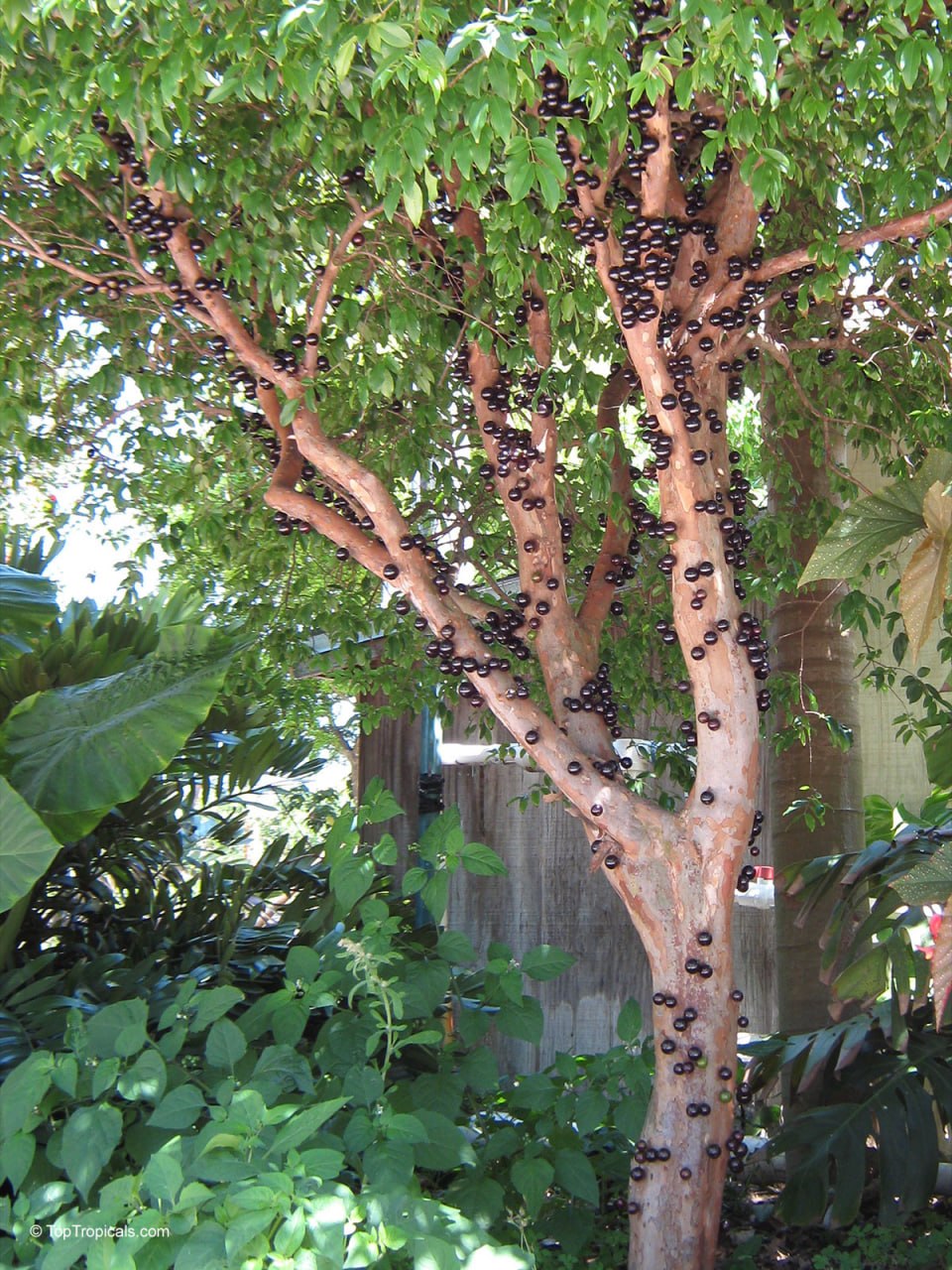
Myrciaria cauliflora Jaboticaba tree

Myrciaria cauliflora Jaboticaba tree

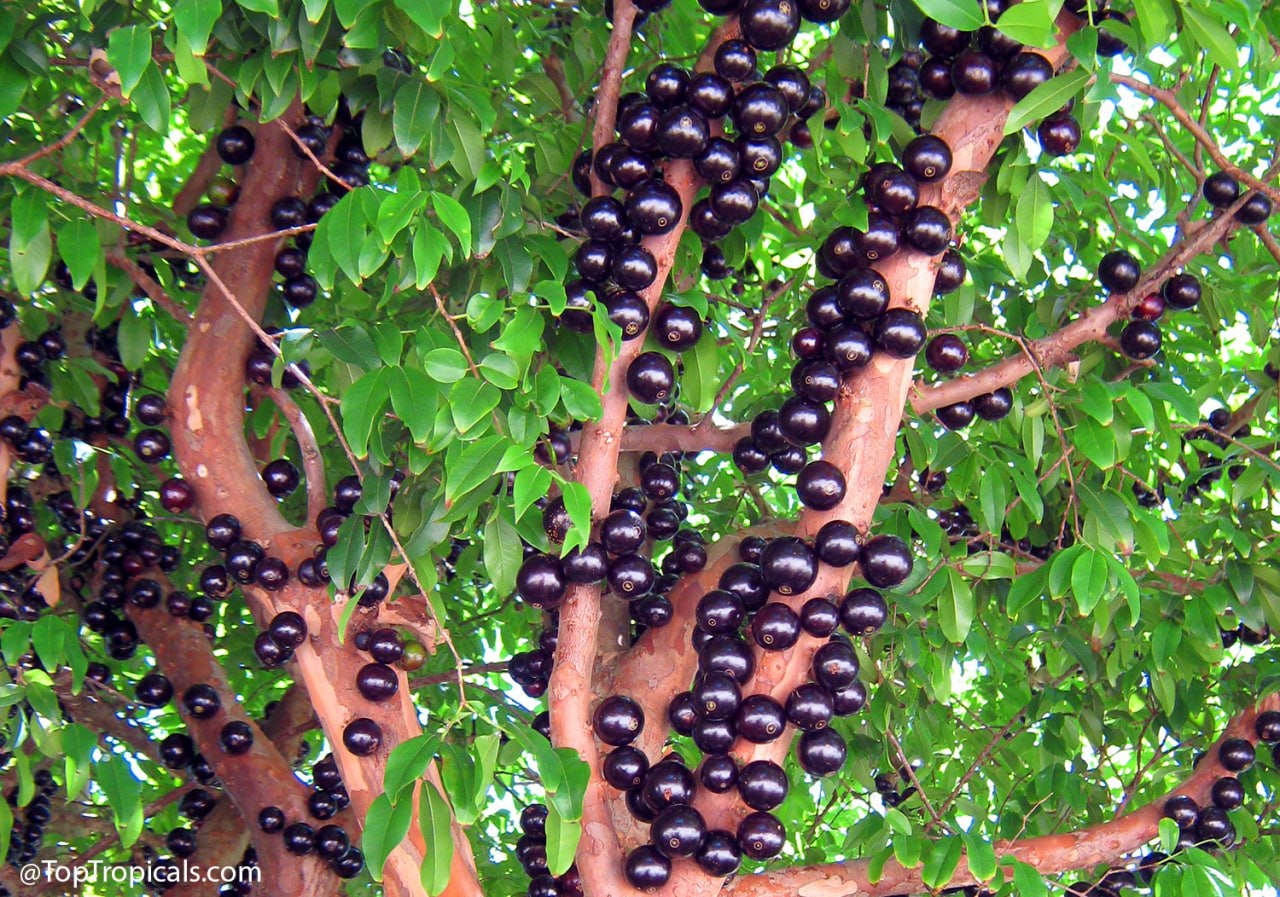
Myrciaria cauliflora Jaboticaba fruit

Myrciaria cauliflora Jaboticaba fruit

Myrciaria cauliflora Jaboticaba fruit

🍇Which jaboticaba to grow: a quick guide to the most popular varieties

Jaboticabas are among the most unusual fruit trees in the world. Native to Brazil, they produce grape-like fruit directly on the trunk and branches. Most varieties have sweet pulp, can fruit multiple times per year, and grow well in containers.

Despite their tropical appearance, jaboticabas are surprisingly cold hardy. During our historic Florida freeze, established trees handled 25F for two nights and nearly two weeks of unusual cold without protection. Many varieties can tolerate temperatures into the 20s, making them one of the more cold-hardy tropical fruit trees for Florida.

From fast-fruiting dwarfs to giant-fruited collectors' varieties, each jaboticaba offers something a little different. Here's a practical guide to some of the most popular selections.

For beginners: Precoce Dwarf (Red Scarlet)


One of the fastest-fruiting jaboticabas, often producing in 3-5 years. Compact, container-friendly, ideal for gardeners who want fruit sooner.

•  Fruits young
•  Naturally compact
•  Excellent container plant
•  Good for cooler climates where winter protection is needed

The classic choice: Sabara


The classic Brazilian jaboticaba and still the most widely grown variety. Small, exceptionally sweet fruit with thin skin and juicy pulp. Can produce several crops per year.

•  Traditional jaboticaba flavor
•  Thin-skinned fruit
•  Sweet and juicy
•  Excellent for bonsai and containers
•  One of Brazil's most popular wine varieties

For large fruit: Grimal


Often called Giant Jaboticaba, with much larger fruit than most varieties. Thick juicy pulp, small seeds, heavy production.

•  Larger fruit
•  Thick pulp
•  Heavy producer
•  Excellent fresh eating quality

For exceptional flavor: ESALQ


Known for large, exceptionally sweet fruit and relatively early production.

•  Outstanding sweetness
•  Large fruit
•  Fruits in about 4-5 years
•  Collector favorite

For beauty and productivity: Branca Vinho


One of the most ornamental jaboticabas, with attractive foliage, upright growth, and excellent white-fleshed fruit. Fruits young and often several times per year.

•  Beautiful foliage and trunk
•  White-fleshed fruit
•  Excellent flavor
•  Multiple crops per year
•  Good cold tolerance

For collectors: Blue Jaboticaba


A close jaboticaba relative (Myrciaria vexator) producing blue-purple fruit with a sweet grape-like flavor. Often grown as much for its beauty as its fruit.

•  Unique blue fruit
•  Sweet grape-like flavor
•  Ornamental tree
•  Rare and unusual

For faster growth: Volcano Red (La Vinotinto)


More vigorous and faster growing than traditional jaboticabas. Famous in Hawaii for Volcano Red wine.

•  Faster growth
•  More vigorous tree
•  Good adaptability
•  Tolerates occasional waterlogging
•  Source of Hawaiian Volcano Red wine

Which one is right for you?


•  Fastest fruit: Precoce Dwarf
•  Classic flavor: Sabara
•  Largest fruit: Grimal
•  Sweetest fruit: ESALQ
•  Best ornamental: Branca Vinho or Blue Jaboticaba
•  Fastest growth: Volcano Red

👉 All jaboticabas share the same magical trait - flowers and fruit appearing directly on the trunk. The differences are in fruit size, growth rate, and how quickly you'll enjoy your first harvest. Jaboticabas are notoriously slow growing, and large fruiting-size trees can take many years to develop. Established specimens are hard to find and can save years of waiting. If you've been thinking about adding one to your garden, remember: the best time to plant a jaboticaba was years ago - the second-best time is today.

🛒 Select from Jaboticaba varieties

📚 Learn more:

Jaboticaba Plant Facts

Botanical name: Myrciaria cauliflora, Plinia cauliflora, Eugenia cauliflora
Also known as: Jaboticaba, Duhat
USDA Zone: 9 - 11
Highligths Plant used for bonsaiSmall tree 10-20 ftFull sunKeep soil moistEdible plantSubtropical plant. Mature plant cold hardy at least to 30s F for a short timeFlood tolerant plant
Get personalized tips for your region

Jaboticaba (Myrciaria cauliflora) in Plant Encyclopedia
Before you open a bottle of wine, meet the Secret Wine Tree from Brazil
What does Blue Jaboticaba taste like?
How Blue Jaboticaba is different from regular Jaboticaba?
What is Jaboticaba? I like the sound of this word!

#Food_Forest #Discover #How_to

🟢 Join 👉 TopTropicals

Date: 27 Feb 2026

Grilled star fruit slices: quick-n-fun exotic recipes

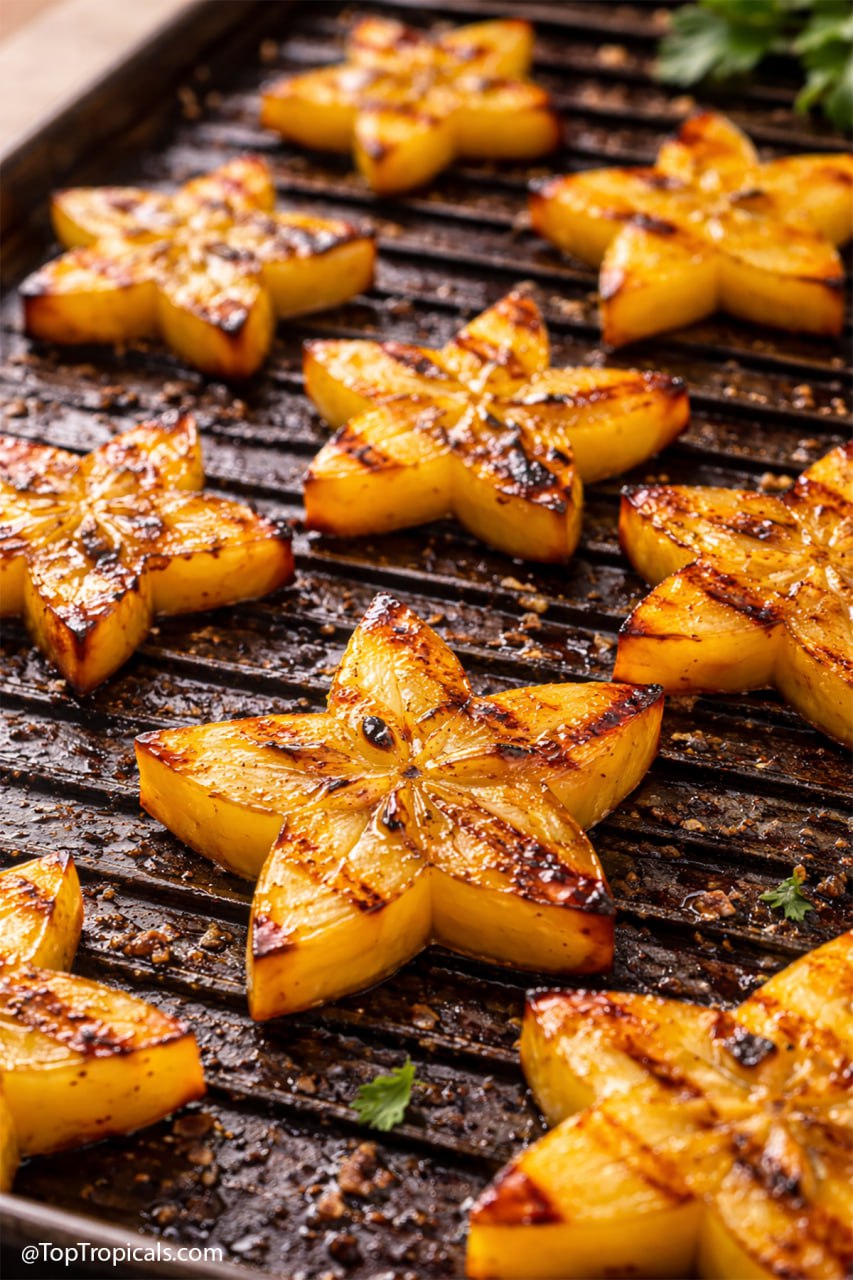
Grilled star fruit slices on grill pan

Grilled star fruit slices on grill pan

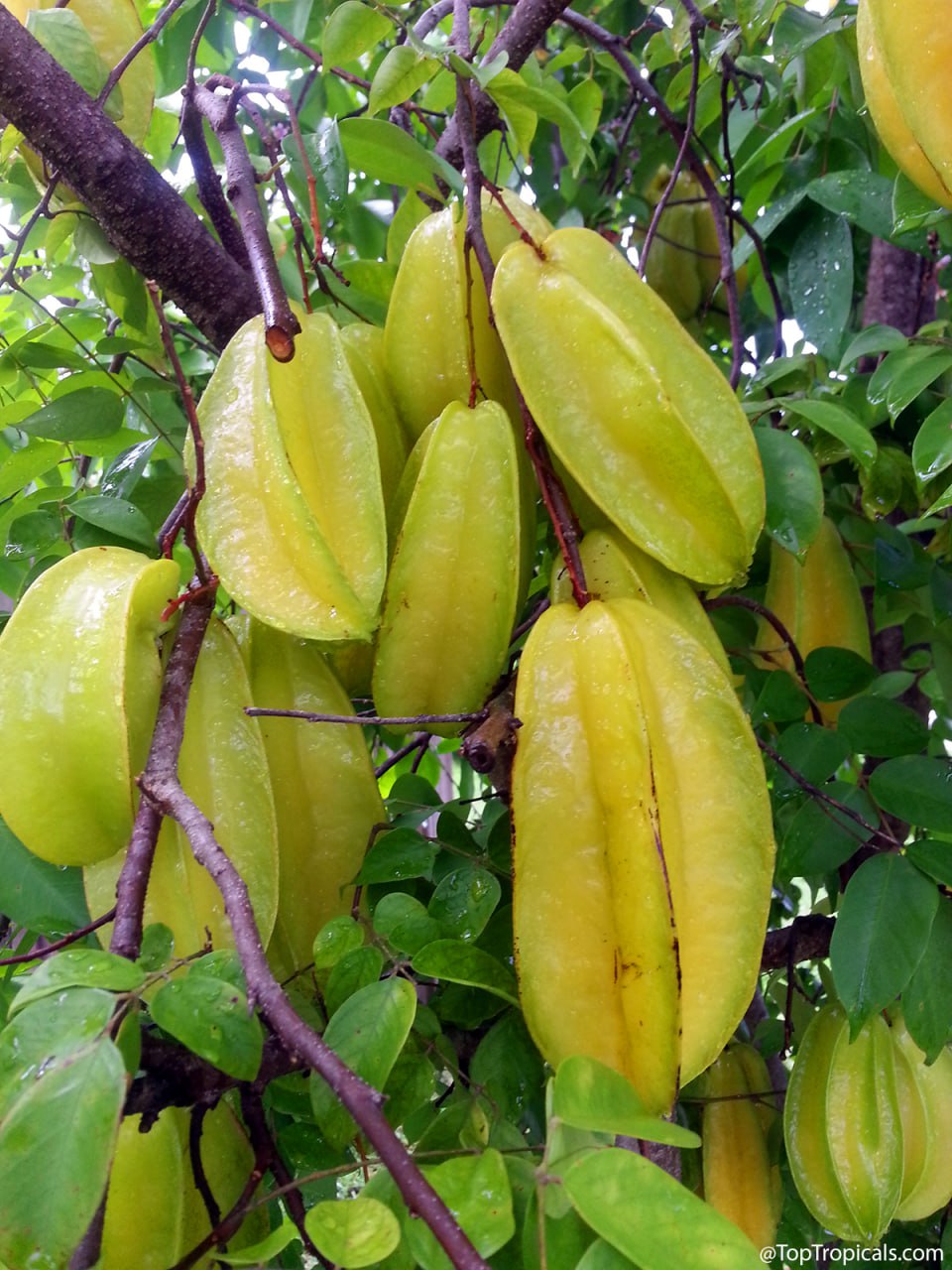
Averrhoa carambola - Star Fruit Carambola Tree

Averrhoa carambola - Star Fruit Carambola Tree

🍴 Grilled star fruit slices: quick-n-fun exotic recipes


Grilled Star Fruit Slices

Ingredients

  • 1 ripe star fruit (carambola)
  • 1 teaspoon honey
  • 1 teaspoon butter or coconut oil

Instructions

  1. Slice the star fruit crosswise into star-shaped pieces.
  2. Heat a grill pan or skillet and lightly grease with butter or coconut oil.
  3. Place the slices on the hot surface and grill briefly on each side.
  4. Drizzle lightly with honey as the edges begin to caramelize.
  5. Serve warm as a tropical side dish or dessert topping.


🌿 About the plant:


Carambola, or Star Fruit, is a small tropical tree with glossy leaves and crisp, juicy fruit that slices into perfect stars.

Carambola Plant Facts

Botanical name: Averrhoa carambola
Also known as: Carambola, Starfruit, Five-finger, Balimbing
USDA Zone: 9 - 11
Highligths Small tree 10-20 ftSemi-shadeFull sunWatering: Regular. Let topsoil dry slightlyEdible plantSubtropical plant. Mature plant cold hardy at least to 30s F for a short time
Get personalized tips for your region


🏡 In the garden:


Thrives in zones 9-11. Likes sun, regular water, and protection from strong winds. Dwarf varieties do well in large containers.

🛒 Plant Star Fruit Carambola Tree

📚 Learn more:


Averrhoa carambola in Plant Encyclopedia
How to gets lots of Star Fruit Carambola
Star Fruit from our garden
Grow your own Carambola
Top 10 fast-fruiting trees: #8. Carambola - Starfruit
Carambola Banana Whip
Carambola Jam recipe
When young Carambola trees are covered with fruit
Carambola tree is the Star of the orchard

#Food_Forest #Recipes

🟢 Join 👉 TopTropicals

Date: 7 Aug 2025

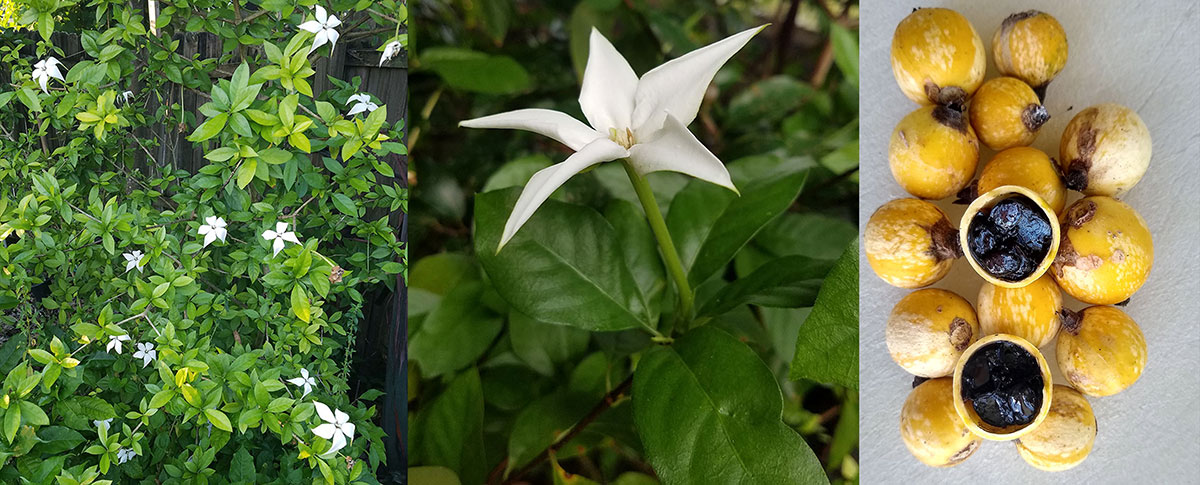
Randia  formosa  shrub  in  bloom  with  white  star-shaped  flowers,  close-up  of  single  bloom,  and  ripe  yellow  fruit  with  black  pulp  that  looks  like  blackberry  jam

Randia formosa - Blackberry Jam Fruit Tree with Flowers and Ripe Fruit

You know how some plants just surprise you?

That's Randia formosa - the Blackberry Jam Fruit Tree. At first, it just looks like a cute little gardenia-type shrub. Glossy leaves, sweet white flowers. Nice enough. But then the fruit shows up… and you crack one open and go, “Wait - this tastes like jam?!”

And not just any jam - like real, fresh blackberry jam. No sugar, no cooking. Just soft black pulp inside this golden little fruit. It's weirdly satisfying. One of those things you make everyone taste just to see their face.

What's even cooler is how easy it is. This thing starts blooming and fruiting when it's barely 2 feet tall. You can grow it in a pot on your porch, or even inside if it gets enough light. And while most of your other plants take the winter off, this one keeps going - flowers, fruit, the whole show.

If you've got a spot with filtered light and a little curiosity, it's absolutely worth a try. Honestly, it's just… fun.

This rare South American evergreen shrub checks all the boxes: fragrant, compact, easy, and edible.

✅ Grows in pots ✅ Indoors ✅ Small yards

Randia formosa – Blackberry Jam Fruit Tree – FAQ

What is Randia formosa?

Randia formosa, also known as Blackberry Jam Fruit or Jasmin de Rosa, is a compact tropical shrub that produces fragrant white flowers and small yellow fruits filled with soft, black pulp that tastes remarkably like blackberry jam. It belongs to the Rubiaceae family, the same as Gardenia and Coffea.

Why gardeners love Randia

  • Delicious jam-flavored fruit – no sugar needed.
  • Compact grower – perfect for patios and indoor spaces.
  • Fast results – blooms and fruits within 1–1.5 years.
  • Big yield in a small pot – 25–30 fruits at once!
  • Fall–Winter performer – keeps going when others stop.
  • Kid favorite – fun to grow, fun to eat.

What does the fruit taste like?

The pulp inside the fruit tastes just like fresh blackberry jam - sweet, tangy, and rich. It is edible fresh, without any processing or sweeteners, and is loved by both kids and adults.

How big does the plant get?

In the ground, Randia formosa typically reaches 4 to 5 feet tall. In containers, it usually stays smaller, around 3 to 4 feet, making it perfect for small gardens, patios, or indoor growing.

How soon will it fruit?

Very quickly! This is one of the fastest fruiting tropicals. Plants begin to flower and produce fruit within two years from seed. Еstablished plants in 3 gallon containers may begin fruiting at just 2 feet tall.

Does it need full sun?

No. It actually prefers filtered light or partial shade, especially in hot climates. Leaves tend to look healthier and greener when grown in dappled light.

Can I grow Randia formosa indoors?

Yes! Its compact size and shade tolerance make it an excellent choice for bright indoor spaces. Just be sure to provide good air circulation, high humidity if possible, and avoid cold drafts.

How cold-hardy is it?

Mature plants can tolerate temperatures down to about 26F for short period of time, but young plants are more sensitive and should be protected from frost. It is best grown outdoors in USDA zones 9b and up or kept as a container plant that can be brought indoors in winter.

What kind of soil does it need?

Randia formosa requires acidic, well-draining soil. Avoid alkaline soils, which may cause leaf chlorosis (yellowing with green veins).

How often should I water it?

Keep soil evenly moist but not soggy. It is sensitive to overwatering, especially in cooler weather. During winter, reduce watering. Underwatering may cause sudden leaf drop - but the plant usually recovers quickly once watered again.

What fertilizer does it need?

Yes. Use a slow-release fertilizer formulated for acid-loving plants. Regular applications of micronutrients (especially iron and magnesium) help prevent chlorosis. Foliar sprays can also be helpful. Apply Sunshine C-Cibus Booster or Green Magic controlled release fertilizer to keep your plant happy: Blackberry Jam Fruit is a heavy feeder!

When does it flower and fruit?

This plant can bloom and fruit for several months, often from summer through winter. It is known to bloom off-season, making it a fun and productive plant when others are dormant.

Are the flowers fragrant?

Yes, the white star-shaped tubular flowers have a light, sweet fragrance, similar to gardenias but less intense. The flowers open at night.

Is it self-pollinating?

Yes. A single plant can set fruit on its own, although insect activity can improve fruit set.

Are there any common problems?

The most common issue is chlorosis, which shows up as yellowing leaves with green veins - usually due to overwatering, poor drainage, or alkaline soil. It's fixable with acidification and micronutrients. The plant may also drop leaves suddenly if underwatered but tends to bounce back.

Is this plant related to Gardenia?

Yes. It is in the same plant family (Rubiaceae) as Gardenia and Coffee. That's why the flowers look similar and why it tolerates similar care needs.

Can it be used for bonsai or miniature tree styling?

Yes, due to its slow growth and branching habit, Randia formosa can be shaped into a miniature tree form and is quite attractive when trained.

Is it drought-tolerant?

Once established, it shows moderate drought tolerance. However, young plants need regular watering and are more vulnerable to drying out.

Read Garden Blog about Blackberry Jam Fruit

Get your Blackberry Jam Fruit
Date: 28 Sep 2025

Guava: The Healthiest Fruit You Can Grow

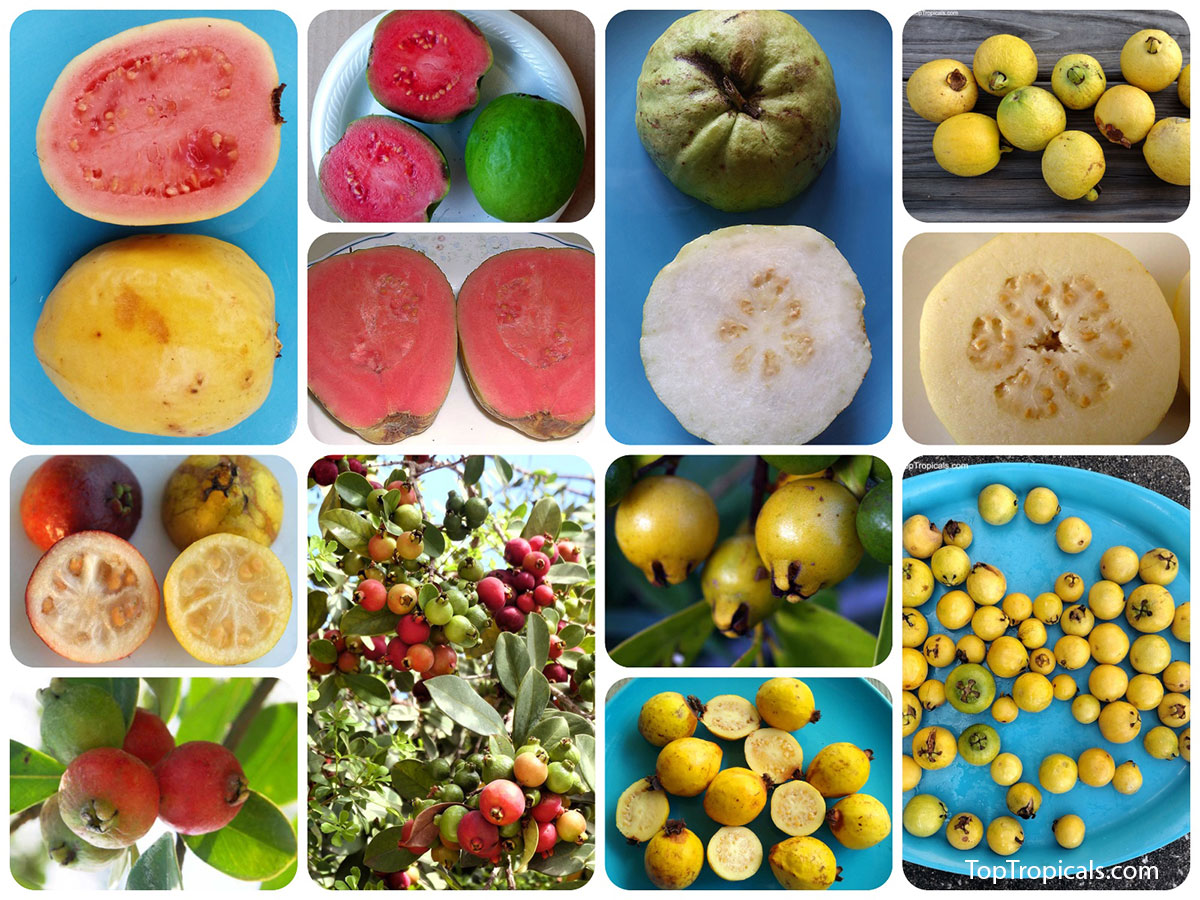
Collage  of  guava  varieties:  pink,  white,  Cas,  red  Cattley,  and  golden 
 Cattley  guavas,  shown  as  whole  fruits,  cut  sections,  and  clusters  on  the 
 tree.

Guava varieties: Pink flesh (upper left quarter), White flesh and Cas (upper right quarter), Red Cattley Guava (bottom left quarter) and Golden Cattley (bottom right quarter).

Let’s talk Guava. Few fruits check as many boxes: flavor, productivity, health, and adaptability. We’ve grown guava trees at Top Tropicals for years here in Florida, and it never fails to surprise people with how easy it is — and how quickly it rewards you.

🌿 Health Benefits

We know the first question:"Why guava in addition to all the other fruit trees I could plant?"Because guava is one of the healthiest tropical fruits you can eat and grow — and it produces faster than almost anything else.

  • Vitamin C powerhouse — guava has four times more vitamin C than oranges. One fruit covers your daily needs and then some.
  • Potassium and fiber — good for balancing blood pressure and keeping your heart strong.
  • Antioxidants like lycopene and vitamin C — these keep your skin glowing and help protect your cells from damage.
  • Dietary fiber — aids digestion and helps keep blood sugar steady.
  • Guava is a true"food as medicine"tree you can plant right in your backyard or in pot.

♥️ Our Favorite Varieties are Available Now

We currently have a DOZEN excellent guava varieties in stock selected by our plant expert Tatiana Anderson — something special for every garden. Our top picks are:

Pink Guavas

  • Barbie Pink – Yellow pear-shaped fruit with thick pink flesh, sweet and juicy. Cold hardy for a tropical fruit. The best seller.
  • Hong Kong – Large, round, smooth pink fruit. Sweet flavor, very few seeds, and very productive.
  • Tikal – Our top pick. Fast-growing, disease-resistant, and produces the sweetest pink guavas with very few seeds.

White Guavas

  • Indonesian White – Aromatic, classic white-fleshed guava with an excellent tropical flavor.
  • Kilo White – Giant fruit up to 2 lbs (1 kilo) each! Few seeds, creamy white flesh, and fruits even in containers.

Compact/Dwarf

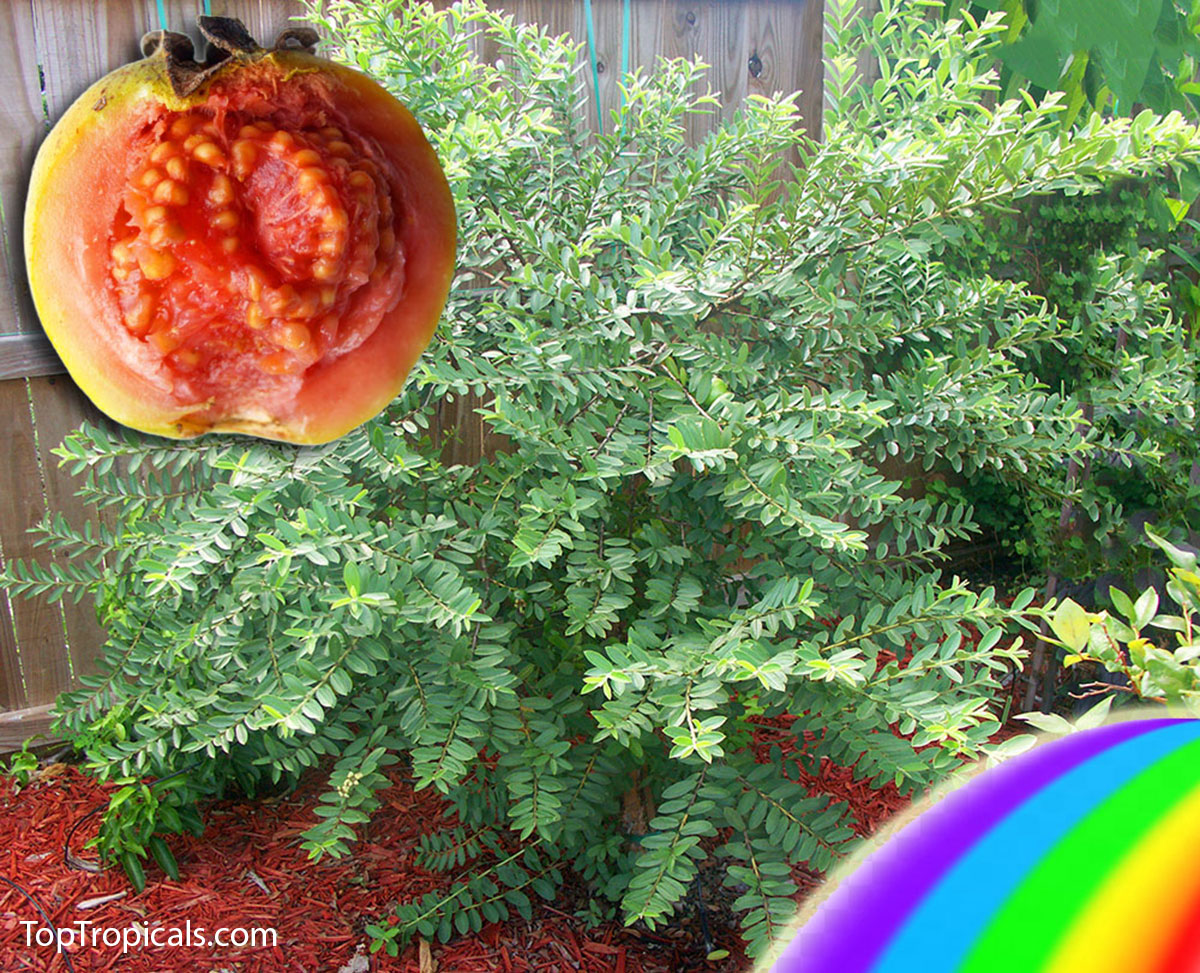
Dwarf  Guava  Hawaiian  Rainbow  tree  with  dense  green  foliage,  inset 
 showing  pink-fleshed  guava  fruit  with 
 seeds.

Dwarf Guava Hawaiian Rainbow

Specialty Varieties

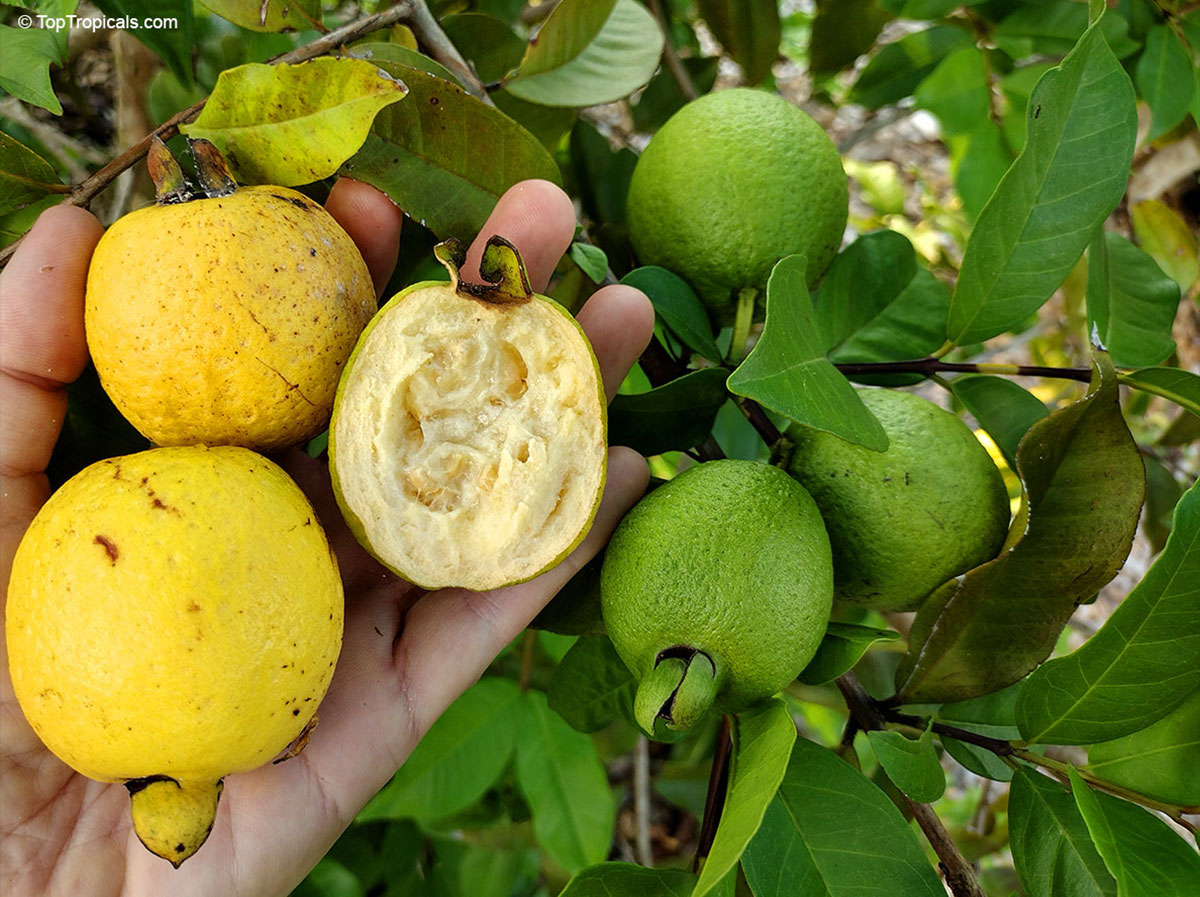
Cas  Guava  fruits  on  tree,  with  ripe  yellow  and  unripe  green  fruit,  one 
 cut  open  to  show  pale  flesh.  Traditional  Costa  Rican  Agua  de  Cas 
 fruit.

Cas Guava with zero sugar for Costa Rican Agua de Cas drink

  • Cas Guava – Bold, tangy, almost zero sugar. The traditional Costa Rican Agua de Cas drink comes from this fruit. Cold hardy.
  • Hawaiian Gold, Yellow Strawberry Guava – The sweetest Strawberry Guava, golden fruit, great for fresh eating and drinks.
  • Brazilian Araca Pera – Rare hybrid used for Guava Wine in Brazil. Tart, concentrated juice makes excellent wine, sorbet, or jelly. Learn more...
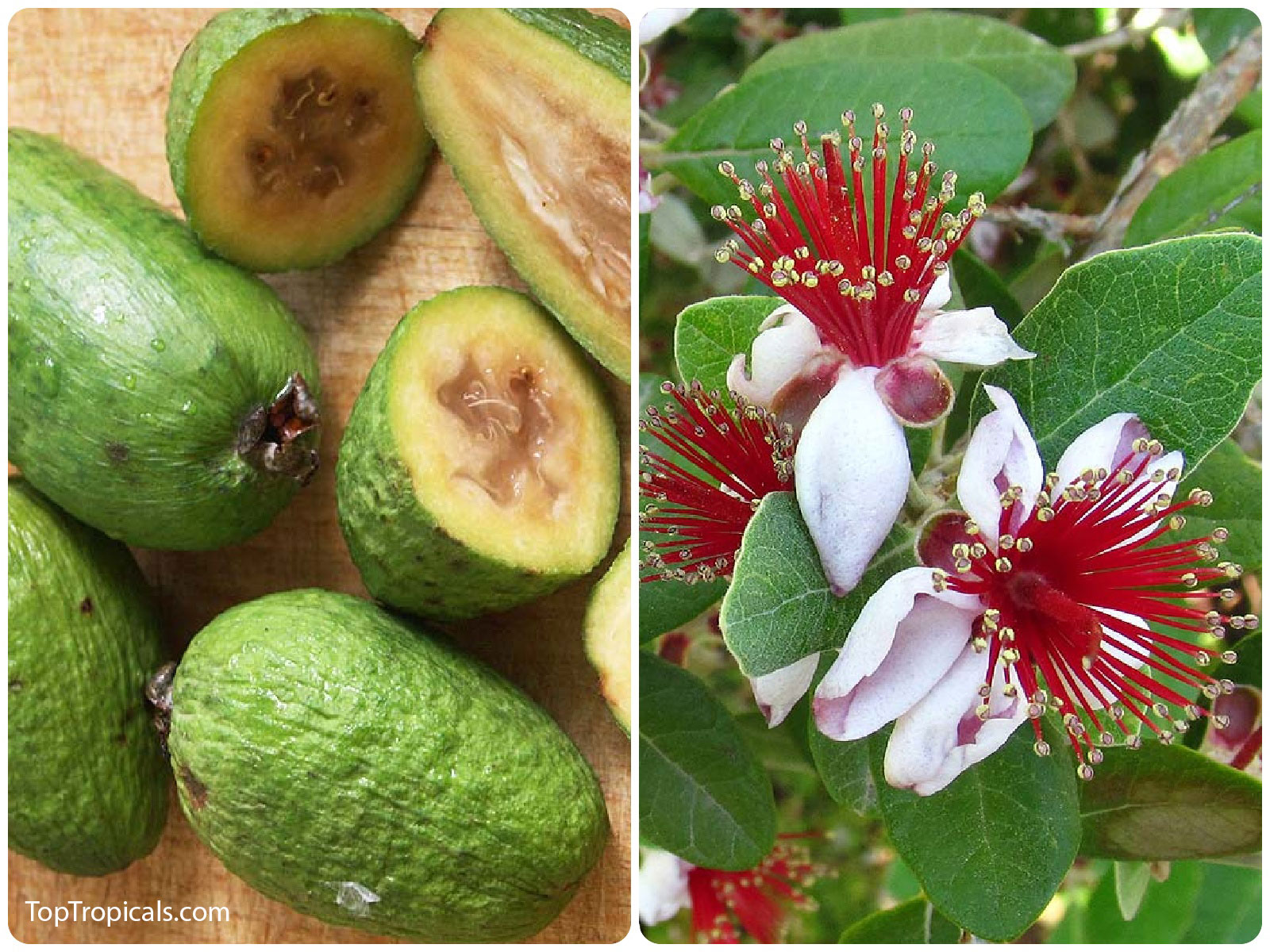
  • Pineapple Guava, Guavasteen – Feijoa sellowiana. Strongly perfumed fruit, best enjoyed when the pulp is mixed with sugar – like forest strawberries. Cold-hardy, tolerates freeze, and doubles as a great windbreak. Learn more...

Pineapple  Guava  (Feijoa  sellowiana)  fruit  and  flowers.  Green  oval  fruit
    with  soft  aromatic  flesh,  and  white-red  blossoms  with  long 
 stamens

Pineapple Guava, Guavasteen – Feijoa sellowiana

Every one of these thrives here in Florida or in warm climate. Some are better in pots, some as landscape trees, but all produce generously.

🎥 Watch short videos about Guava:

💲 Special Offer – 20% off Guava Fruit Plants!

Get 20% OFF already discounted Guava plants with code

GUAVA2025

Min order $100. Excluding S/H, valid online only, cannot be combined with other offers.

Hurry, offer expires October 02, 2025!

Explore Guava Fruit Plants