Garden Blog - Top Tropicals

Date: 7 Oct 2019

Fertilizing in Winter?

Q: I'm a bit confused about what winter fertilization schedule I should follow in South Florida. For blooming plants, usually, I use a monthly granular bloom booster fertilizer as well as a liquid fertilizer every 10 days or so. Should I continue that schedule in the winter as well? Should I stop fertilizing altogether in the winter? How about fruit trees? What fertilization schedule should I follow in the winter?

A: Here is a general fertilizing schedule for established plants that we follow here in SW Florida.
The rule of thumb is, do not fertilize (with macro- NPK elements) when minimum temperatures drop below 65F and stay at that level for more than 7 days. At this temperature point, most of the tropical and subtropical plants slow down their metabolism and some of them going into dormancy. This means, nutrients are not consumed as much as during active growth period, and built-up nutrient supply within a plant plus whatever is available in the soil is just enough to get by through the winter. So additional fertilizing is not necessary. You may continue micro-element supplements and bio-stimulants throughout the year. In fact, it is highly recommended to do so, to help the plant survive cold spells. These are very effective tropical plant protectors:
SUNSHINE-Epi - Brassinosteroid plant hormone
SUNSHINE-Power-Si - Advanced plant protector with Silicon
SUNSHINE SuperFood - Complex microelement supplement

This rule is applied to both flowering and fruiting plants, in general. However, some species are winter-flowering and winter-fruiting. For those, you can make an exception and provide extra nutrients for flowering and fruiting, as long as the weather stays warm. During cold spells, avoid any NPK fertilizers and use only bio-stimulants and micro-elements. If you apply NPK during cold, it won't be consumed by a plant, build up in the soil, and may create a root burn situation.

In simple words, fertilize from March to October. Give plants some rest from November to February.

Date: 18 Sep 2016

About Cold Protection...

Q: I have a question, if I'm in Okeechobee Florida zone 9b are there any plants that you sell that would have to be protected at all? I have a lot that I've purchased from you and don't want to lose any of them winter.

A: Sometimes it is hard to guarantee if certain plants are hardy enough in certain area. From our experience, tropical plant performance in non-tropical areas depend on many factors; a lot of times plants appear to be hardier than they are believed to be. Other times, an obviously hardy plant doesn't survive winter. So there always will be a chance of risk involved, while nice surprises are not an exception. We have been testing many tropical species throughout many years of our nursery experience. Wind protection in many cases is more important than temperature. Enclosed sections of your garden provide better chances to survive cold snaps. Generally speaking, here is the list of some plants (not complete list, just examples) that in our experience have been surviving light freezes without significant damage.

Q: I live in San Jose,CA. Got Mango Alphonso 2 yrs back and protected it for a year in a pot during winter. Last spring I planted it and during winter I put a freeze cloth to protect it but it died. How can I make sure it wont die if I buy this time plz?

A: Mango trees are tolerant only to light frost, once established. If it gets below freezing in your area for more than a few hours, and especially if you have numerous nights with frost throughout winter, we recommend to keep mango tree in a pot. This way it can be moved to protected area during cold night. The more established the tree, the more chances to survive colder temperatures.
We also use plant booster Sunshine to increase plants cold tolerance
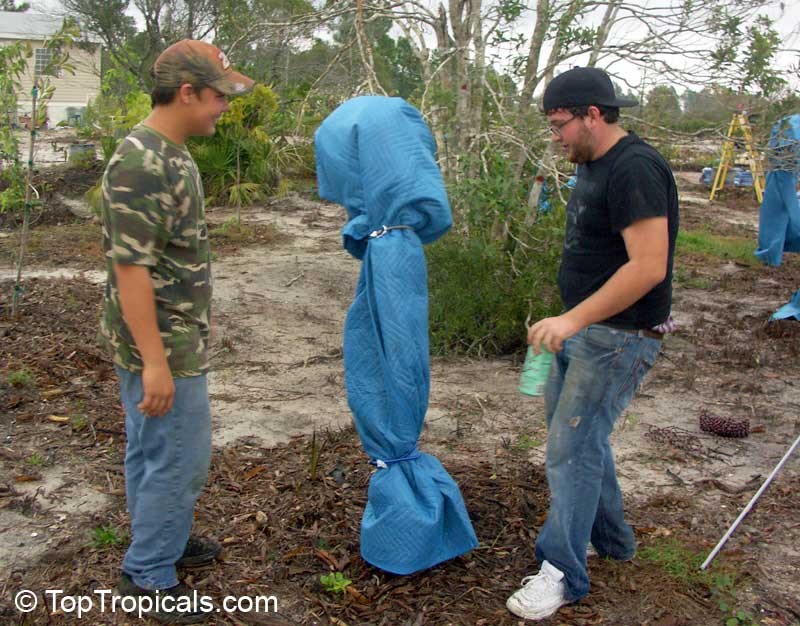
Cold protection is a lengthy subject. You may also use propane heaters during cold nights.
Here is some more information on cold protection.
Also, we recommend to check out our magazine Tropical Treasures (about pushing the limits of tropical gardening) for a detailed article on cold protection.
These are specific articles on Zone-Pushing in different issue #s regarding dealing with cold. See downloadable issues:
(#1) Growing Tropicals in Nontropical Climate, Three Freezing Nights in Southwest Florida
(#2) Temperature drops - an alert or a rehearsal?
(#5) Dealing with cold snaps, Cold hardy beauties
(#7) When winter is around the corner, Growing exotic Cordyline in colder climate
(#8) When the weather outside is frightful
(#9) Winter champions
(#11) Ready-for-winter checklist for in-ground plants
(#13) Winter checklist
(#18) Dealing with cold damaged plants
You may also order hard copies.

If temperatures drop below freezing in your area, remember to add Heat Pack to your order!

Date: 27 Jun 2025

This is what we discovered inside Jackedak - the biggest fruit on earth!

Cheena - Jackfruit x Chempedak (Artocarpus x integer)

🍈 This is what we discovered inside Jackedak - the biggest fruit on earth!

  • 🍐Meet Jackedak - the superstar of the jackfruit world!
  • 🍐Originally grown from a seedling of Cheena (Jackfruit x Chempedak, Artocarpus x integer), this TopTropicals hybrid fruited in just 3 years and blew us away with its flavor.
  • 🍐Each massive fruit (20-25 inches!) is super sweet, crunchy, and rich, with hardly any latex - making it easy to prep and impossible to resist.
  • 🍐 Jackedak is also a garden hero: it fruits low on the trunk, so you can keep it short and tidy, and it's survived both light frost and 48 hours under 3 feet of floodwater during hurricane Irma in 2017, without breaking a sweat.
  • 🍐 If you want the best-tasting jackfruit hybrid we've ever tried, Jackedak is the one!


📚 Learn more from previous posts:


🛒 Buy Jackedak Cheena Tree - Delivered to Your Door

#Food_Forest #Jackfruit

🟢 Join 👉 TopTropicals

Date: 31 May 2024

Top 5 favorite Mango varieties
and Top 10 Condo Mango trees

How to chose the right variety of a Mango tree?

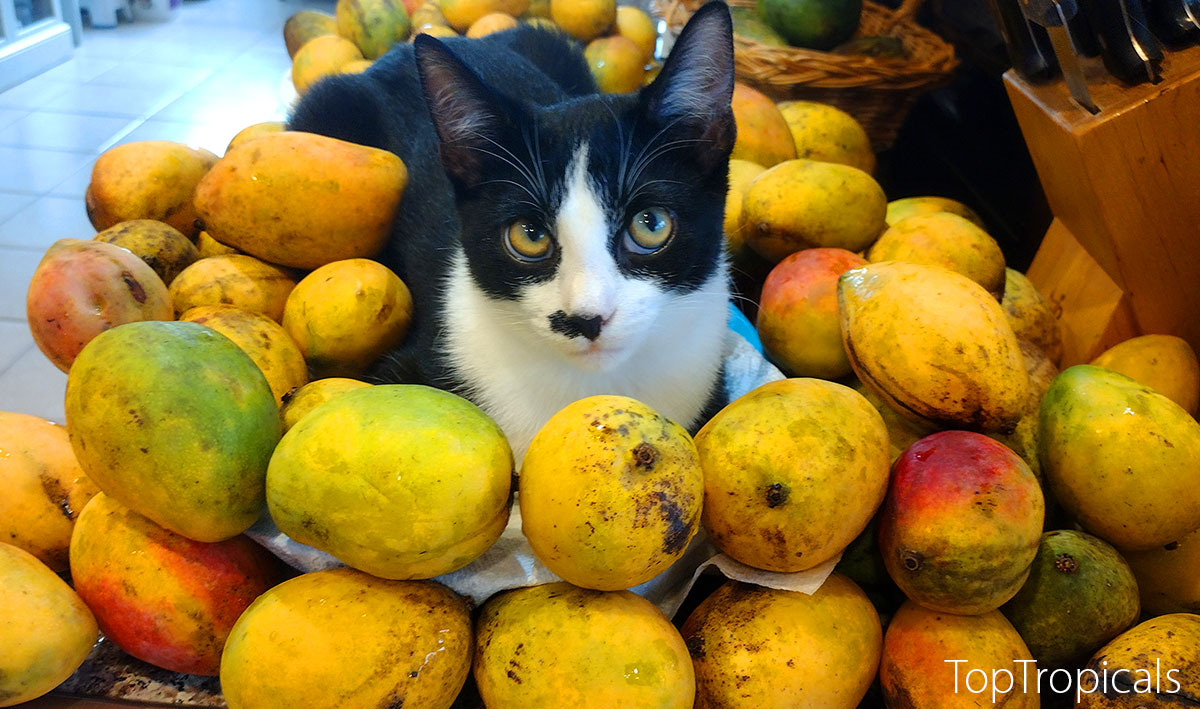
Cat  with  mango  fruit

Q: The most Frequently Asked Question about fruit trees: What is your favorite Mango variety? Which mango varieties are the best? Help me to make a choice!

A: As we mentioned on our Introduction to Mango Varieties page, there are thousands of named mango cultivars available. Similar to the classification of avocados (see our Avocado Variety Guide), mango trees can be selected based on your specific needs. These needs can include tree size and growth habit, disease resistance and hardiness, and most importantly, fruit characteristics such as taste, texture, size, color, storage ability, juice and sugar content.

We are currently working on a comprehensive Mango Variety Guide and will be sharing it with you soon. In the meantime, below are a few tips on selecting the right mango tree.
NOTE: all of the Mango varieties we offer are FIBERLESS!

Top 5 Favorite Mango we just love!

1. Alphonso - the best Indian cultivar in terms of sweetness and flavor. One of the rarest varieties and sought after - sweet large juice fruit. Coconut-like flavor.
2. Maha Chinook - Many consider it the best mango had ever tasted. Very rare mango variety from Singapore. This variety is semi-dwarf and great for pot culture. Nam Doc Mai close relative.
3. Fralan - Super reliable producer and hardy tree. Green fruit, sweet and juicy. Fralan means "Thunder" - as the fruit cracks when peeled.
4. Fruit Cocktail - Flavor is an amazing palette of different fruit, with citrus, pineapple, and guava notes.
5. Nam Doc Mai - It's not just us, everyone loves this Mango! The most popular variety: semi-dwarf and great for pot culture. Eaten green or ripe, a Thailand favorite. It is hands down the most sought after of the Asian mangoes and for good reason.
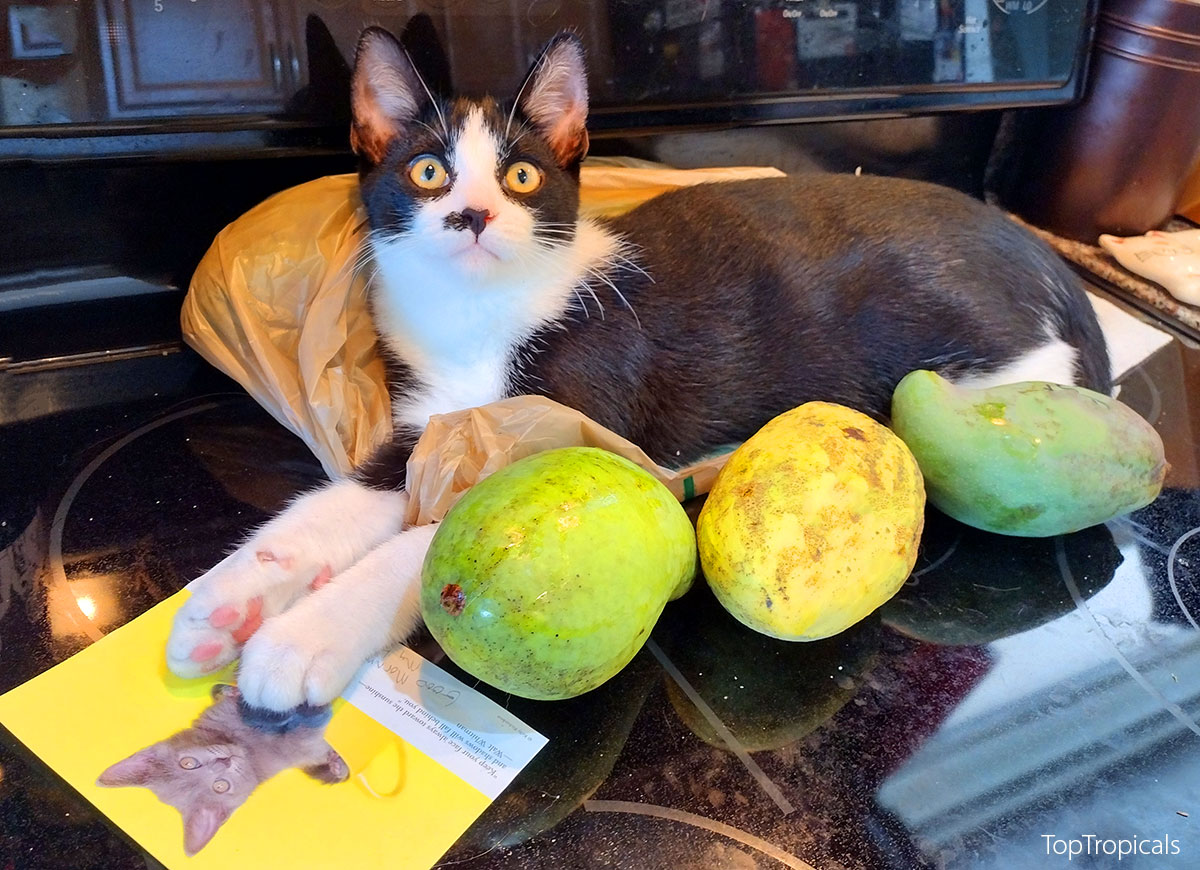
Cat  with  three  mango  fruit

Top 10 Dwarf "Condo" Mango

1. Mallika - condo mango native to India. Among the best of the new generation of Indian dessert mangos. Intensely sweet, rich and highly aromatic flavor with hints of citrus and melon.
2. Ice Cream - far and away the most popular of the "condo mangoes." Flavored like the name. The tree can easily be maintained at a height of just six feet (!) making it ideal for container growing.
3. Julie - the most popular variety in Jamaica and many other Caribbean islands because of its rich, sweet, coconut/pineapple-like flavor. It is a dwarf cultivar, great for containers, but keep in mind it's very cold sensitive, don't plant it in the ground if you get freeze in winter.
4. Okrung - Thai compact cultivar, fruit eaten while green. The fruit is traditionally served in Thailand in combination with sticky rice. One of the most popular varieties in Thailand. The fruit is very sweet, with the highest sugar content.
5. Pickering - great for pot culture. It has a bushy, compact growth habit, and can be maintained in a container at just six feet (!). The fruit has a firm flesh with a fantastic coconut/mango flavor.
6. Nam Doc Mai - The most popular variety for pot culture, we already mentioned in our favorites above.
7. Cogshall - an ultra compact grower. Suitable for container growing on a balcony, or planting in a suburban backyard. It can easily be maintained at just eight feet tall, and it will still produce a good size crop year after year. The fruit is very colorful and has a mild, sweet flavor. It is also fungus resistant.
8. Carrie - the flavor is by far the most outstanding. It has absolutely no fiber and extremely rich in flavor, sweet, aromatic and a pure pleasure to eat. You will savor every mouthful! Its compact size makes it an excellent dooryard tree.
9. Diamond - It has a great taste very similar to Nam Doc Mai. Very compact, of a dwarf habit, great as condo mango.
10. Keitt - the best all-around late mango. It is very productive, good-flavored, and disease resistant. It also has a very long and late season. The compact tree is semi dwarf that bears 4-5 pound goliath fruit!
Mango  tree  with  fruit

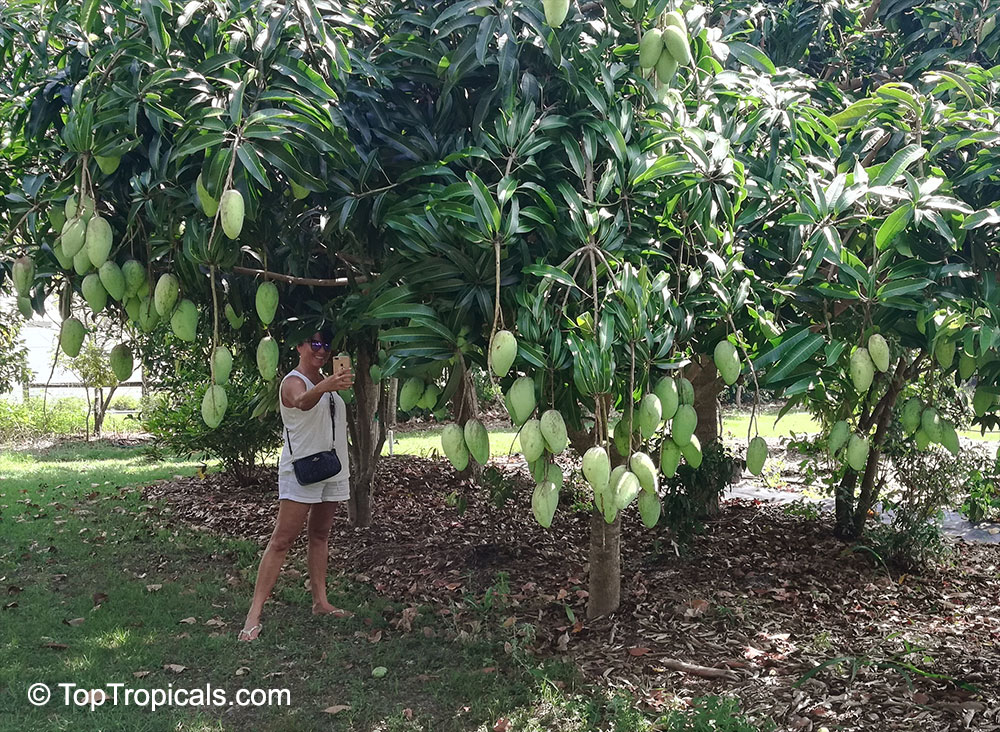
Photo above: Pim Seng Mun mango tree is a reliable and heavy producer.

Top 5 recommended vigorous growers and reliable producers

1. Glenn - Excellent eating quality, consistent production, and effortless to grow.
2. Pim Seng Mun - extremely productive mango.
3. Sweet Tart - New patented variety - exclusive offer.
4. Fruit Punch - Multi fruit flavor, delicious!
5. Orange Sherbet - One of the best new varieties for backyard growing. Flavor is sweet citrus-orange and less lemony than Lemon Meringue mango. The tree is moderately vigorous.

Top 5 exotic varieties for rare fruit collection

Now that you have decided to collect them all but have limited space, these are the top 5 of the most interesting rare cultivars:

1. Kar Lon Long - rare and unusual, native to India. Fruits that can weigh up to 5 lbs each! The unique flavor that has been described as being a cross between a mango and a pineapple.
2. Mun Kun Si - similar to Nam Doc Mai but much bigger. Rare variety, very popular among Thai and Vietnamese people. The fruit are extremely sweet, fiberless and somewhat crunchy ("Mun" means crunchy). Very late producer, fruit may still be on a tree as late as January.
3. Pina Colada - very sweet, has rich flavor with a hint of coconut and pineapple.
4. Ugly Betty - awesome mango, great sweet flavor, while the fruit is real ugly! Slightly mis-shaped at the top - hence the name.
5. Giselle - from Zill's breeding program and was a seedling of a mango called Tower. It was described as a juice mango and is named after Gary's wife.
Mango  fruit  display

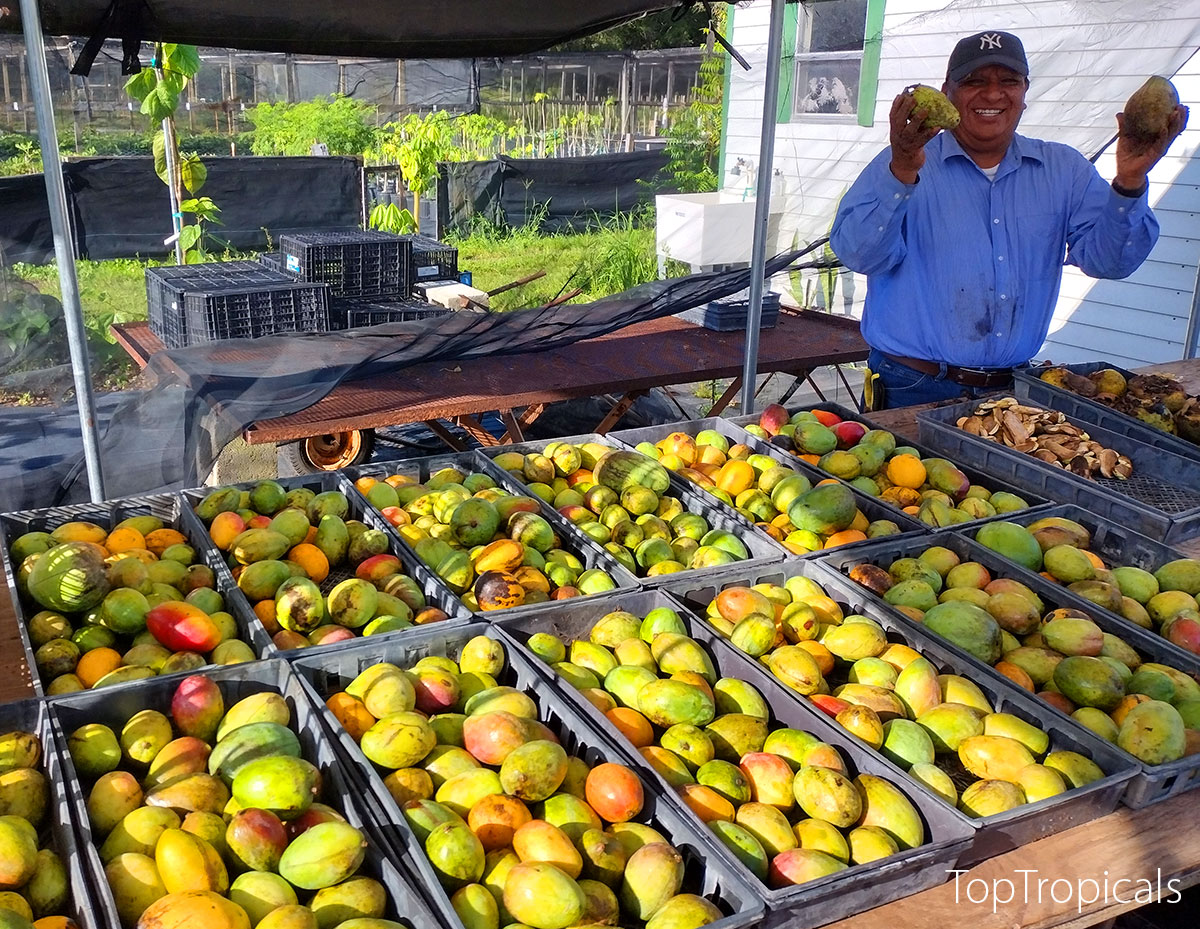
Photo above: preparing mango seeds for planting - growing seedlings for future grafting.
Date: 24 Aug 2025

Before eating ice cream, try this fruit from a house plant

Swiss Cheese Plant - Monstera deliciosa

🍨 Before eating ice cream, try this fruit growing on a house plant!
  • 🍨 Most people know Swiss Cheese Plant - Monstera deliciosa - for its big holey leaves, but here’s the wild part: this jungle climber also makes fruit. Real fruit. And it tastes like pineapple mixed with ice cream.
  • 🍨 Have you tried Monstera fruit? Will you eat it again?
  • 🍨 This plant grows in the rainforests of Mexico and Guatemala, where young seedlings crawl toward the shade until they find a tree to climb. Yes, they grow in the direction of the darkest area, not just merely away from light. Interesting, ah?
  • 🍨 In time, it sends out a green, cone-like fruit nearly a foot long. It takes a while to ripen - about a year - and only when the scales start to lift can you peel them back and find the creamy pulp inside. Ice-cream sweet and tropical.
  • 🍨 One catch though: never eat the fruit unripe. The pulp contains oxalic acid that is generally harmless but will burn your mouth. Best trick is to let it wrinkle a little, wrap it up, and wait until the scales loosen on their own. Then it's ready.
  • 🍨 And for collectors? The Thai Constellation, with its cream-splashed leaves, is the crown jewel. Some specimens sell for thousands. Not bad for a "Swiss Cheese Plant"!


🛒 Shop Monstera plants

📚 Learn more:


How to harvest and eat Monstera Ice Cream

#Food_Forest #Container_Garden #Shade_Garden

🟢 Join 👉 TopTropicals