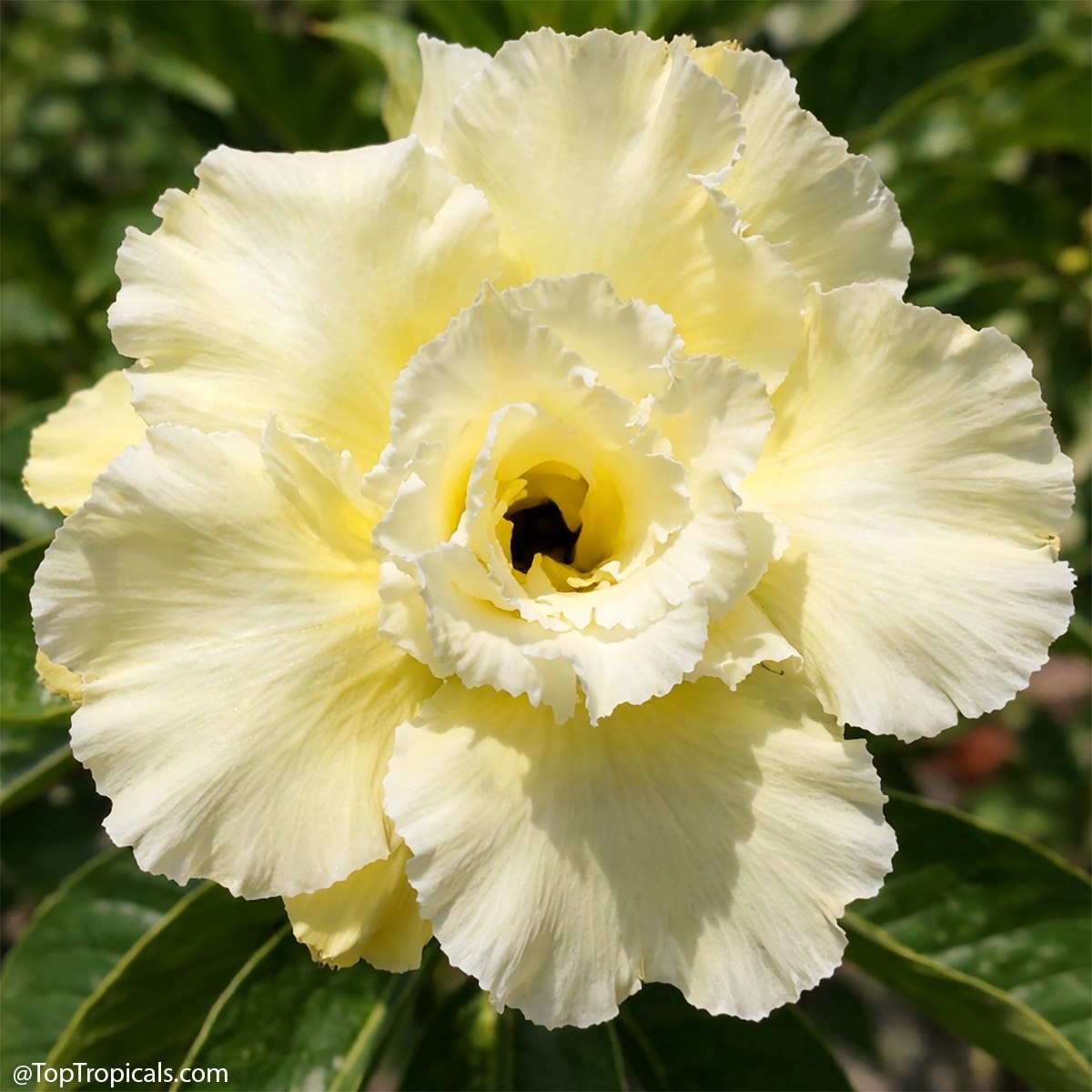
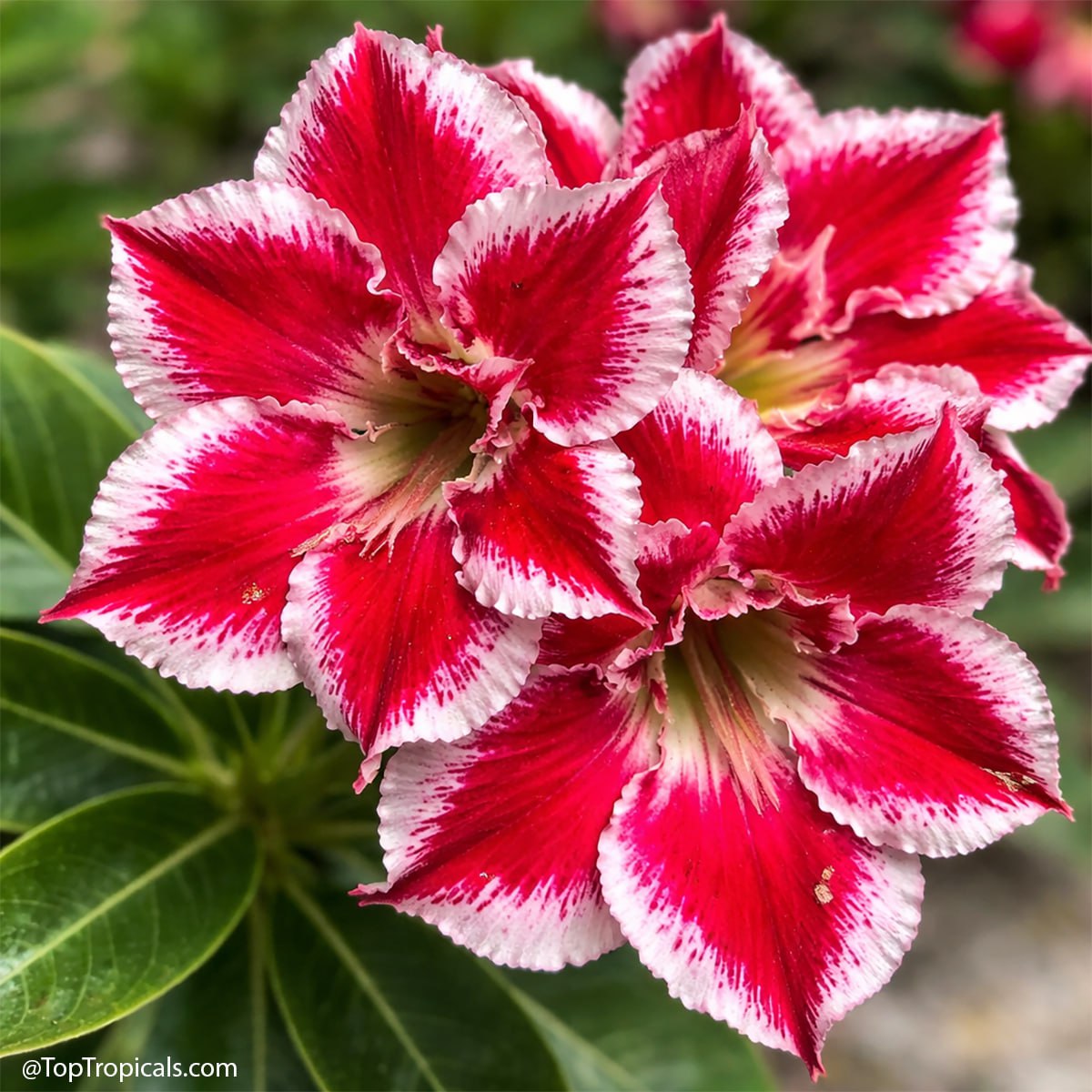
Garden Blog - Top Tropicals

Date: 18 Apr 2016

Seeds germination in summer
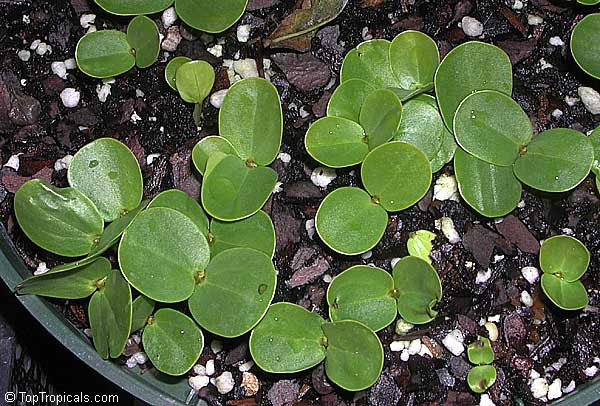
Q: What is the best way to germinate seeds in summer? Should I keep trays indoors or put them outside?

A: Summer is the best growing season for plants, and for their propagation. Seed germination process of tropical plants usually benefits from warm, and even hot temperatures, so keeping pots with seeds outside in full or partial sun can be the best way. However some seeds may be more sensitive than others, or require slightly cooler or higher temperature for germination. These are a few tips that may help:

- For seed germination, use only well drained mixes, containing either peat moss or coconut fiber to retain moisture. Some succulents may require adding sand to the germination mix. You may also try our Professional Formula Seed Germination Mix.

- Large tropical seeds, like palms, or seeds of Fabaceae (Bean) family, can be grown in full sun. Their germination will benefit from higher temperatures (up to 90-95F). Make sure to keep soil moist. Cover them well, with 3/4 to 1 inch of soil.

- Fruit seeds (large size) should be germinated either in individual cells or small pots (3-4"diameter).

- Small to medium size seeds can be grown in so-called community pots. Seedlings can be separated after they establish their first roots.

- Tiny seeds should be planted closer to the surface, covered with only 1/4-1/8 inch of soil; some seeds require bright light for germination, so full sun will be a plus. Some small seeds like Ficus for example, prefer to be broadcasted on the surface, uncovered. Put containers with such seeds in bright shade, as you don't want the surface of the soil to dry out.

- Once your seeds sprouted, move them in filtered light - bright to medium shade depending on tenderness of the species. (Gingers prefer shade, while succulent sprouts can stay in brighter light). Regardless of water/sun needs of the species, all young sprouts and first leaves are sensitive to hot sun and may get burned or even killed. Once a baby plant has a few leaves and well-branched root system, you may start moving trays into a brighter light.

- Do not overwater young seedlings, keep soil slightly moist but not soggy.
See full list of available seeds.

Date: 7 Mar 2016

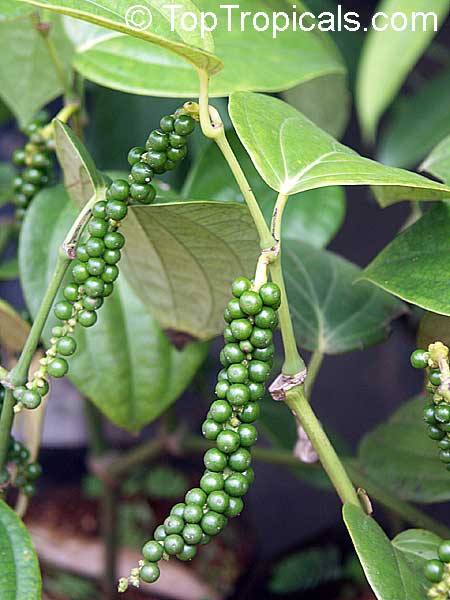
Black Pepper Vine - grow a real spice at home!

Q: What plants are used for commercial production of black pepper, red pepper, and green pepper? I started organic garden and would like to try growing pepper. I live in Georgia, will it survive here?

A: Pungent and aromatic Pepper is grown in Southern India since more than two thousand years, has always been much valued all over the world. Along with other spices from India and lands farther east, it changed the course of world history. Depending on harvest time and processing, peppercorns can be black, white, green and red (reddish-brown). So, the same fruit is also used to produce white pepper, red/pink pepper, and green pepper. The pungency is strongest in white pepper and weakest in green pepper, while black and green pepper are more aromatic than the white one.

The vine can be easily grown in a pot on a trellis, in mild (frost-free) climates it can be grown in the ground providing a tree support. Try growing this legendary plant and taste the real spice!

For more info, see article about Black Pepper.

See full list of spice and herbs

Date: 3 Aug 2024

How to always have your own Root Beer

Piper auritum - Root Beer Plant, Acuyo, False Kava-Kava

How to always have your own Root Beer

  • Piper auritum - Root Beer Plant, Acuyo, False Kava-Kava - is a close relative of Piper methysticum (Kava-Kava), and Piper nigrum (Black Pepper). It is very often confused with Kava-Kava, and probably has some similar medicinal effects.
  • This herb originated from Tropical America and grows also in the South Pacific.
  • Large-leaved perennial, known for its leaves, which are used for their spicy aromatic scent and flavor, some liken to root beer, others to anise-clove. It can be used for making a root beer-flavoted drink.
  • This species is easily identified by its huge leaves which can grow over a foot long in older specimens.
  • The leaves are chopped and used for flavoring, as well as used whole, as wrappings for meats, tamales, etc.


📚
Learn more about Piper plants

🛒 Grow your own Root Beer Plant

#Food_Forest #Remedies

🔴 Join 👉 TopTropicals

Date: 12 Apr 2026

Easter morning with Smokey and Sunshine

Easter morning with Smokey and Sunshine

Easter morning with Smokey and Sunshine

Easter morning with Smokey and Sunshine


Happy Easter to all who celebrate today - especially across Eastern Europe and Orthodox communities around the world.

Smokey and Sunshine are taking a well-earned break with coffee, sweet Easter bread, and a table full of spring color. Wishing you a day filled with peace, renewal, and quiet joy. And of course - the perfect time to plant flowers and fruit and bring new life into your garden.

🛒 Shop tropical flowers and plants

#PeopleCats

🟢 Join 👉 TopTropicals

Date: 29 Mar 2026

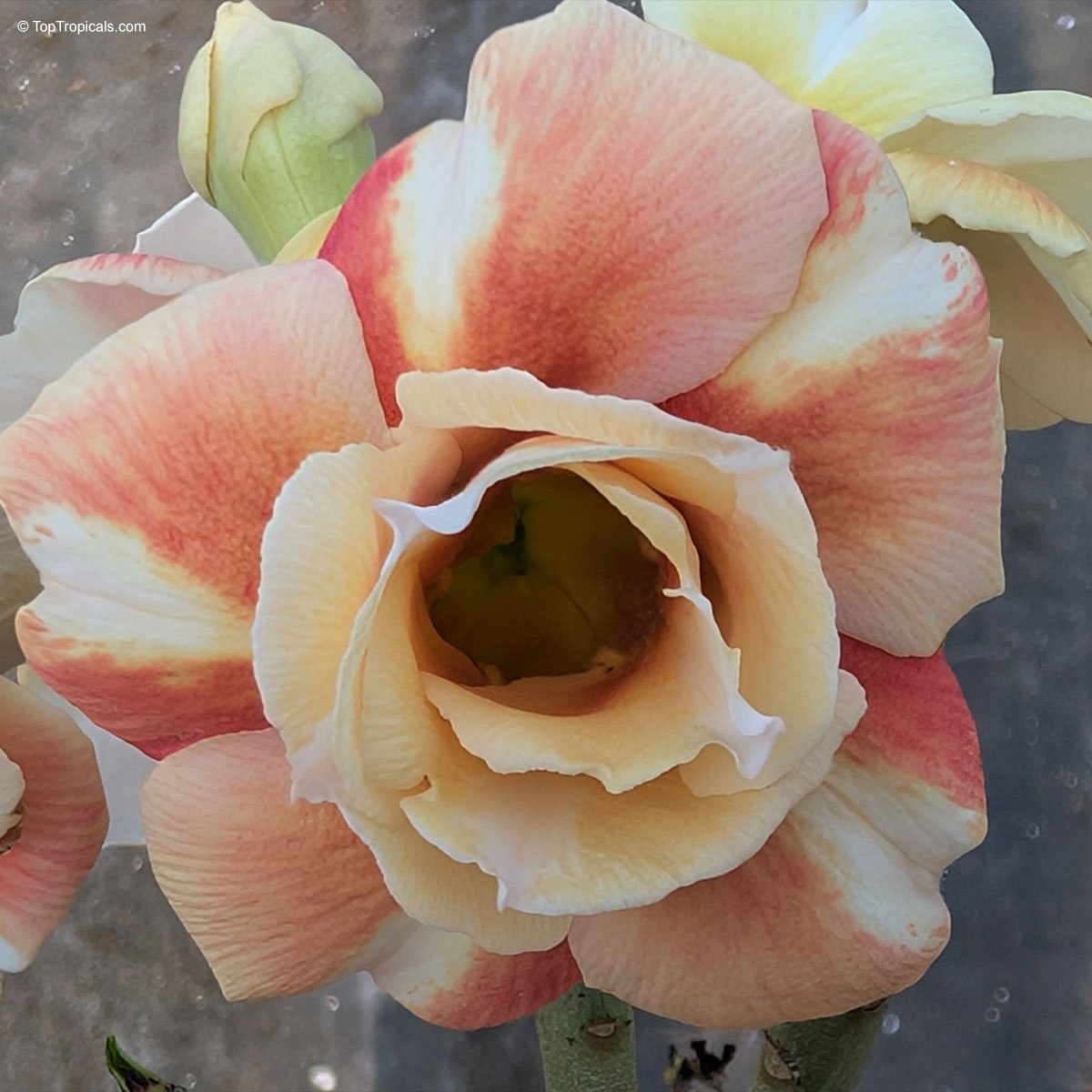
We picked 6 adeniums - youll probably want all 6: Adenium rainbow

Adenium Caramel

Adenium Caramel

Adenium Bumblebee

Adenium Bumblebee

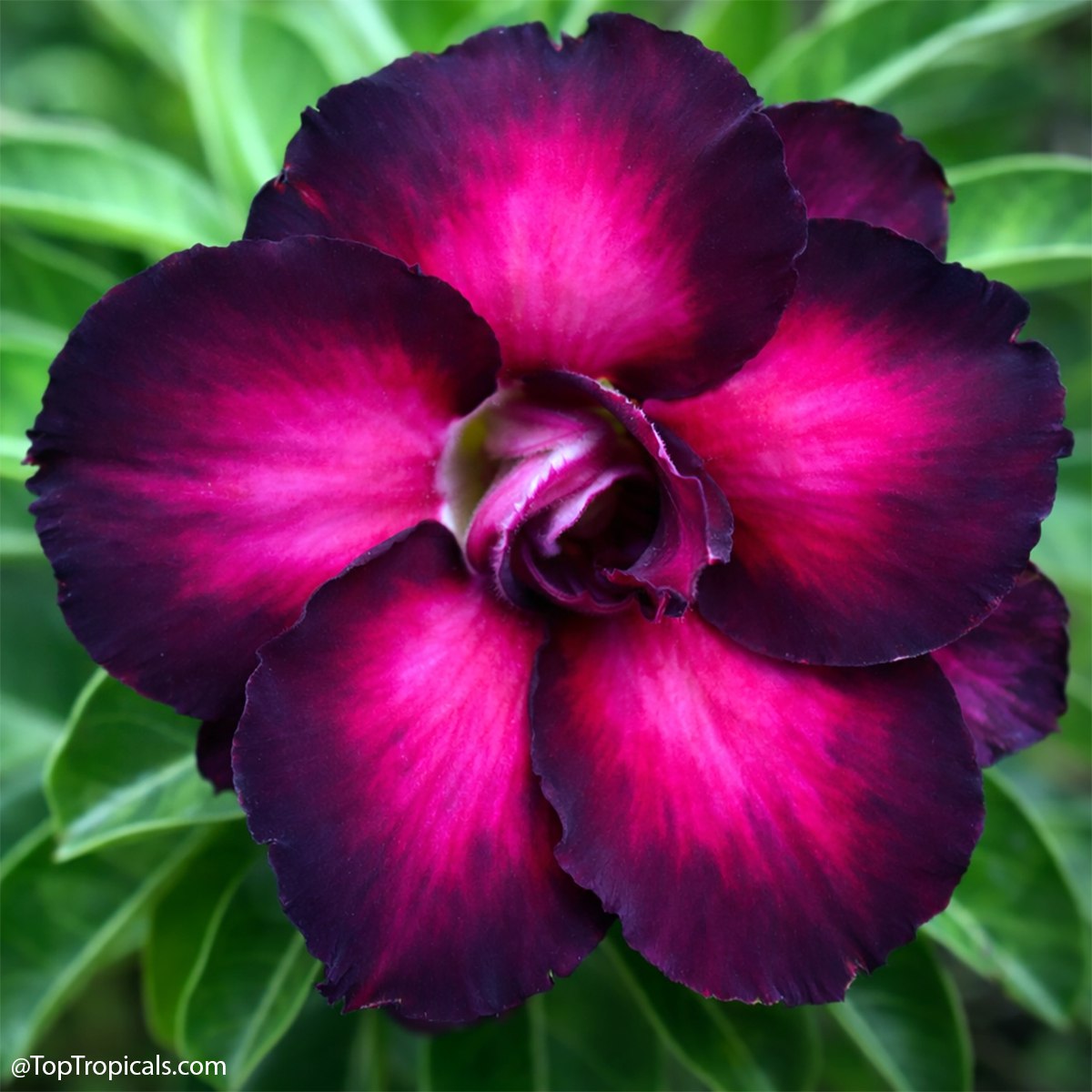
Adenium Purple Plum

Adenium Purple Plum

Adenium Pineapple

Adenium Pineapple

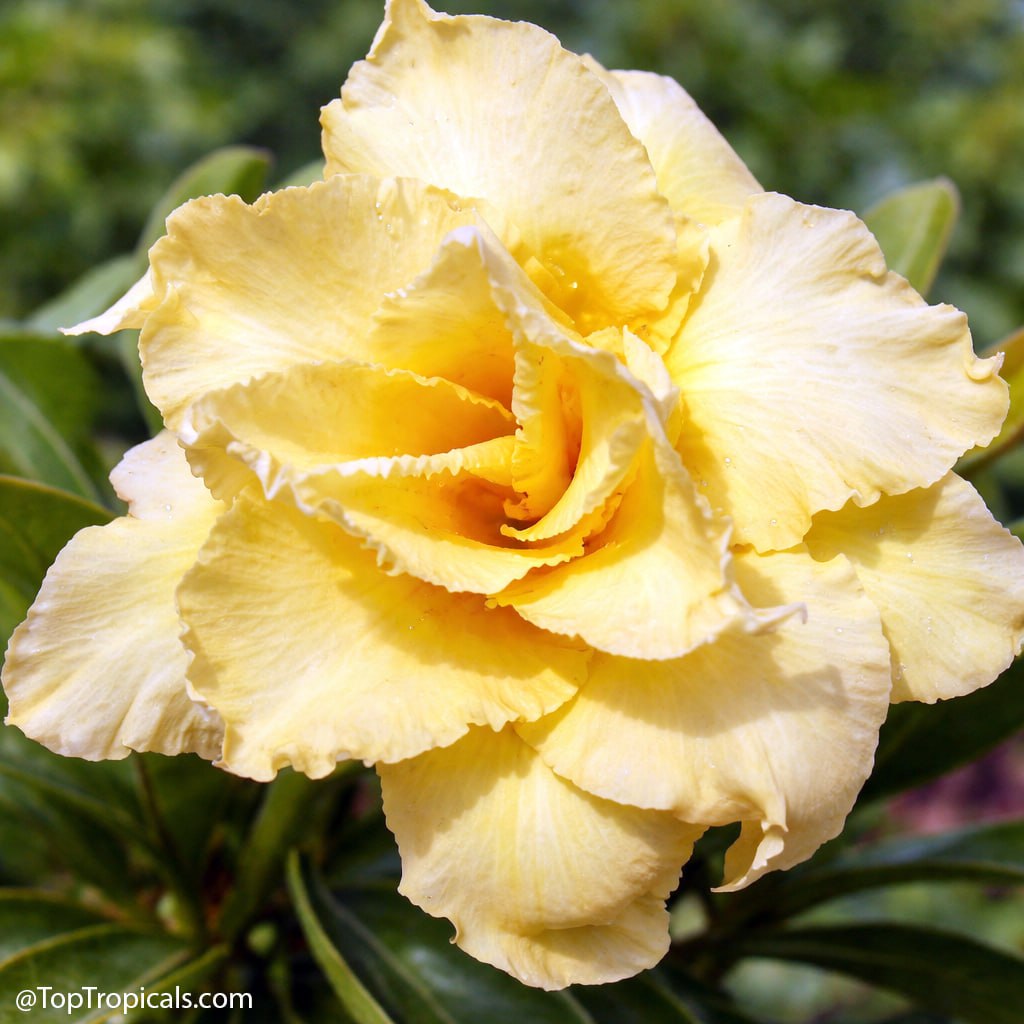
Adenium Vanilla Gold

Adenium Vanilla Gold

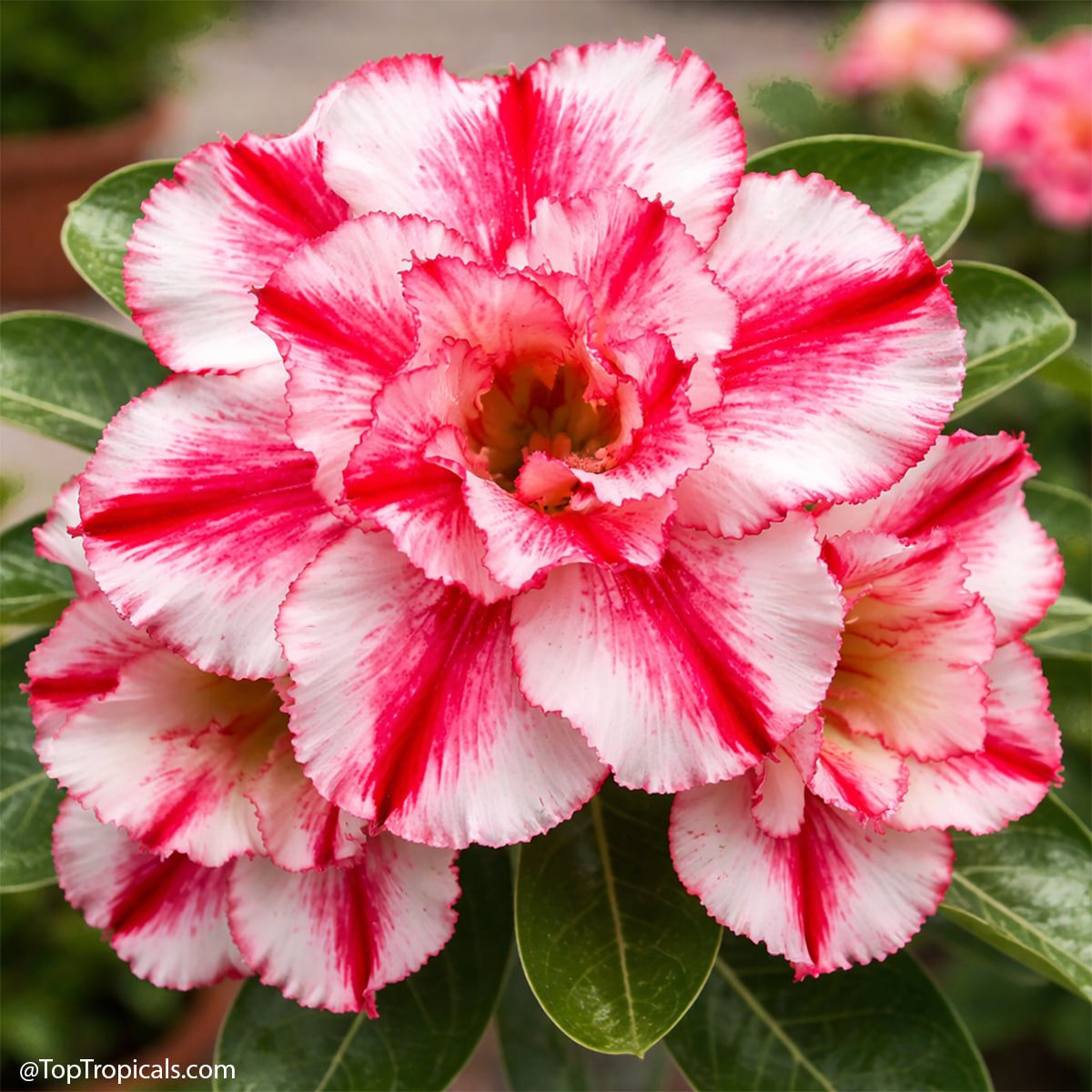
Adenium Multi Berry

Adenium Multi Berry

We picked 6 adeniums - you’ll probably want all 6: Adenium rainbow 🌈

Some adeniums go bright. Some go deep.
And some land right in that rich, warm middle.
This set leans into those “dessert” colors - creamy, golden, purple, and everything in between.
And yes, some varieties even come with fruity or “tasty” names
!

💡 Soil and watering tip


Adeniums are succulents, so they need excellent drainage and prefer to stay on the dry side.
Water deeply, then let the soil dry out before watering again.
No constant moisture.
The potting mix is just as important. It should be very рыхлый and fast-draining, with plenty of conditioners like perlite, bark, or vermiculite.
We recommend using a Adenium Soilless Mix for best results.

🌸 Today's featured adeniums

  •  ✦ Caramel: Warm, rich tones with a smooth, creamy look.
  •  ✦ Bumblebee: Bold contrast with bright yellow and dark patterning - very eye-catching.
  •  ✦ Purple Plum: Deep purple shades with a deep, velvety feel.
  •  ✦ Pineapple: Fresh yellow tones that feel light and tropical.
  •  ✦ Vanilla Gold: Soft golden color with a clean, balanced form.
  •  ✦ Multi Berry: Blend of pinks and reds that gives it a layered, mixed-fruit look.

This kind of mix makes a collection feel warm and inviting - not just colorful, but full of depth.
And once you dial in soil and watering - everything else gets a lot easier.

🛒 Explore Exotic Thai Adeniums

📚 Learn more:

Plant Facts

Adenium sp.
Adenium, Desert Rose, Impala Lily
USDA Zone: 9-11
Plant with caudexLarge shrub 5-10 ft tallSmall tree 10-20 ftFull sunDry conditionsModerate waterYellow, orange flowersRed, crimson, vinous flowersUnusual colorBlue, lavender, purple flowersWhite, off-white flowersPink flowersToxic or Poisonous

#Container_Garden #Adeniums #How_to #Discover

🟢 Join 👉 TopTropicals