Garden Blog - Top Tropicals

Date: 24 Nov 2025

One fruit on this tray always stumps people

Tropical fruit on a tray

One fruit on this tray always stumps people

  • 🍉 Another day, another fruit tray from the garden! Even at the end of November, something is always ripening here in Florida. This tray turned out especially fun - a mix of familiar fruits and a couple that always make people guess twice!
  • 🍉 Today’s harvest includes: sweet Persimmons, Star fruit, a few different dragon fruits: yellow Palora and white with red skin - this is Seoul Kitchen. There's also Cocoplum, which makes great drinks. And - ta-da! - the little showstopper of the day: Curly Locks Orchid Cactus fruit (Epiphyllum guatemalense Monstrosa). It looks wild, but it's edible and tastes like a tiny dragon fruit.
  • 🍉 If you live in Florida or any warm climate, growing your own fruit is one of the best gifts you can give yourself. Tropical fruit trees are generous plants - they don’t wait for a season, they give you something month after month. Some days it’s a handful, some days it’s a whole tray, but there’s always a fresh treat waiting. Once you start growing your own food, you realize how easy and rewarding it is to fill your garden with flavor.
  • 🍉 Every tray has a new surprise. Come along and see what the garden gives us next!


🛒 Explore rare tropical fruit

📚 Learn more:
#Food_Forest #Discover

🟢 Join 👉 TopTropicals
Date: 21 Feb 2026

The best time to plant a fruit tree was 20 years ago - here is why you need to plant it now

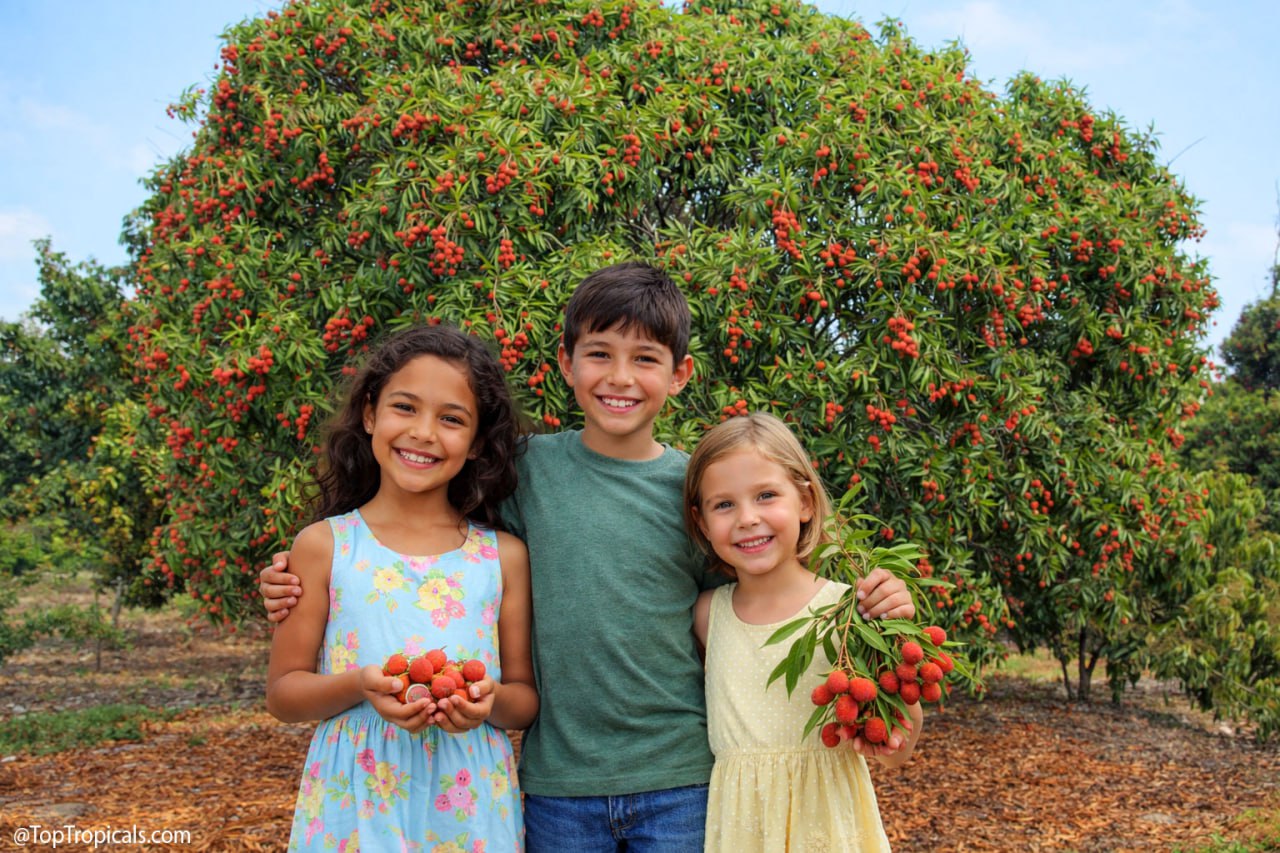
Litchi chinensis - Smiles under the Lychee tree

Litchi chinensis - Smiles under the Lychee tree

🍑 The best time to plant a fruit tree was 20 years ago - here is why you need to plant it now


They say the best time to plant a fruit tree was 20 years ago.
The second best time is today.

A fruit tree is not a seasonal purchase. It is not a decoration. It is a decision that stretches far beyond you.

When you plant a mango, an avocado, a loquat, a lychee tree - you are not just planting for this summer. You are planting for children who will climb that tree. For neighbors who will ask for a basket of fruit. For someone who may live in your house long after you are gone.

Fruit trees are quiet investments in the future.
Unlike annual crops that come and go, a tree deepens its roots every year. Many fruit trees - especially mangoes - can live for decades, even a century. They outlive trends, owners, renovations, even mortgages. They stand there, steady, producing.

Even if you sell the house, the tree remains.
The next family will walk into the yard and discover fruit hanging overhead. Imagine buying a home and realizing someone before you planted abundance!

That is a gift.

In many parts of the world, mango trees are called generational crops. One farmer plants them. His children harvest them. His grandchildren sell the fruit. A single decision continues to feed and support a family long after the planter is gone.
There is something deeply grounding about that.

We live in a fast world. Quick returns. Quick moves. Quick upgrades.
A fruit tree moves at a different pace. It asks for patience. It rewards consistency. It teaches you to think long term.

Planting a fruit tree says:
I believe in tomorrow.
I believe this land will matter.
I believe someone will stand here after me.

And even if you never taste the fullest harvest, someone will.
Passing fruit trees through generations is more than horticulture - it is legacy. It is continuity. It is resilience. It is saying that this space, this soil, this home will keep giving.

So plant it now.
Plant it for your children.
Plant it for the next homeowner.
Plant it for shade you may never sit under.
Plant it for fruit you may never pick.
Because one day, someone will walk into that yard, look up, and thank the person who thought ahead.
Let that person be you.

🛒 Explore fruit trees for your orchard
  • 👉 Tropical Fruit favorites:


🥭 Mango
Avocado
🍒 Cherry
🍊 Loquat
🍈 Jackfruit
🍑 Peach tree
🍉 Guava
🍏 Sugar apple
🍇 Mulberry
🍐 Sapodilla

#Food_Forest #Discover

🟢 Join 👉 TopTropicals

Date: 5 Mar 2026

Passion fruit butter glaze: quick-n-fun exotic recipes

Passion fruit butter glaze

Passion fruit butter glaze

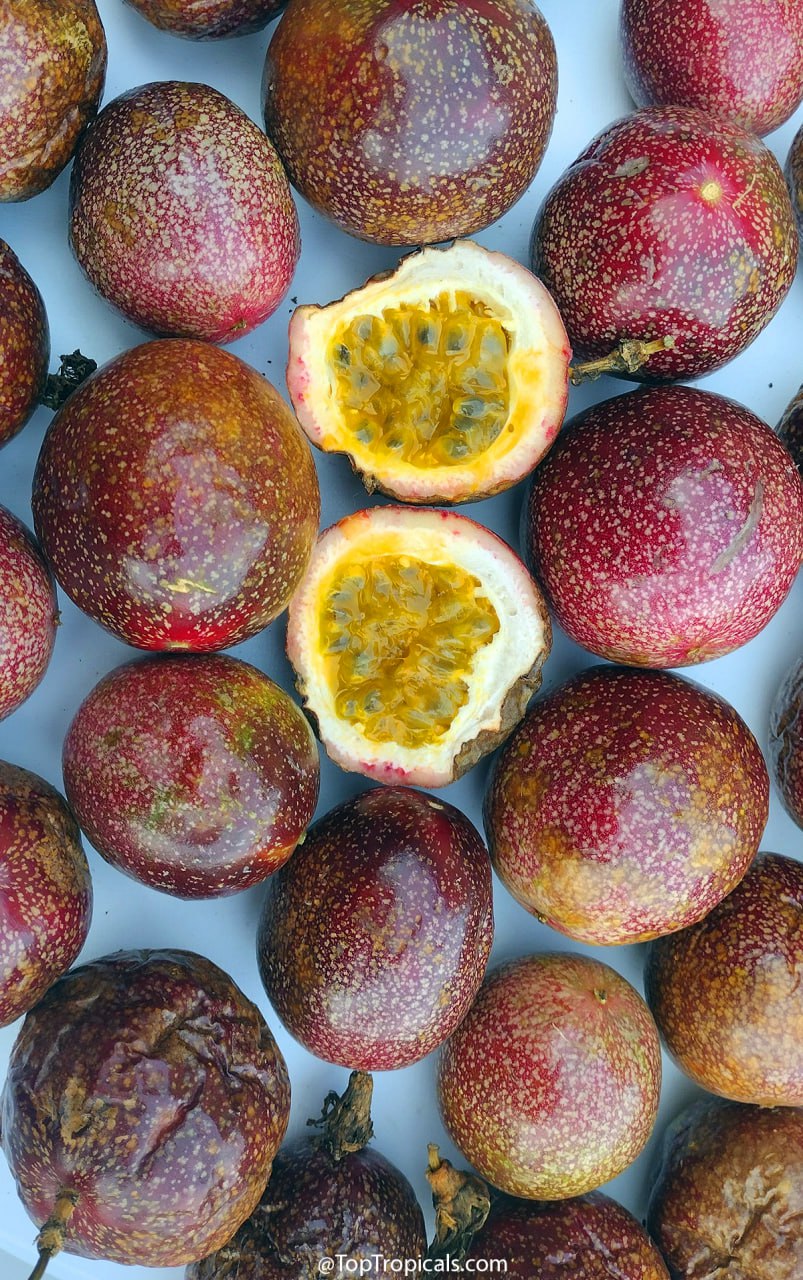
Passion fruit - Passiflora edulis

Passion fruit - Passiflora edulis

🍴 Passion fruit butter glaze: quick-n-fun exotic recipes

Passion Fruit Butter Glaze

Ingredients

  • 2 passion fruits
  • 1 tablespoon butter
  • 1 teaspoon sugar

Instructions

  1. Scoop the pulp from the passion fruits into a small saucepan.
  2. Add butter and a small amount of sugar.
  3. Simmer gently while stirring until the mixture thickens.
  4. Spoon the warm glaze over pancakes, toast, or grilled pineapple.


🌿 About the plant:


A fast-growing vine with exotic flowers and intensely aromatic fruit filled with juicy seeds.

🏡 In the garden:


Needs strong support, full sun, and warmth. Very fast growth in zones 9-11. Prune to keep productive.

🛒 Plant Passionfruit Vine - fast growing and rewarding

📚 Learn more:

Plant Facts

Passiflora edulis
Passion Fruit, Parcha, Maracuya, Granadilla
USDA Zone: 9-11
Vine or creeper plantFull sunModerate waterBlue, lavender, purple flowersWhite, off-white flowersEdible plantSubtropical plant. Mature plant cold hardy at least to 30s F for a short time

#Food_Forest #Recipes

🟢 Join 👉 TopTropicals

Date: 22 Apr 2026

Secrets of Real Mango Flavor

Top-down  view  of  a  white  tray  filled  with  assorted  mango  varieties  in 
 different  shapes  and  colors,  including  green,  yellow,  red,  and  orange, 
 arranged  outdoors  on  a  textured  surface.

A colorful mix of mango varieties - different shapes, colors, and flavors all in one harvest.

Mango Practical Growing Tips (Keep It Simple)

  • Sun: Full sun is key. 6–8+ hours daily for best growth and fruiting.
  • Soil: Excellent drainage is critical. In pots, use well-draining mix with added perlite or sand. Mango does not like wet roots.
  • Watering: Water deeply, then let soil dry slightly before watering again. Avoid constantly wet soil.
  • Containers: Excellent for pots. Condo mango varieties stay compact and are easy to manage on patios.
  • Feeding: Light but consistent feeding during active growth makes a big difference. Use controlled-release Green Magic for steady nutrition, and supplement with liquid Sunshine Boosters Mango Tango during warm months to push growth and fruiting.
  • USDA Zones: Best suited for Zones 9b–11. In Zone 9b, choose a warm, protected microclimate (south-facing wall, patio, or near structures) and be prepared to protect during cold snaps. In Zones 10–11, mango grows reliably in-ground. If you live in colder zones, grow in a pot so you can move the tree indoors or protect it during cold weather.
  • Cold Protection: Protect young trees during cold nights. Use cover or place near a wall or warm microclimate. Mature trees are more tolerant.
  • Airflow: Good airflow helps prevent disease and keeps growth clean.
  • Spacing: Give the tree room for light and airflow. Even compact trees benefit from space.

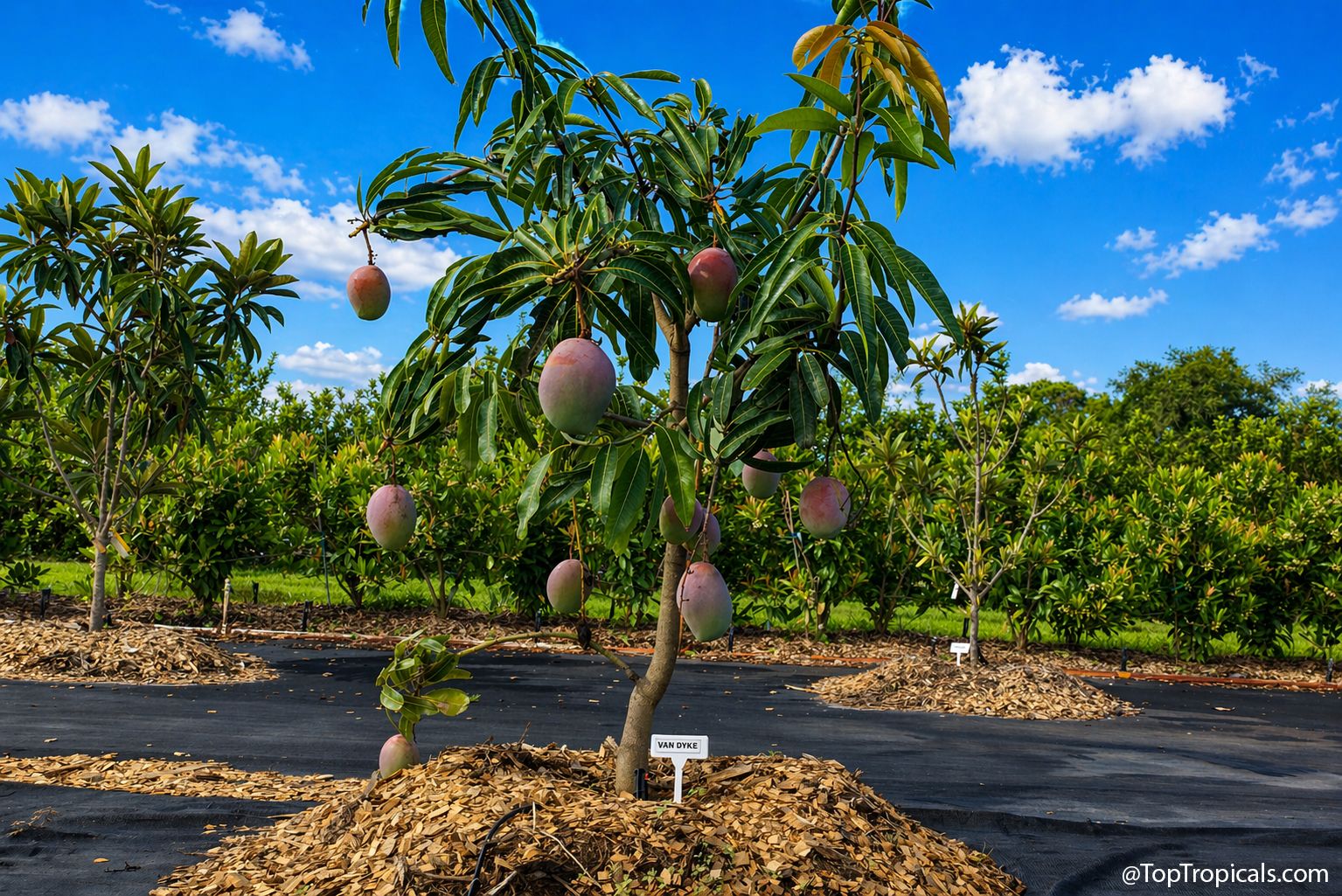
Mango  tree  Van  Dyke  growing  in  an  orchard,  loaded  with  ripening  mango 
 fruits,  surrounded  by  mulch  and  irrigation,  under  a  bright  blue  sky  with 
 scattered  clouds.

A fruiting mango tree Van Dyke in the grove, heavy with developing mangoes and enjoying full sun.

Mango Winter Care (Very Important)

Mango is not a truly cold-hardy plant. It performs best in USDA Zone 9b and warmer, where freezes are rare and short. In borderline areas, winter protection becomes part of the routine. Mango trees should be covered during cold nights, and planting near a south-facing wall helps protect from cold winds. That small microclimate can make a real difference. If your winters are less predictable, growing mango in a container becomes the simplest solution. It gives you full control — you can move the tree to a protected space when temperatures drop, and bring it back into the sun when conditions improve.

That is where condo mango varieties make the most sense. They are naturally compact, easier to manage in pots, and still produce full-size, high-quality fruit. You get all the benefits of a mango tree without needing a large yard or perfect climate — just sun, a container, and a bit of seasonal movement when needed.

📚 Mango tips from our Blog

Growing Mango in a Pot (Condo Mango Made Easy)

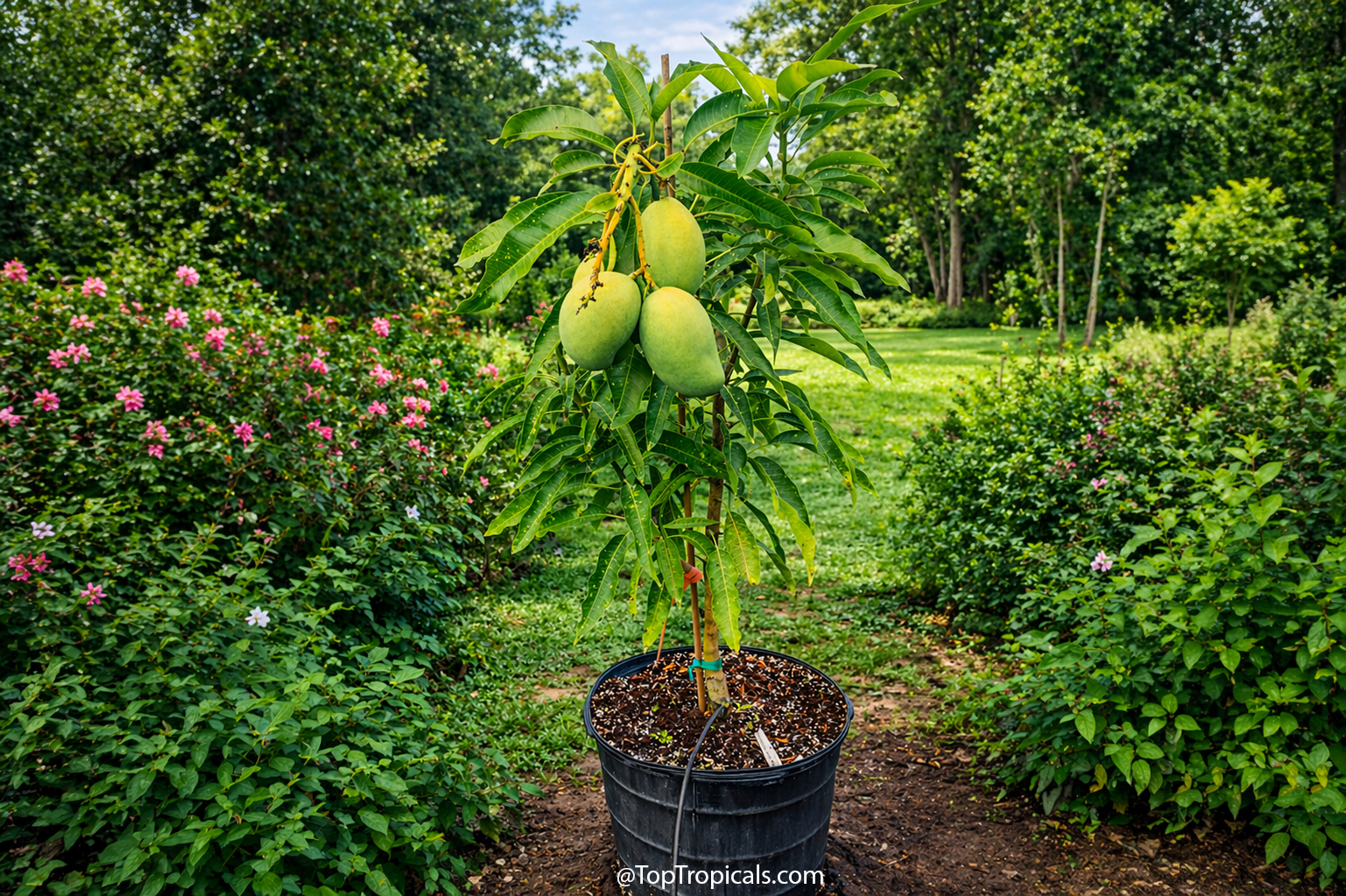
Young  mango  tree  growing  in  a  large  black  nursery  pot,  supported  with 
 stakes  and  drip  irrigation,  bearing  several  green  mango  fruits,  set  in  a 
 lush  garden  with  flowering  shrubs  and  a  sunny  lawn  in  the  background.

Young mango tree in a container, already holding fruit and thriving in a sunny garden setting.

Growing mango in a container is one of the easiest ways to control size, soil, and winter protection. Condo mango varieties stay naturally compact and adapt well to pots, making them ideal for patios, small spaces, or colder climates. You get full flexibility — move the tree when needed, manage its growth, and still enjoy real tree-ripened fruit.

  • Pot size: Start with 3–7 gallon, move up to 15–25 gallon as the tree grows.
  • Soil: Use fast-draining mix such as Abundance soilles mix.
  • Sun: Place in full sun. More light = better growth and fruiting.
  • Watering: Water deeply, then let soil dry slightly before next watering.
  • Feeding: Use controlled-release Green Magic for steady nutrition, plus liquid Sunshine Boosters Mango Tango during active growth.
  • Climate Flexibility: Can be grown in any USDA zone when kept in a container. Simply move indoors or to a protected area during cold weather to keep the tree safe.
  • Pruning: Light pruning keeps the tree compact and productive.

Once you taste a real mango from your own tree, everything changes. It is no longer something you buy — it is something you grow, wait for, and look forward to every season. What felt like hype suddenly makes sense. The passion people have for mango is not exaggerated — it just comes from a completely different experience.

And for people who have never tasted a fresh, juicy mango warmed by the sun, that moment comes as a surprise — the first time they realize what mango is actually supposed to taste like.

As Smokey quietly puts it: Now you know.

📚 More about Condo Mango

🛒 Shop Condo Mango

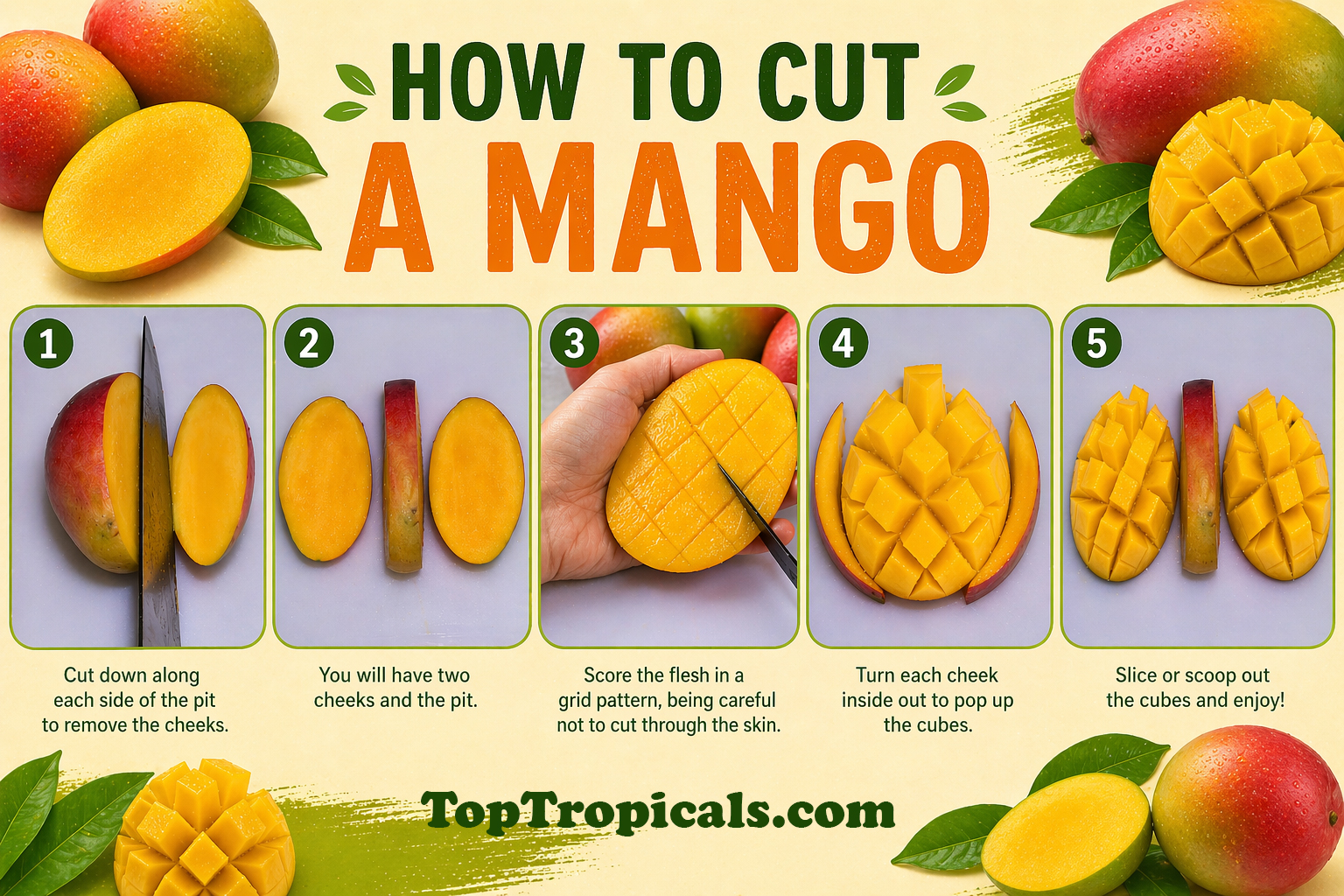
Landscape  infographic  showing  how  to  cut  a  mango  in  five  steps.  Step  1 
 -  slicing  along  each  side  of  the  pit.  Step  2  -  separating  the  two  cheeks  and
    the  pit.  Step  3  -  scoring  the  mango  flesh  in  a  grid  pattern.  Step  4  - 
 turning  the  cheek  inside  out  to  create  cubes.  Step  5  -  scooping  or  slicing 
 the  cubes  to  eat.  Bright  yellow  background  with  whole  and  cut  mangoes  and 
 green  leaves  decorating  the  layout.

Simple step-by-step guide to cutting a mango into clean, easy cubes - from slicing off the cheeks to popping and scooping the fruit.

🎥 Watch Mango videos

🛒 Shop Mango Trees

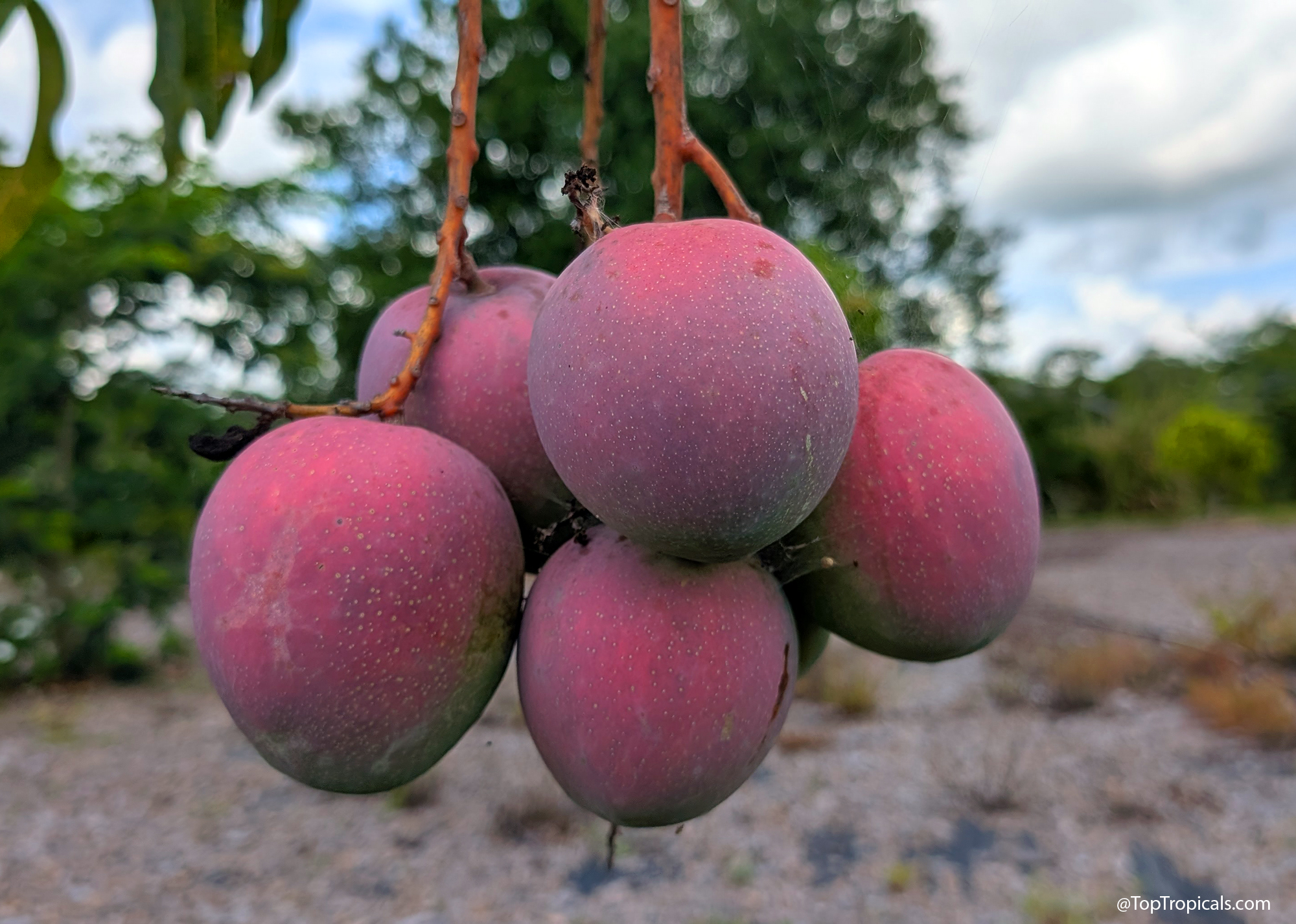
Close-up  of  a  cluster  of  ripening  mangoes  hanging  from  a  branch, 
 showing  red  and  purple  blush  tones  against  a  blurred  outdoor  background.

Cluster of ripening mangoes developing rich color on the tree just before harvest.

Taste the Mango Difference - Save 10%

Once you taste a real mango from your own tree, everything changes. Now you know. Get 10% off with coupon code MANGO2026 on 3 gal mango trees.
Offer valid through 04/28/2026.
Discount applies to 3 gal plants only. Not valid on previous purchases and cannot be combined with other promotions or discounts. Offer subject to change without notice.

Date: 23 Sep 2025

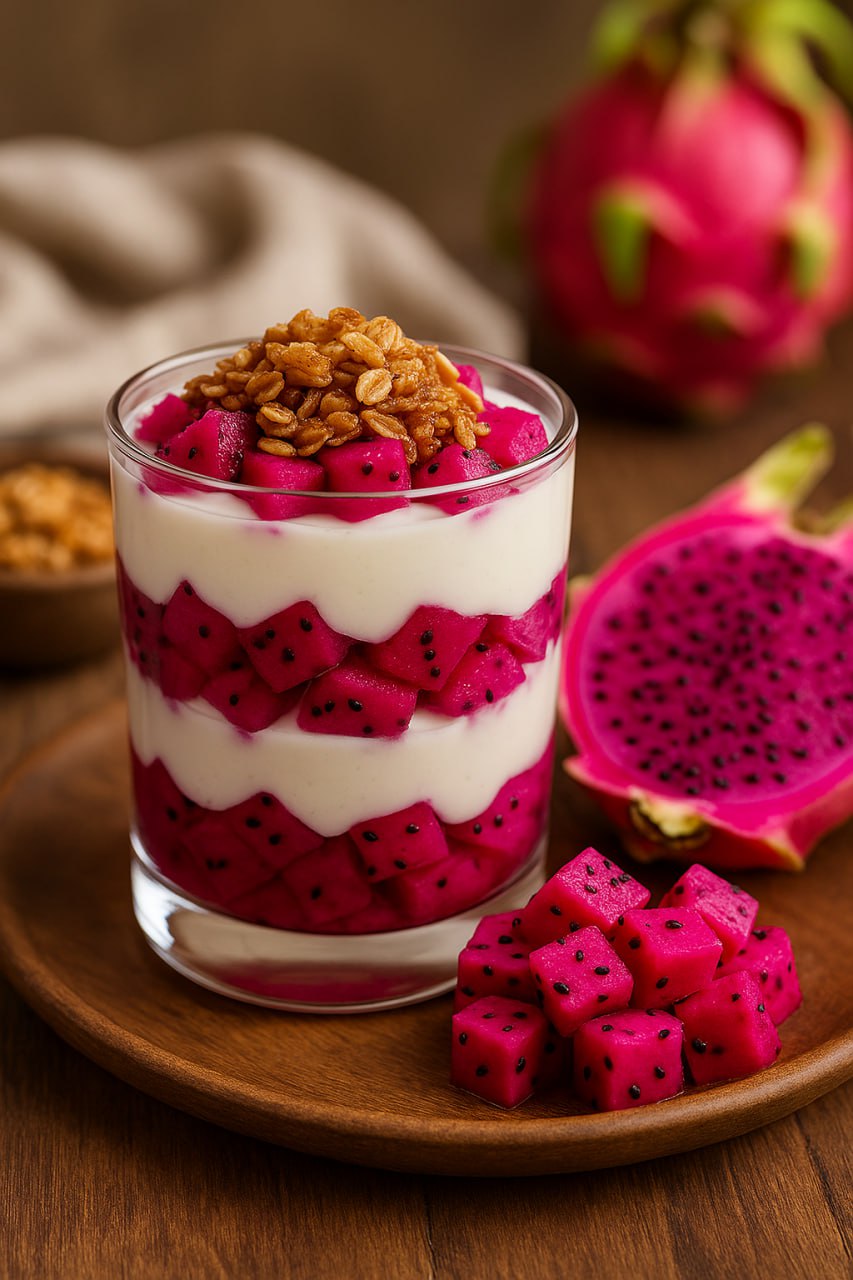
Dragon fruit coconut parfait: quick-n-fun exotic recipes

Dragon fruit coconut parfait

Dragon fruit coconut parfait

🍴 Dragon fruit coconut parfait: quick-n-fun exotic recipes

  • 🔵Layer Dragon Fruit cubes with coconut cream and toasted granola.
  • 🔵A tropical breakfast that looks neon and tastes fresh!

Dragon fruit coconut parfait recipe

Ingredients

  • 1 fresh Dragon Fruit, diced into cubes
  • 1 cup coconut cream
  • 1/2 cup toasted granola
  • Optional: honey or maple syrup for drizzle

Instructions

  1. Layer Dragon Fruit cubes in a glass or bowl.
  2. Add a layer of coconut cream, then sprinkle toasted granola.
  3. Repeat layers until glass is full, finishing with granola on top.
  4. Serve immediately for a refreshing tropical breakfast or snack.

🛒 Explore Dragon Fruit varieties

#Food_Forest #Recipes

🟢 Join 👉 TopTropicals