Garden Blog - Top Tropicals

Date: 2 Aug 2020

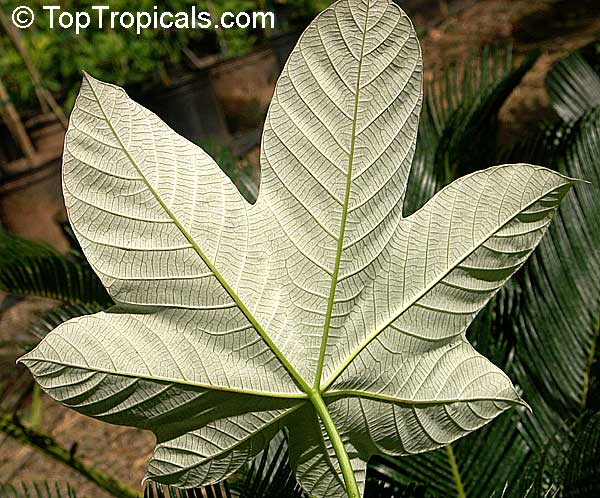
Macaranga grandifolia - Elephant Ear Tree

The very quintessence of tropical foliage luxury

by Mark Hooten, the Garden Doc

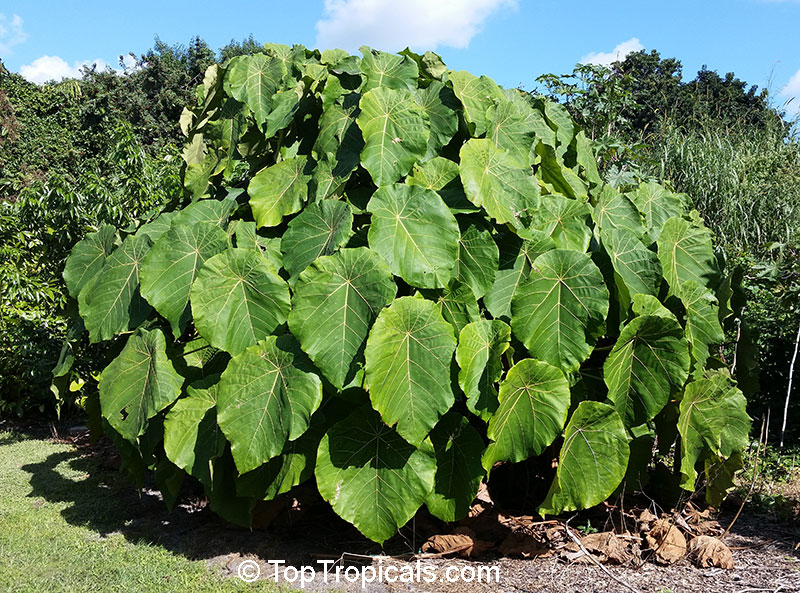
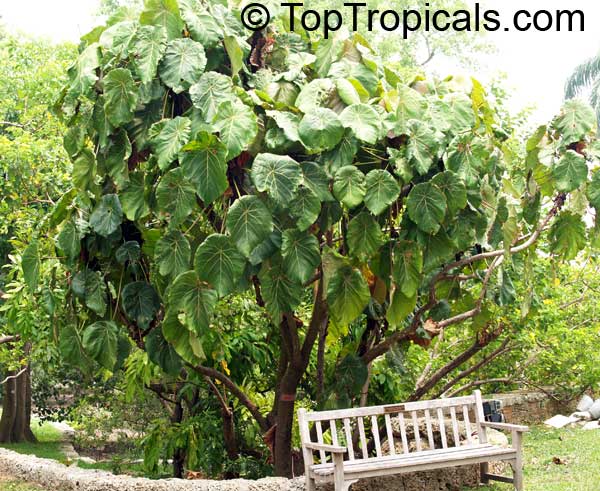
Why is this wonderful little tree so unknown here in Florida? I can only guess it's because people don't see them, and therefor don't know about them, and that basically no nurseries grow them. Yet it's one of the most utterly spectacular foliage plants conceivable... Provided with an appropriately warm climate such as South Florida or elsewhere, there is no reason they should not be seen more often (for purposes of utter awe).

CONTINUE READING >>

Macaranga's genuinely grand foliage much more resembles the ears of actual elephants (esp. the Asian species) than do the leaves of the much more commonly known and grown "elephant ears" meaning certain Alocasia and Colocasia.

Date: 19 Jul 2020

Sugar grains on leaves?

by Mark Hooten, the Garden Doc

Q: On my Stemmadenia tree I noticed tiny drops (like white sand grain or sugar crystals) and wonder if this is a disease or some kind of insect and what can I do about it?

A: Sometimes certain vigorously growing (mostly tropical) plants develop suspiciously-looking tiny "growths" mostly on the undersides of their leaves. Without strong magnification, they can be easily mistaken for mealy bugs, scale insects, or any number of parasitic disease vectors.
However, according to plant pathologists, these are actually harmless excretions actually exuded by the plants themselves. A chemical analysis of these tiny granules shows that they are nothing more than polysaccharides. Polysaccharides are basically complex chains of sugar/glucose molecules which are simply a production of all plants undergoing photosynthesis. Polysaccharides are at the beginning of the entire food-chain. These odd tiny sugar-grained nodules are actually only semi-crystalline complex sugars which certain plants have over manufactured and have had no choice but to excrete through their stomata (breathing pores).
I have personally observed Cecropia, Psychotria, Spondias (Hog Plum), and Guavas doing this... there are many others. Nothing to worry about, they are harmless, but if they bother you - wash them off with a hose water.

Date: 25 Jun 2020

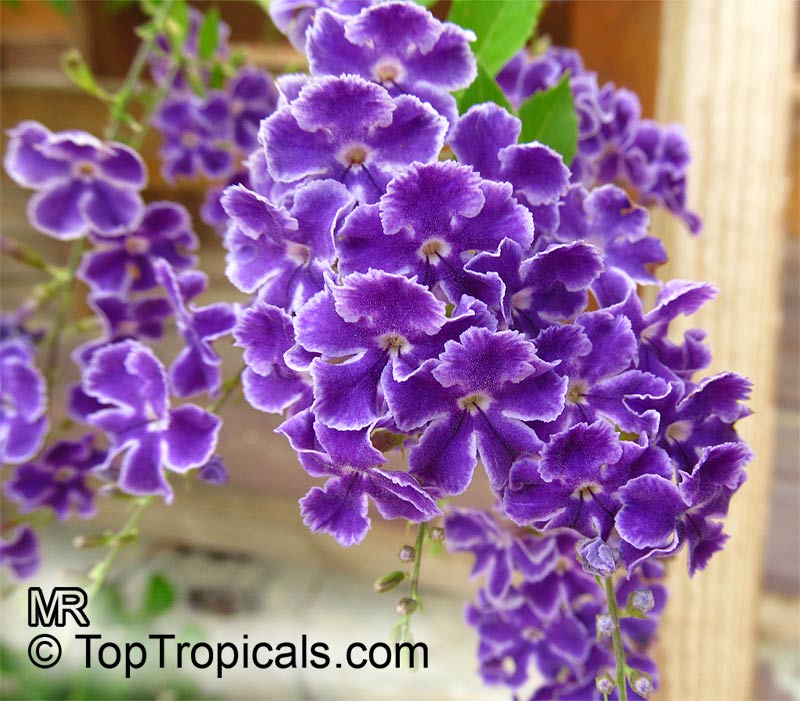
Plant of the Month: Golden Dewdrop - Duranta erecta
Stevie's Pick: what's in bloom?

Our exotic plant grower Steven Gowdy is featuring the most interesting plants he discovers and recommends today while working in TopTropicals greenhouses.

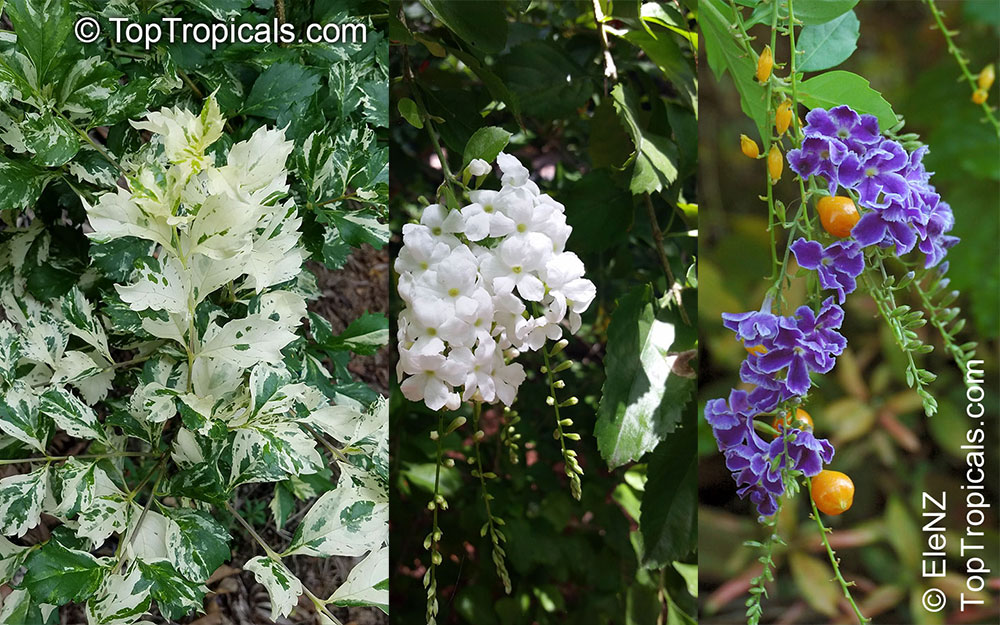
Duranta - Golden Dewdrop - is simply stunning with cascading flowers in abundance. Either it has lavender, blue, or solid white flowers, it is a sight to behold. The popular name Golden Dewdrop is inspired by the clusters of bright orange-yellow berries that follow the flowers, in such quantities that they often cause the slender branches to droop gracefully.
Duranta erecta blooms off and on all year and can be pruned to size as a bush or a standard tree. If let go, it can grow up to 20 feet tall and wide.
Durantas are excellent butterfly and hummingbird attractors. They will complement your tropical garden or a stand alone in your Southern landscape. Great for providing a color contrast in the landscape, they are especially well-suited as a bright-colored background or screening.
White Golden Dewdrop has pure white flowers that appear in loose clusters, and both berries and blossoms are often seen on a plant. This evergreen fast growing shrub spreads and arches to 10 feet tall and wide and is great for live hedges and covering fences and corners.
Variegated variety, also called Variegated Sky Flower, is grown for its summer flowers, and very showy leaves that are dark green with bright white variegation and creamy-yellow margins around the one inch long serrated leaves.. In the summer, cascading clusters of blue tubular flowers appear followed by wonderfully contrasting orange-yellow berries.
In mild climates, Durantas can be in flower nearly year round with flowers and fruit appearing at the same time. It does best in full sun with frequent deep watering and is pretty hardy, to about 20-25F. It is a good choice for espaliers, as a small tree or large bush; all forms benefit from frequent selective pruning. Prune back in late-winter to encourage a more compact shape and strong flush of fresh spring foliage. Requires moderate watering in a well-drained soil.

Date: 17 Jun 2020

The easiest to grow Gardenia

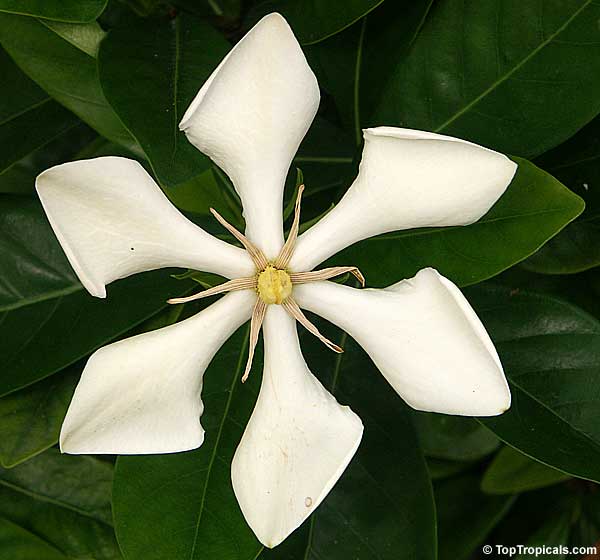
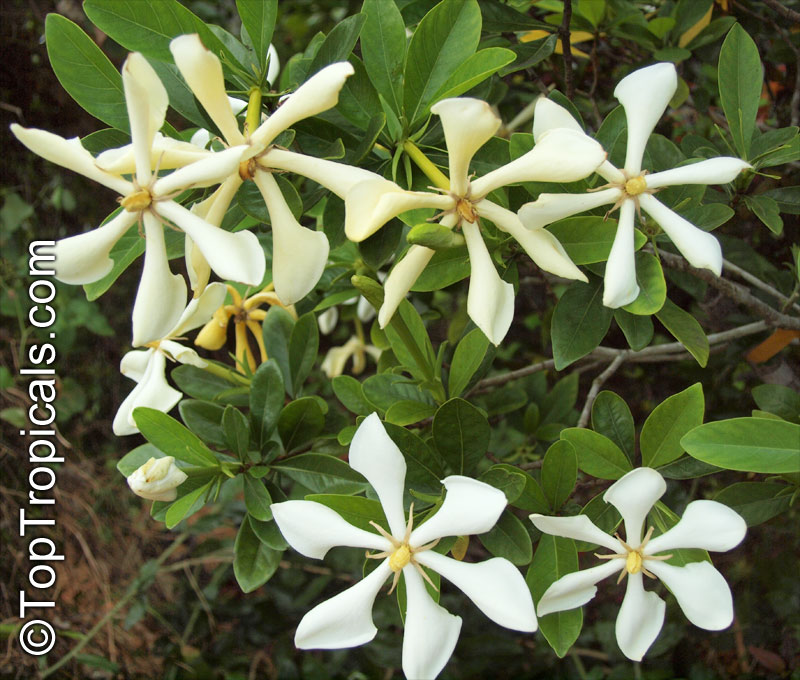
Gardenia (Kailarsenia) vietnamensis

by Onika Amell, tropical plant expert

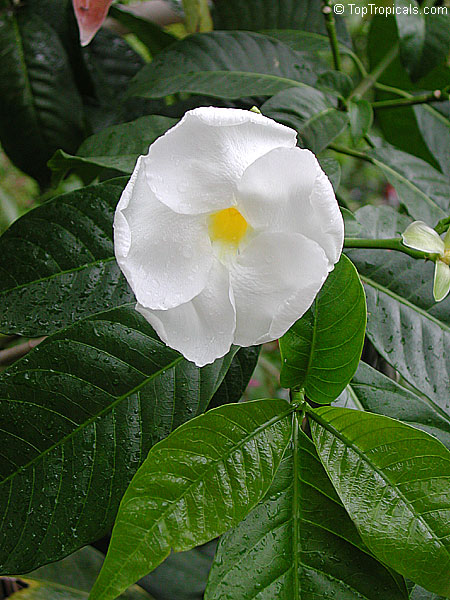
One of the easiest and hardiest Gardenias in our collection is the Vietnamese Gardenia. This plant is much easier to grow than many other Gardenias. It can handle overly moist soils much better, is quite drought tolerant once established and has a high resistance to the typical Gardenia woes. It is hands down also the most cold hardy Gardenia in our collection!

CONTINUE READING >>

Date: 4 Jun 2020

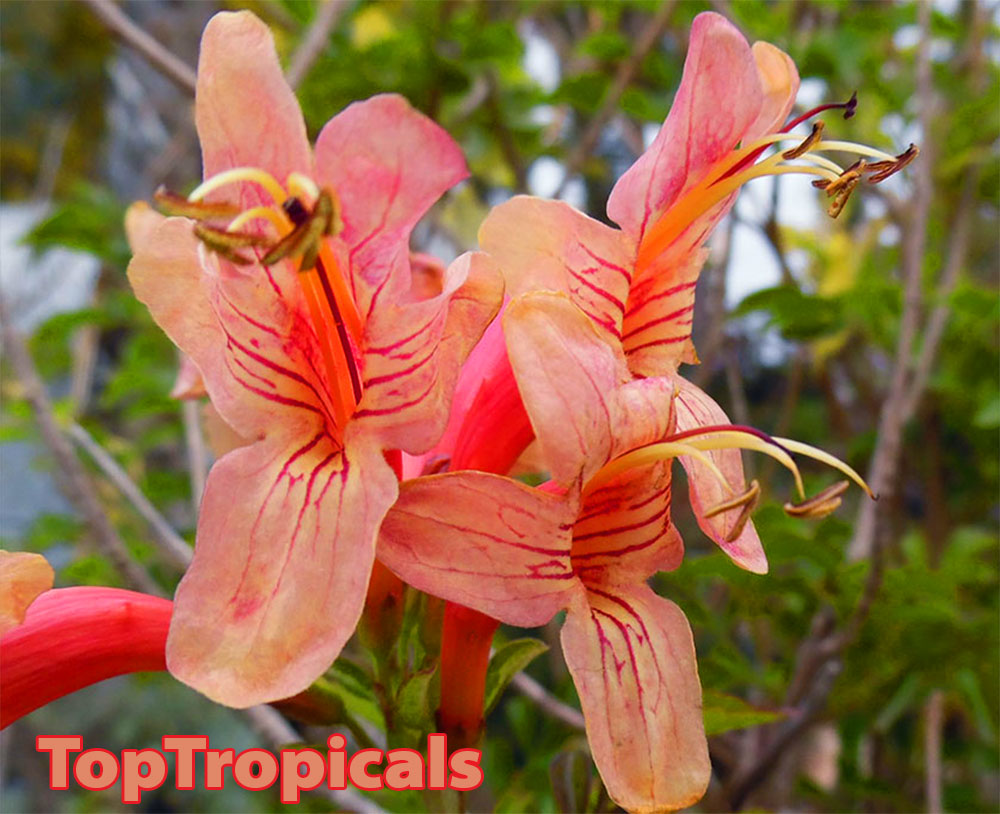
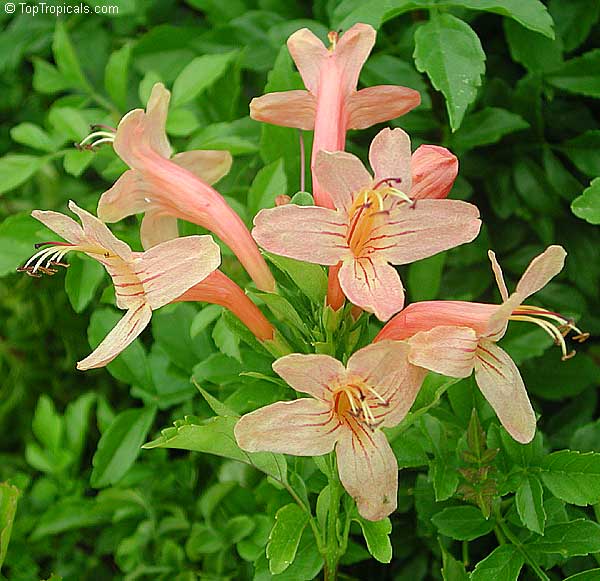
Plant of the Month: Tecomaria capensis Apricot

Stevie's Pick: what's in bloom?

Today we are starting a new column about the most spectacular specials that are in bloom or in fruit today. Our exotic plant grower Steven Gowdy will spotlight the most interesting plants he discovers and recommends today while working in TopTropicals greenhouses.

Summer is in full bloom and everyone is wanting dirt under there nails after being quarantined for two months! Enjoy warm tropical breezes with Apricot flowers of this showy African Tecomaria in your garden.
Tecomas and Tecomarias make a wonderful splash of color in any garden, and apricot is no exception. Tecomaria Apricot has pretty unusual color of flowers, ranging from bright apricot color to light-salmon. Ever blooming in warmer climates, it can grow 3-4 feet high and a whopping 4-5 feet wide. In addition to its beautiful flowers, this plant has many medicinal benefits. An easy fast growing addition to any landscape, it is a great hummingbird and butterfly attractor. It is pretty cold hardy and can tolerate light frost which is a great benefit for gardeners living in subtropical climates with cooler winters.