Garden Blog - Top Tropicals

Date: 10 May 2025

Is Blue Java Banana really blue? Great question!

Ice Cream (Blue Java) Banana - Musa balbisiana x Musa acuminata

🍌 Is Blue Java Banana really blue? Great question!

  • 🔵 The Blue Java Banana, also known as the Ice Cream Banana, really does have a blueish tint when the fruit is unripe.
  • 🔵 It's not bright neon blue, but more of a silvery blue-green or frosty blue tone.
  • 🔵 This cool color is especially noticeable under sunlight and is one of the reasons the variety is so eye-catching.
  • 🔵 Once ripe, the fruit turns pale yellow and has a creamy texture with a vanilla-like flavor, hence the nickname "ice cream banana."


🍌 Ice Cream (Blue Java) is a cold-tolerant hybrid of Musa balbisiana and Musa acuminata, vigorous banana growing 10-15 feet tall and producing 40-60 lb bunches of stout, bluish-skinned fruit with sweet, vanilla-flavored, cream-like flesh that can be eaten raw or cooked.

🆒 Banana #Fun_Facts
  • 🟡Bananas are rich in potassium, which helps regulate blood pressure and supports heart health.
  • 🟡They provide a quick source of energy and are great for post-workout recovery.
  • 🟡The fiber in bananas aids digestion and promotes gut health.
  • 🟡Eat them fresh, add to smoothies, bake into breads and desserts, or use in various savory dishes.
  • 🟡Rubbing the inside of a banana peel on mosquito bites can reduce itching and swelling.


🛒 Blue bananas exist - and you can grow them!

📚 Learn more:


About #Bananas
What are the best varieties of edible Banana and which one should I plant?

#Food_Forest #Bananas

🔴 Join 👉 TopTropicals

Date: 12 Oct 2018

Portlandia - rich hot chocolate with vanilla

TopTropicals.com

From Mark, the Garden Whiz. Since working in the horticultural field for nearly 50 years, at either nurseries or botanical gardens both in Florida and southern California, I have come into contact with a LOT of very cool plants. So many of them in-fact, that it's becoming increasingly difficult to run across new ones that really make me take special notice. Since being at Top Tropicals for a while now, there are a few species I had not met before which really stand out. Among them are a couple of kinds of Portlandia. Continue reading...

See our selection of Portlandias...

Date: 15 Jan 2021

Healthy Plants: Q&A from Mr Booster

New Boosters for the New Year!
Sunshine Total Feed: Orchidasm and Citron

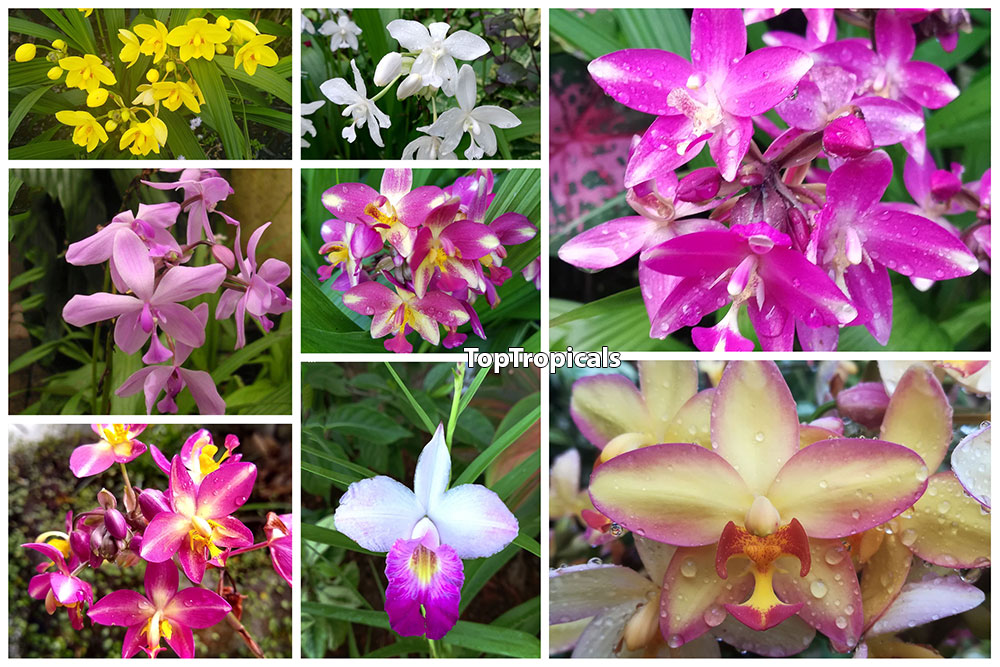
How to grow everblooming orchids?

Q: I ended up with a large collection of orchids that I was given as presents... They grow well but unfortunately after the showy blooms were gone, I don't see any more flowers, just green leaves. What do I need to do to make them bloom again? Should I fertilize them with Azalea bloom booster?

A: Orchids culture is different from garden ornamental plants. First big difference, they are epiphytes, growing in a loose bark medium rather than soil, and benefit from daily mist. Second difference is a type of fertilizer. You can not use a regular garden fertilizer on orchids, because they are very sensitive to salts. Orchids need special, acidic type of fertilizer, very mild in action.
Luckily, Sunshine Boosters formulas are exactly what orchids need! They are amino-acid based, have very mild formulas, and do not create nutrient lock up (building up salts is one of the biggest enemies of tender orchids).
A new Sunshine Boosters Orchidasm TotalFeed is scientifically balanced orchid food that contains all necessary nutrients, including micro-elements, for healthy, happy, vigorous orchids. It can be used as often as daily with every foliage spray. From our testing experience, after using Orchidasm Booster, orchids not only got happy and thriving - they also bloom more often - up to several times a year, shooting new flower spikes one after another! (while normal blooming cycle for most orchids is once a year). It gets even better - the flower display lasts twice longer!
To enjoy these beautiful flowers year around - treat them with Love, give them some Orchidasm!

See more information with pictures in Sunshine Boosters Orchid Blog

Secrets of a healthy Citrus tree

Q: We planted several citrus trees in our yard - Meyer Lemon, Grapefruit and Blood Orange. The trees came from the store full of flowers and even had a few fruit, but a year after planting - no more flowers! The old leaves are green, but new growth doesn't look healthy, leaves are yellowish and have spots, maybe eaten by bugs (?), and how do we get them to fruit?

A: Citrus plants are not the easiest trees to grow; they are susceptible to various diseases, pests, and deficiencies, especially in areas with high humidity/rainfall like Florida. Fungi, viruses, leaf minors, chlorosis - this is not a complete list of citrus common problems. In commercial groves, these conditions are kept under control by using harsh chemicals on solid schedule.
For home gardeners, growing citrus trees may become a challenge. Many people don't want to use harsh chemicals on their edibles; and those who do, may not always have time to apply treatments on a professional schedule. So as much as we all love a fresh juicy orange, growing your own may become quite a pain!
Sunshine Citron TotalFeed is your simple, eco-safe solution to a healthy looking, productive citrus tree with organic fruit! Amino-acid based formula provides all necessary elements to strengthen the tree and make it resistant to possible problems.
Did you know that treatment of leaf chlorosis (yellow leaves with dark green veins), commonly treated with iron supplements, in fact requires a complex combination of nutrients - both balanced NPK and micro-elements?
Use Sunshine Citron in combination with Sunshine GreenLeaf and Sunshine SuperFood and never see yellow chlorotic leaves again!
Apply Sunshine Epi on regular basis (every 2 weeks) and help your tree boost its immune system and stay virus-free.
Add Sunshine Honey, and you will have large, juicy fruit that are much sweeter and more flavorful than those from the store! All these boosters are compatible with each other, and perfectly natural. Eat your fruit safely and enjoy...

Read more about treating citrus tree defficiencies in Sunshine Boosters Citrus Blog.

Date: 10 Jun 2024

Shade Tree Discount Program
How to reduce an electric bill and energy costs?

Cassia  fistula

Photo above: Cassia fistula - Golden Shower Tree - one of the most popular trees. This all time favorite is fast growing and elegant.

Q: How to reduce an electric bill and energy costs?

A: This summer is expected to be hot. And the next summer... and next... Want to reduce your electric bill and energy costs? There is an excellent solution: plant a shade tree! Once fully grown, these trees will help keep your house cooler and lower your energy expenses.

Today we are offering a special discount you can use for purchasing trees that will keep your homes cooler in Summer and gardens warmer in Winter!
Check out Fast Growing Shade Trees, as well as other flowering trees and fruit trees and use discount below:

GETSHADE

Your savings with this code:
5% off orders $100+
15% off orders $150+
20% off orders $200+

Excluding S/H. Excluding 15 gal material. Exp. 6-12-24

Tabebuia  tree

Photo above: Tabebuia - spectacular winter bloomer.

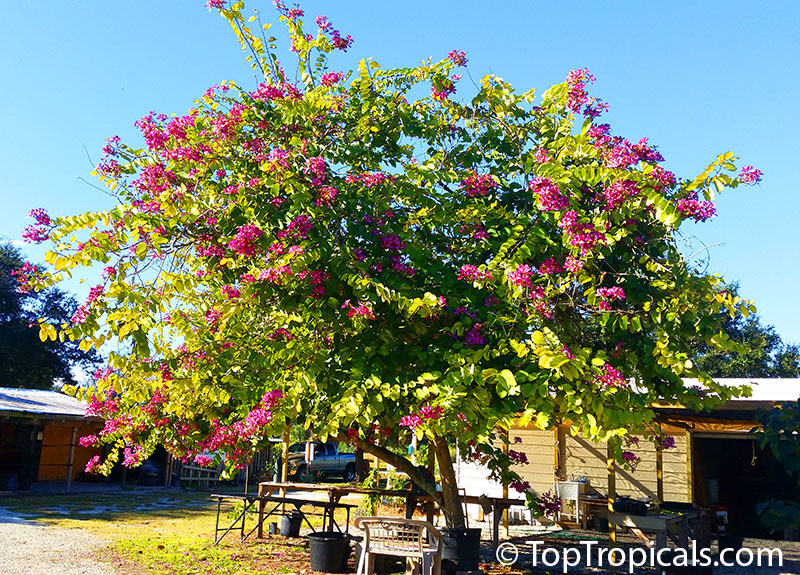
Bauhinia  blakeana  -  Hong  Kong  Orchid  Tree

Photo above: Bauhinia blakeana - Hong Kong Orchid Tree. The most beautiful of all orchid trees.

Mango  trees  with  fruit

Photo above: Mango trees now. Many varieties are vigorous, large trees.

Cattley  guava  tree

Photo above: Cattley Guava Tree is an elegant solution for small spaces. Red Button French Kiss Ginger goes well with it!

Date: 25 May 2025

Botanical bedhead: curly, crazy, and full of surprises

Epiphyllum guatemalense - Curly Locks

Epiphyllum guatemalense - Curly Locks

Epiphyllum guatemalense - Curly Locks, leaves

Epiphyllum guatemalense - Curly Locks, leaves

Epiphyllum guatemalense - Curly Locks, fruit

Epiphyllum guatemalense - Curly Locks, fruit

Botanical bedhead: curly, crazy, and full of surprises

  • This wild-looking jungle cactus doesn't grow straight - it spirals, twirls, and twists! Meet Epiphyllum guatemalense Monstrosa - Orchid Cactus, or Curly Locks.
  • A natural mutation of Epiphyllum guatemalense, Curly Locks creates a tangled cascade of curly stems that look like botanical noodles!
  • Perfect for hanging baskets, it blooms fragrant, orchid-like flowers at night and produces juicy, edible pink fruit.
  • It's self-pollinating and thrives in bright, indirect light. Let it get root-bound to encourage blooms, and water moderately.
  • A must-have oddity for cactus lovers and collectors!


🛒 Get the curly cactus now

📚 More about exotic epiphytic cacti:


Disocactus ackermanni - Red Orchid Cactus
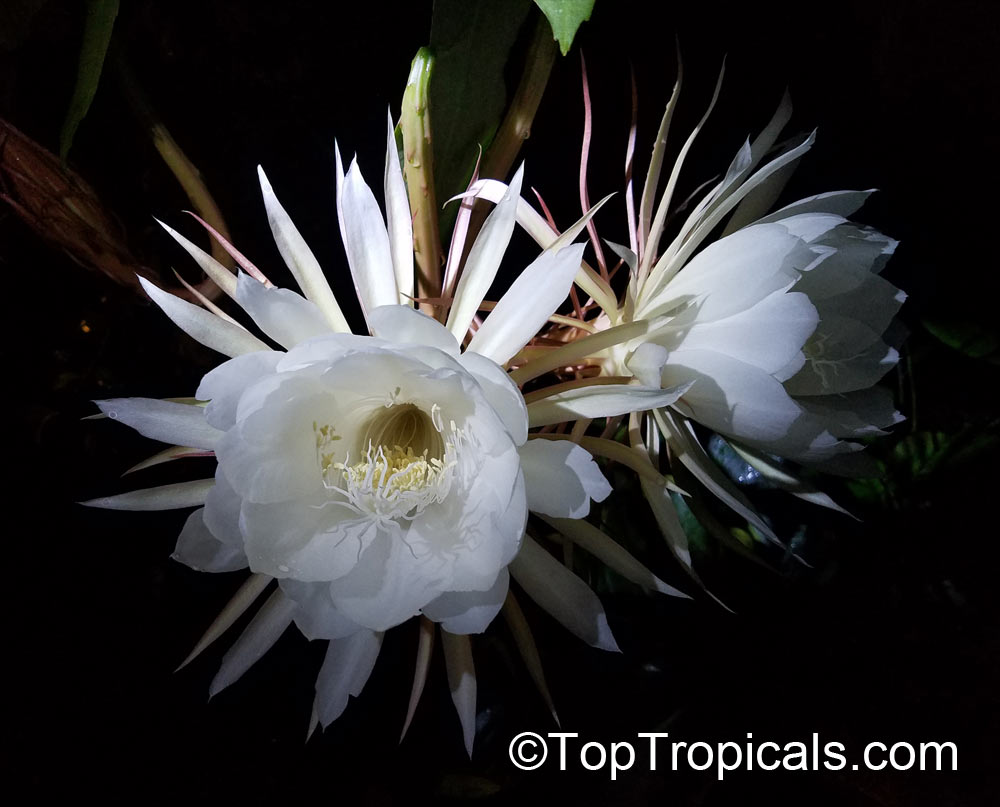
Epiphyllum oxypetalum - Queen of the Night
Pseudorhipsalis (Wittia) amazonica - Blue Flame

#Fun_Facts #Container_Garden #Shade_Garden #Nature_Wonders

🔴 Join 👉 TopTropicals