Garden Blog - Top Tropicals

Date: 18 Apr 2026

The Secret to a Sharper Mind Might Be Growing in Your Backyard
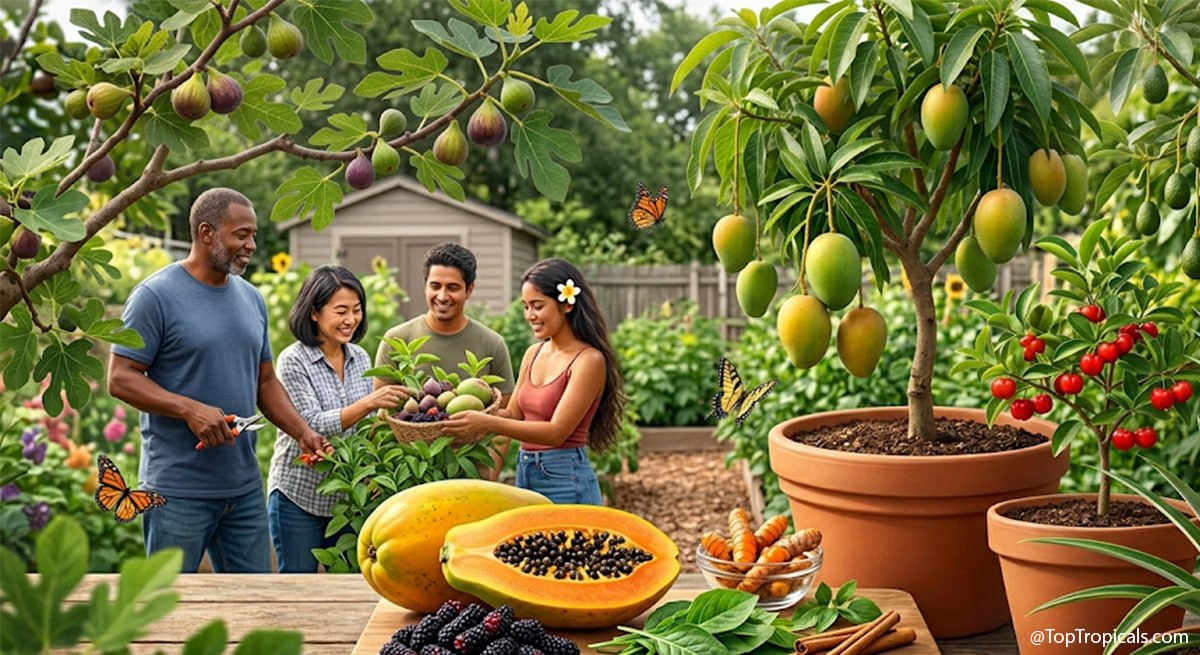
Harvesting tropical fruits

Harvesting tropical fruits

The Secret to a Sharper Mind Might Be Growing in Your Backyard


Your garden shed might hold a more powerful tool for brain health than your medicine cabinet. What if the best defense against cognitive decline isn’t found in a pill bottle - but right outside your door? While we often think of gardening as just a hobby, new research suggests that the combination of physical "zone-pushing" and harvesting your own nutrient-dense tropical fruit could be a literal life-saver for your brain.
  • 🍒 What the Research Actually Says


    A massive study recently published in the journal Neurology followed more than 92,000 people to see how diet impacts the mind. The findings were clear: the quality of the plant-based foods you eat plays a massive role in your risk of dementia. It isn't just about "eating your veggies" - it's about which ones you choose.
    (The full study: Plant-Based Dietary Patterns and Risk of Alzheimer Disease and Related Dementias in the Multiethnic Cohort Study)
  • 🍒 Why Growing Your Own Fruit Changes the Game


    If you grow your own fruit, you quietly solve two problems at once. It turns a "diet plan" into a natural part of your day.

    1. Effortless Nutrition
    When a ripe mango, a handful of mulberries, or a fresh guava is hanging within arm's reach, you eat it. It replaces processed, sugary snacks without any "willpower" required. You are naturally moving toward the high-quality, whole-food diet the research supports.

    2. Functional Fitness
    Gardening doesn't feel like a workout, but it is. Bending, pruning, carrying pots, and digging are all forms of functional movement. It’s steady, useful physical activity that supports your heart and brain while you’re focused on your plants.

    3. The "Outdoor" Effect
    Sunlight and fresh air are natural mood boosters. The mental focus required to manage tropical plants - especially when you’re protecting them from a surprise freeze - provides a level of mental engagement and stress relief that you just can't get from a treadmill.
  • 🍒 What to plant if you are just starting


    You don’t need a massive orchard to start investing in your brain health. One or two plants can shift your habits immediately.

    For Fast Results: Papaya and Mulberries produce fruit quickly and are incredibly easy to manage. Turmeric (curcuma), leafy greens (Longevity spinach, Katuk) and Cinnamon proved instant harvest.
    For Small Spaces: Dwarf Mango varieties and Cherries (Eugenias or Acerola), Pineapples thrive in containers and provide massive doses of antioxidants.
    For the "Zone Pusher": Figs and cold-hardy Avocados offer healthy fats and fiber that are essential for long-term health.
  • 🍒 Start Small, Start Now


    The research makes one thing clear: improving your food quality matters, and you can see results no matter your age. Planting a fruit tree changes what you eat, how you move, and how often you step outside.
    That’s more than just gardening - that’s a lifestyle shift your brain will thank you for.
  • 🍒 FAQ


    Does fruit really support brain health?
    Yes. Diets rich in whole, high-quality plant foods are linked to a lower risk of dementia, especially when they replace processed snacks and added sugars.

    Is gardening enough to count as exercise?
    Absolutely. Regular gardening provides steady, functional movement that improves circulation and supports overall physical health.

    Is it too late for me to start?
    No. The study showed that even participants who improved their diet quality in their 60s and 70s saw a measurable reduction in dementia risk.


🛒 Start your tropical fruit journey

Guava · Mango · Mulberry · Papaya · Pineapple · Avocado · Cherries · Figs

📚 Learn more:


#Food_Forest #Remedies #Discover

🟢 Join 👉 TopTropicals

Date: 24 Jun 2018

TopTropicals

Fruitful Fruit and SuperFood...

Q: I have a large fruit garden here in Florida with many mango trees, avocadoes, guavas, and other tropical fruit. Last year hurricane Irma and flooding killed a few avocado trees, but mangos and guavas survived OK, but the sad part is, very few flowers this year and almost no fruit setting. I noticed on your website your Superfood and Sunshine-Honey boosters that supposedly help fruiting? But I am afraid it is too late now as your instructions say first application must be in early Spring? I wish I discovered earlier that my trees wouldn't want to fruit this year...

A: First of all, it is never late to give the food! You may start applications of SUNSHINE products at any time of the year. The best results will be achieved once you treat your plants on regular basis throughout the whole year cycle of metabolism.
Couple weeks ago we started harvesting our 2 guava trees. These two are the same variety (Variegated Honeymoon), planted within 20 ft from each other and growing in the same conditions. The only difference was, one was treated with SUNSHINE-Honey and SUNSHINE-SuperFood, and another one didn't get any treats in order to have a control plant.
Results are very interesting, see the picture. Both trees were heavily covered with fruit. However the one with treatments developed fruit that is much larger, much sweeter and juicier, and the most interestingly - with less seeds, almost no seeds!
To answer your question: yes, you can start feeding your fruit trees right now. It is still a Springtime. Many mango varieties have late season; even early varieties may delay their fruiting if flowering triggered by miscro-elements. Guavas have very long season and most varieties can have multiple crops throughout Summer-Fall.
Here is a simple and affordable feeding schedule to help your fruit garden recover from last year hurricane stress, and establish reliable production:
1) SUNSHINE-E - for boosting metabolism - once a month
2) SUNSHINE-Honey - for bringing sugars to the heart of the tree and boosting fruit sweetness and quality - now and in 2 weeks
3) SUNSHINE-SuperFood - for overall health, recovering from hurricane and fixing root damage from flood - now and every 2 weeks throughout warm season.
4) You may apply regular balanced fertilizer NPK as usual (we apply once a month, a handful per in-ground tree)
It's that simple. Just try and watch your trees produce again!

Check out all SUNSHINE boosters... We offer FREE shipping on them, so you can make your plants happy!

Date: 11 Mar 2026

📅 Do Not Miss: March 21 - Spring Equinox Plant Market

🍩 Saturday, March 21, 2026: 9 am - 4 pm

Smokey  the  tuxedo  cat  in  work  clothes  studies  the  Spring  Equinox  Plant 
 Market  poster  at  the  Top  Tropicals  nursery  entrance  while  Sunshine  the 
 ginger  tabby  cat  rides  a  bicycle  balancing  coffee  and 
 donuts.
Sunshine: Smokey, look at me! See what I can do on my bike? I'm practicing to give people what they like: coffee and donuts.

Smokey: You'd be perfect for a Gulf beach cafe. But gardeners don't come here for donuts.

Sunshine: Really? Then why do they come?

Smokey: Some gardeners lost plants to the freeze. Others want trees that will handle winter better. Cold-hardy avocados. Macadamia. Grumichama. And some just come for fun - to see the PeopleCats.

Sunshine: And my charm... and my donuts will make it more fun.

Read more about Smokey & Sunshine

Ft Myers Garden Center: 13890 Orange River, Ft Myers, FL
Sebring B-Farm : 9100 McRoy Rd, Sebring, FL

More Spring Equinox Plant Market details

🌞 Welcome to our Spring Equinox Plant Market, proudly hosted by the PeopleCats of Top Tropicals.

This one feels different.

After Florida’s record freeze, many gardens are brown, trimmed back, or missing a few old friends. We felt it too. And now - we rebuild.

The equinox marks equal day and night. More light ahead. New growth beginning.

And the PeopleCats are ready🐾.

  • 🐱King is back on gate duty - inspecting every vehicle for proper plant-hauling capacity.
  • 😺Paisley is rearranging freeze survivors and new arrivals like a design consultant.
  • 😼Snitch is supervising recovery efforts from a comfortable chair.
  • 😸Persephone is checking under tables for "hidden spring energy."
  • 😻Sushi and Loki are preparing for guided garden tours - recovery edition.

This is not just a plant market. This is the spring reset.

👍 Why You Should Come

It is finally warm in Florida. After several nights of hard freeze, some plants survived - and some didn’t. This event is your chance to see real freeze champions in person.

If you lost plants, you are not alone. If you are ready to plant smarter, this is your moment.

Walk the gardens. See proven winter survivors. Discover cold-hardy fruit trees and resilient ornamentals. Get practical advice about replanting after freeze. This is rebuilding - Florida style.

♥️ What Makes This Event Special

We are featuring:

  • Verified freeze survivors
  • Cold-hardy fruit trees
  • Tough flowering trees and shrubs
  • Replacement plants for damaged landscapes
  • Smart layering ideas for frost-resilient gardens
  • You will see which species handled 25F with wind and multiple nights of freeze - with no protection.

Real-world test. Real results.

Cold hardy fruit favorites include:

🌸 Cold hardy subtropical flowering trees including:

And many other cold hardy plants

🎉Event Highlights

  • 30% OFF online prices
  • FREE plants with purchase
  • $5-10 specials
  • Exciting raffle prizes

🌳Don't just mow - grow!

Start your food forest, beat rising prices, and plant a future your family will thank you for.

🌿 Friendly Reminder
Just a quick reminder before we go: Sunshine Boosters are still shipping free. If you were thinking about stocking up for the season, now is a great time to do it while the offer is still active.

🛒 Feed your plants

Date: 19 May 2016

Care of mail-order plants during hot summer

Q: I live in California and about a month ago ordered several plants from you, including fruit trees (Carambola, Mango, Avocado) and flowering trees (Xanthostemon, Adeniums, Champaca, Ylang Ylang). They were all doing well until I tried to move them into full sun, when they got leaf burn immediately. Ylang Ylang was doing great in a shade, but I repotted it from 1 gal into 3 gal and it is drooping leaves now. It has been very hot (over 100F) and dry (humidity is less than 25%). Any suggestions?

A: Hot summer can be pretty challenging time for establishing new plants. These are some guidelines to make your summer gardening more successful and rewarding.

1. You can order plants at any time, but keep your eye on your local weather forecast and try to chose cooler periods to schedule your plant shipments. Here at TopTropcals we monitor weather at destinations, and we can also delay shipment per your request until more favorable conditions.

2. During hot Summer months, many plants are still OK to ship, and to be planted, many species are heat tolerant. It's usually safe to ship most succulents, including Desert roses and Euphorbias. Some fruit trees are pretty easy too, like Loquats, Mango, Eugenias. Many flowering trees can take heat: Acacias, Clusias, Jatropha, Sausage Tree, Plumerias and many others. Check our full list of plants suitable for hot and dry conditions. Most jasmines, including Jasmine Sambac and Trachelospermum make also a safe choice for hot weather planting.

3. Use shade cloth or simply white sheets to protect young plants and new plantings from hot sun.

4. When establishing mail ordered plants during hot weather, keep them in shade for longer period of time than average recommended 1-2 weeks. Give them a chance to establish really well. In areas with low air humidity, try to create a simple mist system. It can be purchased in your local Home Depot for only $20 and set up takes only 10 minutes! It makes a big difference and can help you save many plants from hot weather stress.

5. Although it may seem that during hot weather plants need more water due to high evaporation, be careful with watering, and check soil with your finger before watering - don't water if it is still wet. Combination of "hot and wet" can be as harmful for the root system as "cold and wet" during winter. Protect root systems from overheating: covering black pots with white cloth will work. Remember when temperature is above 90F, most of plants slow down their metabolism, which means roots slow down or even stop pumping water and become more vulnerable to overwatering. For the same reason, do not hurry to step up into bigger container if roots haven't filled yet the existing pot.

Date: 27 Aug 2024

What trees will fruit quickly? Top 10 fast-fruiting trees

What trees will fruit quickly? Top 10 fast-fruiting trees

🥭 What trees will fruit quickly? Top 10 fast-fruiting trees


Q: I would like to plant several fruit trees... I am 85 years old and hope to see them fruiting soon. What fruit trees can you recommend that will fruit quickly?

A: Most grafted fruit trees, such as Mango, Avocado, and Peaches, will fruit quickly - often within the same year or the next. There are also many wonderful tropical fruits that will produce for you within a year or two, even without the need for grafting.

⚠️ In our next posts we will introduce to you the top 10 of most popular, most rewarding and easy to grow fast fruiting tropical trees...

📚 Discover 10 fast-fruiting trees in the following posts:
1. Annona - Sugar Apple, Custard Apple
2. Guava (Psidium sp.): Cattley and Tropical guava
3. Eugenias - Tropical Cherries
4. Barbados Cherry (Malpighia glabra)
5. Loquat (Eriobotrya japonica)
6. Papaya (Carica papaya)
7. Mulberry (Morus hybrids)
8. Carambola - Starfruit (Averrhoa carambola)
9. Blackberry Jam Fruit (Randia formosa)
10. Peanut Butter Tree (Bunchosia argentea)

Stay with us and make sure to subscribe! ⬇️

🛒 Shop fast fruiting tropical trees

#Food_Forest

🔴 Join 👉 TopTropicals