Date: 24 Jun 2018
Spring is coming, plants need food! Time to fertilize...
Last winter was long and snowy in the most part of our
country. Hold on fellow gardeners up North, it is almost
over!
Here in Florida we have been blessed again with a mild
winter without serious cold snaps. Early Spring that is
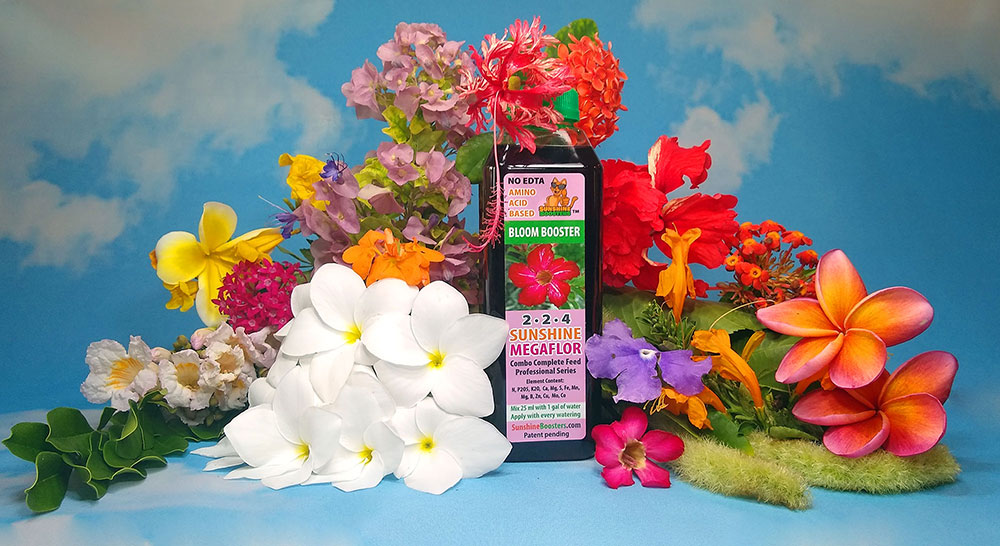
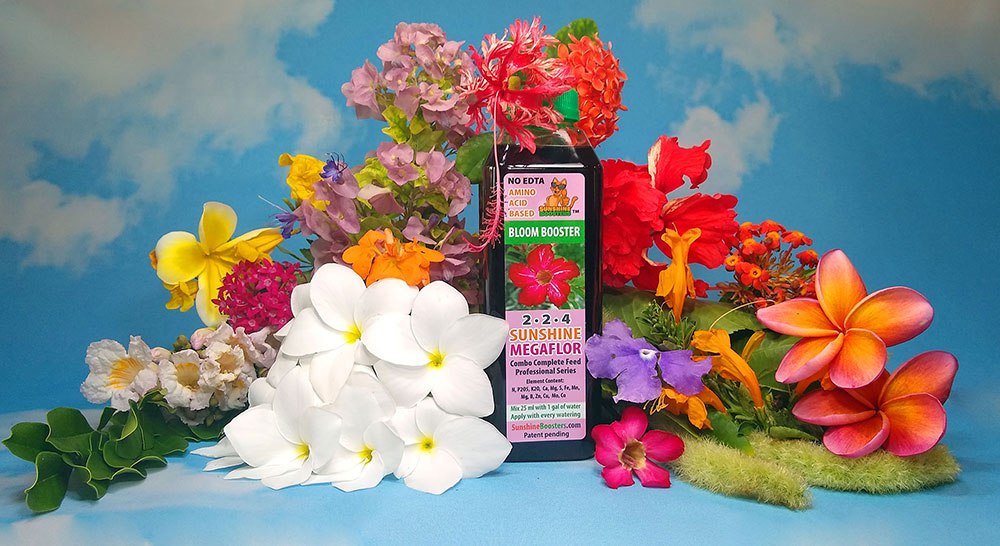
already in the air. Look at this picture of flowers in our
front yard now.
If the weather is already warm in your area (low
temperatures above 55), it is time to start fertilizing.
We are sending our love and support to tropical Puerto
Rico suffered from hurricane last year, and will be happy
to help you guys to restore your lost gardens!
CHECK LIST
what
to do to give your garden a good kick start:
1. Slow release granulated food. Apply Slow Release Fertilizer and
continue once a month. 1 tsp per gallon of pot, or a
handful for in-ground plants. This will provide essential
macro elements (NPK) required for a plant growth.
2. Water soluble micro-elements. Besides
macro-elements, plants need many other elements that most
of the time missing in soil. A lack of micro-elements
causes different deficiencies, resulting in weak root
systems, slow growth, deformed leaves, leaves yellowing,
lack or no flowers/fruit. Apply these supplements as a
foliar spray once a month to induce healthy growth and
flower/fruit development. We recommend the following
micro-element products to keep your plants healthy and
vigorous year round:
a) SUNSHINE SuperFood - plant
health booster. This revolutionary new liquid complex
contains ALL microelements needed and can fix all possible
problems occuring to your tropical plants - from roots to
flowers and fruit. We have convenient dropper bottles of 5 ml for small plant
collections, 50 ml for larger gardens, and
100 ml for professional
landscape applications.
b) SUNSHINE-Micro - Microelement
booster - for common iron deficiency (pale leaves)
c) SUNSHINE-Super-Iron -
Microelement booster - for severe iron deficiency
(severe yellowing leaves)
3. SUNSHINE plant boosters -
SUNSHINE-E, -BC (caudex plants and bonsai), -H (house
plants). Apply these natural plant stimulants to
help plants recover from cold, dormancy, increase plant's
metabolism and make a plant more readily absorb both
Macro- and Micro-elements. SUNSHINE boosters also will
help plants grow vigorously, withstand Summer heat and
drought, and produce bigger and better flowers and fruit.
4. Kickstart a sweeter fruit. To get a better and
sweeter crop in Summer and Fall, you need to start first
application now. SUNSHINE Honey - is natural,
Amber-colored, honey-like liquid microelement product for
fruiting and edible plants that will make them sweeter,
tastier and more flavorful! Very effective for tropical
fruits, tubers, vegetables. Great for tropical fruit
trees: Mango, June Plum, Annonas, Tropical Cherries,
Carambola, Citrus; subtropical fruit trees: Peaches,
Apricots, Loquat and berry plants (blackberry, mulberry,
etc.)
5. SUNSHINE-S. Don't
forget to plant seeds! It's a perfect timing
now to start your tropical garden indoors even if it is
still cold outside. Soak them in SUNSHINE-S solution to
increase germination rate.
See full list of SUNSHINE boosters
Date: 19 Oct 2025
Sunshine, food, and medicine for the soul
😳 Sunshine, food, and medicine for the soul
"Flowers always make people better, happier, and more helpful; they are sunshine, food, and medicine for the soul." - Luther Burbank
🐈📸 Cat Bob during his rare Zen time at TopTropicals PeopleCats.Garden.
#PeopleCats #Quotes
🟢 Join 👉 TopTropicals
Date: 9 Nov 2025
Edible cactus with health benefits that your tortoise will love too
Opuntia cochenillifera - Velvet Nopal Cactus, Nopales, Prickly Pear, leaves and flower
Opuntia cochenillifera - Velvet Nopal Cactus, Nopales, Prickly Pear, leaves
Opuntia cochenillifera - Velvet Nopal Cactus, Nopales, Prickly Pear, leaves and flowers
Opuntia cochenillifera - Velvet Nopal Cactus, Nopales, Prickly Pear, large plants
🐢 Edible cactus with health benefits that your tortoise will love too
- 🌵 Opuntia cochenillifera - Velvet Nopal Cactus, Nopales, Prickly Pear - is one of the most useful and forgiving cactus species you can grow. Unlike most desert cacti, this one thrives even in humid tropical climates like Florida, making it one of the few rain-tolerant cacti that actually loves moisture. Fast-growing and ornamental, it produces bright red flowers and makes a beautiful, low-maintenance landscape plant that thrives in heat, drought, and even neglect.
- 🌵 Prickly Pear is a very valuable edible, used as a vegetable with impressive medicinal properties. The young pads, called nopales, can be stir-fried or sauteed with onions and garlic for a tangy, nutrient-rich side dish.
- 🌵 In Hispanic cooking, this plant is known simply as Nopal or Nopales – a traditional ingredient used in dishes like ensalada de nopales (nopal salad), nopales con huevo (eggs with cactus), and nopales asados (grilled cactus).
- 🌵 Regularly eating Nopales has been linked to improved blood sugar control, and many people who include it in their diet report significant help in managing diabetes.
- 🌵 Nopales is also a favorite treat for tortoises and other herbivorous pets. Its smooth, spineless pads are packed with hydration and nutrients, making it a safe, natural food source.
- 🌵 So, this is not just a cactus - it’s a food, medicine, and ornament all in one. Tough, beautiful, and endlessly useful!
🛒 Plant your own food and pharmacy Nopales
#Food_Forest #Remedies
🟢 Join 👉 TopTropicals
Date: 15 Dec 2025
9 tropical vegetables to grow indoors, or how to have garden-fresh produce all year
🌱 9 tropical vegetables to grow indoors, or how to have garden-fresh produce all year
Cold weather does not have to mean the end of homegrown food. According to Southern Living, vegetables like lettuce, carrots, and radishes can be grown indoors during winter. The downside is that most of these are annuals - you harvest once, then start over.
Tropical vegetables work differently. Many are perennial, long-living plants that grow well in containers and keep producing for years. Grow them indoors year-round, move them outside in summer for extra sun and growth, then bring them back indoors before cold weather. With enough light and regular care, these plants can provide fresh harvests in every season.
✅ Tips for growing tropical vegetables indoors
- 📍Place plants near a bright window or supplement with grow lights for steady growth
- 📍Use containers with good drainage and quality potting mix
- 📍Keep plants away from cold drafts and heating vents
- 📍Rotate pots and prune regularly to encourage fresh, tender growth
- 📍Feed regularly with natural Sunshine Boosters - they are formulated for edibles
✅ Tropical vegetables to grow indoors
- 🌿 Gynura procubens - Longevity Spinach, Cholesterol spinach - a fast-growing leafy green often called a superfood. The tender leaves are used fresh or lightly cooked and can be harvested repeatedly. This plant stays compact, handles containers easily, and regrows quickly after cutting.
- 🌿 Sauropus androgynus - Katuk, Tropical Asparagus. One of Southeast Asia’s most popular leafy vegetables. Katuk produces edible shoots and leaves that are cooked in soups and stews. It grows well indoors and rewards regular harvesting with constant new growth.
- 🌿 Cymbopogon citratus - Lemon grass: a tough, productive plant that adapts well to container growing. The stalks and leaves are used for teas, soups, and flavoring. Indoors, it grows more slowly but stays productive, especially when moved outdoors in summer.
- 🌿 Lippia dulcis - Aztec Sweet Herb, Sweetleaf: a low-growing herb with naturally sweet leaves. The foliage can be eaten fresh or used as a sugar substitute in teas and desserts. It stays compact, tolerates pruning, and performs well in pots indoors.
- 🌿 Piper sarmentosum - Vietnamese Pepper, Lalot: grown for its aromatic, edible leaves rather than peppercorns. The leaves are eaten fresh, cooked, or used as food wraps. This plant stays manageable indoors with light pruning.
- 🌿 Piper nigrum - Black Pepper: the true black pepper vine. Grows well indoors as a container vine with support. It prefers warm temperatures, steady moisture, and bright filtered light.
- 🌿 Piper auritum - Root Beer Plant, False Kava-Kava: close relative of Piper methysticum (Kava-Kava) known for its large, fragrant leaves with a spicy, root beer-like aroma. The leaves are used for wrapping foods and flavoring dishes. Best grown indoors with room for its bold foliage.
- 🌿 Piper betle - Betel leaf: a traditional edible and medicinal leaf used widely in Asia. The glossy leaves are harvested continuously and used fresh or as wraps. This vine grows well indoors with warmth, humidity, and a small trellis.
- 🌿 Piper longum - Indian Long Pepper, Pippali, Bengal Pepper: A tropical pepper relative grown for its elongated spice fruits and edible leaves. Slower to fruit indoors but easy to maintain as a leafy spice plant in containers with bright light and regular feeding.
Tropical vegetables make indoor gardening more rewarding because they do not stop after one harvest. With containers, light, and basic care, these plants can become long-term food producers that move seamlessly between indoors and outdoors - keeping fresh flavors within reach all year.
🛒 Explore tropical edibles, herbs and spices
📚 Learn more:
🎥 Karkade Tea
Longevity Spinach
#Food_Forest #Remedies #Container_Garden #How_to #Discover
🟢 Join 👉 TopTropicals
Date: 2 Jan 2026
Velvet Nopal tacos: quick-n-fun exotic recipes
🍴 Velvet Nopal Tacos
Ingredients
- 2 to 3 tender velvet nopal pads (Opuntia cochenillifera)
- 1 small onion, diced
- 1 small tomato, diced
- 1 tablespoon vegetable oil
- Salt to taste
- Corn tortillas
Instructions
- Remove spines from nopal pads and slice into strips.
- Boil the sliced nopal for 5 minutes, then drain well.
- Heat oil in a pan and saute onion until soft.
- Add tomato and cooked nopal, season with salt, and saute until tender.
- Serve warm in corn tortillas.
🌵 About the plant:
Nopal Opuntia (prickly pear cactus pads) is a cornerstone vegetable in Mexican cuisine and a long-standing staple across Central and South America. It is valued both as food and medicine. Traditionally eaten sauteed, grilled, or stewed, nopal is rich in fiber, minerals, and antioxidants. It is especially well known for its role in blood sugar management - many people who eat it regularly report significant improvement in diabetes control.
🌱 In the garden:
Prickly pear is a fast-growing, tough desert plant with showy red flowers. It thrives on neglect, tolerates drought, and also handles Florida rain surprisingly well. Easy to grow, productive, and edible, it is one of the most practical food plants you can add to your landscape.
🛒 Add Nopal Cactus to your kitchen garden
📚 Learn more:
- Opuntia cochenillifera - Velvet Nopal Cactus, Prickly Pear in Plant Encyclopedia
- Edible cactus with health benefits that your tortoise will love too
#Food_Forest #Recipes #Remedies
🟢 Join 👉 TopTropicals