Garden Blog - Top Tropicals

Date: 6 Oct 2025

The hot Guyanese secret to perfect skin

Biquinho Pepper (Capsicum annuum x chinense) and Wiri Wiri Pepper (Capsicum frutescens)

❗️ The hot Guyanese secret to perfect skin 💥

🌶 Who said Peppers can't be cute? These two little fireballs prove otherwise! They might look small, but they’re full of personality, flavor, and heat.

🌶 Biquinho Pepper (Capsicum annuum x chinense)
This heart-shaped hottie is an ancient hybrid between bird pepper and habanero is as beautiful as it is flavorful. Each tiny 1-inch red pepper packs a fruity, tangy punch with just enough heat to make your taste buds dance. Perfect for container gardens, Biquinho peppers decorate the plant like tiny red ornaments – and they’re just as tasty in pickles, salsas, or fresh salads.

🌶 Wiri Wiri Pepper (Capsicum frutescens)
From the kitchens of Guyana comes a true legend - the Wiri Wiri pepper. These little berry-shaped peppers turn from green to orange to bright red, bursting with intense heat and flavor. Guyanese chefs swear by it - it's the secret behind their famously spicy, flavorful dishes. Locals even say it’s the reason they live long, have glowing skin, and look amazing… it's not just spice, it's magic!

🌶 Fun facts:


· Both peppers belong to the same botanical family as potatoes, tomatoes and eggplants.
· What makes them special isn't just the heat - it's the flavor!
· True pepper lovers know that great peppers are about depth, aroma, and the fruity fire they bring to every meal.

🌶 Growing tips:
Feed your peppers with Sunshine C-Cibus plant booster for abundant crops and extra flavorful fruits. These compact plants thrive in containers and bring tropical flair to patios, balconies, or edible gardens.

💥 These two peppers are a must for spice lovers - intense fruity habanero flavor packs quite a bang!
Extremely showy, these ornamental peppers have culinary benefits and are great for container garden.

🛒 Add the flavor of Hot Peppers to your garden and kitchen

📚 Learn more:

Yellow Lantern Chili Plant Facts

Botanical name: Capsicum chinense
Also known as: Yellow Lantern Chili
USDA Zone: 9 - 11
Highligths Small plant 2-5 ftSemi-shadeFull sunWatering: Regular. Let topsoil dry slightlyWhite, off-white flowersSpice or herb plantIrritating plant
Get personalized tips for your region

Hot-hot-hot HEART! How hot is it?
Wiri Wiri Pepper: how to live long and have a great skin.
📱 How to grow the hot Wiri Wiri and Biquino Peppers

#Food_Forest #Container_Garden

🟢 Join 👉 TopTropicals
Date: 4 Oct 2025

The secret tree behind Chanel No 5 perfume

Ylang-Ylang (Cananga odorata), Chanel No 5 Tree

👑 The secret tree behind Chanel No 5 perfume


⭐️ Ylang-Ylang (Cananga odorata, Chanel No 5 Tree) is the tree behind the worlds most famous fragrance - Chanel No. 5. Its golden, star-like flowers drip from the branches with a scent so powerful you can smell it from yards away.

⭐️ Native to Indonesia and Southeast Asia, this tropical evergreen can reach impressive heights, yet it blooms almost year-round, covering itself in clusters of perfumed flowers. This is one of the most beautiful, fast growing and beneficial flowering trees for Southern landscapes.

⭐️The fragrance shifts as the blooms age, from green to lemon yellow to deep golden, each stage producing an intoxicating scent prized in perfumery and aromatherapy. Even without flowers, its tiered branches and glossy leaves create a striking, almost Christmas-tree effect.

⭐️For smaller spaces, a dwarf form, Cananga fruticosa, brings the same beauty and scent in patio-friendly size. Whether towering or compact, Ylang-Ylang is more than a plant - it's living perfume in your garden.

🛒 Get your own Chanel #5 Tree

📚 Learn more:


Flowering season of Dwarf Chanel No 5
How to grow your own Chanel #5
What is the best perfume tree for container culture
The Ylang-Ylang: Queen of the Perfume World: the Bearer of an Ideal Fragrance
Perfume in a pot: exotic Dwarf Chanel No 5 Tree
Why Desmos - a cousin of Ylang Ylang - is every gardener's dream

📱 What is Chanel No5 made of? The story of Ylang-Ylang

🔽The Ylang-Ylang - Queen of the Perfume World - book - PDF file download

#Perfume_Plants #Trees

🟢 Join 👉 TopTropicals

Date: 10 Oct 2025

Why this Elephant Ear is breaking the internet: the hottest houseplant of the year

Alocasia macrorrhiza Variegata - Variegated Elephant Ears

Why this Elephant Ear is breaking the internet: the hottest houseplant of the year


🍀 This is Alocasia macrorrhiza Variegata - Variegated Elephant Ears - the tropical showstopper that collectors can’t stop talking about.

🍀 One look at those giant leaves splashed with creamy white and deep green, and you'll see why it's always sold out. Every leaf is different - some half white, some marbled like abstract art. Some leaves can be completely white!

🍀 Unlike most elephant ears, this one stays a bit more compact, which makes it perfect for a big decorative pot on a patio or shady corner. It still has that bold, jungle look but behaves better in containers.

🍀 Give it bright, filtered light, warmth, and humidity. Keep the soil moist but never soggy. The white parts of the leaves can burn easily, so skip harsh direct sun.

🍀 Here's a tip: if you see a solid green shoot, cut it off - it can take over and make the plant lose its variegation. That’s because this plant’s variegation is a chimera, meaning it can shift from leaf to leaf.

🍀 Feed it lightly during the growing season. The white parts can’t make food for the plant, so it relies on the green sections to do all the work. A little boost with Sunshine Robusta or Green Magic controlled release fertilizer help it stay balanced without overloading the roots.

🍀 This plant’s got everything: beauty, rarity, and a bit of mystery. No wonder it’s the one everyone wants to show off!

🛒 Get yours before it’s gone or add to wishlist

📚 Learn more:


How can you use Elephant Ears?
Charming Elephant Ears: Alocasia vs. Colocasia - which one is better?
A Beautiful and Edible Delight: Colocasia antiquorum Illustris
What to plant by the pond?
Pharaoh Mask with stunning 3D effect
Mojito Elephant Ears
Colocasia vs Alocasia - what is the difference?

#Shade_Garden #Container_Garden

🟢 Join 👉 TopTropicals
Date: 11 Oct 2025

What fruit contains an enzyme that is used as a meet tenderizer?

Papaya - Carica papaya

🍊 What fruit contains an enzyme that is used as a meet tenderizer?


✔️ Papaya (Carica papaya) is more than just a tropical treat - it's a natural digestive aid packed with powerful enzymes. The most famous one, papain, is so effective at breaking down proteins that it's actually used as a meat tenderizer! That same enzyme helps your body digest food more efficiently, easing bloating and supporting gut health.

✔️ Beyond its digestive superpowers, papaya is rich in vitamins A and C, making it a strong ally for your immune system and skin. It’s a fast-growing, space-saving tree that starts producing fruit within a year, and dwarf varieties can fit even in small gardens or containers.

✔️ For home gardeners, dwarf papayas are quickly becoming favorites. These compact varieties grow beautifully in containers, making them perfect for patios, greenhouses, or small yards. Even in cooler climates, they can thrive with a bit of protection. This season’s top picks are TR Hovey, Lady Red, and Wang Deng.

✔️ Papayas are endlessly versatile in the kitchen - enjoy them fresh as a dessert, blended into smoothies, tossed into salads, or even used in cooking.

✔️ Fun fact: the fruit and even the leaves can be used to tenderize meat naturally. Sweet fruit, strong plant, easy to grow - papaya really does it all!

📚 Learn more:


🟡more about #Papaya
🟡 Why your gut is begging for papaya
🟡 How to grow tons of fruit in limited space - it's incredible!
🟡 Carefree Garden: practical Guide to Growing Papaya.

🛒 Grow your own meat tenderizer - Papaya

#Food_Forest #Papaya

🟢 Join 👉 TopTropicals

Date: 9 Apr 2023

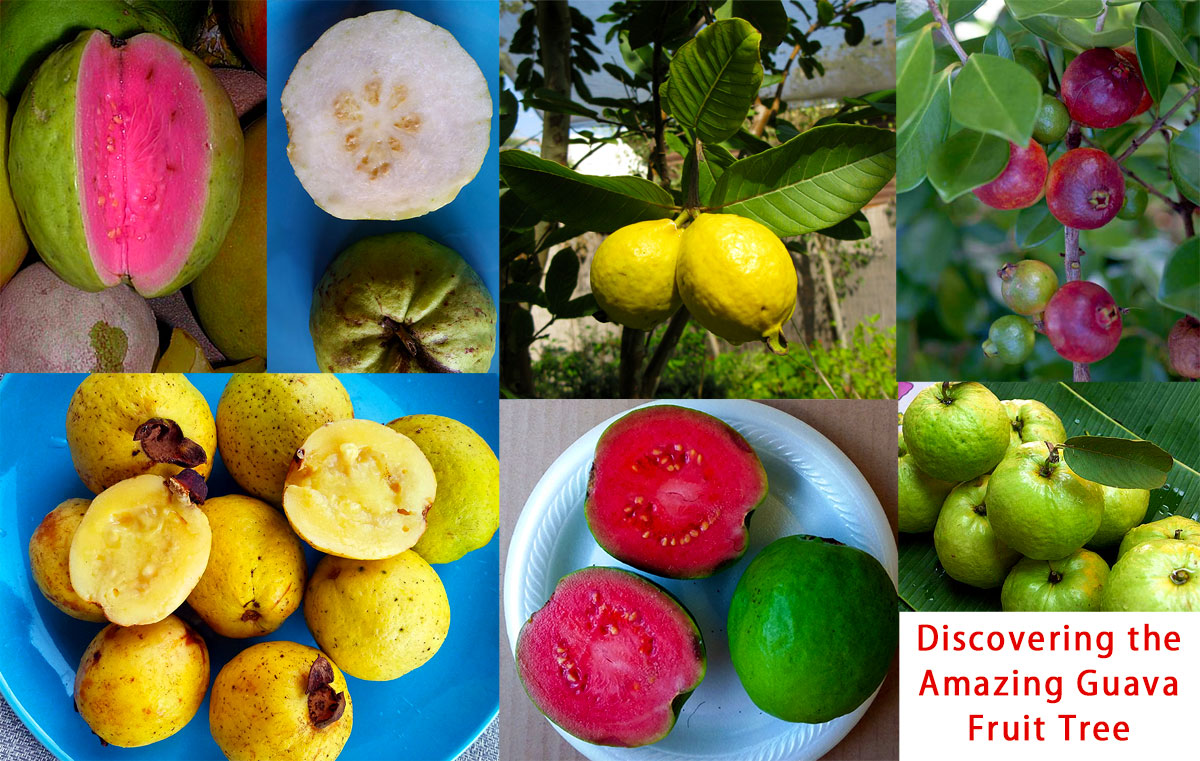
Discovering the Amazing Guava Fruit Tree

Guava  fruit  collage

A Gardener's Delight:
How to grow Guava Tree, delicious recipes and more...

Imagine stepping into your garden, plucking a fresh, juicy guava off a tree, and savoring its sweet, tropical flavor. Sounds delightful, doesn't it? Guava trees are not only a wonderful addition to any garden but also offer an array of delicious and nutritious fruits. Let's explore the fascinating world of guava fruit trees, dive into the different species, and share some tasty ways to enjoy this remarkable fruit.

If you're blessed with a warm climate, find a sunny spot with well-drained soil for your tree. Water it regularly, especially during dry spells, and keep it well-fed with a balanced fertilizer. Pruning is essential for maintaining a bushy, healthy tree that'll reward you with an abundance of fruits...

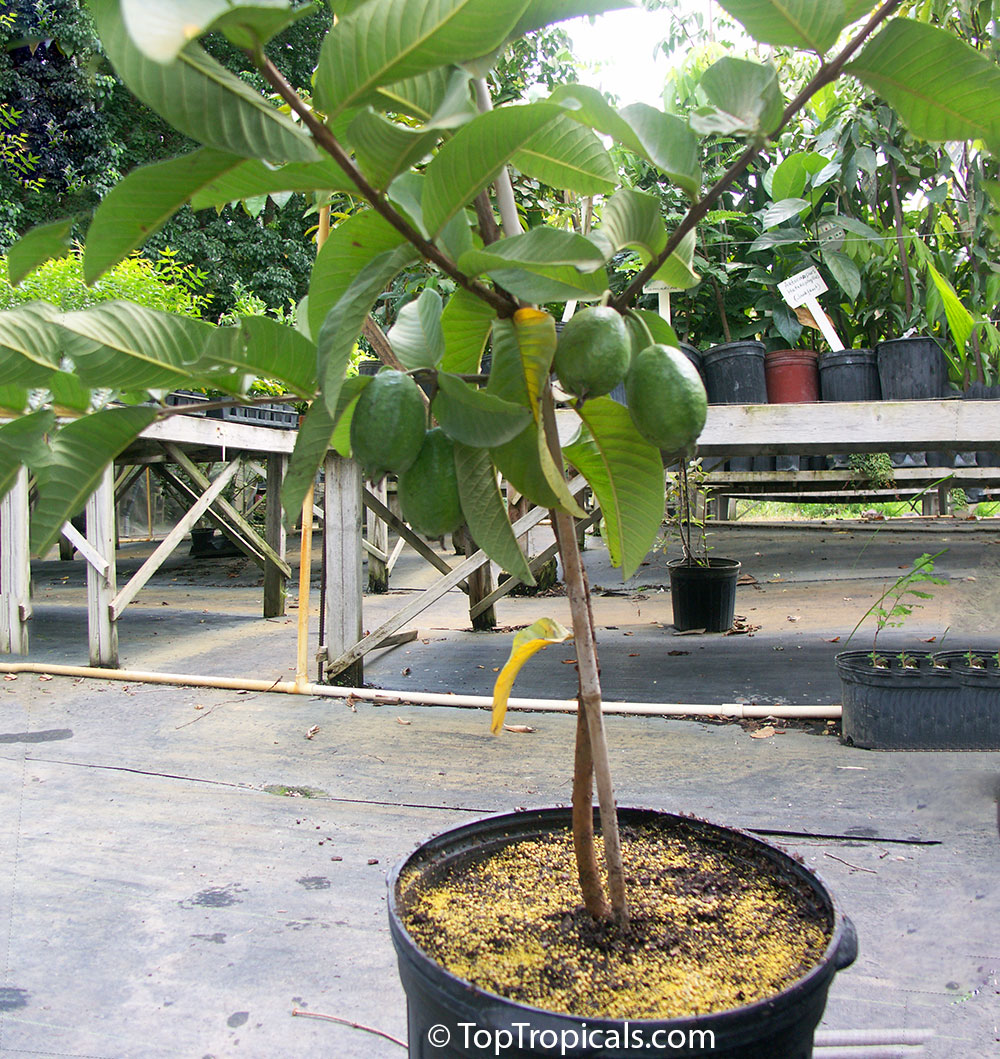
Guava  tree  fruiting  in  a  pot