Which Passion Fruit Vine should you grow - 3 top varieties
🍊 Which Passion Fruit Vine should you grow - 3 top varieties
There are few plants that reward gardeners as quickly as a Passion Fruit Vine (Passiflora edulis). In just a season or two, a single vine can transform a fence, arbor, or trellis into a lush green wall covered with spectacular flowers, followed by dozens of delicious tropical fruits. Passion fruit combines beauty and productivity like few other plants. The flowers look almost too exotic to be real, attracting butterflies and pollinators, while the aromatic fruit is perfect for fresh eating, smoothies, desserts, juices, and jams.
3 top varieties of Passion Fruit
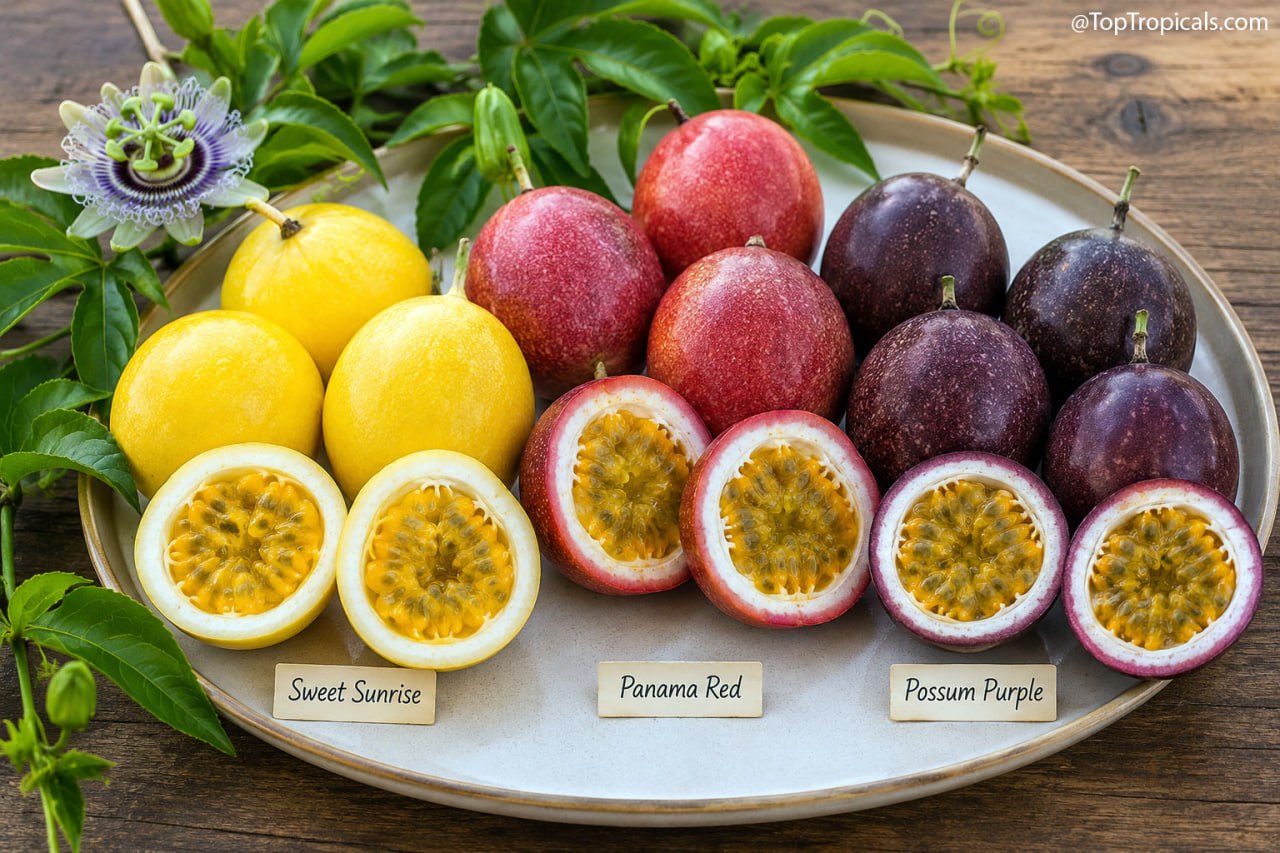
🟡 Sweet Sunrise: the sweetest choice
Large golden-yellow fruit with bright orange pulp and a smooth, sweet tropical flavor. Lower acidity makes it especially enjoyable fresh, right out of the shell. Perfect for: Fresh eating, smoothies, desserts, and juice.
🟣 Possum Purple: the classic purple passion fruit
Medium-sized deep purple fruit with the traditional sweet-tart flavor and intense tropical aroma that passion fruit lovers expect. The most cold hardy variety. Perfect for: Fresh eating, juices, desserts, jams, and all-around garden performance.
🔴 Panama Red: go big with giant fruit
Produces impressive burgundy-red fruits that are much larger than standard passion fruits. A vigorous vine known for heavy crops and bold tropical flavor. Perfect for: Gardeners who want oversized fruit and abundant harvests.
🏡 Why gardeners love passion fruit
📌 No matter which variety you choose, all three are vigorous tropical vines that quickly cover fences, pergolas, arches, and trellises with attractive glossy foliage and some of the most unusual flowers in the plant world. 📌 Once established, passion fruit vines can produce generous harvests over a long season. The fragrant orange pulp is packed with sweet-tart tropical flavor and can be eaten fresh, scooped into yogurt, blended into drinks, or used in countless desserts and preserves. 📌 They thrive in full sun with fertile, well-drained soil and regular watering during active growth. In frost-free climates they can fruit for many years, while gardeners in cooler regions often enjoy growing them in large containers that can be protected during winter.
✅ Which one is right for you?
Choose Sweet Sunrise if you love sweeter, less acidic fruit. Choose Possum Purple if you want the classic passion fruit experience with outstanding balance of sweetness and tang. Choose Panama Red if your goal is giant, show-stopping fruit and heavy harvests.
Whichever you plant, you'll enjoy one of the fastest-growing and most rewarding edible vines you can add to your garden.
Smokey: Those orange spots are plumeria rust. Sunshine: Orange is an excellent color. Smokey: On cats, yes. On plumeria leaves, no. Sunshine: I represent the good kind of orange.
🌸 Plumeria Rust in Humid Climates:
What Finally Worked for Us
By Tatiana Anderson, Plant Expert, Top
Tropicals
Healthy
plumerias with clean, vibrant foliage after successful rust
management. Good airflow, bright conditions, and effective fungicide
treatment
help keep plants growing strong through Florida's rainy season.
If you grow plumerias in Florida,
you probably know what comes next. Around June, when the rainy season begins
and afternoon thunderstorms become part of the daily routine,
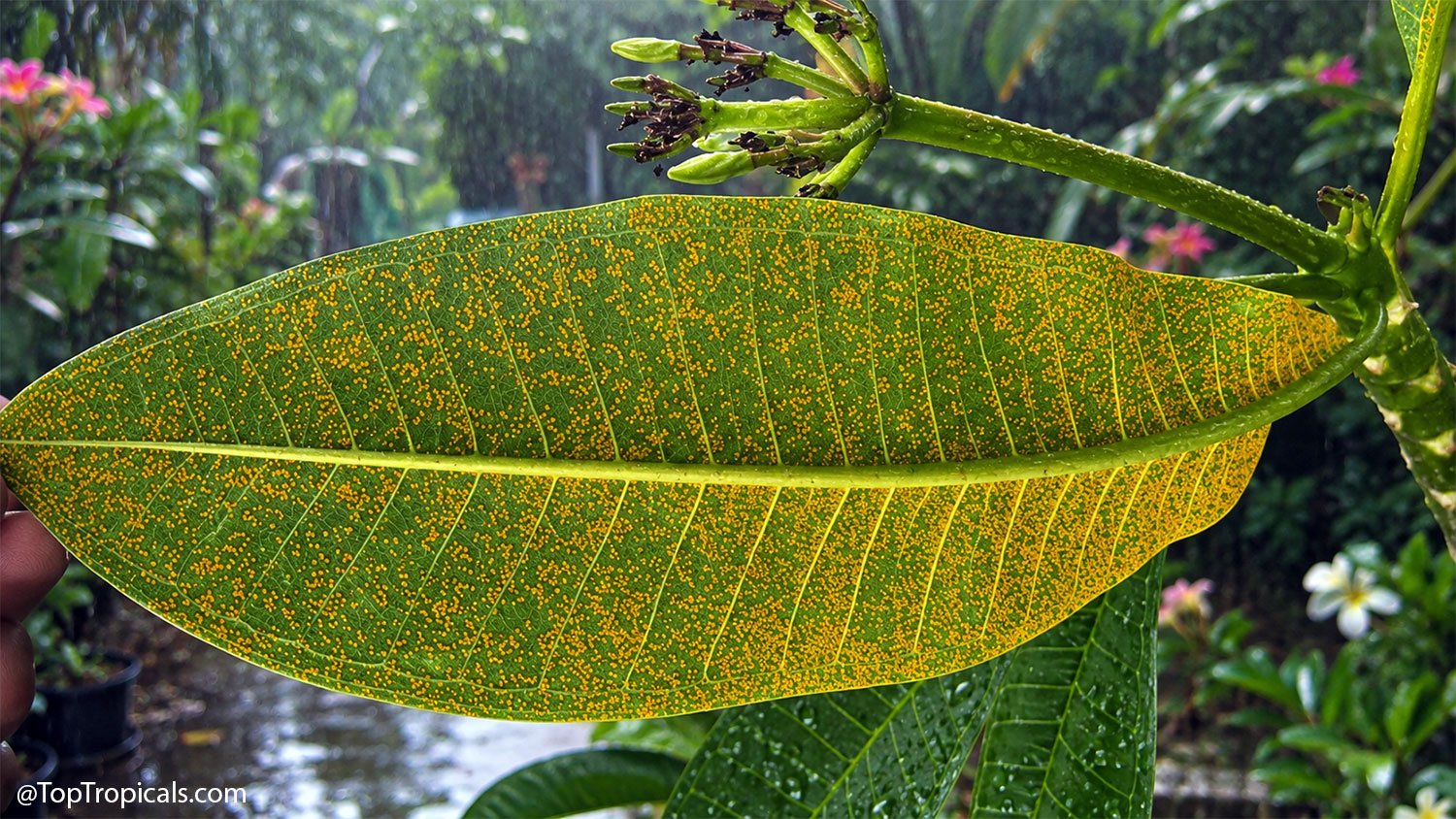
orange-yellow spots start appearing on the undersides of plumeria leaves.
Plumeria rust arrives almost like clockwork.
If you have ever tried to fight it, you know how frustrating that battle can
be.
Plumeria
rust appears as bright orange powdery spores on the underside of
leaves. Warm, humid, rainy conditions allow the fungus to spread quickly,
making it a common sight in tropical and subtropical gardens.
Let me be clear about something right away: Plumeria rust is
rarely fatal to an otherwise
healthy plant.
In our experience, we have never lost a healthy plumeria
to rust alone. The disease is mostly
cosmetic, but it causes significant yellowing, triggers premature leaf drop,
and can turn a beautiful specimen into something that looks ragged
throughout the best months of the growing season. For a plant grown as much
for its attractive foliage as its spectacular flowers, that matters.
At Top Tropicals, we have grown plumerias for many years and have tried most
of the approaches gardeners typically recommend: sulfur-based fungicides,
neem
oil, copper sprays, improving drainage, and removing infected leaves before
they hit the ground. Some of those things helped to varying degrees. None
of them felt like a real breakthrough until recently.
The Fungicide That Actually Did Something
Real-world results after treating plumeria rust with Southern Ag
Garden Friendly Fungicide. The inset shows a
leaf heavily infected with orange rust spores before treatment, while the
main image shows clean, healthy new foliage after the fungus was
brought under control.
A few seasons ago, on the recommendation of another grower, we tried
Southern Ag Garden Friendly Fungicide
. This biological fungicide contains the beneficial bacterium Bacillus
sp, and I want to be careful here: I am not suggesting it is the best
product for everyone or that it will produce the same results in every
situation. What I can say is that, in our experience, it was the first
fungicide that consistently produced visible improvement when applied
according to the label directions.
We applied it at the first sign of rust, repeated applications according
to the label, and actually saw the progression slow down while new
infections became less severe. Whether that was
the product, the timing, or some combination of factors, I cannot say with
certainty. But after cycling through several options over the years, it
was the one that felt like it was doing something real. If you are looking
for a starting point, it is worth trying.
But the fungicide wasn't our main discovery. That came this past season,
and it changed how we think about this disease.
☔️ What This Season Taught Us About Leaf Wetness
Healthy, dry plumeria foliage is one of the best defenses against
plumeria rust. Good airflow, bright light, and keeping leaves dry whenever
possible help prevent the fungus from taking hold during the rainy
season.
This season we moved our prized container plumerias under a covered
growing area with a clear plastic roof and approximately 30 percent shade
cloth overhead. The structure provides excellent light, warm temperatures,
and very good air circulation while protecting the plants from Florida's
frequent summer rains. It is not a climate-controlled greenhouse, but rather
a protected outdoor growing area.
Here is the important part: these plants were still irrigated regularly,
every two to four days, with overhead watering. The leaves did get wet. But
because they were not sitting outside
during Florida's daily summer downpours, the foliage dried within a
reasonable
amount of time instead of remaining wet for hours, which is common after a
heavy rain followed by cloudy skies and still air.
The result? Not a single case of rust developed on those plants
throughout the season.
Considering how consistently plumeria rust appears each summer in our
nursery,
that result immediately caught our attention. The most significant
difference was how long the foliage remained wet after watering or
rain.
Meanwhile, plumerias growing in the ground nearby, fully exposed to the
weather, showed rust
infection at the usual time.
💦 Ambient Humidity vs. Standing Water
That observation made us rethink what we believed was driving the
disease. We had always assumed Florida's high humidity was the primary
factor. Humidity certainly plays a role. But this experience suggested that
prolonged leaf wetness may be a much more significant factor than ambient
humidity by itself.
There is a real difference between air that feels humid and leaves that stay
wet for four, six, or eight hours after a rain. Humid air means the
moisture content of the atmosphere is high. Wet leaves means there is
standing water on the leaf surface. Both conditions can occur together, but
they are not the same thing. A leaf in a humid but breezy location can dry
within an hour. A leaf in still, wet conditions after a heavy rain may stay
wet most of the day. That difference may be far more important than many
gardeners realize.
We are not plant pathologists, and we do not want to overstate what we
learned from one growing season. But after many years of growing plumerias
in Florida, the results were convincing enough that we now
protect our best container specimens from prolonged summer rainfall whenever
possible.
👉 What We Recommend
Based on many years of growing plumerias in Florida, here are the
practices that have worked best for us:
Grow plumerias in full sun whenever conditions allow. Good light means
faster drying after rain or
irrigation, and plants grown in low light often seem to show rust symptoms
more readily.
Keep your plumerias well-fed. Healthy, vigorously growing plants recover
from stress and disease much better than weak ones. We apply Green
Magic
controlled-release fertilizer every six months for a steady supply of
nutrients, and supplement with Sunshine
Boosters Megaflor during the growing season. Because Megaflor is gentle,
it can be safely applied with every watering, all
year long.
During extended rainy periods, consider moving valuable container plants
under cover if possible. Even a covered patio can make a difference if it
keeps the leaves from remaining wet for most of the day.
Provide air circulation. Plants crowded together stay wet longer. Space
them properly and position them where they receive good airflow.
Remove infected fallen leaves. They can continue serving as a source of
spores.
Pick them up and dispose of them rather than leaving them beneath the
plants.
If rust begins to appear, start fungicide applications early. Slowing an
infection at the beginning is much easier than trying to control one that
is already well established.
💡 A Realistic Conclusion
A parade
of healthy plumerias in full color. Clean foliage, bright blooms, and
vigorous growth show what plumerias can look like when rust is kept under
control, letting each variety shine in its own unique colors.
Plumeria rust is mostly a cosmetic problem rather than a life-threatening
one.
Healthy plants usually recover well, but yellowing foliage and premature
leaf drop can take much of the beauty out of an otherwise
beautiful blooming season.
We cannot promise these methods will eliminate rust in every garden.
Every growing environment is different.
However, after years of battling this disease, reducing how long the leaves
remain wet made a bigger difference than any other single change we have
tried. If
you grow plumerias in a humid climate and continue struggling with rust, it
may be worth focusing not only on humidity itself, but also on how quickly
the foliage dries after the rain
stops.
Mix and match your favorite varieties! Purchase 2 or more
plumerias and receive 25% off all plumerias in
your order. No coupon code required. Discount is applied automatically when
qualifying items are added to your cart.
Valid through July 3, 2026
Offer applies to new orders only. Not valid on previous purchases, pending
orders, gift certificates, shipping charges, or combined with other
discounts or promotional offers.
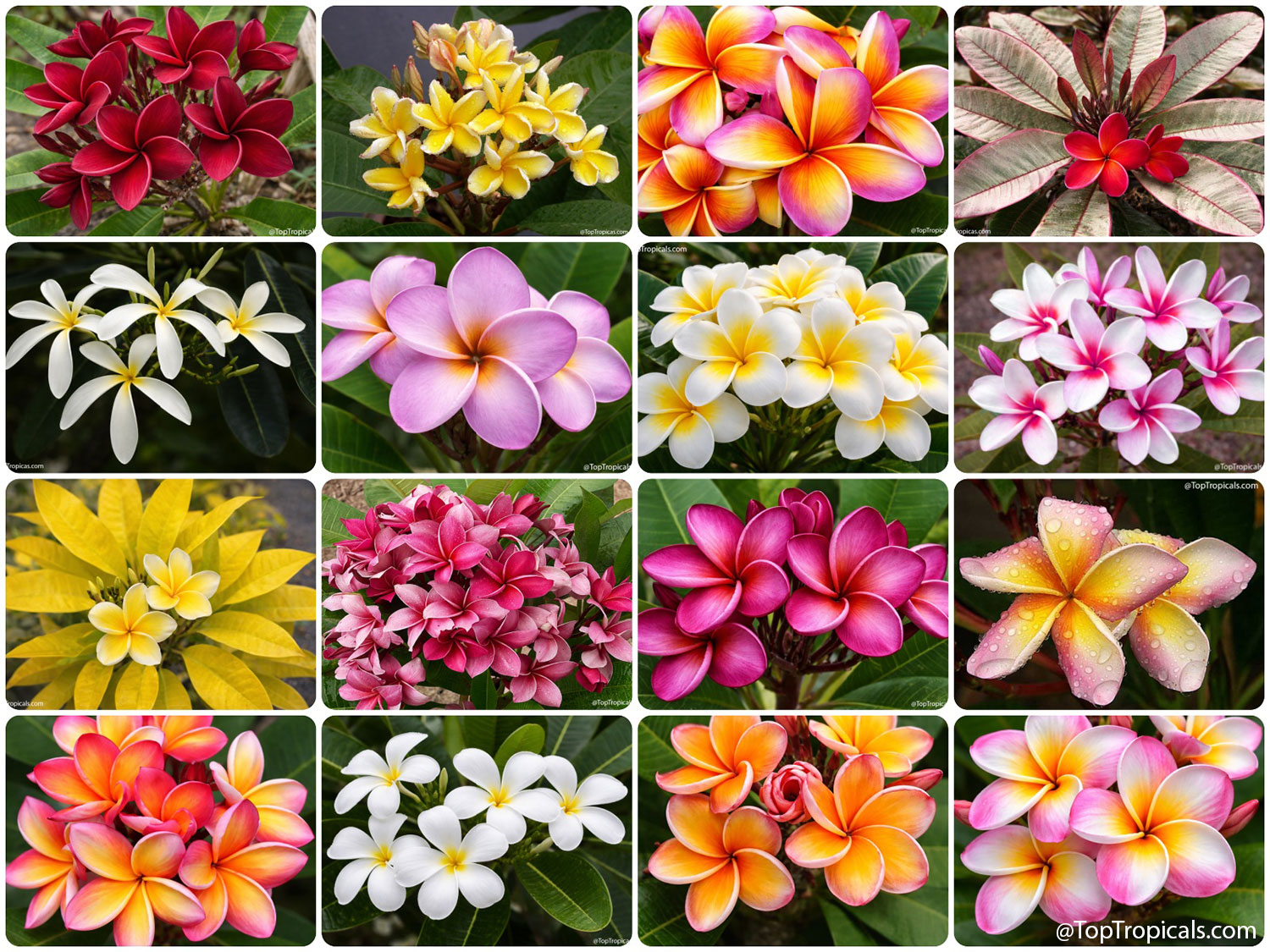
Plumerias come in an amazing spectrum of colors and forms. From pure
white
and buttery yellow to fiery reds, soft pinks, rainbow blends, and even
variegated foliage, there is a plumeria to match every tropical garden and
collector's taste.
Sunshine: Healthy plumerias need sunshine... that's me...
good airflow, and dry leaves. Smokey: That's a surprisingly accurate summary. Sunshine:We can help with all of that. Donut worry. Coffee
first.
Date: 28 Jun 2026
Do you have an orange cat too?
Jacques and Jim II - rescued orange cats of TopTropicals
😼 Do you have an orange cat too?
"Never underestimate someone with an orange head. They're either full of sunshine, or full of bad ideas."
🐈📸 Jacques and Jim II are rescued orange cats living at the TopTropicals PeopleCats.Garden.
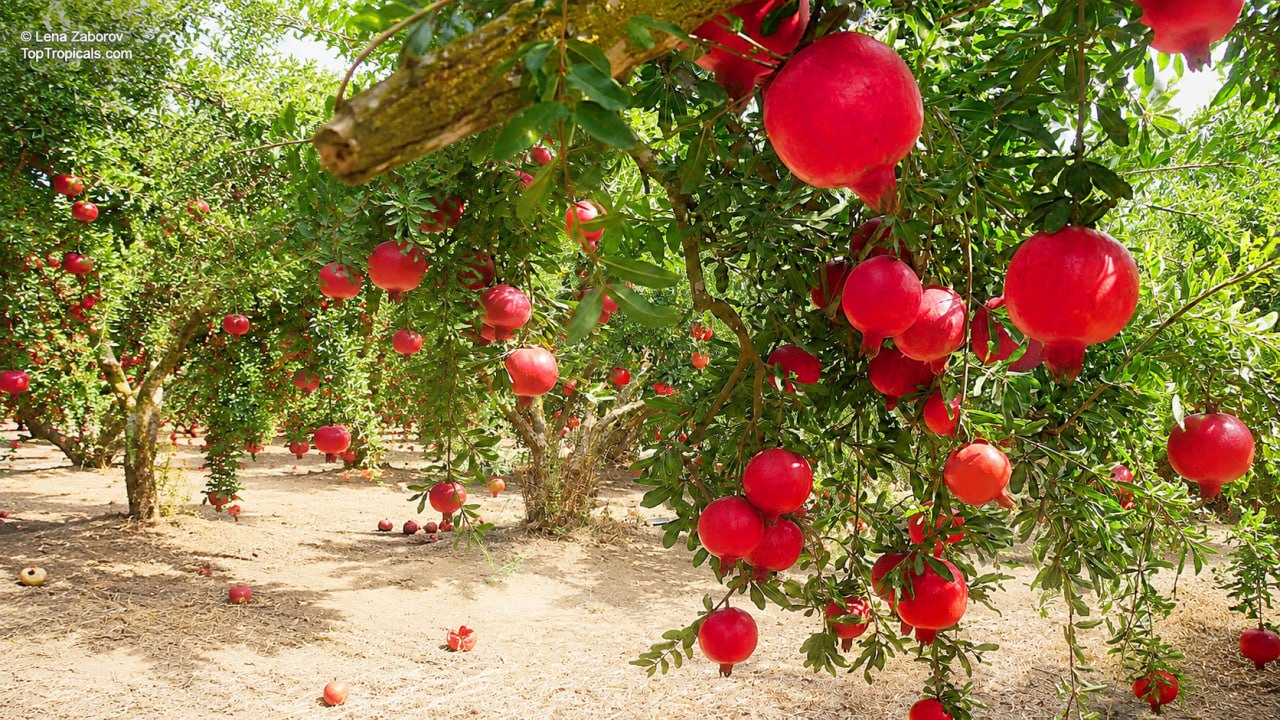
Which Pomegranate Is Right for You - Top 5 Amazing Varieties
🍎 Which Pomegranate Is Right for You - Top 5 Amazing Varieties
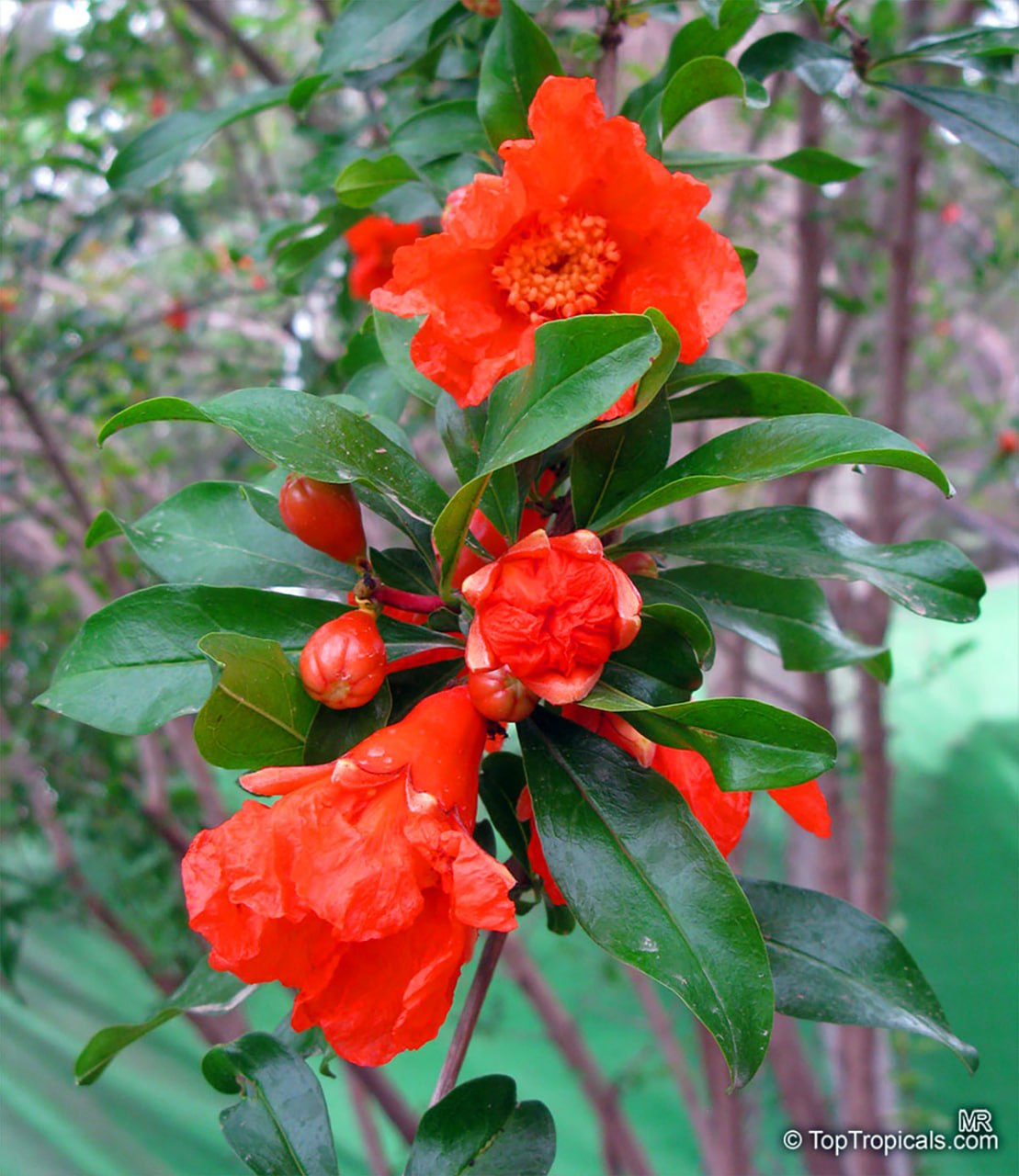
Pomegranate trees (Punica granatum) deserve a place in almost every garden. They are among the easiest fruit trees to grow, rewarding you with months of brilliant orange-red flowers followed by jewel-like fruit packed with sweet, refreshing arils. Beautiful enough to use as an ornamental and productive enough to fill your kitchen with fresh fruit, they have been cultivated for thousands of years and are still one of the healthiest fruits you can grow. Which variety should you choose? They all produce delicious fruit, but each has its own personality.
❣️ Angel Red: the biggest fruit and the juicing champion Large fruit with tender, edible seeds and exceptionally juicy ruby-red arils. Ripens earlier than Wonderful and is one of the best varieties for fresh juice.
❣️ Eversweet: sweet before it's even ripe A unique variety with clear, non-staining juice and very soft seeds. Even slightly immature fruit is sweet, making it an excellent choice for cooler climates.
❣️ Eves: did Eve eat an apple, or was it a pomegranate?Rich flavor for fresh eating Very large fruit with deep red arils and an outstanding sweet, cherry-like flavor. A favorite for eating fresh right off the tree.
❣️ Vietnam: evergreen and everbearing tropical producer
An evergreen, everbearing variety that flowers and fruits repeatedly in warm climates. Produces very large fruit with soft seeds and long harvest seasons.
❣️ Wonderful: the world's most famous classic favorite The world's best-known pomegranate and the leading commercial variety. Famous for its rich, sweet-tart, wine-like flavor and outstanding juice quality.
🏡 Easy to grow, hard to beat
No matter which variety you choose, pomegranates are remarkably easy to grow. · They are self-fertile, highly productive, drought tolerant once established, and thrive in full sun. · They tolerate poor soils, salt, and heat, are cold hardy to about 15F, and grow beautifully as shrubs, small trees, or large container plants. · Their long blooming season attracts pollinators, while the colorful fruit adds beauty to the landscape for months.
✨ A fruit treasured for thousands of years
According to Asian legend, the pomegranate was the "Tree of Life" in the Garden of Eden. Some historians even believe the famous forbidden fruit may have been a pomegranate rather than an apple.
The ruby-red arils have been treasured since ancient times, and an old Hindi saying reminds us: "One pomegranate can serve one hundred sick people." Rich in antioxidants, vitamins, and beneficial plant compounds, pomegranates remain one of the healthiest and most rewarding fruits you can grow in your own backyard.