Garden Blog - Top Tropicals

Date: 23 Aug 2025

When plants cross into the Gothic: the Darker Bat Lily

Black Bat Lily (Tacca chantrieri)

When plants cross into the Gothic: the Darker Bat Lily


🖤 Here’s a striking look at the Black Bat Lily (Tacca chantrieri) - its dramatic dark bracts resembling bat wings, trailing whiskers, and tropical elegance all in one. If you met its cousin, the White Bat Head Lily (Tacca nivea) in earlier video, you'll notice the family resemblance - same dramatic whiskers and wing-like bracts, but this one leans fully into the dark side.

🖤 The Black Bat Flower isn’t just a bloom - it's a full performance. Giant black-maroon"wings" stretch out like a bat in flight, while long, drooping filaments dangle like eerie whiskers or jungle jewelry - some over a foot long!

🖤 Those weird, wild whiskers aren't just for show either. They're thought to mimic the look (and no, not the smell!) of decaying matter, luring in pollinators like flies. Creepy? Yes. Clever? Absolutely.

🖤 The Black Bat Flower blooms best when it feels pampered: filtered light, steady warmth, and spa-level humidity. It’s a smart exotic for a greenhouse or even a bright bathroom with a skylight.

🖤 It grows from a rhizome, and while Tacca chantrieri is prized for its gothic looks, its green cousin Tacca leontopetaloides is actually used in the tropics to make arrowroot starch.

🖤 Patience is part of the package - sometimes it takes months to bloom. But when it does, it becomes the crown jewel of the collection. People will ask if it's real. You'll just smile and say, "Yes - and it lives here."

🛒 Add this gothic gem to your collection - Black Tacca

Tacca colors: Black, White, Green:


Tacca nivea - White Tacca
Tacca chantrieri - Black Tacca
Tacca leontopetaloides - Green Tacca

📚 Learn more:


The mystery of the White Bat Lily - the plant with wings and whiskers
A flying bat with whiskers
The rarest Green Tacca - Tacca leontopetaloides
When Bat Head Devil Flower is in bloom
Bat Head - Devil Flower

#Nature_Wonders #Shade_Garden #Container_Garden

🟢 Join 👉 TopTropicals

Date: 24 Aug 2025

Before eating ice cream, try this fruit from a house plant

Swiss Cheese Plant - Monstera deliciosa

🍨 Before eating ice cream, try this fruit growing on a house plant!

🍨 Most people know Swiss Cheese Plant - Monstera deliciosa - for its big holey leaves, but here’s the wild part: this jungle climber also makes fruit. Real fruit. And it tastes like pineapple mixed with ice cream.

🍨 Have you tried Monstera fruit? Will you eat it again?

🍨 This plant grows in the rainforests of Mexico and Guatemala, where young seedlings crawl toward the shade until they find a tree to climb. Yes, they grow in the direction of the darkest area, not just merely away from light. Interesting, ah?

🍨 In time, it sends out a green, cone-like fruit nearly a foot long. It takes a while to ripen - about a year - and only when the scales start to lift can you peel them back and find the creamy pulp inside. Ice-cream sweet and tropical.

🍨 One catch though: never eat the fruit unripe. The pulp contains oxalic acid that is generally harmless but will burn your mouth. Best trick is to let it wrinkle a little, wrap it up, and wait until the scales loosen on their own. Then it's ready.

🍨 And for collectors? The Thai Constellation, with its cream-splashed leaves, is the crown jewel. Some specimens sell for thousands. Not bad for a "Swiss Cheese Plant"!

🛒 Shop Monstera plants

📚 Learn more:


How to harvest and eat Monstera Ice Cream

#Food_Forest #Container_Garden #Shade_Garden

🟢 Join 👉 TopTropicals

Date: 24 Aug 2025

Adenium care

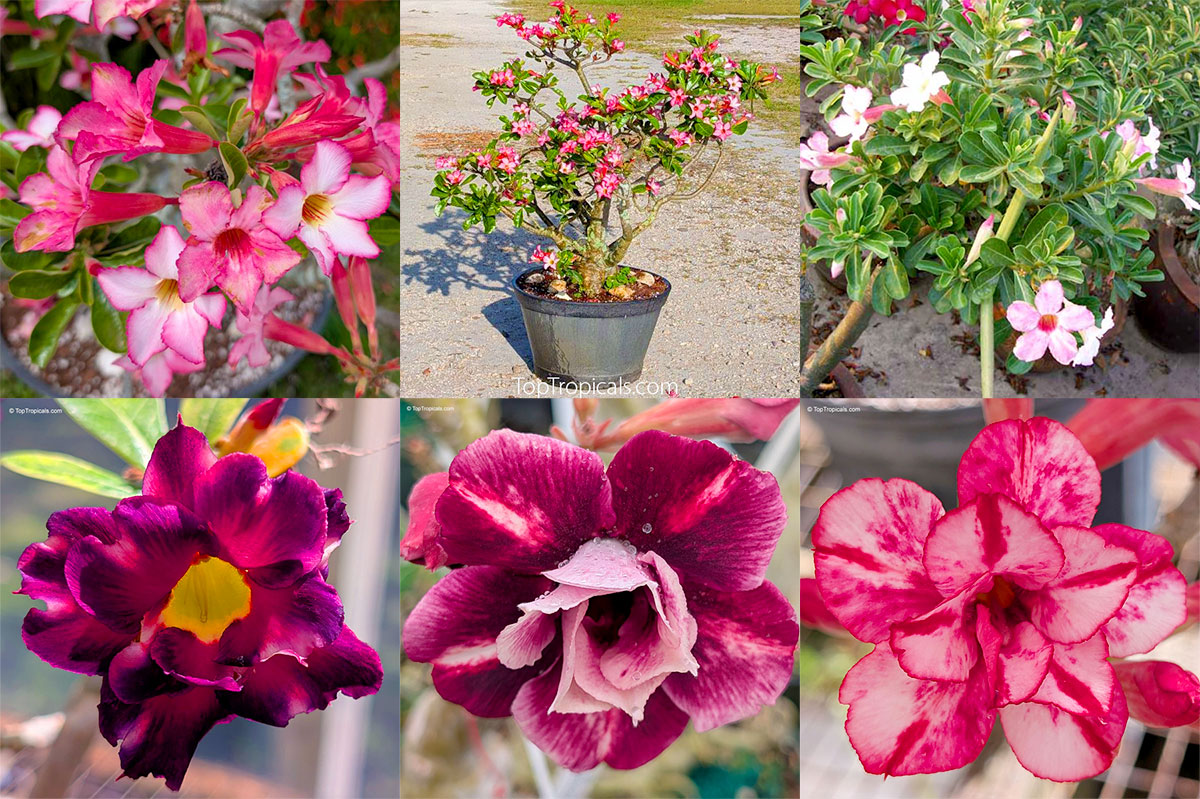
adenium  desert  rose  flowers  and  plants  in  pots  showing  pink,  red,  purple,  and  bicolor 
 blooms.

Care for adeniums is simple once you understand what they like. Think of them as half succulent, half tropical shrub. Keep their roots dry but never bone-dry, give them sun, and feed them during the warm months. Do that, and they will reward you with fat trunks and nonstop flowers.

  • Soil and pot: Use a gritty, fast-draining Adenium Soilless Mix. Shallow wide pots work best — they let the caudex spread and show off its shape like a bonsai.
  • Watering: Water in the morning. Let the surface dry before watering again. Never let pots sit in saucers of water.
  • Foliage: Keep leaves dry. Wet leaves invite rot and fungus.
  • Fertilizer: During active growth, feed with Sunshine Megaflor liquid fertilizer (flower booster); it promotes swollen trunk and sets flower buds.
  • Light: Give them bright light year-round. Full sun in mild climates; filtered light if your summers are scorching.
  • Winter rest: Cut water back when days shorten and let the plant rest. Dormancy is normal.
  • Repotting trick: Each time you repot, lift the plant a bit so the crown roots peek above the soil. This encourages bigger caudex.

Desert roses are made for containers, easy enough for a beginner but rewarding enough for a collector.

Add Adenium to your container garden

Date: 6 Sep 2025

What is Neem and why do millions use it daily? The tree that makes toothpaste and bug spray

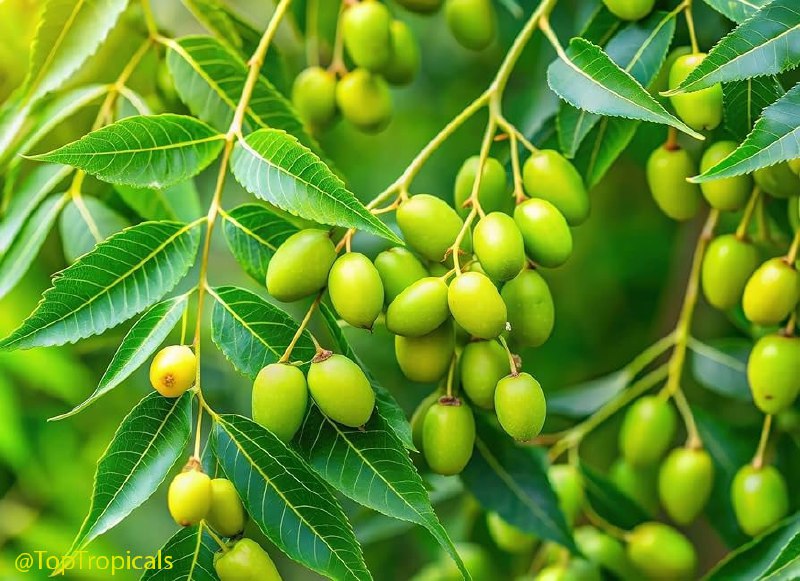
Neem Tree - Azadirachta indica

Neem Tree - Azadirachta indica

🌿 What is Neem and why do millions use it daily? The tree that makes toothpaste and bug spray.


💚 Ever notice Neem listed in toothpaste or skin cream? Or even in natural insecticides and garden treatments? What is this tree and why is it everywhere? Neem products come from the Neem Tree - Azadirachta indica, native to India. It's been used for thousands of years in medicine, farming, and daily life.

💚 How can you use Neem?


Almost every part of the tree has a purpose.
The leaves are brewed as tea, applied to skin for soothing, and used in villages to ward off mosquitoes or protect stored clothes from insects. They are bitter but medicinal, valued for treating malaria and even for lowering blood sugar in diabetics.
Dental cure. Neem twigs, thin and pencil-sized, are chewed and used as toothbrushes to strengthen gums and fight bacteria. Today, toothpicks and dental sticks are still made from them.
Neem oil for your Garden. The seeds produce neem oil, a natural insect repellent and fungicide for the garden that doesn’t harm bees or butterflies.
Bark extracts are used in medicine
Ripe fruits are eaten fresh and considered beneficial too.

💚 Why do people plant Neem?


It’s more than a medicine chest. In India, Neem is planted along streets and in villages as a source of shade, air purifier, and natural pest control. One tree supports health, provides garden protection, and even supplies food.

💚 Is it easy to grow?


Yes. Neem tree thrives in hot, dry conditions and needs little care. Once established, it only needs low to medium water and grows well even without irrigation. It can be grown as a street tree, in the yard for shade, or in poor soils where other trees struggle. Hardy, fast-growing, and evergreen, Neem is one of the most practical trees you can add to a tropical or subtropical garden.

🛒 Plant a Neem Tree and Explore Neem benefits

#Food_Forest #Remedies #Discover

🟢 Join 👉 TopTropicals

Date: 8 Sep 2025

Four best low-growing perennials that bloom all summer

Crossandra, Heliconia Lady Di, Plumbago, and Spathoglottis ground orchids.

🌷 Four best low-growing perennials that bloom all summer


🌼 1. Crossandra


Crossandra is one of those plants that never really takes a break. Its ruffled orange blooms pop almost nonstop in warm weather, making it a reliable color source for borders, pots, or even as a filler around taller shrubs. Unlike many flowering plants that fade in midsummer, Crossandra keeps going through heat and humidity, thriving where others give up. It's compact, easy to trim, and works beautifully in small gardens or patios.

🌼 2. Heliconia psittacorum Lady Di


Heliconia Lady Di adds a tropical accent with its upright, torch-like blooms in fiery orange and yellow. What makes this variety practical is its manageable size compared to giant heliconias - it fits well in small gardens and large pots. Its flowers last long, both on the plant and as cut flowers, making it popular for summer arrangements. Once established, it keeps sending up flower stalks all season, giving a steady display of color and drama.

🌼 3. Plumbago


Plumbago is a gardener's friend in hot climates because it covers a lot of ground and throws out flower clusters all summer (sky-blue, white or red). It's versatile - train it as a shrub, hedge, or let it spill over walls and trellises. The flowers attract butterflies, and the plant is low-maintenance, tolerating pruning, sandy soil, and neglect. If you need a reliable plant to soften fences or add a cool color contrast to reds and oranges in the garden, plumbago is a winner.

🌼 4. Spathoglottis ground orchids


Ground orchids like Spathoglottis are practical because they give you the exotic look of orchids without the fuss. These hardy, clumping perennials send up spikes of purple, pink, or yellow blooms that last for weeks, repeating through summer in warm climates. They’re perfect for edging walkways or filling beds where you want constant color with minimal care. Unlike potted orchids that bloom once and rest, Spathoglottis keeps producing flowers right in the ground, almost year-round in frost-free areas.

🛒 Discover more flowering perennials

#Hedges_with_benefits #Container_Garden #Discover

🟢 Join 👉 TopTropicals