🌱 💪 Green Magic + SUNSHINE Boosters: A
Complete System for Strong Plant Growth
By Tatiana Anderson, Horticulture Expert at Top
Tropicals with Smokey & Sunshine help
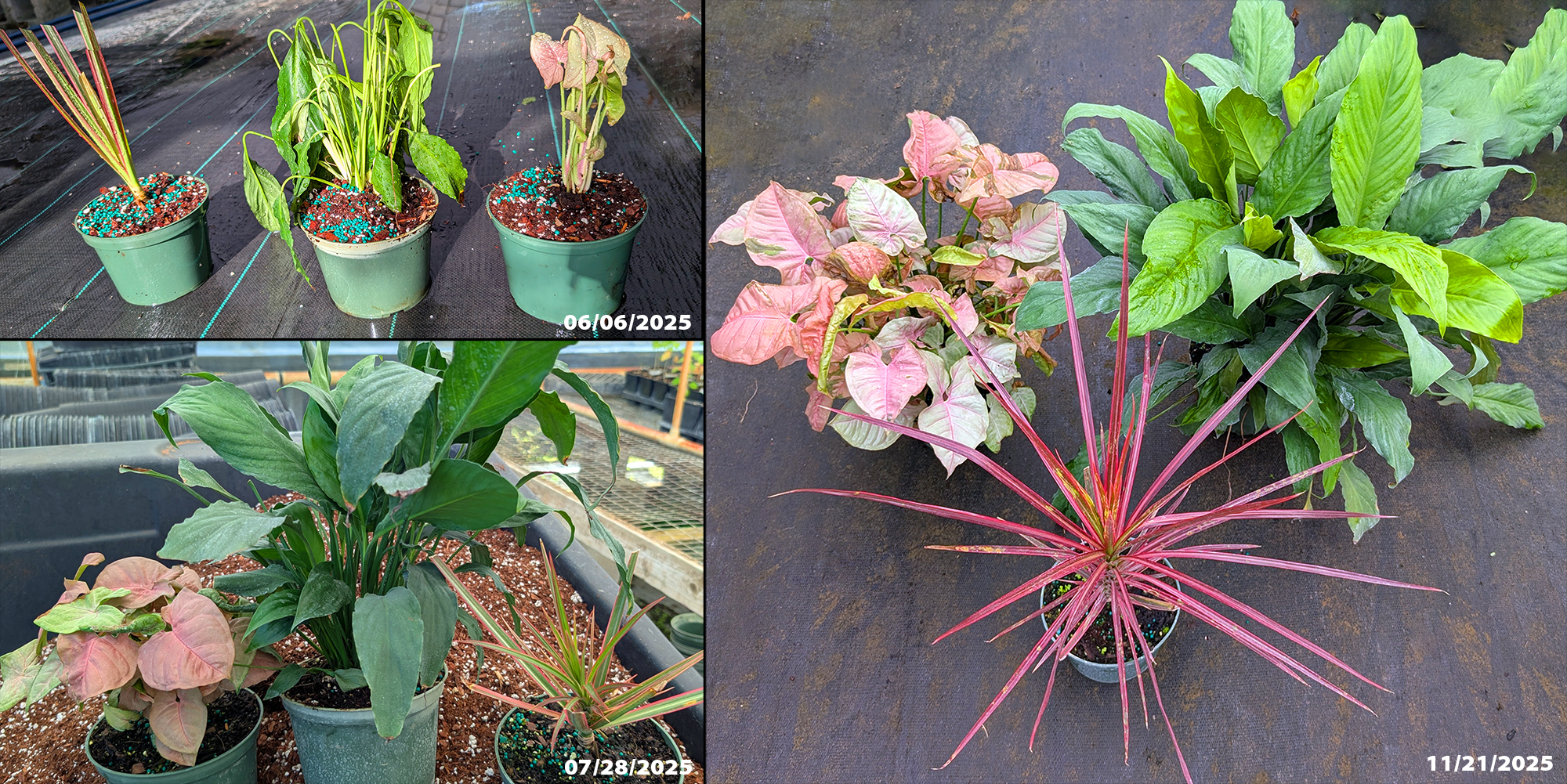
Green Magic recovery test with SUNSHINE Robusta support: Dracaena, Syngonium, and Spathiphyllum
revived from severe stress and growing vigorously.
☀️🌱 Sunshine Boosters: Complete Plant
Nutrition
Sunshine Boosters provide complete plant nutrition,
including Calcium and micronutrients that plants need for strong growth.
Because
nutrients are delivered in liquid form, plants can absorb them quickly and
respond almost immediately.
The Practical Problem
Liquid feeding works well, but it requires frequent application. In real
gardens, many growers simply do not have time to add liquid fertilizer with
every watering.
Green Magic: The Foundation
Green Magic solves this problem by providing steady
background nutrition through controlled-release fertilizer. It feeds plants
gradually, so they continue receiving nutrients even between liquid
feedings.
Why This Combination Works
Together, this system provides both complete nutrition and
steady feeding. Sunshine Boosters supply fast nutrients and
Calcium, while Green Magic maintains a stable nutrient supply between
feedings.
✍️ How to Feed Your Plants
📅 Step 1 – Start of the Growing Season
Apply Green Magic around the root zone every 6 months.
In ground:
Small Shrubs (1–3 feet): Use approximately 1/4
to 1/2 cup per plant
Established Trees: Use 1/2 lb to 1 lb of product per 1
inch of trunk diameter.
Small In-Ground Ornamentals: A common "spoon" rate is
roughly 1 teaspoon per gallon of estimated root volume (or per sq. ft. of
surface area).
Spread evenly around the dripline. Avoid piling the granules against
the base or trunk of the plant. For best results, lightly rake the granules
into the top 1–2 inches of soil.
Container plants:
Apply 1 tea spoon per 1 gal of soil (mix in with soil)
every 6 months during active growth period, or with every re-potting.
Water normally after application.
Adjustment for Temperature. Because Green Magic is
temperature-controlled, adjust your rate if your local climate is extreme:
Cooler Climates (<60°F average): Increase
the rate by 20% to ensure enough nutrients are released.
Hot Climates (> 80°F average): Decrease the rate
by 20% to prevent over-releasing as the heat speeds up the process.
☀️🌿 Step 2 – Active Growing Season
Apply Sunshine Boosters during the growing season.
Regular feeding (maintenance): Mix with tap water according to
the ratio on the label. For SUNSHINE Robusta use 25 ml (5 tsp)per
gallon
of water and spray leaves every 5-7
days during active growth.
Correction feeding ("medicine" dose): if plants show visible
nutrient deficiencies, combine SUNSHINE Robusta with SUNSHINE Superfood
and
spray every 5–7 days until new growth appears healthy. All SUNSHINE
Boosters
products are compatible and can be mixed with water in the same sprayer.
Best time to spray: early morning or evening when temperatures
are cooler and leaves can absorb nutrients efficiently.
Important: spray both the top and underside of leaves for
maximum absorption.
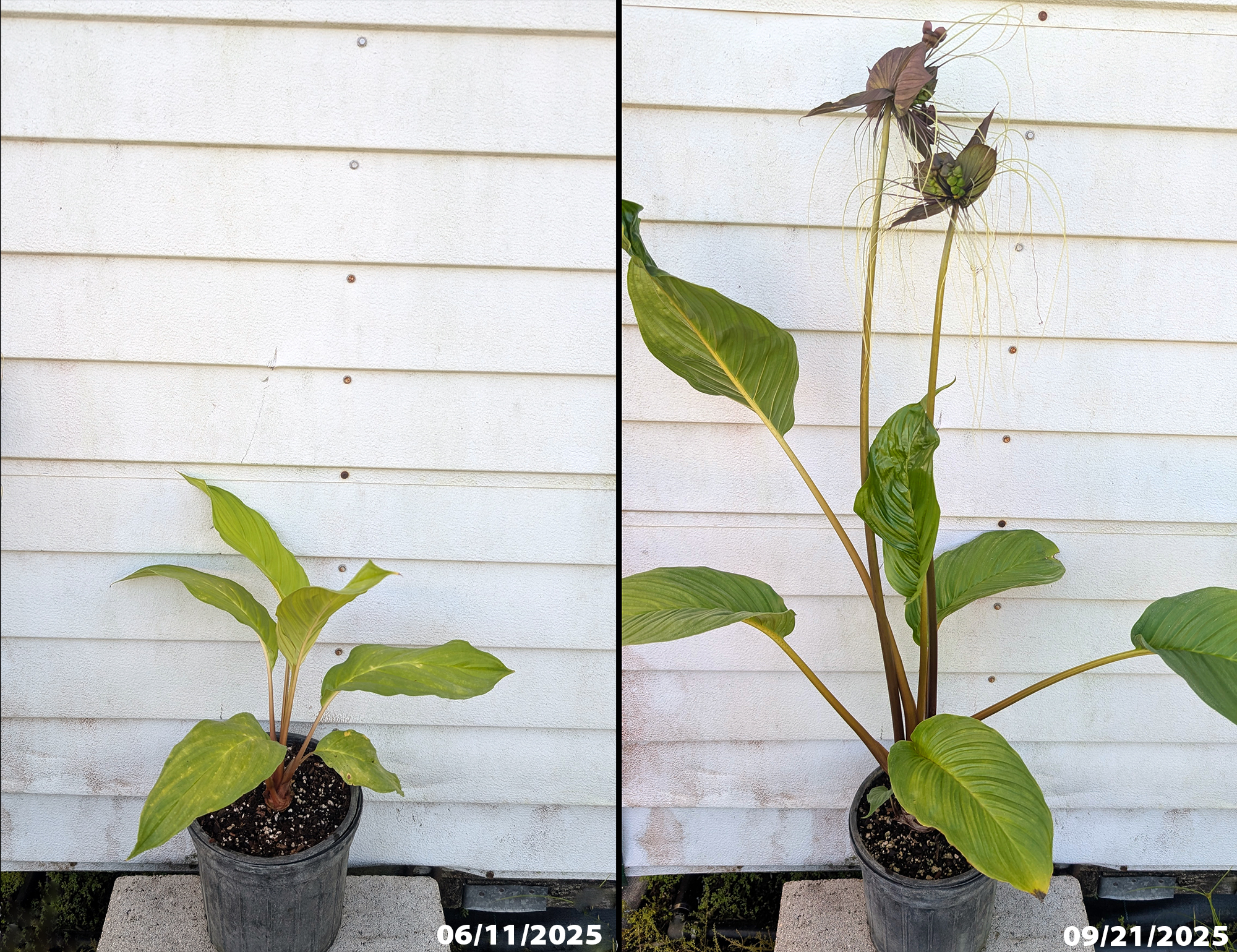
Tacca (bat flower) showing vigorous growth and producing flower buds in
the
same season after feeding with Green Magic.
Swipe left/right to see all data
↔️
📊 Seasonal feeding schedule with Green Magic and Sunshine Boosters.
Season
Product
Method
Goal
Spring (March)
Green Magic
Soil Surface
6-month steady nutrient base.
Growing Season
Sunshine Boosters
Foliar (Every 5-7 days)
Calcium & Bio-available growth power.
Late Summer
Green Magic
Soil Surface
Replenish foundation for Fall.
Winter
Sunshine Epi
Foliar/Drench
Cold tolerance and shipping recovery.
Quick Dose Reference
Green Magic: 1 teaspoon per 1 gallon of soil
volume.
Sunshine Boosters: 25 ml (5 tsp) per 1 gallon of
water.
Pro Tip: Always spray in the early morning or late
evening to prevent leaf scorch and ensure maximum absorption through the
stomata.
Why is the "Spring Fertilizer Rush" a problem?
Most gardeners apply a large amount of traditional fertilizer once in
March. This creates a "roller coaster" effect where plants get a sudden
spike of
nutrients followed by weeks of starvation. This leads to inconsistent growth
and potential "fertilizer burn."
What is "fertilizer burn"?
Traditional fertilizers are made of soluble salts. When too many salts
accumulate around the roots, they actually pull water out of the plant
tissues
(osmosis), dehydrating the plant and damaging sensitive root tips and leaf
edges.
Is there a difference between "Slow-Release" and
"Controlled-Release"?
Yes.
Slow-Release: Relies on natural factors like moisture
and soil microbes to break down. It is often unpredictable.
Controlled-Release: Uses engineered polymer membranes
(like Polyon) to release nutrients at a specific, predictable rate based
primarily on temperature.
Green Magic & Temperature
How does temperature affect my fertilizer?
Most fertilizers are lab-tested at 75°F. In hot climates
(90°F+), the nutrients release much faster. A "6-month" fertilizer
might only last 3
months in the summer heat.
How should I adjust Green Magic for my local weather?
Cooler Climates (<60°F): Increase the
application rate by 20%.
Hot Climates (> 80°F): Decrease the application
rate by 20% to prevent over-releasing.
The Calcium Gap
Why doesn't Green Magic contain Calcium?
Calcium salts are highly soluble and can destabilize the polymer coating
used in controlled-release granules. Therefore, most high-quality granules
leave Calcium out. You can provide Calcium by using SUNSHINE Boosters
Why is Calcium so important for new growth?
Calcium is the "bone" of the plant, building strong cell walls. Unlike
other nutrients, it is immobile—the plant cannot move it from old
leaves
to new ones. If you don't provide a constant supply, new leaves and fruit
will
emerge distorted or weak.
Advanced Science & Troubleshooting
What makes Sunshine Boosters "Bioavailable"?
Unlike most liquid fertilizers that use EDTA chelators, Sunshine Boosters
are amino-acid based. They use organic acids and glycine to escort minerals
into the plant, allowing it to incorporate nutrients into its proteins
almost
immediately.
Will these fertilizers affect the taste of my fruit?
No. Sunshine Boosters are made from pharmaceutical-grade components and
contain no urea or harmful salts, ensuring your harvest (like Mangoes or
Avocados) has a pure, natural flavor without a chemical aftertaste.
Avocado Plant Facts
Botanical name: Persea americana, Persea gratissima Also known as: Avocado, Alligator Pear, Aguacate, Abacate
USDA Zone: 9 - 11
Highligths
✨ Green Magic
- 15% Off This Week
Give Your Plants a Strong Start This Spring
Green Magic - 15% OFF.
Build the foundation for the entire growing season with a steady,
long-lasting nutrient base.
No coupon needed. The discount is automatically applied at
checkout.
Offer valid through 03/21/2026. Discount applies to Green
Magic products only. Not valid on previous purchases and cannot be combined
with other promotions or discounts. Offer subject to change without notice.
Sunshine: So Green Magic feeds the plant for months. Does
that mean I can forget about Sunshine Boosters?
Smokey: Not quite. Green Magic is the steady base diet.
Sunshine Boosters are the weekly power drink during active growth.
Sunshine: Ah. Like my regular meals and donuts on top.
Smokey: Exactly. Plants eat slowly from Green Magic, and
once a week they get a fresh boost.
Sunshine: Sprinkle once, then boosters every week. The
plant grows, I drink coffee, and nobody forgets anything important.
Not just guacamole - 6 unusual avocado recipes from top chefs
Avocado-inspired dishes arrangement
Not just guacamole - 6 unusual avocado recipes from top chefs
Avocado is rich, creamy, and loaded with healthy fats and fiber. It is also packed with vitamins C, K, B6, E, riboflavin, folate, niacin, and pantothenic acid, plus minerals that support digestion, bone health, heart health, and immune function.
Avocado Plant Facts
Botanical name: Persea americana, Persea gratissima Also known as: Avocado, Alligator Pear, Aguacate, Abacate
USDA Zone: 9 - 11
Highligths
Most people stop at guacamole, smoothies, or avocado toast. But in professional kitchens, avocado is treated as far more than a spread. It becomes a sauce base, a frozen dessert, even a chocolate mousse ingredient.
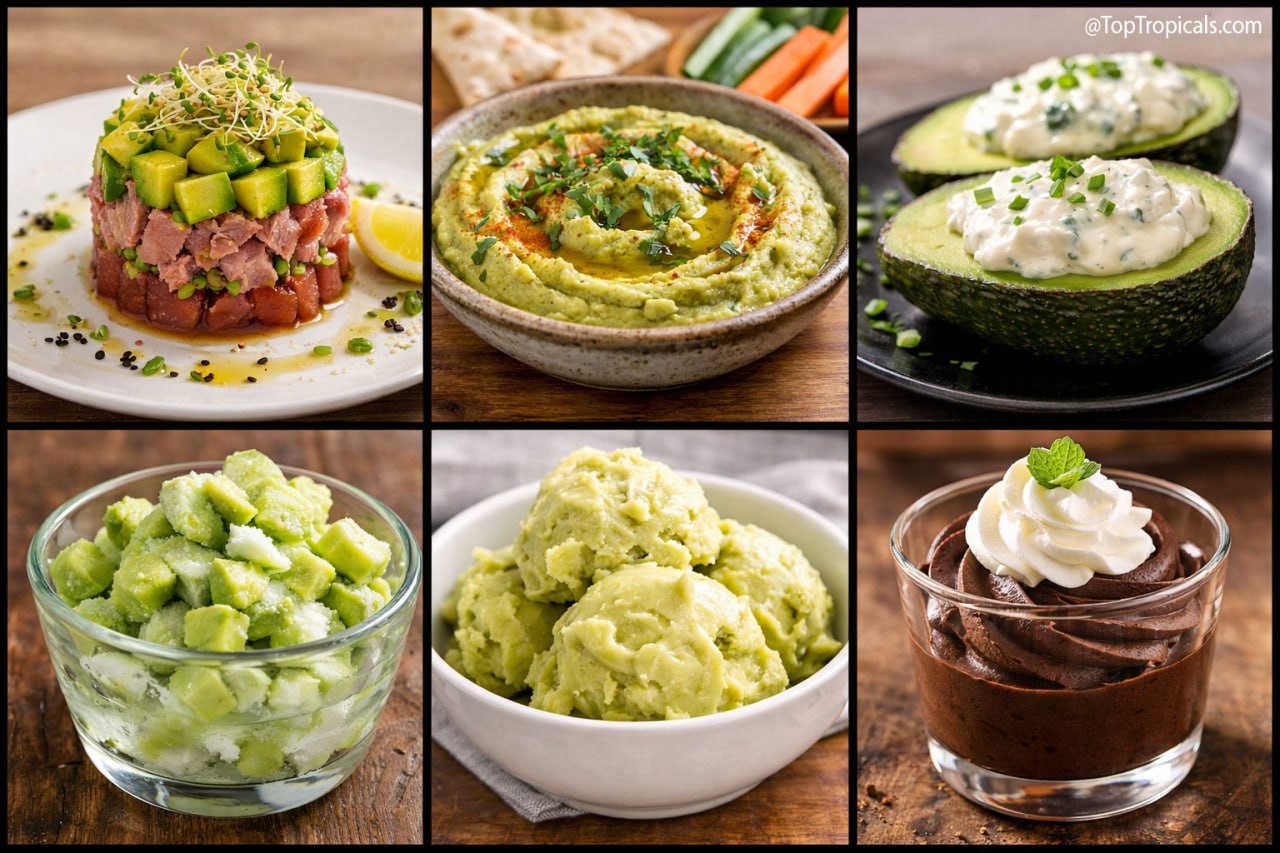
👉 Here are six unexpected avocado ideas inspired by well-known chefs:
1. Tuna avocado timbale
This plated appetizer looks restaurant-level but is surprisingly simple.
Small-diced fresh tuna is mixed with minced shallots or red onion, fresh coriander, pickled ginger, lemon juice, olive oil, salt, and pepper. The mixture is pressed into a small ring mold, then topped with diced avocado and garnished with sprouts.
The avocado adds cool creaminess against the bright citrus and savory tuna.
2. Avocado hummus
Blend two creamy favorites - chickpeas and avocado - into one smooth dip.
Combine drained chickpeas, ripe avocados, tahini or peanut butter, garlic, cumin, olive oil, lemon zest and juice, and salt. Process until silky. Finish with a drizzle of olive oil and a sprinkle of herbs and paprika.
It is lighter than traditional hummus and naturally vibrant green.
3. Stuffed avocado with blue cheese sauce
Avocado can also be the bowl.
Mix Dijon mustard, blue cheese, sour cream, a splash of wine vinegar, salt, and pepper into a thick dressing. Slice the avocado in half, remove the seed, and spoon the sauce into the center.
Eat it straight from the skin for a bold, savory appetizer.
4. Creamy avocado ice bowl
For a quick chilled dessert, cube ripe avocado and mix with cream and a light sweetener. Serve over ice.
It is not quite a smoothie and not quite ice cream - just cold, creamy avocado with clean sweetness.
5. Frozen avocado with condensed milk
Mash ripe avocado with condensed milk and freeze.
After a few hours, it becomes a scoopable, creamy treat with no special equipment required.
6. Green chocolate mousse
Perhaps the most surprising idea: avocado in chocolate mousse.
Puree ripe avocado and blend with melted dark chocolate, cocoa powder, coconut cream, and syrup. Chill until set, then top with whipped cream.
Despite the name, the dessert stays chocolate-brown. The avocado provides structure and silkiness, replacing part of the heavy cream.
💚 Why avocado works in sweet and savory dishes
Avocado is naturally buttery. It thickens sauces without flour, blends smoothly into dips, and creates creamy desserts without dairy overload. It freezes well and holds flavor beautifully.
So next time avocados are in season, think beyond guacamole. Stuff them, blend them, freeze them, or turn them into mousse. Feel like a chef!
This versatile fruit can do far more than sit on toast.
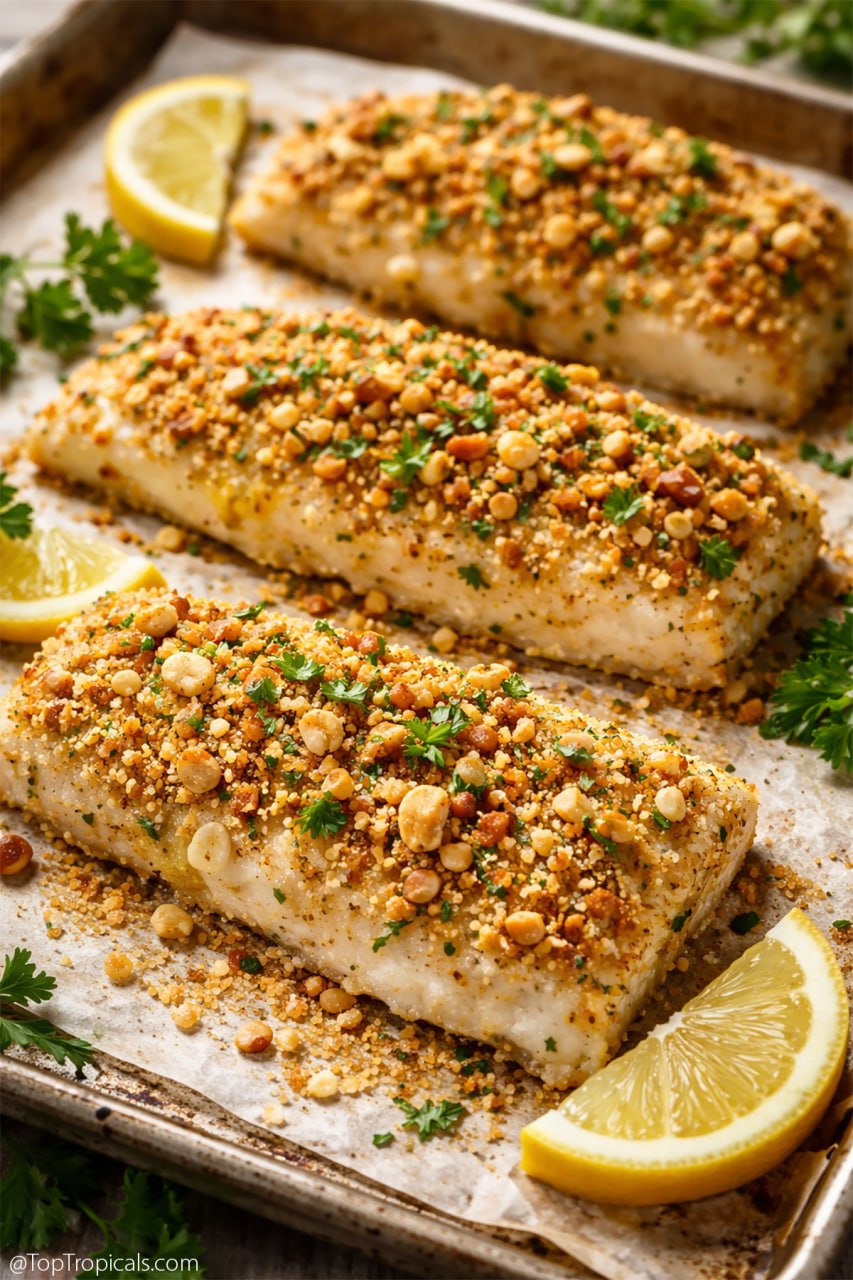
Spread a thin layer of mustard over the fish fillet.
Press crushed macadamia nuts onto the top of the fillet.
Drizzle lightly with olive oil.
Bake until golden and crisp, about 12-15 minutes.
🌿About the plant:
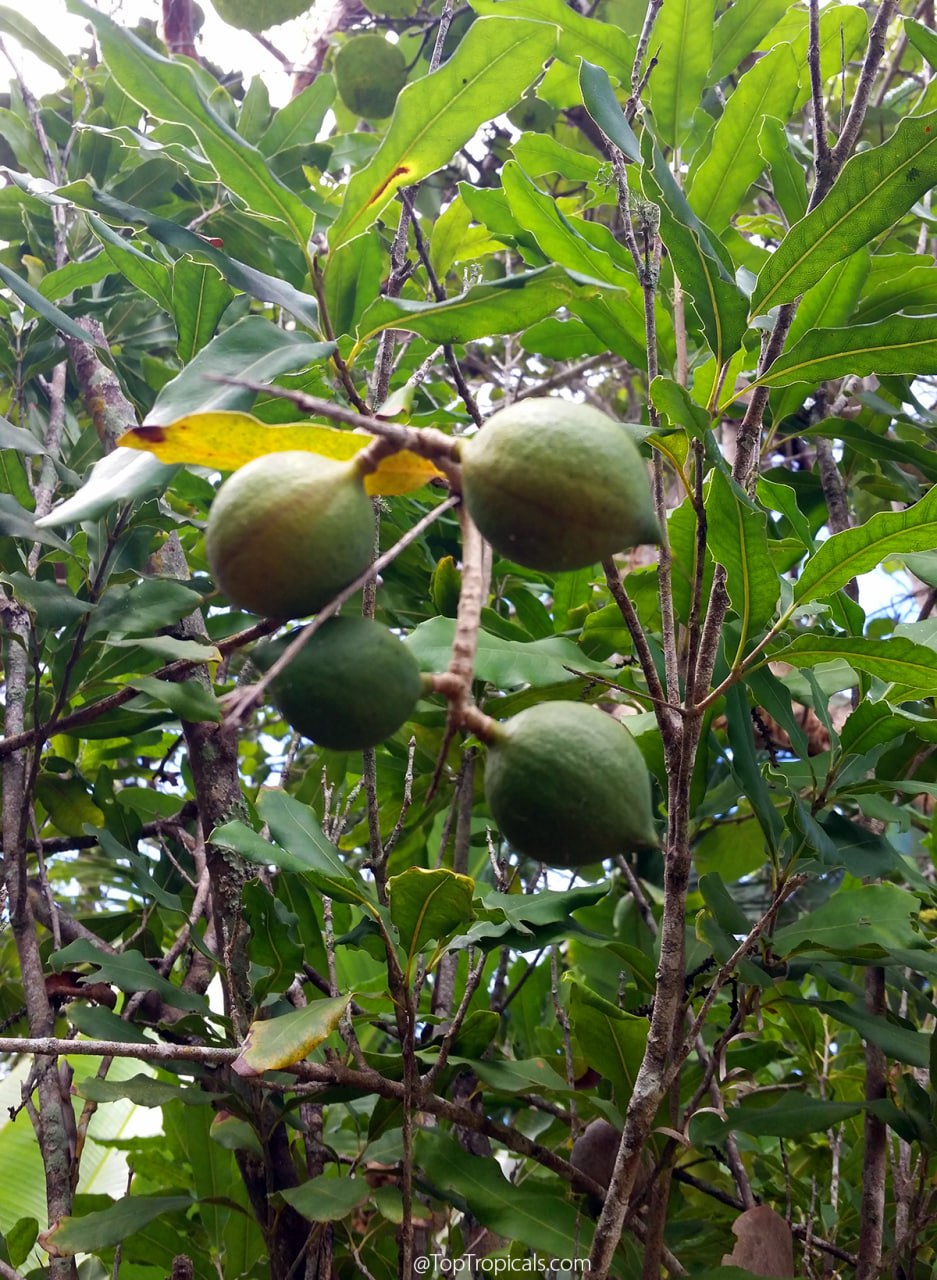
Macadamia is an Australian rainforest tree that gives us one of the richest, creamiest nuts on earth. The shell is famously hard - you really earn that buttery crunch.
🏡 In the garden:
Best in warm climates, zones 9-11, cold hardy to light freeze. Needs full sun, good drainage, and patience - seedlings can take several years to start producing (grafted or air-layered trees start flowering right away). Once established, they are long-lived and productive.
What tropical plants survived Floridas historic freeze without protection
Florida historic freeze
What tropical plants survived Florida's historic freeze without protection
In the first week of February 2026, arctic air pushed deep into Florida. For many areas, this was the coldest event in over a century.
We received one question over and over: How did your gardens do?
Top Tropicals Farm in Sebring, Florida is up and running - and this freeze became a real-world hardiness test for tropical and subtropical plants. Below is our initial field report after inspecting established plantings.
📊 Weather data - February 1-6, 2026
Sebring, Florida - 132 years of recorded observations
This was not a light frost. It was prolonged, windy, penetrating hard freeze.
🌡 Minimum temperature: 25F ❄️ Wind chill: 14F ⏳ Duration: 3 nights of 8-10 hour hard freeze ☀️ Daytime temperatures: around 50F for 7 days 🌀 Wind: sustained 20 mph, gusts 40-50 mph
Cold protection
In-ground trees: selected plants covered with frost cloth, especially
Mango Plant Facts
Botanical name: Mangifera indica Also known as: Mango
USDA Zone: 9 - 11
Highligths
mango and young
Avocado Plant Facts
Botanical name: Persea americana, Persea gratissima Also known as: Avocado, Alligator Pear, Aguacate, Abacate
USDA Zone: 9 - 11
Highligths
avocado trees. Tender container plants: moved into greenhouses with propane heat above 34F. Hardy container plants: frost cloth and wind protection only - no plastic Nutrition support: plants fertilized regularly during the growing season with Green Magic and Sunshine Boosters to maintain vigor and hardiness.
However, the plants listed below had no protection at all.
All were established trees 2-3 years in the ground.
The plants below had NO PROTECTION, established trees 2-3 years old
Botanical name: Psidium cattleyanum, Psidium littorale Also known as: Cattley Guava, Sand Plum, Strawberry Guava
USDA Zone: 9 - 11
Highligths
Eugenias (Grumichama, Rio Grande, Surinam and more)
Olive trees
Bay Leaf (Laurus nobilis)
Fig trees (Ficus carica)
Prunus sp - Peaches, Plums, Nectarines
Persimmons
Rubus (Blackberries) including Tropical Mysore Raspberry
Elderberry (Sambucus)
Yerba Mate - Ilex paraguariensis
Opuntia - Nopal Cactus, Prickly Pear
🌸 Flowering Trees and Shrubs:
Beaucarnea recurvata - Pony Tail
Ponytail Palm Plant Facts
Botanical name: Beaucarnea recurvata, Nolina recurvata Also known as: Ponytail Palm, Pony Tail, Bottle Palm, Nolina, Elephant-foot Tree
USDA Zone: 10 - 11
Highligths
Callistemon - Bottlebrush
Yucca
Tabebuias
Magnolia figo and Little Gem
Banana Magnolia Plant Facts
Botanical name: Magnolia figo, Michelia figo, Magnolia fuscata Also known as: Banana Magnolia, Banana Shrub, Port Wine Magnolia
USDA Zone: 7 - 10
Highligths
Calliandra tweedii - Red Powderpuff
Sophora tomentosa
Yellow Necklace Pod Plant Facts
Botanical name: Sophora tomentosa Also known as: Yellow Necklace Pod, Silverbush
USDA Zone: 8 - 11
Highligths
Galphimia gracillis - Thriallis
Thriallis Plant Facts
Botanical name: Galphimia gracillis, Galphimia gracilis, Galphimia glauca Also known as: Thriallis, Rain of Gold, Spray of Gold
USDA Zone: 9 - 11
Highligths
Acacia trees
Osmanthus fragrans
Tea Olive Plant Facts
Botanical name: Osmanthus fragrans, Olea fragrans, Olea ovalis, Osmanthus longibracteatus, Osmanthus macrocarpus Also known as: Tea Olive, Fragrant Olive, Sweet Olive, Kinmokusei in Japan
USDA Zone: 8 - 11
Highligths
Abutilon trees
Erythrina - several species
Monkey Ear tree - Enterolobium cyclocarpum
Bauhinia Orchid Trees - several species
Pseudobombax ellipticum - Shaving Brush Tree
Shaving Brush Tree Plant Facts
Botanical name: Pseudobombax ellipticum, Bombax ellipticum Also known as: Shaving Brush Tree
USDA Zone: 9 - 11
Highligths
Bulnesia arborea- Vera Wood
Vera Plant Facts
Botanical name: Bulnesia arborea Also known as: Vera, Verawood, Vera Wood, Maracaibo Lignum Vitae
USDA Zone: 10 - 12
Highligths
Caesalpinia mexicana, Mexican Bird of Paradise
Mexican Bird of Paradise Plant Facts
Botanical name: Caesalpinia mexicana Also known as: Mexican Bird of Paradise, Dwarf Poinciana
USDA Zone: 9 - 11
Highligths
Sansevieria - Snake Plant
Foxtail fern - Asparagus densiflorus
Lonicera - several varieties
Jacaranda tree
Eucalyptus
Plumbago Imperial Blue
Philodendron bipinnatum
Gardenias
Gingers (dormant rhizomes)
✳️ Minimal leaf damage only:
(These plants showed light cosmetic damage but no structural injury)
🍑 Tropical Fruit Trees and Edibles:
Glycosmis pentaphylla - Gin Berry
Ash sheora Plant Facts
Botanical name: Glycosmis pentaphylla, Limonia pentaphylla Also known as: Ash sheora, Orangeberry, Rum Berry, Gin Berry
USDA Zone: 9 - 10
Highligths
Black sapote tree
Tamarind tree
Syzygiums: Rose Apple and Java Plum
🌸 Flowering Trees and Shrubs:
Pandora vine
Jasminum - several species
Stenocarpus sinuatus - Firewheel Tree
Firewheel Tree Plant Facts
Botanical name: Stenocarpus sinuatus Also known as: Firewheel Tree
USDA Zone: 9 - 11
Highligths
Xanthostemon
Quisqualis indica
Rangoon Creeper Plant Facts
Botanical name: Combretum indicum, Quisqualis indica Also known as: Rangoon Creeper, Burma Creeper, Chinese Honeysuckle
USDA Zone: 10 - 11
Highligths
Schotia tree
Eranthemum pulchellum - Blue Sage
Blue sage Plant Facts
Botanical name: Eranthemum pulchellum, Eranthemum nervosum Also known as: Blue sage, Blue eranthemum, Lead Flower
USDA Zone: 9 - 11
Highligths
Hiptage benghalensis - Helicopter Flower
Hiptage Plant Facts
Botanical name: Hiptage benghalensis, Hyptage bengalensis Also known as: Hiptage, Helicopter Flower
USDA Zone: 9 - 10
Highligths
🏡 What this means for Florida gardeners
This freeze was a stress test few gardens are prepared for. Yet many species handled 25F, wind, and multi-night freeze conditions without protection.
Choosing proven survivors, planting in smart microclimates, and maintaining strong plant health during the growing season makes a measurable difference.
More updates will follow as full recovery continues - but these early results already help define a stronger plant palette for future winters.
Cold-hardy avocado survival groups - what the numbers really mean
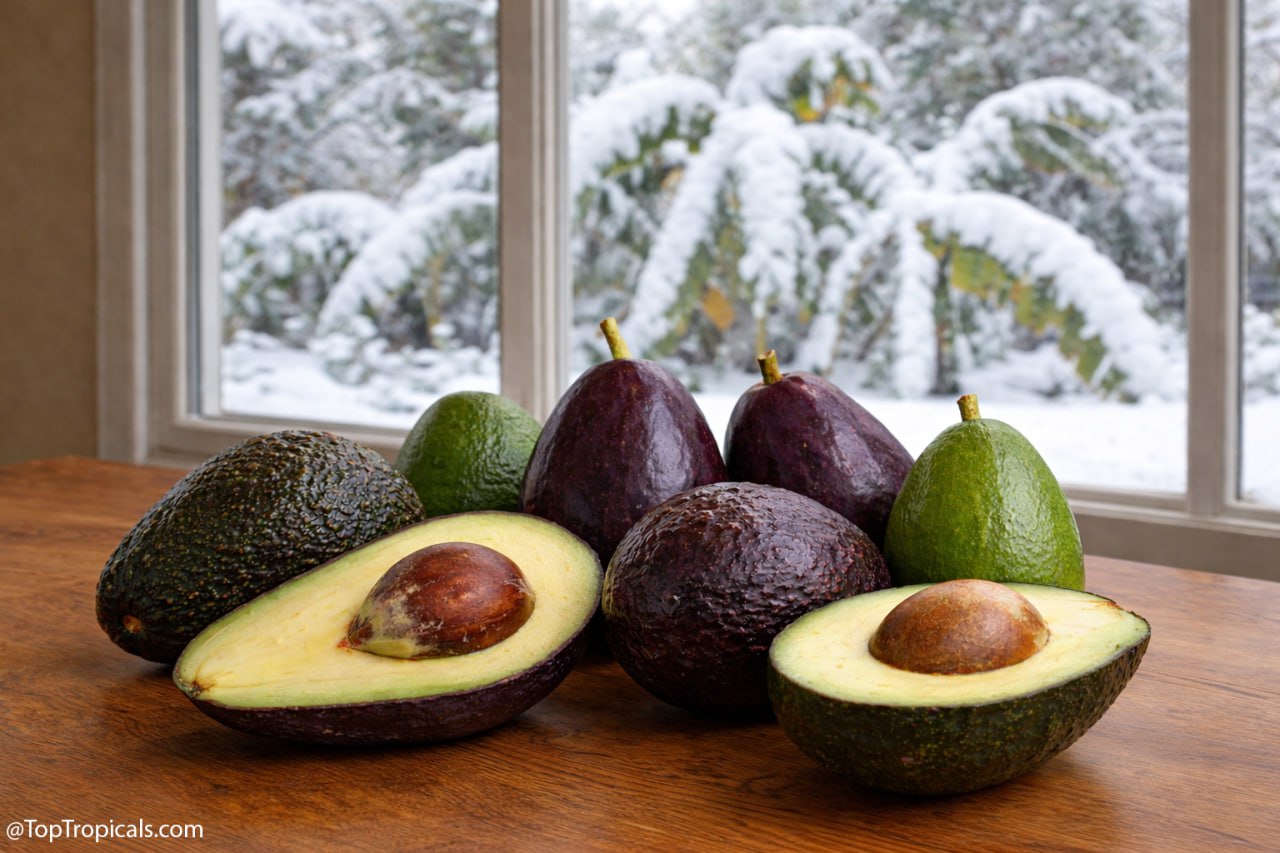
Different varieties of Avocado fruit on a table
Cold-hardy avocado survival groups - what the numbers really mean
Avocado cold hardiness is often misunderstood. Temperature numbers do not mean a tree stays untouched - they describe survival, not appearance. Leaf burn, twig dieback, and temporary setbacks are normal even on hardy varieties. The difference is whether the tree recovers.
Avocado Plant Facts
Botanical name: Persea americana, Persea gratissima Also known as: Avocado, Alligator Pear, Aguacate, Abacate
USDA Zone: 9 - 11
Highligths
Below are cold-hardy avocado varieties grouped by minimum reported survival temperatures, along with what growers typically observe after a freeze.
🌡 Hardy to 15F:
Brazos Belle (Wilma), Fantastic, Joey, Lila (Opal), Day.
Best freeze survivors. Minor leaf burn possible, but trees usually recover quickly with little structural damage. These are among the most cold-tolerant avocado varieties when fully established and exposed to short-duration freezes. What to expect: Trees in this group often survive temperatures near 15F with little to moderate leaf damage. Some tip dieback is possible, but major limb loss is uncommon. Recovery is usually strong once warm weather returns, especially in dry winter conditions.
🌡 Hardy to 20F: Bacon, Brogdon (Brogden), Fuerte (Dwarf), Mexicola, Miguel, Ulala (Super Hass), and Waldin.
Reliable survivors in cold-prone areas. Expect leaf damage and some setback, but established trees typically rebound.
These varieties perform well in marginal climates and are commonly grown where freezes are expected but not extreme. What to expect:
Leaf burn is common at or below 20F, and young shoots may be damaged. Trees typically survive, but may need a full growing season to regain canopy density. Established trees usually rebound well with good drainage and protection from wind.
🌡 Hardy to 25F: Black Prince, Choquette, Hall, Hardee Red, Lula, Marcus Pumpkin, Mexicola Grande, Nishikawa, Oro Negro, Poncho (Pancho), Tonnage, Winter Mexican, Wurtz (Dwarf) and Yamagata.
Moderate cold tolerance. Leaf drop and branch dieback are common after freezes, though trees usually survive.
This group includes moderately cold-tolerant avocados that handle light freezes but are more easily damaged during prolonged cold. What to expect:
Expect noticeable leaf drop and some branch dieback when temperatures fall near 25F. Trees usually survive but may look rough for weeks or months. Proper placement and drainage greatly influence recovery speed.
🌡 Hardy to 30F: Bernecker, Catalina, and Florida Hass (Haas).
Frost-tolerant only. Damage occurs quickly, and repeated freezes can cause serious stress without protection.
Actual results depend on tree age, freeze duration, wind, moisture, and microclimate. Lower numbers do not mean damage-free - they mean the tree lived to grow again.
These avocados are best suited to areas with only occasional frost and minimal freeze exposure. What to expect:
Leaf damage occurs quickly near 30F, and unprotected trees may suffer significant canopy loss. Survival is possible during brief cold events, but repeated freezes can cause lasting damage. These varieties benefit most from proactive protection.
❗️ Important reminder
All temperature figures are approximate and experience-based, not guarantees. Survival depends on tree age, duration of cold, wind, moisture, and microclimate. Cold tolerance improves significantly as trees mature, while young trees remain vulnerable across all groups.
Understanding the difference between survival and damage is the key to choosing the right avocado for colder climates.